
Colorado
Colorado Police Body Camera Laws: Access & Mandate
Independently fact-checked against primary sources (last audited August 20, 2026). · Reviewed by the RecordingLaw editorial team. · Law checked current as of August 20, 2026. · 2 primary sources cited on this page. How we verify our legal content
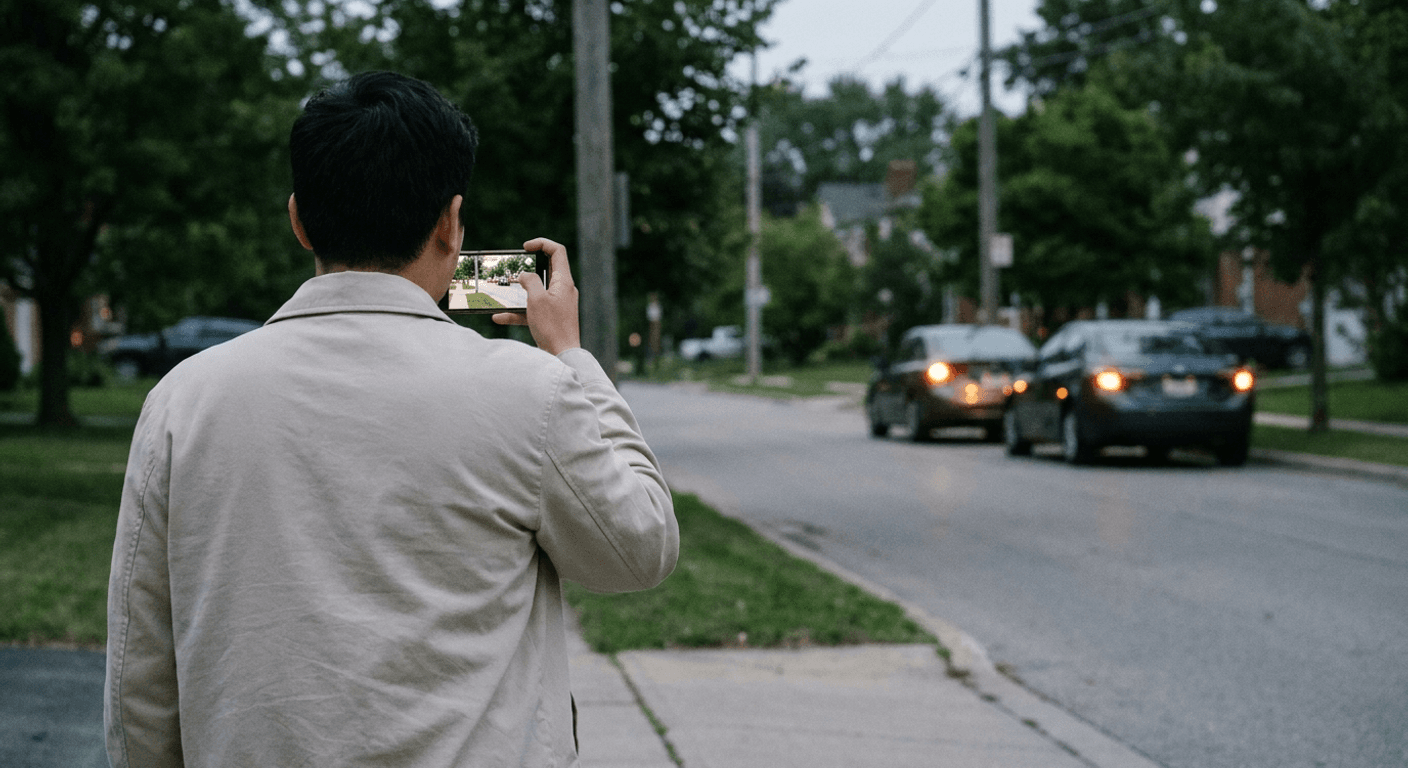
Colorado requires every local police agency and the Colorado State Patrol to equip officers with body cameras, and requires unedited footage tied to a complaint of officer misconduct to be released within 21 days, extendable to 45, under Colo. Rev. Stat. § 24-31-902.
This guide is part of our Police Bodycam Laws by State series.
Jurisdiction scope: This article addresses Colorado state law governing police body-worn cameras: the statewide mandate, activation duties, and public release rules under Colo. Rev. Stat. § 24-31-902. It does not address a civilian's right to record law enforcement, which is covered separately in our guide to recording laws.
Does Colorado require police to wear body cameras?
Yes. Colorado is one of a small group of states, along with Connecticut, Illinois, Maryland, New Jersey, New Mexico, and South Carolina, that mandates body cameras statewide. Colo. Rev. Stat. § 24-31-902 required every local law enforcement agency in Colorado and the Colorado State Patrol to provide a body-worn camera to each peace officer who interacts with members of the public, with full compliance required by July 1, 2023, according to the Colorado Division of Criminal Justice. The activation duty excludes a narrow set of roles: officers working undercover, jail peace officers and agency staff working in any part of a jail that has functioning video cameras, civilian and administrative staff, the Colorado State Patrol's executive detail, and peace officers working in a courtroom. The jail exclusion carries an important carve-back: it does not apply when a jail peace officer performs a task that requires an anticipated use of force, including cell extractions and restraint chairs, so the recording duty returns in exactly those encounters. The statute traces to Senate Bill 20-217, the Enhance Law Enforcement Integrity Act, which was introduced on June 3, 2020 in the 2020 regular session, a session that had recessed because of COVID-19 and reconvened in late May, and which Governor Jared Polis signed on June 19, 2020, according to the Colorado General Assembly's official bill page.

When must a Colorado officer's camera be recording?
Section 24-31-902 sets specific activation triggers rather than leaving it to agency discretion. An officer must wear and activate a body-worn or dash camera when responding to a call for service, when entering a premises to enforce the law or in response to a call for service, during a welfare check other than a simple motorist assist, and during any officer-initiated interaction with the public for the purpose of enforcing the law or investigating a possible violation, whether the interaction is consensual or not, according to Colorado's official statutes portal. The camera does not need to be running en route to a call, but officers should activate it shortly before arriving on scene. Officers may turn a camera off in limited situations, such as to avoid recording unrelated personal information, during an unrelated assignment, or during a long lull in an incident, but turning it off to avoid recording the incident itself is not a permitted use of that discretion.
How fast must Colorado release bodycam footage of a misconduct complaint?
Colorado's release timeline is one of the fastest and most public-facing in the country. When a person files a complaint alleging officer misconduct, the law enforcement agency must release all unedited video and audio recordings of the incident to the public within 21 days of the request. If releasing the recording would substantially interfere with an active or ongoing investigation, the agency may delay release, but the footage must still be released no later than 45 days from the date of the allegation of misconduct, according to Colorado's official statutes portal. Where criminal charges are filed against a party to the incident, the 21-day clock instead begins to run once defense counsel is appointed or enters an appearance, the person elects to proceed without counsel, or the agency receives the criminal complaint, whichever applies.
| Step | Colorado rule (§ 24-31-902) |
|---|---|
| Base release deadline | 21 days from the complaint/request |
| Active-investigation extension | Up to 45 days from the date of the allegation |
| Redaction | Sensitive content (nudity, sexual assault, medical emergency, mental health crisis, and more) must be blurred, not withheld outright |
| Full withholding | The blurring rule does not permit removing any portion of the video; written authorization from the victim or next of kin is what allows unblurred footage to be released. The only ground for withholding from the public is an active investigation, capped at 45 days |
| Failure to activate | Permissive inference of officer misconduct in any investigation or legal proceeding, except a criminal proceeding against the officer; rebuttable presumption of inadmissibility for the officer's related unrecorded statements |
| Tampering | Discipline up to termination; minimum 1-year P.O.S.T. suspension where done with intent to conceal or obstruct justice; mandatory permanent revocation where that conduct occurred in an incident causing civilian death or serious bodily injury |
What gets redacted, and what can be withheld entirely?
Colorado leans toward release with redaction rather than outright denial. Recordings that depict nudity, a sexual assault, a medical emergency, private medical information, or a mental health crisis must generally be blurred to protect the substantial privacy interest involved, while still allowing the rest of the recording to be released. The statute is explicit that this blurring provision does not permit the removal of any portion of the video, and written authorization from the victim, or from the next of kin if the victim has died or is incapacitated, is what allows unblurred footage to be released. It is not a mechanism for holding footage back.
Where blurring is insufficient to protect the substantial privacy interest, the agency must still, on request, release the video to the victim or the victim's family within 20 days of receiving the misconduct complaint, and must notify the person whose privacy interest is implicated, where contact information is known, of the right to waive that interest. A witness, victim, or criminal defendant who waives the interest in writing removes the agency's ability to redact or withhold on that ground. The one route to keeping a recording from the public is an active or ongoing investigation, and even that is capped: the video must be released no later than 45 days from the date of the allegation, and the prosecuting attorney must prepare a written explanation of the interference that justified the delay and release it to the public when the video comes out. This structure reflects the Act's overall design: the presumption runs toward public release, and an agency bears the burden of justifying any delay or redaction rather than the requester having to justify disclosure.
What happens if an officer doesn't turn the camera on, or tampers with footage?
Colorado backs its activation and release rules with real consequences. Any failure to activate a camera as required, or any tampering with footage or the camera's operation, creates a permissive inference that the missing footage would have reflected the officer's misconduct. That inference is available in any investigation or legal proceeding, with a single carve-out for criminal proceedings against the peace officer, so it can be invoked in civil-rights litigation, in an internal-affairs review, and by a defendant in a criminal case, but not in a prosecution of the officer himself. If a court, an administrative law judge, a hearing officer, or a final internal-investigation decision finds that an officer intentionally failed to activate a body-worn or dash camera, or tampered with footage or the camera's operation, the officer's employer must impose discipline up to and including termination, according to the Colorado Division of Criminal Justice. The Colorado Peace Officer Standards and Training (P.O.S.T.) Board must suspend the officer's certification for a minimum of one year where that intentional failure or tampering was done with the intent to conceal unlawful or inappropriate actions or obstruct justice, and must permanently revoke certification where the same conduct occurred in an incident resulting in a civilian's death or serious bodily injury. Separately, if an officer's statements or conduct related to an incident were not recorded because of a failure to activate or a tampering violation, those statements carry a rebuttable presumption of inadmissibility if the prosecution later tries to introduce them.
The Kilyn Lewis case: the Act enforced in court
Colorado's release requirements are not just theoretical. In May 2024, an Aurora SWAT officer shot and killed Kilyn Lewis, who was unarmed, after the officer said he mistakenly believed Lewis was reaching for a gun. When Denver TV station KUSA-9NEWS sought the full, unedited body camera footage and the City of Aurora provided only select portions, the station sued. In June 2025, Arapahoe County District Judge Benjamin Todd Figa ruled that the Aurora Police Department had violated the Enhance Law Enforcement Integrity Act by withholding the complete footage and ordered the department to release it, according to 9NEWS. The case is a real, on-the-record example of how Colorado's 21-day and 45-day release deadlines operate when an agency resists disclosure: the statute gives requesters, including news organizations, a direct path to court enforcement rather than leaving compliance to the agency's discretion.
Is a civilian allowed to record the police in Colorado?
That is a separate question from what this page addresses. Colorado generally recognizes a person's right to record an on-duty officer performing public duties in a public place. For a full explanation of that right and how it differs from the rules on police-generated bodycam footage discussed here, see Is It Illegal to Record Someone?
More Colorado Laws
Frequently Asked Questions
Does Colorado require police departments to use body cameras?
Yes. Colo. Rev. Stat. § 24-31-902 required every local law enforcement agency and the Colorado State Patrol to equip peace officers who interact with the public with body-worn cameras, with statewide compliance required by July 1, 2023.
How long does a Colorado police department have to release bodycam footage of a complaint?
Twenty-one days from the date of the request. If releasing the footage would substantially interfere with an active investigation, the agency may delay, but release is still required no later than 45 days from the date of the allegation of misconduct.
What is the Enhance Law Enforcement Integrity Act?
It is Colorado Senate Bill 20-217, introduced in the 2020 regular session and signed by Governor Jared Polis on June 19, 2020. It created the statewide body camera mandate, activation requirements, and public release timeline now codified at Colo. Rev. Stat. § 24-31-902.
Can a Colorado police department blur or withhold parts of bodycam footage?
Agencies must generally blur sensitive content, such as footage of a sexual assault, a medical emergency, or a mental health crisis, rather than withhold it entirely, and the statute states that the blurring provision does not permit removing any portion of the video. Written authorization from the victim, or the next of kin, is what allows unblurred footage to be released, not what allows footage to be held back. The only ground for keeping a recording from the public is an active or ongoing investigation, and release is still required no later than 45 days from the date of the allegation.
What happens if a Colorado officer fails to turn on a body camera?
Any failure to activate a camera as required, or tampering with footage, creates a permissive inference that the missing footage reflected officer misconduct. The inference applies in any investigation or legal proceeding except a criminal proceeding against that officer, so a criminal defendant can invoke it. There is also a rebuttable presumption that the officer's related unrecorded statements are inadmissible in a later prosecution. A finding of intentional failure to activate requires discipline up to termination, and where the officer acted with intent to conceal unlawful or inappropriate actions or obstruct justice, a minimum one-year suspension of the officer's P.O.S.T. certification.
What was the Kilyn Lewis bodycam ruling in Aurora, Colorado?
In June 2025, an Arapahoe County judge ordered the Aurora Police Department to release full, unedited bodycam footage of the May 2024 fatal shooting of Kilyn Lewis, ruling that withholding portions of the video from KUSA-9NEWS violated the Enhance Law Enforcement Integrity Act.
Does every Colorado police officer have to wear a body camera?
Nearly all peace officers who interact with the public must, but the activation duty excludes officers working undercover, jail peace officers and staff in parts of a jail that have functioning video cameras, civilian and administrative staff, the Colorado State Patrol's executive detail, and peace officers working in a courtroom. The jail exclusion does not apply when a jail peace officer performs a task requiring an anticipated use of force, such as a cell extraction or the use of a restraint chair.
Updates
Corrected the description of how Colorado bodycam footage may be withheld, clarified that the permissive inference for missing footage applies in criminal cases except prosecutions of the officer, completed the list of officers exempt from the recording duty, and fixed the session in which Senate Bill 20-217 was passed.
Independently fact-checked against the cited primary sources; governing law re-checked for recent changes
Added the statute's permissive-inference-of-misconduct consequence for a failure to activate a body camera or tamper with footage, which the article previously omitted, reporting only the rebuttable presumption against the officer's unrecorded statements.
Governing law re-checked for recent changes
Reviewed and approved by an editor
The Law Behind This Article
This article rests on the statutory provisions below, held in our own legal record and retrieved from the official source. Tap a section to read the operative text.
Colorado Revised Statutes, Title 24: Government - State
§ 24-31-902Incident recordings - release - tampering - fineIn forcecited in 3 of our articles
(1) (a) (I) By July 1, 2023, all local law enforcement agencies in the state and the Colorado state patrol shall provide body-worn cameras for each peace officer of the law enforcement agency who interacts with members of the public. Law enforcement agencies may seek funding pursuant to section 24-33.5-519. (II) (A) Except as provided in subsection (1)(a)(II)(B) or (1)(a)(II)(C) of this section, a peace officer shall wear and activate a body-worn camera or dash camera, if the peace officer's vehicle is equipped with a dash camera, when responding to a call for service, entering into a premises for the purposes of enforcing the law or in response to a call for service, during a welfare check except for a motorist assist, or during any interaction with the public initiated by the peace officer, whether consensual or nonconsensual, for the purpose of enforcing the law or investigating possible violations of the law. The body-worn camera or dash camera does not need to be on when en route to a call for service, but should be turned on shortly before the vehicle approaches the scene.
Official text (excerpt) · last checked 2026-08-31 · Read the full text in our law library · Verify at olls.info
Cited in 1 court opinions in our collectionLatest citing opinion in our collection: 2025
Opinions citing this section in our collection:
- Sever v. City of Fort Collins (District Court, D. Colorado 2025)“…blic initiated by the peace officer.” [Id. at 13 (quoting Colo. Rev. Stat. § 24-31-902(1)(a)(II)(A))]. Mr. Corsentino further…”
Identified automatically from the court opinions citing this section — not a ranking of which case controls.
Also relied on in: How to Get a Police Report in Colorado (2026): Crash & Incident Reports, Colorado Recording Laws (2026): One-Party Consent Rules
Search our full record of US law — 2.1 million sections, every state + federal →
Sources and References
- Colo. Rev. Stat. § 24-31-902, incident recordings, statewide body-worn camera mandate, activation duties, release timeline, and tampering penalties(colorado.public.law)
- Colorado Division of Criminal Justice, Office of Adult and Juvenile Justice Assistance, body-worn camera program requirements(dcj.colorado.gov).gov
- Colorado General Assembly, Senate Bill 20-217, Enhance Law Enforcement Integrity Act, official bill page(leg.colorado.gov).gov
- 9NEWS, Arapahoe County judge orders Aurora Police Department to release unaltered bodycam footage in the Kilyn Lewis shooting(9news.com)
- Reporters Committee for Freedom of the Press, ruling ordering release of unedited Aurora bodycam footage(rcfp.org)