
Arizona
Arizona Police Body Camera Laws (2026): Rules & Footage Access
Independently fact-checked against primary sources (last audited August 24, 2026). · Reviewed by the RecordingLaw editorial team. · Law checked current as of August 20, 2026. · 7 primary sources cited on this page. How we verify our legal content

Arizona does not have a statewide law requiring police officers to wear body cameras. Camera programs here are adopted department by department under written agency policy, not under a state mandate.
What Arizona law does govern is access to the footage. Body camera video held by a government agency is a public record under A.R.S. 39-121, and recordings held by the Department of Public Safety have their own release statute, A.R.S. 41-1734, with consent, redaction, and fee rules.
Does Arizona require police to wear body cameras?
No. Arizona has never enacted a statewide body camera mandate. In 2023, S.B. 1640 would have required every local law enforcement agency and the Department of Public Safety to provide body-worn cameras, with activation rules and release deadlines. It was introduced in the 56th Legislature but never advanced. A nearly identical bill, S.B. 1710, was introduced in 2024 and also died without passing.
Because those bills never became law, none of their provisions, including the proposed July 1 compliance deadlines, the 21-day complaint-footage release rule, and the certification penalties for failing to record, are in force in Arizona.
One warning for readers checking citations: some online sources, including a previous version of this article, present A.R.S. 38-1171 and 38-1172 as the codified bodycam mandate. If you look those sections up on the Legislature's site, you will find they are the first responder death benefit provisions. The confusion traces to the failed bills, which would have used those section numbers.
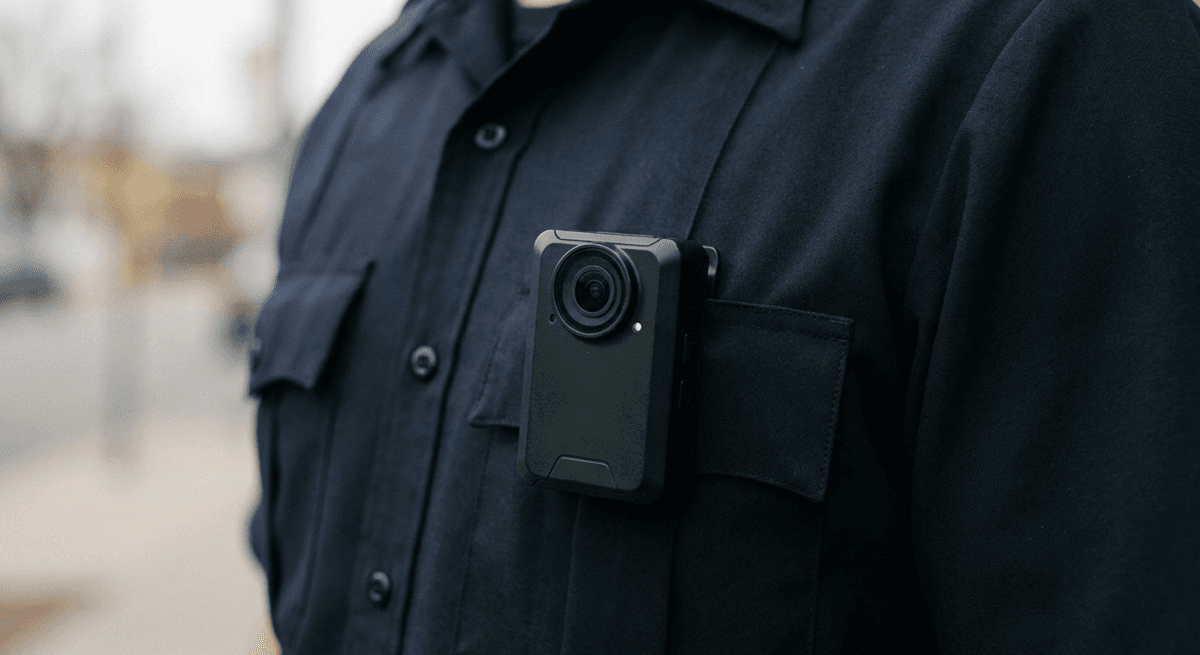
In practice, most large Arizona agencies do operate body camera programs, but they do so under their own written policies, which control when cameras are worn, when they record, and how long footage is kept.
What rules govern recording and officer access to footage?
With no statewide mandate, activation rules are policy questions for each department. Arizona law addresses one narrow related situation, and its limits matter. A.R.S. 38-1116(A) applies only where all three of the following are true: the matter is an administrative investigation rather than a criminal one, the use-of-force incident resulted in a death or serious physical injury to another person, and the officer recorded a video.
Where the section does apply, the administrative investigation is not complete until the officer has had an opportunity to view the recording and provide any further information about the footage the officer believes is relevant, and the officer must first be read a statutory notice that video evidence has limitations and may depict events differently than the officer recalls. Outside those three conditions, for example a criminal investigation, or an administrative investigation into force that caused a lesser injury, the section does not apply at all and officer review is governed by agency policy, which 38-1116(B) expressly preserves.
For people recorded by police rather than recording them, Arizona's victim rights law also matters at the release stage: A.R.S. 13-4434 protects a crime victim's right to privacy and requires redaction of identifying victim information from public records in many circumstances.
Can the public get Arizona bodycam footage, and what does it cost?
Usually yes, through a public records request to the agency that holds the video. A.R.S. 39-121 states Arizona's baseline rule: public records "shall be open to inspection by any person at all times during office hours." Courts and custodians apply recognized exceptions, and agencies commonly redact footage before release to protect privacy, ongoing investigations, and victim information.
Recordings held by the Department of Public Safety run through A.R.S. 41-1734 instead of the general rule alone. That statute reaches DPS recordings only, and it expressly displaces the general public records article for DPS requests, so its consent, request-content, and fee rules do not govern a city or county police department.
Under 41-1734(A), DPS may release a recording if one or more of two conditions is met. The first is consent: everyone shown other than peace officers consents, or information that may identify people shown has been redacted. If a person shown is deceased, a parent, guardian, next of kin, or the estate may consent. The second path does not depend on consent at all. DPS may release a recording it holds when it reasonably determines there is an important public purpose for the release, which the statute says includes a recording involving an arrest for a misdemeanor or felony with a sentence that may result in incarceration, one or more peace officers using physical force, or an allegation of law enforcement misconduct. That second path is the one that matters most for use-of-force and misconduct footage.
Before releasing anything, DPS must review the recording and decide whether redaction or withholding is appropriate, and it may withhold or redact where privacy, confidentiality, or the best interests of the state outweigh release, or where withholding is necessary to protect a victim's rights under the Arizona Constitution. A written request to DPS must contain the date and approximate time of the recording, the specific location where it occurred, and the name of at least one person known to be a subject of the video. A request missing any of those elements is denied, though the requester may submit a later request for the same recording with the required information. The statute also directs DPS to set a fee that may account for the cost of reviewing, copying, and redacting the video and the hourly compensation of a public records employee.
Fees are where requesters get surprised. Reporting by the Arizona Mirror in 2024 put the DPS charge at $46 per hour of video reviewed, which adds up quickly for long incidents, while other agencies have charged far less, with the Phoenix Police Department reported charging a flat per-case fee. Ask the agency for its fee schedule before you request hours of footage.
One group does not pay at all. Under A.R.S. 39-127, a victim of a part I crime under the statewide uniform crime reporting program, the victim's attorney on the victim's behalf, or an immediate family member if the victim is killed or incapacitated, has the right to one copy of the police report and the audio and video recordings from the investigating law enforcement agency or the charging prosecutorial agency at no charge. Subsection (C) extends that same no-charge right to any case involving a domestic violence offense or a sexual offense, whatever its part I classification, and subsection (D) requires agencies to prioritize processing these requests. If you are the victim in the incident you are asking about, say so and cite 39-127 rather than filing an ordinary paid records request.
How long is bodycam footage retained in Arizona?
There is no bodycam-specific statewide retention statute. Each agency keeps footage under its own records retention schedule, so the practical answer depends on which department holds the video and how the recording is classified, for example as evidence in a criminal case versus routine footage. If you may need footage, request it promptly rather than assuming it will be available later.
Disclaimer
This article provides general legal information about Arizona body-worn camera practice and public-records law as verified on 2026-08-24. It does not constitute legal advice and does not create an attorney-client relationship. Readers seeking a specific recording, or advice about a specific incident, should consult a lawyer licensed in Arizona.
Related articles
- Police Bodycam Laws by State: the complete hub
- Is It Illegal to Record Someone in Public?
- Arizona Recording Laws
Last updated: 2026-08-24. Statutes cited reflect their in-force version as of 2026-08-24.
More Arizona Laws
Frequently Asked Questions
Does Arizona require police to wear body cameras?
No. There is no statewide statute requiring Arizona police to wear body cameras. Bills that would have created a mandate, S.B. 1640 in 2023 and S.B. 1710 in 2024, were introduced but never passed. Camera use is governed by each department's own policy.
Is police bodycam footage public record in Arizona?
Generally yes. A.R.S. 39-121 presumes records held by public bodies, including video, are open to inspection, and agencies apply redactions and recognized exceptions. Recordings held by the Department of Public Safety, and only those, are instead released under A.R.S. 41-1734, which by its own terms overrides the general public records article for DPS requests. Footage held by a city or county police department is handled under 39-121, not under the DPS rules.
How much does it cost to get police bodycam footage in Arizona?
It varies by agency. For DPS video, A.R.S. 41-1734 directs the department to set a fee that can reflect the cost of reviewing, copying, and redacting footage; 2024 news reporting put that charge at $46 per hour of video reviewed. Other departments have charged much less, including flat per-case fees. The fee can also be zero: under A.R.S. 39-127, a victim of a part I crime, or the victim of any domestic violence or sexual offense, along with the victim's attorney or an immediate family member if the victim is killed or incapacitated, has the right to one copy of the police report and the audio and video recordings at no charge.
Is there a deadline for police to release bodycam footage in Arizona?
No statute sets a specific deadline. The 21-day release rule sometimes cited for misconduct-complaint footage appeared only in bills that never passed. Requests are handled under the public records law, which requires agencies to respond promptly.
What happens if an Arizona officer fails to turn on a body camera?
No Arizona statute imposes a penalty, because the proposed statewide activation rules never became law. Consequences, if any, come from the officer's department under its own bodycam policy, and a missing recording can still matter as an evidentiary issue in court.
Whose consent does DPS need before releasing bodycam video?
Not always anyone's. A.R.S. 41-1734(A) gives the Department of Public Safety two independent paths. Under the first, DPS may release a recording if all people shown other than peace officers consent, or once identifying information is redacted; if someone shown is deceased, consent can come from a parent, guardian, next of kin, or the estate. Under the second, DPS may release a recording without that consent when it reasonably determines there is an important public purpose, which the statute says includes recordings involving an arrest for a misdemeanor or felony that may result in incarceration, peace officers using physical force, or an allegation of law enforcement misconduct. These rules bind DPS only, not municipal or county police departments.
Updates
Corrected the Department of Public Safety release rules to include the statute's independent public-purpose pathway for arrest, use-of-force and misconduct footage, narrowed the A.R.S. 38-1116 officer-review right to the administrative death or serious-injury investigations it actually covers, added the A.R.S. 39-127 right of crime victims to receive bodycam recordings at no charge, and clarified that the DPS consent, request and fee rules do not apply to city or county police departments.
Correction: this article previously said Arizona enacted a statewide body camera mandate (S.B. 1640/S.B. 1710, cited as A.R.S. 38-1171 to 38-1172). Neither bill passed, and those statute sections are the first-responder death benefit, not camera law. The article now reflects that Arizona has no statewide bodycam mandate; footage access runs through A.R.S. 39-121 and, for DPS video, A.R.S. 41-1734.
Independently fact-checked against the cited primary sources
Independently fact-checked against the cited primary sources; governing law re-checked for recent changes
Governing law re-checked for recent changes
Reviewed and approved by an editor
The Law Behind This Article
This article rests on the statutory provisions below, held in our own legal record and retrieved from the official source. Tap a section to read the operative text.
Arizona Revised Statutes, Title 39 (Public Records, Printing and Notices), Chapter 1 (PUBLIC RECORDS), Article 2 (Searches and Copies)
§ 39-121Inspection of public recordsIn forcecited in 7 of our articles
Public records and other matters in the custody of any officer shall be open to inspection by any person at all times during office hours.
Official text (excerpt) · last checked 2026-09-03 · Read the full text in our law library · Verify at azleg.gov
Cited in 89 court opinions in our collectionLatest citing opinion in our collection: 2026
In the courts (editorial summary, independently checked):Arizona courts presume records covered by section 39-121 open, while allowing a custodian to withhold when confidentiality, privacy, or the state's best interests outweigh disclosure, subject to judicial review. Carlson v. Pima County (1984) stated that balancing; Arizona Board of Regents v. Phoenix Newspapers, Inc. (1991) applied it.
Opinions citing this section in our collection:
- Carlson v. Pima County (Arizona Supreme Court 1984, 141 Ariz. 487)✓A jail inmate sued for defamation after a reporter obtained a sheriff's offense report naming him; the court held the report was a public record open under 39-121, and that records kept under 39-121.01(B) are presumed open unless privacy or state interests outweigh disclosure.
- Arizona Board of Regents v. Phoenix Newspapers, Inc. (Arizona Supreme Court 1991, 167 Ariz. 254)✓Newspapers sought the names and resumes of everyone considered for the ASU presidency; applying 39-121, the court held the Board could withhold the 256 prospects on confidentiality and state interest grounds but had to release the 17 interviewed candidates.
- Salt River Pima-Maricopa Indian Community v. Rogers (Arizona Supreme Court 1991, 168 Ariz. 531)✓A newspaper sought a list of payments to individual tribal allottees for a freeway right of way that sat in the state treasurer's office; the court held mere possession is not enough and that the list was not a public record or other matter under 39-121.
Identified automatically from the court opinions citing this section — not a ranking of which case controls.
Also relied on in: Arizona Laws on Recording Police: Your Rights After HB 2319, Arizona Public Records Law: Requests, Fees, and Special Actions, Are Autopsy Reports Public in Arizona? (2026 Guide)
§ 39-127Free copies of police reports, audio recordings, video recordings and transcripts for crime victims; definitionsIn forcecited in 3 of our articles
A. A victim of a criminal offense that is a part I crime under the statewide uniform crime reporting program, the victim's attorney on behalf of the victim or an immediate family member of the victim if the victim is killed or incapacitated has the right to receive one copy of the police report, audio recordings and video recordings from the investigating law enforcement agency or charging prosecutorial agency at no charge and, on request of the victim, the court or the clerk of the court shall provide, at no charge, the minute entry or portion of the record of any proceeding in the case that arises out of the offense committed against the victim and that is reasonably necessary to pursue a claimed victim's right. For the purposes of this subsection, "criminal offense", "immediate family" and "victim" have the same meanings prescribed in section 13-4401. B.
Official text (excerpt) · last checked 2026-08-04 · Read the full text in our law library · Verify at azleg.gov
Arizona Revised Statutes, Title 41 (State Government), Chapter 12 (PUBLIC SAFETY), Article 2 (Department of Public Safety)
§ 41-1734Video recordings; release; consent; redactions; request requirements; feeIn forcecited in 4 of our articles
A. The department may release to the public a copy of a video recording only if one or more of the following apply: 1. All persons other than peace officers shown in the video recording consent to the release, or any information that may identify persons shown in the video has been redacted. If a person shown in the video recording is deceased, the person's parent, guardian, next of kin or estate may provide the consent. 2. The department is the custodian of the video recording and reasonably determines that there is an important public purpose for releasing the video recording, including a situation in which the video recording involves any of the following: (a) A person being arrested for a misdemeanor or felony with a sentence that may result in incarceration. (b) One or more peace officers using physical force. (c) An allegation of law enforcement misconduct. B. Before the department releases to the public a copy of a video recording, the department shall review the video recording to determine whether redacting or withholding the video recording is appropriate. The department: 1.
Official text (excerpt) · last checked 2026-08-04 · Read the full text in our law library · Verify at azleg.gov
Also relied on in: Arizona Recording Laws (2026): One-Party Consent Rules, How to Get a Police Report in Arizona (2026): Crash & Incident Reports
Arizona Revised Statutes, Title 38 (Public Officers and Employees), Chapter 8 (PUBLIC SAFETY OFFICERS), Article 1 (Law Enforcement Officers)
§ 38-1116Use of force incident investigation; right to view recorded video; statementIn forcecited in 2 of our articles
A. In an administrative investigation of a law enforcement officer's use of force incident that resulted in a death or serious physical injury to another person, if the law enforcement officer recorded a video, both of the following apply: 1. The administrative investigation is not complete until after the officer has an opportunity to view the recorded video and provide any further information regarding the footage that the officer believes is relevant. 2. The law enforcement officer must be read the following notice before viewing the recorded video: Video evidence has limitations and may depict events differently than you recall. The video evidence may assist your memory and may assist in explaining your state of mind at the time of the incident. Viewing video evidence may or may not provide additional clarity to what you remember. You should not feel in any way compelled or obligated to explain any difference in what you remember and acted on from what viewing the additional evidence provides you. B. This section does not prohibit a law enforcement agency from adopting a policy or rule that relates to a law enforcement officer's review of that officer's recorded video.
Official text (excerpt) · last checked 2026-08-04 · Read the full text in our law library · Verify at azleg.gov
Arizona Revised Statutes, Title 13 (Criminal Code), Chapter 40 (CRIME VICTIMS' RIGHTS)
§ 13-4434Victim's right to privacy; redaction of victim's name; exceptions; definitionsIn forcecited in 2 of our articles
A. The victim has the right at any court proceeding not to testify regarding any identifying or locating information unless the victim consents or the court orders disclosure on finding that a compelling need for the information exists. A court proceeding on the motion shall be in camera. B. A victim's identifying and locating information that is obtained, compiled or reported by a law enforcement agency or prosecution agency shall be redacted by the originating agency and prosecution agencies from records pertaining to the criminal case involving the victim, including discovery disclosed to the defendant, the defendant's attorney or any of the attorney's staff. C. Subsection B of this section does not apply to: 1. The victim's name except, if the victim is a minor, the victim's name may be redacted from public records pertaining to the crime if the countervailing interests of confidentiality, privacy, the rights of the minor or the best interests of this state outweigh the public interest in disclosure. 2. Any records that are transmitted between law enforcement and prosecution agencies or a court. 3.
Official text (excerpt) · last checked 2026-08-04 · Read the full text in our law library · Verify at azleg.gov
Cited in 12 court opinions in our collectionLatest citing opinion in our collection: 2025
Opinions citing this section in our collection:
- State Ex Rel. Montgomery v. Hon. chavez/robert Lee Gill (Arizona Supreme Court 2014, 234 Ariz. 255)“…im’s medical records). ¶12 The related statute, A.R.S. § 13-4434, addresses a victim’s right to privacy…”
- State v. Hardwick (Court of Appeals of Arizona 1995, 183 Ariz. 649)“…interest of protecting their privacy. See A.R.S. § 13-4434. 3 . We note many…”
- State v. Romero (Court of Appeals of Arizona 1993, 178 Ariz. 45)“…interests of protecting their privacy. See Ariz.Rev.Stat.Ann. § 13-4434. 3 . One United St…”
Identified automatically from the court opinions citing this section — not a ranking of which case controls.
Arizona Revised Statutes, Title 38 (Public Officers and Employees), Chapter 8 (PUBLIC SAFETY OFFICERS), Article 3 (Civilian Review Boards)
§ 38-1171DefinitionsIn forcecited in 2 of our articles
(Caution: 1998 Prop. 105 applies; Rpld. 1/1/33) In this article, unless the context otherwise requires: 1. "First responder": (a) Has the same meaning prescribed in section 13-1204. (b) Includes a member of the Arizona national guard who is on state active duty in this state and a correctional officer who is employed by the state department of corrections. 2. "Killed in the line of duty" means killed as the result of another person's criminal act while in the performance of the first responder's official duties.
Official text (excerpt) · last checked 2026-08-04 · Read the full text in our law library · Verify at azleg.gov
§ 38-1172State death benefitIn forcecited in 2 of our articles
(Caution: 1998 Prop. 105 applies; Rpld. 1/1/33) In addition to any other death benefit, beginning from and after June 30, 2025, if a first responder is killed in the line of duty, on written notice to the state treasurer from the first responder's employer this state shall pay a state death benefit of $250,000 to the first responder's surviving spouse. If the first responder does not have a surviving spouse but has children, this state shall pay a state death benefit of $250,000, divided equally among the first responder's children. The state shall pay the death benefit within thirty days after receiving the written notice from the first responder's employer.
Official text (excerpt) · last checked 2026-08-04 · Read the full text in our law library · Verify at azleg.gov
Search our full record of US law — 2.1 million sections, every state + federal →
Sources and References
- A.R.S. § 39-121, Inspection of public records(azleg.gov).gov
- A.R.S. § 41-1734, Video recordings; release; consent; redactions; request requirements; fee (Department of Public Safety)(azleg.gov).gov
- A.R.S. § 38-1116, Use of force incident investigation; right to view recorded video; statement(azleg.gov).gov
- A.R.S. § 13-4434, Victim's right to privacy; redaction; exceptions(azleg.gov).gov
- S.B. 1640 (2023), Arizona 56th Legislature, 1st Regular Session: proposed peace-officer body camera mandate (introduced version; the bill did NOT pass)(azleg.gov).gov
- S.B. 1710 (2024), Arizona 56th Legislature, 2nd Regular Session: reintroduced body camera mandate (introduced version; the bill did NOT pass)(azleg.gov).gov
- Arizona Ombudsman-Citizens’ Aide, "Arizona Public Records Law" (A.R.S. § 39-121 overview)(azoca.gov).gov
- Reporters Committee for Freedom of the Press, Open Government Guide: Arizona(rcfp.org)
- Arizona Mirror, "Fees for police body camera footage lead to ‘pretty steep’ charges thanks to new law" (Sept. 3, 2024)(azmirror.com)
- Phoenix New Times, "Requesting police body-cam footage in Arizona? It could cost thousands"(phoenixnewtimes.com)
- A.R.S. § 39-127, Free copies of police reports, audio recordings, video recordings and transcripts for crime victims; definitions(azleg.gov)