Wyoming
Wyoming Drone Laws (2026): Trespass, Infrastructure & Hunting
Independently fact-checked against primary sources (last audited August 17, 2026). · Reviewed by the RecordingLaw editorial team. · Law checked current as of August 17, 2026. · 5 primary sources cited on this page. How we verify our legal content
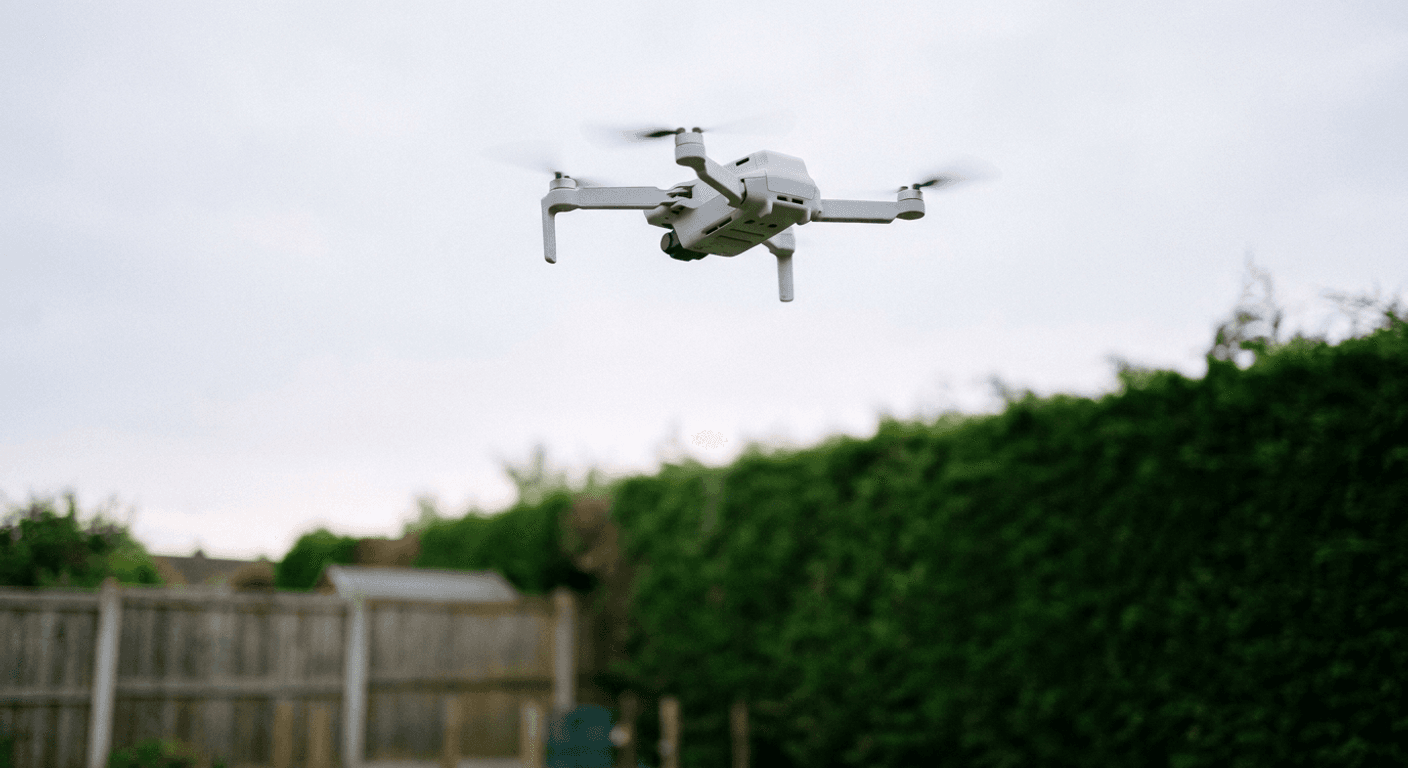
Wyoming overrode a governor's veto in 2025 to criminalize drone flights over critical infrastructure and to add a low-altitude trespass penalty that, because of a 55-pound weight cutoff, reaches almost no consumer drone, on top of an older ban on drones over jails and prisons and a long-standing ban on using drones to hunt.
This guide is part of our Drone Laws by State series.
Information last verified on 2026-07-09. This article has not yet been reviewed by a licensed lawyer.
Jurisdiction scope: This article addresses Wyoming state law governing drones: the 2025 critical-infrastructure statute at W.S. 19-13-503, the amended low-altitude interference penalty at W.S. 10-4-303, the correctional-facility drone offense at W.S. 6-5-214, the hunting restriction at W.S. 23-3-306, and the federal shoot-down prohibition. It does not address FAA registration, Remote ID, or Part 107 licensing, which apply the same way nationwide; see the Drone Laws by State hub for that baseline and how other states compare.
The FAA sets the airspace rules; Wyoming's 2025 law targets specific ground-level harms
The FAA is the exclusive regulator of where a drone may fly nationally, through registration, Remote Pilot Certification under 14 CFR Part 107 for most non-hobby flights, and Remote ID broadcast requirements. Wyoming had almost no drone-specific statute layered on top of that federal baseline until 2025, when a wave of unexplained drone sightings over energy infrastructure pushed the legislature to act twice in a single bill: once to protect critical infrastructure directly, and once to add real teeth to an existing aviation-trespass statute that already covered unmanned aircraft.

Wyoming's new critical-infrastructure drone law
Senate File 132, enacted as Wyoming Senate Enrolled Act No. 58 for the 2025 general session, created W.S. 19-13-503. The statute bars operating a drone over or near "critical infrastructure" or a defined "critical system" to intentionally photograph it, intentionally loiter over or near it, or further any other criminal offense, and separately bars flying a drone carrying an explosive device near one. "Critical system" covers petroleum refineries, electric generation facilities and substations, transmission lines of 69,000 volts or more, water treatment facilities, natural gas infrastructure, railroads, courts, jails, military installations, hospitals with air ambulance service, and mining or chemical manufacturing sites. A first violation is a misdemeanor punishable by up to six months in jail and a $2,500 fine; a second or subsequent violation is a felony punishable by up to two years in prison and a $5,000 fine. The law exempts FAA-authorized operators, government entities using their own drones, the facility owner or the owner's agent, emergency responders, and private landowners flying over their own property.
Law enforcement and the National Guard can disable a violating drone
Unusually among state drone statutes, W.S. 19-13-503(e) authorizes a peace officer to take or authorize "reasonable actions," expressly including disabling, damaging, or removing a drone, to stop a violation of the critical-infrastructure statute. Subsection (f) lets the governor order the Wyoming National Guard to assist, and subsection (g) requires the attorney general to represent guard members and officers in any resulting litigation. Governor Mark Gordon vetoed the bill in March 2025, warning that federal law preempts this kind of state-authorized drone interdiction. Both chambers voted to override him: the Senate 23-8 on March 4, 2025, and the House 47-13. The law took effect immediately. The dispute has not been tested in court as of this writing, and it illustrates a live tension between a state's interest in protecting its infrastructure and the federal government's exclusive authority over the airspace.
Flying a drone over a Wyoming jail or prison is a separate, older crime
Jails appear on the 2025 critical-system list, but Wyoming already had a drone statute aimed squarely at correctional facilities, and its penalties are heavier. W.S. 6-5-214 makes it a crime to intentionally trespass over or in a penal institution, or on its grounds, with an unmanned aircraft system in order to photograph, surveil, broadcast, or otherwise record the facility, or to convey contraband into it. Either of those is a misdemeanor punishable by up to one year in jail and a $2,000 fine, twice the jail exposure of a first offense under the 2025 critical-infrastructure statute.
Using a drone to deliver or attempt to deliver a deadly weapon into a penal institution is a felony punishable by up to ten years in prison and a $10,000 fine.
This statute defines "unmanned aircraft system" on its own terms, as any unmanned powered aircraft that carries no human operator, can be autonomous or remotely piloted, and can be expendable or recoverable. There is no weight floor, so unlike the low-altitude penalty described below, it plainly reaches an ordinary consumer drone. It excludes federal, state, law enforcement, and emergency uses, and an operator relying on one of those exclusions must give the facility reasonable advance notice of the flight.
A new penalty for low-altitude drone flights over private land
The same 2025 act also amended W.S. 10-4-303, Wyoming's long-standing statute on low or dangerous aircraft flight. Subsection (a) has for years made it unlawful to fly at such a low altitude that the flight interferes with a landowner's existing use of their land or water, or to fly in a manner imminently dangerous to people or property lawfully present. The 2025 amendment added subsection (d): a person who operates or uses an unmanned aircraft in a manner not lawful under subsection (a) is guilty of a misdemeanor punishable by up to six months in jail and a $750 fine.
The weight cutoff buried in the definitions matters more here than anything else in the section. Title 10's definitions apply across the whole act, which W.S. 10-1-101(a)(xii) defines as W.S. 10-1-101 through 10-7-105, a range that contains 10-4-303. And W.S. 10-1-101(a)(x) defines "unmanned aircraft" as that term is defined in 14 CFR 1.1, "but excludes 'small unmanned aircraft' as defined in 14 C.F.R. 1.1." A small unmanned aircraft, under 14 CFR 1.1, is one weighing less than 55 pounds on takeoff, including everything on board or attached.
So the 2025 misdemeanor reaches only drones weighing 55 pounds or more, a category that takes in heavy commercial and agricultural airframes but essentially no consumer or hobby drone. Subsection (a) still speaks to "aircraft" generally, a term Wyoming defines without a weight limit, so the flight itself can still be unlawful under that subsection. What the 2025 amendment did not do is attach the new criminal penalty to the ordinary sub-55-pound drone hovering over a ranch.
This is also a different standard from the bright-line 200-foot altitude threshold a separate 2022 bill, HB0128, would have created; that bill was not considered for introduction and never became law, even though some sources online describe a 200-foot rule as if it were enacted.
Mystery drones over the Jim Bridger Power Plant drove the 2025 law
The 2025 legislation did not emerge in a vacuum. Beginning in late 2024, the Sweetwater County Sheriff's Office started fielding reports of coordinated, lighted, drone-like objects flying in formation over the Jim Bridger Power Plant and the surrounding Red Desert at night, sightings that continued into 2025 and 2026 without a confirmed explanation. Sheriff John Grossnickle's office worked with state and federal partners but told local media that no agency had provided answers about the objects' origin. At least six other Wyoming county sheriffs reported similar unexplained drone activity near sensitive sites in the same period. State Senator Stacy Jones, who represents Sweetwater County, sponsored Senate File 132 after her local sheriff's office raised the sightings with her, giving the statute a direct origin story in an unresolved local incident rather than a generic policy trend.
Can you use a drone to hunt in Wyoming?
No. W.S. 23-3-306 bars using an aircraft, other than to take predatory animals, to harass, pursue, hunt, shoot, or kill Wyoming wildlife, and separately bars using an aircraft to aid in taking wildlife by spotting, locating, or communicating with a hunter on the ground. According to the Wyoming Game and Fish Department, a 2023 law, SF0033, updated the statute's aircraft definition, effective July 1, 2023, to state expressly that "aircraft" includes "any machine or device capable of atmospheric flight including but not limited to an airplane, helicopter, glider, dirigible or unmanned aerial vehicle," closing any ambiguity about whether the older statute reached drones. A violation is classified as a high misdemeanor under W.S. 23-6-202(a)(ii), which can carry license suspension in addition to standard criminal penalties. The statute exempts government agencies, employees, and contractors performing lawful duties.
Shooting down a drone is a federal crime, not a Wyoming right
Even with Wyoming's new critical-infrastructure and low-altitude statutes, no state law gives an ordinary landowner the right to shoot down or disable a drone over their own property; that authority under W.S. 19-13-503(e) belongs only to peace officers responding to a critical-infrastructure violation. 18 U.S.C. section 32, the Aircraft Sabotage Act, makes it a federal felony, punishable by up to twenty years in prison, to willfully damage, destroy, or disable an aircraft, and the FAA has classified drones as aircraft within the National Airspace System since 2012. That exposure applies even over the shooter's own ranch or property, because the FAA, not the landowner, controls the airspace, regardless of how low the drone was flying or whether it violated Wyoming's own statutes.
Disclaimer
This article provides general legal information about Wyoming law governing drones, as verified on 2026-07-09. It does not constitute legal advice and does not create an attorney-client relationship. Readers should consult a lawyer licensed in Wyoming for advice about a specific incident or dispute.
Related articles
Last updated: 2026-07-09. Statutes cited reflect their in-force version as of 2026-07-09.
More Wyoming Laws
- Wyoming Data Privacy Laws
- Wyoming GPS Tracking Laws
- Wyoming Police Bodycam Laws
- Wyoming Recording Laws
- Wyoming Smart Glasses Recording Laws
Frequently Asked Questions
Is it illegal to fly a drone over private property in Wyoming?
It can be, but the criminal penalty is narrower than it looks. W.S. 10-4-303(d), added in 2025, makes it a misdemeanor, up to six months in jail and a $750 fine, to fly at such a low altitude that it interferes with the landowner's existing use of the property. That penalty applies only to an 'unmanned aircraft' as Title 10 defines the term, which excludes 'small unmanned aircraft' weighing under 55 pounds, so it does not reach a typical consumer drone.
Does Wyoming have a 200-foot drone trespass law?
No. A 2022 bill that would have created a bright-line 200-foot altitude threshold, HB0128, was not considered for introduction and never became law, despite some online sources describing it as enacted. No confirmed successor bill has passed since.
What is Wyoming's critical-infrastructure drone law?
W.S. 19-13-503, created in 2025, makes it a misdemeanor, and a felony on repeat, to fly a drone over critical infrastructure like a power plant, refinery, or jail to photograph it, loiter over it, or carry an explosive near it.
Is it illegal to fly a drone over a jail or prison in Wyoming?
Yes. W.S. 6-5-214 makes it a misdemeanor, up to one year in jail and a $2,000 fine, to trespass over a penal institution with a drone to photograph or surveil it or to convey contraband in, and a felony punishable by up to ten years and a $10,000 fine to deliver a deadly weapon that way. Unlike the low-altitude penalty, this statute has no weight cutoff, so it applies to consumer drones.
Can Wyoming police shoot down a drone?
Yes, in a narrow circumstance. W.S. 19-13-503(e) lets a peace officer take reasonable action, including disabling or damaging a drone, to stop a violation of the critical-infrastructure statute, and the governor may deploy the National Guard to assist under subsection (f).
Can I shoot down a drone over my own property in Wyoming?
No Wyoming law gives an ordinary landowner that authority, and doing so risks a federal felony charge under 18 U.S.C. section 32 for damaging an aircraft, since the FAA controls the airspace regardless of who owns the land below.
Is it illegal to use a drone to hunt in Wyoming?
Yes. W.S. 23-3-306 bars using a drone, defined as an aircraft since a 2023 update, to locate, herd, or otherwise aid in taking wildlife, other than predatory animals. A violation is a high misdemeanor.
Why did Wyoming pass its 2025 drone law?
Unexplained, coordinated drone sightings over the Jim Bridger Power Plant and other sensitive sites in Sweetwater County and elsewhere, beginning in late 2024, prompted Senator Stacy Jones to sponsor Senate File 132 after her local sheriff's office raised the issue.
Did the governor support Wyoming's 2025 drone law?
No. Governor Mark Gordon vetoed Senate File 132 in March 2025, citing federal preemption concerns, but both chambers overrode the veto, the Senate by 23-8 on March 4, 2025 and the House by 47-13, and the law took effect immediately.
Updates
Corrected the low-altitude drone penalty at W.S. 10-4-303(d), which reaches only drones weighing 55 pounds or more and so does not cover typical consumer drones, fixed the date of Governor Gordon's veto to March 2025 and added the House override vote alongside the Senate's, and added Wyoming's separate correctional-facility drone offense at W.S. 6-5-214.
Independently fact-checked against the cited primary sources; governing law re-checked for recent changes
Governing law re-checked for recent changes
Reviewed and approved by an editor
The Law Behind This Article
This article rests on the statutory provisions below, held in our own legal record and retrieved from the official source. Tap a section to read the operative text.
Wyoming Statutes, Title 19 - Defense Forces and Affairs - Chapter 13: Wyoming Department of Homeland Security - Article 5: Protection of Critical Infrastructure
§ 19-13-503Unlawful operation of unmanned aircraft systems over critical infrastructure and systems prohibited; permitted actions by law enforcement.In force
(a) Except as provided in subsection (c) of this section, no person shall operate or use an unmanned aircraft system over or near critical infrastructure or a critical system: (i) To intentionally photograph critical infrastructure or a critical system; (ii) To intentionally loiter over or near critical infrastructure or a critical system; (iii) In furtherance of any other criminal offense. (b) Unless otherwise authorized by law, no person shall operate or use an unmanned aircraft system or model aircraft that is carrying, contains or is an explosive device over or near critical infrastructure or a critical system. This subsection shall not apply to law enforcement and the military while acting in the course of their lawful duties.
Official text (excerpt) · last checked 2026-08-31 · Read the full text in our law library · Verify at wyoleg.gov
Wyoming Statutes, Title 10 - Aeronautics - Chapter 4: Uniform State Law for Aeronautics - Article 3: Miscellaneous
§ 10-4-303Low or dangerous flight; landing on land or water of another; penalties and remedies.In forcecited in 2 of our articles
(a) Flight of aircraft, including unmanned aircraft or vertical takeoff and landing aircraft, over the lands and waters of this state is lawful unless it is: (i) At such a low altitude as to interfere with the existing use to which the land or water, or the space over the land or water, is put by the owner; (ii) Conducted as to be imminently dangerous to persons or property lawfully on the land or water; or (iii) In violation of the air commerce regulations promulgated by the department of transportation of the United States. (b) The landing of an aircraft, including an unmanned aircraft or vertical takeoff and landing aircraft, on the lands or waters of another, without his consent, is unlawful, except in the case of a forced landing. For damages caused by a forced landing, however, the owner, operator or lessee of the aircraft or the airman shall be liable for actual damage caused by the forced landing. (c) Except as provided in subsection (a) of this section, nothing in this chapter shall be construed to prevent an operator or pilot from operating an aircraft, including an unmanned aircraft or vertical takeoff and landing aircraft, over his own property.
Official text (excerpt) · last checked 2026-07-30 · Read the full text in our law library · Verify at wyoleg.gov
Cited in 1 court opinions in our collectionLatest citing opinion in our collection: 1985
Opinions citing this section in our collection:
- Cheyenne Airport Board v. Rogers (Wyoming Supreme Court 1985, 707 P.2d 717)“…surface beneath subject to the right of flight described in W.S. 10-4-303 * ⅜ *.” Section 10-4-303, W.S.19…”
Identified automatically from the court opinions citing this section — not a ranking of which case controls.
Also relied on in: Wyoming Surveillance Camera Laws (2026 Guide)
Wyoming Statutes, Title 23 - Game and Fish - Chapter 3: General Regulatory Provisions - Article 3: Wildlife Provisions
§ 23-3-306Use of aircraft, automobiles, motorized and snow vehicles and artificial light for hunting or fishing prohibited; exceptions; penalties.In force
(a) No person shall harass, pursue, hunt, shoot, or kill any Wyoming wildlife that requires a license or permit to take, is protected under W.S. 23-1-101(a)(ix) and (x) or is classified as threatened or endangered by federal wildlife regulations, with, from, or by use of any aircraft, automotive vehicle, trailer, motor-propelled wheeled vehicle, or vehicle designed for travel over snow. No person shall use any aircraft, to aid in the taking of any Wyoming wildlife, except predatory animals, whether by spotting or locating the wildlife, communicating with any person attempting to take the wildlife, or by providing other aid to any person taking the wildlife. Nothing in this subsection shall apply to the use of any aircraft by governmental agencies, their employees, contractors or designees performing any lawful duties. The commission may exempt handicapped hunters from any provision of this subsection. For purposes of this section, "aircraft" means any machine or device capable of atmospheric flight including but not limited to an airplane, helicopter, glider, dirigible or unmanned aerial vehicle.
Official text (excerpt) · last checked 2026-07-30 · Read the full text in our law library · Verify at wyoleg.gov
United States Code Title 18
§ 32Destruction of aircraft or aircraft facilitiesIn forcecited in 51 of our articles
Whoever willfully— sets fire to, damages, destroys, disables, or wrecks any aircraft in the special aircraft jurisdiction of the United States or any civil aircraft used, operated, or employed in interstate, overseas, or foreign air commerce; places or causes to be placed a destructive device or substance in, upon, or in proximity to, or otherwise makes or causes to be made unworkable or unusable or hazardous to work or use, any such aircraft, or any part or other materials used or intended to be used in connection with the operation of such aircraft, if such placing or causing to be placed or such making or causing to be made is likely to endanger the safety of any such aircraft; sets fire to, damages, destroys, or disables any air navigation facility, or interferes by force or violence with the operation of such facility, if such fire, damaging, destroying, disabling, or interfering is likely to endanger the safety of any such aircraft in flight; with the intent to damage, destroy, or disable any such aircraft, sets fire to, damages, destroys, or disables or places a destructive device or substance in, upon, or in proximity to, any appliance or structure, ramp, landing area,…
Official text (excerpt) · last checked 2026-07-28 · Read the full text in our law library · Verify at uscode.house.gov
Cited in 168 court opinions in our collectionLatest citing opinion in our collection: 2026
In the courts (editorial summary, independently checked):United States v. Yousef (2003) applied 18 U.S.C. 32 to an overseas airline bombing plot, holding Section 32(a) reaches conduct abroad because US-flag aircraft in flight are within the special aircraft jurisdiction, and that a defendant brought here involuntarily is still found in the United States under Section 32(b).
Opinions citing this section in our collection:
- Perez v. United States (Supreme Court of the United States 1971, 402 U.S. 146)“…commerce, as, for example, the destruction of an aircraft ( 18 U. S. C. § 32 ), or persons or things in commerce, as…”
- Stanford v. Kentucky (Supreme Court of the United States 1989, 492 U.S. 361)“…r by persons subject to Uniform Code of Military Justice); 18 U. S. C. §§ 32 , 33, and 34 (1982 ed. and Supp. V) (de…”
- United States v. Yousef (Court of Appeals for the Second Circuit 2003, 327 F.3d 56)✓Yousef bombed a Philippine airliner and plotted to bomb twelve US flag airliners on Asian routes; the court held Section 32(a) reaches attacks on US flag aircraft worldwide, and that Yousef, brought here involuntarily, was found in the United States under Section 32(b).
Identified automatically from the court opinions citing this section — not a ranking of which case controls.
Also relied on in: Indiana Drone Laws (2026): Police Warrants, Voyeurism, Hunting, Iowa Drone Laws: Homestead, Farmstead & Warrant Rules, Kansas Drone Laws: Stalking Act & Privacy Rules Explained
Wyoming Statutes, Title 10 - Aeronautics - Chapter 1: In General
§ 10-1-101Definitions.In force
(a) As used in this act: (i) "Aircraft" means any contrivance used, or designed for navigation or flight in the air, except a parachute or other contrivance designed for this navigation but used primarily as safety equipment; (ii) "Airman" means any individual, including the individual in command and any pilot, mechanic or member of the crew, who engages in the navigation of aircraft while under way, and any individual who is in charge of the inspection, overhauling or repairing of aircraft; (iii) Repealed by Laws 2005, ch. 207, § 2. (iv) "Commission" means the Wyoming aeronautics commission; (v) "Department" means the department of transportation; (vi) "Aeronautics commission" means the aeronautics commission created by W.S. 10-3-101; (vii) "Division" means the division of aeronautics within the department of transportation; (viii) "Person" means individuals, associations of individuals, firms, partnerships, companies, corporations and other organizations; (ix) "Operator" means a person operating or flying an unmanned aircraft; (x) "Unmanned aircraft" means as defined in 14 C.F.R. 1.1, but excludes "small unmanned aircraft" as defined in 14 C.F.R.
Official text (excerpt) · last checked 2026-07-30 · Read the full text in our law library · Verify at wyoleg.gov
Wyoming Statutes, Title 23 - Game and Fish - Chapter 6: Enforcement; Penalties - Article 2: Penalties
§ 23-6-202Fines and sentences.In force
(a) Any person who has been convicted of or pleaded guilty to any offense under this act may be fined, sentenced to the county jail, or both, as follows: (i) Repealed By Laws 2007, Ch. 62, § 2. (ii) Up to ten thousand dollars ($10,000.00) to which may be added imprisonment up to one (1) year when the offense is a high misdemeanor; (iii) Repealed By Laws 2007, Ch. 62, § 2. (iv) Repealed By Laws 2007, Ch. 62, § 2. (v) Up to one thousand dollars ($1,000.00) to which may be added imprisonment up to six (6) months when the offense is a low misdemeanor; (vi) Repealed By Laws 2007, Ch. 62, § 2. (vii) Repealed By Laws 2007, Ch. 62, § 2. (viii) Repealed By Laws 2007, Ch. 62, § 2. (ix) Repealed By Laws 2007, Ch. 62, § 2. (x) Repealed By Laws 2007, Ch. 62, § 2. (xi) Repealed By Laws 2007, Ch. 62, § 2.
Official text (excerpt) · last checked 2026-07-30 · Read the full text in our law library · Verify at wyoleg.gov
Cited in 1 court opinions in our collectionLatest citing opinion in our collection: 2023
Opinions citing this section in our collection:
- Iron Bar Holdings LLC v. Cape (District Court, D. Wyoming 2023)“…es a low misdemeanor punishable as provided in W.S. 23-6-202(a)(v) [up to $1,000 fine and six…”
Identified automatically from the court opinions citing this section — not a ranking of which case controls.
Wyoming Statutes, Title 6 - Crimes and Offenses - Chapter 5: Offenses Against Public Administration - Article 2: Hindering Government Operations
§ 6-5-214Unmanned aircraft systems and correctional institutions; definitions; penalties.In forcecited in 2 of our articles
(a) As used in this section: (i) "Contraband" means as defined in W.S. 6-5-213(c)(i); (ii) "Penal institution or correctional facility" means as defined in W.S. 6-5-213(c)(ii); (iii) "Unmanned aircraft system": (A) Means an unmanned, powered aircraft that: (I) Does not carry a human operator; (II) Can be autonomous or remotely piloted or operated; and (III) Can be expendable or recoverable. (B) Does not include: (I) A satellite orbiting the earth; (II) An unmanned aircraft system used by the United States Government or a person who is acting pursuant to a contract with the United States Government; (III) An unmanned aircraft system used by the state for purposes of state business; (IV) An unmanned aircraft system used by a law enforcement agency, emergency medical service agency, hazardous materials response team, disaster management agency, or other emergency management agency for the purpose of incident command, area reconnaissance, personnel and equipment deployment monitoring, training, or a related purpose.
Official text (excerpt) · last checked 2026-07-30 · Read the full text in our law library · Verify at wyoleg.gov
Code of Federal Regulations Title 14
§ 1.1General definitions.In force
As used in this chapter, unless the context requires otherwise: Administrator means the Federal Aviation Administrator or any person to whom he has delegated his authority in the matter concerned. Aerodynamic coefficients means non-dimensional coefficients for aerodynamic forces and moments. Air carrier means a person who undertakes directly by lease, or other arrangement, to engage in air transportation. Air commerce means interstate, overseas, or foreign air commerce or the transportation of mail by aircraft or any operation or navigation of aircraft within the limits of any Federal airway or any operation or navigation of aircraft which directly affects, or which may endanger safety in, interstate, overseas, or foreign air commerce. Aircraft means a device that is used or intended to be used for flight in the air. Aircraft engine means an engine that is used or intended to be used for propelling aircraft. It includes turbosuperchargers, appurtenances, and accessories necessary for its functioning, but does not include propellers.
Official text (excerpt) · last checked 2026-07-28 · Read the full text in our law library · Verify at ecfr.gov
Cited in 129 court opinions in our collectionLatest citing opinion in our collection: 2025
Opinions citing this section in our collection:
- Federal Aviation Administration and United States of America v. M. Marshall Landy and International Aircraft Leasing, Inc. (Court of Appeals for the Second Circuit 1983, 705 F.2d 624)“…siness or is, in itself, a major enterprise for profit." 14 C.F.R. Sec. 1.1 (defining "commercial operator"). For…”
- Commercial Insurance Company of Newark, New Jersey v. Hector Gonzalez (Court of Appeals for the First Circuit 1975, 512 F.2d 1307)“…hed in the American Air Almanac, converted to local time.” 14 C.F.R. § 1.1 , Definitions. It was…”
- Dyer v. United States (Court of Appeals for the Ninth Circuit 1987, 832 F.2d 1062)“…e to its use in the definition of “traffic pattern.” See 14 C.F.R. § 1.1 (“ ‘[t]raffic pat *1066 tern’ means th…”
Identified automatically from the court opinions citing this section — not a ranking of which case controls.
Search our full record of US law — 2.1 million sections, every state + federal →
Sources and References
- Wyoming Senate Enrolled Act No. 58 (Senate File 132, 2025 General Session), creating W.S. 19-13-503 and amending W.S. 10-4-303 and 19-9-207(wyoleg.gov).gov
- National Agricultural Law Center, States' Unmanned Aerial Vehicle Laws: Wyoming (reproducing W.S. 10-1-101, 10-3-201, 10-3-301, and 10-4-303)(nationalaglawcenter.org)
- Wyoming Game and Fish Department, Several new laws will have an impact on wildlife and hunting (SF0033 aircraft/UAV definition update to W.S. 23-3-306, effective July 1, 2023)(wgfd.wyo.gov).gov
- Association of Fish & Wildlife Agencies, Wyoming Harassment Statutes (W.S. 23-3-306 high misdemeanor classification under W.S. 23-6-202(a)(ii))(fishwildlife.org)
- Cowboy State Daily, Wyoming Legislature Overrides Governor's Mystery Drone Veto(cowboystatedaily.com)
- Cowboy State Daily, Mystery Drones, Or Maybe UFOs, Over Sweetwater County Are 'The New Normal'(cowboystatedaily.com)
- 18 U.S.C. section 32, Aircraft Sabotage Act (destruction of aircraft or aircraft facilities)(law.cornell.edu)
- W.S. 10-1-101, Definitions (subsection (a)(x) defining 'unmanned aircraft' to exclude 'small unmanned aircraft' as defined in 14 C.F.R. 1.1; (a)(xii) defining 'this act' as W.S. 10-1-101 through 10-7-105)(wyoleg.gov).gov
- W.S. 10-4-303, Low or dangerous flight; landing on land or water of another; penalties and remedies (subsection (d) drone misdemeanor)(wyoleg.gov).gov
- W.S. 6-5-214, Unmanned aircraft systems and correctional institutions; definitions; penalties(wyoleg.gov).gov
- 14 C.F.R. 1.1, Definitions ('Small unmanned aircraft' means an unmanned aircraft weighing less than 55 pounds on takeoff, including everything on board or otherwise attached)(law.cornell.edu)