
Vermont
Vermont Drone Laws: Privacy Statute, Warrants & Penalties
Independently fact-checked against primary sources (last audited August 17, 2026). · Reviewed by the RecordingLaw editorial team. · Law checked current as of August 17, 2026. · 6 primary sources cited on this page. How we verify our legal content
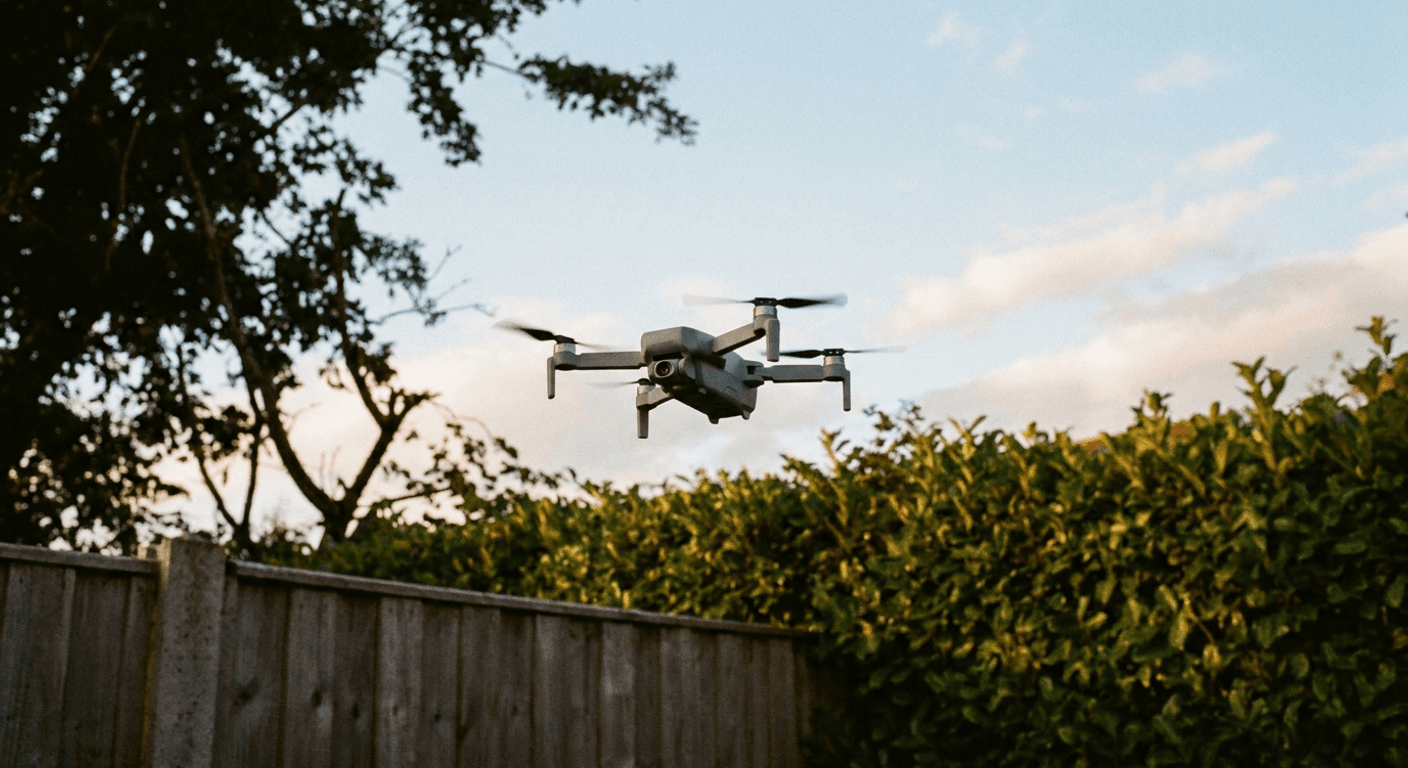
Vermont bars flying a drone for hobby or recreational purposes below 100 feet over private property without the owner's written consent, and separately makes it a civil violation to use a drone to surveil someone's home or land without consent, under 20 V.S.A. section 4626, effective June 6, 2024.
This guide is part of our Drone Laws by State series; for the broader rules on recording people and property in Vermont, see our surveillance camera laws guide.
Jurisdiction scope: This article addresses Vermont law governing private and law-enforcement drone use under 20 V.S.A. chapter 205 (sections 4621 through 4626), the weapons offense at 13 V.S.A. section 4018, and the Fish and Wildlife Board's rule at 10 App. V.S.A. section 20. It does not address FAA registration, Remote ID, or Part 107 pilot certification, which apply the same way nationwide regardless of state law.
How federal and Vermont law divide drone authority
The FAA controls where a drone may fly nationwide. Under 49 U.S.C. section 40102, it classifies any unmanned aircraft as an "aircraft," regardless of size. A commercial or government flight generally needs a Remote Pilot Certificate under 14 C.F.R. Part 107; a hobbyist flight falls under the separate exception at 49 U.S.C. section 44809. Most registrable drones must also broadcast Remote ID since 2023.
That federal framework does not say what a Vermont drone operator may record, or when Vermont police need a warrant. Vermont answers those questions through its own drone chapter, 20 V.S.A. chapter 205, added in 2015 and expanded twice since, most recently in 2024.
Part of that chapter sits in a zone federal courts have already policed, so it is worth being precise about. In Singer v. City of Newton, 284 F. Supp. 3d 125 (D. Mass. 2017), a federal district court held four parts of a Massachusetts city's drone ordinance preempted, and one of them, subsection (c)(1)(a), "prohibit[ed] pilotless aircraft flight below an altitude of 400 feet over any private property without the express permission of the property owner." That is the same kind of provision as Vermont's section 4626(a), which is an altitude rule, not only a recording rule.
What decided Singer, though, was arithmetic rather than the mere fact of an altitude floor. The FAA requires drone operators to stay below 400 feet under 14 C.F.R. section 107.51(b), and Newton had banned flight below 400 feet over private property while a companion subsection barred flight over city property at any altitude, so the court found the two "work in tandem ... to create an essential ban on drone use within the limits of Newton." Vermont's floor is 100 feet rather than 400, it reaches only hobby and recreational flight, and it has no counterpart banning flight over public land, so it leaves the 100-to-400-foot band open, leaves Part 107 operators unrestricted, and forecloses no lawful airspace. Newton's surveillance and reasonable-expectation-of-privacy subsections, the closest analogues to Vermont's section 4626(b), were never challenged in Singer and were left standing. Section 4622, for its part, governs when police may use drone-derived evidence rather than where a drone may be in the sky, and the FAA guidance the Singer court relied on treats privacy, trespass, and law enforcement operations as traditional state and local subjects. No court has yet tested section 4626, so these are the distinctions Vermont would have to defend, not a settled answer.
Can a private citizen legally fly a drone over my property in Vermont?
Not below 100 feet without permission, and not to spy on you regardless of altitude. Section 4626(a) bars a hobby or recreational drone operator from flying below 100 feet over someone else's private property without the owner's prior written consent. Section 4626(b) separately bars anyone, at any altitude, from using a drone to record an image of privately owned real property, or of its owner or occupant, with intent to conduct surveillance in violation of the person's reasonable expectation of privacy, again without written consent.
The exceptions to section 4626 are narrow. Only distribution and transmission utilities and their contractors, and law enforcement officers engaged in legitimate law enforcement activity, are excused from the consent and no-surveillance rules under subsection (f). A real estate photographer, a journalist, a research drone operator, or a neighbor documenting a boundary dispute all fall outside those exceptions and need the property owner's prior written consent before flying below 100 feet over the land or recording it with surveillance intent.
The statute defines "surveillance" as observing a target with sufficient clarity to identify a person or determine their habits, conduct, movements, or whereabouts, or to identify unique features of a property. A "property owner" includes anyone with an ownership, leasehold, or license interest, or otherwise in lawful control of the land. Drone sellers must give purchasers written notice of these restrictions under section 4626(c).
The law traces to a specific complaint that helped drive it forward: a Vermont homeowner reported a drone hovering over his property while his daughter was sunbathing, an incident cited in coverage of the original bill, H.284, before it was folded into the broader judiciary-procedures package that became Act 161. Violations are enforced as civil penalties, up to $50 for a first offense and up to $250 for a repeat, rather than as a criminal charge.
Does police need a warrant to fly a drone over my property in Vermont?
Yes, when the flight is for a criminal investigation. Section 4622(a) bars a law enforcement agency from using a drone, or information a drone gathers, to investigate, detect, or prosecute crime, unless the exceptions in subsection (c) apply. Those exceptions cover a Vermont Rule of Criminal Procedure 41 warrant, a recognized exception to the warrant requirement, or a non-crime purpose such as search and rescue, accident-scene assessment, fire-scene photography, or flood or storm-damage evaluation.
Separately, subsection (b)(1) bars an agency from gathering or retaining data on people peacefully exercising their constitutional rights of free speech and assembly. When a drone is deployed for surveillance, subsection (d) requires the agency to collect data only on the surveillance target, bars using facial recognition or other biometric matching on anyone else the drone incidentally records, and, if the flight relies on exigent circumstances rather than a warrant, requires the agency to apply for a warrant within 48 hours or destroy the data. Evidence gathered in violation of section 4622 is inadmissible in any judicial or administrative proceeding under subsection (e).
Every agency that uses a drone must file an annual report with the Department of Public Safety describing how often it flew, for what purposes, and how many arrests resulted, under section 4624. The department's most recent report to the legislature, covered in a February 2026 news account, found roughly 10 Vermont law enforcement agencies operate drones, with Vermont State Police alone logging about 160 flights in the prior year for uses like search and rescue and crash reconstruction, none of which led to an arrest or involved surveillance, according to a VSP sergeant quoted in that coverage.
Weapons, correctional facilities, and Vermont's drone hunting ban
Vermont separately protects three narrower interests. Unlike the civil penalties that run through 20 V.S.A. chapter 205, the first is a criminal offense.
Under 13 V.S.A. section 4018, no person shall equip a drone with a dangerous or deadly weapon or fire a projectile from a drone. A violation carries imprisonment of not more than one year, a fine of not more than $1,000, or both. The section borrows its definition of "drone" from 20 V.S.A. section 4621 and its definition of "dangerous or deadly weapon" from 13 V.S.A. section 4016, and it writes in no exceptions, so it applies to hobbyists and certificated commercial operators alike. It has been in force since October 1, 2016, under Act 169 of the 2015-2016 session. Every penalty in Vermont's drone chapter, by contrast, is civil.
Section 4625 makes it unlawful to knowingly operate a drone over a correctional facility, or property immediately surrounding one that is recognizably correctional or clearly marked, backed by a civil penalty of up to $500. The Department of Corrections, anyone with the facility superintendent's written consent, and FAA-authorized commercial operators are exempt without notice; the Department of Buildings and General Services, law enforcement, and public safety agencies responding to an emergency may fly over a facility if they notify it beforehand.
On the wildlife side, a Fish and Wildlife Board rule in effect since March 14, 2015, 10 App. V.S.A. section 20, makes it unlawful to take a wild animal using a drone, or to use a drone or another aircraft to locate, surveil, drive, or harass a wild animal for the purpose of hunting, trapping, or taking it. The rule carries the same penalties as other hunting violations, including fines and license loss, and exempts department personnel and other qualified operators acting within applicable state and federal permits.
Can I shoot down a drone over my Vermont property?
No. Federal law makes it a serious felony to damage or destroy any drone, regardless of whose land it is flying over. 18 U.S.C. section 32, the Aircraft Sabotage Act, criminalizes willfully damaging an "aircraft," a category the FAA has applied to drones since 2012, and a conviction carries up to 20 years in federal prison and a fine up to $250,000. The FAA has stated publicly that it, not the property owner, controls the airspace, so owning the ground below a drone does not create a right to fire on it.
Vermont's own remedies for an unwanted drone flight are the civil penalty in section 4626 and, where the facts support it, a trespass or nuisance claim in state court, not self-help. No Vermont statute, and no federal one, authorizes a landowner to shoot down or disable a drone.
| Question | Vermont rule |
|---|---|
| Flying a drone under 100 feet over someone's private property | Requires prior written consent, 20 V.S.A. section 4626(a) |
| Using a drone to surveil a home or its occupants | Barred without written consent if it violates a reasonable expectation of privacy, section 4626(b) |
| Penalty for a section 4626 violation | Civil penalty, up to $50 first offense, $250 repeat |
| Law enforcement drone warrant requirement | Yes, for criminal investigation, section 4622(a), with listed exceptions |
| Exigent-circumstances drone use | Warrant must be sought within 48 hours or data destroyed, section 4622(d)(3) |
| Annual law enforcement reporting | Required, Department of Public Safety, section 4624 |
| Drone over a correctional facility | Barred, civil penalty up to $500, section 4625 |
| Arming a drone or firing a projectile from one | Criminal, up to one year of imprisonment and/or a $1,000 fine, 13 V.S.A. section 4018 |
| Drone for hunting or harassing wildlife | Barred, 10 App. V.S.A. section 20 |
| Shooting down a drone | Federal felony regardless of location, 18 U.S.C. section 32 |
Watch out: Vermont's section 4626 penalty is civil, not criminal, and capped at $50 for a first violation. It does not replace a separate trespass, harassment, or voyeurism claim if the facts support one, and it does not apply at all to a law enforcement officer engaged in legitimate law enforcement activity, who is exempt under section 4626(f).
More Vermont Laws
- Vermont Data Privacy Laws
- Vermont GPS Tracking Laws
- Vermont Police Bodycam Laws
- Vermont Recording Laws
- Vermont Smart Glasses Recording Laws
Frequently Asked Questions
Does Vermont require a warrant for police drone surveillance?
Yes, for a criminal investigation. Section 4622(a) bars a law enforcement agency from using a drone to investigate, detect, or prosecute crime without a warrant or a recognized exception, though non-crime uses like search and rescue and accident assessment are exempt.
Can my neighbor legally fly a drone over my yard in Vermont?
Not below 100 feet without your written consent, under section 4626(a). At any altitude, using a drone to surveil you or your property without consent can also violate section 4626(b) if it invades your reasonable expectation of privacy.
What happens if someone flies a drone over my property in Vermont without permission?
They can face a civil penalty of up to $50 for a first violation and up to $250 for a later one under section 4626(d). Depending on the facts, a separate trespass or nuisance claim may also be available.
Is it legal to shoot down a drone over my property in Vermont?
No. Federal law, 18 U.S.C. section 32, makes destroying any drone a felony regardless of where it is flying, because the FAA controls the airspace, not the landowner.
Is it illegal to put a weapon on a drone in Vermont?
Yes. 13 V.S.A. section 4018 makes it a crime to equip a drone with a dangerous or deadly weapon or to fire a projectile from a drone, punishable by imprisonment of up to one year, a fine of up to $1,000, or both. Unlike the civil penalties in Vermont's drone chapter, this one is criminal, and the section lists no exceptions.
Do Vermont police need a warrant to fly a drone over a crime scene?
Generally yes, if the purpose is investigating, detecting, or prosecuting crime. Section 4622(c) exempts non-crime uses like search and rescue, accident reconstruction, and flood or storm-damage assessment.
Is it illegal to use a drone for hunting in Vermont?
Yes. A Fish and Wildlife Board rule in effect since March 14, 2015, 10 App. V.S.A. section 20, bars using a drone to locate, surveil, drive, or harass wildlife for hunting or trapping.
Can a drone fly over a Vermont prison?
Not without consent or advance notice. Section 4625 bars operating a drone over a correctional facility, with a civil penalty up to $500, subject to exceptions for the Department of Corrections and certain notified agencies.
How much drone activity do Vermont police actually report?
Under section 4624's annual reporting requirement, a February 2026 report to the legislature found about 10 agencies fly drones statewide, with Vermont State Police logging around 160 flights in the prior year, none resulting in an arrest.
Updates
Corrected the federal preemption discussion, which had wrongly said Vermont section 4626 does not regulate altitude, so it now distinguishes Singer v. City of Newton on its actual grounds, and added Vermont criminal weaponized-drone statute, 13 V.S.A. section 4018.
Independently fact-checked against the cited primary sources; governing law re-checked for recent changes
Governing law re-checked for recent changes
Reviewed and approved by an editor
The Law Behind This Article
This article rests on the statutory provisions below, held in our own legal record and retrieved from the official source. Tap a section to read the operative text.
Vermont Statutes Annotated, Title 20: Internal Security and Public Safety, Chapter 205: Drones
§ 4626Drones; operation over private property without consent of owner; civil penaltyIn forcecited in 2 of our articles
(a) A person shall not fly a drone for hobby or recreational purposes at an altitude of less than 100 feet above privately owned real property unless the person has obtained prior written consent from the property owner. (b) A person shall not, without the prior written consent of the property owner or occupant, use a drone to record an image of privately owned real property or of the owner or occupant of the property with the intent to conduct surveillance on the person or the property in violation of the person’s reasonable expectation of privacy. For purposes of this subsection, a person is presumed to have a reasonable expectation of privacy on the person’s privately owned real property if the person is not observable by another person located at ground level in a place where the other person has a legal right to be, regardless of whether the person is observable from the air using a drone. (c) A person engaged in the business of selling drones shall provide written notice to each purchaser of a drone required to be registered by the U.S.
Official text (excerpt) · last checked 2026-08-31 · Read the full text in our law library · Verify at legislature.vermont.gov
Also relied on in: Vermont Surveillance Camera Laws (2026 Guide)
§ 4622Law enforcement use of dronesIn forcecited in 3 of our articles
(a) Except as provided in subsection (c) of this section, a law enforcement agency shall not use a drone or information acquired through the use of a drone for the purpose of investigating, detecting, or prosecuting crime. (b)(1) A law enforcement agency shall not use a drone to gather or retain data on private citizens peacefully exercising their constitutional rights of free speech and assembly. (2) This subsection shall not be construed to prohibit a law enforcement agency from using a drone: (A) for observational, public safety purposes that do not involve gathering or retaining data; or (B) pursuant to a warrant obtained under Rule 41 of the Vermont Rules of Criminal Procedure.
Official text (excerpt) · last checked 2026-08-01 · Read the full text in our law library · Verify at legislature.vermont.gov
Also relied on in: Facial Recognition Laws: Police Use & State Rules (2026)
§ 4625Correctional facilities; use of drones prohibited; civil penaltyIn force
(a) A person shall not knowingly operate a drone over a correctional facility or surrounding property that is readily recognizable to a reasonable person as being correctional facility property or is reasonably identified as such by fencing or appropriate signs. (b) A person who violates subsection (a) of this section shall be assessed a civil penalty of not more than $500.00. (c)(1) Subsection (a) of this section shall not apply to the use of a drone by: (A) the Department of Corrections; (B) a person operating a drone with the written consent of the correctional facility’s supervising officer; or (C) a person operating a drone that is being used for a commercial purpose, if the person is operating in compliance with any authorization, rule, or exemption granted by the Federal Aviation Administration.
Official text (excerpt) · last checked 2026-08-01 · Read the full text in our law library · Verify at legislature.vermont.gov
§ 4624ReportsIn force
(a) On or before September 1 of each year, any law enforcement agency that has used a drone within the previous 12 months shall report the following information to the Department of Public Safety: (1) The number of times the agency used a drone within the previous 12 months. For each use of a drone, the agency shall report the type of incident involved, the nature of the information collected, and the rationale for deployment of the drone. (2) The number of criminal investigations aided and arrests made through use of information gained by the use of drones within the previous 12 months, including a description of how the drone aided each investigation or arrest. (3) The number of times a drone collected data on any person, home, or area other than the target of the surveillance within the previous 12 months and the type of data collected in each instance. (4) The cost of the agency’s drone program and the program’s source of funding.
Official text (excerpt) · last checked 2026-08-01 · Read the full text in our law library · Verify at legislature.vermont.gov
§ 4621DefinitionsIn force
As used in this chapter: (1) “Correctional facility” shall have the same meaning as in 28 V.S.A. § 3. (2) “Drone” means a powered aerial vehicle that does not carry a human operator and is able to fly autonomously or to be piloted remotely. (3) “Law enforcement agency” means: (A) the Vermont State Police; (B) a municipal police department; (C) a sheriff’s department; (D) the Office of the Attorney General; (E) a State’s Attorney’s office; (F) the Capitol Police Department; (G) the Department of Liquor and Lottery; (H) the Department of Fish and Wildlife; (I) the Department of Motor Vehicles; (J) a State investigator; or (K) a person or entity acting on behalf of an agency listed in this subdivision (3). (4) “Public safety agency” shall have the same meaning as in section 1841 of this title. (Added 2015, No. 169 (Adj. Sess.), § 2, eff. Oct. 1, 2016; amended 2017, No. 101 (Adj. Sess.), § 2, eff. April 17, 2018; 2019, No. 73, § 34.)
Official text (excerpt) · last checked 2026-08-01 · Read the full text in our law library · Verify at legislature.vermont.gov
United States Code Title 18
§ 32Destruction of aircraft or aircraft facilitiesIn forcecited in 51 of our articles
Whoever willfully— sets fire to, damages, destroys, disables, or wrecks any aircraft in the special aircraft jurisdiction of the United States or any civil aircraft used, operated, or employed in interstate, overseas, or foreign air commerce; places or causes to be placed a destructive device or substance in, upon, or in proximity to, or otherwise makes or causes to be made unworkable or unusable or hazardous to work or use, any such aircraft, or any part or other materials used or intended to be used in connection with the operation of such aircraft, if such placing or causing to be placed or such making or causing to be made is likely to endanger the safety of any such aircraft; sets fire to, damages, destroys, or disables any air navigation facility, or interferes by force or violence with the operation of such facility, if such fire, damaging, destroying, disabling, or interfering is likely to endanger the safety of any such aircraft in flight; with the intent to damage, destroy, or disable any such aircraft, sets fire to, damages, destroys, or disables or places a destructive device or substance in, upon, or in proximity to, any appliance or structure, ramp, landing area,…
Official text (excerpt) · last checked 2026-07-28 · Read the full text in our law library · Verify at uscode.house.gov
Cited in 168 court opinions in our collectionLatest citing opinion in our collection: 2026
In the courts (editorial summary, independently checked):United States v. Yousef (2003) applied 18 U.S.C. 32 to an overseas airline bombing plot, holding Section 32(a) reaches conduct abroad because US-flag aircraft in flight are within the special aircraft jurisdiction, and that a defendant brought here involuntarily is still found in the United States under Section 32(b).
Opinions citing this section in our collection:
- Perez v. United States (Supreme Court of the United States 1971, 402 U.S. 146)“…commerce, as, for example, the destruction of an aircraft ( 18 U. S. C. § 32 ), or persons or things in commerce, as…”
- Stanford v. Kentucky (Supreme Court of the United States 1989, 492 U.S. 361)“…r by persons subject to Uniform Code of Military Justice); 18 U. S. C. §§ 32 , 33, and 34 (1982 ed. and Supp. V) (de…”
- United States v. Yousef (Court of Appeals for the Second Circuit 2003, 327 F.3d 56)✓Yousef bombed a Philippine airliner and plotted to bomb twelve US flag airliners on Asian routes; the court held Section 32(a) reaches attacks on US flag aircraft worldwide, and that Yousef, brought here involuntarily, was found in the United States under Section 32(b).
Identified automatically from the court opinions citing this section — not a ranking of which case controls.
Also relied on in: Indiana Drone Laws (2026): Police Warrants, Voyeurism, Hunting, Iowa Drone Laws: Homestead, Farmstead & Warrant Rules, Kansas Drone Laws: Stalking Act & Privacy Rules Explained
Vermont Statutes Annotated, Title 13: Crimes and Criminal Procedure, Chapter 85: Weapons, Subchapter: GENERALLY
§ 4018DronesIn force
(a) No person shall equip a drone with a dangerous or deadly weapon or fire a projectile from a drone. A person who violates this section shall be imprisoned not more than one year or fined not more than $1,000.00, or both. (b) As used in this section: (1) “Drone” shall have the same meaning as in 20 V.S.A. § 4621. (2) “Dangerous or deadly weapon” shall have the same meaning as in section 4016 of this title. (Added 2015, No. 169 (Adj. Sess.), § 3, eff. Oct. 1, 2016.)
Official text (excerpt) · last checked 2026-08-01 · Read the full text in our law library · Verify at legislature.vermont.gov
Code of Federal Regulations Title 14
§ 107.51Operating limitations for small unmanned aircraft.In force
A remote pilot in command and the person manipulating the flight controls of the small unmanned aircraft system must comply with all of the following operating limitations when operating a small unmanned aircraft system: (a) The groundspeed of the small unmanned aircraft may not exceed 87 knots (100 miles per hour). (b) The altitude of the small unmanned aircraft cannot be higher than 400 feet above ground level, unless the small unmanned aircraft: (1) Is flown within a 400-foot radius of a structure; and (2) Does not fly higher than 400 feet above the structure's immediate uppermost limit. (c) The minimum flight visibility, as observed from the location of the control station must be no less than 3 statute miles. For purposes of this section, flight visibility means the average slant distance from the control station at which prominent unlighted objects may be seen and identified by day and prominent lighted objects may be seen and identified by night. (d) The minimum distance of the small unmanned aircraft from clouds must be no less than: (1) 500 feet below the cloud; and (2) 2,000 feet horizontally from the cloud.
Official text (excerpt) · last checked 2026-07-28 · Read the full text in our law library · Verify at ecfr.gov
Cited in 2 court opinions in our collectionLatest citing opinion in our collection: 2020
Opinions citing this section in our collection:
- Singer v. City of Newton (District Court, District of Columbia 2017, 284 F. Supp. 3d 125)“…w an altitude of 400 feet from the ground or a structure. 14 C.F.R. § 107.51 (b). Newton's choice to restrict any d…”
- Shaun Koenig v. Timothy N. Aldrich (Court of Appeals of Wisconsin 2020)“…ederal regulations on operating limitations for drones, see 14 C.F.R. § 107.51 (2016), drones are more akin to aircraf…”
Identified automatically from the court opinions citing this section — not a ranking of which case controls.
Search our full record of US law — 2.1 million sections, every state + federal →
Sources and References
- 20 V.S.A. section 4622, Law enforcement use of drones(legislature.vermont.gov).gov
- 20 V.S.A. section 4626, Drones; operation over private property without consent of owner; civil penalty(legislature.vermont.gov).gov
- 20 V.S.A. section 4625, Correctional facilities; use of drones prohibited(legislature.vermont.gov).gov
- 10 App. V.S.A. section 20, Vermont Fish and Wildlife Board rule restricting use of aircraft and drones to take wildlife(legislature.vermont.gov).gov
- 18 U.S.C. section 32, destruction of aircraft or aircraft facilities(law.cornell.edu)
- WCAX, Vermont law enforcement drone use documented in state report to Legislature(wcax.com)
- DroneXL, Soaring Controversy: The Battle Over Drone Surveillance In Vermont(dronexl.co)
- 13 V.S.A. section 4018, Drones; equipping with a dangerous or deadly weapon or firing a projectile(legislature.vermont.gov).gov
- Singer v. City of Newton, 284 F. Supp. 3d 125 (D. Mass. 2017), memorandum and order(govinfo.gov).gov
- 14 C.F.R. section 107.51(b), operating limitations for small unmanned aircraft, 400-foot altitude ceiling(law.cornell.edu)