
South Carolina
South Carolina Drone Laws: 2027 Prison-Drone Act & Privacy Rules
Independently fact-checked against primary sources (last audited August 17, 2026). · Reviewed by the RecordingLaw editorial team. · Law checked current as of August 17, 2026. · 4 primary sources cited on this page. How we verify our legal content
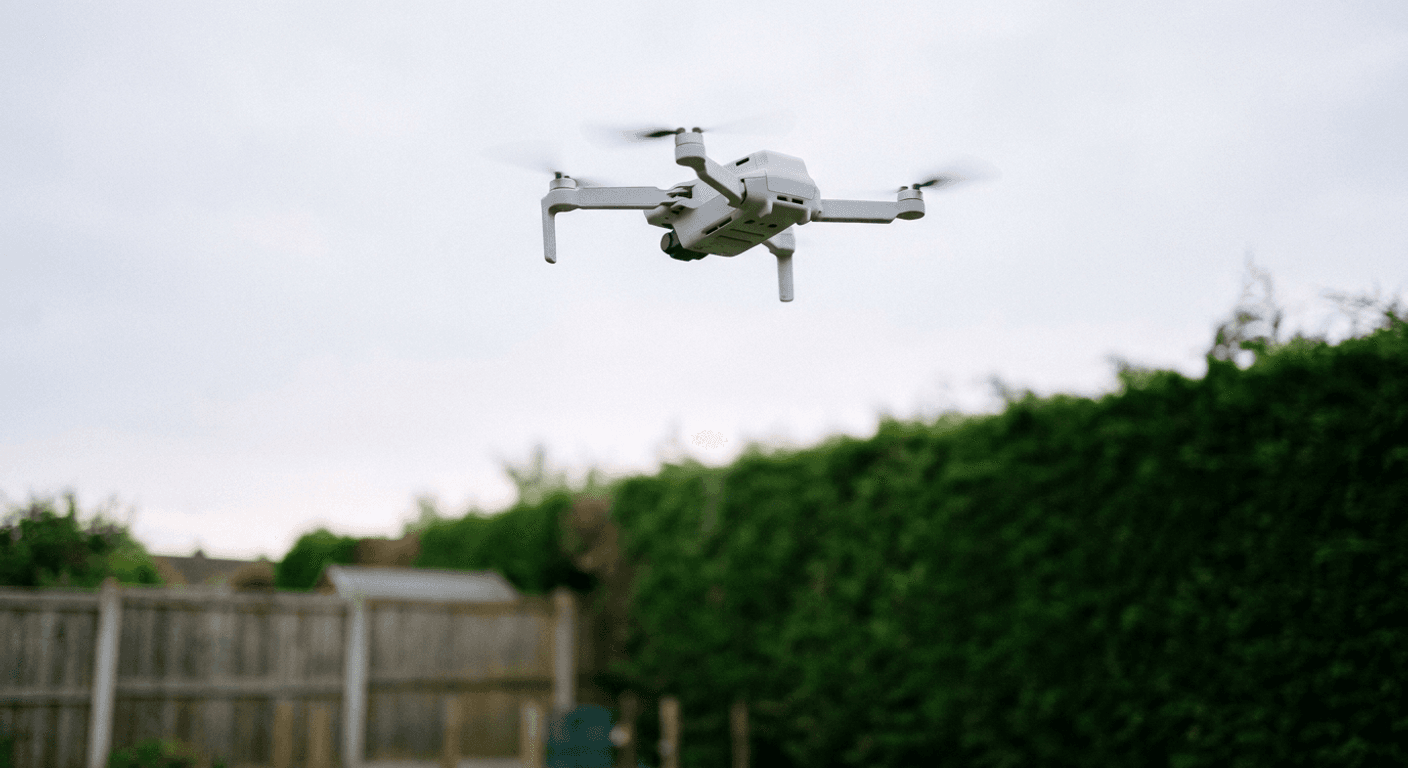
South Carolina's landmark Drone Regulation and Public Safety Act, signed into law May 15, 2026, replaces the state's old prison-buffer misdemeanor with a 1,500-foot no-fly zone and new felony penalties for contraband drops and facility surveillance, effective January 1, 2027. Civilian spying still runs through the state's general Peeping Tom law.
Jurisdiction scope: This article addresses South Carolina law governing private and law-enforcement drone use under S.C. Code Sections 24-1-300, 24-5-175, 16-17-470, and the incoming Sections 55-1-200 through 55-1-230 created by the Drone Regulation and Public Safety Act (effective January 1, 2027). It does not address FAA registration, Remote ID, or Part 107 pilot certification, which apply the same way nationwide regardless of state law.
Federal Airspace Rules vs. South Carolina State Law
The FAA controls where a drone may fly nationwide: altitude limits, pilot certification under 14 CFR Part 107, the recreational-flyer exception at 49 U.S.C. Section 44809, and Remote ID broadcast requirements. That framework does not answer what an operator may lawfully do with captured footage, or how close a drone may come to a South Carolina prison, jail, or military base. South Carolina answers those questions through its own statutes, and the state is in the middle of a rare, sweeping overhaul of that layer.

South Carolina's New Drone Regulation and Public Safety Act
South Carolina has struggled for years with drones dropping contraband into prison yards, a problem that made national news again in December 2025, when officers at Lee Correctional Institution in Bishopville intercepted a drone drop of steak, crab legs, marijuana, cigarettes, and Old Bay seasoning meant for an early holiday meal. The legislature's response, H.4679, the South Carolina Drone Regulation and Public Safety Act, cleared both chambers without a dissenting vote: the House voted 108-0 on second reading April 14, 2026, and gave the bill third reading the next day; the Senate voted 46-0 on second reading May 7 and third reading May 12; and the House concurred in the Senate's amendments 92-0 on May 13. The bill was ratified May 14, 2026, as Ratification No. 198, and Governor Henry McMaster signed it into law on May 15, 2026, as Act No. 150. Its provisions do not take effect immediately; they become operative January 1, 2027.
The Act adds a new Article 3 to Chapter 1 of Title 55, creating S.C. Code Sections 55-1-200 through 55-1-230. Section 55-1-200 defines key terms, distinguishing FAA Part 107 commercial operators from recreational operators under 49 U.S.C. Section 44809, and defines "military installation" broadly enough to include Navy vessels and Coast Guard cutters in the state's territorial waters and South Carolina National Guard facilities. Section 55-1-210 requires registration, FAA compliance, and, for recreational flyers, the Recreational UAS Safety Test.
Section 55-1-220 sets the operative prohibitions. It becomes unlawful to operate, take off, or land a drone within 1,500 feet horizontally of a correctional or detention facility, or military installation, without express written consent, a large expansion from the 500-foot buffer under Sections 24-1-300 and 24-5-175. Those buffer-zone and registration misdemeanors carry escalating penalties, up to $1,000 or 6 months for a first offense, up to $5,000 or 2 years for a third. On top of that, the Act creates two felony tiers: contraband delivery or surveilling a facility to identify vulnerabilities is up to 5 years and a $10,000 fine, and weaponizing a drone or using one to threaten or harm is up to 10 years and $25,000, with mandatory equipment seizure. Section 55-1-230 bars local ordinances that conflict with the state framework or FAA rules, but still lets municipalities impose "reasonable restrictions" on takeoff and landing sites on public property, unlike Florida or Texas, which broadly preempt local drone regulation, subject to limited carve-outs.
South Carolina Law Until January 1, 2027
Until the new Act takes effect, South Carolina's operative drone-specific statutes are narrower. Section 24-1-300 bars a drone within 500 feet horizontally or 250 feet vertically of any DOC facility without written consent from the SCDC Director, and Section 24-5-175 imposes the identical buffer around local detention facilities. Both are misdemeanors, up to a $500 fine and 30 days in jail, and both authorize confiscation of the drone. Both carve out FAA-registered infrastructure inspectors who notify the facility administrator two hours to five days beforehand. The new Act repeals both sections January 1, 2027, replacing them with the broader felony-backed framework above.
Can a Private Citizen Legally Fly a Drone Over Your Property in South Carolina?
Neither the current law nor the incoming 2027 Act creates a civilian drone-privacy statute the way Kentucky's or Florida's laws do; South Carolina's new Act targets correctional and military facilities, not neighbor disputes. Instead, using a drone to spy on someone is prosecuted under South Carolina's general Peeping Tom and voyeurism statute, S.C. Code Section 16-17-470, which makes it a misdemeanor to be an eavesdropper or peeping tom on another's premises, and expressly defines "peeping tom" to include a person who employs "video or audio equipment" for that purpose, broad enough to reach a camera-equipped drone. A first conviction carries up to a $500 fine and 3 years in prison. Where the purpose is sexual arousal or gratification, the same section separately defines voyeurism, and a second or subsequent voyeurism conviction, or aggravated voyeurism (selling or distributing the images), is a felony carrying up to 5 or 10 years, respectively.
Outside that voyeurism framework, a South Carolina property owner bothered by a neighbor's low-flying drone generally has to rely on general trespass and nuisance principles rather than a drone-specific civil remedy, since the state has not enacted a broader civilian image-capture statute comparable to North Carolina's Section 15A-300.1 just across the border.
Does South Carolina Police Need a Warrant to Fly a Drone Over Your Property?
South Carolina has not enacted a drone-specific law-enforcement warrant statute comparable to those in Illinois, Minnesota, or Virginia. Neither the current prison-buffer statutes nor the incoming Act imposes a warrant requirement on law enforcement drone use generally; the new Act's exemptions instead excuse correctional, military, and law-enforcement personnel from the 1,500-foot buffer zones when acting within the scope of their duties. That means whether South Carolina police need a warrant before flying a drone over a resident's property is governed by ordinary Fourth Amendment and state constitutional search-and-seizure case law, not a statutory floor written for drones.
Can You Shoot Down a Drone Over Your Property in South Carolina?
No. Every drone is legally an "aircraft" under federal law, and 18 U.S.C. Section 32, the Aircraft Sabotage Act, makes willfully damaging, destroying, or disabling one a federal felony punishable by up to 20 years in prison, regardless of whose property it is flying over. The FAA has stated since 2016 that it, not the landowner, controls the national airspace. Neither South Carolina's current prison-buffer statutes nor the incoming 2027 Act creates any state-law right for a landowner to disable a drone; confiscation belongs to law enforcement and facility administrators, not individual property owners.
South Carolina Drone Rules at a Glance
| Conduct | Statute | Status | Consequence |
|---|---|---|---|
| Drone within 500 ft/250 ft of a DOC or jail facility without consent | S.C. Code Sections 24-1-300, 24-5-175 | Applies until Jan. 1, 2027 | Misdemeanor, up to $500 fine and 30 days |
| Drone within 1,500 ft of a correctional facility or military installation without consent | S.C. Code Section 55-1-220 | Effective Jan. 1, 2027 | Misdemeanor, escalating to $5,000 or 2 years for a third offense |
| Drone contraband delivery or facility-vulnerability surveillance | S.C. Code Section 55-1-220 | Effective Jan. 1, 2027 | Felony, up to 5 years and $10,000 |
| Weaponized drone or threats/harm | S.C. Code Section 55-1-220 | Effective Jan. 1, 2027 | Felony, up to 10 years and $25,000 |
| Drone-based peeping or voyeurism | S.C. Code Section 16-17-470 | Current law | Misdemeanor up to 3 years; felony up to 10 years for aggravated voyeurism |
| Shooting down any drone | 18 U.S.C. Section 32 (federal) | Current law | Felony, up to 20 years in prison |
Watch out: South Carolina's incoming 1,500-foot buffer and felony tiers do not take effect until January 1, 2027. Until that date, the operative correctional-facility buffer remains the narrower 500-foot/250-foot rule under Sections 24-1-300 and 24-5-175. Operators and facility neighbors should track the effective date rather than assume the new rule already applies.
This guide is part of our Drone Laws by State series; for the broader rules on recording and surveillance across South Carolina, see our surveillance camera laws guide.
More South Carolina Laws
- South Carolina Data Privacy Laws
- South Carolina GPS Tracking Laws
- South Carolina Police Bodycam Laws
- South Carolina Recording Laws
- South Carolina Smart Glasses Recording Laws
Frequently Asked Questions
Is South Carolina's new drone law in effect yet?
Not yet. The Drone Regulation and Public Safety Act (H.4679) was signed May 15, 2026, as Act No. 150, but does not take effect until January 1, 2027. Until then, the older 500-foot/250-foot correctional-facility buffer under Sections 24-1-300 and 24-5-175 remains operative.
What happened to South Carolina's prison-drone felony bill?
It passed. H.4679 cleared both the House and the Senate unanimously, and Governor McMaster signed it May 15, 2026. Effective January 1, 2027, it replaces the misdemeanor-only prison buffer with a 1,500-foot no-fly zone and felonies, up to 5 years for contraband delivery or facility surveillance and up to 10 years for a weaponized drone.
How close can a drone fly to a South Carolina prison right now?
Until January 1, 2027, under Section 24-1-300, a drone may not come within 500 feet horizontally or 250 feet vertically of a DOC facility without written consent, and Section 24-5-175 sets the same buffer for local jails. Both are misdemeanors. The buffer expands to 1,500 feet January 1, 2027.
Does South Carolina have a civilian drone privacy law?
No standalone one. The new Act targets correctional and military facilities, not neighbor disputes. Using a drone to spy on someone is prosecuted under the general Peeping Tom and voyeurism statute, Section 16-17-470, which expressly covers video or audio equipment.
Does South Carolina police need a warrant to fly a drone over my property?
South Carolina has no drone-specific law-enforcement warrant statute. The analysis follows ordinary Fourth Amendment and state constitutional search-and-seizure case law.
Can South Carolina cities pass their own drone ordinances?
The new Act, effective January 1, 2027, bars ordinances that conflict with state or FAA drone rules, but lets municipalities impose reasonable restrictions on takeoff and landing sites on public property.
Is it legal to shoot down a drone flying over my South Carolina property?
No. Damaging or destroying any drone is a federal felony under 18 U.S.C. Section 32 regardless of the state, because the FAA controls the national airspace. Neither South Carolina's current law nor the 2027 Act gives a landowner the right to disable one.
Updates
Corrected the description of the legislative votes on H.4679 to identify the 108-0 and 46-0 tallies as second-reading votes, and clarified the penalty and effective-date language for the incoming Drone Regulation and Public Safety Act.
Independently fact-checked against the cited primary sources; governing law re-checked for recent changes
Governing law re-checked for recent changes
Reviewed and approved by an editor
The Law Behind This Article
This article rests on the statutory provisions below, held in our own legal record and retrieved from the official source. Tap a section to read the operative text.
South Carolina Code of Laws, Title 24: CORRECTIONS, JAILS, PROBATIONS, PAROLES AND PARDONS
§ 24-1-300Unlawful operation of unmanned aerial vehicle near Department of Corrections facility; penalties; exclusionsIn force
(A) Except as provided in subsection (D), a person shall not operate an unmanned aerial vehicle within a horizontal distance of five hundred feet or a vertical distance of two hundred fifty feet from any Department of Corrections facility without written consent from the Director of the Department of Corrections. (B) A person who violates this section is guilty of a misdemeanor and, upon conviction, shall be fined not more than five hundred dollars or imprisoned not more than thirty days, or both. (C)(1) In addition to the penalty provided in this section, an unmanned aerial vehicle involved in the violation of this section may be confiscated by the Department of Corrections. An unmanned aerial vehicle must not be disposed of in any manner until the results of any legal proceeding in which it may be involved are finally determined, or as otherwise required by Section 17-28-300, et seq. Records must be kept of all confiscated unmanned aerial vehicles received by the Department of Corrections under the provisions of this section.
Official text (excerpt) · last checked 2026-08-31 · Read the full text in our law library · Verify at scstatehouse.gov
§ 24-5-175Unlawful operation of unmanned aerial vehicle near detention facility; penalties; exclusionsIn force
(A) Except as provided in subsection (D), a person shall not operate an unmanned aerial vehicle within a horizontal distance of five hundred feet or a vertical distance of two hundred fifty feet from any local detention facility without written consent from the jail administrator. (B) A person who violates this section is guilty of a misdemeanor and, upon conviction, shall be fined not more than five hundred dollars or imprisoned not more than thirty days, or both. (C)(1) In addition to the penalty provided in this section, an unmanned aerial vehicle involved in the violation of this section may be confiscated by the jail administrator of a local detention facility. An unmanned aerial vehicle must not be disposed of in any manner until the results of any legal proceeding in which it may be involved are finally determined, or as otherwise required by Section 17-28-300, et seq. Records must be kept of all confiscated unmanned aerial vehicles received by the jail administrator under the provisions of this section.
Official text (excerpt) · last checked 2026-07-29 · Read the full text in our law library · Verify at scstatehouse.gov
South Carolina Code of Laws, Title 16: CRIMES AND OFFENSES
§ 16-17-470Eavesdropping, peeping, voyeurismIn forcecited in 14 of our articles
(A) It is unlawful for a person to be an eavesdropper or a peeping tom on or about the premises of another or to go upon the premises of another for the purpose of becoming an eavesdropper or a peeping tom. The term "peeping tom", as used in this section, is defined as a person who peeps through windows, doors, or other like places, on or about the premises of another, for the purpose of spying upon or invading the privacy of the persons spied upon and any other conduct of a similar nature, that tends to invade the privacy of others. The term "peeping tom" also includes any person who employs the use of video or audio equipment for the purposes set forth in this section. A person who violates the provisions of this section is guilty of a misdemeanor and, upon conviction, must be fined not more than five hundred dollars or imprisoned not more than three years, or both.
Official text (excerpt) · last checked 2026-08-31 · Read the full text in our law library · Verify at scstatehouse.gov
Cited in 8 court opinions in our collectionLatest citing opinion in our collection: 2026
In the courts (editorial summary, independently checked):United States v. Anthony Helton (2019) read the section's voyeurism subsection to require knowingly viewing a person without consent, where privacy is expected, for sexual arousal or gratification, and held that conviction a sex offense requiring federal registration. State v. Harris (1987) held peeping tom a crime of moral turpitude.
Opinions citing this section in our collection:
- State v. Holmes (Supreme Court of South Carolina 1995, 320 S.C. 259)✓At a capital murder trial the defense was barred from impeaching a jailhouse witness with his 1984 Peeping Tom conviction; the court held that was error because a section 16-17-470 violation is a crime of moral turpitude, but found the error harmless.
- State v. Harris (Supreme Court of South Carolina 1987, 293 S.C. 75)✓A man tried for assault with intent to commit sexual conduct with a minor was impeached with a prior Peeping Tom conviction; the court held the section 16-17-470 offense is a crime of moral turpitude, so using it to attack his credibility was proper.
- In re Parrott (Supreme Court of South Carolina 2017, 421 S.C. 105)“…ondent was arrested and charged with voyeurism pursuant to S.C. Code Ann. § 16-17-470 (B) (2015) after he used a cell phone t…”
Identified automatically from the court opinions citing this section — not a ranking of which case controls.
Also relied on in: South Carolina Medical Recording Laws: Patient Rights, HIPAA, and Consent (2026), South Carolina Smart Glasses Recording Laws 2026, South Carolina Employee Monitoring Laws: Workplace Surveillance and Social Media (2026)
United States Code Title 18
§ 32Destruction of aircraft or aircraft facilitiesIn forcecited in 51 of our articles
Whoever willfully— sets fire to, damages, destroys, disables, or wrecks any aircraft in the special aircraft jurisdiction of the United States or any civil aircraft used, operated, or employed in interstate, overseas, or foreign air commerce; places or causes to be placed a destructive device or substance in, upon, or in proximity to, or otherwise makes or causes to be made unworkable or unusable or hazardous to work or use, any such aircraft, or any part or other materials used or intended to be used in connection with the operation of such aircraft, if such placing or causing to be placed or such making or causing to be made is likely to endanger the safety of any such aircraft; sets fire to, damages, destroys, or disables any air navigation facility, or interferes by force or violence with the operation of such facility, if such fire, damaging, destroying, disabling, or interfering is likely to endanger the safety of any such aircraft in flight; with the intent to damage, destroy, or disable any such aircraft, sets fire to, damages, destroys, or disables or places a destructive device or substance in, upon, or in proximity to, any appliance or structure, ramp, landing area,…
Official text (excerpt) · last checked 2026-07-28 · Read the full text in our law library · Verify at uscode.house.gov
Cited in 168 court opinions in our collectionLatest citing opinion in our collection: 2026
In the courts (editorial summary, independently checked):United States v. Yousef (2003) applied 18 U.S.C. 32 to an overseas airline bombing plot, holding Section 32(a) reaches conduct abroad because US-flag aircraft in flight are within the special aircraft jurisdiction, and that a defendant brought here involuntarily is still found in the United States under Section 32(b).
Opinions citing this section in our collection:
- Perez v. United States (Supreme Court of the United States 1971, 402 U.S. 146)“…commerce, as, for example, the destruction of an aircraft ( 18 U. S. C. § 32 ), or persons or things in commerce, as…”
- Stanford v. Kentucky (Supreme Court of the United States 1989, 492 U.S. 361)“…r by persons subject to Uniform Code of Military Justice); 18 U. S. C. §§ 32 , 33, and 34 (1982 ed. and Supp. V) (de…”
- United States v. Yousef (Court of Appeals for the Second Circuit 2003, 327 F.3d 56)✓Yousef bombed a Philippine airliner and plotted to bomb twelve US flag airliners on Asian routes; the court held Section 32(a) reaches attacks on US flag aircraft worldwide, and that Yousef, brought here involuntarily, was found in the United States under Section 32(b).
Identified automatically from the court opinions citing this section — not a ranking of which case controls.
Also relied on in: Indiana Drone Laws (2026): Police Warrants, Voyeurism, Hunting, Iowa Drone Laws: Homestead, Farmstead & Warrant Rules, Kansas Drone Laws: Stalking Act & Privacy Rules Explained
Search our full record of US law — 2.1 million sections, every state + federal →
Sources and References
- S.C. Code Ann. Sections 55-1-200 through 55-1-230, added by Act No. 150 of 2026 (H.4679, the South Carolina Drone Regulation and Public Safety Act), signed May 15, 2026, effective January 1, 2027. Sets a 1,500-foot correctional/military buffer, registration rules, felony tiers for contraband delivery, facility surveillance, and weaponization, and local-preemption rules.(scstatehouse.gov).gov
- S.C. Code Ann. Section 24-1-300, Unlawful operation of unmanned aerial vehicle near Department of Corrections facility; penalties; exclusions. Current law (until repealed Jan. 1, 2027); 500 ft/250 ft buffer, misdemeanor up to $500 and 30 days.(scstatehouse.gov).gov
- S.C. Code Ann. Section 24-5-175, Unlawful operation of unmanned aerial vehicle near detention facility; penalties; exclusions. Current law (until repealed Jan. 1, 2027); same 500 ft/250 ft buffer for local jails.(scstatehouse.gov).gov
- S.C. Code Ann. Section 16-17-470, Eavesdropping, peeping, voyeurism. General Peeping Tom and voyeurism statute expressly covering use of video or audio equipment; misdemeanor up to 3 years, felony up to 10 years for aggravated voyeurism.(scstatehouse.gov).gov
- 18 U.S.C. Section 32, Destruction of aircraft or aircraft facilities (Aircraft Sabotage Act). Makes willfully damaging, destroying, or disabling any aircraft, including a drone, a federal felony punishable by up to 20 years in prison.(law.cornell.edu)
- The Washington Post, 'Prison intercepts drone delivery of steak, crab legs and Old Bay' (Dec. 10, 2025). Reports the Lee Correctional Institution drone-contraband interception in Bishopville, South Carolina, illustrating the problem the 2026 Act responds to.(washingtonpost.com)