
Pennsylvania
Pennsylvania Drone Laws 2026: Privacy, Hunting & Penalties
Independently fact-checked against primary sources (last audited August 17, 2026). · Reviewed by the RecordingLaw editorial team. · Law checked current as of August 17, 2026. · 3 primary sources cited on this page. How we verify our legal content
Pennsylvania makes it a summary offense to fly a drone to spy on someone in a private place or to threaten them with it, and a second-degree felony to use one to deliver contraband into a prison, under 18 Pa.C.S. Section 3505, the state's only drone-specific statute.
Information last verified on 2026-07-09. This article has not yet been reviewed by a licensed lawyer.
Scope: This page covers Pennsylvania's civilian drone-privacy statute, its prison-contraband felony, local preemption, hunting restrictions, and the federal shoot-down law. It does not cover FAA flight-operation rules like registration or Remote ID, which apply the same way nationwide. For camera-based surveillance generally, see Recording Law's surveillance camera laws guide; for how other states handle drones, see the Drone Laws hub.
Who regulates drones in Pennsylvania: the federal and state split
The FAA owns Pennsylvania's airspace itself, meaning altitude limits, drone registration, commercial pilot certification under 14 CFR Part 107, and Remote ID all come from federal law regardless of what Harrisburg wants. A federal district court made that division explicit in Singer v. City of Newton, 284 F. Supp. 3d 125 (D. Mass. 2017), striking down a Massachusetts city's attempt to impose its own altitude and registration rules. Pennsylvania regulates conduct instead, and unlike Florida, Texas, or Oregon, it does so through a single, fairly narrow statute rather than a sprawling set of privacy, warrant, and critical-infrastructure provisions. The Fifth Circuit's 2024 decision upholding a comparable Texas surveillance statute in National Press Photographers Ass'n v. McCraw, 90 F.4th 770 (5th Cir. 2024), is the strongest current appellate signal that conduct-based drone statutes like Pennsylvania's survive both First Amendment and preemption challenges.
Can someone fly a drone over your property in Pennsylvania and film you?
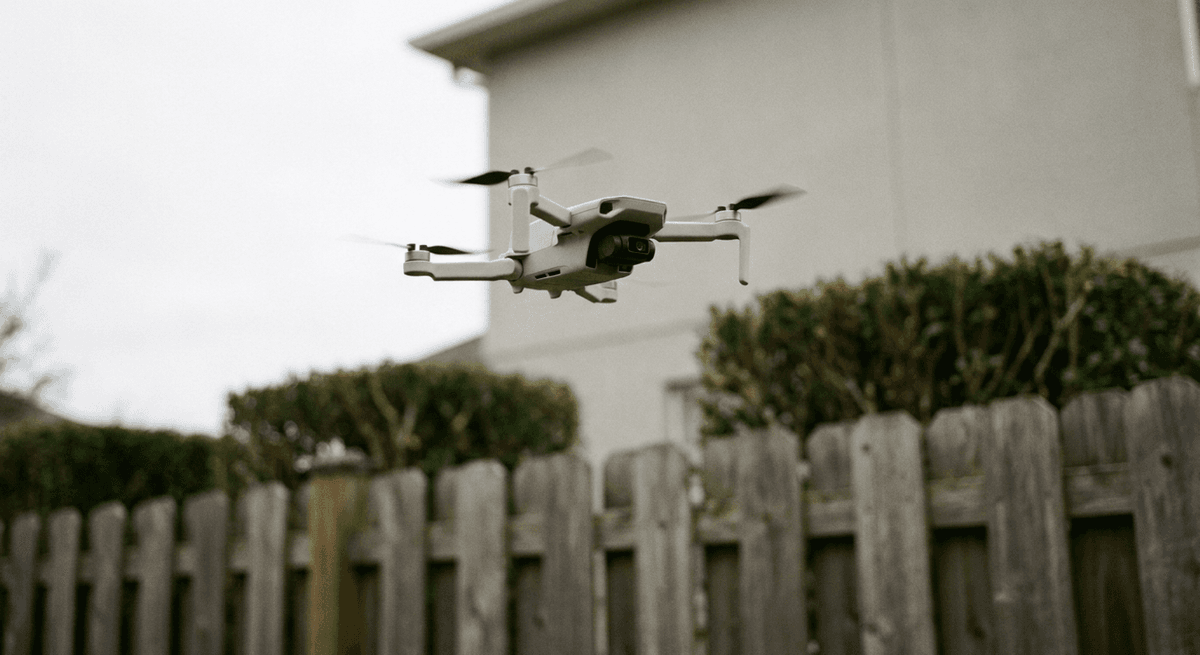
18 Pa.C.S. Section 3505, Pennsylvania's Unlawful Use of Unmanned Aircraft statute, is the answer. Added by Act 78 of 2018, which Governor Tom Wolf signed on October 12, 2018 and which took effect 90 days later, on January 10, 2019, the law makes it a crime to use a drone intentionally or knowingly to conduct surveillance of another person in a private place, or to operate it in a manner that places another person in reasonable fear of bodily injury. Wolf described the bill at signing as "a commonsense step to prevent the use of drones to invade someone's privacy."
The statute defines "private place" as a place where a person has a reasonable expectation of privacy, and "surveillance" as using a drone to observe, record, or invade the privacy of another. Both offenses are graded as summary offenses, Pennsylvania's lowest tier of criminal liability, punishable by a fine of up to $300 rather than jail time, which puts Pennsylvania toward the lenient end of the national spectrum compared to North Carolina's $5,000 per-image statutory damages or Kentucky's 2025 punitive-damages statute. A Pennsylvania property owner dealing with a persistent nuisance drone may find a civil nuisance or intrusion-upon-seclusion claim more useful than Section 3505's modest criminal penalty alone.
The statute's exceptions are narrower than they first look, and they do not all reach the same offenses. Section 3505(c) exempts law enforcement officers, and personnel of the Department of Corrections or a local correctional facility, prison or jail, acting in the performance of their official duties from all of subsection (a). Section 3505(d) reaches only subsection (a)(1) and (2), the surveillance and fear-of-injury offenses, and covers firefighters and special fire police, emergency medical responders, utility employees and agents, and government agency employees and agents acting in their official duties. Section 3505(e) is narrower still: it applies only to subsection (a)(1), and only where a person engaged in aerial data collection complied with FAA regulations and did not knowingly or intentionally conduct surveillance of another person in a private place. So a utility or EMS operator is not exempt from the contraband felony at subsection (a)(3).
Section 3505(a)(3) treats drone-delivered prison contraband far more seriously. Using a drone to deliver contraband in violation of 18 Pa.C.S. Section 5123 (state correctional facility contraband) or 61 Pa.C.S. Section 5902 is a felony of the second degree, carrying up to 10 years in prison and a $25,000 fine. Lawmakers cited a real problem when they wrote the bill: corrections officers had reported drones dropping cell phones, tobacco, and suboxone strips into state prison exercise yards in the years leading up to 2018.
Does Pennsylvania police need a warrant to fly a drone over your property?
Pennsylvania has not enacted a statute specifically requiring a warrant before law enforcement uses a drone, and Section 3505 exempts law enforcement acting within the scope of official duties from its surveillance ban entirely. That means the statute governing civilian drone conduct simply does not apply to police drone use, leaving Pennsylvania in the group of states, alongside Georgia and Arizona, where drone surveillance by police is governed by ordinary constitutional case law rather than a dedicated statutory floor.
That baseline is not purely federal, however. Pennsylvania courts interpret Article I, Section 8 of the Pennsylvania Constitution independently of the federal Fourth Amendment, a framework the Pennsylvania Supreme Court set out in Commonwealth v. Edmunds, 526 Pa. 374, 586 A.2d 887 (1991), when it declined to adopt the federal "good faith" exception to the exclusionary rule because doing so would frustrate Article I, Section 8's privacy guarantees. Pennsylvania courts have used that framework to extend broader protection than federal law in other search-and-seizure contexts, so a warrantless police drone flight into a constitutionally protected part of a Pennsylvania home could face a more skeptical state-constitutional analysis than a comparable federal claim, even without a drone-specific warrant statute. No Pennsylvania appellate decision has yet applied that framework squarely to a drone case as of this research.
Does Pennsylvania let cities and counties pass their own drone rules?
No, with a narrow exception. 53 Pa.C.S. Section 305, enacted as part of Act 78, preempts and supersedes any municipal ordinance regulating the ownership or operation of a drone, and bars a municipality from regulating drone ownership or operation unless a statute expressly authorizes it. The one carve-out lets a municipality use drones itself within its own boundaries for municipal purposes, and regulate that specific use.
Drones and hunting in Pennsylvania
Pennsylvania treats a drone the same way it treats a walkie-talkie or a cell phone in the field: as a prohibited electronic hunting aid. The Game Code's broad "unlawful devices and methods" framework at 34 Pa.C.S. Section 2308 bars a range of electronic and mechanical aids to taking game, and the Pennsylvania Game Commission has applied that framework, together with its disturbance-of-wildlife and spotlighting rules, to drone-assisted hunting and recovery.
That position produced a closely watched real case. On December 6, 2023, the Game Commission ran an undercover sting and cited Joshua Wingenroth, a Downingtown drone-services operator, after he used a thermal drone to help recover a client's wounded deer at Welsh Mountain Nature Preserve in Lancaster County. Wingenroth, the first person cited in Pennsylvania for recovering game by drone, received four citations, two for unlawful devices and methods, one for disturbance of wildlife, and one for restrictions on recreational spotlighting, facing up to $2,500 in fines and 90 days in jail; the Commission also seized his roughly $10,000 drone. A January 16, 2025 summary appeal hearing found the Game Commission had withheld a recorded call in which an employee told him a drone could be used for recovery, a Brady Rule violation; the judge dismissed all charges and ordered the drone returned, and the Game Commission has not refiled. Senate Bill 303, introduced in the 2025-2026 session, would create a narrow recovery exception, but it had not been enacted as of this writing.
Can you legally shoot down a drone over your Pennsylvania property?
No. Federal law makes it a serious felony to shoot down, disable, or otherwise damage any drone, anywhere, including over the shooter's own property, because the FAA, not the landowner, controls the airspace. 18 U.S.C. Section 32, the Aircraft Sabotage Act, criminalizes willfully damaging or destroying an "aircraft," a category the FAA has treated drones as falling into since 2012, and a conviction carries up to 20 years in federal prison. Pennsylvania's own criminal mischief statute, 18 Pa.C.S. Section 3304, adds separate state exposure: intentionally damaging a drone with a firearm can be a felony of the third degree if the damage exceeds $5,000, or a lesser misdemeanor for smaller losses, plus possible charges for discharging a firearm in a populated area. Section 3505(a)(2)'s own ban on operating a drone in a way that causes reasonable fear of bodily injury protects a resident who feels threatened, but it does not authorize responding to that fear with a firearm.
This article provides general legal information about Pennsylvania's drone-related laws as of mid-2026. It is not legal advice. For a specific dispute, consult a Pennsylvania attorney or the appropriate law enforcement agency.
Disclaimer
This article provides general legal information about Pennsylvania drone law as verified on 2026-07-09. It does not constitute legal advice and does not create an attorney-client relationship. Readers with a specific drone incident should consult a lawyer licensed in Pennsylvania or the appropriate law enforcement agency.
Related articles
- Drone Laws by State: the complete hub
- Pennsylvania Surveillance Camera Laws
- Pennsylvania Recording Laws
Last updated: 2026-07-09. Statutes cited reflect their in-force version as of 2026-07-09.
More Pennsylvania Laws
- Pennsylvania Data Privacy Laws
- Pennsylvania GPS Tracking Laws
- Pennsylvania Police Bodycam Laws
- Pennsylvania Recording Laws
- Pennsylvania Smart Glasses Recording Laws
Frequently Asked Questions
Is it illegal to fly a drone over my neighbor's house in Pennsylvania?
Not by itself. 18 Pa.C.S. Section 3505 only bans intentionally or knowingly using a drone to conduct surveillance of a person in a private place, or to place someone in reasonable fear of bodily injury. A drone that simply passes overhead does not violate the statute.
What is the penalty for illegal drone surveillance in Pennsylvania?
Surveillance of a person in a private place, or placing someone in reasonable fear of bodily injury, is a summary offense punishable by a fine of up to $300. Delivering contraband to a prison or mental hospital by drone is a much more serious felony of the second degree.
Does Pennsylvania police need a warrant to fly a drone over my property?
No specific statute requires it, since Section 3505 exempts law enforcement acting within official duties from its ban. Warrantless police drone use is instead analyzed under the Fourth Amendment and the Pennsylvania Constitution's Article I, Section 8, which Pennsylvania courts interpret independently and sometimes more protectively.
Can my city or township in Pennsylvania pass its own drone ordinance?
Almost never. 53 Pa.C.S. Section 305 preempts local regulation of drone ownership and operation statewide, though a municipality may still use drones for its own municipal purposes and regulate that specific use.
Can I use a drone to help me hunt or recover game in Pennsylvania?
No. The Game Commission treats drones as a prohibited electronic hunting aid under the Game Code's unlawful-devices framework. A Downingtown drone operator was criminally cited in 2023 for using one to recover a hunter's deer; a court dismissed those charges in January 2025 after finding the Commission withheld exculpatory evidence, and no recovery exception has been enacted yet.
Is it legal to shoot down a drone flying over my house in Pennsylvania?
No. Destroying a drone is a federal felony under 18 U.S.C. Section 32 regardless of location. Pennsylvania's own criminal mischief and firearm-discharge statutes can also apply, on top of any federal exposure.
What happens if someone flies a drone into a Pennsylvania prison?
Delivering contraband to an inmate by drone is a felony of the second degree under 18 Pa.C.S. Section 3505(a)(3), punishable by up to 10 years in prison and a $25,000 fine, reflecting lawmakers' concern about contraband drops at state prison exercise yards.
Updates
Corrected the effective date of Act 78 of 2018 to January 10, 2019 (90 days after signing, not 60), clarified that the statute's firefighter, EMS, utility and aerial-data-collection exceptions do not cover the prison-contraband felony, and fixed the year of the Fifth Circuit decision in National Press Photographers Ass'n v. McCraw.
Corrected the outcome of the Wingenroth drone-deer-recovery case: the January 2025 court hearing did not send the case back for further proceedings, it dismissed all charges after finding the Game Commission withheld exculpatory evidence, and the drone was returned.
Independently fact-checked against the cited primary sources; governing law re-checked for recent changes
Governing law re-checked for recent changes
Reviewed and approved by an editor
The Law Behind This Article
This article rests on the statutory provisions below, held in our own legal record and retrieved from the official source. Tap a section to read the operative text.
Pennsylvania Consolidated Statutes Title 18 (Crimes and Offenses)
§ 3505Unlawful use of unmanned aircraftIn force
(a) Offense defined.--A person commits the offense of unlawful use of unmanned aircraft if the person uses an unmanned aircraft intentionally or knowingly to: (1) Conduct surveillance of another person in a private place. (2) Operate in a manner which places another person in reasonable fear of bodily injury. (3) Deliver, provide, transmit or furnish contraband in violation of section 5123 (relating to contraband) or 61 Pa.C.S. § 5902 (relating to contraband prohibited). (b) Grading.--The offense of unlawful use of unmanned aircraft shall be graded as follows: (1) An offense under subsection (a)(1) or (2) is a summary offense punishable by a fine of up to $300. (2) An offense under subsection (a)(3) is a felony of the second degree. (c) Exceptions for law enforcement officers.--Subsection (a) shall not apply if the conduct proscribed under subsection (a) is committed by any of the following: (1) Law enforcement officers engaged in the performance of their official law enforcement duties. (2) Personnel of the Department of Corrections, local correctional facility, prison or jail engaged in the performance of their official duties.
Official text (excerpt) · last checked 2026-08-31 · Read the full text in our law library · Verify at palegis.us
Cited in 3 court opinions in our collectionLatest citing opinion in our collection: 2023
Opinions citing this section in our collection:
- Commonwealth v. Downing (Supreme Court of Pennsylvania 1986, 511 Pa. 28)“…nd the affirmative defense for defiant trespass provided at 18 Pa.C.S. § 3505(c)(2) is unavailable to excuse Appellee…”
- In the Interest of R.M., Appeal of: R.M., A Minor (Superior Court of Pennsylvania 2017)“…22 delinquent acts: Defiant Trespass (in violation of 18 Pa. C.S. § 3505(b)(ii)),4 Simple Assault (in viola…”
- Com. v. McGahren, I. (Superior Court of Pennsylvania 2023)“…visited ____________________________________________ 1 18 Pa.C.S. § 3505(a)(1)(ii). J-A24026-23 each other’s…”
Identified automatically from the court opinions citing this section — not a ranking of which case controls.
§ 5123ContrabandIn force
(a) Controlled substance contraband to confined persons prohibited.--A person commits a felony of the second degree if he sells, gives, transmits or furnishes to any convict in a prison, or inmate in a mental hospital, or gives away in or brings into any prison, mental hospital, or any building appurtenant thereto, or on the land granted to or owned or leased by the Commonwealth or county for the use and benefit of the prisoners or inmates, or puts in any place where it may be secured by a convict of a prison, inmate of a mental hospital, or employee thereof, any controlled substance included in Schedules I through V of the act of April 14, 1972 (P.L.233, No.64), known as The Controlled Substance, Drug, Device and Cosmetic Act, (except the ordinary hospital supply of the prison or mental hospital) without a written permit signed by the physician of such institution, specifying the quantity and quality of the substance which may be furnished to any convict, inmate, or employee in the prison or mental hospital, the name of the prisoner, inmate, or employee for whom, and the time when the same may be furnished, which permit shall be delivered to and kept by the warden or…
Official text (excerpt) · last checked 2026-07-29 · Read the full text in our law library · Verify at palegis.us
Cited in 62 court opinions in our collectionLatest citing opinion in our collection: 2026
Opinions citing this section in our collection:
- Commonwealth v. Sarvey (Superior Court of Pennsylvania 2018, 199 A.3d 436)“…2 35 P.S. § 780-113(a)(30) and 18 Pa.C.S. § 5123(a.2), respectively.…”
- Com. v. Arnold, D. (Superior Court of Pennsylvania 2022, 284 A.3d 1262)“…th ____________________________________________ 1 See 18 Pa.C.S. §§ 5123(a) (“controlled substance contraband to…”
- Commonwealth v. Cornelius (Superior Court of Pennsylvania 2018, 180 A.3d 1256)“…substance by an inmate within his brief, Appellant cites to 18 Pa.C.S. § 5123(a)(2). This subsection does not exist.…”
Identified automatically from the court opinions citing this section — not a ranking of which case controls.
§ 3304Criminal mischiefIn force
(a) Offense defined.--A person is guilty of criminal mischief if he: (1) damages tangible property of another intentionally, recklessly, or by negligence in the employment of fire, explosives, or other dangerous means listed in section 3302(a) of this title (relating to causing or risking catastrophe); (2) intentionally or recklessly tampers with tangible property of another so as to endanger person or property; (3) intentionally or recklessly causes another to suffer pecuniary loss by deception or threat; (4) intentionally defaces or otherwise damages tangible public property or tangible property of another with graffiti by use of any aerosol spray-paint can, broad-tipped indelible marker or similar marking device; (5) intentionally damages real or personal property of another; or (6) intentionally defaces personal, private or public property by discharging a paintball gun or paintball marker at that property.
Official text (excerpt) · last checked 2026-07-29 · Read the full text in our law library · Verify at palegis.us
Cited in 193 court opinions in our collectionLatest citing opinion in our collection: 2026
Opinions citing this section in our collection:
- Commonwealth v. Weir (Superior Court of Pennsylvania 2018, 201 A.3d 163)“…tentionally damage[d] . . . personal property of another.” 18 Pa.C.S. § 3304(a)(5). Mr. Korimko testified that Appe…”
- Com. v. Edwards, M. (Superior Court of Pennsylvania 2020, 229 A.3d 298)“…roperty of another so as to endanger person or property[.]” 18 Pa.C.S. § 3304(a)(2). In its opinion, the tria…”
- Commonwealth v. Battiato (Superior Court of Pennsylvania 1993, 422 Pa. Super. 285)“…0. Otherwise criminal mischief is a summary offense. 18 Pa.C.S. § 3304. Appellant argues that proof of monetar…”
Identified automatically from the court opinions citing this section — not a ranking of which case controls.
Pennsylvania Consolidated Statutes Title 53 (Municipalities Generally)
§ 305Local regulation of unmanned aircraft prohibitedIn force
(a) Preemption.--The provisions of 18 Pa.C.S. § 3505 (relating to unlawful use of unmanned aircraft) shall preempt and supersede any ordinance, resolution, rule or other enactment of a municipality regulating the ownership or operation of unmanned aircraft. As of the effective date of this section, a municipality shall not regulate the ownership or operation of unmanned aircraft unless expressly authorized by statute. (b) Municipal use.--Nothing under 18 Pa.C.S. § 3505 shall prohibit a municipality from using unmanned aircraft within the boundaries of the municipality for municipal purposes and regulating that use. (c) Definition.--As used in this section, the term "municipality" shall include a county, city, borough, incorporated town or township or home rule, optional plan or optional charter municipality, any other general purpose unit of government established by the General Assembly, a municipal authority and any entity formed pursuant to Ch. 23 Subch. A (relating to intergovernmental cooperation).
Official text (excerpt) · last checked 2026-07-29 · Read the full text in our law library · Verify at palegis.us
Pennsylvania Consolidated Statutes Title 61 (Prisons and Parole)
§ 5902Contraband prohibitedIn force
(a) Alcohol and drugs.--No spirituous or fermented liquor, drug, medicine, poison, opium, morphine or any other kind or character of narcotic shall, on any pretense whatever: (1) be sold or given away in a correctional institution or in any building appurtenant thereto, or on the land granted to or owned or leased by the Commonwealth for the use and benefit of inmates; or (2) be brought into a correctional institution or any building appurtenant thereto, or on to the land granted to or owned or leased by the Commonwealth for the use of and benefit of inmates, without a written permit signed by the physician of the correctional institution specifying the quantity and quality of the liquor or narcotic which may be furnished to the inmate or employee in the prison and the name of the inmate or employee for whom and the time when the liquor or narcotic may be furnished, except the ordinary hospital supply of the prisons. (b) Permit.--The permit shall be delivered to and kept by the chief administrator.
Official text (excerpt) · last checked 2026-07-29 · Read the full text in our law library · Verify at palegis.us
Cited in 3 court opinions in our collectionLatest citing opinion in our collection: 2026
Opinions citing this section in our collection:
- Penjuke v. Pa. Bd. of Prob. & Parole (Commonwealth Court of Pennsylvania 2019, 203 A.3d 401)“…(1)(iii), 6113(2), 6122(b)(2), 6143(c) of the Parole Code, 61 Pa.C.S. §§5902(e)(1)(iii) (stating that, with respect…”
- Young, O. v. PA Board of Probation & Parole, Aplt. (Supreme Court of Pennsylvania 2020)“…at 399. The power to give a thing does 1 See, e.g., 61 Pa.C.S. § 5902(e.1)(1)(iii) (stating that, with respec…”
- Com. v. Chilcote, F. (Superior Court of Pennsylvania 2026)“…re, is not contraband pursuant to 18 Pa.C.S. § 5123(c) and 61 Pa.C.S. § 5902(a)(1). After review, we affirm.…”
Identified automatically from the court opinions citing this section — not a ranking of which case controls.
Pennsylvania Consolidated Statutes Title 34 (Game)
§ 2308Unlawful devices and methodsIn force
(a) General rule.--Except as otherwise provided in this title, it is unlawful for any person to hunt or aid, abet, assist or conspire to hunt any game or wildlife through the use of: (1) An automatic firearm or similar device. (2) A semiautomatic rifle or pistol, except as set forth in subsection (b.1). (3) (Reserved). (4) A semiautomatic shotgun or magazine shotgun for hunting or taking small game, furbearers, turkey or unprotected birds unless the shotgun is plugged to a two-shell capacity in the magazine. (5) (Deleted by amendment). (6) Any recorded call or sound or recorded or electronically amplified imitation of a call or sound of any description or any other call or sound or imitation of calls or sounds which are prohibited by regulations of the commission. The commission shall be authorized, by resolution, to adopt rules and regulations authorizing the limited use of recorded calls or sounds or recorded or electronically amplified imitation of calls or sounds when such use is necessary in the commission's judgment to protect the public health and safety or to preserve that species or any other endangered by it.
Official text (excerpt) · last checked 2026-07-29 · Read the full text in our law library · Verify at palegis.us
Cited in 22 court opinions in our collectionLatest citing opinion in our collection: 2026
Opinions citing this section in our collection:
- Commonwealth v. Russo (Supreme Court of Pennsylvania 2007, 594 Pa. 119)“…34 Pa. C.S. § 2307; [6] and Unlawful Devices and Methods, 34 Pa.C.S. § 2308, see supra. After being found guilty…”
- Commonwealth v. Sellinger (Commonwealth Court of Pennsylvania 2000, 763 A.2d 525)“…embers of a group of ten individuals charged with violating 34 Pa.C.S. § 2308(8) relating to hunting in areas that ha…”
- Commonwealth v. Donovan (Commonwealth Court of Pennsylvania 2003, 829 A.2d 759)“…lation of Section 2308(a)(8) of the Game and Wildlife Code, 34 Pa.C.S. § 2308(a)(8). We affirm. A deputy wildlife c…”
Identified automatically from the court opinions citing this section — not a ranking of which case controls.
United States Code Title 18
§ 32Destruction of aircraft or aircraft facilitiesIn forcecited in 51 of our articles
Whoever willfully— sets fire to, damages, destroys, disables, or wrecks any aircraft in the special aircraft jurisdiction of the United States or any civil aircraft used, operated, or employed in interstate, overseas, or foreign air commerce; places or causes to be placed a destructive device or substance in, upon, or in proximity to, or otherwise makes or causes to be made unworkable or unusable or hazardous to work or use, any such aircraft, or any part or other materials used or intended to be used in connection with the operation of such aircraft, if such placing or causing to be placed or such making or causing to be made is likely to endanger the safety of any such aircraft; sets fire to, damages, destroys, or disables any air navigation facility, or interferes by force or violence with the operation of such facility, if such fire, damaging, destroying, disabling, or interfering is likely to endanger the safety of any such aircraft in flight; with the intent to damage, destroy, or disable any such aircraft, sets fire to, damages, destroys, or disables or places a destructive device or substance in, upon, or in proximity to, any appliance or structure, ramp, landing area,…
Official text (excerpt) · last checked 2026-07-28 · Read the full text in our law library · Verify at uscode.house.gov
Cited in 168 court opinions in our collectionLatest citing opinion in our collection: 2026
In the courts (editorial summary, independently checked):United States v. Yousef (2003) applied 18 U.S.C. 32 to an overseas airline bombing plot, holding Section 32(a) reaches conduct abroad because US-flag aircraft in flight are within the special aircraft jurisdiction, and that a defendant brought here involuntarily is still found in the United States under Section 32(b).
Opinions citing this section in our collection:
- Perez v. United States (Supreme Court of the United States 1971, 402 U.S. 146)“…commerce, as, for example, the destruction of an aircraft ( 18 U. S. C. § 32 ), or persons or things in commerce, as…”
- Stanford v. Kentucky (Supreme Court of the United States 1989, 492 U.S. 361)“…r by persons subject to Uniform Code of Military Justice); 18 U. S. C. §§ 32 , 33, and 34 (1982 ed. and Supp. V) (de…”
- United States v. Yousef (Court of Appeals for the Second Circuit 2003, 327 F.3d 56)✓Yousef bombed a Philippine airliner and plotted to bomb twelve US flag airliners on Asian routes; the court held Section 32(a) reaches attacks on US flag aircraft worldwide, and that Yousef, brought here involuntarily, was found in the United States under Section 32(b).
Identified automatically from the court opinions citing this section — not a ranking of which case controls.
Also relied on in: Indiana Drone Laws (2026): Police Warrants, Voyeurism, Hunting, Iowa Drone Laws: Homestead, Farmstead & Warrant Rules, Kansas Drone Laws: Stalking Act & Privacy Rules Explained
Search our full record of US law — 2.1 million sections, every state + federal →
Sources and References
- 18 Pa.C.S. Section 3505, Unlawful Use of Unmanned Aircraft (added by Act 78 of 2018)(legis.state.pa.us).gov
- 53 Pa.C.S. Section 305, Local Regulation of Unmanned Aircraft Prohibited(legis.state.pa.us).gov
- 34 Pa.C.S. Section 2308, Unlawful Devices and Methods (Pennsylvania Game Code)(legis.state.pa.us).gov
- Commonwealth v. Edmunds, 526 Pa. 374, 586 A.2d 887 (1991) (Article I, Section 8 independent state constitutional framework)(courtlistener.com)
- 18 U.S.C. Section 32, Destruction of Aircraft or Aircraft Facilities (federal shoot-down prohibition)(law.cornell.edu)
- Patch, "New Law Regulating Drone Use Signed In Pennsylvania" (Act 78 signing, Oct. 12, 2018)(patch.com)
- The Philadelphia Inquirer, "A drone helped this Pa. hunter recover a deer. He was criminally cited for it." (Jan. 16, 2024)(inquirer.com)
- Outdoor News, "Pennsylvania case against drone operator dismissed" (Jan. 24, 2025)(outdoornews.com)
- Pennsylvania General Assembly, Act 78 of 2018 law information (approved Oct. 12, 2018; Effective 90 DAYS)(palegis.us)
- Act 78 of 2018, enrolled text (Section 3: "This act shall take effect in 90 days")(palegis.us)