
Missouri
Missouri Drone Laws (2026): Stadiums, Prisons & Privacy
Independently fact-checked against primary sources (last audited August 17, 2026). · Reviewed by the RecordingLaw editorial team. · Law checked current as of August 17, 2026. · 6 primary sources cited on this page. How we verify our legal content
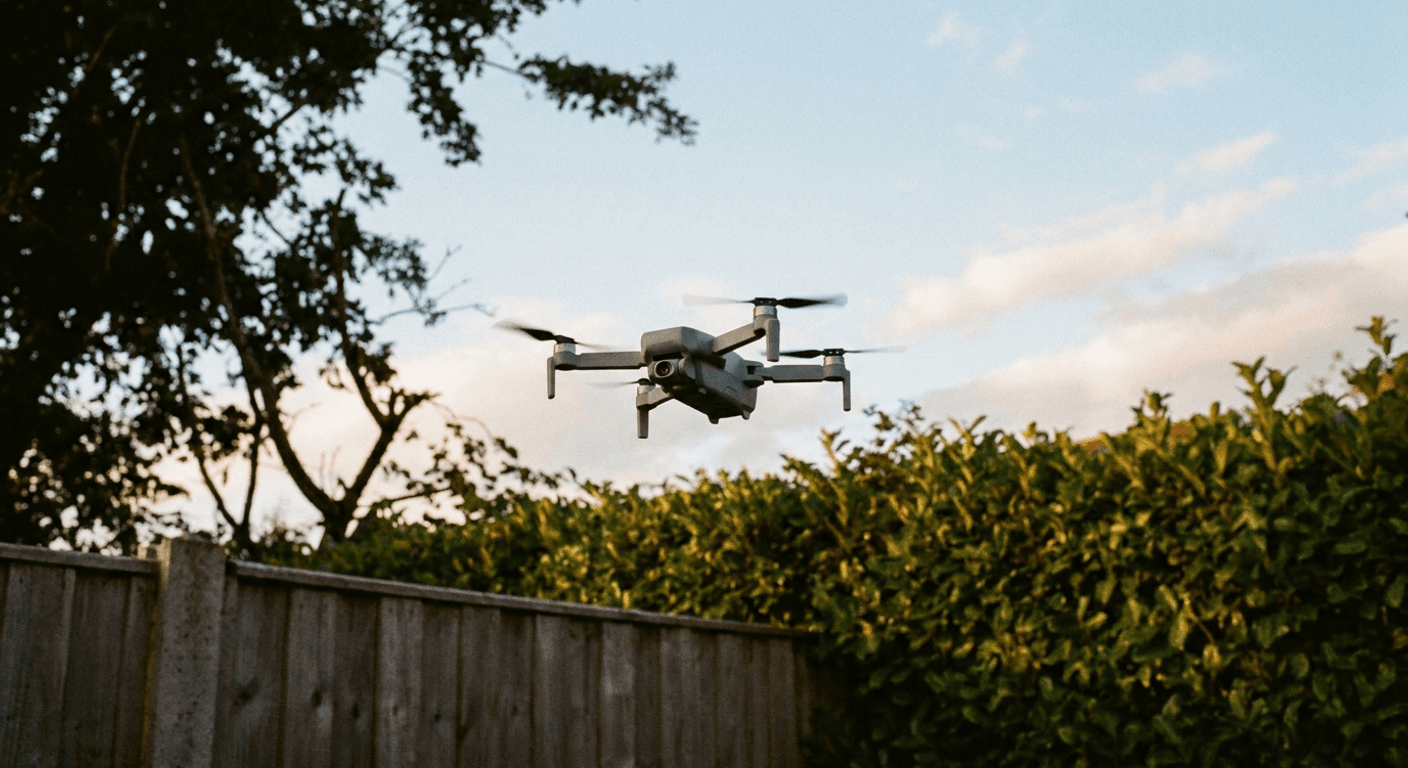
Missouri has no general drone-privacy statute and no warrant requirement for police drone use, but it bans flying a drone over a large stadium or a prison, and its invasion of privacy law reaches a drone used to peep into a private space.
Information last verified on 2026-07-09. This article has not yet been reviewed by a licensed lawyer.
Jurisdiction scope: This article addresses Missouri state law governing drones, specifically Mo. Rev. Stat. sections 577.800, 217.850, and 632.575, sections 589.900 to 589.902, section 565.252, and the Missouri Wildlife Code's hunting-drone rules, as verified on 2026-07-09. It does not address FAA registration, Remote ID, or Part 107 licensing, which apply the same way in every state; see the Drone Laws by State hub for that baseline and for how other states compare.
The FAA sets the airspace rules; Missouri law covers what happens on the ground
The FAA is the exclusive regulator of where a drone may fly, through drone registration, Remote Pilot Certification under 14 CFR Part 107 for most non-hobby flights, and, since 2023, Remote ID broadcast requirements. That does not answer the questions a Missouri resident actually has: can a neighbor legally hover a drone over your backyard, does police need a warrant to fly one over your property, and what happens if you fly one near Arrowhead Stadium or a state prison. Those are state-law questions, and Missouri answers them narrowly, through three venue-specific criminal statutes passed in 2020, a general invasion of privacy law that predates drones, and hunting regulations, rather than one comprehensive drone code.

Can someone legally fly a drone over your property in Missouri?
Missouri has no statute giving a property owner a standalone civil claim against a neighbor's drone for the overflight itself, unlike states such as California or Nevada that created a drone-specific trespass or nuisance tort. A resident's clearest legal tool against an intrusive drone is the invasion of privacy statute below, which applies when someone uses a drone to record them nude or through their clothing in a place where they reasonably expect privacy. Outside that scenario, a resident bothered by a drone repeatedly hovering low over their yard has to rely on common-law trespass and private nuisance, since no drone-specific civil statute fills the gap. Mo. Rev. Stat. section 569.140, the general first-degree trespass statute, requires the property be fenced, enclosed, or posted, and is written around entering or remaining on land rather than airspace intrusion, so its fit to a drone overflight is untested in Missouri courts.
Missouri's invasion of privacy law reaches a drone used to peep
Mo. Rev. Stat. section 565.252 does not mention drones by name, but its text is broad enough to cover one. The statute makes it a crime to knowingly photograph, film, videotape, or otherwise create an image of another person without consent while that person is in a state of full or partial nudity in a place where they would have a reasonable expectation of privacy, or to create an image under or through a person's clothing without consent. A drone camera aimed at a bedroom window or hovering over a privacy-fenced backyard fits this description as readily as a handheld camera would. A first violation is a Class A misdemeanor, rising to a Class E felony if the image is distributed or transmitted electronically, if more than one person is captured in the same course of conduct, or on a repeat offense. The statute took its current form effective January 1, 2017, after amendment by 2014 Senate Bill 491.
Missouri's three venue-specific drone statutes
All three of Missouri's drone-specific criminal statutes were created by the same 2020 public-safety bill, House Bill 1963, and took effect August 28, 2020.
Mo. Rev. Stat. section 577.800 makes it an offense to purposely operate a drone within 400 feet vertically of the ground and within the property line of an "open-air facility," defined as a sports, theater, music, performing arts, or other entertainment venue with a capacity of 500 or more that is not completely enclosed by a roof, such as Arrowhead Stadium in Kansas City or Busch Stadium in St. Louis. The statute was amended in 2026 by House Bills 2637 and 3155, merged with Senate Bill 1421, which lowered the open-air-facility capacity threshold from 5,000 to 500, brought critical infrastructure into the statute, and added delivering an explosive device or material to the weapon-delivery felony tier.
The critical-infrastructure coverage does not work like the stadium rule, and the difference matters. Under section 577.800.1(3), it is an offense to use a drone anywhere "within the boundary of any critical infrastructure facility," as that term is defined in section 569.086, with no altitude limit at all. The separate 400-foot, property-line test in section 577.800.1(4) applies to a critical infrastructure facility only when the flight is "in furtherance of any violation of criminal law." A basic violation is an infraction, but delivering a weapon (including an explosive device or material) by drone is a Class B felony and delivering a controlled substance is a Class D felony.
Section 577.800 exempts an employee, owner, or operator of the facility flying to monitor, inspect, operate, or maintain it; a person with written consent from the facility's president or chief executive officer; employees of law enforcement, fire, and emergency medical agencies and other government officials in the exercise of official duties; public utilities and rural electric cooperatives that meet the statute's notice and escort conditions; and railroad employees on railroad land. A 2026 amendment added a further exemption in subsection 6 for any drone "being used for a commercial purpose that is otherwise operating lawfully," so long as the operator is authorized by the FAA to conduct lawful operations in that airspace. Covered facilities must post warning signage at least eleven by fourteen inches in a conspicuous place.
Drone mitigation and seizure authority is not part of section 577.800, which contains no such language. It sits in separate new sections created by the same merged 2026 bills. Mo. Rev. Stat. section 589.902 provides that, to the greatest extent permissible under federal law including the Homeland Security Act of 2002, "authorized individuals" may take necessary action to mitigate a credible threat that a drone poses to people, facilities, assets, venues used for large-scale public gatherings, critical infrastructure, or correctional facilities. Section 589.900 defines an authorized individual as a peace officer certified in accordance with federal requirements, and defines mitigation broadly to include detecting, identifying, monitoring, or tracking a drone, warning its operator, disrupting control of it, seizing or taking control of it, and using reasonable force to disable, damage, or destroy it. Section 589.902 also preserves an officer's existing power to seize a drone in the course of their duties, makes a drone seized under that section or in connection with a criminal act subject to forfeiture under section 513.607, and bars jamming or signal interference except as federal law allows.
Mo. Rev. Stat. section 217.850, enacted in the same 2020 bill, separately bans operating a drone within 400 feet vertically over a correctional center's secure perimeter, or letting one contact the facility or anyone on its grounds. It covers correctional centers, private jails, and county or municipal jails. A basic violation is an infraction, but delivering a weapon is a Class B felony, facilitating an escape is a Class C felony, and delivering drugs is a Class D felony. Seven categories of operator are exempted, including facility employees, law enforcement, and utility employees inspecting infrastructure with prior notice.
Mo. Rev. Stat. section 632.575, the third statute from that bill, applies a comparable structure to a state mental health hospital, meaning a facility the Department of Mental Health operates for inpatient evaluation, treatment, or care. It is an offense to purposely operate a drone within a vertical distance of 400 feet, measured from ground level, over the hospital's property line, or to use a drone to deliver a covered object to a person confined there. A basic violation is an infraction, delivering a weapon or other dangerous article is a Class B felony, facilitating an escape from commitment is a Class C felony, and delivering a controlled substance is a Class D felony. The statute exempts seven categories of operator, including authorized hospital employees, law enforcement, government officials, utilities that give notice, railroad employees, and operators holding an FAA waiver, and each facility must post warning signage at least eleven by fourteen inches.
Does police need a warrant to fly a drone over your property in Missouri?
No. Missouri is one of the states where police drone use is governed entirely by ordinary Fourth Amendment case law rather than a state statutory warrant floor. A bill titled the "Preserving Freedom from Unwarranted Surveillance Act" would change that by requiring state, county, and local law enforcement to get a warrant before using a drone to gather evidence or information related to criminal conduct, with an exception for imminent life-threatening emergencies and a requirement that drone flights over privately held land have the owner's permission. That bill, most recently filed as House Bill 209 in the 2025 session, has been introduced repeatedly under different bill numbers since 2013, including House Bill 46 (2013) and House Bill 1204 (2015), and has never passed. Until it does, a Missouri police department can generally fly a drone over private property to gather evidence without a warrant, the same way it could observe that property from a manned aircraft in public airspace, subject only to the general Fourth Amendment limits that apply to any government search.
Hunting, wildlife, and a 2024 rule change worth knowing
Missouri does not ban drone use for hunting outright, and its regulatory posture recently loosened rather than tightened. Effective for the 2024 to 2025 season, the Missouri Department of Conservation's Wildlife Code began allowing hunters to use a drone specifically to locate and recover a wounded or dead deer, turkey, elk, or black bear during the relevant season. That narrow allowance sits alongside a broader, continuing prohibition: a drone may not be used to pursue, take, attempt to take, drive, or otherwise harass wildlife, and a hunter cannot possess a firearm, bow, or crossbow afield while a drone is in flight for game-recovery purposes. Hunters who want to use a drone on a conservation area must first get permission from the county conservation agent. Separately, Mo. Rev. Stat. section 578.151 makes it an offense to intentionally interfere with the lawful taking of wildlife by another or to intentionally harass, drive, or disturb game to disrupt a hunt, which is not limited to any particular method and would reach a drone used for that purpose.
Shooting down a drone is a federal crime, not a Missouri property right
Missouri has no statute authorizing a landowner to disable or shoot down a drone flying over their land, and doing so carries serious federal exposure regardless of Missouri trespass law. 18 U.S.C. section 32, the Aircraft Sabotage Act, makes it a felony punishable by up to twenty years in federal prison to willfully damage, destroy, or disable an aircraft, and the FAA has treated drones as aircraft within the National Airspace System since 2012. That exposure applies even over the shooter's own property, because the FAA, not the landowner, controls the airspace. Publicized cases in other states where local prosecutors declined to bring or continue state charges after a drone shoot-down are examples of discretionary charging decisions, not evidence of a legal right to disable a drone; no state, including Missouri, has enacted a law affirmatively authorizing it.
Separately, Missouri lawmakers introduced two 2025 bills, House Bill 210 and Senate Bill 296, that would bar state and local agencies from buying or operating drones from manufacturers tied to countries such as China, Russia, or Iran. Those address government procurement, not civilian privacy or trespass, and had not been enacted as of this writing.
Disclaimer
This article provides general legal information about Missouri law governing drones, as verified on 2026-07-09. It does not constitute legal advice and does not create an attorney-client relationship. Readers should consult a lawyer licensed in Missouri for advice about a specific incident or dispute.
Related articles
- Drone Laws by State: the complete hub
- Surveillance Camera Laws by State
- Missouri Recording Laws: One-Party Consent Rules
Last updated: 2026-07-09. Statutes cited reflect their in-force version as of 2026-07-09.
More Missouri Laws
- Missouri Data Privacy Laws
- Missouri GPS Tracking Laws
- Missouri Police Bodycam Laws
- Missouri Recording Laws
- Missouri Smart Glasses Recording Laws
Frequently Asked Questions
Is it illegal to fly a drone over someone's house in Missouri?
Not by itself. Missouri has no general aerial-trespass statute for private property. It can become illegal if the flight fits the invasion of privacy statute, Mo. Rev. Stat. section 565.252, or general trespass and nuisance principles.
Can I fly a drone over Arrowhead Stadium or Busch Stadium?
Not within 400 feet of the ground without authorization. Mo. Rev. Stat. section 577.800 makes unauthorized drone flight over a covered open-air facility (capacity 500 or more, as of 2026 amendments) an infraction, escalating to a felony if the drone is used to deliver a weapon, an explosive device or material, or drugs. Separate 2026 sections, Mo. Rev. Stat. sections 589.900 to 589.902, let certified peace officers mitigate and seize a drone that poses a credible threat, and a seized drone is subject to forfeiture under section 513.607.
Does Missouri police need a warrant to use a drone?
No. Missouri has no drone-specific warrant statute, so police drone use is governed by ordinary Fourth Amendment case law. A bill to add a warrant requirement, most recently House Bill 209 (2025), has been introduced repeatedly since 2013 and has never passed.
Can I fly a drone over a Missouri prison?
Not within 400 feet of a correctional center's secure perimeter, and never letting it contact the facility. Mo. Rev. Stat. section 217.850 makes that an infraction, escalating to a felony for delivering a weapon, aiding an escape, or delivering drugs.
Is there a drone restriction over Missouri mental health hospitals?
Yes. Mo. Rev. Stat. section 632.575 makes it an offense to operate a drone within 400 feet, measured from ground level, over the property line of a Department of Mental Health inpatient facility, or to use one to deliver a covered object to a person confined there. A basic violation is an infraction, rising to a Class B felony for a weapon, a Class C felony for facilitating an escape, and a Class D felony for a controlled substance.
Can I use a drone to recover a deer I shot in Missouri?
Yes, as of the 2024 to 2025 season, the Missouri Department of Conservation's Wildlife Code allows using a drone to locate and recover a wounded or dead deer, turkey, elk, or black bear, though using a drone to pursue or harass live wildlife remains prohibited.
Can I shoot down a drone flying over my property in Missouri?
No Missouri law authorizes this, and doing so risks a federal felony charge under 18 U.S.C. section 32 for damaging an aircraft, since the FAA controls the airspace regardless of who owns the land below.
Does Missouri's invasion of privacy law cover drone cameras?
It is not drone-specific, but Mo. Rev. Stat. section 565.252 covers recording someone nude or through their clothing without consent in a place where they expect privacy, which a drone camera can trigger the same as any other camera.
Updates
Corrected Missouri's 2026 drone amendments: mitigation, seizure and forfeiture authority comes from new sections 589.900 to 589.902 and applies to a credible threat, not from section 577.800; clarified that the critical-infrastructure ban has no altitude limit; added the omitted commercial-operator exemption and the previously missing mental health hospital statute, section 632.575.
Updated the description of Missouri's stadium/venue drone statute (section 577.800) to reflect 2026 amendments: the covered-venue capacity threshold dropped from 5,000 to 500 people, coverage was extended to critical infrastructure facilities, the felony tier now explicitly covers explosive devices, and law enforcement gained authority to seize a drone posing an imminent threat, subject to forfeiture.
Independently fact-checked against the cited primary sources; governing law re-checked for recent changes
Governing law re-checked for recent changes
Reviewed and approved by an editor
The Law Behind This Article
This article rests on the statutory provisions below, held in our own legal record and retrieved from the official source. Tap a section to read the operative text.
Revised Statutes of Missouri, Title XXXVIII (CRIMES AND PUNISHMENT; PEACE OFFICERS AND PUBLIC DEFENDERS), Chapter 577
§ 577.800Unlawful use of unmanned aircraft over open-air facility, offense of — permissible acts — violation, penalty — signage.In forcecited in 2 of our articles
1. A person commits the offense of unlawful use of unmanned aircraft over an open-air facility if he or she purposely: (1) Operates an unmanned aircraft within a vertical distance of four hundred feet from the ground and within the property line of an open-air facility; or (2) Uses an unmanned aircraft with the purpose of delivering to a person within an open-air facility any object described in subdivision (1) or (2) of subsection 4 of this section. 2. For purposes of this section, "open-air facility" shall mean any sports, theater, music, performing arts, or other entertainment facility with a capacity of five thousand people or more and not completely enclosed by a roof or other structure.
Official text (excerpt) · last checked 2026-08-31 · Read the full text in our law library · Verify at revisor.mo.gov
Also relied on in: Missouri Surveillance Camera Laws (2026 Guide)
Revised Statutes of Missouri, Title XIII (CORRECTIONAL AND PENAL INSTITUTIONS), Chapter 217
§ 217.850Correctional center, unlawful use of unmanned aircraft over, offense of — permissible acts — violation, penalty — signage to be posted.In forcecited in 2 of our articles
1. A person commits the offense of unlawful use of unmanned aircraft over a correctional center if he or she purposely: (1) Operates an unmanned aircraft within a vertical distance of four hundred feet over a correctional center's secure perimeter fence; or (2) Allows an unmanned aircraft to make contact with a correctional center, including any person or object on the premises of or within the facility. 2. For purposes of this section, "correctional center" shall include: (1) Any correctional center as defined in section 217.010; (2) Any private jail as defined in section 221.095; and (3) Any county or municipal jail.
Official text (excerpt) · last checked 2026-07-31 · Read the full text in our law library · Verify at revisor.mo.gov
Revised Statutes of Missouri, Title XXXVIII (CRIMES AND PUNISHMENT; PEACE OFFICERS AND PUBLIC DEFENDERS), Chapter 565
§ 565.252Invasion of privacy, penalty.In forcecited in 13 of our articles
1. A person commits the offense of invasion of privacy if he or she knowingly: (1) Photographs, films, videotapes, produces, or otherwise creates an image of another person, without the person's consent, while the person is in a state of full or partial nudity and is in a place where one would have a reasonable expectation of privacy; or (2) Photographs, films, videotapes, produces, or otherwise creates an image of another person under or through the clothing worn by that other person for the purpose of viewing the body of or the undergarments worn by that other person without that person's consent.
Official text (excerpt) · last checked 2026-08-31 · Read the full text in our law library · Verify at revisor.mo.gov
Cited in 3 court opinions in our collectionLatest citing opinion in our collection: 2021
Opinions citing this section in our collection:
- United States v. Alexander (Court of Appeals for the Eighth Circuit 2009, 574 F.3d 484)“…contends, because the Missouri invasioh-of-privacy statute, Mo.Rev.Stat. § 565.252, only prohibits the filming of a nude p…”
- T.S.H. v. Green (Court of Appeals for the Eighth Circuit 2021, 996 F.3d 915)“…e where one would have a reasonable expectation of privacy. Mo. Rev. Stat. § 565.252.1(1). Reasonable officers could have be…”
- United States v. Michael Alexander (Court of Appeals for the Eighth Circuit 2009)“…contends, because the Missouri invasion-of-privacy statute, Mo. Rev. Stat. § 565.252, only prohibits the filming of a nude p…”
Identified automatically from the court opinions citing this section — not a ranking of which case controls.
Also relied on in: Missouri Landlord-Tenant Recording Laws: Surveillance, Privacy, and Consent, Missouri Medical Recording Laws: Patient Rights, HIPAA, and Consent (2026), Missouri Recording Laws (2026): One-Party Consent Rules
United States Code Title 18
§ 32Destruction of aircraft or aircraft facilitiesIn forcecited in 51 of our articles
Whoever willfully— sets fire to, damages, destroys, disables, or wrecks any aircraft in the special aircraft jurisdiction of the United States or any civil aircraft used, operated, or employed in interstate, overseas, or foreign air commerce; places or causes to be placed a destructive device or substance in, upon, or in proximity to, or otherwise makes or causes to be made unworkable or unusable or hazardous to work or use, any such aircraft, or any part or other materials used or intended to be used in connection with the operation of such aircraft, if such placing or causing to be placed or such making or causing to be made is likely to endanger the safety of any such aircraft; sets fire to, damages, destroys, or disables any air navigation facility, or interferes by force or violence with the operation of such facility, if such fire, damaging, destroying, disabling, or interfering is likely to endanger the safety of any such aircraft in flight; with the intent to damage, destroy, or disable any such aircraft, sets fire to, damages, destroys, or disables or places a destructive device or substance in, upon, or in proximity to, any appliance or structure, ramp, landing area,…
Official text (excerpt) · last checked 2026-07-28 · Read the full text in our law library · Verify at uscode.house.gov
Cited in 168 court opinions in our collectionLatest citing opinion in our collection: 2026
In the courts (editorial summary, independently checked):United States v. Yousef (2003) applied 18 U.S.C. 32 to an overseas airline bombing plot, holding Section 32(a) reaches conduct abroad because US-flag aircraft in flight are within the special aircraft jurisdiction, and that a defendant brought here involuntarily is still found in the United States under Section 32(b).
Opinions citing this section in our collection:
- Perez v. United States (Supreme Court of the United States 1971, 402 U.S. 146)“…commerce, as, for example, the destruction of an aircraft ( 18 U. S. C. § 32 ), or persons or things in commerce, as…”
- Stanford v. Kentucky (Supreme Court of the United States 1989, 492 U.S. 361)“…r by persons subject to Uniform Code of Military Justice); 18 U. S. C. §§ 32 , 33, and 34 (1982 ed. and Supp. V) (de…”
- United States v. Yousef (Court of Appeals for the Second Circuit 2003, 327 F.3d 56)✓Yousef bombed a Philippine airliner and plotted to bomb twelve US flag airliners on Asian routes; the court held Section 32(a) reaches attacks on US flag aircraft worldwide, and that Yousef, brought here involuntarily, was found in the United States under Section 32(b).
Identified automatically from the court opinions citing this section — not a ranking of which case controls.
Also relied on in: Indiana Drone Laws (2026): Police Warrants, Voyeurism, Hunting, Iowa Drone Laws: Homestead, Farmstead & Warrant Rules, Kansas Drone Laws: Stalking Act & Privacy Rules Explained
Revised Statutes of Missouri, Title XXXVIII (CRIMES AND PUNISHMENT; PEACE OFFICERS AND PUBLIC DEFENDERS), Chapter 578
§ 578.151Interference with lawful hunting, fishing or trapping in the first degree — penalty.In force
1. It is the intent of the general assembly of the state of Missouri to recognize that all persons shall have the right to hunt, fish and trap in this state in accordance with law and the rules and regulations made by the commission as established in Article IV of the Constitution of Missouri. 2. A person commits the offense of interference with hunting, fishing, or trapping in the first degree if he or she intentionally interferes with the lawful taking of wildlife by another. 3. It shall be considered a violation of this section to intentionally harass, drive, or disturb any game animal or fish for the purpose of disrupting lawful hunting, fishing or trapping. 4. The offense of interference with lawful hunting, fishing or trapping in the first degree is a class A misdemeanor.
Official text (excerpt) · last checked 2026-07-31 · Read the full text in our law library · Verify at revisor.mo.gov
Revised Statutes of Missouri, Title XL (ADDITIONAL EXECUTIVE DEPARTMENTS), Chapter 632
§ 632.575Unlawful use of unmanned aircraft over a mental health hospital, offense of — permissible acts — signage — violation, penalty.In force
1. A person commits the offense of unlawful use of unmanned aircraft over a mental health hospital if he or she purposely: (1) Operates an unmanned aircraft within a vertical distance of four hundred feet over the mental health hospital's property line; or (2) Uses an unmanned aircraft to deliver to a person confined in a mental health hospital any object described in subdivision (1) or (3) of subsection 6 of this section. 2. For the purposes of subsection 1 of this section, vertical distance extends from ground level. 3. For purposes of this section, "mental health hospital" shall mean a facility operated by the department of mental health to provide inpatient evaluation, treatment, or care to persons suffering from a mental disorder, as defined under section 630.005; mental illness, as defined under section 630.005; or mental abnormality, as defined under section 632.480.
Official text (excerpt) · last checked 2026-07-31 · Read the full text in our law library · Verify at revisor.mo.gov
Search our full record of US law — 2.1 million sections, every state + federal →
Sources and References
- Mo. Rev. Stat. section 577.800, unlawful use of unmanned aircraft over an open-air facility (created by 2020 Mo. Laws H.B. 1963, effective Aug. 28, 2020)(revisor.mo.gov).gov
- Mo. Rev. Stat. section 217.850, unlawful use of unmanned aircraft over a correctional center (created by 2020 Mo. Laws H.B. 1963, effective Aug. 28, 2020)(revisor.mo.gov).gov
- Mo. Rev. Stat. section 565.252, invasion of privacy, first degree (effective Jan. 1, 2017, as amended by 2014 Mo. Laws S.B. 491)(revisor.mo.gov).gov
- Mo. Rev. Stat. section 578.151, interference with hunting, fishing, or trapping(revisor.mo.gov).gov
- Missouri House Bill 209 (2025 Regular Session), Preserving Freedom from Unwarranted Surveillance Act, official bill summary, introduced Jan. 30, 2025(documents.house.mo.gov).gov
- 18 U.S.C. section 32, Aircraft Sabotage Act (destruction of aircraft or aircraft facilities)(law.cornell.edu)
- Missouri Senate, Bill Tracking: SB 1421 (2026), amending section 577.800 (critical infrastructure coverage, mitigation/seizure and forfeiture authority)(senate.mo.gov).gov
- Mo. Rev. Stat. section 632.575, unlawful use of unmanned aircraft over a mental health hospital (created by 2020 Mo. Laws H.B. 1963, enacted as section 632.460, effective Aug. 28, 2020)(revisor.mo.gov)
- Mo. Rev. Stat. section 589.902, mitigation of a credible threat from an unmanned aircraft, seizure and forfeiture under section 513.607 (2026 Mo. Laws H.B. 2637 & 3155 merged with S.B. 1421)(revisor.mo.gov)
- Mo. Rev. Stat. section 589.900, definitions for sections 589.900 to 589.902, including "authorized individuals" and "mitigate" (2026 Mo. Laws H.B. 2637 & 3155 merged with S.B. 1421)(revisor.mo.gov)