
Wisconsin
Wisconsin Car Accident Laws: Fault, Insurance, and Your Claim
Independently fact-checked against primary sources (last audited August 18, 2026). · Reviewed by the RecordingLaw editorial team. · Law checked current as of August 18, 2026. · 5 primary sources cited on this page. How we verify our legal content
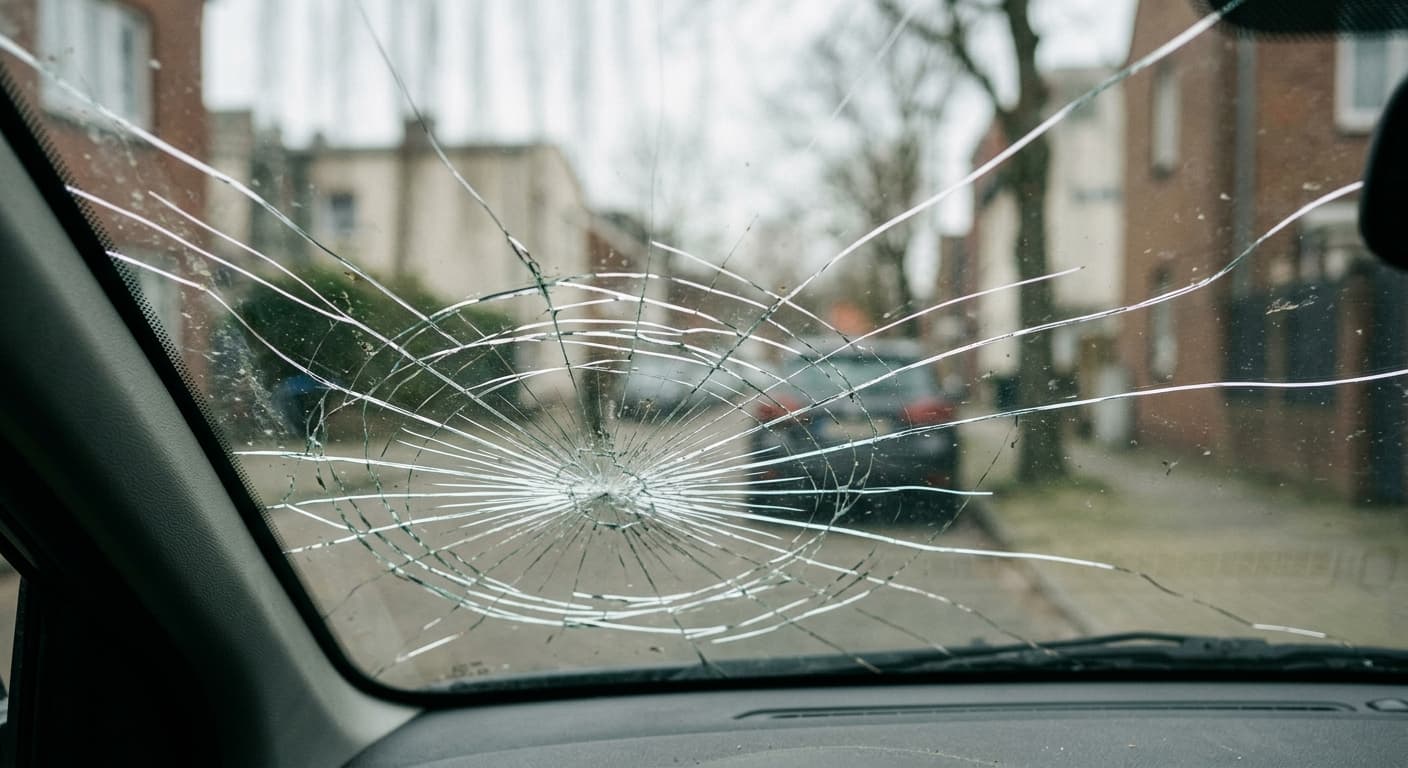
Wisconsin is an at-fault (tort) state that follows modified comparative negligence with a 51% bar, meaning the at-fault driver's insurer pays and your recovery is reduced by your share of fault but eliminated entirely against any person whose negligence was less than yours.
Is Wisconsin a no-fault or at-fault state?
Wisconsin is a traditional at-fault (tort) state. It is not one of the no-fault states that require personal injury protection (PIP) coverage. When a crash occurs in Wisconsin, the at-fault driver and their liability insurer are responsible for the other party's bodily-injury losses and property damage. There is no PIP-first requirement, no threshold that must be crossed before you can seek pain-and-suffering damages, and no mandate to exhaust your own first-party coverage before filing a third-party claim.
Under Wisconsin's financial-responsibility statute (Wis. Stat. ch. 344) and the required auto policy provisions of § 632.32, every Wisconsin driver must carry bodily-injury liability and property-damage liability coverage. An injured party may file a claim with the at-fault driver's insurer, use their own collision or medical-payments coverage, or file a lawsuit directly. Because Wisconsin is a tort state, pain and suffering, lost wages, and all other compensatory damages are recoverable from the start, subject only to the state's modified comparative-negligence rule.
How fault is shared: Wisconsin's negligence rule
Wisconsin follows modified comparative negligence with a 51% bar under Wis. Stat. § 895.045(1). Under this system, each party's percentage of fault is calculated, and the plaintiff's damages are reduced by that percentage. A plaintiff who is 20% at fault recovers 80% of their damages. However, a plaintiff whose negligence is greater than the defendant's fault (51% or more) is completely barred from recovery.
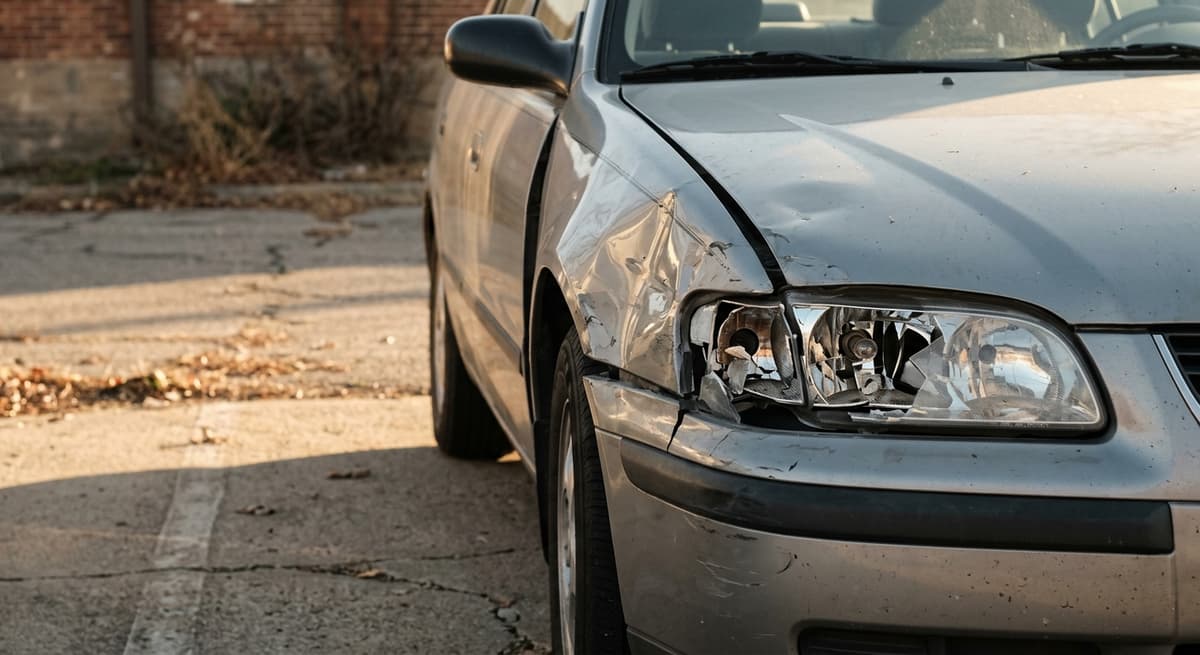
This is an important distinction from pure contributory negligence states, where even 1% of fault bars a claim, and from pure comparative negligence states, where even a 99% at-fault plaintiff can recover something. Wisconsin's rule is in the middle: a plaintiff who is up to 50% at fault can recover from a defendant who carries at least as much fault, but nothing is recoverable from a defendant whose negligence was less than the plaintiff's. Section 895.045(1) directs that the plaintiff's negligence be measured separately against the negligence of each person found to be causally negligent, so spreading fault among several defendants can defeat a claim that would have survived against one. A plaintiff who is 40% at fault facing three defendants at 20% each recovers nothing, because 40% is greater than each individual defendant's share. The same subsection caps the liability of any defendant found less than 51% causally negligent at that defendant's own percentage, while a defendant at 51% or more is jointly and severally liable for the damages allowed. Insurers frequently dispute fault percentages during settlement negotiations, making documentation of the crash scene and early legal advice valuable.
Minimum car insurance in Wisconsin
Wisconsin requires minimum liability insurance under Wis. Stat. ch. 344 and § 632.32. The mandatory limits are 25/50/10: $25,000 for bodily injury to one person, $50,000 for bodily injury to all persons in a single accident, and $10,000 for property damage. These are the legal floor, and most attorneys recommend carrying significantly higher limits.
In addition to liability coverage, Wisconsin mandates uninsured motorist (UM) bodily-injury coverage at minimum limits of $25,000 per person and $50,000 per accident under Wis. Stat. § 632.32(4). UM coverage protects you when the at-fault driver has no insurance. Town mutual insurers are excepted from the UM mandate. Underinsured motorist (UIM) coverage is not mandatory in Wisconsin. Wis. Stat. § 632.32(4m)(a) requires the insurer to provide a written notice that UIM coverage is available, once, in conjunction with delivery of the policy. Rejection is far less formal: § 632.32(4m)(b) states that acceptance or rejection need not be in writing, and that the absence of a premium payment for UIM coverage is conclusive proof that the person rejected the coverage. Look for a UIM premium line on your declarations page rather than assuming the coverage is there. If UIM is in force, minimum limits are $50,000 per person and $100,000 per accident. UIM coverage closes the gap when the at-fault driver's liability limits are insufficient to cover your losses. Personal injury protection (PIP) is not required in Wisconsin because it is a tort state. Medical payments coverage is treated differently: Wis. Stat. § 632.32(4)(a)2. requires every policy subject to the statute to contain medical payments coverage of at least $1,000 per person, and § 632.32(4)(bc) lets a named insured reject it. It is included by default unless you turned it down, so check the declarations page before assuming you have no first-party medical coverage.
How long you have to file: the statute of limitations
In Wisconsin, personal-injury actions arising from a car accident must be filed within 3 years under Wis. Stat. § 893.54(1m)(a). The clock generally starts running on the date of the crash. If you miss this deadline without a valid legal exception, the court will almost certainly dismiss your case and you lose your right to compensation no matter how clear the other driver's fault.

One important carve-out applies to wrongful-death claims: when someone dies as a result of a motor-vehicle accident, the family's wrongful-death lawsuit must be filed within 2 years, not 3, under Wis. Stat. § 893.54(2m). Property-damage claims from a motor-vehicle accident also carry a 3-year deadline under Wis. Stat. § 893.52(2); the general 6-year property-damage period in § 893.52(1) does not apply to crash damage. If your crash involved a government vehicle or was caused by a government employee's negligence, notice-of-claim requirements and shorter administrative deadlines may apply well before any court filing is due. Speaking with an attorney shortly after the crash helps preserve evidence and ensures you stay within all applicable deadlines.
For more detail on Wisconsin's civil filing deadlines, see the Wisconsin statute of limitations page.
What a Wisconsin car accident claim is worth
Wisconsin's tort system allows injured parties to pursue the full range of compensatory damages: medical expenses (past and future), lost wages and lost earning capacity, rehabilitation costs, property damage, pain and suffering, emotional distress, and loss of enjoyment of life. Because Wisconsin is an at-fault state with no injury threshold, you are not limited to economic losses; non-economic damages like pain and suffering are available from the first dollar of loss.
In practice, the actual recovery depends on several factors. First, your fault percentage under § 895.045 reduces your award proportionally. A $100,000 verdict where you are found 25% at fault yields $75,000. Second, the at-fault driver's policy limits cap what their insurer will pay unless you pursue a judgment directly against the driver. Many drivers carry only the 25/50/10 minimum, which can be inadequate for serious injuries. Your own UIM coverage becomes critical when the at-fault driver is underinsured. Use the Wisconsin car accident settlement calculator to get a rough estimate of your claim's value based on your specific losses and fault allocation.
What to do after a car accident in Wisconsin
Your actions in the hours and days after a crash in Wisconsin directly affect your safety, the police record, and the strength of any future claim.

At the scene: Move to safety if possible, call 911 for injuries, and stay at the scene. Wisconsin law requires drivers involved in accidents causing injury, death, or property damage above a threshold to report the crash. Exchange name, address, insurance information, and license-plate numbers with all other drivers.
Document everything: Take photos of vehicle damage, skid marks, road conditions, traffic signs, and any visible injuries. Get contact information from witnesses before they leave. Note the responding officers' names and request the crash report number.
Seek medical care promptly: Even if you feel fine, some injuries (concussion, soft-tissue damage, internal bleeding) are not immediately apparent. A delay in treatment can harm your health and is routinely used by insurers to argue that your injuries were not caused by the crash.
Be careful with early communications: Do not give a recorded statement to the at-fault driver's insurer without consulting an attorney. Wisconsin's 51% bar means an insurer may pressure you to accept partial blame to reduce or eliminate their payout. An initial settlement offer may appear quickly and may be far below the value of your claim.
Consult an attorney: Most Wisconsin car accident attorneys work on a contingency basis, and many offer a free consultation. On those terms, you can get a free claim review from a Wisconsin car accident lawyer and file within the 3-year statute of limitations (attorney advertising).
This article is general legal information, not legal advice. Car accident law varies by state and changes, and settlement values depend on the specific facts. For advice about a specific crash, consult a licensed attorney in Wisconsin.
Related pages:
- Wisconsin Car Accident Settlement Calculator
- Wisconsin Hit-and-Run Laws
- Car Accident Laws by State: Hub
More Wisconsin Laws
- Wisconsin Dashcam Laws
- Wisconsin Hit and Run Laws
- Wisconsin Slip and Fall Laws
- Wisconsin Statute of Limitations
- Wisconsin Workers Compensation Laws
Frequently Asked Questions
Is Wisconsin a no-fault state?
No. Wisconsin is an at-fault (tort) state. There is no personal injury protection (PIP) requirement and no no-fault threshold. After a crash, you file a claim directly against the at-fault driver's liability insurer and can immediately seek pain-and-suffering damages.
Is Wisconsin an at-fault state?
Yes. Wisconsin is a traditional at-fault state. The driver who caused the crash is responsible for the other party's bodily-injury losses and property damage. Wisconsin requires mandatory liability insurance under Wis. Stat. ch. 344 and § 632.32 to cover those claims.
What is the statute of limitations for a car accident in Wisconsin?
You generally have 3 years from the accident date to file a personal-injury lawsuit under Wis. Stat. § 893.54(1m)(a). Wrongful-death claims arising from a car crash have a shorter 2-year deadline under § 893.54(2m). Property-damage claims from a motor-vehicle accident also have 3 years under § 893.52(2). Missing these deadlines usually means losing your right to compensation.
Can I still recover if I was partly at fault in Wisconsin?
Usually yes if your fault does not exceed 50%, but the comparison is made defendant by defendant. Wisconsin uses modified comparative negligence (Wis. Stat. § 895.045(1)), and your damages are reduced by your fault percentage, so at 30% fault you recover 70%. The statute measures your negligence separately against the negligence of each person found causally negligent, so you cannot recover from a defendant whose share of fault was smaller than yours. If you are 40% at fault and three defendants are 20% each, you recover nothing even though your own share is under 51%.
What are the minimum insurance requirements in Wisconsin?
Wisconsin requires 25/50/10 liability coverage: $25,000 bodily injury per person, $50,000 per accident, and $10,000 property damage. Uninsured motorist coverage of $25,000/$50,000 is also mandatory. Insurers must give written notice that underinsured motorist coverage is available, but under Wis. Stat. § 632.32(4m)(b) a rejection need not be in writing and not paying a UIM premium is conclusive proof of rejection. PIP is not required, though a policy must include at least $1,000 per person in medical payments coverage unless the named insured rejects it under § 632.32(4)(bc).
How much is my Wisconsin car accident claim worth?
There is no single answer, but Wisconsin's tort system allows recovery of medical bills, lost wages, future care costs, pain and suffering, and other compensatory damages. Your recovery is reduced by your share of fault under the 51% comparative-negligence rule. Use the Wisconsin car accident settlement calculator for a rough estimate based on your specific losses.
Updates
Corrected how Wisconsin's comparative negligence rule works when several defendants share fault, and fixed the insurance section: underinsured motorist coverage can be rejected without a writing, and at least $1,000 of medical payments coverage is included by default unless the named insured rejects it.
Corrected the deadline for property-damage claims from a Wisconsin car accident: Wis. Stat. 893.52(2) sets 3 years (the 6-year period in 893.52(1) applies only to property damage not arising from a motor-vehicle accident).
Independently fact-checked against the cited primary sources; governing law re-checked for recent changes
Governing law re-checked for recent changes
Reviewed and approved by an editor
The Law Behind This Article
This article rests on the statutory provisions below, held in our own legal record and retrieved from the official source. Tap a section to read the operative text.
Wisconsin Statutes, Chapter 895: Damages, Liability, And Miscellaneous Provisions Regarding Actions In Courts
§ 895.045Contributory negligence.In forcecited in 10 of our articles
(1) Comparative negligence. Contributory negligence does not bar recovery in an action by any person or the person’s legal representative to recover damages for negligence resulting in death or in injury to person or property, if that negligence was not greater than the negligence of the person against whom recovery is sought, but any damages allowed shall be diminished in the proportion to the amount of negligence attributed to the person recovering. The negligence of the plaintiff shall be measured separately against the negligence of each person found to be causally negligent. The liability of each person found to be causally negligent whose percentage of causal negligence is less than 51 percent is limited to the percentage of the total causal negligence attributed to that person. A person found to be causally negligent whose percentage of causal negligence is 51 percent or more shall be jointly and severally liable for the damages allowed. (2) Concerted action. Notwithstanding sub. (1), if 2 or more parties act in accordance with a common scheme or plan, those parties are jointly and severally liable for all damages resulting from that action, except as provided in s.
Official text (excerpt) · last checked 2026-09-15 · Read the full text in our law library · Verify at docs.legis.wisconsin.gov
Cited in 69 court opinions in our collectionLatest citing opinion in our collection: 2024
Opinions citing this section in our collection:
- Industrial Risk Insurers & Quad Graphics, Inc. v. American Engineering Testing, Inc. (Court of Appeals of Wisconsin 2009, 318 Wis. 2d 148)“…g to Leavitt, the policy reasons for the 1995 amendment to Wis. Stat. § 895.045 , which changed the common law on joint…”
- Richards v. Badger Mutual Insurance (Wisconsin Supreme Court 2008, 309 Wis. 2d 541)“…me or plan" that invokes joint and several liability under Wis. Stat. § 895.045 (2) (2005-06). [2] We affirm the court…”
- Fuchsgruber v. Custom Accessories, Inc. (Wisconsin Supreme Court 2001, 244 Wis. 2d 758)“…o the compara *763 tive negligence statute, Wis. Stat. § 895.045 (1) (1999-2000), 1 applies…”
Identified automatically from the court opinions citing this section — not a ranking of which case controls.
Also relied on in: Medical Malpractice Laws in Wisconsin (2026): Deadlines & Caps, Motorcycle Accident Laws in Wisconsin (2026): Deadlines, Wisconsin Slip and Fall Laws: Proving Premises Liability
Wisconsin Statutes, Chapter 632: Insurance Contracts In Specific Lines
§ 632.32Provisions of motor vehicle insurance policies.In force
(1) Scope. Except as otherwise provided, this section applies to every policy of insurance issued or delivered in this state against the insured’s liability for loss or damage resulting from accident caused by any motor vehicle, whether the loss or damage is to property or to a person. (2) Definitions. In this section: (ab) “Commercial automobile liability policy” means a liability insurance policy that is intended principally to provide primary coverage for the insured’s liability arising out of the ownership, maintenance, or use of a motor vehicle in the insured’s business or other commercial activities. (ac) “Commercial liability policy” means any form of liability insurance policy, including a commercial or business package policy or a policy written on farm and agricultural operations, that is intended principally to provide primary coverage for the insured’s general liability arising out of its business or other commercial activities, and that includes coverage for the insured’s liability arising out of the ownership, maintenance, or use of a motor vehicle as only one component of the policy or as coverage that is only incidental to the principal purpose of the policy.
Official text (excerpt) · last checked 2026-07-29 · Read the full text in our law library · Verify at docs.legis.wisconsin.gov
Cited in 136 court opinions in our collectionLatest citing opinion in our collection: 2023
Opinions citing this section in our collection:
- Folkman v. Quamme (Wisconsin Supreme Court 2003, 264 Wis. 2d 617)“…s of liability clause in Society's policy does not violate Wis. Stat. §§ 632.32 (3)(b), 632.32(5)(f), or 641.43(1), is…”
- Johnson Controls, Inc. v. Employers Insurance of Wausau (Wisconsin Supreme Court 2003, 264 Wis. 2d 60)“…nessee, 501 U.S. 808, 827 (1991). [3] See, e.g., Wis. Stat. § 632.32 (5)(f) (1995-96), permitting an insurer…”
- Teschendorf v. State Farm Ins. Companies (Wisconsin Supreme Court 2006, 293 Wis. 2d 123)“…any person related to the insured. ¶ 2. We conclude that Wis. Stat. § 632.32 (5)(i)2. (2001-02) 2 does not allow an…”
Identified automatically from the court opinions citing this section — not a ranking of which case controls.
Wisconsin Statutes, Chapter 893: Limitations Of Commencement Of Actions And Proceedings; Procedure For Claims Against Governmental Units
§ 893.54Injury to the person.In forcecited in 7 of our articles
(1m) Except as provided in sub. (2m), the following actions shall be commenced within 3 years or be barred: (a) An action to recover damages for injuries to the person, including an action to recover damages for injuries to the person caused or sustained by or arising from an accident involving a motor vehicle. (b) An action brought to recover damages for death caused by the wrongful act, neglect or default of another. (2m) An action brought to recover damages for death caused by the wrongful act, neglect, or default of another and arising from an accident involving a motor vehicle shall be commenced within 2 years after the cause of action accrues or be barred. Judicial Council Committee’s Note, 1979: This section is derived from previous s. 893.205 but was amended to eliminate language now covered by newly created s. 893.07. (See note to s. 893.07). [Bill 326-A] Cross-reference: See also the notes to s. 893.53 for additional treatments of 42 USC 1983.
Official text (excerpt) · last checked 2026-07-29 · Read the full text in our law library · Verify at docs.legis.wisconsin.gov
Cited in 104 court opinions in our collectionLatest citing opinion in our collection: 2026
Opinions citing this section in our collection:
- Sawyer v. Midelfort (Wisconsin Supreme Court 1999, 227 Wis. 2d 124)“…of emotional distress *155 against Lausted is barred by Wis. Stat. § 893.54 , [7] the three-year statute of limita…”
- John Doe 67C v. Archdiocese of Milwaukee (Wisconsin Supreme Court 2005, 284 Wis. 2d 307)“…aim would be barred by the present statute of limitations, Wis. Stat. § 893.54 (1) (2001-02), [5] which bars actions…”
- Tews v. NHI, LLC (Wisconsin Supreme Court 2010, 330 Wis. 2d 389)“…y the three-year statute of limitations *431 contained in Wis. Stat. § 893.54 . 2 It is undisputed that Tews' second…”
Identified automatically from the court opinions citing this section — not a ranking of which case controls.
Also relied on in: Wisconsin Dog Bite Laws: Liability and Victim Rights, Wisconsin Statute of Limitations: Filing Deadlines by Case Type, Truck Accident Laws in Wisconsin (2026): Deadlines & Liability
§ 893.52Action for damages for injury to property.In forcecited in 2 of our articles
(1) Except as provided in sub. (2) and in any other case where a different period is expressly prescribed, an action, not arising on contract, to recover damages for an injury to real or personal property shall be commenced within 6 years after the cause of action accrues or be barred. (2) An action, not arising on contract, to recover damages for an injury to real or personal property that are caused or sustained by, or that arise from, an accident involving a motor vehicle shall be commenced within 3 years after the cause of action accrues or be barred. Judicial Council Committee’s Note, 1979: This section is based upon previous s. 893.19 (5) which is split into 2 separate provisions. See s. 893.53 for the other provision. [Bill 326-A]
Official text (excerpt) · last checked 2026-07-29 · Read the full text in our law library · Verify at docs.legis.wisconsin.gov
Cited in 27 court opinions in our collectionLatest citing opinion in our collection: 2026
Opinions citing this section in our collection:
- Zastrow v. Journal Communications, Inc. (Wisconsin Supreme Court 2006, 291 Wis. 2d 426)“…easoned that the six-year statute of limitations in either Wis. Stat. §§ 893.52 or 893.53 applied. The circuit court d…”
- Munger v. Seehafer (Court of Appeals of Wisconsin 2016, 372 Wis. 2d 749)“…as the six-year statute governing injury to real property, Wis. Stat. § 893.52 . Alternatively, they argued that no st…”
- Gumz v. Northern States Power Co. (Wisconsin Supreme Court 2007, 305 Wis. 2d 263)“…suit within the six-year period of limitations imposed by Wis. Stat. § 893.52 . [2] The circuit court denied the mot…”
Identified automatically from the court opinions citing this section — not a ranking of which case controls.
Explore the law
This article also draws on these acts and chapters (opening at their first section): Wisconsin Statutes, Chapter 344: Vehicles § 344.01 (Words and phrases defined.)
Related law for further reading — not part of this article’s citations.
Search our full record of US law — 2.1 million sections, every state + federal →
Sources and References
- Wis. Stat. § 632.32 — Required provisions in automobile insurance policies(docs.legis.wisconsin.gov).gov
- Wis. Stat. ch. 344 — Financial responsibility (mandatory liability insurance, 25/50/10)(docs.legis.wisconsin.gov).gov
- Wis. Stat. § 895.045(1) — Contributory negligence (modified comparative fault, 51% bar)(docs.legis.wisconsin.gov).gov
- Wis. Stat. § 893.54(1m)(a) — Personal-injury statute of limitations (3 years)(docs.legis.wisconsin.gov).gov
- Wis. Stat. § 893.52 (property damage limitations: 6 years generally, 3 years for damage arising from a motor vehicle accident under sub. (2))(docs.legis.wisconsin.gov).gov
Paid attorney referral. RecordingLaw may receive compensation when you use an attorney-help link. RecordingLaw is not a law firm. Submitting a request does not guarantee that an attorney will accept your case and does not create an attorney-client relationship.