
West Virginia
West Virginia Car Accident Laws: Fault, Insurance, and Your Claim
Independently fact-checked against primary sources (last audited August 18, 2026). · Reviewed by the RecordingLaw editorial team. · Law checked current as of August 18, 2026. · 5 primary sources cited on this page. How we verify our legal content
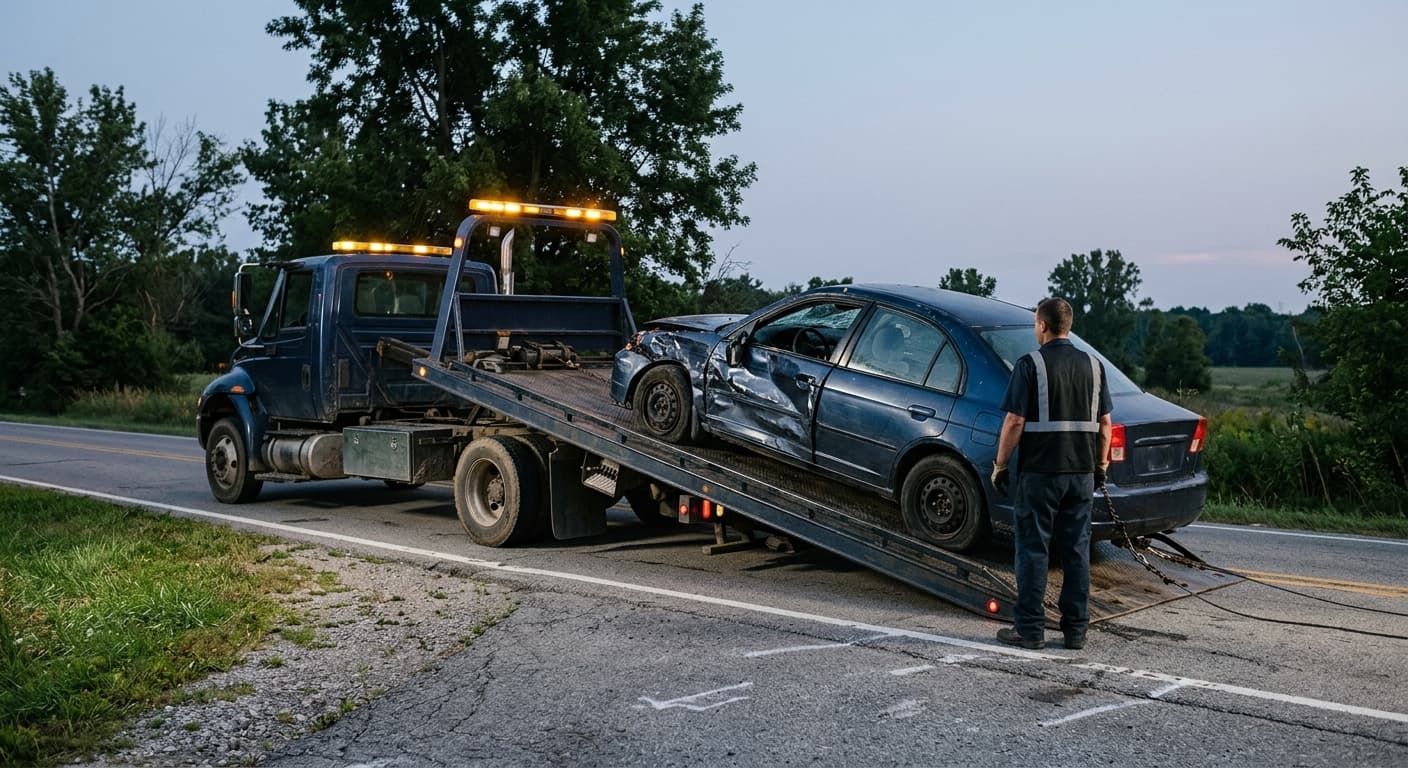
West Virginia is an at-fault (tort) state that follows modified comparative fault with a 51% bar, so the at-fault driver's liability insurance pays for injuries and damages, and your recovery is reduced by your share of fault but barred entirely if you are more than 50% at fault.
Is West Virginia a no-fault or at-fault state?
West Virginia is a traditional at-fault (tort) state. It is not one of the twelve no-fault states (FL, MI, MN, NY, ND, HI, KS, KY, MA, NJ, PA, UT) and is not a choice or add-on PIP state. After a crash, the at-fault driver's liability insurance pays the injured party's damages. An injured person may sue the at-fault driver directly for both economic damages (medical bills, lost wages, vehicle repair) and non-economic damages (pain and suffering) without first crossing any injury threshold. West Virginia has no statutory PIP or no-fault scheme, so first-party medical coverage is optional MedPay only. The result is a clean tort system: liability follows fault, and there is no no-fault benefit pool standing between you and the at-fault driver.
How fault is shared: West Virginia's negligence rule
West Virginia follows modified comparative fault with a 51% bar, codified at W. Va. Code 55-7-13a through 55-7-13d. Under this rule, a plaintiff can recover only if their share of fault is not greater than the combined fault of all other persons involved, which means your fault must be 50% or less. If a jury finds you 51% or more at fault, you recover nothing. If you are 50% or less at fault, your damages are reduced in proportion to your fault percentage. For example, if a jury awards $100,000 but finds you 30% at fault, you take home $70,000. This is more favorable than pure contributory negligence states (AL, DC, MD, NC, VA), where any fault at all can bar your claim, but it is stricter than pure comparative fault states where even a 99%-at-fault plaintiff can recover something. Documenting the other driver's negligence is important under any comparative fault system, and especially so near the 50% line.

Minimum car insurance in West Virginia
West Virginia mandates liability insurance with minimum limits of 25/50/25: $25,000 bodily injury per person, $50,000 bodily injury per accident, and $25,000 property damage per accident (W. Va. Code 17D-4-2, effective January 1, 2016). Policies in effect on or before December 31, 2015 used the prior 20/40/10 limits, which were grandfathered only until renewal. Uninsured motorist (UM) coverage is mandatory at the same minimum 25/50/25 limits under W. Va. Code 33-6-31(b). Underinsured motorist (UIM) coverage is not mandatory, but insurers must offer it with adjusted premiums in an amount up to the insured's liability limits; you may decline or limit UIM in writing. Insurers must also offer optional higher UM/UIM limits up to $100,000/$300,000 bodily injury and $50,000 property damage. Because UM is mandatory but UIM is offer-only, many policies carry UM without UIM unless the insured specifically requested UIM. West Virginia does not require PIP; first-party medical coverage is available only as optional MedPay.
How long you have to file: the statute of limitations
West Virginia imposes a two-year statute of limitations for personal-injury claims arising from auto accidents under W. Va. Code 55-2-12. The clock generally starts running on the date of the accident. Wrongful-death claims also run two years under W. Va. Code 55-7-6. Missing this deadline almost always means your claim is permanently barred, regardless of how strong the underlying facts are. Certain circumstances can toll or extend the period, including claims involving minors or situations where injuries were not immediately discoverable, but you should never count on tolling. Government defendants follow different rules in West Virginia, and they are not shorter filing deadlines. An action against a political subdivision such as a county, municipality, or local agency must be brought within two years under W. Va. Code 29-12A-6(a), measured from when the cause of action arose or when the loss was or reasonably should have been discovered, whichever is later, unless another code section sets a shorter period for that type of action. Suing a state agency requires written notice by certified mail to the agency's chief officer and to the Attorney General at least thirty days before filing, and that notice tolls the applicable statute of limitations for thirty days rather than shortening it (W. Va. Code 55-17-3(a)). If a government vehicle or employee was involved, consult an attorney immediately. For a deeper look at West Virginia's civil filing deadlines, see our West Virginia statute of limitations page.

What a West Virginia car accident claim is worth
The value of a West Virginia car accident claim depends on your economic damages (medical bills, future medical costs, lost wages, lost earning capacity, vehicle repair or replacement) plus non-economic damages (pain and suffering, emotional distress, loss of enjoyment of life). Because West Virginia is an at-fault tort state, there is no no-fault cap or benefit schedule limiting pain-and-suffering recovery. Your award is then reduced by your percentage of fault under the modified comparative fault rule. Insurance policy limits are a practical ceiling: even a large jury verdict can be difficult to collect if the at-fault driver only carries 25/50 bodily injury limits. UM/UIM coverage you carry on your own policy fills some of the gap when the at-fault driver is uninsured or underinsured. Use our West Virginia car accident settlement calculator to estimate a ballpark range for your specific facts.
What to do after a car accident in West Virginia
Your actions in the hours and days after a crash directly affect both your safety and the strength of any future claim. First, make sure everyone is safe and call 911 if there are injuries or significant property damage. West Virginia law requires drivers to report accidents resulting in injury, death, or property damage over a threshold. Stay at the scene, exchange insurance and contact information with the other driver, and cooperate with the investigating officer. Document the scene thoroughly: photograph vehicle damage, road conditions, skid marks, traffic controls, and any visible injuries. Seek medical attention even if you feel fine, as some injuries (soft tissue, concussion, internal) surface hours or days later, and gaps in medical care are routinely used by insurers to minimize claims. Notify your own insurer of the accident. Before you give the at-fault driver's insurer a statement or take its offer, get a free claim review from a West Virginia injury lawyer to see what the offer leaves out (attorney advertising). Insurers typically make early offers that do not account for future medical costs or full non-economic damages. An attorney can also help identify UM/UIM coverage and evaluate comparative fault arguments.

This article is general legal information, not legal advice. Car accident law varies by state and changes, and settlement values depend on the specific facts. For advice about a specific crash, consult a licensed attorney in West Virginia.
Related pages:
- West Virginia car accident settlement calculator
- West Virginia hit-and-run laws
- West Virginia statute of limitations
- Car accident laws by state: full hub
More West Virginia Laws
- West Virginia Dashcam Laws
- West Virginia Hit and Run Laws
- West Virginia Slip and Fall Laws
- West Virginia Statute of Limitations
- West Virginia Workers Compensation Laws
Frequently Asked Questions
Is West Virginia a no-fault state?
No. West Virginia is an at-fault (tort) state with no PIP or no-fault scheme. After a crash, the at-fault driver's liability insurance pays for injuries and damages. You may sue the at-fault driver directly for medical bills, lost wages, and pain and suffering without clearing any injury threshold.
Is West Virginia an at-fault state?
Yes. West Virginia is a traditional at-fault state. The driver responsible for causing the accident bears financial liability through their liability insurance, and an injured party can bring a tort claim against the at-fault driver in court.
What is the statute of limitations for a car accident in West Virginia?
Two years from the date of the accident for personal-injury claims (W. Va. Code 55-2-12). Wrongful-death claims also carry a two-year limit. Missing the deadline almost always bars the claim permanently. Actions against a county or municipality also run two years (W. Va. Code 29-12A-6(a)), and suing a state agency requires thirty days' written pre-suit notice to the agency and the Attorney General, which tolls the deadline rather than shortening it (W. Va. Code 55-17-3(a)).
Can I still recover if I was partly at fault in West Virginia?
Yes, as long as your fault is 50% or less. West Virginia follows modified comparative fault with a 51% bar (W. Va. Code 55-7-13a to 55-7-13d). Your damages are reduced by your percentage of fault. If you are found more than 50% at fault, you recover nothing.
What are the minimum insurance requirements in West Virginia?
Drivers must carry at least 25/50/25 liability coverage: $25,000 per injured person, $50,000 per accident for bodily injury, and $25,000 for property damage (W. Va. Code 17D-4-2). Uninsured motorist coverage at the same minimums is also mandatory. Underinsured motorist coverage is optional but must be offered by the insurer.
How much is my West Virginia car accident claim worth?
Claim value depends on your economic damages (medical bills, lost wages, vehicle repair) plus non-economic damages (pain and suffering). Your award is reduced by your share of fault. Insurance policy limits are a practical ceiling. Use our West Virginia car accident settlement calculator for a ballpark estimate based on your specific facts.
Does West Virginia require PIP coverage?
No. West Virginia does not have a PIP or no-fault insurance requirement. First-party medical coverage is available only as optional MedPay. Because WV is a tort state, you recover medical costs from the at-fault driver's liability coverage or your own optional MedPay.
Updates
Corrected the claims-against-government section: West Virginia gives you two years to sue a county or municipality, and the thirty-day notice required before suing a state agency pauses the filing deadline instead of shortening it.
Independently fact-checked against the cited primary sources; governing law re-checked for recent changes
Governing law re-checked for recent changes
Reviewed and approved by an editor
The Law Behind This Article
This article rests on the statutory provisions below, held in our own legal record and retrieved from the official source. Tap a section to read the operative text.
West Virginia Code
§ 55-7-13AModified comparative fault standard established.In forcecited in 6 of our articles
(a) For purposes of this article, "comparative fault" means the degree to which the fault of a person was a proximate cause of an alleged personal injury or death or damage to property, expressed as a percentage. Fault shall be determined according to section thirteen-c of this article. (b) In any action based on tort or any other legal theory seeking damages for personal injury, property damage, or wrongful death, recovery shall be predicated upon principles of comparative fault and the liability of each person, including plaintiffs, defendants and nonparties who proximately caused the damages, shall be allocated to each applicable person in direct proportion to that person's percentage of fault. (c) The total of the percentages of comparative fault allocated by the trier of fact with respect to a particular incident or injury must equal either zero percent or one hundred percent.
Official text (excerpt) · last checked 2026-09-14 · Read the full text in our law library · Verify at code.wvlegislature.gov
Also relied on in: West Virginia Dog Bite Laws: Liability and Victim Rights, Medical Malpractice Laws in West Virginia (2026): Caps & Deadlines
§ 55-7-13DDetermination of fault; imputed fault; when plaintiff’s criminal conduct bars recovery; burden of proof; damages; stay of action; limitations; applicability; severability.In forcecited in 2 of our articles
(a) Determination of fault of parties and nonparties. — (1) In assessing percentages of fault, the trier of fact shall consider the fault of all persons who contributed to the alleged damages regardless of whether the person was or could have been named as a party to the suit; (2) Fault of a nonparty shall be considered if the plaintiff entered into a settlement agreement with the nonparty or if a defending party gives notice no later than one hundred eighty days after service of process upon said defendant that a nonparty was wholly or partially at fault. Notice shall be filed with the court and served upon all parties to the action designating the nonparty and setting forth the nonparty’s name and last known address, or the best identification of the nonparty which is possible under the circumstances, together with a brief statement of the basis for believing such nonparty to be at fault; (3) In all instances where a nonparty is assessed a percentage of fault, any recovery by a plaintiff shall be reduced in proportion to the percentage of fault chargeable to such nonparty.
Official text (excerpt) · last checked 2026-07-30 · Read the full text in our law library · Verify at code.wvlegislature.gov
§ 17D-4-2"Proof of financial responsibility" defined.In forcecited in 3 of our articles
As used in this chapter: (a) "Proof of financial responsibility" means proof of ability to respond in damages for liability, on account of accident occurring subsequent to the effective date of the proof, arising out of the ownership, operation, maintenance or use of a motor vehicle, trailer or semitrailer in the amount of $20,000 because of bodily injury to or death of one person in any one accident, and, subject to the limit for one person, in the amount of $40,000 because of bodily injury to or death of two or more persons in any one accident, and in the amount of $10,000 because of injury to or destruction of property of others in any one accident.
Official text (excerpt) · last checked 2026-07-30 · Read the full text in our law library · Verify at code.wvlegislature.gov
Cited in 4 court opinions in our collectionLatest citing opinion in our collection: 2025
Opinions citing this section in our collection:
- Jackson v. Builders Transport (Court of Appeals for the Fourth Circuit 1996)“…limited to the dollar amount, i.e. $20,000, provided for in W. Va. Code § 17D-4-2. To answer this question, the West Virg…”
- United States v. Mark Bolling (Court of Appeals for the Fourth Circuit 2025)“…The West Virginia statute cited by the parties, W. Va. Code Ann. § 17D-4-2, is silent about whether a car…”
- White Pine Insurance Company v. Interstate Towing, LLC (District Court, S.D. West Virginia 2023)“…d under West Virginia’s Vehicle Safety Responsibility Law. W. Va. Code § 17D-4-2. (ECF No. 24 at 9). After White reject…”
Identified automatically from the court opinions citing this section — not a ranking of which case controls.
Also relied on in: Truck Accident Laws in West Virginia (2026): Deadlines & Liability
§ 33-6-31Motor vehicle policy; omnibus clause; uninsured and underinsured motorists' coverage; conditions for recovery under endorsement; rights and liabilities of insurer.In forcecited in 2 of our articles
(a) No policy or contract of bodily injury liability insurance, or of property damage liability insurance, covering liability arising from the ownership, maintenance or use of any motor vehicle, may be issued or delivered in this state to the owner of such vehicle, or may be issued or delivered by any insurer licensed in this state upon any motor vehicle for which a certificate of title has been issued by the Division of Motor Vehicles of this state, unless it contains a provision insuring the named insured and any other person, except a bailee for hire and any persons specifically excluded by any restrictive endorsement attached to the policy, responsible for the use of or using the motor vehicle with the consent, expressed or implied, of the named insured or his or her spouse against liability for death or bodily injury sustained or loss or damage occasioned within the coverage of the policy or contract as a result of negligence in the operation or use of such vehicle by the named insured or by such person: Provided, That in any such automobile liability insurance policy or contract, or endorsement thereto, if coverage resulting from the use of a nonowned automobile is…
Official text (excerpt) · last checked 2026-07-30 · Read the full text in our law library · Verify at code.wvlegislature.gov
Cited in 27 court opinions in our collectionLatest citing opinion in our collection: 2025
Opinions citing this section in our collection:
- United Financial Casualty Co. v. Greg Ball (Court of Appeals for the Fourth Circuit 2019, 941 F.3d 710)“…in § 33-6-31(h) applied to eliminate this requirement. See W. Va. Code § 33-6-31(h) (providing that subsection (a) does…”
- Rodney Weese Maude Weese v. Nationwide Insurance Company, an Ohio Corporation (Court of Appeals for the Fourth Circuit 1989, 879 F.2d 115)“…of the claim against the uninsured motorist as permitted by W.Va.Code § 33-6-31(d). The jury returned a verdict of $201…”
- Nadler v. Liberty Mutual Fire Insurance (District Court, S.D. West Virginia 1990, 770 F. Supp. 294)“…lized procedure to determine a motorist’s fault pursuant to W.Va.Code 33-6-31, is deemed to sound in tort. 2…”
Identified automatically from the court opinions citing this section — not a ranking of which case controls.
§ 55-2-12Personal actions not otherwise provided for.In forcecited in 18 of our articles
Every personal action for which no limitation is otherwise prescribed shall be brought: (a) Within two years next after the right to bring the same shall have accrued, if it be for damage to property; (b) within two years next after the right to bring the same shall have accrued if it be for damages for personal injuries; and (c) within one year next after the right to bring the same shall have accrued if it be for any other matter of such nature that, in case a party die, it could not have been brought at common law by or against his personal representative.
Official text (excerpt) · last checked 2026-09-14 · Read the full text in our law library · Verify at code.wvlegislature.gov
Cited in 94 court opinions in our collectionLatest citing opinion in our collection: 2026
Opinions citing this section in our collection:
- Ashley Cooper v. City of Wheeling (Court of Appeals for the Fourth Circuit 2026)“…sonal representative. W. Va. Code § 55-2-12 (emphases supplied). Co…”
- Graham County Soil & Water Conservation District v. United States Ex Rel. Wilson (Supreme Court of the United States 2005, 545 U.S. 409)“…e § 4.16.080 (2) (2004) (catchall for injuries to person); W. Va. Code §55-2-12 (Lexis 2000) (catchall); § 6C-1-4(a) (…”
- Fernando Smith v. Michael Travelpiece (Court of Appeals for the Fourth Circuit 2022, 31 F.4th 878)“…te of limitations for personal injury actions applies. See W. Va. Code § 55-2-12(b). 3 But general common-law pr…”
Identified automatically from the court opinions citing this section — not a ranking of which case controls.
Also relied on in: West Virginia Recording Laws (2026): One-Party Consent Rules, West Virginia Defamation Laws: Libel & Slander (2026), West Virginia Slip and Fall Laws: Proving Premises Liability
§ 55-7-6By whom action for wrongful death to be brought; amount and distribution of damages; period of limitation.In forcecited in 12 of our articles
(a) Every such action shall be brought by and in the name of the personal representative of such deceased person who has been duly appointed in this state, or in any other state, territory or district of the United States, or in any foreign country, and the amount recovered in every such action shall be recovered by said personal representative and be distributed in accordance herewith. If the personal representative was duly appointed in another state, territory or district of the United States, or in any foreign country, such personal representative shall, at the time of filing of the complaint, post bond with a corporate surety thereon authorized to do business in this state, in the sum of $100, conditioned that such personal representative shall pay all costs adjudged against him or her and that he or she shall comply with the provisions of this section. The circuit court may increase or decrease the amount of said bond, for good cause.
Official text (excerpt) · last checked 2026-07-30 · Read the full text in our law library · Verify at code.wvlegislature.gov
Cited in 20 court opinions in our collectionLatest citing opinion in our collection: 2025
Opinions citing this section in our collection:
- Thomas v. Brooks Run Min. Co., LLC (District Court, S.D. West Virginia 2007, 504 F. Supp. 2d 121)“…ere are no living beneficiaries. (Doc. No. 11 at 7) (citing W.Va. Code § 55-7-6(b)). However, a plain reading of sectio…”
- Panagopoulous v. Martin (District Court, S.D. West Virginia 1969, 295 F. Supp. 220)“…g standards for measuring recovery. The applicable statute (W.Va. Code 55-7-6) provides in pertinent part as follows:…”
- Mosser v. Fruehauf Corp. (Court of Appeals for the Fourth Circuit 1991, 940 F.2d 77)“…or for sorrow and solace in a wrongful death case, see W.Va. Code § 55-7-6 (1981 & Supp.1991) — in particular are…”
Identified automatically from the court opinions citing this section — not a ranking of which case controls.
Also relied on in: West Virginia Statute of Limitations: Filing Deadlines by Case Type, Motorcycle Accident Laws in West Virginia (2026): Deadlines, West Virginia Wrongful Death Laws (2026): Deadlines
§ 29-12A-6Limitation of actions; specification of amount of damages not allowed.In forcecited in 4 of our articles
(a) An action against a political subdivision to recover damages for injury, death, or loss to persons or property allegedly caused by any act or omission in connection with a governmental or proprietary function, except as provided in subsection (b) of this section, shall be brought within two years after the cause of action arose or after the injury, death or loss was discovered or reasonably should have been discovered, whichever last occurs or within any applicable shorter period of time for bringing the action provided by this code. This section applies to actions brought against political subdivisions by all persons, governmental entities, and the state. (b) An action against a political subdivision to recover damages for injury, death, or loss to a minor, brought by or on behalf of a minor who was under the age of ten years at the time of such injury, shall be commenced within two years after the cause of action arose or after the injury, death of loss was discovered or reasonably should have been discovered, whichever last occurs, or prior to the minor's twelfth birthday, whichever provides the longer period.
Official text (excerpt) · last checked 2026-07-30 · Read the full text in our law library · Verify at code.wvlegislature.gov
Cited in 2 court opinions in our collectionLatest citing opinion in our collection: 2023
Opinions citing this section in our collection:
- Shelton v. Collins Career Center (District Court, S.D. West Virginia 2020)“…d above, it shall apply the statute of limitations found in W. Va. Code § 29-12A-6(a), which establishes a two-year period…”
- Peterson v. Berkeley County Council (District Court, M.D. Pennsylvania 2023)“…W. Va. Code § 29-12A-6(d) provides:…”
Identified automatically from the court opinions citing this section — not a ranking of which case controls.
§ 55-17-3Preliminary procedures; service on Attorney General; notice to the Legislature.In forcecited in 5 of our articles
(a)(1) Notwithstanding any provision of law to the contrary, at least 30 days prior to the institution of an action against a governmental agency, the complaining party or parties shall provide the chief officer of the governmental agency and the Attorney General written notice, by certified mail, return receipt requested, of the alleged claim and the relief desired. Upon receipt, the chief officer of the governmental agency shall immediately forward a copy of the notice to the President of the Senate and the Speaker of the House of Delegates. The provisions of this subdivision do not apply in actions seeking injunctive relief where the court finds that irreparable harm would have occurred if the institution of the action was delayed by the provisions of this subsection. (2) The written notice to the chief officer of the governmental agency and the Attorney General required by subdivision (1) of this subsection is considered to be provided on the date of mailing of the notice by certified mail, return receipt requested.
Official text (excerpt) · last checked 2026-07-30 · Read the full text in our law library · Verify at code.wvlegislature.gov
Cited in 6 court opinions in our collectionLatest citing opinion in our collection: 2026
Opinions citing this section in our collection:
- Klug v. Marshall University Board of Governors (District Court, S.D. West Virginia 2019)“…d of thirty days after receipt of the notice of the claim. W. Va. Code § 55-17-3(a)(2).5 3In relevant part, West Virg…”
- Johnston (District Court, S.D. West Virginia 2026)“…utory immunity, the pre-notice requirements pursuant to W. Va. Code § 55-17-3, the inapplicability of W. Va. Code § 6…”
- Sanders (District Court, S.D. West Virginia 2026)“…able statute of limitations is tolled for 30 days . . . .” W. Va. Code § 55-17-3(a)(2).…”
Identified automatically from the court opinions citing this section — not a ranking of which case controls.
Also relied on in: Slip and Fall Laws by State (2026): Premises Liability Guide
Search our full record of US law — 2.1 million sections, every state + federal →
Sources and References
- W. Va. Code 17D-4-2 (minimum liability insurance limits, 25/50/25)(code.wvlegislature.gov).gov
- W. Va. Code 33-6-31 (uninsured and underinsured motorist coverage)(code.wvlegislature.gov).gov
- W. Va. Code 55-7-13a to 55-7-13d (modified comparative fault, 51% bar)(code.wvlegislature.gov).gov
- W. Va. Code 55-2-12 (personal-injury statute of limitations, 2 years)(code.wvlegislature.gov).gov
- W. Va. Code 55-7-6 (wrongful death statute of limitations)(code.wvlegislature.gov).gov
- W. Va. Code 29-12A-6 (two-year limitation for actions against political subdivisions)(code.wvlegislature.gov)
- W. Va. Code 55-17-3 (thirty-day pre-suit notice to state agencies; tolls the statute of limitations)(code.wvlegislature.gov)
Paid attorney referral. RecordingLaw may receive compensation when you use an attorney-help link. RecordingLaw is not a law firm. Submitting a request does not guarantee that an attorney will accept your case and does not create an attorney-client relationship.