
North Carolina
North Carolina Car Accident Laws: Fault, Insurance, and Your Claim
Independently fact-checked against primary sources (last audited August 18, 2026). · Reviewed by the RecordingLaw editorial team. · Law checked current as of August 18, 2026. · 4 primary sources cited on this page. How we verify our legal content
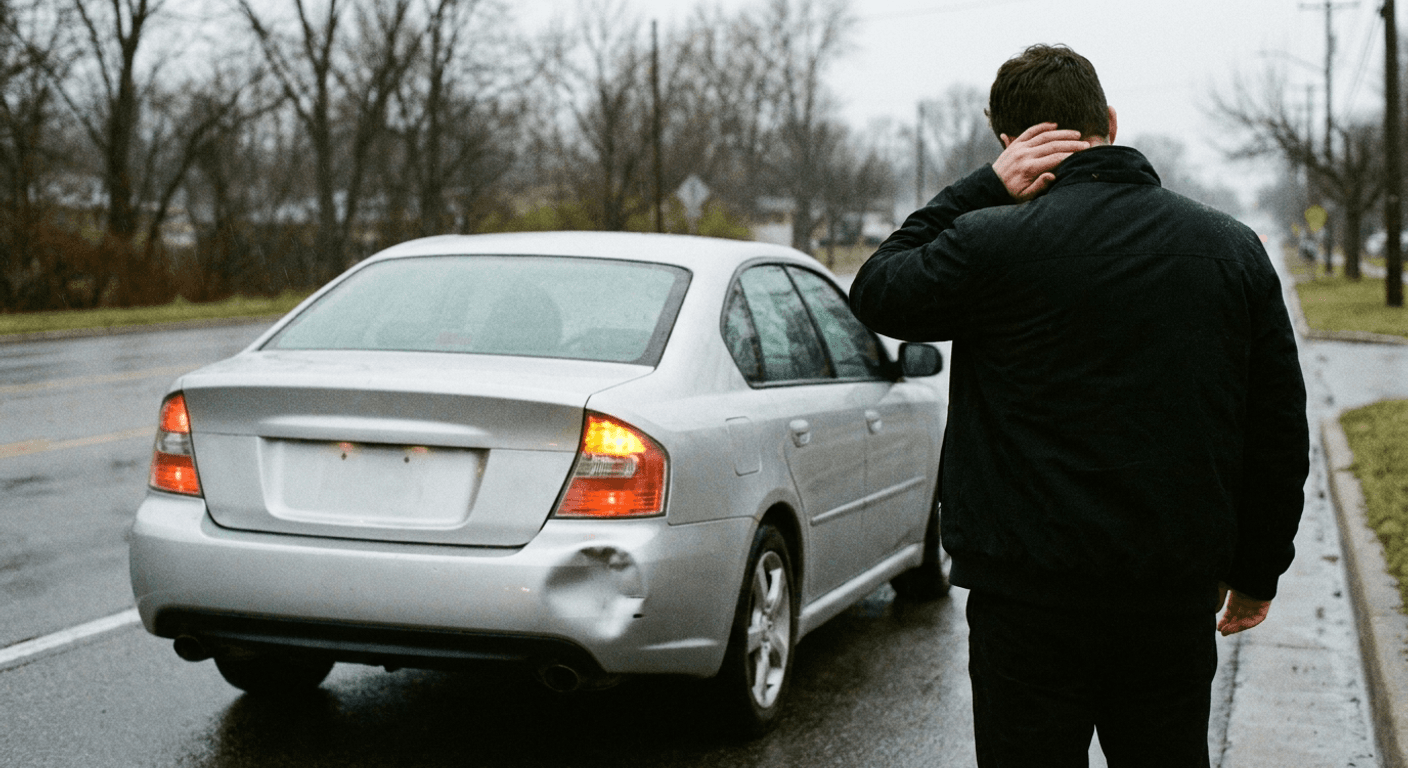
North Carolina is an at-fault (tort) state that follows pure contributory negligence, meaning the at-fault driver is liable for all damages and any victim found even 1% at fault is completely barred from any recovery.
Is North Carolina a no-fault or at-fault state?
North Carolina is a traditional at-fault (tort) liability state. When a crash occurs, the driver who caused it is responsible for the resulting damages, including medical expenses, lost wages, vehicle repair, and pain and suffering. North Carolina is not one of the 12 no-fault states (Florida, Michigan, Minnesota, New York, North Dakota, Hawaii, Kansas, Kentucky, Massachusetts, New Jersey, Pennsylvania, and Utah), so injured drivers do not file claims with their own insurer first.
Instead, you pursue the at-fault driver's liability insurance directly, or file a lawsuit if necessary. Because North Carolina has no no-fault or personal injury protection (PIP) system, there is no "serious-injury threshold" to clear before you can sue. Any injured person may bring a claim against the at-fault driver for the full range of economic and non-economic damages. The most significant recovery barrier in North Carolina is not a no-fault threshold but the state's harsh pure contributory-negligence rule, described in the next section.
Optional medical payments (MedPay) coverage is available under North Carolina policies and pays your own medical bills regardless of fault, up to the policy limit. It is not required by law.
How fault is shared: North Carolina's negligence rule
North Carolina is one of only five jurisdictions (Alabama, Washington DC, Maryland, North Carolina, and Virginia) that still apply pure contributory negligence. Under this rule, if you contributed to the accident in any way, even by 1%, you can be completely barred from recovering any compensation from the other driver.

This is not an exaggeration. In states that use comparative fault, a 10% or 20% share of fault merely reduces your recovery by that percentage. In North Carolina, the same small share of fault can eliminate your recovery entirely. Insurance adjusters are acutely aware of this rule and routinely argue that the injured person contributed to the crash specifically to deny the claim.
North Carolina courts have applied pure contributory negligence for over a century, and the General Assembly has never replaced it with a comparative-fault system the way the vast majority of states have. The one doctrinal safety valve is the last-clear-chance doctrine: if the defendant had a final opportunity to avoid the accident after the plaintiff's negligence had already put the plaintiff in a position of danger, the court may allow recovery despite the plaintiff's contributory fault. But last-clear-chance is a narrow exception and difficult to prove. If any insurer raises contributory negligence, even a minor error on your part (failing to brake quickly enough, a momentary lane drift) can become a complete defense to your entire claim. Given that risk, ask a North Carolina car accident lawyer in a free claim review what to say, if anything, to the other driver's insurer (attorney advertising).
Minimum car insurance in North Carolina
The Motor Vehicle Financial Responsibility Act, N.C. Gen. Stat. § 20-279.21, governs minimum liability insurance requirements in North Carolina. Under S.L. 2023-133, the minimum mandatory limits increased to 50/100/50 for all new or renewed policies on or after July 1, 2025:
- $50,000 bodily injury per person per accident
- $100,000 bodily injury total per accident (all injured parties combined)
- $50,000 property damage per accident
These minimums represent a significant increase from the prior 30/60/25 limits ($30,000/$60,000/$25,000). Despite the increase, these floors can still be exhausted quickly in a serious crash involving surgery, hospitalization, or long-term rehabilitation. Drivers with significant assets should strongly consider carrying higher limits.
Uninsured motorist (UM) coverage is mandatory on every North Carolina motor-vehicle liability policy under § 20-279.21. As of July 1, 2025, underinsured motorist (UIM) coverage is also required on all new and renewed policies, a significant change from prior law, which only attached UIM to policies written above the statutory minimum limits. UM/UIM limits track the policy's bodily-injury liability limits, and policyholders may select higher UM/UIM limits up to a $1,000,000/$1,000,000 cap but cannot carry less than the statutory minimum.
UM coverage also responds to hit-and-run accidents where the at-fault driver flees and cannot be identified. If you were injured in a hit-and-run, your own UM coverage is often your primary avenue of recovery.
How long you have to file: the statute of limitations
North Carolina's personal injury statute of limitations is three years from the date of the accident under N.C. Gen. Stat. § 1-52(16), which covers "injury to the person" and governs motor-vehicle negligence claims. The cause of action accrues when bodily harm becomes apparent, or reasonably should have become apparent, subject to a 10-year outer repose limit.

Wrongful-death claims carry a separate and shorter deadline: two years from the date of death under N.C. Gen. Stat. § 1-53. If someone dies from injuries sustained in a crash, the estate has only two years to file, not three.
Property damage claims for damage to your vehicle also fall under the 3-year limitations period in § 1-52. If a government vehicle or government employee caused the crash, separate notice-of-claim requirements with shorter deadlines may apply before you can sue a municipality or the State of North Carolina. Do not wait on those cases.
Missing the filing deadline means the defendant can raise the statute of limitations as a complete bar, and a court will dismiss your lawsuit regardless of how strong your underlying case is. Insurance companies know these deadlines and often slow-walk negotiations in hopes the clock runs out.
For a full breakdown of North Carolina's civil filing deadlines, see the North Carolina statute of limitations overview.
What a North Carolina car accident claim is worth
Damages in a North Carolina car accident claim fall into two main categories. Economic damages are verifiable out-of-pocket losses: emergency room and hospital bills, surgery and rehabilitation costs, prescription medication, lost wages from missed work, lost future earning capacity if injuries are permanent, and the cost to repair or replace your vehicle. These are calculated from bills, pay stubs, and expert testimony.
Non-economic damages compensate for harms that do not come with a receipt: physical pain and suffering, emotional distress, loss of enjoyment of life, and permanent disfigurement or disability. North Carolina places no statutory cap on non-economic damages in ordinary car accident cases.
The practical ceiling on your recovery is usually the at-fault driver's liability policy limits. If the at-fault driver carries only the 50/100/50 minimum and your injuries exceed those amounts, you may need to pursue your own UIM coverage for the gap, or consider whether the at-fault driver has personal assets worth pursuing. As of July 1, 2025, mandatory UIM coverage on all renewed policies improves the odds that a gap can be bridged.
North Carolina's pure contributory-negligence rule fundamentally shapes every claim valuation. An insurer's argument that you were 10% at fault does not reduce your recovery by 10%, it is used as a complete defense to bar any recovery at all. Documenting that the other driver was solely at fault, through photos, witness statements, the crash report, and dashcam footage, is not just helpful in North Carolina. It is essential.
Use the North Carolina car accident settlement calculator to estimate a range for your claim based on your specific injuries and liability picture.
What to do after a car accident in North Carolina
1. Check for injuries and call 911. Safety is the first priority. North Carolina law requires drivers involved in accidents resulting in injury, death, or property damage to stop, render reasonable aid, and report to law enforcement. Do not leave the scene.

2. Document the scene thoroughly. While you are still at the accident site, photograph every vehicle from multiple angles, road conditions, skid marks, traffic signs, traffic signals, and any visible injuries. Collect the other driver's name, license number, insurance company, and policy number. Get names and phone numbers of any witnesses before they leave.
3. Get a police report. Ask the responding officer for the report number. The police report often becomes the foundation of the insurance claim and any lawsuit. In North Carolina, a written report is generally required when damage exceeds a set threshold or there are injuries.
4. Seek medical attention promptly. Even if you feel uninjured at the scene, see a doctor the same day or the next morning. Adrenaline masks pain, and serious injuries such as traumatic brain injury, internal bleeding, and soft-tissue damage are not always immediately obvious. A delay in treatment gives insurers an argument that your injuries were not caused by the accident.
5. Notify your own insurer. Report the accident to your insurance company even if you were not at fault. Most policies have prompt-notice requirements. Your own UM/UIM coverage (now mandatory on all renewed NC policies) can step in if the at-fault driver is uninsured or underinsured.
6. Do not give a recorded statement to the other driver's insurer without speaking to an attorney first. North Carolina's pure contributory-negligence rule means that anything you say can be used to argue you were at least 1% at fault, which would bar your entire claim. An attorney can help you respond without inadvertently conceding fault.
7. Consult a North Carolina attorney before accepting any settlement. Once you sign a release, you typically cannot reopen the claim. An attorney familiar with North Carolina's contributory-negligence doctrine can assess whether a settlement offer reflects your full damages and whether the contributory-negligence defense is genuinely supported by the facts of your crash.
This article is general legal information, not legal advice. Car accident law varies by state and changes, and settlement values depend on the specific facts. For advice about a specific crash, consult a licensed attorney in North Carolina.
Related pages:
More North Carolina Accident and Liability Laws
More North Carolina Laws
- North Carolina Dashcam Laws
- North Carolina Slip and Fall Laws
- North Carolina Statute of Limitations
- North Carolina Workers Compensation Laws
Frequently Asked Questions
Is North Carolina a no-fault state?
No. North Carolina is a pure at-fault (tort) state. There is no statewide no-fault or PIP system. When a crash occurs, the driver who caused it is responsible for all resulting damages. Injured parties claim directly against the at-fault driver's liability insurance, or through their own UM/UIM coverage if the other driver is uninsured or underinsured.
Is North Carolina an at-fault state?
Yes. North Carolina is a traditional at-fault state. The at-fault driver's liability insurance covers the other party's medical bills, lost wages, property damage, and pain and suffering. Because North Carolina uses pure contributory negligence, the injured party must be completely free of fault to recover.
What is the statute of limitations for a car accident in North Carolina?
Three years from the date of the accident for personal injury claims under N.C. Gen. Stat. § 1-52(16). Property damage claims also carry a 3-year deadline. Wrongful-death claims have a shorter 2-year deadline under § 1-53. If a government entity is involved, separate notice-of-claim requirements with shorter deadlines may apply.
Can I still recover if I was partly at fault in North Carolina?
Almost certainly not. North Carolina applies pure contributory negligence, which bars any recovery if you were even 1% at fault for the accident. This is one of the strictest fault rules in the country, shared only by Alabama, Washington DC, Maryland, and Virginia. The narrow last-clear-chance doctrine may allow recovery in limited circumstances, but it is difficult to invoke.
What are the minimum insurance requirements in North Carolina?
As of July 1, 2025, North Carolina requires minimum liability coverage of 50/100/50: $50,000 bodily injury per person, $100,000 bodily injury per accident, and $50,000 property damage, under N.C. Gen. Stat. § 20-279.21 as amended by S.L. 2023-133. Both uninsured motorist (UM) and underinsured motorist (UIM) coverage are mandatory on all new and renewed policies.
How much is my North Carolina car accident claim worth?
It depends on your medical bills, lost wages, pain and suffering, permanent injuries, and the at-fault driver's insurance policy limits. Because North Carolina's pure contributory-negligence rule can completely bar recovery if you are found even 1% at fault, establishing the other driver's sole fault is critical. Use the North Carolina settlement calculator for a personalized estimate.
Does North Carolina require PIP coverage?
No. North Carolina does not require personal injury protection (PIP) and is not a no-fault state. Optional medical payments (MedPay) coverage is available through your own insurer and pays your medical bills regardless of fault, but it is not mandated by law.
Updates
Corrected a link in the related-laws list that pointed a "North Carolina Hit and Run Laws" label at a news story about ski-slope hit-and-run legislation; the correct hit-and-run guide remains linked above.
Repaired the S.L. 2023-133 citation link (dead bill-draft PDF replaced with the enacted session law).
Independently fact-checked against the cited primary sources; governing law re-checked for recent changes
Governing law re-checked for recent changes
Reviewed and approved by an editor
The Law Behind This Article
This article rests on the statutory provisions below, held in our own legal record and retrieved from the official source. Tap a section to read the operative text.
North Carolina General Statutes, Chapter 20: Motor Vehicles.
§ 20-279.21"Motor vehicle liability policy" definedIn forcecited in 2 of our articles
(a) A "motor vehicle liability policy" as said term is used in this Article shall mean an owner's or an operator's policy of liability insurance, certified as provided in G.S. 20-279.19 or 20-279.20 as proof of financial responsibility, and issued, except as otherwise provided in G.S. 20-279.20, by an insurance carrier duly authorized to transact business in this State, to or for the benefit of the person named therein as insured. (b) Except as provided in G.S. 20-309(a2), such owner's policy of liability insurance: (1) Shall designate by explicit description or by appropriate reference all motor vehicles with respect to which coverage is thereby to be granted; (2) Shall insure the person named therein and any other person, as insured, using any such motor vehicle or motor vehicles with the express or implied permission of such named insured, or any other persons in lawful possession, against loss from the liability imposed by law for damages arising out of the ownership, maintenance or use of such motor vehicle or motor vehicles within the United States of America or the Dominion of Canada subject to limits exclusive of interest and costs, with respect to each such motor…
Official text (excerpt) · last checked 2026-09-14 · Read the full text in our law library · Verify at ncleg.gov
Cited in 401 court opinions in our collectionLatest citing opinion in our collection: 2026
Opinions citing this section in our collection:
- Liberty Mutual Insurance v. Pennington (Supreme Court of North Carolina 2002, 356 N.C. 571)“…ich provided UIM coverage pursuant to the provisions of N.C.G.S. § 20-279.21(b)(4). On 5 June 1996, the Penni…”
- State Capital Insurance v. Nationwide Mutual Insurance (Supreme Court of North Carolina 1986, 318 N.C. 534)“…uage in the compulsory motor vehicle liability statute, N.C.G.S. § 20-279.21(b)(2), and the State Capital homeowners…”
- Sutton v. Aetna Casualty & Surety Co. (Supreme Court of North Carolina 1989, 325 N.C. 259)“…he question presented is what is the effect, if any, of N.C.G.S. § 20-279.21(b)(4) on an insurer’s obligation to agg…”
Identified automatically from the court opinions citing this section — not a ranking of which case controls.
Also relied on in: Truck Accident Laws in North Carolina (2026): Deadlines & Liability
North Carolina General Statutes, Chapter 1: Civil Procedure.
§ 1-52Three yearsIn forcecited in 9 of our articles
Within three years an action - (1) Upon a contract, obligation or liability arising out of a contract, express or implied, except those mentioned in the preceding sections or in G.S. 1-53(1). (1a) Upon the official bond of a public officer. (2) Upon a liability created by statute, either state or federal, unless some other time is mentioned in the statute creating it. (3) For trespass upon real property. When the trespass is a continuing one, the action shall be commenced within three years from the original trespass, and not thereafter. (4) For taking, detaining, converting or injuring any goods or chattels, including action for their specific recovery. (5) For criminal conversation, or for any other injury to the person or rights of another, not arising on contract and not hereafter enumerated, except as provided by G.S. 1-17(d) and (e). (6) Against the sureties of any executor, administrator, collector or guardian on the official bond of their principal; within three years after the breach thereof complained of.
Official text (excerpt) · last checked 2026-07-29 · Read the full text in our law library · Verify at ncleg.gov
Cited in 868 court opinions in our collectionLatest citing opinion in our collection: 2026
Opinions citing this section in our collection:
- Forbis v. Neal (Supreme Court of North Carolina 2007, 361 N.C. 519)“…hat the statute of limitations bars plaintiffs’ action. N.C.G.S. § 1-52(9) provides that actions for “relief on…”
- Pembee Mfg. Corp. v. Cape Fear Const. Co., Inc. (Supreme Court of North Carolina 1985, 313 N.C. 488)“…This common law rule is modified by the provisions of N.C.G.S. § 1-52(1), (5), and (16), which provide:…”
- Barger v. McCoy Hillard & Parks (Supreme Court of North Carolina 1997, 346 N.C. 650)“…e and was thus subject to the statute of limitations in N.C.G.S. § 1-52(5). Plaintiffs argue further that a cau…”
Identified automatically from the court opinions citing this section — not a ranking of which case controls.
Also relied on in: North Carolina Slip and Fall Laws: Proving Premises Liability in a Pure-Contributory State, North Carolina Statute of Limitations: Filing Deadlines by Case Type, North Carolina Debt Collection Laws: No Wage Garnishment Procedure, and the Piercers That Reach Anyway
§ 1-53Two yearsIn forcecited in 6 of our articles
Within two years - (1) An action against a local unit of government upon a contract, obligation or liability arising out of a contract, express or implied. Unless otherwise provided by law, if the preceding sentence of this subsection would bar commencement of a cause of action arising out of a contract to improve real property: (i) such an action may be brought no later than 90 days after substantial completion, provided proper notice of the claim has been given if required by contract, or (ii) if prior to substantial completion the contract was terminated by either party, such an action may be brought no later than 90 days after the date of termination of the contract. As used in this subdivision, "substantial completion" has the same meaning as in G.S. 1-50(a)(5)c. This subdivision shall not apply to actions based upon bonds, notes and interest coupons or when a different period of limitation is prescribed by this Article. (2) An action to recover the penalty for usury, including an action regarding the financing of usurious points, usurious fees, or other usurious charges; the two-year period shall accrue with each payment made and accepted on the loan.
Official text (excerpt) · last checked 2026-07-29 · Read the full text in our law library · Verify at ncleg.gov
Cited in 111 court opinions in our collectionLatest citing opinion in our collection: 2026
Opinions citing this section in our collection:
- Raftery v. Wm. C. Vick Construction Co. (Supreme Court of North Carolina 1976, 291 N.C. 180)“…statute of limitation bears upon plaintiff’s action except G.S. 1-53(4), which prescribed a two-year period…”
- Dunn v. Pacific Employers Insurance (Supreme Court of North Carolina 1992, 332 N.C. 129)“…atal illness was diagnosed and therefore time-barred by N.C.G.S. § 1-53(4). The trial court granted these motio…”
- Dennis v. City of Albemarle (Supreme Court of North Carolina 1955, 242 N.C. 263)“…issioners as required by this charter provision and also by G.S. 1-53. G.S. 1-53, presently codified a…”
Identified automatically from the court opinions citing this section — not a ranking of which case controls.
Also relied on in: North Carolina Wrongful Death Laws (2026): Deadlines, Medical Malpractice Laws in North Carolina (2026): Caps, Motorcycle Accident Laws in North Carolina (2026): Deadlines
Search our full record of US law — 2.1 million sections, every state + federal →
Sources and References
- N.C. Gen. Stat. § 20-279.21 (Motor Vehicle Financial Responsibility Act, minimum liability + UM/UIM)(ncleg.gov).gov
- S.L. 2023-133 (July 1, 2025: 50/100/50 limits + mandatory UIM on all policies)(ncleg.gov).gov
- N.C. Gen. Stat. § 1-52(16) (3-year personal injury statute of limitations)(ncleg.gov).gov
- N.C. Gen. Stat. § 1-53 (2-year wrongful-death statute of limitations)(ncleg.gov).gov
Paid attorney referral. RecordingLaw may receive compensation when you use an attorney-help link. RecordingLaw is not a law firm. Submitting a request does not guarantee that an attorney will accept your case and does not create an attorney-client relationship.