
Iowa
Iowa Car Accident Laws: Fault, Insurance, and Your Claim
Independently fact-checked against primary sources (last audited August 17, 2026). · Reviewed by the RecordingLaw editorial team. · Law checked current as of August 17, 2026. · 6 primary sources cited on this page. How we verify our legal content
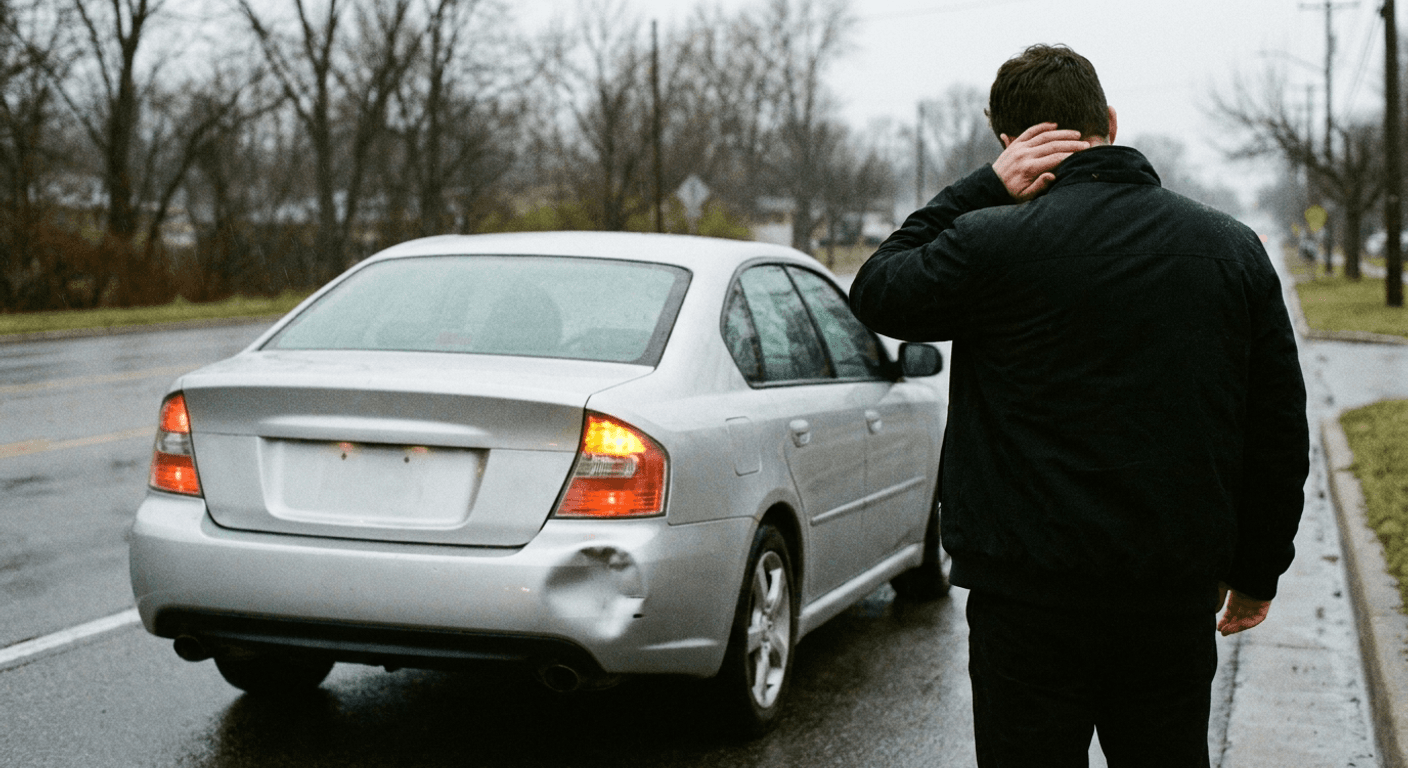
Iowa is an at-fault (tort) state that follows modified comparative fault with a 51% bar, so the driver who caused the crash pays, and you can recover reduced damages as long as your share of fault does not exceed 50%.
Is Iowa a no-fault or at-fault state?
Iowa is a traditional at-fault (tort) state. It is not a no-fault state and has no Personal Injury Protection (PIP) requirement or no-fault threshold of any kind. When a crash occurs in Iowa, the driver who caused it (through their liability insurer) is responsible for paying the other party's bodily-injury losses and property damage. Because there is no serious-injury threshold to clear, an injured person may sue the at-fault driver for pain and suffering immediately, without first meeting a monetary or verbal injury threshold. Compulsory liability insurance and financial responsibility rules are governed by Iowa Code ch. 321A and Iowa Code 321.20B. MedPay coverage is available from Iowa insurers as an optional add-on, but it is not mandated by law.
How fault is shared: Iowa's negligence rule
Iowa follows modified comparative fault with a 51% bar under Iowa Code 668.3. Under this rule, your damages are reduced in proportion to your own percentage of fault. If you are found 25% at fault for a crash, for example, a $100,000 award is reduced to $75,000. The critical cutoff is 50%: as long as your share of fault is 50% or less, you can still recover, though your award is reduced. If a jury finds you 51% or more at fault, you recover nothing at all. This rule sits between the strictest standard (pure contributory negligence, which bars any recovery if you share even 1% of fault) and the most plaintiff-friendly (pure comparative fault, which allows recovery even when you are 99% responsible). Iowa's 51% bar means that building the strongest possible case for the other driver's majority fault is critical before accepting any settlement.

Minimum car insurance in Iowa
Iowa law requires every motorist to carry liability insurance meeting a 20/40/15 minimum: $20,000 for bodily injury per person, $40,000 for bodily injury per accident, and $15,000 for property damage. These minimums are set by Iowa Code 321A.1 and made compulsory by Iowa Code 321.20B. A bill to raise these limits to 50/100/25 has been introduced but has not been enacted, so 20/40/15 remains current law. On top of liability coverage, Iowa Code 516A.1 requires insurers to include uninsured motorist (UM) and underinsured motorist (UIM) coverage in every auto policy issued in the state, with minimum limits matching the liability minimums ($20,000/$40,000 for bodily injury). A named insured may reject UM/UIM coverage entirely by signing a separate written form that contains only the rejection language and directly related information. If you are hit by an uninsured driver or a driver whose coverage is inadequate, your own UM/UIM policy becomes your primary recovery avenue.
How long you have to file: the statute of limitations
Iowa gives injured parties two years to file a personal-injury lawsuit arising from a car accident under Iowa Code 614.1(2). The same two-year period applies to wrongful-death claims. Property-damage claims run five years under Iowa Code 614.1(4), a longer window than the personal-injury deadline above. The clock generally starts on the date of the crash, but a discovery rule can delay accrual in cases where an injury was not reasonably discoverable at the time of the accident. Tolling provisions also apply for minors, whose limitations period does not expire until one year after their 18th birthday, and for certain other disabilities recognized by Iowa law. Two years sounds like a long time, but building a strong injury case, obtaining medical records, and negotiating with insurers takes time. Missing the deadline almost always results in the court dismissing your case regardless of how strong the underlying claim is. For a full overview of Iowa's personal-injury filing windows, see the Iowa statute of limitations page.

What an Iowa car accident claim is worth
The value of an Iowa car accident claim depends on the specific economic and non-economic losses the injured person can document. Economic damages include medical expenses (past and future), lost wages, reduced earning capacity, and property-repair or replacement costs. Non-economic damages cover pain and suffering, emotional distress, loss of enjoyment of life, and similar harms. Iowa does not cap non-economic damages in personal auto-accident cases, so high-value injuries can produce substantial recoveries. Any award, however, is reduced by your percentage of comparative fault under Iowa Code 668.3, and there is a full bar if your fault exceeds 50%. As a practical matter, the at-fault driver's liability limits (often 20/40/15 minimums) may cap the actual recovery unless the defendant has significant assets beyond their policy. Your own UM/UIM coverage can supplement recovery when the at-fault driver is uninsured or underinsured. Use the Iowa car accident settlement calculator to get a rough sense of potential claim ranges based on injury type and fault allocation.
What to do after a car accident in Iowa
The steps you take in the hours and days after a crash in Iowa can directly affect both your physical recovery and the value of your claim.

Call 911 and secure the scene. If anyone is injured, call 911 immediately. Move vehicles out of traffic if it is safe to do so. Iowa Code 321.263 requires you to stop, give your name, address, and vehicle registration number to the other driver, and render reasonable assistance to anyone injured. Leaving the scene can constitute a hit-and-run offense.
Report the crash as Iowa law requires. Under Iowa Code 321.266, the driver of a vehicle involved in an accident resulting in injury to or death of any person must immediately, by the quickest means of communication, give notice of the accident to the sheriff of the county where it occurred, the nearest office of the state patrol, or another peace officer near the scene. A written report must also be forwarded to the Iowa Department of Transportation within 72 hours when the accident caused injury or death, or total property damage to an apparent extent of $1,500 or more, unless a law enforcement agency investigated the accident.
Document everything you can. Photograph damage to all vehicles, road conditions, skid marks, traffic controls, and any visible injuries. Get the names and contact information of witnesses. Request a copy of the police report, which will be important when filing your claim.
Seek medical attention promptly. See a doctor even if you feel fine immediately after the crash. Some injuries, including soft-tissue injuries and concussions, do not produce obvious symptoms right away. A documented medical visit creates a record linking your injuries to the accident.
Notify your insurer, but be careful what you say. Prompt notice to your own insurance company is a condition of your policy rather than a duty imposed by Iowa statute, but failing to give it can still jeopardize your own coverage, so report the crash to your carrier promptly. When speaking with the at-fault driver's insurer, stick to the basic facts and do not speculate about fault or the extent of your injuries until you have a complete medical picture.
Consult an attorney before accepting any settlement. Iowa's 51% comparative-fault bar makes fault allocation a high-stakes issue. With that much riding on fault, have an Iowa car accident lawyer tally your total damages in a free claim review and negotiate with the adjusters (attorney advertising).
This article is general legal information, not legal advice. Car accident law varies by state and changes, and settlement values depend on the specific facts. For advice about a specific crash, consult a licensed attorney in Iowa.
Related:
- Iowa Car Accident Settlement Calculator
- Iowa Hit-and-Run Laws
- Car Accident Laws by State: Hub
- Iowa Statute of Limitations
More Iowa Laws
- Iowa Dashcam Laws
- Iowa Hit and Run Laws
- Iowa Slip and Fall Laws
- Iowa Statute of Limitations
- Iowa Workers Compensation Laws
Frequently Asked Questions
Is Iowa a no-fault state?
No. Iowa is not a no-fault state. It is a traditional at-fault (tort) state with no Personal Injury Protection (PIP) requirement and no serious-injury threshold. The at-fault driver's liability insurer is responsible for paying the injured party's losses.
Is Iowa an at-fault state?
Yes. Iowa is an at-fault (tort) state. The driver who caused the crash is financially responsible for the other party's injuries and property damage, through their liability insurance.
What is the statute of limitations for a car accident in Iowa?
Iowa gives you two years from the date of the accident to file a personal-injury or wrongful-death lawsuit under Iowa Code 614.1(2). Property-damage claims run five years under Iowa Code 614.1(4). A discovery rule and minor/disability tolling can extend this deadline in limited circumstances.
Can I still recover if I was partly at fault in Iowa?
Yes, up to a point. Iowa uses modified comparative fault with a 51% bar under Iowa Code 668.3. If your share of fault is 50% or less, you can recover damages, but they will be reduced by your fault percentage. If you are found 51% or more at fault, you recover nothing.
What are the minimum insurance requirements in Iowa?
Iowa requires minimum liability coverage of $20,000 per person and $40,000 per accident for bodily injury, plus $15,000 for property damage (20/40/15). Uninsured and underinsured motorist coverage must be included in every policy but can be waived in writing.
How much is my Iowa car accident claim worth?
Claim value depends on your documented economic losses (medical bills, lost wages, property damage) plus non-economic losses (pain and suffering). Iowa has no cap on non-economic damages in auto cases, but any award is reduced by your percentage of comparative fault, and the at-fault driver's policy limits often set a practical ceiling. Use the Iowa car accident settlement calculator for a rough estimate.
Does Iowa require PIP coverage?
No. Iowa does not require Personal Injury Protection (PIP) and has no no-fault system. Medical-payments (MedPay) coverage is available from insurers as an optional add-on, but it is not mandated. Injury recovery in Iowa runs through the at-fault driver's liability coverage and your own UM/UIM.
Updates
Corrected the post-crash steps: notifying your own insurer is a condition of your insurance policy, not an Iowa statutory requirement, and the article now states Iowa's actual crash-reporting duty under Iowa Code 321.266.
Independently fact-checked against the cited primary sources; governing law re-checked for recent changes
Corrected the property-damage filing deadline from 2 years to 5 years: Iowa Code 614.1(4), the section the article already cited, itself sets a five-year period for injuries to property (the 2-year period in 614.1 belongs to subsection (2), which covers injury to the person, not property).
Governing law re-checked for recent changes
Reviewed and approved by an editor
The Law Behind This Article
This article rests on the statutory provisions below, held in our own legal record and retrieved from the official source. Tap a section to read the operative text.
Iowa Code, Chapter 668: LIABILITY IN TORT
§ 668.3Comparative fault — effect — payment method.In forcecited in 6 of our articles
1. a. Contributory fault shall not bar recovery in an action by a claimant to recover damages for fault resulting in death or in injury to person or property unless the claimant bears a greater percentage of fault than the combined percentage of fault attributed to the defendants, third-party defendants and persons who have been released pursuant to section 668.7, but any damages allowed shall be diminished in proportion to the amount of fault attributable to the claimant. b. Contributory fault shall not bar recovery in an action by a claimant to recover damages for loss of services, companionship, society, or consortium, unless the fault attributable to the person whose injury or death provided the basis for the damages is greater in percentage than the combined percentage of fault attributable to the defendants, third-party defendants, and persons who have been released pursuant to section 668.7, but any damages allowed shall be diminished in proportion to the amount of fault attributable to the person whose injury or death provided the basis for the damages. 2.
Official text (excerpt) · last checked 2026-09-08 · Read the full text in our law library · Verify at legis.iowa.gov
Cited in 116 court opinions in our collectionLatest citing opinion in our collection: 2026
Opinions citing this section in our collection:
- Reed v. Chrysler Corp. (Supreme Court of Iowa 1992, 494 N.W.2d 224)“…ct a person to strict liability. A plaintiff's fault, under Iowa Code section 668.3, does not bar recovery; it serves only…”
- Todd A. Mulhern, Individually and as Representative of the Estate of Elizabeth M. Von Linden v. Catholic Health Initiatives A/K/A Catholic Health Initiatives Iowa Corp. D/B/A Mercy Franklin Center and/or Mercy Hospital and/or Mercy Psychiatric Services (Supreme Court of Iowa 2011, 799 N.W.2d 104)“…e estate’s objection. The jury was informed, as required by Iowa Code section 668.3(5), that the estate would be barred fro…”
- Kragel v. Wal-Mart Stores, Inc. (Supreme Court of Iowa 1995, 537 N.W.2d 699)“…7, and a third-party defendant. Iowa Code § 668.2 (1991). Iowa Code section 668.3 provides the procedure for instructing…”
Identified automatically from the court opinions citing this section — not a ranking of which case controls.
Also relied on in: Medical Malpractice Laws in Iowa (2026): Deadlines & Caps, Truck Accident Laws in Iowa (2026): Deadlines & Liability, Iowa Wrongful Death Laws (2026): Deadlines & Who Can Sue
Iowa Code, Chapter 321: MOTOR VEHICLES AND LAW OF THE ROAD
§ 321.20BFinancial liability coverage — proof required — violations — penalties — exceptions.In force
1. a. Notwithstanding chapter 321A, which requires certain persons to maintain proof of financial responsibility, a person shall not drive a motor vehicle on the highways of this state unless financial liability coverage, as defined in section 321.1, subsection 24B, is in effect for the motor vehicle and unless the driver has in the motor vehicle the proof of financial liability coverage card issued for the motor vehicle, or if the vehicle is registered in another state, other evidence that financial liability coverage is in effect for the motor vehicle. A proof of financial liability coverage card may be produced in paper or electronic format. Acceptable electronic formats include electronic images displayed on a cellular telephone or any other portable electronic device that has a display screen with touch input or a miniature keyboard. b.
Official text (excerpt) · last checked 2026-07-29 · Read the full text in our law library · Verify at legis.iowa.gov
Cited in 7 court opinions in our collectionLatest citing opinion in our collection: 2025
Opinions citing this section in our collection:
- Faeth v. State Farm Mutual Automobile Insurance Co. (Supreme Court of Iowa 2005, 707 N.W.2d 328)“…s. The financial liability coverage recognized under Iowa Code section 321.20B(1) (as defined in Iowa Code section 321…”
- State of Iowa v. Carrisa Doreen Mensch (Court of Appeals of Iowa 2025)“…responsible for paying court costs associated with it. See Iowa Code § 321.20B(4)(c) (2023). The issue regarding her p…”
- Timmy Lee Briggs and Monica Mae Evison v. First Chicago Insurance Company (Court of Appeals of Iowa 2023)“…See 1997 Iowa Acts ch. 139, § 2(1) (codified as amended at Iowa Code § 321.20B(1)(a)); see also Baker v. Catlin Specia…”
Identified automatically from the court opinions citing this section — not a ranking of which case controls.
§ 321.263Information and aid — leaving scene of personal injury accident.In forcecited in 2 of our articles
1. The driver of a vehicle involved in an accident resulting in injury to or death of a person or damage to a vehicle which is driven or attended by a person shall give the driver’s name, address, and the registration number of the vehicle the driver is driving and shall upon request and if available exhibit the driver’s driver’s license to the person struck, the driver or occupant of, or the person attending the vehicle involved in the accident and shall render to a person injured in the accident reasonable assistance, including the transporting or arranging for the transporting of the person for medical treatment if it is apparent that medical treatment is necessary or if transportation for medical treatment is requested by the injured person. 2. If the accident causes the death of a person, all surviving drivers shall remain at the scene of the accident except to seek necessary aid or to report the accident to law enforcement authorities. Before leaving the scene of the fatal accident, each surviving driver shall leave the surviving driver’s driver’s license, automobile registration receipt, or other identification data at the scene of the accident.
Official text (excerpt) · last checked 2026-07-29 · Read the full text in our law library · Verify at legis.iowa.gov
Cited in 4 court opinions in our collectionLatest citing opinion in our collection: 2008
Opinions citing this section in our collection:
- State Of Iowa Vs. Christopher Jerome Tarbox (Supreme Court of Iowa 2007)“…edical treatment is requested by the injured person. Iowa Code § 321.263(1). Our resolution of the issue on appe…”
- State v. Johnson (Supreme Court of Iowa 2008, 744 N.W.2d 340)“…1(2)), and leaving the scene of a personal injury accident (Iowa Code section 321.263). On appeal, Johnson raises a single is…”
- State v. Tarbox (Supreme Court of Iowa 2007, 739 N.W.2d 850)“…dical treatment is requested by the injured person. Iowa Code § 321.263 (1). Our resolution of the issue on app…”
Identified automatically from the court opinions citing this section — not a ranking of which case controls.
§ 321.266Reporting accidents.In forcecited in 2 of our articles
1. The driver of a vehicle involved in an accident resulting in injury to or death of any person shall immediately by the quickest means of communication give notice of such accident to the sheriff of the county in which said accident occurred, or the nearest office of the state patrol, or to any other peace officer as near as practicable to the place where the accident occurred. 2. The driver of a vehicle involved in an accident resulting in injury to or death of any person, or total property damage to an apparent extent of one thousand five hundred dollars or more shall, within seventy-two hours after the accident, forward a written report of the accident to the department. However, such report is not required when the accident is investigated by a law enforcement agency. 3. Every law enforcement officer who, in the regular course of duty, investigates a motor vehicle accident of which report must be made as required in subsections 1 and 2, either at the time of and at the scene of the accident or thereafter by interviewing participants or witnesses shall, within twenty-four hours after completing such investigation, forward a written report of such accident to the department.
Official text (excerpt) · last checked 2026-07-29 · Read the full text in our law library · Verify at legis.iowa.gov
Cited in 4 court opinions in our collectionLatest citing opinion in our collection: 2019
Opinions citing this section in our collection:
- State of Iowa v. Ryan Bradley Tostenson (Court of Appeals of Iowa 2019)“…s for stopping Tostenson based on a suspected violation of Iowa Code 321.266(2), which requires a driver of a vehicl…”
- Miller v. Boone County Hospital (Supreme Court of Iowa 1986, 394 N.W.2d 776)“…ss of the tort-feasor or any intent to file a claim. Cf. Iowa Code § 321.266 (requiring reporting of car accidents,…”
- State v. Tarbox (Supreme Court of Iowa 2007, 739 N.W.2d 850)“…jury to any person to contact the authorities immediately. Iowa Code § 321.266 . The State had the option of charging…”
Identified automatically from the court opinions citing this section — not a ranking of which case controls.
Iowa Code, Chapter 516A: UNINSURED, UNDERINSURED, OR HIT-AND-RUN MOTORISTS
§ 516A.1Coverage included in every liability policy — rejection by insured.In forcecited in 2 of our articles
1. No automobile liability or motor vehicle liability insurance policy insuring against liability for bodily injury or death arising out of the ownership, maintenance, or use of a motor vehicle shall be delivered or issued for delivery in this state with respect to any motor vehicle registered or principally garaged in this state, unless coverage is provided in such policy or supplemental thereto, for the protection of persons insured under such policy who are legally entitled to recover damages from the owner or operator of an uninsured motor vehicle or a hit-and-run motor vehicle or an underinsured motor vehicle because of bodily injury, sickness, or disease, including death resulting therefrom, caused by accident and arising out of the ownership, maintenance, or use of such uninsured or underinsured motor vehicle, or arising out of physical contact of such hit-and-run motor vehicle with the person insured or with a motor vehicle which the person insured is occupying at the time of the accident.
Official text (excerpt) · last checked 2026-07-29 · Read the full text in our law library · Verify at legis.iowa.gov
Cited in 63 court opinions in our collectionLatest citing opinion in our collection: 2025
Opinions citing this section in our collection:
- Hamm v. Allied Mutual Insurance Co. (Supreme Court of Iowa 2000, 612 N.W.2d 775)“…ry language “legally entitled to recover,” see Iowa Code § 516A.1 3 , makes suit against the…”
- Miller v. Westfield Insurance Co. (Supreme Court of Iowa 2000, 606 N.W.2d 301)“…ed as a result of the fault of an uninsured motorist. See Iowa Code § 516A.1 (1997) (stating that no motor vehicle l…”
- Thomas v. Progressive Casualty Insurance Co. (Supreme Court of Iowa 2008, 749 N.W.2d 678)“…d driver exclusion. A. Compliance with Chapter 516A. Iowa Code section 516A.1 requires that automobile liability poli…”
Identified automatically from the court opinions citing this section — not a ranking of which case controls.
Also relied on in: Iowa Hit and Run Laws: Penalties and What to Do
Iowa Code, Chapter 614: LIMITATIONS OF ACTIONS
§ 614.1Period.In forcecited in 18 of our articles
Actions may be brought within the times limited as follows, respectively, after their causes accrue, and not afterwards, except when otherwise specially declared: 1. Penalties or forfeitures under ordinance. Those to enforce the payment of a penalty or forfeiture under an ordinance, within one year. 2. Injuries to person or reputation — relative rights — statute penalty. Those founded on injuries to the person or reputation, including injuries to relative rights, whether based on contract or tort, or for a statute penalty, within two years. 2A. With respect to products. a.
Official text (excerpt) · last checked 2026-09-08 · Read the full text in our law library · Verify at legis.iowa.gov
Cited in 459 court opinions in our collectionLatest citing opinion in our collection: 2026
In the courts (editorial summary, independently checked):Iowa courts pick the subsection by the nature of the right sued upon. Sandbulte v. Farm Bureau Mutual Insurance Co. (1984) applied the five-year unwritten-contract period of 614.1(4), not the two-year injury period, to an insurer bad-faith claim. Rathje v. Mercy Hospital (2008) read 614.1(9)(a) to run from knowledge of injury and cause.
Opinions citing this section in our collection:
- Sandbulte v. Farm Bureau Mutual Insurance Co. (Supreme Court of Iowa 1984, 343 N.W.2d 457)✓Insureds sued their carrier for bad faith failure to defend and for failing to advise on adequate coverage; the Iowa Supreme Court held both claims rested on implied contracts, so the five-year period of section 614.1(4) applied, not the two-year period of 614.1(2).
- Miller v. Boone County Hospital (Supreme Court of Iowa 1986, 394 N.W.2d 776)✓A mother sued a county hospital nearly two years after its staff allegedly gave negligent advice about her feverish infant; the Iowa Supreme Court struck the 60-day notice rule of section 613A.5 on equal protection grounds and held chapter 614 supplies the limitation period.
- Hamm v. Allied Mutual Insurance Co. (Supreme Court of Iowa 2000, 612 N.W.2d 775)✓After settling with an underinsured driver, insureds sued their own carrier for underinsured motorist benefits; the Iowa Supreme Court held the policy set no limitation period of its own, so section 614.1(5)'s ten-year contract period ran from the insurer's denial.
Identified automatically from the court opinions citing this section — not a ranking of which case controls.
Also relied on in: Iowa Dog Bite Laws: Liability and Victim Rights, Iowa Defamation Laws: Libel, Slander & Suing (2026), Motorcycle Accident Laws in Iowa (2026): Deadlines & Helmets
Iowa Code, Chapter 321A: MOTOR VEHICLE FINANCIAL RESPONSIBILITY
§ 321A.1Definitions.In force
The following words and phrases when used in this chapter shall, for the purposes of this chapter, have the meanings respectively ascribed to them in this section, except in those instances where the context clearly indicates a different meaning: 1. “Book”, “list”, “record”, or “schedule” kept by a county auditor, assessor, treasurer, recorder, sheriff, or other county officer means the county system as defined in section 445.1. 2. “Department” means the state department of transportation. 3.
Official text (excerpt) · last checked 2026-07-29 · Read the full text in our law library · Verify at legis.iowa.gov
Cited in 15 court opinions in our collectionLatest citing opinion in our collection: 2009
Opinions citing this section in our collection:
- American States Insurance Co. v. Estate of Tollari (Supreme Court of Iowa 1985, 362 N.W.2d 519)“…han “un-derinsurance”, it did so with specific reference to Iowa Code section 321A.1(10), saying: [The operator of the tor…”
- Krause v. Krause (Supreme Court of Iowa 1999, 589 N.W.2d 721)“…l Responsibility. The minimum liability limits specified in Iowa Code section 321A.1(10) are $20,000 per person and $40,000…”
- Lemars Mutual Insurance Co. v. Joffer (Supreme Court of Iowa 1998, 574 N.W.2d 303)“…d in section 321A.1, subsection 10”); see also Iowa Code § 321A.1(10) (requiring proof of financial respo…”
Identified automatically from the court opinions citing this section — not a ranking of which case controls.
Search our full record of US law — 2.1 million sections, every state + federal →
Sources and References
- Iowa Code 321A.1 — Minimum liability limits and financial responsibility(legis.iowa.gov).gov
- Iowa Code ch. 321A — Motor Vehicle Financial Responsibility(legis.iowa.gov).gov
- Iowa Code 321.20B — Compulsory insurance requirement(legis.iowa.gov).gov
- Iowa Code 668.3 — Comparative fault (51% bar)(legis.iowa.gov).gov
- Iowa Code 516A.1 — Uninsured/underinsured motorist coverage(legis.iowa.gov).gov
- Iowa Code 614.1(2) — Statute of limitations for personal injury(legis.iowa.gov).gov
- Iowa Code 321.266 - Reporting accidents (notice to law enforcement; written report to the Iowa DOT)(legis.iowa.gov)
- Iowa Code 321.263 - Information and aid; leaving scene of personal injury accident(legis.iowa.gov)
Paid attorney referral. RecordingLaw may receive compensation when you use an attorney-help link. RecordingLaw is not a law firm. Submitting a request does not guarantee that an attorney will accept your case and does not create an attorney-client relationship.