
Idaho
Idaho Car Accident Laws: Fault, Insurance, and Your Claim
Independently fact-checked against primary sources (last audited August 17, 2026). · Reviewed by the RecordingLaw editorial team. · Law checked current as of August 17, 2026. · 7 primary sources cited on this page. How we verify our legal content
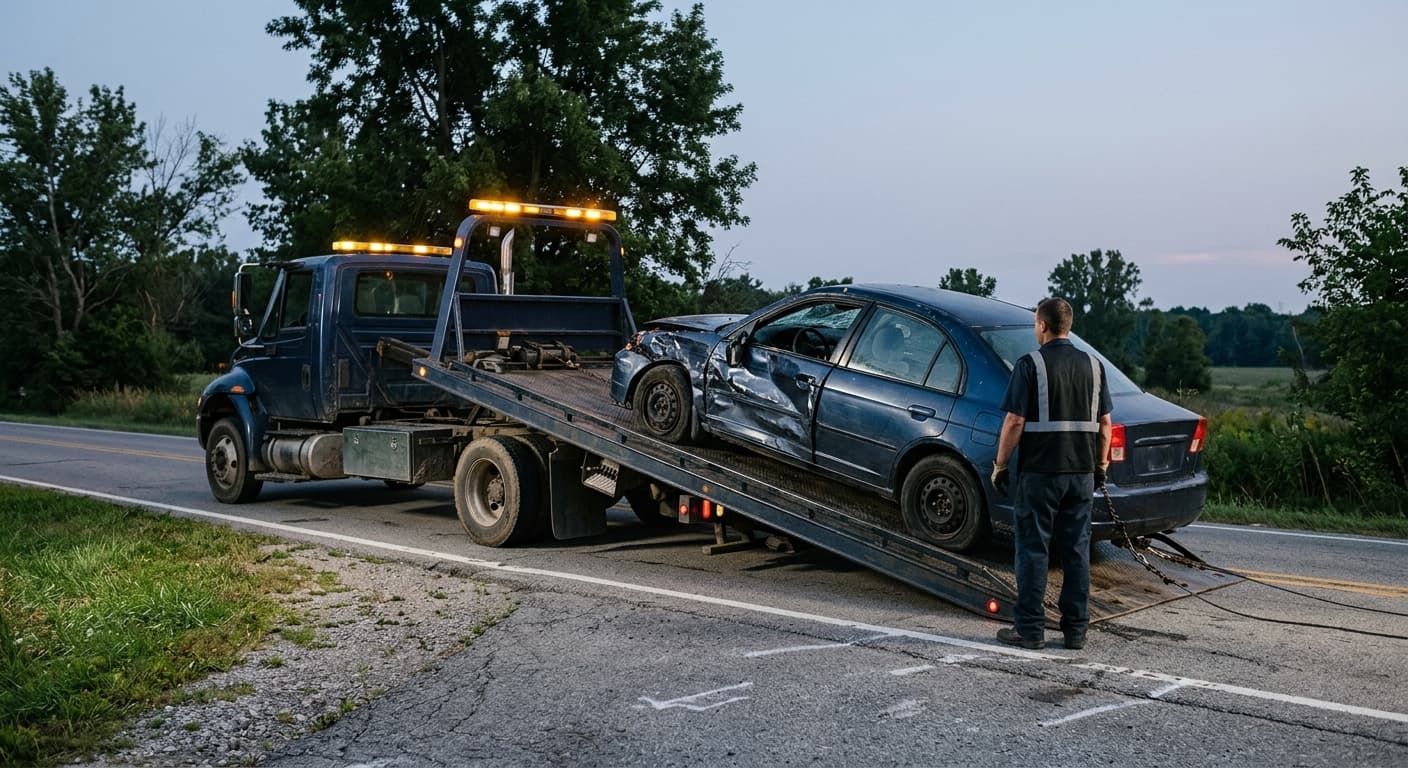
Idaho is an at-fault (tort) state that follows modified comparative negligence with a 50% bar, so the driver who causes the crash is liable for your damages and your recovery is reduced by your share of fault, but is completely barred if you are 50% or more at fault.
Is Idaho a no-fault or at-fault state?
Idaho is a traditional at-fault (tort) state. When a crash occurs, the driver who caused it is legally responsible for the resulting damages, and the injured party pursues a claim against the at-fault driver and their liability insurer. Idaho is not one of the 12 traditional no-fault states and has not adopted a choice or add-on no-fault scheme.
Because Idaho has no personal-injury protection (PIP) or no-fault system, there is no verbal or monetary threshold you must clear before suing for pain and suffering. Full tort damages, including medical bills, lost wages, and non-economic losses, are available from the moment of the crash. The only limit on recovery is Idaho's modified comparative-negligence rule and the statutory cap on non-economic damages. Mandatory liability insurance is required under Idaho Code sections 49-1229 and 49-1212, with minimum dollar amounts supplied by section 49-117(20).
How fault is shared: Idaho's negligence rule
Idaho follows modified comparative negligence with a 50% bar, codified at Idaho Code section 6-801. Under this rule, your total damages are reduced in proportion to your share of fault. If a jury finds you 20% at fault in a $100,000 claim, you recover $80,000. If you are found to be 50% or more at fault, you recover nothing.

This rule matters most in disputes where insurers argue shared fault to reduce a payout. Unlike pure contributory-negligence states (Alabama, Maryland, North Carolina, Virginia, and DC) where any fault at all bars recovery, Idaho allows partially at-fault claimants to recover as long as their fault stays below 50%. It also differs from pure comparative-negligence states (like California) where you can recover even if 99% at fault. Idaho's 50% bar sits in the middle: protective enough to allow partial-fault recovery, strict enough to bar a claimant who is equally or more responsible for the crash than the other driver.
Minimum car insurance in Idaho
Idaho law requires every motor-vehicle liability policy to carry minimum limits of $25,000 bodily injury per person, $50,000 bodily injury per accident, and $15,000 property damage per accident (commonly written 25/50/15). These figures are defined in Idaho Code section 49-117(20) and made mandatory by sections 49-1212(1) and 49-1229. A first violation of the insurance requirement is an infraction punishable by a $75 fine; a second or subsequent conviction within five years is a misdemeanor punishable by a fine of up to $1,000, up to six months in county jail, or both (Idaho Code section 49-1229(5)).
These are legal minimums, not recommended levels. Medical care after a serious crash frequently exceeds $25,000 per person, and a single accident involving multiple injuries can exhaust the $50,000 per-accident cap quickly. Carrying higher limits or an umbrella policy gives better protection.
Uninsured and underinsured motorist (UM/UIM) coverage must be offered with every motor-vehicle liability policy issued in Idaho under Idaho Code section 41-2502. The named insured has the right to reject UM or UIM coverage, but the rejection must be in writing (or in an electronic record under the Uniform Electronic Transactions Act). Once rejected with the same insurer, the coverage does not have to be included on renewals or replacements. When provided, UM/UIM limits track the bodily-injury minimums (25/50). Because a meaningful share of Idaho drivers carry only the minimum, UM/UIM coverage is a valuable safety net worth keeping unless you have a specific reason to waive it.
Personal injury protection (PIP) is not required in Idaho. Unlike true no-fault states, Idaho imposes no statutory minimum PIP amount. MedPay and PIP are available as optional add-ons a driver may choose for first-party medical coverage, but the state does not mandate them.
How long you have to file: the statute of limitations
Idaho's personal-injury statute of limitations is two years from the date of the accident under Idaho Code section 5-219(4). If you do not file a lawsuit within two years, the court will almost certainly dismiss your claim, and you lose the right to recover no matter how strong your case is.

One important distinction: claims for damage to personal property run three years under Idaho Code section 5-218, not two. If you are seeking compensation for both bodily injury and vehicle damage, the shorter two-year deadline controls your injury claim, so treat that as your operative deadline.
Government-entity defendants add a separate procedural layer. If a government employee's negligence contributed to your crash (for example, a poorly maintained road or a government-vehicle driver), Idaho's Tort Claims Act requires you to file a notice of claim within 180 days before you can sue the government entity. Missing that notice deadline bars the claim regardless of the two-year SOL.
For more detail on Idaho civil filing deadlines, see the Idaho statute-of-limitations guide.
What an Idaho car accident claim is worth
Damages in an Idaho car accident claim fall into two categories. Economic damages cover the measurable financial losses: medical bills (past and future), lost wages, reduced earning capacity, rehabilitation costs, and vehicle repair or replacement. These are calculated from records and expert testimony and carry no statutory cap.
Non-economic damages cover pain, suffering, emotional distress, loss of enjoyment of life, and similar losses. Idaho caps non-economic damages at $538,425.04 as of July 1, 2026 (up from $509,013.28 the prior year), an amount that started at $250,000 in 2003 and is adjusted every July 1 for changes in average wages under Idaho Code section 6-1603, per the Idaho Industrial Commission's published calculation. The cap does not apply when the defendant's conduct was reckless, willful, or constituted a felony.
Your actual recovery is reduced by your comparative fault under section 6-801. A $300,000 verdict is reduced to $240,000 if you were 20% at fault. Insurance-limit reality also matters: if the at-fault driver carries only 25/50/15 minimum coverage, collecting more than those limits requires pursuing the driver's personal assets or making a claim on your own UM/UIM coverage.
For an estimate of settlement ranges based on injury type, use the Idaho car accident settlement calculator.
What to do after a car accident in Idaho
Taking the right steps after a crash protects both your health and your legal claim.

Stay and check for injuries. A driver involved in a crash that results in injury or death must immediately stop, give their name, address, insurance company or agent, and vehicle registration number, and render reasonable assistance to anyone injured (Idaho Code section 18-8007). Leaving that scene is a felony. In a crash involving only vehicle damage, the driver must still stop and remain at the scene (section 49-1301) and exchange name, address, driver’s license, registration, and proof of liability insurance (section 49-1302). Check on everyone involved and call 911 if anyone is hurt.
Report the crash. File a crash report with law enforcement or the Idaho Transportation Department if the accident involves injury, death, or property damage above a threshold. A police report creates an official record that is valuable when filing an insurance claim.
Document everything at the scene. Photograph vehicle damage, skid marks, road conditions, traffic signals, and visible injuries. Get the other driver's name, license number, insurance information, and plate number. Collect contact information from witnesses.
Seek medical attention promptly. Even if you feel fine, see a doctor the same day or the next day. Some injuries (whiplash, internal bleeding, traumatic brain injury) present symptoms days after the crash. A delay in treatment gives insurers grounds to argue your injuries were not caused by the accident.
Notify your insurer. Report the accident to your own insurer promptly, even if you were not at fault. Idaho is an at-fault state, so the at-fault driver's insurer should ultimately pay, but your insurer needs early notice to investigate and, if you carry UM/UIM or MedPay, to handle those portions of your claim.
Consult an attorney before accepting a settlement offer. Insurance adjusters often make quick settlement offers that do not fully account for future medical costs or non-economic losses. Once you sign a release, your claim is gone. Before you sign, get a free claim review from an Idaho injury lawyer that weighs the offer against your future medical costs (attorney advertising).
This article is general legal information, not legal advice. Car accident law varies by state and changes, and settlement values depend on the specific facts. For advice about a specific crash, consult a licensed attorney in Idaho.
Related:
More Idaho Laws
- Idaho Dashcam Laws
- Idaho Hit and Run Laws
- Idaho Slip and Fall Laws
- Idaho Statute of Limitations
- Idaho Workers Compensation Laws
Frequently Asked Questions
Is Idaho a no-fault state?
No. Idaho is not a no-fault state. Idaho is a traditional at-fault (tort) state with no personal-injury protection (PIP) mandate and no no-fault threshold. Injured parties file claims against the at-fault driver's liability insurer.
Is Idaho an at-fault state?
Yes. Idaho is an at-fault state. The driver who causes a crash is liable for the resulting damages. You do not need to exhaust your own coverage first, and there is no threshold to clear before claiming pain and suffering.
What is the statute of limitations for a car accident in Idaho?
Two years from the date of the accident for personal-injury claims (Idaho Code section 5-219(4)). Property-damage claims run three years. If a government entity is involved, you must also file a notice of claim within 180 days under the Idaho Tort Claims Act.
Can I still recover if I was partly at fault in Idaho?
Yes, as long as you are less than 50% at fault. Idaho follows modified comparative negligence under Idaho Code section 6-801: your damages are reduced by your fault percentage, but you recover nothing if you are found 50% or more at fault.
What are the minimum insurance requirements in Idaho?
Idaho requires minimum liability coverage of $25,000 bodily injury per person, $50,000 per accident, and $15,000 property damage per accident (25/50/15), as defined in Idaho Code section 49-117(20). Uninsured/underinsured motorist coverage must be offered but can be rejected in writing. PIP is not required.
How much is my Idaho car accident claim worth?
It depends on your economic losses (medical bills, lost wages, property damage) and non-economic losses (pain and suffering). Non-economic damages are capped at $538,425.04 as of July 1, 2026 under Idaho Code section 6-1603. Your recovery is also reduced by your comparative fault percentage. Use the Idaho car accident settlement calculator for a range estimate.
Does Idaho cap pain-and-suffering damages?
Yes. Idaho Code section 6-1603 caps non-economic damages at $538,425.04 as of July 1, 2026, adjusted every July 1 for wage inflation from a 2003 base of $250,000. The cap does not apply to reckless, willful, or felonious conduct.
Updates
Corrected the penalty for driving without insurance (a first violation is a $75 infraction, not a misdemeanor) and replaced the wrong duty-to-stop citations with Idaho Code 18-8007 for injury or death crashes and 49-1301 and 49-1302 for vehicle-damage crashes.
Independently fact-checked against the cited primary sources; governing law re-checked for recent changes
Corrected Idaho's non-economic damages cap from an approximate $400,000 figure to the exact current figure of $538,425.04 (effective July 1, 2026), sourced from the Idaho Industrial Commission's official annual calculation table under Idaho Code 6-1603.
Governing law re-checked for recent changes
Reviewed and approved by an editor
The Law Behind This Article
This article rests on the statutory provisions below, held in our own legal record and retrieved from the official source. Tap a section to read the operative text.
Idaho Code
§ 6-801Comparative negligence or comparative responsibility — Effect of contributory negligence. Contributory negligence or comparative responsibility shall not bar recovery in an action by any person or his legal representative to recover damages for negligence, gross negligence or comparative responsibility resulting in death or in injury to person or property, if such negligence or comparative responsibility was not as great as the negligence, gross negligence or comparative responsibility of the person against whom recovery is sought, but any damages allowed shall be diminished in the proportion to the amount of negligence or comparative responsibility attributable to the person recovering. Nothing contained herein shall create any new legal theory, cause of action, or legal defenseIn forcecited in 8 of our articles
6-801. Comparative negligence or comparative responsibility — Effect of contributory negligence. Contributory negligence or comparative responsibility shall not bar recovery in an action by any person or his legal representative to recover damages for negligence, gross negligence or comparative…
Official text (excerpt) · last checked 2026-09-08 · Read the full text in our law library · Verify at legislature.idaho.gov
Cited in 21 court opinions in our collectionLatest citing opinion in our collection: 2026
Opinions citing this section in our collection:
- Noel v. City of Rigby (Idaho Supreme Court 2020, 166 Idaho 575)“…e, the relevant statutory provision governing this issue is Idaho Code section 6-801. That statute abrogated the common law…”
- Boswell v. Steele (Idaho Supreme Court 2018)“…6 The Boswells assert that the plain language of Idaho Code section 6-801 precludes it from being applied to stri…”
- Ross v. Coleman Co., Inc. (Idaho Supreme Court 1988, 114 Idaho 817)“…re’s intent in enacting our comparative negligence system. Idaho Code § 6-801 , as it read prior to 1987, was substan…”
Identified automatically from the court opinions citing this section — not a ranking of which case controls.
Also relied on in: Idaho Dog Bite Laws: Liability and Victim Rights, Medical Malpractice Laws in Idaho (2026): Deadlines & Caps, Motorcycle Accident Laws in Idaho (2026): Deadlines & Helmets
§ 49-1229Required motor vehicle insuranceIn forcecited in 2 of our articles
49-1229. Required motor vehicle insurance. (1) Every owner of a motor vehicle which is registered and operated in Idaho by the owner or with his permission shall continuously, except as provided in section 41-2516, Idaho Code, provide insurance against loss resulting from liability imposed by law…
Official text (excerpt) · last checked 2026-08-01 · Read the full text in our law library · Verify at legislature.idaho.gov
Cited in 1 court opinions in our collectionLatest citing opinion in our collection: 2007
Opinions citing this section in our collection:
- McKinley v. Guaranty National Insurance (Idaho Supreme Court 2007, 144 Idaho 247)“…ovided only the minimum liability coverage required by law. Idaho Code §§ 49-1229(1) and 49-117(18). Thus, a serious acci…”
Identified automatically from the court opinions citing this section — not a ranking of which case controls.
Also relied on in: Truck Accident Laws in Idaho (2026): Deadlines & Liability
§ 49-1212Expressed, permitted and implied provisions of motor vehicle liability policyIn force
49-1212. Expressed, permitted and implied provisions of motor vehicle liability policy. (1) An owner’s policy of liability insurance shall: (a) Designate by explicit description or by appropriate reference all motor vehicles with respect to which coverage is to be granted; and (b) Insure the person…
Official text (excerpt) · last checked 2026-08-01 · Read the full text in our law library · Verify at legislature.idaho.gov
Cited in 3 court opinions in our collectionLatest citing opinion in our collection: 2024
Opinions citing this section in our collection:
- Lanningham v. Farm Bureau (Idaho Supreme Court 2024)“…claim is affirmed. B. The Policy does not run afoul of Idaho Code section 49-1212(12) which prohibits reduced liab…”
- Purvis v. Progressive Casualty Insurance (Idaho Supreme Court 2005, 142 Idaho 213)“…icy is an owner’s policy that satisfies the statute. Idaho Code Section 49-1212(2) addresses operator’s policies, which…”
- Farm Bureau Mutual Insurance v. Schrock (Idaho Supreme Court 2011, 150 Idaho 817)“…ry motor vehicle policy. See 2007 Idaho Sess. Laws Ch. 307. Idaho Code section 49-1212(12) provides that “[n]o motor vehicle l…”
Identified automatically from the court opinions citing this section — not a ranking of which case controls.
§ 41-2502Uninsured motorist and underinsured motorist coverage for automobile insurance — exceptionsIn force
41-2502. Uninsured motorist and underinsured motorist coverage for automobile insurance — exceptions. (1) Except as otherwise provided in subsection (2) of this section, no owner’s or operator’s policy of motor vehicle liability insurance that is subject to the requirements of section 49-1212(1) or…
Official text (excerpt) · last checked 2026-08-01 · Read the full text in our law library · Verify at legislature.idaho.gov
Cited in 12 court opinions in our collectionLatest citing opinion in our collection: 2025
Opinions citing this section in our collection:
- Hill v. American Family Mutual Insurance (Idaho Supreme Court 2011, 150 Idaho 619)“…itutional provision. 2. Statute. The majority cites Idaho Code § 41-2502 as amended in 2008, but it is clear tha…”
- Eastman v. Farmers Insurance (Idaho Supreme Court 2018, 423 P.3d 431)“…e public policy reflected in the Legislature’s amendment of Idaho Code section 41-2502(1) in 2008. Id. at 623–25, 249 P.3d 816…”
- Lanningham v. Farm Bureau (Idaho Supreme Court 2024)“…The language on which [Jamie and Jeremy] rely from Idaho Code § 41-2502(1) plainly applies to the protection of…”
Identified automatically from the court opinions citing this section — not a ranking of which case controls.
§ 6-1603Limitation on noneconomic damagesIn forcecited in 6 of our articles
6-1603. Limitation on noneconomic damages. (1) In no action seeking damages for personal injury, including death, shall a judgment for noneconomic damages be entered for a claimant exceeding the maximum amount of two hundred fifty thousand dollars ($250,000); provided, however, that beginning on…
Official text (excerpt) · last checked 2026-08-01 · Read the full text in our law library · Verify at legislature.idaho.gov
Cited in 25 court opinions in our collectionLatest citing opinion in our collection: 2024
Opinions citing this section in our collection:
- Kirkland v. Blaine County Medical Center (Idaho Supreme Court 2000, 134 Idaho 464)“…156, 1158 (1992). IV. DISCUSSION A. Idaho Code § 6-1603 does not violate the right to jury tri…”
- Aguilar v. Coonrod (Idaho Supreme Court 2011, 151 Idaho 642)“…ive non-party doctors. B. The noneconomic damages cap in Idaho Code § 6-1603 limits the noneconomic damages award a…”
- Ballard v. Kerr, M.D, Silk Touch Laser (Idaho Supreme Court 2016, 160 Idaho 674)“…2 and 6-1013 by only asserting recklessness claims. Idaho Code section 6-1603(1) provides: “In no action seeking dama…”
Identified automatically from the court opinions citing this section — not a ranking of which case controls.
Also relied on in: Idaho Slip and Fall Laws: Proving Premises Liability, Wrongful Death Laws in Idaho (2026): Deadlines & Who Can Sue
§ 5-219Actions against officers, for penalties, on bonds, and for professional malpractice or for personal injuries. Within twoIn forcecited in 11 of our articles
5-219. Actions against officers, for penalties, on bonds, and for professional malpractice or for personal injuries. Within two (2) years: 1.
Official text (excerpt) · last checked 2026-08-01 · Read the full text in our law library · Verify at legislature.idaho.gov
Cited in 167 court opinions in our collectionLatest citing opinion in our collection: 2026
Opinions citing this section in our collection:
- Lapham v. Stewart (Idaho Supreme Court 2002, 137 Idaho 582)“…that the action was barred by the statute of limitations, Idaho Code § 5-219 (4). Because matters outside the compla…”
- Martin v. Clements (Idaho Supreme Court 1978, 98 Idaho 906)“…ssible retroactive application of the statute. We agree. Idaho Code § 5-219 (4), prior to its 1971 amendment, provi…”
- Conner v. Hodges (Idaho Supreme Court 2014, 157 Idaho 19)“…was barred by the two-year statute of limitations found in Idaho Code section 5-219(4), as Jami suffered some damage that w…”
Identified automatically from the court opinions citing this section — not a ranking of which case controls.
Also relied on in: Idaho Defamation Laws: Libel, Slander & Suing (2026), Idaho Medical Records Retention Laws (2026 Guide), Idaho Statute of Limitations: Filing Deadlines by Case Type
§ 49-117Definitions — PIn forcecited in 2 of our articles
49-117. Definitions — P. (1) "Park" or "parking" means the standing of a vehicle, whether occupied or not, other than temporarily for the purpose of and while actually engaged in loading or unloading property or passengers.
Official text (excerpt) · last checked 2026-08-01 · Read the full text in our law library · Verify at legislature.idaho.gov
Cited in 3 court opinions in our collectionLatest citing opinion in our collection: 2025
Opinions citing this section in our collection:
- Eastman v. Farmers Insurance (Idaho Supreme Court 2018, 423 P.3d 431)“…r UIM coverage with at least the minimum limits required by Idaho Code section 49-117 in all Idaho auto insurance policies. I…”
- State v. Rhonda Trusdall (Idaho Court of Appeals 2014, 155 Idaho 965)“…ht into harmony by interpretation. 5 For example, Idaho Code § 49-117(7)(a) defines “Person” as: ever…”
- Foresee v. Metropolitan Group Property and Casualty Insurance Company (Idaho Court of Appeals 2025, 572 P.3d 754)“…r UIM coverage with at least the minimum limits required by Idaho Code section 49-117 in all Idaho auto insurance policies.”…”
Identified automatically from the court opinions citing this section — not a ranking of which case controls.
§ 18-8007Leaving scene of accident resulting in injury or deathIn forcecited in 2 of our articles
18-8007. Leaving scene of accident resulting in injury or death. (1) The driver of any vehicle that has been involved in an accident, either upon public or private property open to the public, who knows or has reason to know that said accident has resulted in injury to or death of any person…
Official text (excerpt) · last checked 2026-09-23 · Read the full text in our law library · Verify at legislature.idaho.gov
Cited in 12 court opinions in our collectionLatest citing opinion in our collection: 2025
Opinions citing this section in our collection:
- State v. Shafer (Idaho Court of Appeals 2007, 144 Idaho 370)“…a felony charge of leaving the scene of an injury accident, Idaho Code § 18-8007, and as a condition of probation was or…”
- State v. Kenny Carl Struhs (Idaho Supreme Court 2015, 158 Idaho 262)“…the scene of an accident resulting in injury or death under Idaho Code section 18-8007 and vehicular manslaughter, alternately…”
- State v. Mead (Idaho Court of Appeals 2008, 145 Idaho 378)“…scobar, 134 Idaho at 389 , 3 P.3d at 67 . Idaho Code Section 18-8007(2) provides that it is a felony for a p…”
Identified automatically from the court opinions citing this section — not a ranking of which case controls.
Also relied on in: Idaho Hit and Run Laws: Penalties and What to Do
§ 49-1301Accidents involving damage to vehicleIn forcecited in 2 of our articles
49-1301. Accidents involving damage to vehicle. (1) The driver of any vehicle involved in an accident, either on public or private property open to the public, resulting only in damage to a vehicle which is driven or attended by any person shall immediately stop the vehicle at the scene of the…
Official text (excerpt) · last checked 2026-08-01 · Read the full text in our law library · Verify at legislature.idaho.gov
Cited in 3 court opinions in our collectionLatest citing opinion in our collection: 2018
Opinions citing this section in our collection:
- State v. Bernal (Idaho Supreme Court 2018, 427 P.3d 1)“…ode section 49- 1401; and leaving the scene of an accident, Idaho Code section 49-1301. The State also charged a sentencing en…”
- Munns v. Swift Transportation Co. (Idaho Supreme Court 2002, 138 Idaho 108)“…subject to but one clear meaning. Id. Idaho Code section 49-1301(1) directs the driver of any vehicle in…”
- State v. Richard W. Wright (Idaho Court of Appeals 2013, 154 Idaho 157)“…ed for “leaving the scene of a property damage crash” under Idaho Code section 49-1301 and, following a bench trial, was found…”
Identified automatically from the court opinions citing this section — not a ranking of which case controls.
§ 49-1302Duty to give information in accident involving damage to a vehicleIn forcecited in 2 of our articles
49-1302. Duty to give information in accident involving damage to a vehicle. (1) The driver of any vehicle involved in an accident resulting in damage to any vehicle which is driven or attended by any person shall, at the scene of the accident, give his name, address and, if available, at the scene…
Official text (excerpt) · last checked 2026-08-01 · Read the full text in our law library · Verify at legislature.idaho.gov
Cited in 1 court opinions in our collectionLatest citing opinion in our collection: 2013
Opinions citing this section in our collection:
- State v. Richard W. Wright (Idaho Court of Appeals 2013, 154 Idaho 157)“…some “requirements of law” to fulfill there. 2 Idaho Code section 49-1302 alternatively requires the driver to pr…”
Identified automatically from the court opinions citing this section — not a ranking of which case controls.
Search our full record of US law — 2.1 million sections, every state + federal →
Sources and References
- Idaho Code section 49-117(20): minimum liability limits(legislature.idaho.gov).gov
- Idaho Code section 49-1212: mandatory liability insurance(legislature.idaho.gov).gov
- Idaho Code section 49-1229: required security/insurance(legislature.idaho.gov).gov
- Idaho Code section 6-801: modified comparative negligence(legislature.idaho.gov).gov
- Idaho Code section 41-2502: uninsured motorist coverage(legislature.idaho.gov).gov
- Idaho Code section 5-219(4): personal-injury statute of limitations(legislature.idaho.gov).gov
- Idaho Code section 6-1603: non-economic damages cap(legislature.idaho.gov).gov
- Idaho Code section 18-8007: leaving the scene of an accident resulting in injury or death(legislature.idaho.gov)
- Idaho Code section 49-1301: accidents involving damage to a vehicle(legislature.idaho.gov)
- Idaho Code section 49-1302: duty to give information in an accident involving vehicle damage(legislature.idaho.gov)
Paid attorney referral. RecordingLaw may receive compensation when you use an attorney-help link. RecordingLaw is not a law firm. Submitting a request does not guarantee that an attorney will accept your case and does not create an attorney-client relationship.