
Arkansas
Arkansas Car Accident Laws: Fault, Insurance, and Your Claim
Independently fact-checked against primary sources (last audited September 8, 2026). · Reviewed by the RecordingLaw editorial team. · Law checked current as of August 17, 2026. · 5 primary sources cited on this page. How we verify our legal content
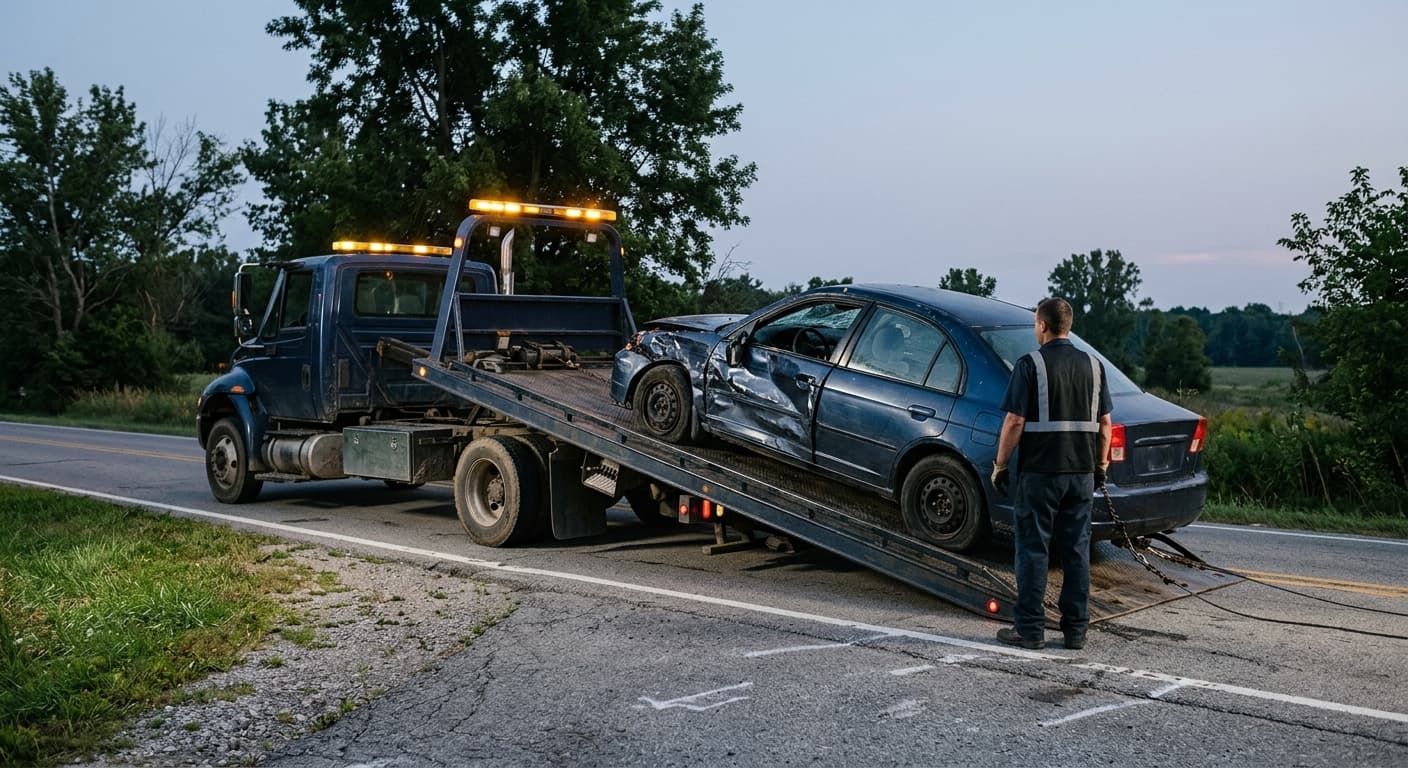
Arkansas is an at-fault (tort) state that also requires insurers to offer add-on PIP benefits, and it follows modified comparative negligence with a 50% bar, meaning you can sue the at-fault driver directly for full damages but your recovery is reduced by your share of fault and eliminated entirely if you are 50% or more responsible.
Is Arkansas a no-fault or at-fault state?
Arkansas is fundamentally an at-fault (tort) state. When you are injured in a car crash, you pursue compensation directly from the driver who caused it, either through their liability insurer or in court. Arkansas is NOT one of the 12 traditional no-fault states, and there is no verbal or monetary injury threshold you must satisfy before suing for pain and suffering.
What makes Arkansas distinctive is its add-on PIP structure. Under Ark. Code Ann. § 23-89-202, every private-passenger auto policy must include first-party medical and disability benefits payable regardless of fault. These benefits exist on top of your full tort rights, not instead of them. You can collect PIP-style benefits immediately for medical bills and lost income while simultaneously pursuing the at-fault driver for all remaining damages, including non-economic losses. The named insured may reject those first-party benefits in writing under § 23-89-203, but if you keep them, they supplement rather than replace your right to sue.
Because Arkansas retains full tort rights alongside the required PIP offer, it is classified as an add-on PIP state rather than a true no-fault state. The practical result: injured Arkansas drivers face fewer systemic barriers to recovery than drivers in genuine no-fault states like Michigan or Florida.
How fault is shared: Arkansas's negligence rule
Arkansas follows modified comparative negligence with a 50% bar, codified at Ark. Code Ann. § 16-64-122. Under this system, fault is allocated among all parties, and each party's damages are reduced in proportion to their own percentage of fault. A driver who is 30% at fault for a crash recovers 70% of total damages. A driver who is found to be exactly 50% at fault recovers nothing.

The 50% threshold is a hard cutoff. If the jury determines you are 50% or more responsible for the accident, your recovery is completely barred regardless of how severe your injuries are. This rule distinguishes Arkansas from pure comparative-fault states (like California) where even a 99%-at-fault plaintiff can still recover 1% of damages, but it is less severe than pure contributory negligence states (Alabama, Maryland, North Carolina, Virginia, and DC) where any fault at all bars recovery.
Insurer adjusters often try to assign comparative fault during negotiations to reduce settlement offers. If liability is disputed, documenting the other driver's conduct thoroughly (through police reports, witness statements, and traffic-camera footage) is essential to protecting your percentage of fault.
Minimum car insurance in Arkansas
Arkansas law requires every motor vehicle operator to maintain liability coverage at a minimum of 25/50/25. Under Ark. Code Ann. § 27-22-104, those minimums are $25,000 for bodily injury or death of one person in one accident, $50,000 for bodily injury or death of two or more persons in one accident, and $25,000 for property damage. Operating a vehicle without this coverage (or a certificate of self-insurance) is unlawful.
In addition, every policy must include first-party PIP-style add-on benefits unless the named insured rejects them in writing (Ark. Code Ann. §§ 23-89-202 and 23-89-203). The required minimum medical/hospital benefit is $5,000 per person for reasonable and necessary expenses incurred within 24 months of the accident. Income-disability benefits cover 70% of lost income up to $140 per week for up to 52 weeks. There is also a $5,000 accidental-death benefit. These benefits are paid by your own insurer regardless of fault.
For uninsured and underinsured motorist coverage, Arkansas insurers must offer UM bodily-injury coverage up to the insured's liability limits and may not skip the offer (Ark. Code Ann. § 23-89-403). Underinsured-motorist coverage must also be offered, but is available only if the insured elects to carry UM, and may likewise be rejected in writing (Ark. Code Ann. § 23-89-209). Uninsured-motorist property-damage coverage is separately addressed by § 23-89-404. None of these coverages are mandatory to carry; the insurer's obligation is to offer them, not to force them on the insured.
How long you have to file: the statute of limitations
Arkansas gives injured parties three years to file a personal-injury lawsuit arising from a car accident. The limitations period is set by Ark. Code Ann. § 16-56-105 (actions with a three-year limitation), and the clock generally begins running on the date of the injury. Property-damage claims follow the same three-year period under general Arkansas limitations law.

Three years is longer than the two-year window in many states, but it still runs faster than most people expect when medical treatment, insurance negotiations, and daily life consume attention. Missing the deadline is almost always fatal to a claim: courts dismiss untimely suits, and no amount of merit in the underlying case overcomes a limitations bar.
If your accident involved a government vehicle or occurred on government property, additional notice requirements and shorter claim deadlines may apply under the Arkansas State Claims Commission Act or the Arkansas Municipal Liability Act. Those special rules are separate from and in addition to the standard three-year SOL. Consult an Arkansas attorney as soon as possible if a government entity is involved.
For more on how limitations periods work across different claim types, see the Arkansas statute of limitations page.
What an Arkansas car accident claim is worth
The value of an Arkansas car accident claim depends on the nature and extent of your injuries, your documented economic losses, and the at-fault driver's policy limits. Economic damages include all out-of-pocket losses: medical bills (emergency room, surgery, physical therapy, future treatment), lost wages during recovery, loss of future earning capacity if the injury is permanent, and property damage to your vehicle. Non-economic damages compensate for pain and suffering, emotional distress, loss of enjoyment of life, and, in catastrophic cases, permanent disfigurement or disability.
Arkansas's modified comparative negligence rule directly affects settlement value. If you are found 20% at fault, your damages are reduced by 20%. Adjusters know this rule and often open negotiations by inflating your share of fault. Preserving evidence (crash photos, medical records, a prompt police report, and independent witness contact information) protects your ability to contest fault allocation.
As a practical matter, the at-fault driver's minimum 25/50 bodily-injury limits cap what you can recover from their insurer absent umbrella coverage, a commercial policy, or an underinsured-motorist claim. Serious injuries frequently exceed minimum-limit policies. Your UM/UIM coverage, if you elected it, fills part of that gap.
Use the Arkansas car accident settlement calculator to model damages based on your specific injuries and fault allocation.
What to do after a car accident in Arkansas
Prioritize safety first. Move vehicles out of traffic if it is safe to do so, check for injuries, and call 911. Arkansas requires drivers involved in accidents causing injury, death, or property damage above a modest threshold to report the crash. A police report creates an official record that is difficult for insurers to contradict later.

Document the scene. Photograph vehicle positions before moving them, visible damage to all vehicles, skid marks, road conditions, traffic controls, and any visible injuries. Get the names, contact information, driver's license numbers, and insurance details of all other drivers. Collect contact information from any witnesses.
Seek medical attention promptly. Even if you feel fine at the scene, some injuries (soft-tissue damage, concussions, internal bleeding) present symptoms hours or days later. A prompt medical evaluation creates a contemporaneous record linking your injuries to the crash, which is critical in any subsequent claim.
Use your add-on PIP benefits. If you kept the first-party benefits on your Arkansas policy, file a claim with your own insurer for immediate medical expense and income-disability reimbursement. These benefits are paid without regard to fault and do not require you to wait for the liability dispute to resolve.
Contact an attorney before accepting a settlement. Arkansas insurers often move quickly after crashes with low initial offers. Once you sign a release, you cannot reopen the claim even if your injuries prove more serious than initially thought. Before you sign, have an Arkansas car accident lawyer check in a free claim review whether the offer covers your economic and non-economic losses (attorney advertising). Most Arkansas car accident attorneys work on a contingency fee, and many offer a free consultation.
Also review the Arkansas hit-and-run laws page if the at-fault driver fled the scene, and see the car accident laws hub for a nationwide comparison.
This article is general legal information, not legal advice. Car accident law varies by state and changes, and settlement values depend on the specific facts. For advice about a specific crash, consult a licensed attorney in Arkansas.
More Arkansas Laws
- Arkansas Dashcam Laws
- Arkansas Hit and Run Laws
- Arkansas Slip and Fall Laws
- Arkansas Statute of Limitations
- Arkansas Workers Compensation Laws
Frequently Asked Questions
Is Arkansas a no-fault state?
No. Arkansas is an at-fault (tort) state. Injured drivers pursue compensation from the driver who caused the crash, not their own insurer. Arkansas does require insurers to offer PIP-style first-party benefits as an add-on, but those benefits supplement full tort rights rather than replacing them. There is no lawsuit threshold limiting your right to sue for pain and suffering.
Is Arkansas an at-fault state?
Yes. Arkansas is an at-fault state. The at-fault driver's liability insurer is responsible for compensating injured parties. Arkansas also requires insurers to offer first-party add-on PIP benefits, which pay regardless of fault, but having those benefits does not prevent you from suing the at-fault driver directly.
What is the statute of limitations for a car accident in Arkansas?
Three years. Under Ark. Code Ann. § 16-56-105, you generally have three years from the date of injury to file a personal-injury lawsuit. Property-damage claims also carry a three-year limit. If a government vehicle was involved, shorter notice deadlines may apply. Missing the deadline almost always bars your claim entirely.
Can I still recover if I was partly at fault in Arkansas?
Yes, as long as you are less than 50% at fault. Arkansas follows modified comparative negligence under Ark. Code Ann. § 16-64-122: your damages are reduced by your percentage of fault. If you are 30% at fault, you recover 70% of your total damages. If you are found to be 50% or more at fault, you recover nothing.
What are the minimum insurance requirements in Arkansas?
Arkansas requires 25/50/25 liability coverage: $25,000 for bodily injury per person, $50,000 for bodily injury per accident, and $25,000 for property damage (Ark. Code Ann. § 27-22-104). Insurers must also offer first-party PIP-style add-on benefits and UM/UIM coverage, though both can be rejected in writing.
What is add-on PIP and how does it work in Arkansas?
Add-on PIP means Arkansas requires insurers to provide first-party medical and income-disability benefits payable regardless of fault, on top of your full right to sue the at-fault driver. The minimum medical benefit is $5,000 per person. Unlike true no-fault states, collecting PIP in Arkansas does not limit your right to sue for pain and suffering. You may reject these benefits in writing under Ark. Code Ann. § 23-89-203.
How much is my Arkansas car accident claim worth?
Value depends on your economic losses (medical bills, lost wages, future treatment costs, property damage) plus non-economic losses (pain and suffering, emotional distress). Your total is then reduced by your percentage of comparative fault. The at-fault driver's minimum 25/50 policy limits also cap insurer payouts; serious injuries often require a UM/UIM claim against your own policy to fully compensate losses. Use the Arkansas settlement calculator for a rough estimate based on your specific facts.
Updates
Independently fact-checked against the cited primary sources
Independently fact-checked against the cited primary sources; governing law re-checked for recent changes
Governing law re-checked for recent changes
Reviewed and approved by an editor
The Law Behind This Article
This article rests on the statutory provisions below, held in our own legal record and retrieved from the official source. Tap a section to read the operative text.
Arkansas Code of 1987 Annotated
§ 16-64-122Comparative fault.In forcecited in 7 of our articles
(a) Except as otherwise provided under § 16-118-109, in all actions for damages for personal injuries or wrongful death or injury to property in which recovery is predicated upon fault, liability shall be determined by comparing the fault chargeable to a claiming party with the fault chargeable to
Official text (excerpt) · last checked 2026-09-08 · Read the full text in our law library · Verify at arkleg.state.ar.us
Cited in 51 court opinions in our collectionLatest citing opinion in our collection: 2017
Opinions citing this section in our collection:
- Ouachita Wilderness Institute v. Mergen (Supreme Court of Arkansas 1997, 329 Ark. 405)“…ial Court declined to give a jury instruction patterned on Ark. Code Ann. § 16-64-122 (c) (Supp. 1995). That subsection, foun…”
- Skinner v. R.J. Griffin & Co. (Supreme Court of Arkansas 1993, 313 Ark. 430)“…ative fault is an affirmative defense, ARCP Rule 8(c), and Ark. Code Ann. § 16-64-122 (1987), in the pertinent part, provide…”
- Nationsbank, N.A. v. Murray Guard, Inc. (Supreme Court of Arkansas 2001, 343 Ark. 437)“…es from whom the claiming party seeks to recover damages.” Ark. Code Ann. § 16-64-122 . Just how this change of phrase was in…”
Identified automatically from the court opinions citing this section — not a ranking of which case controls.
Also relied on in: Arkansas Hit and Run Laws: Penalties and What to Do, Medical Malpractice Laws in Arkansas (2026): Deadlines & Caps, Arkansas Wrongful Death Laws (2026): Deadlines & Who Can Sue
§ 27-22-104Insurance required — Minimum coverage — Definitions.In force
(a)(1) It is unlawful for a person to operate a motor vehicle within this state unless the motor vehicle and the person's operation of the motor vehicle are each covered by: (A) A certificate of self-insurance under § 27-19-107; or (B) An insurance policy issued by an insurance company authoriz
Official text (excerpt) · last checked 2026-08-06 · Read the full text in our law library · Verify at arkleg.state.ar.us
Cited in 28 court opinions in our collectionLatest citing opinion in our collection: 2026
Opinions citing this section in our collection:
- Branscumb v. Freeman (Supreme Court of Arkansas 2004, 360 Ark. 171)“…ll to operate his vehicle without insurance as required by Ark. Code Ann. §§ 27-22-104 & 27-19-711 (2004). He also alleged in…”
- Small v. State (Court of Appeals of Arkansas 2018, 543 S.W.3d 516)“…ble cause that a (2) traffic violation had occurred under Ark. Code Ann. § 27-22-104 . So I too will address this issue of…”
- State v. Kelley (Supreme Court of Arkansas 2005, 362 Ark. 636)“…on appeal is that the circuit court erred in interpreting Ark. Code Ann. § 27-22-104 to forbid impoundment of a motor vehic…”
Identified automatically from the court opinions citing this section — not a ranking of which case controls.
§ 23-89-202Required first party coverage.In force
Every automobile liability insurance policy covering any private passenger motor vehicle issued or delivered in this state shall provide minimum medical and hospital benefits, income disability, and accidental death benefits under policy provisions and on forms approved by the Insurance…
Official text (excerpt) · last checked 2020-11-06 · Read the full text in our law library
Cited in 27 court opinions in our collectionLatest citing opinion in our collection: 2024
Opinions citing this section in our collection:
- Shelter General Insurance v. Williams (Supreme Court of Arkansas 1993, 315 Ark. 409)“…e entitled to recover benefits under the policy pursuant to Ark.Code Ann. § 23-89-202 (1987) since any exclusion that attempt…”
- United Services Automovile Association v. Mary Norton (Court of Appeals of Arkansas 2020, 596 S.W.3d 522)“…mandate that medical benefits be paid only to the insured. Ark. Code Ann. §§ 23-89-202 to -204; see Woolsey v. Nationwide Ins.…”
- Southern Farm Bureau Casualty Insurance v. Allen (Supreme Court of Arkansas 1996, 326 Ark. 1023)“…TS” and that Appellant breached its obligation pursuant to Ark. Code Ann. § 23-89-202 (Repl. 1992) to provide no-fault death…”
Identified automatically from the court opinions citing this section — not a ranking of which case controls.
§ 23-89-203Rejection of coverage.In force
(a) The named insured shall have the right to reject in writing all or any one (1) or more of the coverages enumerated in § 23-89-202 . (b) After a named insured or applicant for insurance rejects this coverage, the insurer or any of its affiliates shall not be required to notify any insured in…
Official text (excerpt) · last checked 2020-11-06 · Read the full text in our law library
Cited in 6 court opinions in our collectionLatest citing opinion in our collection: 2013
Opinions citing this section in our collection:
- Shelter General Insurance v. Williams (Supreme Court of Arkansas 1993, 315 Ark. 409)“…ault statute is more instructive in the instant case. Under Ark.Code Ann. § 23-89-203 (1987) the insured has the right to rej…”
- Colonia Underwriters Insurance v. Richardson (Supreme Court of Arkansas 1996, 325 Ark. 300)“…so requires a second rejection of no-fault insurance under Ark. Code Ann. § 23-89-203 (Repl. 1992). Fimpel v. State Auto. Mu…”
- Fimpel v. State Automobile Mutual Insurance (Supreme Court of Arkansas 1995, 322 Ark. 797)“…le requires a second rejection of no-fault insurance under Ark. Code Ann. § 23-89-203 (Repl. 1992). We conclude that it does…”
Identified automatically from the court opinions citing this section — not a ranking of which case controls.
§ 23-89-403Bodily injury coverage required.In force
(a)(1) No automobile liability insurance covering liability arising out of the ownership, maintenance, or use of any motor vehicle shall be delivered or issued for delivery in this state with respect to any motor vehicle registered or principally garaged in this state unless coverage is provided…
Official text (excerpt) · last checked 2020-11-06 · Read the full text in our law library
Cited in 31 court opinions in our collectionLatest citing opinion in our collection: 2019
Opinions citing this section in our collection:
- Castaneda v. Progressive Classic Insurance (Supreme Court of Arkansas 2004, 357 Ark. 345)“…ge directly conflicts with the express mandate contained in Ark.Code Ann. § 23-89-403 (Supp.2001). Ms. Castaneda's reliance o…”
- State Farm Mutual Automobile Insurance v. Henderson (Supreme Court of Arkansas 2004, 356 Ark. 335)“…at the policy issued to him by State Farm was invalid under Ark.Code Ann. § 23-89-403(a)(1) (Supp.2003) and was against publi…”
- Crawford v. Emcasco Insurance (Supreme Court of Arkansas 1988, 294 Ark. 569)“…nd not in violation of the minimum coverage required) under Ark.Code Ann. § 23-89-403 (1987). In pressing her point for rever…”
Identified automatically from the court opinions citing this section — not a ranking of which case controls.
§ 23-89-209Underinsured motorist coverage.In force
(a)(1) No private passenger automobile liability insurance covering liability arising out of the ownership, maintenance, or use of any motor vehicles in this state shall be delivered or issued in this state or issued as to any private passenger automobile principally garaged in this state unless…
Official text (excerpt) · last checked 2020-11-06 · Read the full text in our law library
Cited in 52 court opinions in our collectionLatest citing opinion in our collection: 2019
Opinions citing this section in our collection:
- American Casualty Co. v. Mason (Supreme Court of Arkansas 1993, 312 Ark. 166)“…e trial court held that under Ark. 335 of 1987 codified at Ark. Code Ann. § 23-89-209 (Supp. 1989) appellee was entitled to…”
- Clampit v. State Farm Mutual Automobile Insurance (Supreme Court of Arkansas 1992, 309 Ark. 107)“…Clampits but not insured under that policy violates either Ark.Code Ann. § 23-89-209 (1987) or the public policy of this sta…”
- Corn v. Farmers Insurance Co. (Supreme Court of Arkansas 2013, 430 S.W.3d 655)“…Cite as 2013 Ark. 444 Ark. Code Ann. § 23-89-209(a)(3) (Repl. 2004). UIM coverage applie…”
Identified automatically from the court opinions citing this section — not a ranking of which case controls.
§ 23-89-404Uninsured motorist property damage coverage.In force
(a) Every insured purchasing uninsured motorist bodily injury coverage shall be provided an opportunity to include uninsured motorist property damage coverage, subject to provisions filed with and approved by the Insurance Commissioner, applicable to losses in excess of two hundred dollars ($200).…
Official text (excerpt) · last checked 2020-11-06 · Read the full text in our law library
Cited in 2 court opinions in our collectionLatest citing opinion in our collection: 2019
Opinions citing this section in our collection:
- George Konecny v. Federated Rural Electric Insurance Exchange and Auto-Owners Insurance Company (Court of Appeals of Arkansas 2019, 2019 Ark. App. 452)“…vers who are injured by financially irresponsible drivers. Ark. Code Ann. § 23-89-404 (Supp. 2007). Konecny acknow…”
- Estate of Baker v. Columbia Mutual Insurance (Court of Appeals of Arkansas 2000, 71 Ark. App. 345)“…erty damage coverage is required for certain purposes. See Ark. Code Ann. § 23-89-404 (Repl. 1999). Also, written rejection…”
Identified automatically from the court opinions citing this section — not a ranking of which case controls.
§ 16-56-105Actions with limitation of three years.In forcecited in 9 of our articles
The following actions shall be commenced within three (3) years after the cause of action accrues: (1) All actions founded upon any contract, obligation, or liability not under seal and not in writing, excepting such as are brought upon the judgment or decree of some court of record of the United…
Official text (excerpt) · last checked 2020-11-06 · Read the full text in our law library
Cited in 252 court opinions in our collectionLatest citing opinion in our collection: 2026
In the courts (editorial summary, independently checked):Arkansas courts apply the three-year period of Ark. Code Ann. 16-56-105(3) to fraud and other claims not on a written contract. Chalmers v. Toyota Motor Sales, USA, Inc. (1996) held it runs from injury, not discovery, absent concealment; Arkansas Department of Environmental Quality v. Brighton Corp. (2003) held it does not bar the State.
Opinions citing this section in our collection:
- Tyson Foods, Inc. v. Davis (Supreme Court of Arkansas 2002, 347 Ark. 566)✓A hog grower sued Tyson for fraud after it ended a bedded-floor program he had borrowed heavily to join. Applying the three-year period of section 16-56-105, the court held the suit timely because damages, an element of fraud, did not arise until Tyson cut off hogs in 1998.
- Chalmers v. Toyota Motor Sales, USA, Inc. (Supreme Court of Arkansas 1996, 326 Ark. 895)✓A Toyota dealer sued over pricing that favored dealers across the state line. The court applied the three-year period of section 16-56-105(3) and affirmed summary judgment, holding the dealer's own 1987 and 1989 letters showed he knew or could have discovered the alleged wrong.
- Arkansas Department of Environmental Quality v. Brighton Corp. (Supreme Court of Arkansas 2003, 352 Ark. 396)✓Defendants argued the state agency's suit over PCB-contaminated oil at a defunct industrial site was barred by the three-year period of section 16-56-105(3). The court held limitations do not run against the State when it enforces public rights, so the action was not barred.
Identified automatically from the court opinions citing this section — not a ranking of which case controls.
Also relied on in: Arkansas Dog Bite Laws: Liability and Victim Rights, Arkansas Defamation Laws: Libel, Slander & Suing (2026), Arkansas Slip and Fall Laws: Proving Premises Liability
Search our full record of US law — 2.1 million sections, every state + federal →
Sources and References
- Ark. Code Ann. §§ 23-89-202, 23-89-203 (required first-party add-on benefits; written rejection)(arkleg.state.ar.us).gov
- Ark. Code Ann. § 27-22-104 (minimum liability limits 25/50/25)(arkleg.state.ar.us).gov
- Ark. Code Ann. §§ 23-89-403, 23-89-209, 23-89-404 (UM/UIM offer requirements)(arkleg.state.ar.us).gov
- Ark. Code Ann. § 16-64-122 (modified comparative negligence, 50% bar)(arkleg.state.ar.us).gov
- Ark. Code Ann. § 16-56-105 (three-year personal-injury limitations period)(arkleg.state.ar.us).gov
Paid attorney referral. RecordingLaw may receive compensation when you use an attorney-help link. RecordingLaw is not a law firm. Submitting a request does not guarantee that an attorney will accept your case and does not create an attorney-client relationship.