
United Kingdom
Jury Service in Scotland: 15 Jurors and the End of Not Proven
Independently fact-checked against primary sources (last audited September 28, 2026). · Law checked current as of September 28, 2026. · 7 primary sources cited on this page. How we verify our legal content
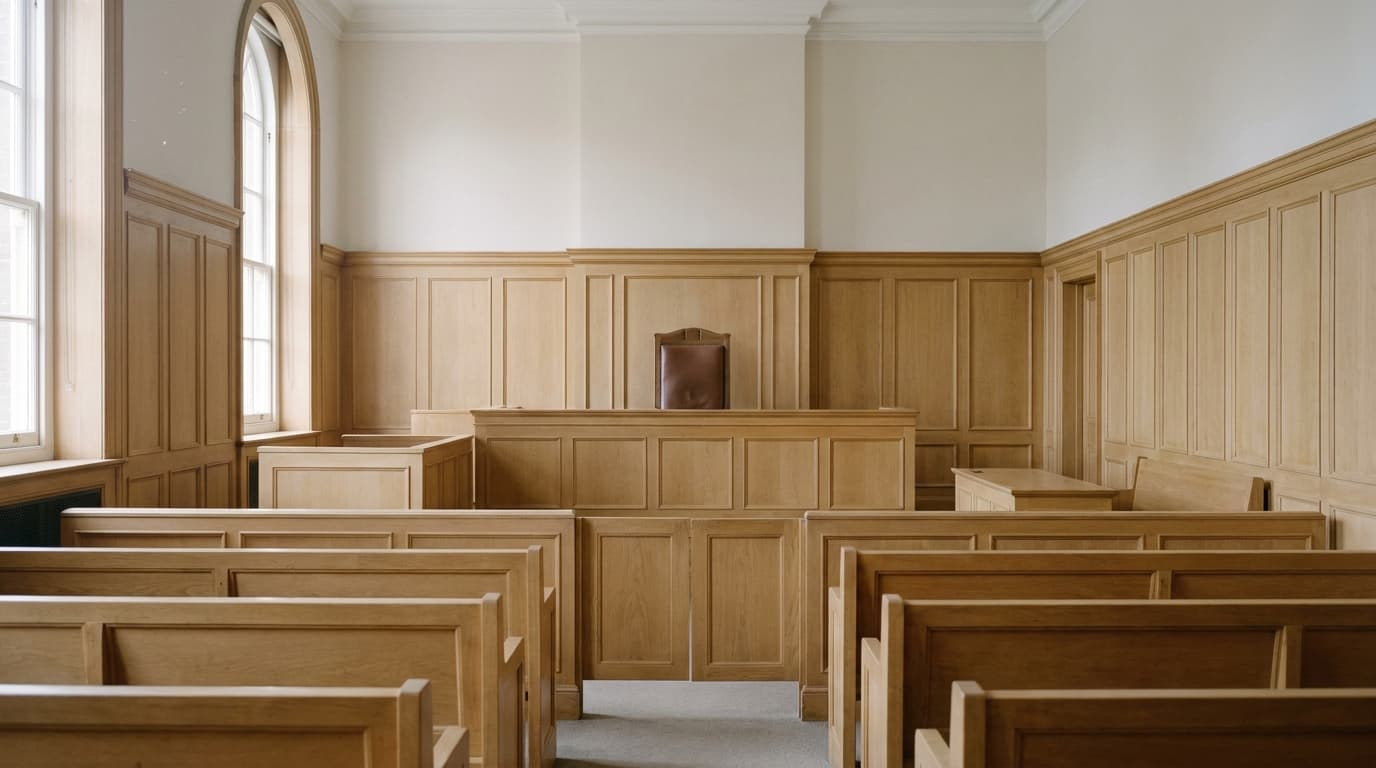
A criminal jury trial in Scotland looks different from one in England and Wales in almost every respect: 15 jurors instead of 12, a public prosecutor called the procurator fiscal rather than the Crown Prosecution Service, and, since 1 January 2026, a fundamentally changed set of verdicts. This guide explains how Scottish solemn trials work today, and exactly which trials the new rules apply to.
Why Scottish Criminal Trials Work Differently
Scotland has its own criminal justice system, separate from England and Wales, with its own courts, its own prosecutor and its own rules of evidence. Serious criminal cases (solemn procedure) are tried before a judge and jury in the High Court of Justiciary or the Sheriff Court. Less serious cases go through summary procedure, decided by a judge alone with no jury.
Prosecutions are brought by the Crown Office and Procurator Fiscal Service (COPFS), Scotland's independent public prosecution service, acting on behalf of the Lord Advocate. There is no route by which a private individual personally decides whether a case goes to trial or chooses a jury; that decision belongs to the prosecutor.
15 Jurors: The Largest Criminal Jury in the World
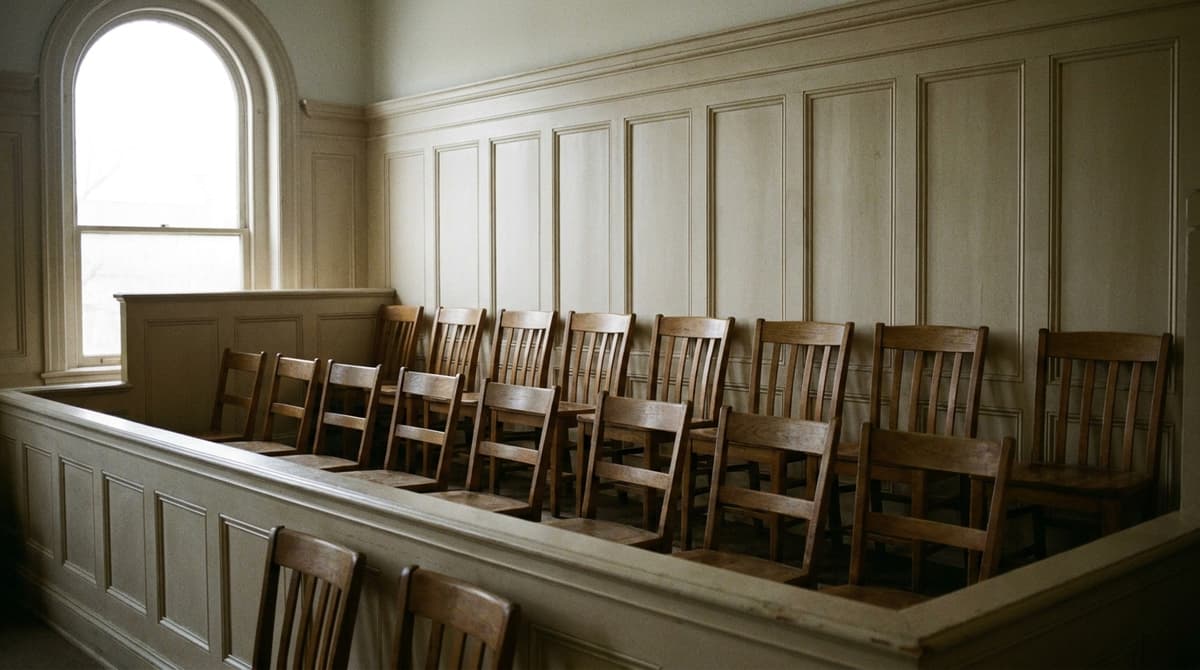
A Scottish solemn jury is empanelled with 15 members, more than the 12 used in England, Wales and Northern Ireland, and more than almost any other jury system in the world. If jurors are discharged during the trial, for example through illness, the trial can continue as long as the number does not fall below 12.
The 1 January 2026 Change: From Three Verdicts to Two
For roughly three centuries, a Scottish jury could return one of three verdicts: guilty, not guilty, or not proven. Not proven acquitted the accused in exactly the same way as not guilty, but without the same finding, and it had long been criticised as confusing for jurors and difficult for both complainers and acquitted defendants to live with.
The Victims, Witnesses, and Justice Reform (Scotland) Act 2025 (asp 2025/12), which received Royal Assent on 30 October 2025, abolished the not proven verdict. Sections 65 and 66 of the Act were brought into force on 1 January 2026, by the Victims, Witnesses, and Justice Reform (Scotland) Act 2025 (Commencement No. 1 and Transitional Provision) Regulations 2025 (SSI 2025/393).
The practical effect: for any criminal trial that starts on or after 1 January 2026, a Scottish jury can return only two verdicts, guilty or not guilty. Not proven is no longer an option for those trials.
The Transitional Saving: Some Trials Still Use the Old System
This change is not retrospective, and that distinction matters. The commencement regulations include a transitional and saving provision so that a trial already under way before 1 January 2026 is not disrupted partway through.

In practice, a trial counts as having started, for this purpose, once the jury has been sworn in a solemn case, or once the first witness has been sworn in a summary case. If that had already happened before 1 January 2026, the trial continues under the old three-verdict system (guilty, not guilty or not proven) with the old simple majority rule, even if the jury does not return its verdict until weeks or months later.
The result is that, for a period, two different verdict systems are genuinely running side by side in Scottish courts, sorted purely by when each individual trial began. Do not assume a Scottish case reported in the news necessarily used the new two-verdict system just because the verdict came after 1 January 2026; the relevant date is when the trial itself started, not when it finished.
The New Majority Rule: Two-Thirds, Not a Simple Majority
The verdict-count reform arrived alongside a change to how large a majority is needed to convict. Previously, a simple majority sufficed. On a full 15-person jury that meant 8 votes for guilty.
For trials falling under the new rules, a guilty verdict now needs at least a two-thirds majority, which on a full 15-person jury means 10 of 15 jurors agreeing. If the jury has been reduced during the trial, the statute sets the number needed: at least 10 where 14 or 15 jurors remain, 9 where 13 remain, and 8 where 12 remain.
Eligibility to Serve on a Scottish Jury
The basic eligibility rules broadly mirror the rest of the UK: you generally need to be at least 18, on the electoral register, and resident in the UK, the Channel Islands or the Isle of Man for at least 5 years since your 13th birthday, and not on the list of people disqualified or ineligible.
One real difference is at the top end. England and Wales cap jury service at age 75. Scotland has no fixed statutory upper age limit. Instead, a prospective juror aged 71 or over can apply to be excused as of right, and can do so at any time up to the day they attend court (other people excusable as of right must apply within 7 days of receiving their citation). Someone in that age group can still choose to serve if they want to; the 71-plus rule is an entitlement to opt out, not a bar.
This guide explains the general position under Scots criminal procedure and the 2025 Act's transitional arrangements. It is not a substitute for advice on a specific case, and anyone actually facing a Scottish criminal trial should get advice from a solicitor admitted in Scotland. For the different jury system south of the border, see jury service in England and Wales. For how criminal legal aid works across the UK's three separate systems, including Scotland, see legal aid eligibility.
Frequently Asked Questions
Has the not proven verdict really been abolished in Scotland?
Yes, for trials that start on or after 1 January 2026. Sections 65 and 66 of the Victims, Witnesses, and Justice Reform (Scotland) Act 2025 removed not proven from the verdicts a jury can return in those trials. Trials that had already started before that date continue to have not proven available to them.
What verdicts can a Scottish jury return now?
For a trial starting on or after 1 January 2026, only guilty or not guilty. For a trial that was already under way before that date, the old three verdicts, guilty, not guilty and not proven, still apply.
How many jurors sit on a Scottish criminal jury?
15, the largest criminal jury in the world, compared with 12 in England, Wales and Northern Ireland. The trial can continue with as few as 12 jurors if some are discharged along the way.
What majority is needed to convict in Scotland now?
For trials under the new rules, at least a two-thirds majority, which is 10 of 15 jurors on a full jury. Before the reform, a simple majority of 8 of 15 was enough.
Who prosecutes criminal cases in Scotland?
The Crown Office and Procurator Fiscal Service (COPFS), acting on behalf of the Lord Advocate. Procurators fiscal decide whether to prosecute and at what level, rather than a victim or private complainant making that decision.
Is there an upper age limit for Scottish jury service?
No fixed statutory cap, unlike the age-75 limit in England and Wales. A prospective juror aged 71 or over can apply to be excused as of right at any time up to the day they attend court, but is not barred from serving if they would rather take part.
Does the reform apply to a trial that started before 1 January 2026?
No. A transitional and saving provision in the commencement regulations keeps the old three-verdict, simple-majority system running for any trial where the jury had already been sworn, or the first witness already sworn, before 1 January 2026.
Updates
Corrected the excusal rule for jurors aged 71 or over, who can apply to be excused as of right up to the day they attend court rather than within 7 days of their citation, and replaced a description of the reduced-jury majority as a fixed proportion with the numbers the statute sets.
Independently fact-checked against the cited primary sources; governing law re-checked for recent changes
The not proven verdict was abolished for Scottish criminal trials starting on or after this date, under sections 65 and 66 of the Victims, Witnesses, and Justice Reform (Scotland) Act 2025, commenced by SSI 2025/393. A guilty verdict on such a trial now needs a two-thirds jury majority (10 of 15) rather than a simple majority. Trials already under way before this date, where the jury had been sworn or the first witness sworn, continue under the old three-verdict, simple-majority system.
Sources and References
- Victims, Witnesses, and Justice Reform (Scotland) Act 2025 (asp 2025/12), full text(legislation.gov.uk).gov
- Victims, Witnesses, and Justice Reform (Scotland) Act 2025 (Commencement No. 1 and Transitional Provision) Regulations 2025 (SSI 2025/393)(legislation.gov.uk).gov
- Scottish Courts and Tribunals Service: About jury duty in Scotland(scotcourts.gov.uk).gov
- Scottish Courts and Tribunals Service: Excusal from jury service(scotcourts.gov.uk).gov
- gov.scot: Abolition of not proven verdict(gov.scot).gov
- Crown Office and Procurator Fiscal Service (COPFS)(copfs.gov.uk).gov
- Victims, Witnesses, and Justice Reform (Scotland) Act 2025, section 65 (new section 99A of the Criminal Procedure (Scotland) Act 1995: verdicts and majorities)(legislation.gov.uk).gov