
Montana
Montana Self-Defense Laws: Stand Your Ground & Castle Doctrine (2026)
Independently fact-checked against primary sources (last audited August 17, 2026). · Reviewed by the RecordingLaw editorial team. · Law checked current as of August 17, 2026. · 1 primary source cited on this page. How we verify our legal content

Montana is a stand-your-ground state. Under MCA section 45-3-110, a person who is lawfully in a place and who is threatened with bodily injury or loss of life has no duty to retreat and no duty to summon law enforcement before using force. Montana also protects the home under a castle-doctrine statute, section 45-3-103, which authorizes force to stop an unlawful entry into or attack on an occupied structure. The core deadly force standard is set out in section 45-3-102, which requires a reasonable belief that force is necessary to prevent imminent death, serious bodily harm, or a forcible felony. Montana does not have a statutory presumption of reasonable fear in the home, and it does not have a civil-immunity statute; justification under Chapter 3 of Title 45 is a criminal defense, not a pretrial immunity mechanism.
Legal disclaimer: This article provides general legal information about Montana self-defense law. It is not legal advice and does not create an attorney-client relationship. Use of force carries serious criminal and civil consequences that turn on highly specific facts. Always consult a licensed Montana criminal-defense attorney before relying on any self-defense claim. Laws can change; verify current statutes with the official Montana Code Annotated at mca.legmt.gov.
Is Montana a Stand-Your-Ground State?
Yes. Montana is a stand-your-ground state by statute. MCA section 45-3-110, enacted by Chapter 332, Laws of 2009, states that a person who is lawfully in a place or location and who is threatened with bodily injury or loss of life has no duty to retreat from a threat or to summon law enforcement assistance before using force. The statute cross-references sections 45-3-102, 45-3-103, and 45-3-104, confirming that the no-retreat rule applies across the full range of defensive force contexts the code recognizes.
The no-retreat rule applies wherever a person is lawfully present. This is not limited to the home or a business. Whether the confrontation occurs on a public street, in a parking lot, at a campsite in the backcountry, or anywhere else a person has a legal right to be, Montana law does not impose an obligation to withdraw before using force.
One qualifier is built directly into section 45-3-110: the provision excepts situations governed by section 45-3-105. That section addresses the aggressor scenario. Under section 45-3-105, a person who purposely or knowingly provokes force against themselves, or who is attempting or committing a forcible felony, cannot rely on the justification defense. Two narrow exceptions exist even for aggressors: (1) when the force responding to their provocation becomes so great that they reasonably face imminent death or serious bodily harm and have no reasonable means of escape other than defensive force, or (2) when the person genuinely withdraws from physical contact and clearly communicates that desire to withdraw but the other party continues the confrontation. Outside those two windows, section 45-3-110 does not protect someone who started the fight.
The stand-your-ground rule does not eliminate the reasonableness requirement. A person who holds their ground must still demonstrate that the force used was a response a reasonable person in the same position would believe necessary. Holding ground in the face of a threat that has already passed, or responding to a minor threat with lethal force, does not become lawful simply because Montana has removed the duty to retreat.
Defense of an Occupied Structure: Castle Doctrine (MCA 45-3-103)
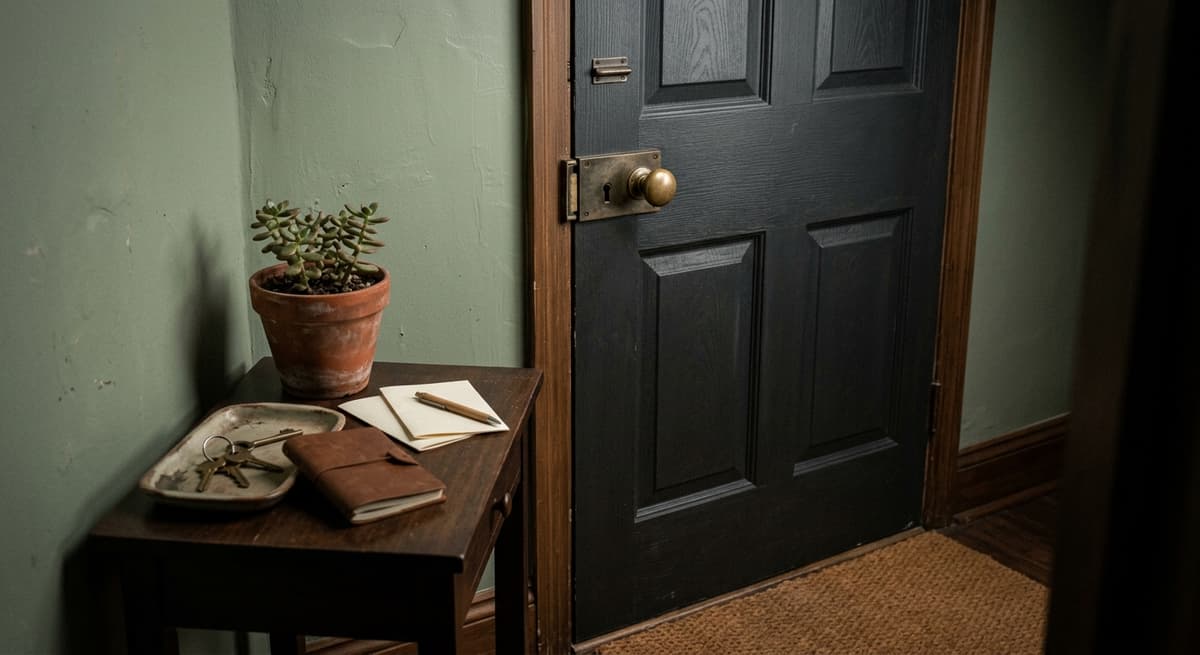
Montana codifies the castle doctrine in MCA section 45-3-103. The provision authorizes a person to use force, or the threat of force, against another to the extent reasonably believed necessary to prevent or terminate an unlawful entry into or attack upon an occupied structure.
Deadly force is justified under section 45-3-103 in two circumstances:
- The entry is made or attempted and the person reasonably believes force is necessary to prevent an assault upon themselves or another person then inside the occupied structure.
- The person reasonably believes force is necessary to prevent the commission of a forcible felony inside the occupied structure.
The scope of section 45-3-103 turns on the definition of "occupied structure" in MCA 45-2-101(47), which extends the castle doctrine beyond the home itself. That definition covers any building, vehicle, or other place suitable for human occupancy, and it also reaches any outbuilding that is immediately adjacent to or in close proximity to an occupied structure and habitually used for personal use or employment. A fenced yard by itself does not fit that definition. Defense of a fenced yard or other open area not covered by the definition still exists under the general defense-of-person framework in section 45-3-102 and the no-duty-to-retreat rule in section 45-3-110, but it is not a categorical castle-doctrine location under section 45-3-103.
Montana does not attach a statutory presumption of reasonable fear to section 45-3-103. Many states have amended their castle-doctrine statutes to presume, as a matter of law, that a person who uses deadly force against an intruder unlawfully entering the home had a reasonable belief. Montana has not taken that step. A defendant who relies on section 45-3-103 must still persuade the trier of fact that the belief in the necessity of force was reasonable under all the circumstances, including the facts of the entry and any information the defender had about the intruder.
The absence of a presumption matters most in contested cases where the facts are ambiguous, such as a confrontation with someone the defendant knows, a partial entry through a window, or a situation where the intruder turns out to have been unarmed. In those cases, the defense bears the burden of producing sufficient evidence of justification to raise a reasonable doubt; the state then bears the burden of disproving justification beyond a reasonable doubt.
When Deadly Force Is Justified (MCA 45-3-102)
The fundamental deadly force standard for personal defense in Montana is section 45-3-102, titled "Use of force in defense of person." Under that provision, a person is justified in using force or threatening force when they reasonably believe the conduct is necessary to defend themselves or another against the imminent use of unlawful force.
Force likely to cause death or serious bodily harm is authorized under section 45-3-102 only when the person reasonably believes such force is necessary to prevent one of the following:
- Imminent death or serious bodily harm to themselves or another
- The commission of a forcible felony
Both elements of the standard are objective as well as subjective. The defendant must have actually believed force was necessary (subjective), and that belief must be one a reasonable person in the same circumstances would have formed (objective). An honest but unreasonable belief does not satisfy the statute.
Montana's justification statutes turn on the phrase "serious bodily harm," but the Montana Code does not define that phrase. The closest statutory standard is the definition of "serious bodily injury" at MCA section 45-2-101(66), which covers bodily injury that (i) creates a substantial risk of death, (ii) causes serious permanent disfigurement or protracted loss or impairment of the function or process of a bodily member or organ, or (iii) at the time of injury, can reasonably be expected to result in serious permanent disfigurement or protracted loss or impairment of the function or process of a bodily member or organ. That definition also includes serious mental illness or impairment.
Because "serious bodily harm" is itself undefined, it is read against that related standard rather than applied as a codified test, and whether a particular apprehended injury clears the bar is a question of fact decided on the specific circumstances. The one place Chapter 3 speaks to the phrase directly is MCA section 45-3-101(1), and it does so by describing conduct rather than an injury threshold: force likely to cause death or serious bodily harm includes, but is not limited to, firing a firearm in the direction of a person even though no purpose exists to kill or inflict serious bodily harm, and firing a firearm at a vehicle in which a person is riding. That subsection identifies which acts count as deadly force, not which feared injuries justify using it.
MCA section 45-3-111 adds an important practical dimension. It permits any person not otherwise prohibited by federal or state law to openly carry a weapon and to communicate to another person the fact of carrying. More directly relevant to the defensive-force framework, section 45-3-111(2) allows a person who reasonably believes they or another person is threatened with bodily harm to warn or threaten the use of force, including deadly force, against the aggressor, including drawing or presenting the weapon. This provision, also enacted in 2009 and amended in 2021, means that a defensive gun display short of actual discharge is expressly authorized when the threat threshold of bodily harm is met, which is a lower threshold than the imminent-death-or-serious-bodily-harm bar for actual deadly force.
How Self-Defense Is Raised at Trial
In Montana, self-defense is a justification defense codified in Title 45, Chapter 3 of the Montana Code Annotated. Justification is an affirmative defense, meaning the defendant bears the initial burden of producing evidence sufficient to raise the issue. Once sufficient evidence of justification is in the record, the burden shifts to the state to disprove the justification beyond a reasonable doubt. The state does not need to anticipate and disprove self-defense in its case-in-chief.

Montana does not have a pretrial immunity hearing mechanism comparable to the procedures available in states like Florida or Alabama. A defendant in Montana who invokes self-defense raises it at trial as part of the criminal proceeding rather than in a pretrial proceeding that could result in dismissal before trial. This means that even a person with a strong self-defense case must go through the trial process to obtain a verdict; there is no summary-dismissal mechanism tied to the justification statutes.
The absence of civil immunity in Montana statute also means that a person who uses force in self-defense may face a civil lawsuit by the person they injured or by that person's estate even after a criminal acquittal on justification grounds. A criminal acquittal based on justification does not automatically preclude civil liability because the burdens of proof differ. Defendants in that position would need to argue the justification on the civil-liability merits separately.
When Self-Defense Fails
Montana's justification defense is unavailable in several circumstances defined by section 45-3-105.

The aggressor bar. A person who purposely or knowingly provokes force against themselves cannot invoke section 45-3-102, 45-3-103, or 45-3-104 as a defense. The provocation must be purposeful or knowing; accidental provocation does not trigger the bar.
The forcible-felony bar. A person who is attempting, committing, or fleeing after committing a forcible felony at the time force is used cannot claim justification. The term "forcible felony" is defined in MCA section 45-2-101(24) as a felony that involves the use or threat of physical force or violence against any individual, a single functional standard rather than a list of specific named offenses.
Excessive force. Even where justification applies, the force used must be proportionate to the threat. Using deadly force against a threat that required only non-deadly protective force is not covered by the justification statutes. A jury that finds the force was disproportionate will reject the defense regardless of the no-duty-to-retreat rule.
Restoration of the right after provocation. Section 45-3-105 provides two pathways for an initial aggressor to regain the right to use force. First, if the responsive force escalates to a level that creates a reasonable apprehension of imminent death or serious bodily harm and there is no reasonable means of escape except using force, the aggressor may defend. Second, if the aggressor genuinely withdraws from physical contact and clearly communicates that intent but the other party continues or resumes force, the aggressor may defend against that continuation.
For an overview of when property-defense rights and trespass intersect in Montana, see the Montana squatters rights guide.
For a side-by-side comparison of all 50 states, see the self-defense laws by state hub.
Last updated: June 1, 2026.
Statutes cited reflect their in-force version as of June 1, 2026, as published at mca.legmt.gov.
More Montana Laws
Frequently Asked Questions
Is Montana a stand your ground state?
Yes. Montana is a stand-your-ground state by statute. MCA section 45-3-110, enacted in 2009, removes any duty to retreat from a threat or to summon law enforcement assistance for a person who is lawfully in a place and who is threatened with bodily injury or loss of life. The rule applies everywhere a person is lawfully present, not only in the home.
Does Montana have a duty to retreat?
No, not for a person lawfully present who is not the aggressor. MCA 45-3-110 expressly eliminates the duty to retreat and the duty to summon law enforcement before using force. The exception is section 45-3-105: a person who provoked the confrontation or who is committing a forcible felony cannot claim justification and therefore cannot rely on the no-retreat rule.
What is the Montana castle doctrine?
Montana's castle doctrine is codified at MCA 45-3-103. It authorizes force, including deadly force, to prevent or terminate an unlawful entry into or attack upon an occupied structure when a person reasonably believes force is necessary to prevent an assault on those inside or to prevent a forcible felony. Unlike many states, Montana does not attach a statutory presumption that deadly force was reasonable simply because an intruder entered the home.
Does Montana castle doctrine cover vehicles or outbuildings?
Yes, for vehicles and qualifying outbuildings. MCA 45-2-101(47) defines 'occupied structure' for purposes of section 45-3-103 to include any building, vehicle, or other place suitable for human occupancy, plus any outbuilding immediately adjacent to or in close proximity to an occupied structure that is habitually used for personal use or employment. A fenced yard by itself does not meet that definition, and defense there is analyzed under the general deadly-force standard in MCA 45-3-102 and the no-duty-to-retreat rule in MCA 45-3-110 instead.
Does Montana have civil immunity for self-defense?
No. Montana does not have a civil-immunity statute that automatically bars a lawsuit by an injured aggressor. Justification under MCA 45-3-102 through 45-3-104 is a criminal defense. A person who uses force in self-defense and is acquitted on justification grounds may still face civil liability in a separate proceeding, where the burden of proof is lower than in a criminal trial.
Can I draw my gun to warn someone in Montana?
Yes, with conditions. MCA 45-3-111(2) authorizes warning or threatening the use of force, including deadly force, against an aggressor, including drawing or presenting a weapon, when a person reasonably believes they or another person is threatened with bodily harm. The bodily-harm threshold is lower than the imminent-death-or-serious-bodily-harm threshold required to actually discharge a firearm in self-defense.
When does self-defense not apply in Montana?
Self-defense does not apply under MCA 45-3-105 when the person purposely or knowingly provoked force against themselves, or when the person is committing or fleeing from a forcible felony. Even outside those bars, the defense fails if the force used was disproportionate or if the belief in the necessity of force was not objectively reasonable.
Updates
Corrected the discussion of "serious bodily harm": Montana does not define that term by statute, so the page now quotes the "serious bodily injury" definition at MCA 45-2-101(66) in full, explains how the undefined term relates to it, cites the conduct-based rule at MCA 45-3-101(1), and removes an unsupported example about broken bones.
Independently fact-checked against the cited primary sources; governing law re-checked for recent changes
Corrected the castle-doctrine scope description (MCA 45-3-103) in the body and FAQ to match the statutory "occupied structure" definition (MCA 45-2-101(47)), which covers vehicles and adjacent habitually-used outbuildings, and corrected "forcible felony" (MCA 45-2-101(24)) to the statute's single functional standard instead of an unsupported list of named crimes.
Fixed a formatting issue that prevented the FAQ section from displaying.
Governing law re-checked for recent changes
Reviewed and approved by an editor
The Law Behind This Article
This article rests on the statutory provisions below, held in our own legal record and retrieved from the official source. Tap a section to read the operative text.
Montana Code Annotated, Title 45
§ 45-3-102Use Of Force In Defense Of PersonIn force
45-3-102. Use of force in defense of person. A person is justified in the use of force or threat to use force against another when and to the extent that the person reasonably believes that the conduct is necessary for self-defense or the defense of another against the other person's imminent use of unlawful force. However, the person is justified in the use of force likely to cause death or serious bodily harm only if the person reasonably believes that the force is necessary to prevent imminent death or serious bodily harm to the person or another or to prevent the commission of a forcible felony.
Official text (excerpt) · last checked 2026-09-01 · Read the full text in our law library · Verify at mca.legmt.gov
Cited in 57 court opinions in our collectionLatest citing opinion in our collection: 2025
In the courts (editorial summary, independently checked):Montana courts have applied MCA 45-3-102 beyond ordinary confrontations. State v. Courville (2002) held self-defense remains available when the person met with force is a police officer; the bar on resisting arrest is separate. State v. Kaarma (2017) upheld giving both defense of person and occupied structure instructions.
Opinions citing this section in our collection:
- State v. Sunday (Montana Supreme Court 1980, 187 Mont. 292)✓Sunday shot two ranch owners who confronted him at gunpoint over horses he had taken; the court held the instructions adequately conveyed section 45-3-102's reasonable-belief standard, covering apparent danger and the no-retreat rule, and did not shift the burden of proof.
- State v. Bashor (Montana Supreme Court 1980, 188 Mont. 397)✓Bashor shot a man who reached through his car window during a late-night confrontation, fearing damage to a recently operated eye; the court held refusing a serious bodily injury definition was not error, since section 45-3-102 uses the undefined term serious bodily harm.
- State v. Courville (Montana Supreme Court 2002, 313 Mont. 218)✓Courville beat a deputy with the deputy's own gun during an arrest and argued the resisting-arrest bar created unequal classes; the court held section 45-3-102 applies the same whether or not the aggressor is an officer, leaving reasonableness to the jury, and rejected the claim.
Identified automatically from the court opinions citing this section — not a ranking of which case controls.
§ 45-3-110No Duty To Summon Help Or FleeIn forcecited in 6 of our articles
45-3-110. No duty to summon help or flee. Except as provided in 45-3-105, a person who is lawfully in a place or location and who is threatened with bodily injury or loss of life has no duty to retreat from a threat or summon law enforcement assistance prior to using force. The provisions of this section apply to a person offering evidence of justifiable use of force under 45-3-102, 45-3-103, or 45-3-104.
Official text (excerpt) · last checked 2026-07-29 · Read the full text in our law library · Verify at mca.legmt.gov
Cited in 3 court opinions in our collectionLatest citing opinion in our collection: 2020
Opinions citing this section in our collection:
- State v. S. Trujillo (Montana Supreme Court 2020, 400 Mont. 124)“…strict Court committed plain error in violation of § 45-3-110, MCA, by allowing the State’s closing argume…”
- State v. Bobby Cooksey (Montana Supreme Court 2012, 366 Mont. 346)“…elf-defense,” the officer may have a duty 2 Section 45-3-110, MCA, concerns the duty to retreat or summon…”
- State v. King (Montana Supreme Court 2016, 385 Mont. 483)“…of force. The former instruction reflects the language of § 45-3-110, MCA, and addresses a person’s duty to retre…”
Identified automatically from the court opinions citing this section — not a ranking of which case controls.
Also relied on in: Stand Your Ground States: Rules in All 50 States and DC, Castle Doctrine States: Rules in All 50 States and DC, Self-Defense Laws by State: Stand Your Ground & Castle Doctrine (2026)
§ 45-3-103Use Of Force In Defense Of Occupied StructureIn forcecited in 6 of our articles
45-3-103. Use of force in defense of occupied structure. (1) A person is justified in the use of force or threat to use force against another when and to the extent that the person reasonably believes that the use of force is necessary to prevent or terminate the other person's unlawful entry into or attack upon an occupied structure. (2) A person justified in the use of force pursuant to subsection (1) is justified in the use of force likely to cause death or serious bodily harm only if: (a) the entry is made or attempted and the person reasonably believes that the force is necessary to prevent an assault upon the person or another then in the occupied structure; or (b) the person reasonably believes that the force is necessary to prevent the commission of a forcible felony in the occupied structure.
Official text (excerpt) · last checked 2026-07-29 · Read the full text in our law library · Verify at mca.legmt.gov
Cited in 13 court opinions in our collectionLatest citing opinion in our collection: 2025
Opinions citing this section in our collection:
- State v. Daniels (Montana Supreme Court 2011, 362 Mont. 426)“…tion concerning the defense of an occupied structure under § 45-3-103, MCA (2009). Daniels argues that this refus…”
- State v. Barrack (Montana Supreme Court 1994, 267 Mont. 154)“…in defense of an occupied structure, which is set forth at § 45-3-103, MCA. That statute provides that: A person…”
- State v. Hagen (Montana Supreme Court 1995, 273 Mont. 432)“…efense of an occupied structure is set forth at s 45-3-103, MCA, which states: A person is justif…”
Identified automatically from the court opinions citing this section — not a ranking of which case controls.
§ 45-3-105Use Of Force By AggressorIn force
45-3-105. Use of force by aggressor. The justification described in 45-3-102 through 45-3-104 is not available to a person who: (1) is attempting to commit, committing, or escaping after the commission of a forcible felony; or (2) purposely or knowingly provokes the use of force against the person, unless: (a) the force is so great that the person reasonably believes that the person is in imminent danger of death or serious bodily harm and that the person has exhausted every reasonable means to escape the danger other than the use of force that is likely to cause death or serious bodily harm to the assailant; or (b) in good faith, the person withdraws from physical contact with the assailant and indicates clearly to the assailant that the person desires to withdraw and terminate the use of force, but the assailant continues or resumes the use of force.
Official text (excerpt) · last checked 2026-07-29 · Read the full text in our law library · Verify at mca.legmt.gov
Cited in 9 court opinions in our collectionLatest citing opinion in our collection: 2025
Opinions citing this section in our collection:
- State v. Bashor (Montana Supreme Court 1980, 188 Mont. 397)“…ere are some exceptions to the aggressor *487 limitation. Section 45-3-105, MCA, states that an aggressor may use the t…”
- State v. Lafley (Montana Supreme Court 1998, 287 Mont. 276)“…f force is only available in two very narrow circumstances. Section 45-3-105, MCA, states: The justification descr…”
- State v. Bingman (Montana Supreme Court 1987, 229 Mont. 101)“…already indicated to his assailant his desire to withdraw. Section 45-3-105, MCA, (1985). Retreat is not required if the…”
Identified automatically from the court opinions citing this section — not a ranking of which case controls.
§ 45-3-111Openly Carrying Weapon -- DisplayIn force
45-3-111. Openly carrying weapon -- display. (1) Any person who is not otherwise prohibited from doing so by federal or state law may openly carry a weapon and may communicate to another person the fact that the person has a weapon. (2) If a person reasonably believes that the person or another person is threatened with bodily harm, the person may warn or threaten the use of force, including deadly force, against the aggressor, including drawing or presenting a weapon.
Official text (excerpt) · last checked 2026-07-29 · Read the full text in our law library · Verify at mca.legmt.gov
Cited in 2 court opinions in our collectionLatest citing opinion in our collection: 2022
Opinions citing this section in our collection:
- State v. Bobby Cooksey (Montana Supreme Court 2012, 366 Mont. 346)“…on help when threatened with bodily injury or loss of life. Section 45-3-111, MCA, grants authority to openly carry and d…”
- Board of Regents v. State (Montana Supreme Court 2022, 2022 MT 128)“…of the MUS. In Section 8 of HB 102, the Legislature amended § 45-3-111, MCA, regarding open carry, and deleted the…”
Identified automatically from the court opinions citing this section — not a ranking of which case controls.
§ 45-2-101General DefinitionsIn forcecited in 11 of our articles
45-2-101. General definitions. Unless otherwise specified in the statute, all words must be taken in the objective standard rather than in the subjective, and unless a different meaning plainly is required, the following definitions apply in this title: (1) "Acts" has its usual and ordinary meaning and includes any bodily movement, any form of communication, and when relevant, a failure or omission to take action. (2) "Administrative proceeding" means a proceeding the outcome of which is required to be based on a record or documentation prescribed by law or in which a law or a regulation is particularized in its application to an individual. (3) "Another" means a person or persons other than the offender. (4) (a) "Benefit" means gain or advantage or anything regarded by the beneficiary as gain or advantage, including benefit to another person or entity in whose welfare the beneficiary is interested. (b) Benefit does not include an advantage promised generally to a group or class of voters as a consequence of public measures that a candidate engages to support or oppose.
Official text (excerpt) · last checked 2026-07-29 · Read the full text in our law library · Verify at mca.legmt.gov
Cited in 54 court opinions in our collectionLatest citing opinion in our collection: 2026
Opinions citing this section in our collection:
- State v. Smith (Montana Supreme Court 2004, 322 Mont. 206)“…n the intended victim of the serious bodily injury. ¶34 Section 45-2-101, MCA, defines “another” as, simply, “a perso…”
- State v. Haser (Montana Supreme Court 2001, 304 Mont. 63)“…other person." Under the general definitions provided under § 45-2-101, MCA, "sexual intercourse" includes "penetra…”
- State v. Stevens (Montana Supreme Court 2002, 311 Mont. 52)“…ingness to act, pursuant to §§ 45-5-501(1)(b)(ii) and 45-2-101, MCA, which defines “physically helpless.” H…”
Identified automatically from the court opinions citing this section — not a ranking of which case controls.
Also relied on in: Montana Hit and Run Laws: Penalties and What to Do, Montana Age of Consent Laws: Statutes, Penalties and Reporting, Montana Pepper Spray and Stun Gun Laws (2026)
Explore the law
This article also draws on these acts and chapters (opening at their first section): Montana Code Annotated, Title 45 § 45-3-101 (Definitions)
Related law for further reading — not part of this article’s citations.
Search our full record of US law — 2.1 million sections, every state + federal →
Sources and References
- MCA 45-3-102: Use of force in defense of person(mca.legmt.gov)
- MCA 45-3-103: Use of force in defense of occupied structure(mca.legmt.gov)
- MCA 45-3-105: Use of force by aggressor(mca.legmt.gov)
- MCA 45-3-110: No duty to summon help or flee(mca.legmt.gov)
- MCA 45-3-111: Openly carrying weapon: display(mca.legmt.gov)
- MCA 45-2-101: Definitions (serious bodily harm, forcible felony)(mca.legmt.gov)
- Montana Code Annotated Title 45 Chapter 3: Justification(mca.legmt.gov)
- MCA 45-2-101: Definitions (Montana Legislature, 2025 ed.): serious bodily harm, forcible felony(mca.legmt.gov).gov
- MCA 45-3-101: Definitions (force likely to cause death or serious bodily harm; forcible felony)(mca.legmt.gov)