
Wisconsin
Wisconsin Probate and Intestate Succession: What Happens Without a Will (2026)
Independently fact-checked against primary sources (last audited August 20, 2026). · Reviewed by the RecordingLaw editorial team. · Law checked current as of August 20, 2026. · 11 primary sources cited on this page. How we verify our legal content
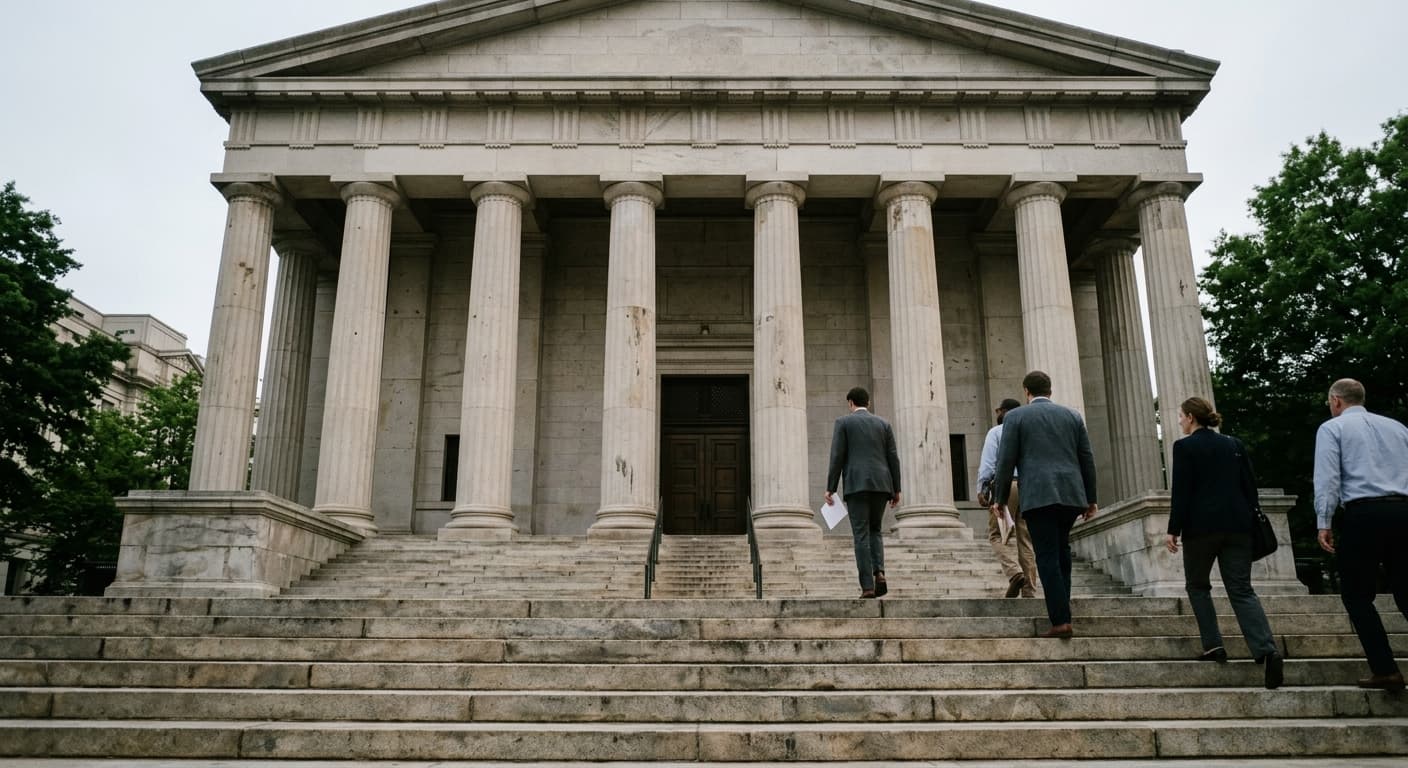
Wisconsin probate is handled by the Circuit Court of the county where the decedent lived, sitting in probate, with the county's Register in Probate managing most filings and supervising the state's common informal-administration track under Wis. Stat. ch. 865.
Information last verified on 2026-07-16. This article has not yet been reviewed by a licensed lawyer.
How Probate Works in Wisconsin
Wisconsin probate is a Circuit Court function. Wis. Stat. § 851.04 defines "court," for probate purposes, as the circuit court of the county where the case is filed, or a judge assigned to exercise probate jurisdiction there. In practice, each county's Register in Probate, a non-judicial officer appointed by the county's circuit judges under Wis. Stat. §§ 851.71 to 851.73, handles the day-to-day filings and supervises the state's informal administration process on the court's behalf. The circuit court itself remains the probate court of record.
Wisconsin has not adopted the full Uniform Probate Code, but it independently runs a genuine two-track system. Informal administration, governed by Wis. Stat. ch. 865, is supervised by the Register in Probate without continuous judge involvement, does not require an attorney, and is the form most Wisconsin estates use. Chapter 856 covers the general estate-opening steps, such as filing the will and the petition for administration, that precede either track. Formal administration, by contrast, is supervised directly by a circuit court judge and requires an attorney. Wisconsin law channels an estate into formal administration in specific situations. Under Wis. Stat. § 865.02(2), informal administration cannot be used at all where the will expressly prohibits it. Otherwise, § 865.02(1)(a) allows informal administration in a testate case where the will does not prohibit it, the person named as personal representative accepts that appointment, and bond is furnished if required. If the named personal representative declines to serve, or the decedent died intestate, informal administration remains available under § 865.02(1)(b), but only if every interested person requests or consents in writing both to informal administration and to the appointment of the same personal representative, and bond is furnished if required. Without that unanimous written consent, the estate proceeds under formal administration. The Register in Probate decides whether informal administration is appropriate for a given estate, and by statute cannot give legal advice even if that particular Register happens to be an attorney.
Once an application for administration is filed, the court, or the probate registrar in an informal case, must set a creditor-claims deadline that is not less than three and not more than four months from the date of that order, under Wis. Stat. § 859.01. Claims not filed by that deadline are barred against the estate, the personal representative, and the heirs or beneficiaries under § 859.02, and this deadline cannot be waived by agreement.
Intestate Succession in Wisconsin: Who Inherits Without a Will
Wisconsin's intestate succession statute, Wis. Stat. § 852.01(1)(a), starts from a straightforward rule and then layers in a distinctly Wisconsin wrinkle tied to the state's marital property system. A surviving spouse or registered domestic partner takes the entire estate if the decedent has no surviving issue, or if every surviving issue is also issue of that surviving spouse or partner. Where the decedent leaves surviving issue and one or more of them are not issue of the surviving spouse or partner, a blended-family case, the rule changes: the spouse or partner takes one-half of the decedent's property other than two excluded categories set out in Wis. Stat. § 852.01(1)(a)2: the decedent's interest in marital property, and the decedent's interest in property held equally and exclusively with the surviving spouse or domestic partner as tenants in common. Those two categories pass instead to the decedent's issue rather than to the spouse. That split exists because Wisconsin's Marital Property Act, Wis. Stat. ch. 766, already vests the surviving spouse with ownership of their own half of marital property automatically, independent of intestacy, so the intestate statute only needs to redirect the decedent's remaining interest.
It is worth stating plainly: Wisconsin is a community property state, and the IRS counts it as one of the nine. The difference is terminology rather than substance. Wisconsin enacted the Uniform Marital Property Act, so its statutes say "marital property" throughout, and Wis. Stat. § 766.001(2) provides that "it is the intent of the legislature that marital property is a form of community property." Wisconsin's version still carries its own statutory rules and its own case law, so do not assume that a result from Texas or California transfers over unchanged.
Children's and other issue's shares are distributed per stirpes. If there is no surviving spouse or partner and no issue, the estate passes to the decedent's parents under § 852.01(1)(c). If no parents survive, it passes to the decedent's siblings and the issue of any deceased sibling, per stirpes, under § 852.01(1)(d). If none of those survive, the estate splits equally between the decedent's paternal and maternal grandparents or their descendants, with the entire estate going to one side if the other side has no survivors, under § 852.01(1)(f). If the decedent has no heirs at all, the estate escheats to the state to be added to the capital of the school fund under § 852.01(3).
One way to make sure your property goes to the people you actually choose, rather than following Wisconsin's intestate succession order, is to have a valid will in place. recordinglaw.com's free Wisconsin Last Will and Testament Generator can help you create one, with no account required.
Small Estate and Simplified Probate in Wisconsin
Wisconsin sets its small estate threshold at $50,000 and offers three related mechanisms under Wis. Stat. ch. 867, rather than a single procedure. Summary Settlement, under § 867.01, is available when the estate, net of secured debts, is $50,000 or less and the decedent is survived by a spouse, domestic partner, or minor children. Summary Assignment, under § 867.02, lets the court summarily assign a $50,000-or-under estate without appointing a personal representative at all, for cases where summary settlement is not available. Transfer by Affidavit, under § 867.03, applies to estates with $50,000 or less in gross property value and lets any heir, a revocable-trust trustee, a will-nominated personal representative, or the decedent's guardian at death collect the decedent's money and property and transfer assets by affidavit, without opening a probate case at all. For thresholds, waiting periods and forms, see our guide to the Wisconsin small estate affidavit.
Completing a Wisconsin Transfer by Affidavit
The official route for a $50,000-or-under estate is the statute's own paperwork, such as the Transfer by Affidavit under Wis. Stat. § 867.03, which needs no probate case at all. If you have the affidavit as a PDF, PDFelement is optional paid software for filling it in, editing text, and e-signing it. An e-signature does not make the affidavit valid by itself or stand in for any notarization or witness step the form requires, so sign it the way the form directs.
See What PDFelement DoesAffiliate disclosure: if you sign up through this link we may earn a commission, at no extra cost to you. Learn more
Estate and Inheritance Tax in Wisconsin
Wisconsin levies neither a state estate tax nor a state inheritance tax. Wisconsin repealed its inheritance tax outright in 1992 and has had no state estate tax since. That status is still current: a 2026 legislative proposal to reinstate a state estate tax on deaths occurring after October 31, 2026, Assembly Bill 1029, introduced February 6, 2026, failed to pass pursuant to Senate Joint Resolution 1 on March 23, 2026, so Wisconsin remains a no-estate-tax, no-inheritance-tax state going into the rest of 2026.
Do You Need a Probate Attorney?
Informal administration in Wisconsin is specifically designed to work without an attorney, and the Register in Probate can walk a personal representative through the paperwork, though not give legal advice. If the will prohibits informal administration or the interested persons cannot all agree in writing, ask a Wisconsin probate lawyer for a free case evaluation on taking the estate through formal administration (attorney advertising). An attorney is also worth engaging for a blended family navigating the marital-property split described above, a business interest in the estate, or any estate near the $50,000 small-estate threshold where the choice of mechanism matters. See Probate by State for how Wisconsin's approach compares to neighboring states.
Disclaimer
This article provides general information about probate and intestate succession in Wisconsin as of the verification date above. It is not legal advice and does not create an attorney-client relationship. It is not a substitute for advice from a probate attorney licensed in Wisconsin, particularly for a contested estate, a business interest, a blended family, or an estate raising marital-property questions. Figures, thresholds, and program details change; verify current details directly with the official source before relying on any figure here.

Last updated: 2026-07-16. Figures and statutes cited reflect their in-force version as of 2026-07-16.
More Wisconsin Laws
- Wisconsin Child Custody Laws
- Wisconsin Divorce Laws
- Wisconsin Power of Attorney Laws
- Wisconsin Unclaimed Property
Frequently Asked Questions
What court handles probate in Wisconsin?
The Circuit Court of the county where the decedent resided, sitting in probate, under Wis. Stat. § 851.04. Each county's Register in Probate handles most filings and supervises informal administration.
What happens if you die without a will in Wisconsin?
Wisconsin's intestate succession statute, Wis. Stat. § 852.01, controls. A surviving spouse or domestic partner takes everything if all issue are shared; if some issue are not the spouse's, the spouse gets half of the decedent's property other than two excluded categories, the decedent's interest in marital property and property the decedent held equally and exclusively with that spouse as tenants in common, both of which pass to the issue instead.
What is the small estate limit in Wisconsin?
$50,000, under Wis. Stat. ch. 867. Depending on the situation, an estate at or below that threshold may qualify for Summary Settlement, Summary Assignment, or Transfer by Affidavit.
Is Wisconsin a community property state?
Yes. Wisconsin is one of the nine community property states the IRS recognizes. Its statutes use the term 'marital property' under the Marital Property Act, Wis. Stat. ch. 766, because Wisconsin enacted the Uniform Marital Property Act, and Wis. Stat. § 766.001(2) provides that the legislature intends marital property to be a form of community property.
Does Wisconsin have an inheritance tax or estate tax?
No. Wisconsin repealed its inheritance tax in 1992 and has no state estate tax. A 2026 proposal to add a new state estate tax failed to pass.
How long do creditors have to file a claim against a Wisconsin estate?
Not less than three and not more than four months from the date of the court's order setting the claims deadline, under Wis. Stat. § 859.01. This deadline cannot be waived, and late claims are generally barred under § 859.02.
Do you need a lawyer for probate in Wisconsin?
Not for informal administration, which is designed to be handled without an attorney. Formal administration, required where the will prohibits informal administration or the interested persons do not all consent in writing to informal administration and the same personal representative, does require an attorney.
Updates
Corrected this page to state that Wisconsin is one of the nine community property states, clarified that a will-named personal representative declining to serve does not by itself force formal administration, corrected the Register in Probate to an appointed office, and added the second category of property excluded from a surviving spouse's blended-family intestate share.
Corrected the statute chapter cited for Wisconsin's informal probate track (ch. 865, not ch. 856, which covers general estate-opening steps) and corrected the bill number for the failed 2026 estate-tax proposal (Assembly Bill 1029, not Senate Joint Resolution 1, which was the procedural vehicle it died under).
Independently fact-checked against the cited primary sources; governing law re-checked for recent changes
Governing law re-checked for recent changes
Governing law re-checked for recent changes
Reviewed and approved by an editor
The Law Behind This Article
This article rests on the statutory provisions below, held in our own legal record and retrieved from the official source. Tap a section to read the operative text.
Wisconsin Statutes, Chapter 852: Intestate Succession
§ 852.01Basic rules for intestate succession.In force
(1) Who are heirs. Except as modified by the decedent’s will under s. 852.10 (1), any part of the net estate of a decedent that is not disposed of by will passes to the decedent’s surviving heirs as follows: (a) To the spouse or domestic partner: 1. If there are no surviving issue of the decedent, or if the surviving issue are all issue of the surviving spouse or surviving domestic partner and the decedent, the entire estate. 2. If there are surviving issue one or more of whom are not issue of the surviving spouse or surviving domestic partner, one-half of decedent’s property other than the following property: a. The decedent’s interest in marital property. b. The decedent’s interest in property held equally and exclusively with the surviving spouse or surviving domestic partner as tenants in common. (b) To the issue, per stirpes, the share of the estate not passing to the spouse or surviving domestic partner, under par. (a), or the entire estate if there is no surviving spouse or surviving domestic partner. (c) If there is no surviving spouse, surviving domestic partner, or issue, to the parents.
Official text (excerpt) · last checked 2026-09-06 · Read the full text in our law library · Verify at docs.legis.wisconsin.gov
Cited in 22 court opinions in our collectionLatest citing opinion in our collection: 2026
Opinions citing this section in our collection:
- Hailey Marie-Joe Force v. American Family Mutual Insurance Company (Wisconsin Supreme Court 2014)“…ing our consideration of the children's claim, we reviewed Wis. Stat. § 852.01(2m) (1985- 86), which preclud…”
- Bowen v. American Family Insurance (Court of Appeals of Wisconsin 2012, 340 Wis. 2d 232)“…by [Wis. Stat. §] 852.01." Wis. Stat. § 895.04 (2). Under Wis. Stat. § 852.01 (l)(a) and (b), if the deceased's spous…”
- Day v. Allstate Indemnity Co. (Court of Appeals of Wisconsin 2010, 325 Wis. 2d 370)“…paid to ... the deceased's lineal heirs as determined by [ Wis. Stat. § 852.01 ]." Wis. Stat. § 895.04 (2). ¶ 11. T…”
Identified automatically from the court opinions citing this section — not a ranking of which case controls.
Wisconsin Statutes, Chapter 851: Probate
§ 851.04Court.In force
“Court” means the circuit court or judge assigned to exercise probate jurisdiction.
Official text (excerpt) · last checked 2026-07-29 · Read the full text in our law library · Verify at docs.legis.wisconsin.gov
§ 851.71Appointment and compensation of registers in probate.In force
(1) In each county, the judges of the county shall appoint and may remove a register in probate. Appointments and removals may be made only with the approval of the chief judge. Before entering upon duties, the register in probate shall take and subscribe the constitutional oath of office and file it, together with the order of appointment, in the office of the clerk of circuit court. (2) One or more deputies may be appointed in the manner specified in sub. (1). (3) The salary of the register in probate and of any deputies shall be fixed by the county board and paid by the county. (4) In counties having a population of 750,000 or more, the appointment under subs. (1) and (2) shall be made as provided in those subsections but the judges shall not remove the register in probate and deputy registers, except through charges for dismissal made and sustained under s. 63.10.
Official text (excerpt) · last checked 2026-07-29 · Read the full text in our law library · Verify at docs.legis.wisconsin.gov
Cited in 3 court opinions in our collectionLatest citing opinion in our collection: 2008
Opinions citing this section in our collection:
- Racine County v. International Ass'n of MacHinists & Aerospace Workers District 10, AFL-CIO (Wisconsin Supreme Court 2008, 310 Wis. 2d 508)“…esheim stated: Like the statutory authority conferred by Wis. Stat. § 851.71 on the Iowa County circuit judge…”
- Barland v. Eau Claire County (Wisconsin Supreme Court 1998, 216 Wis. 2d 560)“…48.065 , appointment of juvenile court commissioners, and Wis. Stat. § 851.71 , power to appoint and remove a registe…”
- STATE EX REL. REISE v. Morlen (Court of Appeals of Wisconsin 2002, 251 Wis. 2d 472)“…m." The Register is appointed by the judges of the county. Wis. Stat. § 851.71 (1). The Register's duties and powers a…”
Identified automatically from the court opinions citing this section — not a ranking of which case controls.
Wisconsin Statutes, Chapter 859: Probate
§ 859.01Time for filing claims.In force
When an application for administration is filed, the court, or the probate registrar under informal administration proceedings, shall by order set a date as the deadline for filing a claim against the decedent’s estate. The date shall be not less than 3 nor more than 4 months from the date of the order. If a claim is not filed by the deadline, the consequences provided in s. 859.02 apply.
Official text (excerpt) · last checked 2026-07-29 · Read the full text in our law library · Verify at docs.legis.wisconsin.gov
§ 859.02Limitation on claims.In force
(1) Except as provided in sub. (2) and s. 859.03, all claims against a decedent’s estate including claims of the state and any subdivision thereof, whether due or to become due, absolute or contingent, liquidated or unliquidated, are barred against the estate, the personal representative and the heirs and beneficiaries of the decedent unless filed on or before the date set under s. 859.01. (2) A claim against a decedent’s estate that is not filed on or before the date set under s. 859.01 is not barred if: (a) It is a claim based on tort, on a marital property agreement that is subject to the time limitations under s. 766.58 (13) (b) or (c), on Wisconsin income, franchise, sales, withholding, gift, or death taxes, or on unemployment insurance contributions due or benefits overpaid; a claim for funeral or administrative expenses; a claim of this state under s. 46.27 (7g), 2017 stats., or s. 49.496, 49.682, or 49.849; or a claim of the United States; or (b) All of the following circumstances exist: 1. On or before the date set under s.
Official text (excerpt) · last checked 2026-07-29 · Read the full text in our law library · Verify at docs.legis.wisconsin.gov
Wisconsin Statutes, Chapter 867: Probate
§ 867.02Summary assignment of small estates subject to claims of creditors.In forcecited in 2 of our articles
(1) Availability. The court shall summarily assign the estate of a deceased person without the appointment of a personal representative if the estate, less the amount of the debts for which any property in the estate is security, does not exceed $50,000 in value and the estate cannot be summarily settled under s. 867.01. An estate, administration of which has been commenced under ch. 856, or a summary settlement commenced under s. 867.01 may be terminated under this section at any time that it is found to meet the requirements of this section. (2) Procedure. (ac) Who may petition. Any person who has standing to petition for administration of the estate under s. 856.07 has standing to petition for summary assignment. (am) Petition contents. The petition shall contain the following information, except that the petitioner may omit from the petition the information in subds. 3. and 4. and include it in an affidavit filed with the court prior to the signing of the order assigning the estate: 1. A statement that the estate does not exceed $50,000 in value and cannot be summarily settled under s. 867.01. 2.
Official text (excerpt) · last checked 2026-07-29 · Read the full text in our law library · Verify at docs.legis.wisconsin.gov
Cited in 1 court opinions in our collectionLatest citing opinion in our collection: 2005
Opinions citing this section in our collection:
- Schmitz v. Fire Insurance Exchange (Court of Appeals of Wisconsin 2005, 280 Wis. 2d 560)“…See, *570 e.g., Wis. Stat. § 867.02 (2)(i) (entitled "Mailing or d…”
Identified automatically from the court opinions citing this section — not a ranking of which case controls.
Also relied on in: Wisconsin Small Estate Affidavit: $50,000 Limit, Rules and Form
Wisconsin Statutes, Chapter 766: Property Rights Of Married Persons; Marital Property
§ 766.001Liberal construction; intent.In forcecited in 2 of our articles
(1) This chapter is remedial in nature and shall be liberally construed, consistent with s. 766.96. (2) It is the intent of the legislature that marital property is a form of community property.
Official text (excerpt) · last checked 2026-07-29 · Read the full text in our law library · Verify at docs.legis.wisconsin.gov
Cited in 8 court opinions in our collectionLatest citing opinion in our collection: 2015
Opinions citing this section in our collection:
- State of Wisconsin Department of Justice v. State of Wisconsin Department of Workforce Development (Wisconsin Supreme Court 2015, 365 Wis. 2d 694)“…across the broadest spectrum of our statutes. See, e.g., Wis. Stat. § 766.001 (1) (Marital Property); Wis. Stat. § 1…”
- United States v. Dennis P. Marx A/K/A Dennis Martin, Big "D," Dennis Burtell, Appeal of Mary Ann Marx (Court of Appeals for the Seventh Circuit 1988, 844 F.2d 1303)“…ure that marital property is a form of community property,” Wis.Stat. § 766.001(2), and states that all property is pre…”
- In Re Passmore (United States Bankruptcy Court, E.D. Wisconsin 1993, 156 B.R. 595)“…property, a form of community property under Wisconsin law. Wis.Stat. § 766.001(2). Both spouses’ interests in the fund…”
Identified automatically from the court opinions citing this section — not a ranking of which case controls.
Also relied on in: Wisconsin Prenuptial Agreement Laws: Rules and Enforceability (2026)
Wisconsin Statutes, Chapter 865: Probate
§ 865.02Use of informal administration.In force
(1) Informal administration may be used: (a) Where the decedent died testate and: 1. The will does not prohibit the use of informal administration; 2. The will names a personal representative who accepts such appointment; 3. Bond is furnished if required under s. 865.07 as provided under s. 856.25; and 4. The probate registrar may appoint a guardian ad litem, and shall have the authority, for such purpose, granted to the court by, and shall proceed pursuant to s. 879.23. (b) Where the decedent died intestate or the requirements of par. (a) 2. and 3. are not satisfied and: 1. All interested persons request or consent in writing to informal administration and to the appointment of the same person as personal representative. A guardian or guardian ad litem may consent on behalf of an interested person who is a minor or is an individual adjudicated incompetent. The probate registrar may appoint a guardian ad litem, and shall have the authority, for such purpose, granted to the court by, and shall proceed pursuant to s. 879.23. 2. Bond is furnished if required under s. 865.07 as provided under s. 856.25.
Official text (excerpt) · last checked 2026-07-29 · Read the full text in our law library · Verify at docs.legis.wisconsin.gov
Cited in 2 court opinions in our collectionLatest citing opinion in our collection: 2022
Opinions citing this section in our collection:
- Hutchinson ex rel. Baker v. Spink (Court of Appeals for the Seventh Circuit 1997, 126 F.3d 895)“…irements (consent of interested parties, bonding) are met. Wis. Stat. Ann. § 865.02 (l)(b). Of particular importance to our…”
- Sims v. City of Elkhart (District Court, N.D. Indiana 2022)“…Hutchinson v. Spink, 126 F.3d 895 (7th Cir. 1997) (quoting Wis. Stat. § 865.02(1)(b)) (recognizing that “[i]n Wiscons…”
Identified automatically from the court opinions citing this section — not a ranking of which case controls.
Explore the law
This article also draws on these acts and chapters (opening at their first section): Wisconsin Statutes, Chapter 867: Probate § 867.01 (Summary settlement of small estates.)
Related law for further reading — not part of this article’s citations.
Search our full record of US law — 2.1 million sections, every state + federal →
Sources and References
- Wisconsin Statutes § 851.04, Definition of "court" for probate purposes(docs.legis.wisconsin.gov).gov
- Wisconsin Statutes ch. 852, Intestate succession(docs.legis.wisconsin.gov).gov
- Wisconsin Statutes § 852.01, Intestate succession shares(docs.legis.wisconsin.gov).gov
- Wisconsin Statutes ch. 867, Small estates and summary procedures(docs.legis.wisconsin.gov).gov
- Wisconsin Statutes § 859.01, Time for filing claims against a decedent's estate(docs.legis.wisconsin.gov).gov
- Wisconsin Statutes § 859.02, Claims barred by failure to file(docs.legis.wisconsin.gov).gov
- Wisconsin Court System, Guide to Wisconsin Probate(wicourts.gov).gov
- Milwaukee County, Informal Probate(county.milwaukee.gov).gov
- Wisconsin Department of Revenue, Estate Tax FAQs(revenue.wi.gov).gov
- Wisconsin Statutes ch. 865, Probate — Informal Administration(docs.legis.wisconsin.gov).gov
- Wisconsin Legislature, 2025 Assembly Bill 1029 (proposed estate tax, failed to pass March 23, 2026)(docs.legis.wisconsin.gov).gov
- Wisconsin Statutes § 766.001(2), Liberal construction; intent (marital property is a form of community property)(docs.legis.wisconsin.gov)
- Wisconsin Statutes § 851.71, Appointment and compensation of registers in probate(docs.legis.wisconsin.gov)
- Wisconsin Statutes § 865.02, Use of informal administration(docs.legis.wisconsin.gov)
- IRS Publication 555, Community Property (lists Wisconsin among the nine community property states)(irs.gov)
Paid attorney referral. RecordingLaw may receive compensation when you use an attorney-help link. RecordingLaw is not a law firm. Submitting a request does not guarantee that an attorney will accept your case and does not create an attorney-client relationship.