
Michigan
Michigan Probate and Intestate Succession: What Happens Without a Will (2026)
Independently fact-checked against primary sources (last audited August 20, 2026). · Reviewed by the RecordingLaw editorial team. · Law checked current as of August 20, 2026. · 7 primary sources cited on this page. How we verify our legal content
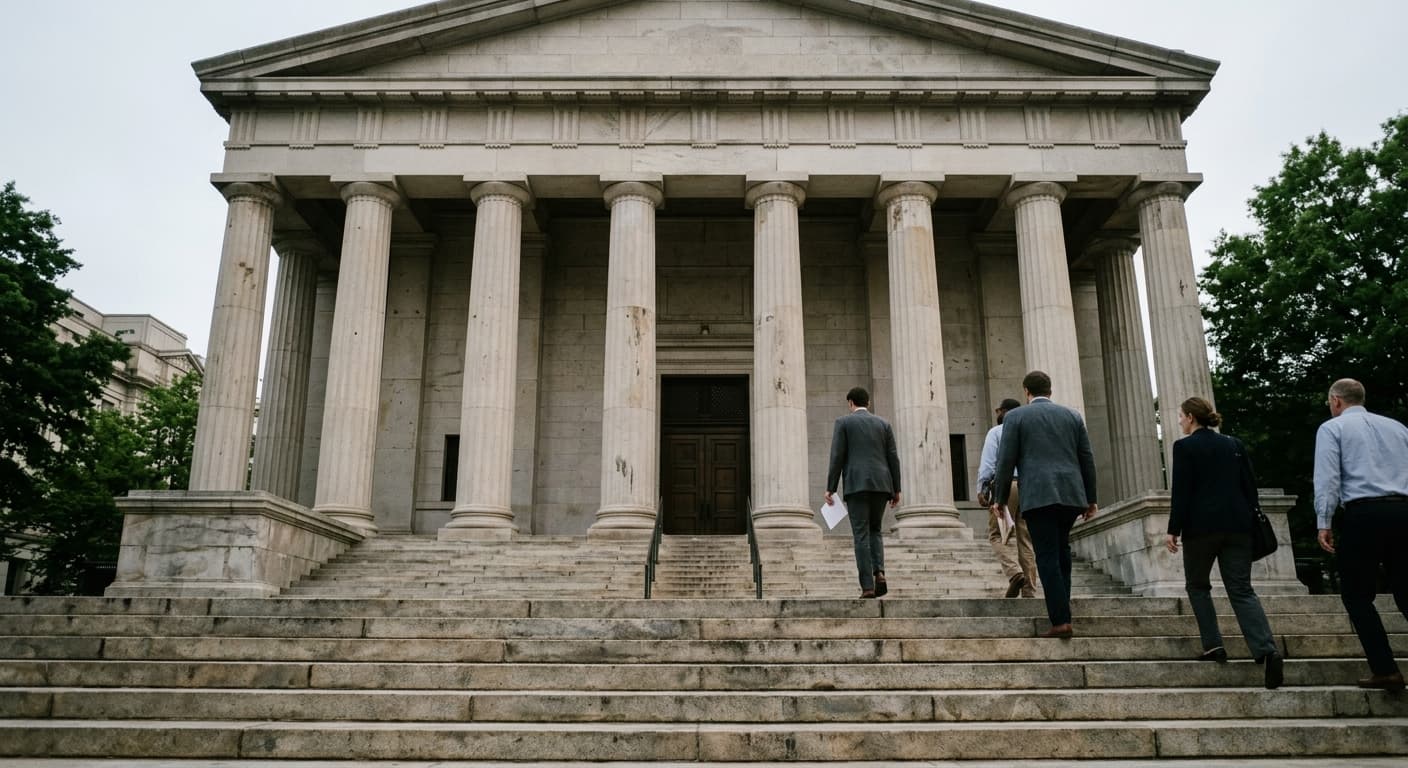
Michigan probate matters are handled by a Probate Court in each county, and the state's Estates and Protected Individuals Code offers three separate tracks depending on how contested an estate is. Most Michigan estates use the fastest of the three, Informal Probate.
Information last verified on 2026-07-16. This article has not yet been reviewed by a licensed lawyer.
How Probate Works in Michigan
Probate in Michigan is handled by the Probate Court, with a dedicated court in each of the state's 83 counties, though a handful of counties have consolidated into shared multi-county probate districts. Michigan is a genuine Uniform Probate Code state: it adopted the Estates and Protected Individuals Code (EPIC), codified at MCL 700.1101 et seq., in 2000, closely modeled on the national Uniform Probate Code.
EPIC offers three distinct procedural tracks. Informal Probate is processed by a probate register rather than a judge, requires no court hearing, and is the fastest route, used for the large majority of uncontested Michigan estates. Formal Probate goes before a judge and is used when there are disputes among heirs, an ambiguous or contested will, or when the original will cannot be located. Supervised Administration provides the maximum level of ongoing court oversight throughout the case, and is ordered when heirs or creditors need that protection or the court determines it is appropriate.
Because most Michigan estates qualify for the informal track, overall probate timelines in the state tend to run shorter than in states without a true informal option. A simple estate handled by an independent personal representative under Informal Probate often closes in about 6 to 9 months, a timeline driven largely by Michigan's 4-month statutory creditor-claims window. Formal or supervised cases involving disputes or complexity can take 12 to 24 months or longer.
Intestate Succession in Michigan: Who Inherits Without a Will
Michigan intestate succession is governed by EPIC, specifically MCL 700.2102 (the surviving spouse's share) and MCL 700.2103 (other heirs), with the dollar figures in both sections adjusted annually for inflation under MCL 700.1210. The statute sets a fixed statutory order that applies whenever a Michigan resident dies without a valid will.

If the decedent has no surviving descendant or parent, the surviving spouse inherits the entire estate. If all of the decedent's descendants are also descendants of the surviving spouse, and the spouse has no other descendants, the spouse takes the first $301,000 plus one-half of the balance, with the remainder passing to the shared descendants. If there is no surviving descendant but a parent survives, the spouse takes the first $301,000 plus three-quarters of the balance. Where the surviving spouse has descendants who are not the decedent's, the spouse likewise takes the first $301,000 plus one-half of the balance. If some, but not all, of the decedent's own descendants are not descendants of the surviving spouse, a partial blended-family situation from the decedent's side, the spouse still takes the first $301,000 plus one-half of the balance. Only if none of the decedent's own descendants are descendants of the surviving spouse does the spouse's share drop to the first $201,000 plus one-half of the balance. These figures are the statute's $150,000 and $100,000 base amounts, as adjusted for 2026 under MCL 700.1210 and the Michigan Department of Treasury's EPIC cost-of-living-adjustment notice; they change annually.
If there is no surviving spouse, the estate passes to the decedent's descendants by representation. Absent descendants, it passes to the decedent's parents equally, or to the surviving parent. Absent parents, it passes to the descendants of the decedent's parents (siblings and their children) by representation. If none survive, half the estate passes to the decedent's surviving paternal grandparents or their descendants, and half to the surviving maternal grandparents or their descendants. Michigan is not a community-property state. An estate escheats to the State of Michigan under MCL 700.2105 only when no qualifying heir can be found at all, which is rare.
One way to make sure your property goes to the people you actually choose, rather than following Michigan's intestate succession order, is to have a valid will in place. recordinglaw.com's free Michigan Last Will and Testament Generator can help you create one, with no account required.
Small Estate and Simplified Probate in Michigan
Michigan's simplified small-estate procedure lets an heir skip full probate administration for a genuinely small estate. Using a Petition and Order for Assignment (Form PC 556), an heir can ask the probate court to assign the decedent's property directly to the spouse or heirs when the gross estate value, after subtracting funeral and burial expenses, is $53,000 or less. That figure is not fixed; it is indexed for inflation annually under MCL 700.3982, and $53,000 reflects the current 2026 threshold. For thresholds, waiting periods and forms, see our guide to the Michigan small estate affidavit.
Because the small-estate assignment process skips much of what full administration requires, including the standard 4-month creditor window used in Informal and Formal Probate, it can close considerably faster, often in as little as 3 to 4 months. The petition still goes through the Probate Court, unlike a pure affidavit process in some other states, but the filing and hearing requirements are substantially lighter than either Informal or Formal Probate.
Filling In Form PC 556
Start with Form PC 556 itself, the Petition and Order for Assignment that the small-estate procedure uses. If you are working from a PDF copy, PDFelement, which is optional paid software, can fill in the form's fields, edit text, and turn a scanned page into editable, searchable text. An e-signature in PDFelement does not make the petition valid by itself, and it does not replace any notarization or witness step the probate court requires.
See PDFelement FeaturesAffiliate disclosure: if you sign up through this link we may earn a commission, at no extra cost to you. Learn more
Does Michigan Have an Estate or Inheritance Tax?
Michigan has no current state estate tax and no current state inheritance tax. Michigan's inheritance tax was repealed for deaths occurring after September 30, 1993; it can still apply only in the rare case of a decedent who died on or before that date, which by 2026 covers almost no active estates. The Michigan Estate Tax Act is still on the books, but it is a pick-up tax rather than a standalone one: MCL 205.232 sets the Michigan tax equal to the maximum allowable federal credit under the Internal Revenue Code for estate, inheritance, legacy, and succession taxes paid to the states. Michigan never severed that link, and Congress phased the federal credit out, so the statutory calculation now produces no Michigan liability.
As a result, only the federal estate tax can apply to a Michigan estate, and it applies only to a small fraction of the largest estates nationally. For 2026, the federal basic exclusion amount is $15,000,000 per person, confirmed by the IRS, so the overwhelming majority of Michigan estates owe no estate or inheritance tax at either the state or federal level.
Do You Need a Probate Attorney?
For a straightforward, uncontested Michigan estate that qualifies for Informal Probate or the small-estate assignment procedure, many families are able to navigate the process without hiring a probate attorney. If the will may be contested, the estate holds a business interest, the family is blended, or federal estate tax is a real concern, ask a Michigan probate attorney in a free case evaluation whether the estate needs formal or supervised administration (attorney advertising). For a broader look at how probate works nationally and in other states, see Probate by State.

Disclaimer
This article provides general information about probate and intestate succession in Michigan as of the verification date above. It is not legal advice and does not create an attorney-client relationship. It is not a substitute for advice from a probate attorney licensed in Michigan, particularly for a contested estate, a business interest, a blended family, or an estate raising federal estate tax questions. Figures, thresholds, and program details change over time; verify current details directly with the Michigan Probate Court or the Michigan Department of Treasury before relying on any figure here.

Last updated: 2026-07-16. Figures and statutes cited reflect their in-force version as of 2026-07-16.
More Michigan Laws
- Michigan Child Custody Laws
- Michigan Divorce Laws
- Michigan Power of Attorney Laws
- Michigan Unclaimed Property
Frequently Asked Questions
What court handles probate in Michigan?
The Probate Court, with a dedicated court in most Michigan counties (some counties share a consolidated multi-county probate district), handles all probate matters in the state.
How long does probate take in Michigan?
A simple Informal Probate estate typically closes in about 6 to 9 months, driven by Michigan's 4-month creditor-claims window. Formal or Supervised Administration for contested or complex estates can take 12 to 24 months or longer.
What is the small estate limit in Michigan?
Michigan's small-estate assignment procedure (Form PC 556) is available when the gross estate, after funeral and burial expenses, is $53,000 or less, an inflation-adjusted figure current for 2026 under MCL 700.3982.
Who inherits if you die without a will in Michigan?
Under MCL 700.2102, a surviving spouse typically inherits the entire estate if there are no surviving descendants or parents. When descendants or a parent survive, the spouse takes a first-dollar amount that is inflation-adjusted annually under MCL 700.1210 and is $201,000 to $301,000 for 2026, plus a fraction of the balance, with the rest passing to descendants or parents.
Does Michigan have an inheritance tax?
No, not for current estates. Michigan's inheritance tax was repealed for deaths after September 30, 1993, and applies only to decedents who died on or before that date.
Does Michigan have an estate tax?
No Michigan estate tax is payable. The Michigan Estate Tax Act remains a pick-up tax: MCL 205.232 sets it equal to the maximum federal credit allowed for state death taxes paid, and that federal credit was phased out, so the calculation produces no Michigan liability. Only the federal estate tax, with a $15,000,000 exemption in 2026, can apply to a Michigan estate.
Does having a will avoid probate in Michigan?
No. A will still needs to be authenticated through the probate process. What a will avoids is intestate succession, meaning your own wishes, not the default order in MCL 700.2101 to 700.2103, decide who inherits.
Updates
Corrected how the Michigan estate tax works: the Michigan Estate Tax Act is tied to a federal credit that no longer exists rather than decoupled from federal law, and fixed a statute reference in the final FAQ so it points to the full intestacy scheme instead of MCL 700.2103 alone.
Updated Michigan's intestate spousal-share dollar figures from the unadjusted year-2000 base amounts ($100,000/$150,000) to the current 2026 inflation-adjusted figures ($201,000/$301,000) under MCL 700.2102 and MCL 700.1210.
Independently fact-checked against the cited primary sources; governing law re-checked for recent changes
Split MCL 700.2102's blended-family spousal share into its two actual dollar tiers: $150,000 plus half the balance when only some of the decedent's descendants are outside the spouse's, and $100,000 plus half the balance only when none of the decedent's descendants are the spouse's. The article had collapsed both into a single $100,000 figure, understating the spouse's share by $50,000 in the more common partial-overlap case.
Governing law re-checked for recent changes
Reviewed and approved by an editor
The Law Behind This Article
This article rests on the statutory provisions below, held in our own legal record and retrieved from the official source. Tap a section to read the operative text.
Michigan Compiled Laws
§ 700.2102Share of spouseIn force
(1) The intestate share of a decedent's surviving spouse is 1 of the following: (a) The entire intestate estate if no descendant or parent of the decedent survives the decedent. (b) The first $150,000.00, plus 1/2 of any balance of the intestate estate, if all of the decedent's surviving descendants are also descendants of the surviving spouse and there is no other descendant of the surviving spouse who survives the decedent. (c) The first $150,000.00, plus 3/4 of any balance of the intestate estate, if no descendant of the decedent survives the decedent, but a parent of the decedent survives the decedent. (d) The first $150,000.00, plus 1/2 of any balance of the intestate estate, if all of the decedent's surviving descendants are also descendants of the surviving spouse and the surviving spouse has 1 or more surviving descendants who are not descendants of the decedent. (e) The first $150,000.00, plus 1/2 of any balance of the intestate estate, if 1 or more, but not all, of the decedent's surviving descendants are not descendants of the surviving spouse.
Official text (excerpt) · last checked 2026-09-06 · Read the full text in our law library · Verify at legislature.mi.gov
Cited in 7 court opinions in our collectionLatest citing opinion in our collection: 2018
Opinions citing this section in our collection:
- In Re BENNETT ESTATE (Michigan Court of Appeals 2003, 255 Mich. App. 545)“…ldren, and pay the surviving spouse’s statutory share under MCL 700.2102(l)(f) 8 to the extent poss…”
- King v. Nash (In Re Estate of Erwin) (Michigan Supreme Court 2018, 503 Mich. 1)“…the cart before the horse. 3 MCL 700.1101 et seq. 4 MCL 700.2102.…”
- in Re Jajuga Estate (Michigan Court of Appeals 2015, 312 Mich. App. 706)“…he exempt property provision as a right would conflict with MCL 700.2102(2) and MCL 700.2302(2)(a), or render th…”
Identified automatically from the court opinions citing this section — not a ranking of which case controls.
§ 700.2101Intestate estateIn force
(1) Any part of a decedent's estate not effectively disposed of by will passes by intestate succession to the decedent's heirs as prescribed in this act, except as modified by the decedent's will. (2) A decedent by will may expressly exclude or limit the right of an individual or class to succeed to property of the decedent that passes by intestate succession. If that individual or a member of that class survives the decedent, the share of the decedent's intestate estate to which that individual or class would have succeeded passes as if that individual or each member of that class had disclaimed his or her intestate share.
Official text (excerpt) · last checked 2026-07-30 · Read the full text in our law library · Verify at legislature.mi.gov
Cited in 13 court opinions in our collectionLatest citing opinion in our collection: 2025
Opinions citing this section in our collection:
- in Re Jajuga Estate (Michigan Court of Appeals 2015, 312 Mich. App. 706)“…that resolution of this appeal requires the construction of MCL 700.2101 because MCL 700.2101(2) and MCL 700.240…”
- in Re Certified Question (Mattison v. Soc SEC) (Michigan Supreme Court 2012, 493 Mich. 70)“…ether plaintiffs twins can inherit from Jeffery. The first, MCL 700.2101(1), provides that “[a]ny part of a dece…”
- Kim v. Jpmorgan Chase Bank, Na (Michigan Supreme Court 2012, 493 Mich. 98)“…h types of transfers occur pursuant to statutory authority. MCL 700.2101(1) (“Any part of a decedent’s estate no…”
Identified automatically from the court opinions citing this section — not a ranking of which case controls.
§ 700.2103Share of heirs other than surviving spouseIn force
Any part of the intestate estate that does not pass to the decedent's surviving spouse under section 2102, or the entire intestate estate if there is no surviving spouse, passes in the following order to the following individuals who survive the decedent: (a) The decedent's descendants by representation. (b) If there is no surviving descendant, the decedent's parents equally if both survive or to the surviving parent. (c) If there is no surviving descendant or parent, the descendants of the decedent's parents or of either of them by representation. (d) If there is no surviving descendant, parent, or descendant of a parent, but the decedent is survived by 1 or more grandparents or descendants of grandparents, 1/2 of the estate passes to the decedent's paternal grandparents equally if both survive, or to the surviving paternal grandparent, or to the descendants of the decedent's paternal grandparents or either of them if both are deceased, the descendants taking by representation; and the other 1/2 passes to the decedent's maternal relatives in the same manner.
Official text (excerpt) · last checked 2026-07-30 · Read the full text in our law library · Verify at legislature.mi.gov
Cited in 14 court opinions in our collectionLatest citing opinion in our collection: 2025
Opinions citing this section in our collection:
- In Re RAYMOND ESTATE (Michigan Supreme Court 2009, 483 Mich. 48)“…predeceased sibling’s descendants take by representation.9 MCL 700.2103(a). MCL 700.2106(1) provides the frame…”
- in Re Certified Question (Mattison v. Soc SEC) (Michigan Supreme Court 2012, 493 Mich. 70)“…ecedent’s heirs as prescribed in this act . . . .” Next, MCL 700.2103 provides that “[a]ny part of the intes…”
- in Re Koehler Estate (Michigan Court of Appeals 2016)“…paternal grandparents, and half to his maternal relatives. MCL 700.2103(d). Kenneth Koehler’s paternal…”
Identified automatically from the court opinions citing this section — not a ranking of which case controls.
§ 700.3982Court order distributing small estatesIn forcecited in 2 of our articles
(1) On a showing of evidence, satisfactory to the court, of payment of the expenses for the decedent's funeral and burial and if the balance of a decedent's gross estate consists of property of the value of $50,000.00 or less, the court may order that the property be turned over to the surviving spouse or, if there is not a spouse, to the decedent's heirs. (2) On a showing of evidence, satisfactory to the court, that the decedent's funeral or burial expenses are unpaid or were paid by a person other than the estate, and if the balance of the gross estate after payment of the expenses would consist of property of the value of $50,000.00 or less, the court shall order that the property be first used to pay the unpaid funeral and burial expenses, or to reimburse the person that paid those expenses, and may order that the balance be turned over to the surviving spouse or, if there is not a spouse, to the decedent's heirs.
Official text (excerpt) · last checked 2026-07-30 · Read the full text in our law library · Verify at legislature.mi.gov
Also relied on in: Michigan Small Estate Affidavit: Limits, Rules and How to Use It
§ 700.2105No taker; effectIn force
If there is no taker under the provisions of this article, the intestate estate passes to this state.
Official text (excerpt) · last checked 2026-07-30 · Read the full text in our law library · Verify at legislature.mi.gov
§ 700.1210Cost-of-living adjustmentIn forcecited in 2 of our articles
(1) The specific dollar amounts stated in sections 2102, 2402, 2404, and 2405, and the specific dollar amounts stated in sections 3982 and 3983 before those sections were amended by the amendatory act that added section 1215, apply to decedents who die before January 1, 2001. For decedents who die after December 31, 2000, these specific dollar amounts must be multiplied by the 1997 cost-of-living adjustment factor for the calendar year in which the decedent dies. (2) Before January 1, 2024, the specific amounts stated in sections 2519, 3605, 3916, 3918, 3981, and 5102, and the specific amounts stated in sections 3982 and 3983 as amended by the amendatory act that added section 1215, apply to those sections. Beginning January 1, 2024, those specific dollar amounts must be multiplied by the 2023 cost-of-living adjustment factor for the calendar year in which the decedent dies.
Official text (excerpt) · last checked 2026-07-30 · Read the full text in our law library · Verify at legislature.mi.gov
Cited in 2 court opinions in our collectionLatest citing opinion in our collection: 2026
Opinions citing this section in our collection:
- In Re Nielsen Estate (Michigan Court of Appeals 2026)“…described in this section must be adjusted as provided in [MCL 700.1210].[3] 3 MCL 700.1210 provides a co…”
- in Re Warner Estate (Michigan Court of Appeals 2015)“…homestead allowance of $15,000.00, adjusted as provided in [MCL 700.1210].” MCL 700.2402. The homestead allowanc…”
Identified automatically from the court opinions citing this section — not a ranking of which case controls.
§ 700.1101Short titleIn force
This act shall be known and may be cited as the "estates and protected individuals code".
Official text (excerpt) · last checked 2026-07-30 · Read the full text in our law library · Verify at legislature.mi.gov
Cited in 239 court opinions in our collectionLatest citing opinion in our collection: 2026
Opinions citing this section in our collection:
- Aichele v. Hodge (Michigan Court of Appeals 2004, 259 Mich. App. 146)“…ances in the Estates and Protected Individuals Code (EPIC), MCL 700.1101 et seq. MCL 700.2114 provides: (1)…”
- King v. Nash (In Re Estate of Erwin) (Michigan Supreme Court 2018, 503 Mich. 1)“…poses of the Estates and Protected Individuals Code (EPIC), MCL 700.1101 et seq. Beatrice asserted that M…”
- Papazian v. Goldberg (In Re Mardigian Estate) (Michigan Supreme Court 2018, 502 Mich. 154)“…f the Estates and Protected Individuals Code (EPIC), MCL 700.1101 et seq., and the underlying principles…”
Identified automatically from the court opinions citing this section — not a ranking of which case controls.
§ 205.232Tax on transfer of estate of residents and nonresidentsIn force
(1) A tax is imposed upon the transfer of the estate of every person who at the time of death was a resident of this state. The tax is equal to the maximum allowable federal credit under the internal revenue code for estate, inheritance, legacy, and succession taxes paid to the states. This tax shall be reduced by the amount of all estate, inheritance, legacy, and succession taxes paid to states other than Michigan, which amount shall not exceed an amount equal to the proportional share of that maximum allowable federal credit that the gross value of all real and tangible personal property located in states other than this state bears to the gross value of all property included in the decedent's gross estate wherever located. (2) A tax is imposed upon the transfer of property located in this state of every person who at the time of death was not a resident of this state.
Official text (excerpt) · last checked 2026-07-30 · Read the full text in our law library · Verify at legislature.mi.gov
Cited in 1 court opinions in our collectionLatest citing opinion in our collection: 2003
Opinions citing this section in our collection:
- In Re LACKS ESTATE (Michigan Court of Appeals 2003, 255 Mich. App. 555)“…aint, 460 Mich. 396, 413 , 596 N.W.2d 164 (1999). MCL 205.232(1) provides, in pertinent part: [T]ax…”
Identified automatically from the court opinions citing this section — not a ranking of which case controls.
Search our full record of US law — 2.1 million sections, every state + federal →
Sources and References
- Michigan Legislature, Michigan Compiled Laws 700.2102 (intestate share of surviving spouse)(legislature.mi.gov).gov
- Michigan Legislature, Michigan Compiled Laws 700.2103 (share of heirs other than surviving spouse)(legislature.mi.gov).gov
- Michigan Department of Attorney General, "Probate Courts" (Elder Abuse Task Force)(michigan.gov).gov
- Michigan Department of Treasury, "Inheritance Tax FAQs"(michigan.gov).gov
- Livingston County, Michigan, Probate Court, "Small Estates"(milivcounty.gov).gov
- Michigan Legal Help, "Overview of Informal Probate"(michiganlegalhelp.org)
- IRS, "What’s New – Estate and Gift Tax" (2026 federal basic exclusion amount)(irs.gov).gov
- Cornell Law School, Legal Information Institute, "Intestate Succession"(law.cornell.edu)
- Michigan Department of Treasury, 2026 EPIC Cost-of-Living Adjustment Notice (Estates and Other Protected Individuals)(michigan.gov).gov
- Michigan Legislature, Michigan Compiled Laws 205.232 (Michigan Estate Tax Act, tax equal to the maximum allowable federal credit for state death taxes)(legislature.mi.gov)
Paid attorney referral. RecordingLaw may receive compensation when you use an attorney-help link. RecordingLaw is not a law firm. Submitting a request does not guarantee that an attorney will accept your case and does not create an attorney-client relationship.