
Washington
Washington Drone Laws: Voyeurism, Warrants & Penalties
Independently fact-checked against primary sources (last audited August 17, 2026). · Reviewed by the RecordingLaw editorial team. · Law checked current as of August 17, 2026. · 5 primary sources cited on this page. How we verify our legal content

Washington has no drone-specific privacy statute and no state law requiring police to get a warrant before flying a drone. A 2014 bill that would have imposed one was vetoed by the governor, and a 2015 follow-up died in the legislature, leaving Washington's general voyeurism law, RCW 9A.44.115, as its primary tool against drone spying.
This guide is part of our Drone Laws by State series; for the broader rules on recording people and property in Washington, see our surveillance camera laws guide.
Jurisdiction scope: This article addresses Washington law relevant to private and law-enforcement drone use, including RCW 9A.44.115 (voyeurism), WAC 220-413-070 (wildlife), RCW 47.68.250 (commercial registration), and RCW 10.116.040 (military equipment), and explains why the state currently has no dedicated drone-privacy or law-enforcement drone-warrant statute. It does not address FAA registration, Remote ID, or Part 107 pilot certification, which apply the same way nationwide regardless of state law.
How federal and Washington law divide drone authority
The FAA controls where a drone may fly nationwide. Under 49 U.S.C. section 40102, it classifies any unmanned aircraft as an "aircraft," regardless of size. A commercial or government flight generally needs a Remote Pilot Certificate under 14 C.F.R. Part 107; a hobbyist flight falls under the separate exception at 49 U.S.C. section 44809. Most registrable drones must also broadcast Remote ID since 2023.
That federal framework does not say what a Washington drone operator may record, or when Washington police need a warrant. Unlike many neighboring states, Washington never finished answering those questions in statute. Two attempts to pass a comprehensive law enforcement drone bill, in 2014 and 2015, both failed, so the state instead relies on general privacy, voyeurism, and wildlife statutes that were not written with drones specifically in mind, plus local ordinances and individual agency policy.
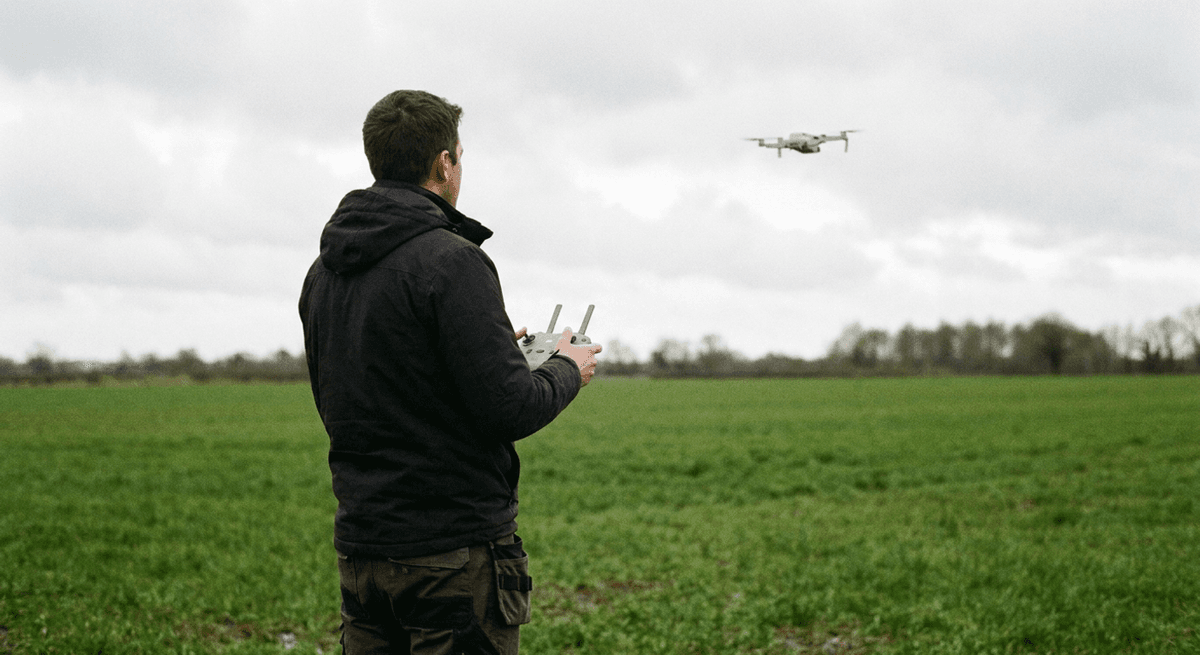
Can a private citizen legally fly a drone over my property in Washington?
Washington has no statute that bars a private drone operator from flying over your property, and no dedicated civil damages statute for drone surveillance like several neighboring states have enacted. What Washington has instead is its general voyeurism law, RCW 9A.44.115, which prosecutors have applied to drone conduct even though the statute does not mention drones by name.
First-degree voyeurism is a Class C felony: knowingly viewing, photographing, or filming another person, without consent, while they are in a place where a reasonable person would believe they could disrobe in privacy or be safe from casual or hostile surveillance, done for the purpose of sexual gratification. Second-degree voyeurism, a gross misdemeanor, covers photographing or filming someone's intimate areas without consent with the intent to distribute the images, without the sexual-gratification requirement.
That statute got a real test in 2024 and 2025. University security at Walla Walla University recovered a crashed drone after months of complaints about a device flying near a women's dormitory; data on the device led investigators to a suspect. On July 8, 2025, College Place police executed a search warrant and arrested 60-year-old Ross Wright, booking him at Walla Walla Corrections Facility on two counts of first-degree voyeurism after recovering footage that included identifiable individuals near the dorms and nearby homes. Because RCW 9A.44.115 requires the sexual-gratification or dissemination intent described above, a drone that simply hovers over a yard and records without that specific intent may fall outside the statute entirely, leaving general trespass, harassment, or nuisance law, none of it drone-specific, as the only other option.
Do police need a warrant to fly a drone over my property in Washington?
Not under any current state statute. Washington came close twice and neither attempt survived. In 2014, EHB 2789 would have required Washington law enforcement agencies to obtain a warrant before using a drone for most purposes, with exceptions for emergencies and other defined legitimate uses, and would have required agency heads or the legislature to approve any drone acquisition. It passed the House 77-21 and the Senate 46-1 and reached Governor Jay Inslee's desk on March 13, 2014. Inslee vetoed it on April 4, 2014, saying the bill's provisions conflicted with public-records law in a way that could shield government drone use from disclosure. In place of the bill, he imposed a 15-month moratorium on drone purchases and use by executive-branch state agencies, asked local police departments to voluntarily hold off as well, and announced a task force to study the issue ahead of the 2015 session.
That task force produced HB 1639 in the 2015 session. It passed the House 73-25 on March 4, 2015, and the Senate passed an amended version 43-4 on April 15, 2015. The bill then needed the House to concur with the Senate's changes before it could go to the governor. According to the legislature's own bill history, the last recorded action was an April 24, 2015 referral to the concurrence calendar and House Rules, with no further action. The bill never reached the governor's desk, and no successor has passed since. As a result, no Washington statute says when police may fly a drone for surveillance or whether a warrant is required; that question is left to ordinary Fourth Amendment case law and each agency's own internal policy.
One state statute does limit police drones, just not on the surveillance question. RCW 10.116.040 provides that a law enforcement agency "may not acquire or use any military equipment," and the statute's definition of military equipment expressly includes "armed or armored drones" alongside items such as machine guns, tanks, and grenades. Agencies that already held such equipment were required to return it to the federal agency it came from, or destroy it, by December 31, 2022. So an armed or armored drone is off the table for Washington police entirely, while an ordinary camera-equipped drone is left to Fourth Amendment law and department policy.
In the absence of a state law, some cities have filled the gap locally. Seattle abandoned an early police drone program in 2013 after public protest led the mayor to order the department to return two federally funded drones to the vendor, and the city later adopted a surveillance-technology ordinance requiring city council approval, through a public ordinance process, before any city department may acquire new surveillance equipment, including drones.
Washington's rules on drone hunting and commercial registration
Washington Administrative Code 220-413-070 addresses drones in the hunting and wildlife context specifically. It is unlawful to use an aircraft, including an unmanned aircraft, to spot, locate, or report the location of wildlife for hunting purposes, except under a director-issued permit; unlawful to hunt wildlife from an unmanned aircraft; unlawful to use an unmanned aircraft to pursue, concentrate, or harass a wild animal or wild bird, except as the department authorizes to address a wildlife conflict; and unlawful to hunt game animals, game birds, or migratory birds on the same day a person has operated an unmanned aircraft.
On the commercial side, RCW 47.68.250 requires every aircraft based or operated in Washington, including a commercial unpiloted aircraft system, to register annually with the Washington State Department of Transportation for a $15 fee, a requirement that took effect April 1, 2022 alongside House Bill 1379. That $15 figure is scheduled to change: the version of RCW 47.68.250 now in force is captioned "Effective until January 1, 2027," and the successor version raises the fee to $30 beginning January 1, 2027, then adjusts it upward by 2 percent each year starting January 1, 2028. State registration sits on top of, not instead of, FAA registration; hobby and recreational drones, along with government aircraft, are exempt from the state fee.
Can I shoot down a drone over my Washington property?
No. Federal law makes it a serious felony to damage or destroy any drone, regardless of whose land it is flying over. 18 U.S.C. section 32, the Aircraft Sabotage Act, criminalizes willfully damaging an "aircraft," a category the FAA has applied to drones since 2012, and a conviction carries up to 20 years in federal prison and a fine up to $250,000. The FAA has stated publicly that it, not the property owner, controls the airspace, so owning the ground below a drone does not create a right to fire on it.
Washington's own gap in drone-specific statutes does not change this federal analysis. A landowner who believes a drone is trespassing or spying has the voyeurism statute, general trespass and harassment law, and a complaint to local police as available options, not self-help.
| Question | Washington rule |
|---|---|
| Dedicated civilian drone-privacy statute | None; general voyeurism law, RCW 9A.44.115, is the primary tool |
| State law enforcement drone warrant statute | None currently in force; 2014 bill vetoed, 2015 follow-up died in the legislature |
| Voyeurism using a drone (sexual gratification) | Class C felony, RCW 9A.44.115 first degree |
| Voyeurism using a drone (intimate images for dissemination) | Gross misdemeanor, RCW 9A.44.115 second degree |
| Drone for hunting or wildlife harassment | Banned, WAC 220-413-070 |
| Commercial drone state registration | Required, $15 per year per aircraft, rising to $30 on January 1, 2027, RCW 47.68.250 |
| Armed or armored police drones | Barred outright, RCW 10.116.040 (military equipment) |
| Local law enforcement drone rules | Set by individual agencies and cities (e.g., Seattle's surveillance-technology ordinance), not state law |
| Shooting down a drone | Federal felony regardless of location, 18 U.S.C. section 32 |
Watch out: Because Washington has no dedicated drone-privacy statute, a drone that merely hovers over your yard and records you, without the sexual-gratification or image-dissemination intent RCW 9A.44.115 requires, may not fit the voyeurism statute at all. Depending on the facts, a general trespass, harassment, or nuisance claim may be the only available remedy, and none of those are drone-specific either.
More Washington Laws
- Washington Data Privacy Laws
- Washington GPS Tracking Laws
- Washington Police Bodycam Laws
- Washington Recording Laws
- Washington Smart Glasses Recording Laws
Frequently Asked Questions
Does Washington require a warrant for police drone surveillance?
Not under any current state statute. A 2014 bill requiring one was vetoed and a 2015 follow-up died in the legislature, so police drone surveillance is governed by ordinary Fourth Amendment law and individual agency policy. The one state statute aimed at police drones, RCW 10.116.040, bars agencies from acquiring or using armed or armored drones but says nothing about warrants or surveillance.
Can my neighbor legally fly a drone over my yard in Washington?
Washington has no statute barring the flight itself. If they record you with intent tied to sexual gratification, or to disseminate intimate images without consent, RCW 9A.44.115's voyeurism law can apply; otherwise, general trespass or harassment law may be the only avenue.
Is drone voyeurism a felony in Washington?
First-degree voyeurism, viewing, photographing, or filming someone without consent in a place they reasonably expect privacy for sexual gratification, is a Class C felony under RCW 9A.44.115. Second-degree voyeurism, photographing intimate areas for later dissemination, is a gross misdemeanor.
Did Washington ever try to pass a drone warrant law?
Yes, twice. EHB 2789 passed both chambers in 2014 but was vetoed by Governor Inslee on April 4, 2014. A revised bill, HB 1639, passed both chambers in different forms in 2015 but stalled before final concurrence and was never signed.
Is it illegal to use a drone for hunting in Washington?
Yes. WAC 220-413-070 bars using an aircraft, including an unmanned aircraft, to locate or harass wildlife for hunting, and bars hunting on the same day someone operated an unmanned aircraft.
Do I have to register my drone with Washington state?
Only if you fly commercially under FAA Part 107. RCW 47.68.250 requires a $15 annual state registration per commercial aircraft on top of FAA registration, and an already-enacted amendment raises that fee to $30 on January 1, 2027, with a 2 percent annual increase from 2028. Hobbyist and government drones are exempt from the state fee.
Can Washington police use armed drones?
No. RCW 10.116.040 bars any Washington law enforcement agency from acquiring or using military equipment, and the statute's definition of that term expressly includes armed or armored drones. Agencies that already had such equipment had to return or destroy it by December 31, 2022.
Is it legal to shoot down a drone over my property in Washington?
No. Federal law, 18 U.S.C. section 32, makes destroying any drone a felony regardless of state law, because the FAA controls the airspace, not the landowner.
Why doesn't Washington have a drone privacy law like other states?
Two legislative attempts, in 2014 and 2015, failed: one was vetoed over disclosure concerns and a follow-up died before a final vote. No successor bill has passed since, so Washington relies on general privacy, voyeurism, and trespass law instead.
Updates
Repaired a broken citation to RCW 47.68.250, added the already-enacted increase of the state aircraft registration fee to $30 on January 1, 2027, noted RCW 10.116.040’s ban on armed or armored police drones, and corrected a heading.
Independently fact-checked against the cited primary sources; governing law re-checked for recent changes
Governing law re-checked for recent changes
Reviewed and approved by an editor
The Law Behind This Article
This article rests on the statutory provisions below, held in our own legal record and retrieved from the official source. Tap a section to read the operative text.
Revised Code of Washington
§ 9A.44.115Voyeurism.In forcecited in 6 of our articles
(1) As used in this section: (a) "Intimate areas" means any portion of a person's body or undergarments that is covered by clothing and intended to be protected from public view; (b) "Photographs" or "films" means the making of a photograph, motion picture film, videotape, digital image, or any other recording or transmission of the image of a person; (c) "Place where he or she would have a reasonable expectation of privacy" means: (i) A place where a reasonable person would believe that he or she could disrobe in privacy, without being concerned that his or her undressing was being photographed or filmed by another; or (ii) A place where one may reasonably expect to be safe from casual or hostile intrusion or surveillance; (d) "Surveillance" means secret observation of the activities of another person for the purpose of spying upon and invading the privacy of the person; (e) "Views" means the intentional looking upon of another person for more than a brief period of time, in other than a casual or cursory manner, with the unaided eye or with a device designed or intended to improve visual acuity.
Official text (excerpt) · last checked 2026-08-31 · Read the full text in our law library · Verify at app.leg.wa.gov
Cited in 33 court opinions in our collectionLatest citing opinion in our collection: 2026
Opinions citing this section in our collection:
- State v. Stevenson (Court of Appeals of Washington 2005, 128 Wash. App. 179)“…of voyeurism (domestic violence). On appeal, he challenges RCW 9A.44.115 as unconstitutionally vague and overbro…”
- State v. Glas (Washington Supreme Court 2002, 147 Wash. 2d 410)“…Sorrells each contend that Washington's voyeurism statute, RCW 9A.44.115, does not apply to their actions becaus…”
- State v. Boyd (Court of Appeals of Washington 2007, 137 Wash. App. 910)“…where a person has a reasonable expectation of privacy. 1 RCW 9A.44.115(2)(b) provides, A person commits the…”
Identified automatically from the court opinions citing this section — not a ranking of which case controls.
Also relied on in: Washington Voyeurism and Hidden Camera Laws: Penalties and Protections (2026), Washington Employee Monitoring Laws: Biometric Privacy, Social Media, and Surveillance (2026), Washington Ring Doorbell Laws: What You Need to Know in 2026
§ 47.68.250Registration of aircraft. (Effective until January 1, 2027.)In force
(1) Every aircraft, inclusive of commercial unpiloted aircraft systems, must be registered with the department for each calendar year in which the aircraft is operated or is based within this state. A fee of fifteen dollars is charged for each such registration and each annual renewal thereof. (2) The department must review the fee schedule based on the number of unpiloted aircraft systems registered under any single entity. Consideration should be given to the cost to administer the program and the number of commercial aircraft registered in the state. The department shall collaborate with the department of commerce, the department of revenue, and industry representatives in determining any recommendations to revise the initial fee. The report is due to the transportation committees of the legislature by December 1, 2022.
Official text (excerpt) · last checked 2026-07-29 · Read the full text in our law library · Verify at app.leg.wa.gov
§ 10.116.040Military equipment.In force
(1) A law enforcement agency may not acquire or use any military equipment. Any law enforcement agency in possession of military equipment as of July 25, 2021, shall return the equipment to the federal agency from which it was acquired, if applicable, or destroy the equipment by December 31, 2022. (2)(a) Each law enforcement agency shall compile an inventory of military equipment possessed by the agency, including the proposed use of the equipment, estimated number of times the equipment has been used in the prior year, and whether such use is necessary for the operation and safety of the agency or some other public safety purpose. The agency shall provide the inventory to the Washington association of sheriffs and police chiefs no later than November 1, 2021. (b) The Washington association of sheriffs and police chiefs shall summarize the inventory information from each law enforcement agency and provide a report to the governor and the appropriate committees of the legislature no later than December 31, 2021.
Official text (excerpt) · last checked 2026-07-29 · Read the full text in our law library · Verify at app.leg.wa.gov
United States Code Title 18
§ 32Destruction of aircraft or aircraft facilitiesIn forcecited in 51 of our articles
Whoever willfully— sets fire to, damages, destroys, disables, or wrecks any aircraft in the special aircraft jurisdiction of the United States or any civil aircraft used, operated, or employed in interstate, overseas, or foreign air commerce; places or causes to be placed a destructive device or substance in, upon, or in proximity to, or otherwise makes or causes to be made unworkable or unusable or hazardous to work or use, any such aircraft, or any part or other materials used or intended to be used in connection with the operation of such aircraft, if such placing or causing to be placed or such making or causing to be made is likely to endanger the safety of any such aircraft; sets fire to, damages, destroys, or disables any air navigation facility, or interferes by force or violence with the operation of such facility, if such fire, damaging, destroying, disabling, or interfering is likely to endanger the safety of any such aircraft in flight; with the intent to damage, destroy, or disable any such aircraft, sets fire to, damages, destroys, or disables or places a destructive device or substance in, upon, or in proximity to, any appliance or structure, ramp, landing area,…
Official text (excerpt) · last checked 2026-07-28 · Read the full text in our law library · Verify at uscode.house.gov
Cited in 168 court opinions in our collectionLatest citing opinion in our collection: 2026
In the courts (editorial summary, independently checked):United States v. Yousef (2003) applied 18 U.S.C. 32 to an overseas airline bombing plot, holding Section 32(a) reaches conduct abroad because US-flag aircraft in flight are within the special aircraft jurisdiction, and that a defendant brought here involuntarily is still found in the United States under Section 32(b).
Opinions citing this section in our collection:
- Perez v. United States (Supreme Court of the United States 1971, 402 U.S. 146)“…commerce, as, for example, the destruction of an aircraft ( 18 U. S. C. § 32 ), or persons or things in commerce, as…”
- Stanford v. Kentucky (Supreme Court of the United States 1989, 492 U.S. 361)“…r by persons subject to Uniform Code of Military Justice); 18 U. S. C. §§ 32 , 33, and 34 (1982 ed. and Supp. V) (de…”
- United States v. Yousef (Court of Appeals for the Second Circuit 2003, 327 F.3d 56)✓Yousef bombed a Philippine airliner and plotted to bomb twelve US flag airliners on Asian routes; the court held Section 32(a) reaches attacks on US flag aircraft worldwide, and that Yousef, brought here involuntarily, was found in the United States under Section 32(b).
Identified automatically from the court opinions citing this section — not a ranking of which case controls.
Also relied on in: Indiana Drone Laws (2026): Police Warrants, Voyeurism, Hunting, Iowa Drone Laws: Homestead, Farmstead & Warrant Rules, Kansas Drone Laws: Stalking Act & Privacy Rules Explained
Search our full record of US law — 2.1 million sections, every state + federal →
Sources and References
- RCW 9A.44.115, Voyeurism(app.leg.wa.gov).gov
- WAC 220-413-070, Hunting with aid of aircraft, boats, or other vehicles(app.leg.wa.gov).gov
- RCW 47.68.250, Registration of aircraft(app.leg.wa.gov).gov
- Washington State Legislature, HB 2789 (2013-2014) bill history and final status(app.leg.wa.gov).gov
- Washington State Legislature, HB 1639 (2015-2016) bill history and final status(app.leg.wa.gov).gov
- 18 U.S.C. section 32, destruction of aircraft or aircraft facilities(law.cornell.edu)
- Union-Bulletin, College Place police arrest man accused of voyeurism using drone(union-bulletin.com)
- RCW 10.116.040, Military equipment, acquisition and use prohibited(app.leg.wa.gov)