
Tennessee
Tennessee Drone Laws (2026): Warrants, Privacy & Shoot-Downs
Independently fact-checked against primary sources (last audited August 17, 2026). · Reviewed by the RecordingLaw editorial team. · Law checked current as of August 17, 2026. · 2 primary sources cited on this page. How we verify our legal content

Tennessee makes it a crime to fly a drone over someone's property in order to spy on them, and it has one of the more detailed police-warrant statutes in the country. Tennessee Code Annotated Sections 39-13-901 through 39-13-907, the state's Surveillance by Unmanned Aircraft law, make it an offense to use a drone to capture an image of an individual or privately owned real property with the intent to conduct surveillance, and a felony to surveil a power substation or other critical infrastructure from close range. A separate statute, Section 39-13-609, the Freedom from Unwarranted Surveillance Act, requires a search warrant before a Tennessee law enforcement agency can use a drone to gather evidence. What Tennessee does not give a property owner is a statutory right to sue: the drone statute carries criminal penalties only.
This guide is part of our Drone Laws by State series, which also covers how state drone law intersects with surveillance camera laws more broadly.
Jurisdiction scope: This article addresses Tennessee state law on law enforcement drone use under Tenn. Code Ann. Section 39-13-609, the state's civilian drone statute at Tenn. Code Ann. Title 39, Chapter 13, Part 9, Tennessee's general civil and criminal privacy law as applied to private drone operators, and the federal baseline that applies in every state. It does not address a civilian's right to record police in public, which is covered separately in our guide to recording laws.
Does the FAA or Tennessee control where a drone can fly?
The Federal Aviation Administration is the exclusive regulator of the airspace itself, in Tennessee as in every state. A commercial or otherwise non-recreational drone operator must hold a Remote Pilot Certificate under 14 CFR Part 107, register the aircraft, fly at or below 400 feet, and stay within visual line of sight; recreational flyers register separately under 49 U.S.C. Section 44809. Since September 16, 2023, most registered drones must also broadcast a Remote ID signal identifying the aircraft and its control station. Tennessee cannot add its own altitude ceiling or flight-path rule on top of that federal framework; a federal district court struck down several provisions of a Massachusetts city's drone ordinance on exactly that theory in Singer v. City of Newton, 284 F. Supp. 3d 125 (D. Mass. 2017). What Tennessee regulates instead is conduct, meaning what a police department or a private operator does with a drone once it is over Tennessee ground.
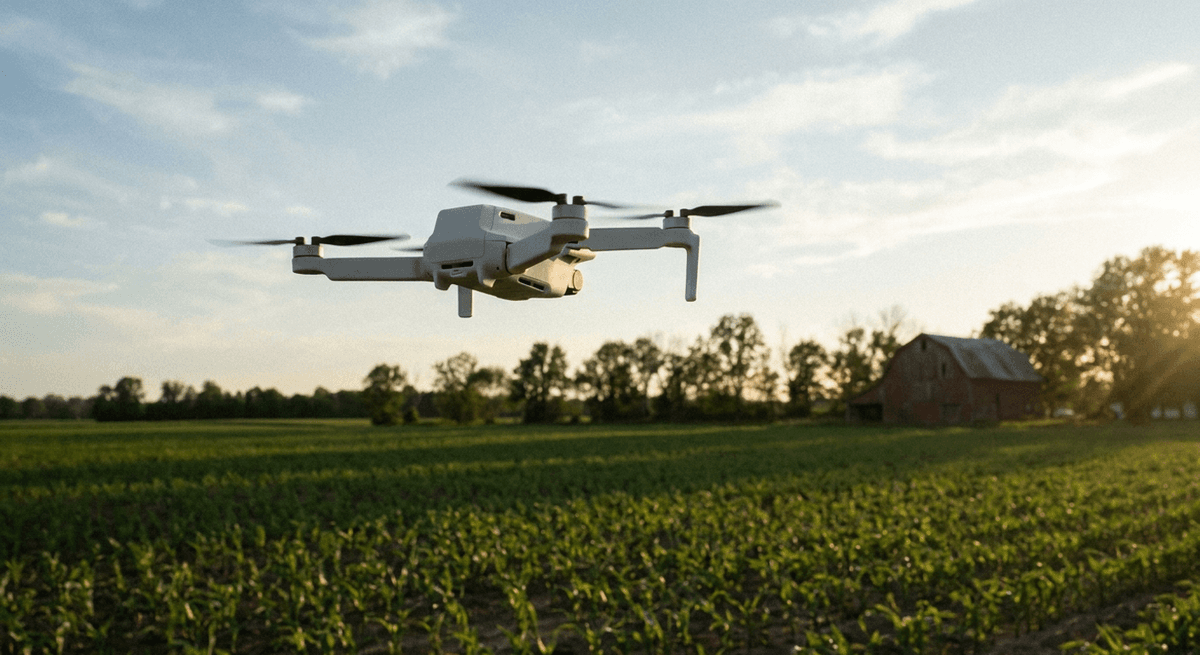
Does police need a warrant to fly a drone over my property in Tennessee?
Yes, in most cases. Tenn. Code Ann. Section 39-13-609(c) provides that a law enforcement agency's use of a drone to search for and collect evidence or other information is a search subject to Article I, Section 7 of the Tennessee Constitution, and that a Tennessee agency may not do so without either a search warrant signed by a judge or a judicially recognized exception to the warrant requirement. Subsection (d) then lists the specific circumstances that allow a warrantless flight: a credible terrorist-attack risk confirmed by the United States Secretary of Homeland Security, an imminent danger to life supported by reasonable suspicion, a search for a fugitive or escapee or a hostage situation, a search for a missing person, a motor vehicle accident investigation on a public right-of-way, a crime that occurred on publicly owned property, a fire investigation scene, aerial security coverage for an event open to the public such as a concert, athletic event, festival, or protest, aerial coverage during a declared state of emergency after a natural disaster, or investigation of the scene of a crime that is occurring or has occurred. Every flight, warrant or not, must also comply with applicable FAA rules.
The statute backs up the warrant requirement with real teeth. Any evidence a drone collects must be deleted within three business days of collection unless it is directly relevant to both the lawful reason the drone was used and an ongoing investigation or prosecution, in which case it is retained under the same policies the agency uses for evidence gathered by other means. Evidence collected in violation of the statute cannot be admitted in a Tennessee criminal prosecution, and it cannot be used to establish probable cause or reasonable suspicion for anything else if it was unrelated to the drone's original lawful purpose. A person aggrieved by a violation can sue the law enforcement agency directly under subsection (f) for all appropriate relief, including injunctive relief, destruction of the evidence, damages, and reasonable attorney fees.
Tennessee first enacted the Freedom from Unwarranted Surveillance Act in 2013 (Acts 2013, ch. 470) and substantially rewrote the warrant-exception and data-retention provisions in 2018 (Acts 2018, ch. 970, effective July 1, 2018), which is the version currently in force.
Can a neighbor or business legally fly a drone over my property in Tennessee?
Not if the point of the flight is to watch you. Tennessee has a dedicated civilian drone statute, Tenn. Code Ann. Title 39, Chapter 13, Part 9, and Section 39-13-903(a)(1) is the operative offense: a person commits a Class C misdemeanor by using an unmanned aircraft to capture an image of an individual or privately owned real property in Tennessee with the intent to conduct surveillance on that individual or property. "Image" is defined broadly in Section 39-13-901 to cover not just video and photographs but thermal, infrared, and other electromagnetic capture. Section 39-13-904 adds a second layer: possessing an image captured in violation of Section 39-13-903 is a Class C misdemeanor and disclosing, displaying, or distributing it is a Class B misdemeanor, with each image counted as a separate offense. Section 39-13-905 then makes an unlawfully captured image inadmissible in any criminal, juvenile, civil, or administrative proceeding, and shields it from public-records disclosure, discovery, and subpoena except to prove a violation of the drone statute itself. Tennessee's official drone program guidance from the Department of Transportation points readers to the same part, noting that capturing images of individuals in private settings without consent is prohibited.
Two limits matter before you assume a flight over your yard is a crime. First, the offense turns on surveillance intent, so a hobbyist transiting overhead on the way somewhere else is not committing it. Second, Section 39-13-902(a) carves out a long list of lawful captures that the offense is expressly subject to, including flights made with the consent of the owner or lawful occupant of the property, images of public real property, mapping and land surveying, electric and gas utility inspection, real estate marketing photography in which no individual is identifiable, and, most broadly, any flight made as part of a commercial service authorized by the FAA to operate unmanned aircraft. That last exception is why a business flying a properly authorized Part 107 commercial job is usually outside the statute even though a neighbor doing the same thing to spy would not be.
What Part 9 does not create is a civil cause of action. Unlike the Texas image-capture statute it is modeled on, Tennessee's version gives an aggrieved property owner no statutory right to sue for damages, so a civilian dispute over a drone still runs on common law. On the civil side, the Tennessee Supreme Court recognized the tort of intrusion upon seclusion in Givens v. Mullikin ex rel. Estate of McElwaney, 75 S.W.3d 383 (Tenn. 2002), holding that a person who intentionally intrudes on another's private affairs in a manner that would be highly offensive to a reasonable person can be liable for invasion of privacy; ordinary trespass and nuisance claims may also apply depending on the facts.
Separately, Tenn. Code Ann. Section 39-13-605 makes it an offense to knowingly photograph someone's unclothed intimate area without consent, where the image would offend or embarrass an ordinary person and was taken for the purpose of sexual arousal or gratification. Effective July 1, 2025, a violation is a Class E felony at the baseline under Public Chapter 474 of 2025, rising to a Class D felony if the image is disseminated, the victim is under 13, or a minor under 13 was used to facilitate the offense, and rising further to a Class C felony if the image is disseminated and either the victim is under 13 or the defendant held and exploited a position of trust over the victim. A separate provision in the same statute makes it an offense to photograph and disseminate that kind of image with the intent to offend, intimidate, embarrass, ridicule, or harass the person shown; a first violation of that provision is a Class B misdemeanor, rising to a Class A misdemeanor for a repeat offense, with no felony escalation. That statute is narrowly aimed at nudity and intimate-area images, so a drone hovering over a fully clothed backyard barbecue falls to Section 39-13-903(a)(1) instead, which turns on the operator's surveillance intent rather than on what the camera happened to capture.
Places a Tennessee hobbyist simply cannot fly
Beyond the surveillance offense, Section 39-13-903 sets out three flat prohibitions that do not require any intent to spy and that catch ordinary recreational flyers most often. Under subdivision (a)(3), it is an offense to intentionally capture an image of an individual or event at, or to drop any item or substance into, an open-air event venue where more than 100 people are gathered for a ticketed event, without the consent of the venue owner or operator. Under (a)(4), knowingly flying within or over a designated fireworks discharge site, display site, or fallout area during an event is an offense, again absent the event owner's or operator's consent. Under (a)(5), knowingly flying a drone over the grounds of a correctional facility is an offense on its own terms, with no surveillance element at all. All three were added by 2015 Public Chapter 240, effective July 1, 2015, and each is a Class C misdemeanor under Section 39-13-903(b)(1). A 2026 bill, HB1538 in the 114th General Assembly, would have raised the correctional-facility offense to a Class C felony and allowed facility staff to disable an offending drone, but it was taken off notice in the Senate Finance, Ways and Means Subcommittee on April 15, 2026, so the misdemeanor penalty stands.
Section 39-13-903(c) provides a defense to prosecution under the section if the operator destroyed the image as soon as they knew it had been captured unlawfully and did so without disclosing, displaying, or distributing it to anyone else.
Weaponized drones and the federal shoot-down rule
Tennessee has not enacted its own statute banning a weapon-carrying drone the way some states have. It does, however, have a directly on-point critical-infrastructure felony. Section 39-13-903(a)(6) makes it an offense to knowingly operate a drone within 250 feet of the perimeter of a critical infrastructure facility, without the business operator's written consent, for the purpose of conducting surveillance of, gathering evidence or collecting information about, or photographically or electronically recording critical infrastructure data. The definition expressly includes an electrical power generation system, an electrical transmission system or any individual component of it, and an electrical distribution substation, along with refineries, chemical and hazardous-substance manufacturing facilities, water and wastewater treatment plants, natural gas and propane infrastructure, non-public railroad yards, and communication service facilities. That offense is a Class E felony under Section 39-13-903(b)(2), raised from a misdemeanor by 2019 Public Chapter 60, effective July 1, 2019. The subdivision does not reach an unmanned aircraft system operating for commercial purposes under an FAA authorization.
Because subdivision (a)(6) targets surveillance and data collection rather than an attack, the most violent drone plots are still charged federally. In September 2025, a 24-year-old Columbia, Tennessee man, Skyler Philippi, pleaded guilty to a federal charge of attempting to use a weapon of mass destruction after federal investigators said he plotted to fly an explosive-laden drone into a Nashville electric substation as part of an extremist agenda; he faces up to life in prison at sentencing. That prosecution proceeded under federal terrorism and energy-facility statutes rather than Section 39-13-903, whose felony reaches the reconnaissance stage of such a plot rather than the bombing itself.
A related and more common misconception involves shooting down a drone that is merely a nuisance. The FAA classifies drones as aircraft within the National Airspace System, so 18 U.S.C. Section 32, the federal Aircraft Sabotage Act, applies to them: willfully damaging, destroying, or disabling a drone is a federal felony carrying up to 20 years in prison, regardless of whose property the drone is over, because the federal government, not the landowner, controls the airspace. No Tennessee statute authorizes a landowner to disable a drone over their own land, and a state criminal-mischief charge being reduced or dismissed in a sympathetic local case does not establish a legal right to do so.
- Tennessee AI Meeting Recording Laws
- Tennessee Alimony Laws
- Tennessee At-Will Employment Laws
- Tennessee Car Accident Laws
- Tennessee Car Seat Laws
- Tennessee Child Custody Laws
- Tennessee Child Support Laws
- Tennessee Common Law Marriage Laws
- Tennessee Dashcam Laws
- Tennessee Data Privacy Laws
- Tennessee Deepfake Laws
- Tennessee Divorce Laws
- Tennessee Dog Bite Laws
- Tennessee Emancipation Laws
- Tennessee Employee Monitoring Laws
- Tennessee Expungement Laws
More Tennessee Laws
- Tennessee Data Privacy Laws
- Tennessee GPS Tracking Laws
- Tennessee Police Bodycam Laws
- Tennessee Recording Laws
- Tennessee Smart Glasses Recording Laws
Frequently Asked Questions
Does Tennessee require police to get a warrant before flying a drone over my property?
Generally yes. Tenn. Code Ann. Section 39-13-609(c) requires a Tennessee law enforcement agency to obtain a search warrant before using a drone to search for and collect evidence, unless a judicially recognized exception applies or one of the statute's listed warrantless circumstances, such as an imminent danger to life or a missing person search, is present.
Can I sue the police if they flew a drone over my house without a warrant in Tennessee?
Yes. Section 39-13-609(f) lets a person aggrieved by an unlawful law enforcement drone flight sue the agency for injunctive relief, destruction of the evidence, damages, and reasonable attorney fees.
How long can Tennessee police keep footage from a drone flight?
Under Section 39-13-609(e), evidence collected by drone must generally be deleted within three business days of collection, unless it is directly relevant to both the lawful reason the drone was used and an ongoing investigation or prosecution.
Is it illegal for my neighbor to fly a drone over my backyard in Tennessee?
It can be. Tenn. Code Ann. Section 39-13-903(a)(1) makes it a Class C misdemeanor to use a drone to capture an image of an individual or privately owned real property with the intent to conduct surveillance, subject to the exceptions in Section 39-13-902(a). The offense turns on surveillance intent, so a hobbyist simply passing overhead is not committing it. Tennessee's drone statute gives you no statutory right to sue, so a civil claim would rest on trespass, nuisance, or intrusion upon seclusion, the privacy tort recognized in Givens v. Mullikin, 75 S.W.3d 383 (Tenn. 2002).
Can I shoot down a drone flying over my property in Tennessee?
No. Destroying, damaging, or disabling any drone is a federal felony under 18 U.S.C. Section 32, the Aircraft Sabotage Act, because the FAA controls the airspace regardless of who owns the land beneath it. No Tennessee law authorizes a landowner to disable a drone.
Does Tennessee have a law against flying a drone near a power plant or prison?
Yes to both. Section 39-13-903(a)(6) makes it a Class E felony to knowingly fly a drone within 250 feet of the perimeter of a critical infrastructure facility, including an electrical power generation system, transmission component, or distribution substation, to surveil or record critical infrastructure data without the business operator's written consent, unless the flight is an FAA-authorized commercial operation. Section 39-13-903(a)(5) separately makes it a Class C misdemeanor to knowingly fly a drone over the grounds of a correctional facility. A 2026 bill to raise that correctional-facility offense to a Class C felony, HB1538, was taken off notice on April 15, 2026, so the misdemeanor penalty stands.
Can I fly a drone over a concert or a fireworks show in Tennessee?
No, not without permission. Section 39-13-903(a)(3) makes it a Class C misdemeanor to capture an image at, or drop any item into, an open-air venue holding a ticketed event with more than 100 people gathered, without the venue owner's or operator's consent. Section 39-13-903(a)(4) separately prohibits knowingly flying within or over a designated fireworks discharge site, display site, or fallout area during an event without the event owner's or operator's consent.
What is the Tennessee Freedom from Unwarranted Surveillance Act?
It is Tenn. Code Ann. Section 39-13-609, first enacted in 2013 and substantially rewritten in 2018, which restricts Tennessee law enforcement agencies from using drones to gather evidence without a warrant or a recognized exception, and sets rules for data retention, admissibility, and civil enforcement. It is separate from Tennessee's civilian drone statute at Title 39, Chapter 13, Part 9.
Updates
Corrected the description of Singer v. City of Newton to identify Newton as a Massachusetts city, as the opinion does.
Corrected this guide to reflect that Tennessee does have a dedicated civilian drone statute, Tenn. Code Ann. Sections 39-13-901 through 39-13-907, and added its surveillance offense, its felony critical-infrastructure rule, and its flat bans on flying over prisons, fireworks sites, and ticketed open-air events.
Corrected the penalty description for Tennessee's unlawful-photography statute to reflect the July 2025 rewrite (Class E felony baseline, escalating to Class D then Class C), and completed the list of circumstances letting Tennessee police fly a drone without a warrant to include public-event security and natural-disaster response.
Independently fact-checked against the cited primary sources; governing law re-checked for recent changes
Corrected Tenn. Code Ann. Section 39-13-609: the drone-warrant private right of action is at subsection (f), not (g), and the statute awards actual damages plus reasonable attorney fees rather than the fabricated 'greater of actual damages or three times attorney fees' formula; also restated Section 39-13-605 as its two separate offenses, since only the sexual-arousal-purpose offense carries a felony tier, not the offend/harass-purpose offense.
Governing law re-checked for recent changes
Reviewed and approved by an editor
The Law Behind This Article
This article rests on the statutory provisions below, held in our own legal record and retrieved from the official source. Tap a section to read the operative text.
Tennessee Code Annotated
§ 39-13-903Unlawful capture of image with intent to conduct surveillance a misdemeanor offense — Defense.In force
(a) Subject to the exceptions set forth in § 39-13-902(a), a person commits an offense if the person: (1) Uses an unmanned aircraft to capture an image of an individual or privately owned real property in this state with the intent to conduct surveillance on the individual or property captured in…
Official text (excerpt) · last checked 2021-05-21 · Read the full text in our law library
§ 39-13-605Unlawful photographing in violation of privacy.In forcecited in 12 of our articles
(a) It is an offense for a person to knowingly photograph, or cause to be photographed an individual, when the individual has a reasonable expectation of privacy, without the prior effective consent of the individual, or in the case of a minor, without the prior effective consent of the minor's…
Official text (excerpt) · last checked 2021-05-21 · Read the full text in our law library
Cited in 14 court opinions in our collectionLatest citing opinion in our collection: 2026
In the courts (editorial summary, independently checked):State of Tennessee v. David Eric Lambert (2020) reversed a conviction under the pre-2018 version of section 39-13-605 because a fully clothed shopper in public had no reasonable expectation of privacy. State of Tennessee v. Brandon Robert Vandenburg (2019) rejected a vagueness challenge to the same element.
Opinions citing this section in our collection:
- State of Tennessee v. Thomas Whited (Tennessee Supreme Court 2016, 506 S.W.3d 416)✓A father hid a phone to video his twelve-year-old daughter and her friend undressing; the court noted the evidence would have supported unlawful photography under section 39-13-605, but charges were dropped because the statute excepts photographing a minor with parental consent.
- State of Tennessee v. David Eric Lambert (Court of Criminal Appeals of Tennessee 2020)✓A man followed a fully clothed woman through a Walmart and aimed his phone at her, but no image was ever found; the court held section 39-13-605 was not satisfied because she had no reasonable expectation of privacy and no photograph existed to judge, and reversed the conviction.
- State of Tennessee v. Brandon Robert Vandenburg (Court of Criminal Appeals of Tennessee 2019)✓A student photographed and filmed an unconscious, intoxicated woman as she was sexually assaulted in his dorm, then sent the files to a friend; the court upheld his felony conviction under section 39-13-605 and rejected his claim that the statute was unconstitutionally vague.
Identified automatically from the court opinions citing this section — not a ranking of which case controls.
Also relied on in: Tennessee Landlord-Tenant Recording Laws: Rights and Restrictions, Tennessee School Recording Laws: Student, Parent, and Teacher Rights, Tennessee Security Camera Laws: Home, Business, and HOA Rules
§ 39-13-609Freedom from Unwarranted Surveillance Act — Use of drones to gather evidence or information — Standing to initiate civil action against law enforcement agency.In forcecited in 2 of our articles
(a) This section shall be known and may be cited as the “Freedom from Unwarranted Surveillance Act.” (b) As used in this section: (1) “Drone” means a powered, aerial vehicle that: (A) Does not carry a human operator and is operated without the possibility of direct human intervention from within…
Official text (excerpt) · last checked 2021-05-21 · Read the full text in our law library
Also relied on in: Tennessee Recording Laws (2026): One-Party Consent Rules
United States Code Title 18
§ 32Destruction of aircraft or aircraft facilitiesIn forcecited in 51 of our articles
Whoever willfully— sets fire to, damages, destroys, disables, or wrecks any aircraft in the special aircraft jurisdiction of the United States or any civil aircraft used, operated, or employed in interstate, overseas, or foreign air commerce; places or causes to be placed a destructive device or substance in, upon, or in proximity to, or otherwise makes or causes to be made unworkable or unusable or hazardous to work or use, any such aircraft, or any part or other materials used or intended to be used in connection with the operation of such aircraft, if such placing or causing to be placed or such making or causing to be made is likely to endanger the safety of any such aircraft; sets fire to, damages, destroys, or disables any air navigation facility, or interferes by force or violence with the operation of such facility, if such fire, damaging, destroying, disabling, or interfering is likely to endanger the safety of any such aircraft in flight; with the intent to damage, destroy, or disable any such aircraft, sets fire to, damages, destroys, or disables or places a destructive device or substance in, upon, or in proximity to, any appliance or structure, ramp, landing area,…
Official text (excerpt) · last checked 2026-07-28 · Read the full text in our law library · Verify at uscode.house.gov
Cited in 168 court opinions in our collectionLatest citing opinion in our collection: 2026
In the courts (editorial summary, independently checked):United States v. Yousef (2003) applied 18 U.S.C. 32 to an overseas airline bombing plot, holding Section 32(a) reaches conduct abroad because US-flag aircraft in flight are within the special aircraft jurisdiction, and that a defendant brought here involuntarily is still found in the United States under Section 32(b).
Opinions citing this section in our collection:
- Perez v. United States (Supreme Court of the United States 1971, 402 U.S. 146)“…commerce, as, for example, the destruction of an aircraft ( 18 U. S. C. § 32 ), or persons or things in commerce, as…”
- Stanford v. Kentucky (Supreme Court of the United States 1989, 492 U.S. 361)“…r by persons subject to Uniform Code of Military Justice); 18 U. S. C. §§ 32 , 33, and 34 (1982 ed. and Supp. V) (de…”
- United States v. Yousef (Court of Appeals for the Second Circuit 2003, 327 F.3d 56)✓Yousef bombed a Philippine airliner and plotted to bomb twelve US flag airliners on Asian routes; the court held Section 32(a) reaches attacks on US flag aircraft worldwide, and that Yousef, brought here involuntarily, was found in the United States under Section 32(b).
Identified automatically from the court opinions citing this section — not a ranking of which case controls.
Also relied on in: Indiana Drone Laws (2026): Police Warrants, Voyeurism, Hunting, Iowa Drone Laws: Homestead, Farmstead & Warrant Rules, Kansas Drone Laws: Stalking Act & Privacy Rules Explained
Search our full record of US law — 2.1 million sections, every state + federal →
Sources and References
- Tenn. Code Ann. Section 39-13-609, Freedom from Unwarranted Surveillance Act, as amended by 2018 Public Chapter 970 (Senate Bill 1993), signed May 18, 2018, effective July 1, 2018(capitol.tn.gov).gov
- Office of Public Affairs, U.S. Department of Justice, "Man Pleads Guilty to Attempting to Use a Weapon of Mass Destruction and Attempting to Destroy an Energy Facility in Nashville" (Sept. 2025)(justice.gov).gov
- Tenn. Code Ann. Section 39-13-605, Unlawful photographing in violation of privacy(womenslaw.org)
- Givens v. Mullikin ex rel. Estate of McElwaney, 75 S.W.3d 383 (Tenn. 2002) (recognizing the tort of intrusion upon seclusion)(courtlistener.com)
- 18 U.S.C. Section 32, Aircraft Sabotage Act, federal prohibition on destroying or damaging an aircraft including drones(law.cornell.edu)
- Tennessee Department of Transportation, Aeronautics Division, UAS/Drone Program, Drone Regulations and Compliance (citing Tenn. Code Ann. Sections 39-13-609 and 39-13-902)(tn.gov)
- 2019 Tennessee Public Chapter 60 (Senate Bill 306, 111th General Assembly), raising the penalty for operating a drone over critical infrastructure without consent from a Class C misdemeanor to a Class E felony and adding communication service facilities to the definition, effective July 1, 2019(capitol.tn.gov)
- 2015 Tennessee Public Chapter 240 (House Bill 153, 109th General Assembly), prohibiting drone image capture at ticketed open-air events and fireworks display sites and drone operation over correctional facility grounds, effective July 1, 2015(capitol.tn.gov)
- Tennessee House Bill 1538 (114th General Assembly), which would have raised the correctional-facility drone offense to a Class C felony, taken off notice in subcommittee on April 15, 2026(capitol.tn.gov)