
Ohio
Ohio Drone Laws: New Police Warrant Rule (HB 251, 2026)
Independently fact-checked against primary sources (last audited August 17, 2026). · Reviewed by the RecordingLaw editorial team. · Law checked current as of August 17, 2026. · 6 primary sources cited on this page. How we verify our legal content
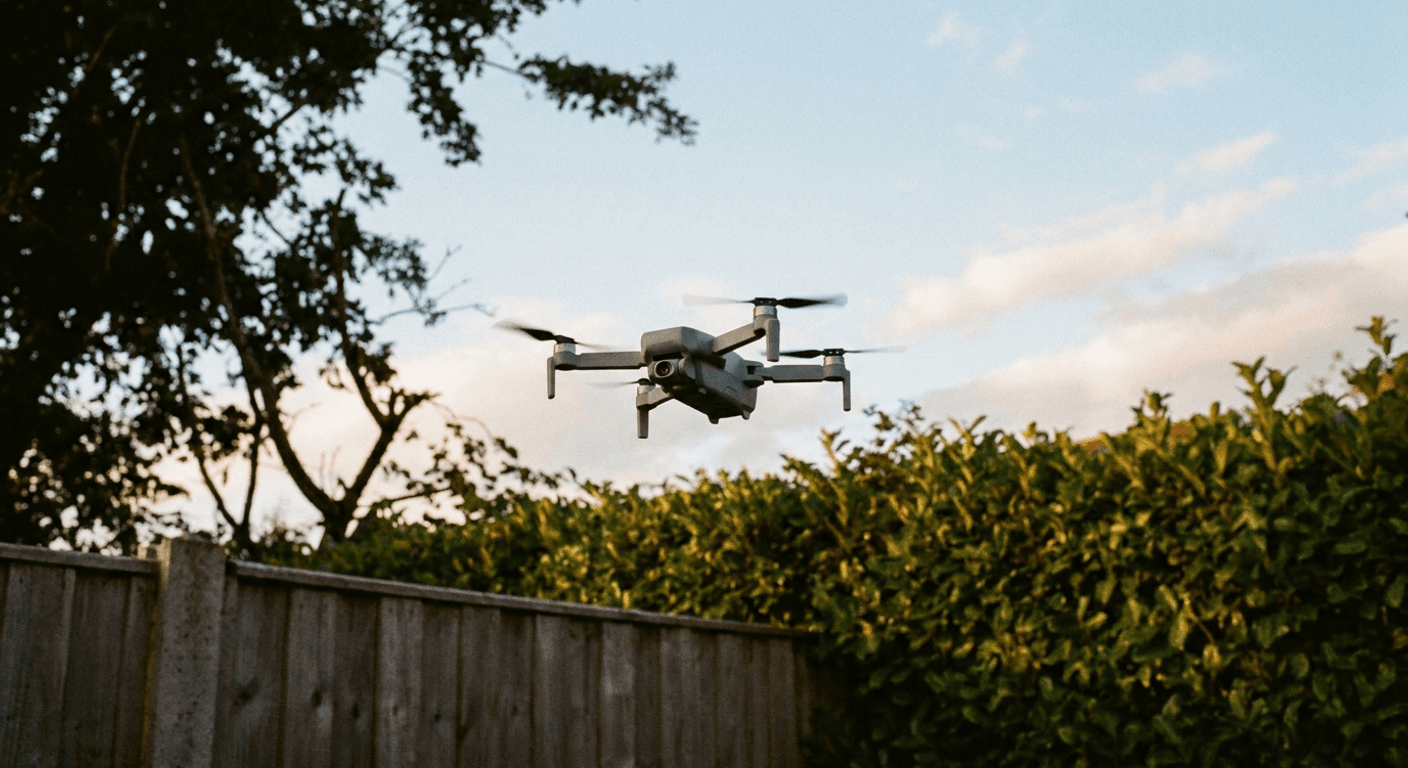
Ohio has no dedicated civilian drone-privacy statute; drone spying by a private citizen is analyzed under general trespass, voyeurism, and common-law privacy claims. Ohio Revised Code Section 4561.51 bars flying a drone near a critical facility with criminal intent, and House Bill 251, signed July 7, 2026, will give Ohio its first law enforcement drone-warrant requirement once its provisions take effect in early October 2026.
This guide is part of our Drone Laws by State series; for the broader rules on recording people and property in Ohio, see our surveillance camera laws guide.
Information last verified on 2026-07-09. This article has not yet been reviewed by a licensed lawyer.
Jurisdiction scope: This article addresses Ohio law on civilian and law-enforcement drone use under ORC Sections 4561.50 through 4561.64, ORC Section 2911.21, and the federal shoot-down law. It does not cover FAA flight-operation rules, which apply the same way nationwide.
How federal and Ohio law divide drone authority
The FAA controls the navigable airspace, which for drones extends down to the ground; every Ohio operator must still register a qualifying drone, hold the applicable FAA credential, and broadcast Remote ID under the nationwide rules that took effect in 2023. None of that decides whether a neighbor can legally point a camera drone at your backyard, or when Ohio police need a warrant before launching one. Those are state privacy, trespass, and criminal-procedure questions, and Ohio has moved on both fronts recently: a critical-facility statute in 2025, and, as of July 2026, its first law enforcement drone-warrant statute.

Does Ohio have a civilian drone privacy law?
Not a dedicated one. Ohio has no statute that generally bars a private citizen from flying a drone over a neighbor's property or recording what is visible from the air. Civilian drone conduct is instead analyzed under existing general law. ORC Section 2907.08, Ohio's voyeurism statute, penalizes trespassing or otherwise surreptitiously invading someone's privacy to spy, or secretly recording a person in a place where they have a reasonable expectation of privacy, but only for a sexual-gratification purpose or to view a person's private areas; it does not reach a drone recording an ordinary backyard gathering. Penalties range from a third-degree misdemeanor up to a first-degree misdemeanor, except that recording a minor's private areas under division (C) is a fifth-degree felony, not a misdemeanor.
Ohio courts also recognize a common-law invasion-of-privacy tort. The Ohio Supreme Court's 1956 decision in Housh v. Peth recognized Ohio's common-law right of privacy and approved as substantially correct a jury charge defining invasion of privacy as wrongful intrusion into a person's private activities in a way that would outrage or cause mental suffering, shame, or humiliation to a person of ordinary sensibilities. A homeowner harassed by a persistent camera drone has a stronger practical claim through intrusion upon seclusion, or through civil trespass and nuisance theories, than through the voyeurism statute. Once House Bill 251 takes effect in early October 2026, a narrower drone-specific rule will also matter when a law enforcement agency authorizes the flight: ORC Section 4561.63(B) will bar an agency from permitting one private individual to use a drone to surveil another without the surveilled person's or the property owner's express, informed consent, though that rule will run through the permitting agency rather than creating a direct civilian-to-civilian claim.
Do police need a warrant to fly a drone over my property in Ohio?
Not yet, but soon. Governor Mike DeWine signed House Bill 251 on July 7, 2026, creating ORC Sections 4561.60 through 4561.64, but those sections are not yet in effect; under Ohio's standard 90-day rule they take effect in early October 2026. Once effective, new Section 4561.61(A) will require a law enforcement agency to obtain a search warrant before using a drone to enter or observe the interior of a house or any other place where an in-person physical search would otherwise require a warrant. Section 4561.62 will list nine exceptions, among them border patrol within 50 miles of an international border, exigent circumstances involving imminent destruction of evidence, disaster response, traffic-crash investigation, crime-scene photography, naked-eye-visible observation from lawful airspace, reasonable-suspicion public-area surveillance, a pre-event public-safety assessment, and research or training use. HB 251 will also bar arming a law enforcement drone with any lethal weapon under Section 4561.63(A), and will make flight and surveillance data a public record under ORC Section 149.43 unless a specific exemption applies, a transparency feature the ACLU of Ohio criticized as potentially exposing the very privacy the bill was meant to protect.
Until HB 251 takes effect, Ohio has no state-specific drone-warrant statute, and its only published appellate guidance, State v. Stevens, 2023-Ohio-889 (5th Dist. Coshocton, March 17, 2023), applied ordinary Fourth Amendment doctrine rather than a state statute. Investigating a hit-and-run, deputies flew a drone without a warrant over the defendant's rural property and located the suspect vehicle roughly 280 feet from the residence in a wooded area. The Fifth District found no Fourth Amendment violation because the vehicle sat in an open area away from the home's curtilage. (Stevens predates, and does not cite, the Michigan Supreme Court's May 2024 decision in Long Lake Township v. Maxon, a separate case about warrantless zoning-enforcement drone surveillance.) Once HB 251's warrant requirement takes effect, it is keyed to places where an in-person search would already require one, so an open-field flight like the one in Stevens will likely remain outside its core protection; the statute mainly closes the gap for a home's interior and curtilage, not the open-fields doctrine.
Ohio's critical-facility drone law
ORC Section 4561.51, enacted by House Bill 77 and effective April 9, 2025, was Ohio's first dedicated drone statute and remains in force alongside the new HB 251 provisions. Subsection (A) bars operating a drone in violation of federal aviation law. Subsection (B) bars disrupting law enforcement, fire, or emergency medical services personnel while on duty; a reckless violation is a fourth-degree misdemeanor, and a knowing violation is a first-degree misdemeanor on a first offense and a fifth-degree felony on a subsequent one. Subsection (C) creates two critical-facility offenses: photographing, recording, or loitering over or near a critical facility to further a crime involving physical harm to a person, a first-degree misdemeanor rising to a fifth-degree felony on a repeat offense, and doing the same to destroy or tamper with the facility, a third-degree felony regardless of prior offenses.
"Critical facility" pulls in the "critical infrastructure facility" definition from ORC Section 2911.21, covering power, petroleum and chemical facilities, water treatment, and telecommunications infrastructure, and adds a list found only in the drone statute: police and sheriff stations, jails and prisons, military installations, courts, and hospitals with air ambulance service. Unlike Florida's or Texas's critical-infrastructure statutes, Ohio's sets no numerical distance buffer; what matters is the operator's criminal purpose, so a casual overflight of a power plant or a prison is not automatically a violation.
| Question | Ohio rule |
|---|---|
| Civilian drone privacy statute | None dedicated; general voyeurism (ORC 2907.08) and common-law privacy tort apply |
| Critical-facility drone offense | ORC 4561.51(C), misdemeanor to third-degree felony |
| Law enforcement warrant | Will be required for home interior/curtilage searches, ORC 4561.61(A) (enacted but not yet effective; effective early Oct. 2026) |
| Warrant exceptions | 9 listed in ORC 4561.62 (border, exigency, disaster, crash, crime scene, and more) |
| Lethal drone weapons for police | Will be banned, ORC 4561.63(A) (enacted but not yet effective; effective early Oct. 2026) |
| Public-entity purchase of foreign-adversary drones | Will be restricted, ORC 5501.84 (enacted but not yet effective; four-year compliance window) |
| Shooting down a drone | Federal felony regardless of location, 18 U.S.C. Section 32 |
Watch out: House Bill 251 was signed on July 7, 2026, only days before this article was verified. Most of its provisions carry no stated emergency clause, so they likely follow Ohio's standard 90-day rule and take effect around early October 2026; none of the HB 251 sections is in force today. Confirm the exact effective date with the Ohio Legislative Service Commission before relying on the warrant requirement in an active matter.
Is it legal to shoot down a drone over my property in Ohio?
No. Federal law makes it a serious felony to damage, destroy, or disable any drone, including one hovering low over the shooter's own yard. 18 U.S.C. Section 32, the Aircraft Sabotage Act, criminalizes willfully damaging an "aircraft," a category the FAA has applied to drones since 2012. A conviction carries up to 20 years in federal prison, a fine of up to $250,000, and the permanent loss of firearm rights that follows any federal felony. The FAA has stated publicly that it, not the property owner, controls the airspace, so owning the ground below a drone does not create a right to fire on what is above it.
Publicized cases where a shooter faced only reduced or dismissed state charges elsewhere are not evidence that this conduct is safe in Ohio. A Kentucky man's 2015 shoot-down of a neighbor's drone led a local judge to dismiss state criminal-mischief charges, but the drone owner's federal lawsuit, Boggs v. Merideth, was dismissed in 2017 for lack of federal jurisdiction, without any court deciding whether the shoot-down itself was lawful. No Ohio statute, and no federal one, gives a landowner the right to disable a drone; doing so near a critical facility could also separately trigger the ORC 4561.51 felony tiers described above.
Disclaimer
This article provides general legal information about Ohio drone law as verified on 2026-07-09, including House Bill 251, signed by Governor Mike DeWine on July 7, 2026. It does not constitute legal advice and does not create an attorney-client relationship. Because HB 251 is newly enacted and not yet in force, readers should confirm its current effective status and consult a lawyer licensed in Ohio for a specific drone incident.
Related articles
Last updated: 2026-07-09. Statutes cited reflect their in-force or enacted version as of 2026-07-09.
More Ohio Laws
- Ohio Data Privacy Laws
- Ohio GPS Tracking Laws
- Ohio Police Bodycam Laws
- Ohio Recording Laws
- Ohio Smart Glasses Recording Laws
Frequently Asked Questions
Does Ohio require a warrant for police drone surveillance?
Not yet. House Bill 251, signed July 7, 2026, creates a warrant requirement for entering or observing a home's interior or curtilage under ORC Section 4561.61(A), but that section is not yet in effect; under Ohio's standard 90-day rule it takes effect in early October 2026. Once effective, nine listed exceptions in Section 4561.62 will allow warrantless use, including border patrol, exigent circumstances, and crime-scene photography.
Can my neighbor legally fly a drone over my yard in Ohio?
Ohio has no dedicated civilian drone-privacy statute. A persistent or intrusive flight may support a claim under Ohio's common-law invasion-of-privacy tort, which Housh v. Peth recognized and which covers wrongful intrusion into a person's private activities, or under general trespass and nuisance law, rather than a drone-specific statute.
Is it legal to fly a drone near an Ohio prison or power plant?
Simple overflight is not automatically illegal; ORC 4561.51(C) requires criminal purpose, either to further a crime involving harm to a person or to destroy or tamper with the facility. Violations range from a misdemeanor to a third-degree felony.
Can Ohio police arm a drone with a weapon?
Not for much longer. ORC Section 4561.63(A), added by House Bill 251, will bar any law enforcement agency from using or authorizing a drone armed with a lethal weapon, but that section is not yet in effect; it takes effect in early October 2026. Until then, no Ohio statute specifically addresses armed law enforcement drones.
Is it legal to shoot down a drone flying over my house in Ohio?
No. Destroying a drone is a federal felony under 18 U.S.C. Section 32 regardless of location, punishable by up to 20 years in federal prison. No Ohio statute creates an exception for a landowner.
What did State v. Stevens decide about Ohio drone searches?
In State v. Stevens, 2023-Ohio-889, Ohio's Fifth District Court of Appeals held that a warrantless police drone flight over a defendant's rural property did not violate the Fourth Amendment because the evidence was found in an open, wooded area away from the home, not within its curtilage.
Updates
Corrected the description of Housh v. Peth to the privacy definition the Ohio Supreme Court actually approved in that case.
Corrected the tense throughout: House Bill 251's police drone provisions, including the lethal-weapon ban and the foreign-adversary purchase restriction, are enacted but not yet in force, and the effective date is now given as early October 2026 rather than a specific day we could not verify.
Corrected the article to state clearly, in every instance (not just the callout box), that Ohio House Bill 251's law-enforcement drone-warrant requirement is enacted but not yet in effect until October 6, 2026, and removed a fabricated claim that a 2023 Ohio appeals court ruling (State v. Stevens) contrasted itself with a Michigan Supreme Court decision (Long Lake Township v. Maxon) that was not decided until more than a year later.
Independently fact-checked against the cited primary sources; governing law re-checked for recent changes
Corrected two errors in the Ohio drone-law penalty descriptions: fixed the voyeurism statute (ORC 2907.08) to show that recording a minor's private areas is a fifth-degree felony, not capped at a misdemeanor, and removed a drone-endangerment penalty ("$500 fine / 6 months") that does not appear anywhere in ORC 4561.51's penalty section.
Governing law re-checked for recent changes
Reviewed and approved by an editor
The Law Behind This Article
This article rests on the statutory provisions below, held in our own legal record and retrieved from the official source. Tap a section to read the operative text.
Ohio Revised Code
§ 4561.51UAV operation and prohibitionsIn force
(A)(1) Except as provided in division (A)(2) of this section, no person shall operate an unmanned aerial vehicle in the air space over this state if the operation is prohibited by either federal law or federal regulations, including any federal aviation administration regulations.
Official text (excerpt) · last checked 2026-07-31 · Read the full text in our law library · Verify at codes.ohio.gov
§ 4561.50Unmanned aerial vehicle definitionsIn force
As used in sections 4561.50 to 4561.53 of the Revised Code: (A) "Critical facility" means any of the following: (1) A critical infrastructure facility as defined in section 2911.21 of the Revised Code; (2) A commercial distribution center; (3) A federal, state, county, or municipal court; (4)…
Official text (excerpt) · last checked 2026-07-31 · Read the full text in our law library · Verify at codes.ohio.gov
§ 2911.21Criminal trespassIn forcecited in 2 of our articles
(A) No person, without privilege to do so, shall do any of the following: (1) Knowingly enter or remain on the land or premises of another; (2) Knowingly enter or remain on the land or premises of another, the use of which is lawfully restricted to certain persons, purposes, modes, or hours, when…
Official text (excerpt) · last checked 2026-07-31 · Read the full text in our law library · Verify at codes.ohio.gov
Cited in 565 court opinions in our collectionLatest citing opinion in our collection: 2026
Opinions citing this section in our collection:
- State v. Otten (Ohio Court of Appeals 1986, 33 Ohio App. 3d 339)“…viction for one count of criminal trespass, in violation of R.C. 2911.21(A)(4). We affirm. Facts O…”
- State v. O'Neal (Ohio Supreme Court 2000, 87 Ohio St. 3d 402)“…enter[s] or remain[s] on the land or premises of another.” R.C. 2911.21(A)(1). “Land or premises” includes “any…”
- State v. Burnett (Ohio Supreme Court 2001, 93 Ohio St. 3d 419)“…bject to immediate arrest for criminal trespass pursuant to R.C. 2911.21. Id. At the time a person is arrest…”
Identified automatically from the court opinions citing this section — not a ranking of which case controls.
Also relied on in: Ohio Laws on Recording in Public: Rights, Limits, and Privacy
§ 2907.08VoyeurismIn forcecited in 14 of our articles
(A) No person, for the purpose of sexually arousing or gratifying the person's self, shall commit trespass or otherwise surreptitiously invade the privacy of another, to spy or eavesdrop upon another.
Official text (excerpt) · last checked 2026-07-31 · Read the full text in our law library · Verify at codes.ohio.gov
Cited in 97 court opinions in our collectionLatest citing opinion in our collection: 2026
In the courts (editorial summary, independently checked):Ohio courts have applied R.C. 2907.08 to conduct concealed from the victim. State v. Sipple (2021) held the state need not prove an image was actually captured to sustain an attempted-voyeurism conviction. State v. Goldblum (2014) held that acts committed while the victims slept satisfied the surreptitious-invasion element.
Opinions citing this section in our collection:
- State v. Sipple (Ohio Court of Appeals 2021, 170 N.E.3d 1273)✓Sipple put his phone under a woman's dress at an event without her knowledge. The court affirmed his attempted voyeurism conviction under R.C. 2907.08(D), holding the state need not prove a photo was taken and that stealth without her authority was surreptitious.
- State v. Goldblum (Ohio Court of Appeals 2014, 2014 Ohio 5068)✓Goldblum lifted the covers and clothing off girls sleeping at his home and stared at their genitals. Affirming convictions under R.C. 2907.08(C), the court held acts done while the victims slept surreptitiously invaded their privacy and that sexual purpose could be inferred.
- State v. Huffman (Ohio Court of Appeals 2006, 165 Ohio App. 3d 518)✓Huffman hid wireless cameras in his tanning salon rooms and recorded patrons, including a minor. Affirming convictions under R.C. 2907.08(B) and (C), the court held digital video is a series of photographs, so recording video counted as photographing under the statute.
Identified automatically from the court opinions citing this section — not a ranking of which case controls.
Also relied on in: Ohio Recording Laws (2026): One-Party Consent Rules, Ohio Landlord-Tenant Recording Laws: Privacy, Cameras, and Rights, Ohio School Recording Laws: Classrooms, IEP Meetings, and Surveillance
United States Code Title 18
§ 32Destruction of aircraft or aircraft facilitiesIn forcecited in 51 of our articles
Whoever willfully— sets fire to, damages, destroys, disables, or wrecks any aircraft in the special aircraft jurisdiction of the United States or any civil aircraft used, operated, or employed in interstate, overseas, or foreign air commerce; places or causes to be placed a destructive device or substance in, upon, or in proximity to, or otherwise makes or causes to be made unworkable or unusable or hazardous to work or use, any such aircraft, or any part or other materials used or intended to be used in connection with the operation of such aircraft, if such placing or causing to be placed or such making or causing to be made is likely to endanger the safety of any such aircraft; sets fire to, damages, destroys, or disables any air navigation facility, or interferes by force or violence with the operation of such facility, if such fire, damaging, destroying, disabling, or interfering is likely to endanger the safety of any such aircraft in flight; with the intent to damage, destroy, or disable any such aircraft, sets fire to, damages, destroys, or disables or places a destructive device or substance in, upon, or in proximity to, any appliance or structure, ramp, landing area,…
Official text (excerpt) · last checked 2026-07-28 · Read the full text in our law library · Verify at uscode.house.gov
Cited in 168 court opinions in our collectionLatest citing opinion in our collection: 2026
In the courts (editorial summary, independently checked):United States v. Yousef (2003) applied 18 U.S.C. 32 to an overseas airline bombing plot, holding Section 32(a) reaches conduct abroad because US-flag aircraft in flight are within the special aircraft jurisdiction, and that a defendant brought here involuntarily is still found in the United States under Section 32(b).
Opinions citing this section in our collection:
- Perez v. United States (Supreme Court of the United States 1971, 402 U.S. 146)“…commerce, as, for example, the destruction of an aircraft ( 18 U. S. C. § 32 ), or persons or things in commerce, as…”
- Stanford v. Kentucky (Supreme Court of the United States 1989, 492 U.S. 361)“…r by persons subject to Uniform Code of Military Justice); 18 U. S. C. §§ 32 , 33, and 34 (1982 ed. and Supp. V) (de…”
- United States v. Yousef (Court of Appeals for the Second Circuit 2003, 327 F.3d 56)✓Yousef bombed a Philippine airliner and plotted to bomb twelve US flag airliners on Asian routes; the court held Section 32(a) reaches attacks on US flag aircraft worldwide, and that Yousef, brought here involuntarily, was found in the United States under Section 32(b).
Identified automatically from the court opinions citing this section — not a ranking of which case controls.
Also relied on in: Indiana Drone Laws (2026): Police Warrants, Voyeurism, Hunting, Iowa Drone Laws: Homestead, Farmstead & Warrant Rules, Kansas Drone Laws: Stalking Act & Privacy Rules Explained
Search our full record of US law — 2.1 million sections, every state + federal →
Sources and References
- Ohio Revised Code Section 4561.51, Unmanned aerial vehicles; critical facilities(codes.ohio.gov).gov
- Ohio Revised Code Section 2911.21, Criminal trespass (critical infrastructure facility definition)(codes.ohio.gov).gov
- Ohio Revised Code Section 2907.08, Voyeurism(codes.ohio.gov).gov
- Ohio House Bill 251, 136th General Assembly, unmanned aerial vehicle law enforcement requirements(legislature.ohio.gov).gov
- Office of Governor Mike DeWine, "Governor DeWine Signs Bills Into Law" (July 7, 2026)(governor.ohio.gov).gov
- State v. Stevens, 2023-Ohio-889 (5th Dist. Coshocton), Ohio Supreme Court Reported Opinions Database(supremecourt.ohio.gov).gov
- Housh v. Peth, 165 Ohio St. 35, 133 N.E.2d 340 (Ohio 1956)(case-law.vlex.com)
- 18 U.S.C. Section 32, Destruction of Aircraft or Aircraft Facilities(law.cornell.edu)
- ACLU of Ohio, statement on Governor DeWine signing House Bill 251 into law (July 14, 2026)(acluohio.org)
- Police1, New Ohio police drone law stipulates warrant requirements, exceptions (July 14, 2026)(police1.com)