
New York
New York Drone Laws (2026): NYC Rules, Privacy & Prisons
Independently fact-checked against primary sources (last audited August 17, 2026). · Reviewed by the RecordingLaw editorial team. · Law checked current as of August 17, 2026. · 6 primary sources cited on this page. How we verify our legal content

New York now has a drone-specific criminal statute. Penal Law Article 280, effective August 25, 2026, creates the offense of unlawful use of a drone, a Class A misdemeanor, and it sits on top of an older patchwork: general criminal statutes, Department of Environmental Conservation and state park rules, and in New York City, the most restrictive municipal drone regime of any major American city.
This guide is part of our Drone Laws by State series, which also covers how state law intersects with surveillance camera laws more broadly.
Jurisdiction scope: This article addresses New York state and New York City law on drone-related privacy, hunting, corrections, and law enforcement use, plus the federal baseline that applies in every state. It does not address a civilian's right to record police, which is covered separately in our guide to recording laws.
Does the FAA or New York control where a drone can fly?
The Federal Aviation Administration is the exclusive regulator of the airspace itself. Under 14 CFR Part 107, a commercial or non-recreational drone operator must hold a Remote Pilot Certificate, register the aircraft, fly at or below 400 feet, and stay within visual line of sight; recreational flyers register and follow a similar, separate framework under 49 U.S.C. Section 44809. Neither New York State nor New York City can add its own altitude ceiling or pilot-licensing requirement on top of that federal scheme. What both levels of government can and do regulate is where a drone may take off and land, and what a person does with a drone once it is airborne over New York soil, whether that is spying on a neighbor, flying near a prison, or scouting deer.
For most of the past decade New York's Legislature failed to pass a comprehensive drone statute despite trying nearly every session since 2015. That changed with Penal Law Article 280, effective August 25, 2026, covered in the next section. Article 280 does not sweep away the older layers, so drone regulation in New York still runs across general criminal statutes, Department of Environmental Conservation rules, Office of Parks permit requirements, and local ordinances, above all New York City's. Governor Hochul's 2026 State of the State agenda proposed going further than the flight restrictions that became Article 280, including a State Police drone pilot program, partly to bring New York into compliance with the federal Safer Skies Act in the 2026 National Defense Authorization Act; that pilot program is not part of the enacted statute.
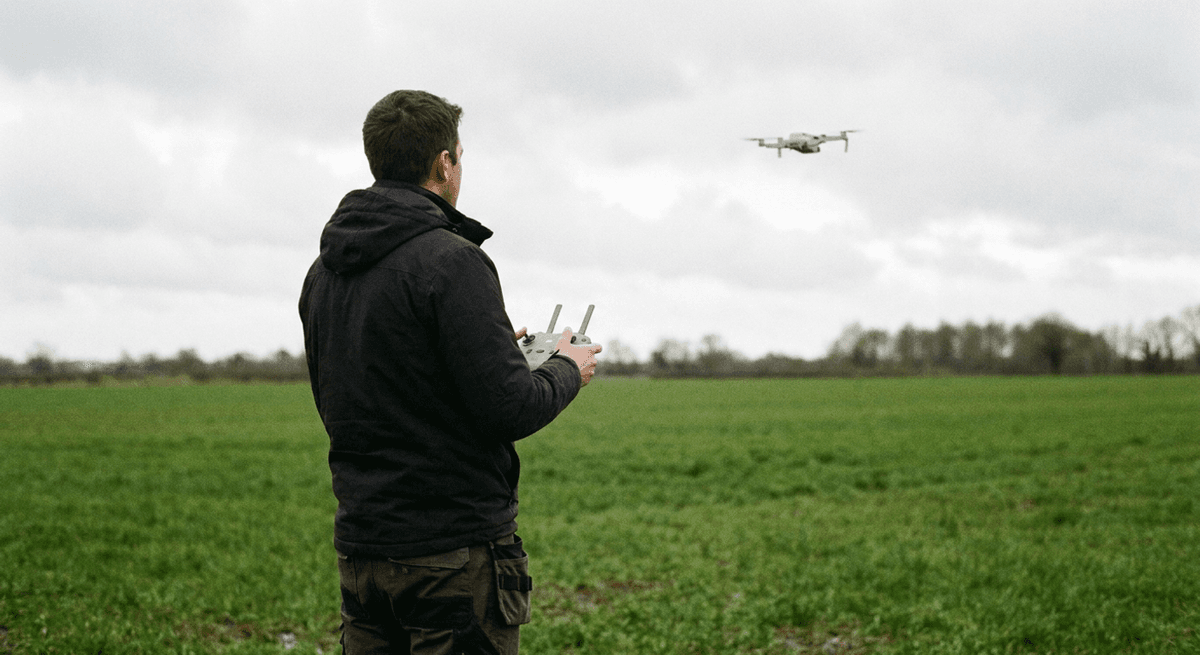
New York's drone statute: Penal Law Article 280
Penal Law Article 280 is New York's first drone-specific criminal law. Section 280.05 creates the offense of unlawful use of a drone, a Class A misdemeanor, committed when a person either operates a drone "in a nefarious manner" or operates a drone "over prohibited space without express prior approval from someone the person reasonably believes has the authority to grant such approval," according to the New York State Senate's official statutes portal.
Section 280.00 supplies the definitions that do the work. Operating in a "nefarious manner" covers conduct that constitutes or facilitates a crime; recklessly creates a substantial risk of physical injury or of property damage; knowingly or intentionally interferes with an emergency response, law enforcement operation, search and rescue, disaster response, medical evacuation, or other public safety operation; is used to harass, intimidate, stalk, surveil, or physically menace another person in a manner that would otherwise violate state or local law; is used to deliver, attempt to deliver, or facilitate delivery of contraband to a correctional, detention, secure treatment, or other secure governmental facility; involves a drone the operator knows is equipped or operated to discharge, drop, spray, or release a projectile or substance in a way that risks injury, property damage, or disruption of public safety operations; or is used for unauthorized surveillance of a state or federal military installation.
"Prohibited space" is defined geographically. It is the area within 500 feet horizontally of the outer perimeter of an airport, a state or federal military installation, a state, local, or federal correctional facility, a police station, a fire department station, an emergency services dispatch station, a large public gathering (an event with 500 or more people, including festivals, concerts, and sporting events), critical infrastructure as defined in Public Officers Law Section 86(5), or a school as defined in Education Law Section 1125(10). The restricted airspace runs up to 400 feet above the ground inside those boundaries, and at any height above them when the flight is not authorized by the FAA.
Section 280.10 carves out most ordinary flying. The article does not apply to a "toy drone" or a "recreational drone," each defined as 0.55 pounds or less at takeoff and flown under 49 U.S.C. Section 44809 solely for personal recreation, with the toy category also barred from carrying any camera or recording sensor; nor to a drone flown for commercial, educational, agricultural, journalistic, infrastructure, or other lawful purposes in compliance with federal, state, and local rules; nor to a government employee or someone acting for a state or local government entity consistently with those duties. The first three exemptions drop away if the drone is flown in a manner that recklessly creates a substantial risk of physical injury to another person or of damage to property.
New York's unlawful surveillance statute and the privacy gap
New York's most direct privacy protection against drone misuse is Penal Law Section 250.45, unlawful surveillance in the second degree, a Class E felony. It applies when a person, for their own or another's amusement, entertainment, or profit, for the purpose of degrading or abusing a person, or for sexual arousal or gratification, intentionally uses or installs an imaging device, a category that includes a drone-mounted camera, to surreptitiously view, broadcast, or record another person dressing, undressing, or engaged in intimate conduct, in a place where the person has a reasonable expectation of privacy, without consent, according to the New York State Senate's official statutes portal. Surreptitious, non-consensual recording of someone undressing alone is not enough; the statute requires one of those specific purposes. Like New Jersey's and New Mexico's comparable statutes, this reaches a specific category of drone misconduct, intimate or undressing scenes recorded for one of those purposes, not general backyard photography.
What makes New York distinctive is what is missing. It is one of only a small number of states with no general common-law right to privacy at all. The Court of Appeals held in Roberson v. Rochester Folding Box Co., 171 N.Y. 538 (1902), that no such right existed under New York common law, a ruling that provoked enough backlash that the Legislature responded the following year with what is now Civil Rights Law Sections 50 and 51, a narrow statutory right covering only the unauthorized commercial use of a person's name, portrait, picture, or voice. That statute helps someone whose drone footage is used commercially; it does nothing for a homeowner whose backyard is simply photographed and never published. Article 280 does not close that gap either: it reaches drone use that harasses, stalks, or surveils in a way that would otherwise violate another law, not ordinary photography of private property. Absent a violation of Penal Law 250.45 or Article 280, a New Yorker's civil claim against a nuisance drone typically has to be framed as trespass, drawing on the U.S. Supreme Court's reasoning in United States v. Causby, 328 U.S. 256 (1946), rather than as an invasion-of-privacy tort New York courts do not recognize.
Does police need a warrant to fly a drone over my property in New York?
No New York statute requires it, and Article 280 does not change that: Section 280.10 exempts a government employee, or someone acting on behalf of a state or local government entity, who is acting consistently with those governmental duties. Two efforts to impose a warrant requirement have stalled in the Legislature's Codes Committees: the Protect Our Privacy Act, reintroduced as Assembly Bill 972 and Senate Bill 1096, would bar warrantless drone surveillance of protests and other First Amendment-protected gatherings, and Senate Bill 6340 would add a specific penal law crime for surreptitious drone surveillance. Neither had passed either chamber as of early 2026. Without a state-specific statute, a New York resident's claim that police unlawfully surveilled them by drone falls back on ordinary Fourth Amendment analysis. The U.S. Supreme Court has held that aerial observation of a yard from public airspace by a manned aircraft, without a warrant, generally does not violate the Fourth Amendment. See California v. Ciraolo, 476 U.S. 207 (1986); Florida v. Riley, 488 U.S. 445 (1989). Neither case involved a drone, and no New York appellate court has squarely extended that reasoning to a small drone hovering much closer to a home.
New York City's strict local drone regime
New York City regulates drones more aggressively than the state does. Administrative Code Section 10-126(b) makes it unlawful to take off or land an aircraft, a category the NYPD has treated as including drones for more than a decade, anywhere except places the Department of Transportation or Port Authority designates. Parks Rule 1 RCNY Section 1-05(g) separately bans flying a model aircraft in city parks outside designated areas. Since July 2023, the NYPD and DOT have run a joint permit portal under 38 RCNY Section 24. Absent an individual permit, only three citywide locations are open to fly without one: Flushing Meadows-Corona Park, LaTourette Park on Staten Island, and Calvert Vaux Park in Brooklyn. Enforcement runs through the NYPD's Aviation Unit, with administrative fines commonly $250 to $1,000 and criminal charges available for more serious conduct, such as flying near an NYPD helicopter.
Hunting with a drone in New York
New York restricts drone-assisted hunting through its general aircraft-hunting rules rather than a drone-specific statute. Environmental Conservation Law Section 11-0901(4) bars hunting deer or bear "with the aid of a dog, or aircraft of any kind," language that predates civilian drones but that the DEC applies to them without qualification, according to DEC guidance on drone use on department-managed lands. Separately, ECL Section 11-0103(13) defines unlawful "taking" of wildlife broadly enough to include disturbing or harrying an animal, which DEC has said can capture a drone flown too close to game even outside a hunting context. A pending bill, Senate Bill 3542, would let hunters use an infrared drone to recover an animal already lawfully killed, while keeping the existing ban on using a drone to scout game beforehand. Both hobbyist and commercial drones are also banned outright in Wilderness and Primitive areas of the Adirondack and Catskill Forest Preserves under 6 NYCRR Section 196.8.
Drones and New York prisons: the Marcy incident and the new no-fly zone
New York's most acute current drone problem is contraband delivery into state prisons. On March 14, 2026, a drone dropped a package between two dormitory buildings at Marcy Correctional Facility containing two double-edged knives, roughly 530 grams of what appeared to be marijuana, a cell phone, hair clippers, and other contraband; the operator was not apprehended. A drop like that is prosecuted primarily under the general contraband law, Penal Law Section 205.25, promoting prison contraband in the first degree, a Class D felony.
Since August 25, 2026 it also carries a second, drone-specific charge. Penal Law Section 280.00 makes using a drone to deliver, attempt to deliver, or facilitate the delivery of contraband to a correctional, detention, secure treatment, or other secure governmental facility a "nefarious manner" of operation, and it places the area within 500 feet of any state, local, or federal correctional facility inside "prohibited space." Either route makes out unlawful use of a drone under Section 280.05. Because that offense is a Class A misdemeanor and Section 205.25 is a Class D felony, Article 280 supplements the contraband charge for a Marcy-type drop rather than displacing it. A separate measure, Senate Bill 694, most recently amended as S694A, would add a flat $500 civil penalty for each flight within 500 feet of a correctional facility; it remains in the Senate's Crime Victims, Crime and Correction Committee and has not passed either chamber.
The federal shoot-down rule: destroying a drone is a felony
A persistent misconception is that a landowner may legally shoot down a drone hovering over their own property. Federal law says otherwise. The FAA classifies drones as aircraft within the National Airspace System, which means 18 U.S.C. Section 32, the federal Aircraft Sabotage Act, applies to them: willfully damaging, destroying, or disabling a drone is a federal felony carrying up to 20 years in prison, regardless of whose property the drone is over, because the federal government, not the landowner, controls the airspace. New York has already produced a clear illustration. In February 2019, a 26-year-old St. James, Long Island, man fired three shotgun blasts from his yard and knocked a drone out of the sky that a volunteer group, Missing Angels-Long Island, was using to search for a missing dog; he was arrested and charged with third-degree criminal mischief and prohibited use of a weapon, both state charges, not the federal felony described above. That gap between what happened and what could have happened is typical: state prosecutors, not federal ones, usually bring the case, which has fed a persistent misconception that shooting down a drone is low-risk. It is not. No New York law authorizes a landowner to disable a drone over their own property, and the federal exposure applies regardless of how a state case is resolved.
More New York Laws
- New York Data Privacy Laws
- New York GPS Tracking Laws
- New York Police Bodycam Laws
- New York Recording Laws
- New York Smart Glasses Recording Laws
Frequently Asked Questions
Does New York have a state drone law?
Yes. Penal Law Article 280, effective August 25, 2026, makes unlawful use of a drone a Class A misdemeanor. A person commits it by operating a drone in a 'nefarious manner,' which includes using it to facilitate a crime, to harass, stalk, or surveil someone in a way that would otherwise break the law, or to deliver contraband to a correctional facility, or by flying over 'prohibited space' without approval. Article 280 does not replace New York City's local rules, DEC and state park rules, or Penal Law Section 250.45.
Does New York have a state drone privacy law?
Partly. Penal Law Article 280 reaches drone use that harasses, intimidates, stalks, surveils, or menaces a person in a manner that would otherwise violate state or local law, and it bars flying within 500 feet of a school without approval. Penal Law Section 250.45, unlawful surveillance, remains a Class E felony but is limited to recording someone undressing or in intimate conduct without consent, and only when done for a purpose like amusement, entertainment, profit, degrading the person, or sexual arousal or gratification. New York still has no statute against ordinary drone photography of private property.
How close to a school, airport, or prison can I fly a drone in New York?
Not within 500 feet horizontally, without express prior approval from someone you reasonably believe can grant it. Penal Law Section 280.00 defines 'prohibited space' as the area within 500 feet of an airport, a state or federal military installation, a correctional facility, a police station, a fire department station, an emergency services dispatch station, a gathering of 500 or more people, critical infrastructure, or a school, plus the airspace up to 400 feet above the ground inside those boundaries. Flying there without approval is a Class A misdemeanor under Section 280.05.
Can I fly a drone in New York City without a permit?
Only at three designated model-aircraft fields: Flushing Meadows-Corona Park, LaTourette Park on Staten Island, and Calvert Vaux Park in Brooklyn. Anywhere else in the city, taking off or landing a drone without NYPD and DOT authorization violates Administrative Code Section 10-126(b).
Does New York require a warrant for police drone surveillance?
No. New York has no statute requiring a warrant for law enforcement drone use, and Penal Law Section 280.10 exempts government employees acting consistently with their governmental duties from the new drone offense. The Protect Our Privacy Act, reintroduced as Assembly Bill 972 and Senate Bill 1096, would limit warrantless drone use at protests and gatherings, but had not passed as of early 2026.
Can I use a drone to scout deer before hunting in New York?
No. Environmental Conservation Law Section 11-0901 bars hunting deer or bear with the aid of an aircraft of any kind, a rule the DEC applies to drones, and using a drone to disturb or locate wildlife can separately violate the law's broad definition of unlawful 'taking.'
What happened at Marcy Correctional Facility in 2026?
On March 14, 2026, a drone dropped a package containing knives, drugs, a cell phone, and other contraband inside the facility. The operator was not caught. Since August 25, 2026, that conduct is separately covered by Penal Law Article 280: using a drone to deliver contraband to a correctional facility, or flying within 500 feet of one without approval, is unlawful use of a drone, a Class A misdemeanor, on top of the Class D felony contraband charge under Penal Law Section 205.25. A further bill, S694A, which would add a flat $500 civil penalty, is still in Senate committee.
Is it legal to shoot down a drone flying over my property in New York?
No. Destroying, damaging, or disabling any drone is a federal felony under 18 U.S.C. Section 32, the Aircraft Sabotage Act, regardless of who owns the land beneath it. A 2019 Long Island man who shot down a drone searching for a missing dog faced state, not federal, charges, which does not mean the conduct was legal.
Why doesn't New York recognize a general right to privacy?
The New York Court of Appeals rejected a common-law right to privacy in Roberson v. Rochester Folding Box Co. (1902). The Legislature responded with Civil Rights Law Sections 50 and 51, but that statute only covers unauthorized commercial use of a person's name, portrait, picture, or voice, not general drone photography of private property.
Updates
Updated to cover New York Penal Law Article 280, the state drone statute effective August 25, 2026, which makes unlawful use of a drone a Class A misdemeanor and sets 500-foot no-fly zones around prisons, schools, airports, and large gatherings, correcting the earlier statement that New York had no drone-specific law.
Corrected the description of New York's pending prison-drone bill from a stale 2017-2018-session 'Senate Bill 2125' (falsely described as having passed the Senate at 1,000 feet / $1,000) to the actual live 2025-2026-session bill, S694/S694A (500 feet, flat $500 civil penalty per offense, not yet passed the Senate), and fixed the Marcy Correctional Facility incident date from March 18 to March 14, 2026.
Independently fact-checked against the cited primary sources; governing law re-checked for recent changes
Corrected the article's description of Penal Law 250.45 (unlawful surveillance) to include the statute's required purpose element -- amusement, entertainment, profit, degrading/abusing the person, or sexual arousal/gratification -- which the article had dropped in both the main text and the FAQ, making it sound like any nonconsensual intimate-place drone recording qualifies regardless of purpose.
Governing law re-checked for recent changes
Reviewed and approved by an editor
The Law Behind This Article
This article rests on the statutory provisions below, held in our own legal record and retrieved from the official source. Tap a section to read the operative text.
New York Penal Law
§ 280.05Unlawful use of a droneIn force
* § 280.05 Unlawful use of a drone. A person commits unlawful use of a drone when such person: 1. operates a drone in a nefarious manner; or 2. operates a drone over prohibited space without express prior approval from someone the person reasonably believes has the authority to grant such approval. Unlawful use of a drone is a class A misdemeanor. * NB Effective August 25, 2026
Official text (excerpt) · last checked 2026-08-31 · Read the full text in our law library · Verify at legislation.nysenate.gov
§ 280.00DefinitionsIn force
* § 280.00 Definitions. As used in this article, the following terms shall have the following meanings: 1. "Drone" shall mean an unmanned aircraft and its associated operating system, including the hardware and software that manages flight control, navigation, and sensors for autonomous or remote flight without the possibility of direct human intervention from within or on the aircraft. 2. "Nefarious manner" shall mean engaging in conduct that: (a) constitutes or facilitates the commission of a crime as defined by subdivision six of section 10.00 of the penal law; (b) recklessly creates a substantial risk of physical injury to another person; (c) recklessly creates a substantial risk of damage to property; (d) knowingly or intentionally interferes with, obstructs, or impedes an emergency response, law enforcement operation, search and rescue operation, disaster response, medical evacuation, or other public safety-related operation; (e) is knowingly or intentionally used to harass, intimidate, stalk, surveil, or physically menace another person in a manner that would otherwise violate state or local law; (f) is knowingly or intentionally used to deliver, attempt to…
Official text (excerpt) · last checked 2026-07-29 · Read the full text in our law library · Verify at legislation.nysenate.gov
§ 280.10Applicability and restrictionsIn force
* § 280.10 Applicability and restrictions. The provisions of this article shall not apply to the following persons or entities: 1. A toy drone operated solely for recreation, unless such toy drone is operated in a manner that would recklessly create a substantial risk of physical injury to another person or substantial risk of damage to property. 2. A recreational drone operated solely for hobby or recreational purposes and operates in compliance with all applicable federal laws, rules, regulations, authorizations, waivers, or exemptions and all other applicable state and local laws, rules, and regulations, unless such recreational drone is operated in a manner that recklessly creates a substantial risk of physical injury to another person or substantial risk of damage to property. 3.
Official text (excerpt) · last checked 2026-07-29 · Read the full text in our law library · Verify at legislation.nysenate.gov
§ 250.45Unlawful surveillance in the second degreeIn forcecited in 19 of our articles
Unlawful surveillance in the second degree. A person is guilty of unlawful surveillance in the second degree when: 1. For his or her own, or another person's amusement, entertainment, or profit, or for the purpose of degrading or abusing a person, he or she intentionally uses or installs, or permits the utilization or installation of an imaging device to surreptitiously view, broadcast or record a person dressing or undressing or the sexual or other intimate parts of such person at a place and time when such person has a reasonable expectation of privacy, without such person's knowledge or consent; or 2. For his or her own, or another person's sexual arousal or sexual gratification, he or she intentionally uses or installs, or permits the utilization or installation of an imaging device to surreptitiously view, broadcast or record a person dressing or undressing or the sexual or other intimate parts of such person at a place and time when such person has a reasonable expectation of privacy, without such person's knowledge or consent; or 3.
Official text (excerpt) · last checked 2026-08-31 · Read the full text in our law library · Verify at legislation.nysenate.gov
Cited in 51 court opinions in our collectionLatest citing opinion in our collection: 2025
In the courts (editorial summary, independently checked):People v. Piznarski (2013) held Penal Law 250.45 reaches a participant who secretly records consensual sex, that the victim kept a reasonable expectation of privacy, and that the one-party consent rule for eavesdropping does not apply. People v. Evans (2006) applied section 250.45(3) to a camera hidden in a bedroom.
Opinions citing this section in our collection:
- People v. Evans (Appellate Division of the Supreme Court of the State of New York 2006, 27 A.D.3d 905)✓A man placed a video camera in his girlfriend's 12-year-old daughter's bedroom and recorded her undressing, then pleaded guilty under Section 250.45(3); the court affirmed, holding the plea needed no express admission of no legitimate purpose given the statutory presumption.
- People v. Lema (Appellate Division of the Supreme Court of the State of New York 2017, 152 A.D.3d 440)✓A man used a phone camera to record under women's skirts on a subway train, but dark lighting produced no image of intimate parts; the court affirmed, holding Section 250.45(4) is satisfied when a device is used for the purpose of making such a recording.
- People v. Piznarski (Appellate Division of the Supreme Court of the State of New York 2013, 113 A.D.3d 166)✓A student secretly recorded sex with two women using a camera left in view on his bedroom desk; the court affirmed under Section 250.45, holding the statute reaches a participant who records a consensual encounter and that a visible camera can still be used surreptitiously.
Identified automatically from the court opinions citing this section — not a ranking of which case controls.
Also relied on in: New York Dashcam Laws: Legality, Mounting Rules, and Evidence Use, New York Landlord-Tenant Recording Laws: Rights for Renters and Property Owners, New York Medical Recording Laws: Patient Rights and Healthcare Privacy
§ 205.25Promoting prison contraband in the first degreeIn force
Promoting prison contraband in the first degree. A person is guilty of promoting prison contraband in the first degree when: 1. He knowingly and unlawfully introduces any dangerous contraband into a detention facility; or 2. Being a person confined in a detention facility, he knowingly and unlawfully makes, obtains or possesses any dangerous contraband. Promoting prison contraband in the first degree is a class D felony.
Official text (excerpt) · last checked 2026-07-29 · Read the full text in our law library · Verify at legislation.nysenate.gov
Cited in 200 court opinions in our collectionLatest citing opinion in our collection: 2025
Opinions citing this section in our collection:
- People v. Finley (New York Court of Appeals 2008, 10 N.Y.3d 647)“…dicate that the felony/misdemeanor distinction set forth in Penal Law §§ 205.25 and 205.20 "substantially restates" tha…”
- People v. Livingston (Appellate Division of the Supreme Court of the State of New York 1999, 262 A.D.2d 786)“…ully makes, obtains or possesses any dangerous contraband” (Penal Law § 205.25 [2]). A razorblade clearly constitutes…”
- People v. Watson (Appellate Division of the Supreme Court of the State of New York 1990, 162 A.D.2d 1015)“…20.03) and promoting prison contraband in the first degree (Penal Law § 205.25 [2]). On appeal, defendant contests onl…”
Identified automatically from the court opinions citing this section — not a ranking of which case controls.
New York Environmental Conservation Law
§ 11-0901ProhibitionsIn force
Prohibitions. 1. No person while in or on a motor vehicle, as defined in section 11-0931 of this chapter, shall take wildlife other than migratory game birds, or use any lights on any such vehicle for such purpose. * 2. Wildlife shall not be taken on or from any public highway, except: a. that in the forest preserve counties it may be taken from highways other than state, county or town highways; and b. by a nuisance wildlife specialist with a permit issued pursuant to section 11-0522 of this article provided that such activities are in furtherance of the site-specific deer management plan. c. by a nuisance wildlife specialist with a permit issued pursuant to section 11-0522-a of this article provided that such activities are in furtherance of the site-specific deer management plan. * NB Effective until January 1, 2027 * 2. Wildlife shall not be taken on or from any public highway, except that in the forest preserve counties it may be taken from highways other than state, county or town highways. * NB Effective January 1, 2027 3. a. Migratory game birds shall be taken only as permitted by regulations of the department adopted pursuant to section 11-0307. b.
Official text (excerpt) · last checked 2026-07-29 · Read the full text in our law library · Verify at legislation.nysenate.gov
United States Code Title 18
§ 32Destruction of aircraft or aircraft facilitiesIn forcecited in 51 of our articles
Whoever willfully— sets fire to, damages, destroys, disables, or wrecks any aircraft in the special aircraft jurisdiction of the United States or any civil aircraft used, operated, or employed in interstate, overseas, or foreign air commerce; places or causes to be placed a destructive device or substance in, upon, or in proximity to, or otherwise makes or causes to be made unworkable or unusable or hazardous to work or use, any such aircraft, or any part or other materials used or intended to be used in connection with the operation of such aircraft, if such placing or causing to be placed or such making or causing to be made is likely to endanger the safety of any such aircraft; sets fire to, damages, destroys, or disables any air navigation facility, or interferes by force or violence with the operation of such facility, if such fire, damaging, destroying, disabling, or interfering is likely to endanger the safety of any such aircraft in flight; with the intent to damage, destroy, or disable any such aircraft, sets fire to, damages, destroys, or disables or places a destructive device or substance in, upon, or in proximity to, any appliance or structure, ramp, landing area,…
Official text (excerpt) · last checked 2026-07-28 · Read the full text in our law library · Verify at uscode.house.gov
Cited in 168 court opinions in our collectionLatest citing opinion in our collection: 2026
In the courts (editorial summary, independently checked):United States v. Yousef (2003) applied 18 U.S.C. 32 to an overseas airline bombing plot, holding Section 32(a) reaches conduct abroad because US-flag aircraft in flight are within the special aircraft jurisdiction, and that a defendant brought here involuntarily is still found in the United States under Section 32(b).
Opinions citing this section in our collection:
- Perez v. United States (Supreme Court of the United States 1971, 402 U.S. 146)“…commerce, as, for example, the destruction of an aircraft ( 18 U. S. C. § 32 ), or persons or things in commerce, as…”
- Stanford v. Kentucky (Supreme Court of the United States 1989, 492 U.S. 361)“…r by persons subject to Uniform Code of Military Justice); 18 U. S. C. §§ 32 , 33, and 34 (1982 ed. and Supp. V) (de…”
- United States v. Yousef (Court of Appeals for the Second Circuit 2003, 327 F.3d 56)✓Yousef bombed a Philippine airliner and plotted to bomb twelve US flag airliners on Asian routes; the court held Section 32(a) reaches attacks on US flag aircraft worldwide, and that Yousef, brought here involuntarily, was found in the United States under Section 32(b).
Identified automatically from the court opinions citing this section — not a ranking of which case controls.
Also relied on in: Indiana Drone Laws (2026): Police Warrants, Voyeurism, Hunting, Iowa Drone Laws: Homestead, Farmstead & Warrant Rules, Kansas Drone Laws: Stalking Act & Privacy Rules Explained
Search our full record of US law — 2.1 million sections, every state + federal →
Sources and References
- N.Y. Penal Law Section 250.45, Unlawful surveillance in the second degree(nysenate.gov).gov
- N.Y. Environmental Conservation Law Section 11-0901, Prohibitions (aircraft-assisted deer and bear hunting ban)(nysenate.gov).gov
- New York State DEC, "Drone Use On DEC Managed Lands" guidance(dec.ny.gov).gov
- N.Y. Penal Law Section 205.25, Promoting prison contraband in the first degree(nysenate.gov).gov
- New York State Senate, Bill S1096 (2025-2026), the Protect Our Privacy Act(nysenate.gov).gov
- Roberson v. Rochester Folding Box Co., 171 N.Y. 538 (1902), New York Court of Appeals opinion rejecting a common-law right to privacy(courtlistener.com)
- 18 U.S.C. Section 32, Aircraft Sabotage Act, federal prohibition on destroying or damaging an aircraft including drones(law.cornell.edu)
- New York State Senate, Bill S694A (2025-2026), correctional-facility drone restriction(nysenate.gov).gov
- CNY Central, Drone drops knives, drugs and cell phone inside fence at Marcy Correctional Facility(cnycentral.com)
- N.Y. Penal Law Section 280.05, Unlawful use of a drone (class A misdemeanor, effective August 25, 2026)(nysenate.gov)
- N.Y. Penal Law Section 280.00, Definitions for Article 280 (drone, nefarious manner, prohibited space, recreational and toy drone)(nysenate.gov)
- N.Y. Penal Law Section 280.10, Applicability and restrictions (exemptions from Article 280)(nysenate.gov)