
Maryland
Maryland Drone Laws: Privacy, Trespass & Warrant Rules Explained
Independently fact-checked against primary sources (last audited August 17, 2026). · Reviewed by the RecordingLaw editorial team. · Law checked current as of August 17, 2026. · 8 primary sources cited on this page. How we verify our legal content
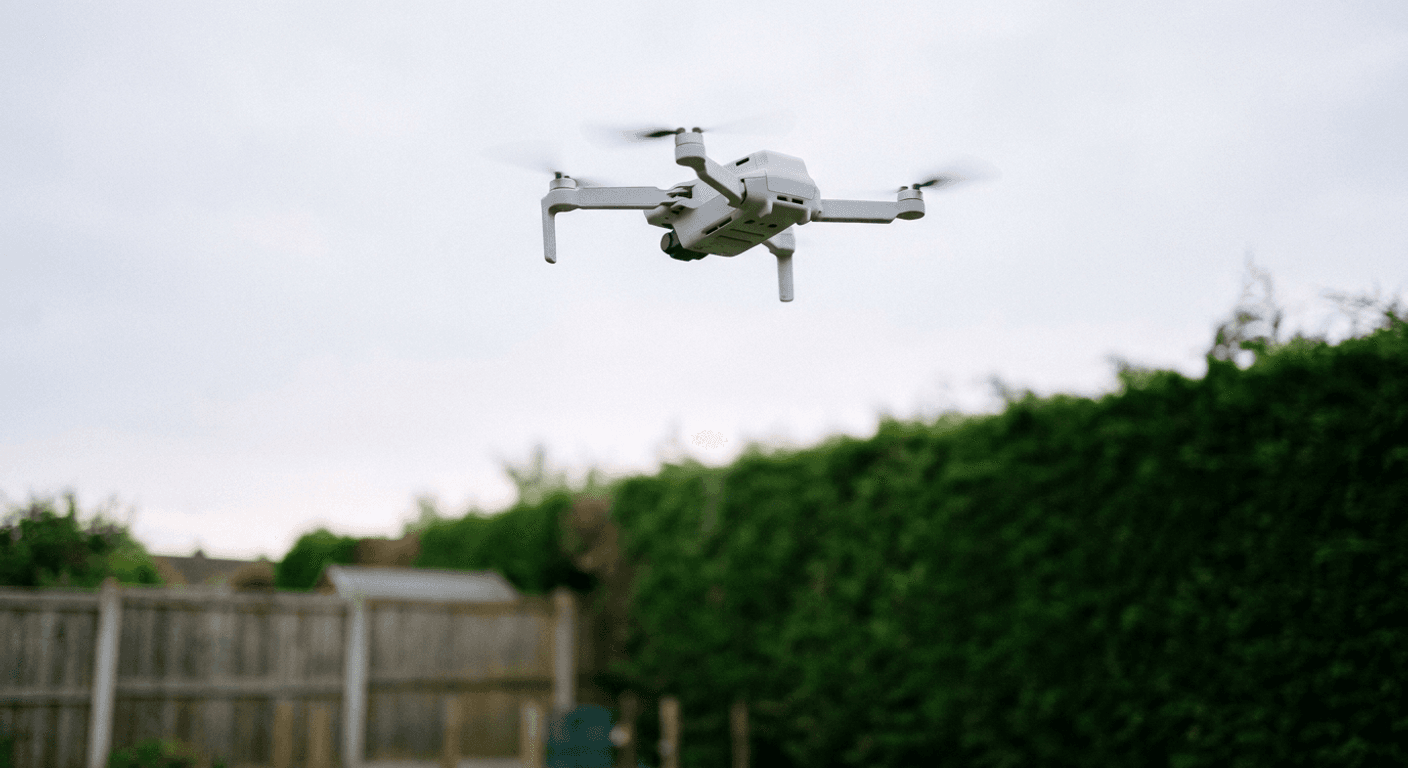
Maryland has no drone-specific privacy statute for private citizens. Disputes fall back on general trespass, nuisance, and invasion-of-privacy law, layered under a 2015 state law that preempts local drone ordinances and a 2024 law protecting correctional facilities from drones.
Federal Airspace Rules vs. Maryland State Law
The Federal Aviation Administration regulates the national airspace: registration, Remote Pilot Certification under Part 107, the recreational exception at 49 U.S.C. 44809, and Remote ID broadcast, all nationwide and outside any state's control. Maryland has not layered a dedicated drone-privacy statute on top of that federal framework the way states like California or Texas have. What Maryland has instead is a 2015 preemption law keeping drone regulation at the state level, a narrow 2024 correctional-facility statute, a decades-old wildlife statute, and Maryland's ordinary common-law privacy torts, which predate drones entirely but still apply to them.

Maryland Has No Civilian Drone-Privacy Statute: What Governs Instead
Maryland is one of the roughly three dozen states without a dedicated drone-privacy or targeted-surveillance statute, so a resident who believes a neighbor's drone is spying on them relies on general common-law claims rather than a statute written with drones in mind. Maryland recognizes the tort of intrusion upon seclusion, defined as the intentional intrusion, physically or otherwise, upon the solitude or seclusion of another that would be highly offensive to a reasonable person and causes injury. The leading Maryland decision applying that tort to covert filming, Furman v. Sheppard, 130 Md. App. 67, 744 A.2d 583 (Md. Ct. Spec. App. 2000), involved an investigator who trespassed into a gated, private yacht club to videotape a personal-injury plaintiff working on his boat. The court rejected the intrusion claim, reasoning that the investigator filmed only activity that was already visible to other club members and to boaters on the adjacent public waterway, and that trespass alone does not automatically convert otherwise reasonable surveillance into an unreasonable one.
The same reasoning would likely extend to a drone: Maryland courts have not directly addressed drone-based surveillance, but Furman suggests a court would focus on what the drone actually captured and whether that was already visible from a lawful vantage point, rather than on the fact that a drone flew over the property line. A drone that peers through a fenced yard's tree line to record activity no ground-level observer could see stands on different footing than one that photographs a yard already visible from the street.
Separately, Md. Code Ann., Transp. Section 5-1001 establishes "a public right to freedom of transit in air commerce through the airspace of this State," meaning a Maryland property owner generally cannot exclude aircraft, including a drone, from the airspace above their land. That right is not unlimited: the statute restricts operation at a "dangerously low altitude" that interferes with an existing lawful use of land or water, or that poses an imminent danger to people or property, which is the closest thing Maryland law has to an aerial trespass or nuisance standard.
Much of the Maryland Suburbs Sit Inside Washington's No-Drone Zone
This is a federal restriction, not a Maryland statute, but it is the single most important drone rule for a large share of Maryland residents. The FAA maintains a Washington, D.C. Special Flight Rules Area (SFRA), a 30-nautical-mile ring centered on Reagan National Airport, and within it a smaller Flight Restricted Zone (FRZ) reaching out roughly 13 to 15 nautical miles. Drone flight inside the FRZ is prohibited outright without specific FAA and security-agency authorization; the inner-Beltway Maryland suburbs, including National Harbor, Oxon Hill, Hyattsville, College Park, and the inner edges of Bethesda, Chevy Chase, and Silver Spring, sit inside or against that ring. Between 15 and 30 nautical miles, covering most of Montgomery and Prince George's counties, recreational flight under 49 U.S.C. 44809 is generally allowed, but Part 107 commercial flight needs SFRA-specific authorization on top of ordinary LAANC clearance. A drone flight that is otherwise perfectly legal under Maryland's civilian privacy and trespass law can still be a serious federal violation if it launches from, or enters, this airspace without the right authorization, so a Maryland operator anywhere near the Beltway should check the FAA's B4UFLY app or DroneZone before taking off.
Does Maryland Law Require a Warrant for Police Drone Use?
No. Maryland has not enacted a statute requiring a warrant before a state or local law enforcement agency uses a drone, unlike neighboring Virginia. House Bill 471, the 2026-session bill that would have imposed a warrant requirement and made improperly gathered drone evidence inadmissible, traces back to concerns first raised after the Baltimore Police Department's 2019 aerial surveillance program. Its 2025-session predecessor, House Bill 682 (Public Safety - Persistent Aerial Surveillance), died in committee, and House Bill 471 followed the same path: it received a February 24, 2026 hearing in the House Judiciary Committee but was never voted out, and it died when the 2026 session adjourned sine die. Absent a new bill that passes, Maryland police drone use is governed by ordinary Fourth Amendment principles and individual agency policy rather than a state-specific statutory floor. For the roughly dozen states that already impose a statutory warrant requirement on police drone use, see Drone Laws by State.
Maryland Preempts Local Drone Ordinances
Md. Code Ann., Econ. Dev. Section 14-301, enacted in 2015 as Chapter 164 (Senate Bill 370), provides that only the State of Maryland may enact a law or take other action to prohibit, restrict, or regulate the testing or operation of unmanned aircraft systems, and it expressly supersedes any existing county or municipal ordinance that attempts to do so, while preserving federal preemption of state law. In practice, enforcement has lagged the statute's text. A 2020 Baltimore Sun report described Carroll County requiring a permit and $1 million in liability insurance to fly a drone in several county parks, a rule that appears to conflict with Section 14-301 on its face; rather than challenge it, at least one commercial drone operator simply relocated his practice flights to a neighboring county instead of testing the preemption question in court.
Correctional Facilities: Drones and Contraband
Effective October 1, 2024, Md. Code Ann., Crim. Law Section 9-417.1, enacted as Senate Bill 273, makes it a crime to use an unmanned aircraft to deliver contraband to a person confined in a place of confinement. A violation is punishable by up to three years' imprisonment, a fine of up to $1,000, or both, and covered facilities must post visible signage warning the public about the restriction. The same 2024 Act, Chapter 101 (Senate Bill 273), separately created Md. Code Ann., Corr. Servs. Section 8-804, which makes it a crime to intentionally operate an unmanned aircraft over a correctional facility to photograph or record images of the facility without authorization from the facility's managing official or the Secretary of Public Safety and Correctional Services, carrying the same penalty of up to three years, a $1,000 fine, or both. The law responds to a documented, ongoing pattern of drones smuggling cell phones, drugs, and weapons into Maryland correctional facilities, a problem the Department of Public Safety and Correctional Services had previously been able to address only through internal policy rather than criminal statute.
Hunting, Wildlife, and Drones
Md. Code Ann., Nat. Res. Section 10-410(j) bars hunting or attempting to hunt wild birds or mammals "from an aircraft" within Maryland, a misdemeanor punishable by a fine of up to $1,000, imprisonment of up to six months, or both. The statute predates consumer drones, but Maryland wildlife officials treat it as reaching drones used to hunt or to spot game for a hunt, consistent with the federal Airborne Hunting Act's similarly broad definition of aircraft. A separate hunter-interference statute, Nat. Res. Section 10-422, bars intentionally interfering with a lawful hunt or harassing game animals on private land or Department-managed hunting areas, a provision that could also reach a drone flown specifically to disrupt a hunt. A hunter who wants to use a drone for post-kill game recovery should confirm current Department of Natural Resources policy before flying, since Maryland has not adopted a specific carve-out for that narrower use.
Can I Shoot Down a Drone Over My Property in Maryland?
No. Federal law, not Maryland law, controls this question. The Aircraft Sabotage Act, 18 U.S.C. Section 32, makes it a felony to willfully damage, destroy, or disable an "aircraft," a category the FAA has treated as including drones since 2012, regardless of altitude or property ownership below. A conviction carries up to 20 years in federal prison and a fine of up to $250,000. Publicized cases where a shooter avoided serious consequences under state law, like Kentucky's 2015 "Kentucky Drone Slayer" incident, reflect local prosecutorial discretion rather than an established legal right; the related federal suit, Boggs v. Merideth, was dismissed in 2017 on jurisdictional grounds without the court reaching the merits. No Maryland statute authorizes a property owner to shoot down or otherwise disable a drone. For the camera side of Maryland privacy law, including home security and workplace monitoring, see Maryland Surveillance Camera Laws.
Penalties at a Glance
| Conduct | Authority | Penalty |
|---|---|---|
| Flying a drone without FAA authorization inside the DC Flight Restricted Zone | Federal (FAA / SFRA rules) | Civil penalty up to $27,500; possible criminal referral |
| Delivering contraband to a correctional facility by drone | Md. Code Ann., Crim. Law Section 9-417.1 | Up to 3 years, $1,000 fine, or both |
| Recording images of a correctional facility by drone without authorization | Md. Code Ann., Corr. Servs. Section 8-804 | Up to 3 years, $1,000 fine, or both |
| Hunting wild birds or mammals from an aircraft, including a drone | Md. Code Ann., Nat. Res. Section 10-410(j) | Up to $1,000 fine and 6 months, or both |
| County or municipal ordinance restricting drone testing or operation | Md. Code Ann., Econ. Dev. Section 14-301 | Preempted; unenforceable against state-authorized flights |
| Shooting down or disabling any drone (private citizen, anywhere in the US) | 18 U.S.C. Section 32 | Up to 20 years and $250,000 fine (federal) |
More Maryland Laws
- Maryland Data Privacy Laws
- Maryland GPS Tracking Laws
- Maryland Police Bodycam Laws
- Maryland Recording Laws
- Maryland Smart Glasses Recording Laws
Frequently Asked Questions
Is it illegal for a drone to fly over my property in Maryland?
Not by itself. Maryland Transportation Section 5-1001 establishes a public right of transit through the airspace above your land, so simple overflight is not trespass. A drone can still raise a claim if it flies at a dangerously low altitude that interferes with your use of the property, or if it is used to record something you had a reasonable expectation of privacy in that was not otherwise visible to the public.
Can I sue my neighbor for flying a drone and filming me in Maryland?
Possibly, under the common-law tort of intrusion upon seclusion, which Maryland courts recognize. Under Furman v. Sheppard, 130 Md. App. 67 (2000), the key question is what the drone actually captured, not just whether it crossed your property line. Filming activity that was already visible to the public from a lawful vantage point is unlikely to support a claim; filming something hidden from ordinary view is more likely to.
Does Maryland police need a warrant to fly a drone over my house?
Maryland has not enacted a statute requiring one. A 2025-session bill on persistent aerial surveillance, House Bill 682, died in committee, and its 2026-session successor, House Bill 471, which would have imposed a warrant requirement, also died in committee when the 2026 session adjourned. Until a bill like it passes, Maryland police drone use is governed by general Fourth Amendment principles and individual department policy.
Can my county pass its own drone ordinance in Maryland?
No, generally. Md. Code Ann., Econ. Dev. Section 14-301 gives the State of Maryland exclusive authority to regulate drone testing and operation and preempts conflicting county or municipal ordinances, though enforcement of that preemption against individual local rules has been inconsistent in practice.
What happens if a drone is used to deliver contraband to a Maryland prison?
It is a crime under Md. Code Ann., Crim. Law Section 9-417.1, effective October 1, 2024, punishable by up to three years in prison, a $1,000 fine, or both. The same 2024 law, Chapter 101, separately makes it a crime under Corr. Servs. Section 8-804 to fly a drone over a correctional facility to record images of it without authorization, carrying the same penalty. Covered facilities must also post visible signage warning the public about the restriction.
Can I use a drone to hunt or scout game in Maryland?
No. Md. Code Ann., Nat. Res. Section 10-410(j) bars hunting wild birds or mammals from an aircraft, which Maryland wildlife officials apply to drones, backstopped by the federal Airborne Hunting Act. Confirm current Department of Natural Resources policy before using a drone for any hunting-adjacent purpose, including game recovery.
Can I legally shoot down a drone flying over my property in Maryland?
No. Shooting a drone out of the sky anywhere in the United States, including over your own land in Maryland, is a federal felony under 18 U.S.C. Section 32 regardless of state law. No Maryland statute authorizes a property owner to disable or shoot down a drone.
Can I fly a drone in my Maryland suburb near Washington, DC?
It depends on exactly where you are. The FAA's DC Flight Restricted Zone reaches roughly 13 to 15 nautical miles from Reagan National Airport and covers inner-Beltway communities like National Harbor, Hyattsville, and College Park, where drone flight is prohibited without specific federal authorization. Between 15 and 30 nautical miles, covering most of Montgomery and Prince George's counties, recreational flight is generally allowed but commercial Part 107 flight needs additional SFRA-specific authorization.
Updates
Corrected the description of Furman v. Sheppard: the opinion describes the person who filmed the plaintiff as an investigator employed by a private firm, not as an insurance investigator.
Updated the status of House Bill 471, the 2026 police drone warrant bill, which died in the House Judiciary Committee when the 2026 legislative session adjourned; Maryland still has no police drone warrant statute.
Corrected the bill numbers for Maryland's police-drone-warrant legislation (the 2025-session bill was HB 682, not HB 471; HB 471 is the 2026-session bill) and added that the same 2024 law banning drone contraband delivery to prisons also separately bans unauthorized drone image-recording over a correctional facility, under Corr. Servs. Section 8-804.
Independently fact-checked against the cited primary sources; governing law re-checked for recent changes
Governing law re-checked for recent changes
Corrected the article to reflect that Maryland's drone-contraband statute (Crim. Law Section 9-417.1) prohibits delivering contraband to a correctional facility by drone, but does not separately ban recording or photographing a correctional facility without authorization -- that recording-ban claim was not supported by the statute's text and has been removed from the article body, KeyTakeaways, penalties table, and FAQ.
Governing law re-checked for recent changes
Reviewed and approved by an editor
The Law Behind This Article
This article rests on the statutory provisions below, held in our own legal record and retrieved from the official source. Tap a section to read the operative text.
Maryland Code, Economic Development Article
§ 14-301In force
§14–301. (a) (1) In this section the following words have the meanings indicated. (2) “Unmanned aircraft” means the flying portion of an unmanned aircraft system, flown by a pilot via a ground control system, or autonomously through use of an onboard computer, a communication link, and any additional equipment that is necessary for the unmanned aircraft to operate safely. (3) “Unmanned aircraft system” means an unmanned aircraft and all the associated support equipment, control stations, data links, telemetry, communications and navigation equipment, and other equipment necessary to operate the unmanned aircraft. (b) Only the State may enact a law or take any other action to prohibit, restrict, or regulate the testing or operation of unmanned aircraft systems in the State. (c) Subsection (b) of this section: (1) preempts the authority of a county or municipality to prohibit, restrict, or regulate the testing or operation of unmanned aircraft systems; and (2) supersedes any existing law or ordinance of a county or municipality that prohibits, restricts, or regulates the testing or operation of unmanned aircraft systems.
Official text (excerpt) · last checked 2026-07-29 · Read the full text in our law library · Verify at mgaleg.maryland.gov
Maryland Code, Transportation Article
§ 5-1001In force
§5–1001. (a) There is a public right to freedom of transit in air commerce through the airspace of this State. (b) The operation of aircraft over the lands and waters of this State is lawful, unless the operation is: (1) At so low an altitude as to interfere with any lawful existing use of the land or water or the space above the land or water; or (2) Conducted in a manner imminently dangerous to persons or property on the land or water. (c) (1) Except for a forced or emergency landing, a person may not land an aircraft on the lands or waters of any other person without the consent of that other person. (2) For damages caused by a forced or emergency landing, a person is liable as set forth in § 5-1005 of this subtitle.
Official text (excerpt) · last checked 2026-07-29 · Read the full text in our law library · Verify at mgaleg.maryland.gov
Maryland Code, Criminal Law Article
§ 9-417.1In force
§9–417.1. (a) (1) In this section the following words have the meanings indicated. (2) “Aircraft” means a device that is used or intended to be used for flight in the air. (3) “Unmanned aircraft” means an aircraft that is operated without the possibility of direct human intervention from within or on the aircraft. (b) A person may not deliver any contraband to a person detained or confined in a place of confinement using an unmanned aircraft. (c) A person who violates this section is guilty of a misdemeanor and on conviction is subject to imprisonment not exceeding 3 years or a fine not exceeding $1,000 or both. (d) A correctional facility shall post signage warning of the provisions of this section on the exterior of the property in an area visible to the general public.
Official text (excerpt) · last checked 2026-07-29 · Read the full text in our law library · Verify at mgaleg.maryland.gov
Maryland Code, Correctional Services Article
§ 8-804In force
§8–804. (a) (1) In this section the following words have the meanings indicated. (2) “Aircraft” means a device that is used or intended to be used for flight in the air. (3) “Unmanned aircraft” means an aircraft that is operated without the possibility of direct human intervention from within or on the aircraft. (b) A person may not intentionally operate an unmanned aircraft over a correctional facility for the purpose of photographing or recording images of the correctional facility through the use of the unmanned aircraft without the authorization of the managing official of the correctional facility or the Secretary. (c) A person who violates this section is guilty of a misdemeanor and on conviction is subject to imprisonment not exceeding 3 years or a fine not exceeding $1,000 or both. (d) A correctional facility shall post signage warning of the provisions of this section on the exterior of the property in an area visible to the general public.
Official text (excerpt) · last checked 2026-07-29 · Read the full text in our law library · Verify at mgaleg.maryland.gov
Maryland Code, Natural Resources Article
§ 10-410In force
§10–410. (a) (1) (i) The Department may allow a person to hunt on each Sunday of the game bird and game mammal seasons in: 1. Allegany County; 2. Subject to subparagraph (iii) of this paragraph, Calvert County, from 30 minutes before sunrise until 10:30 a.m.; 3. Subject to subparagraph (iii) of this paragraph, Caroline County, from 30 minutes before sunrise until 10:30 a.m.; 4. Cecil County; 5. Subject to subparagraph (iii) of this paragraph, Charles County, from 30 minutes before sunrise until 10:30 a.m.; 6. Subject to subparagraph (iv) of this paragraph, Dorchester County, from 30 minutes before sunrise until 10:30 a.m.; 7. Garrett County; 8. Subject to subparagraph (iii) of this paragraph, Queen Anne’s County, from 30 minutes before sunrise until 10:30 a.m.; 9. St. Mary’s County; 10. Subject to subparagraph (ii) of this paragraph, Somerset County, from 30 minutes before sunrise until 10:30 a.m.; 11. Washington County; 12. Subject to subparagraph (ii) of this paragraph, Worcester County, from 30 minutes before sunrise until 10:30 a.m.; and 13. Subject to subparagraph (v) of this paragraph, Wicomico County, from 30 minutes before sunrise until 10:30 a.m.
Official text (excerpt) · last checked 2026-07-29 · Read the full text in our law library · Verify at mgaleg.maryland.gov
§ 10-422In force
§10–422. (a) If the Department determines that a significant interference or disruption of a hunt or hunters is likely to occur on any land managed by the Department, the Department may adopt regulations to prohibit that interference or disruption. (b) While on private land that is owned by another person or in a hunting area on land managed by the Department, a person may not: (1) Interfere intentionally with the lawful taking of wildlife by another person; or (2) Harass, drive, or disturb any game animal intentionally for the purpose of disrupting a lawful hunt. (c) A Natural Resources police officer or other police officer of the State who has probable cause to believe that a person has violated this section may: (1) Order the person to desist or to leave the area; or (2) Arrest the person on refusal to desist or leave the area. (d) The conduct declared unlawful in this section does not include any incidental interference arising from lawful activity by private land users or users of land managed by the Department, including farmers, miners, or persons engaged in recreation.
Official text (excerpt) · last checked 2026-07-29 · Read the full text in our law library · Verify at mgaleg.maryland.gov
United States Code Title 18
§ 32Destruction of aircraft or aircraft facilitiesIn forcecited in 51 of our articles
Whoever willfully— sets fire to, damages, destroys, disables, or wrecks any aircraft in the special aircraft jurisdiction of the United States or any civil aircraft used, operated, or employed in interstate, overseas, or foreign air commerce; places or causes to be placed a destructive device or substance in, upon, or in proximity to, or otherwise makes or causes to be made unworkable or unusable or hazardous to work or use, any such aircraft, or any part or other materials used or intended to be used in connection with the operation of such aircraft, if such placing or causing to be placed or such making or causing to be made is likely to endanger the safety of any such aircraft; sets fire to, damages, destroys, or disables any air navigation facility, or interferes by force or violence with the operation of such facility, if such fire, damaging, destroying, disabling, or interfering is likely to endanger the safety of any such aircraft in flight; with the intent to damage, destroy, or disable any such aircraft, sets fire to, damages, destroys, or disables or places a destructive device or substance in, upon, or in proximity to, any appliance or structure, ramp, landing area,…
Official text (excerpt) · last checked 2026-07-28 · Read the full text in our law library · Verify at uscode.house.gov
Cited in 168 court opinions in our collectionLatest citing opinion in our collection: 2026
In the courts (editorial summary, independently checked):United States v. Yousef (2003) applied 18 U.S.C. 32 to an overseas airline bombing plot, holding Section 32(a) reaches conduct abroad because US-flag aircraft in flight are within the special aircraft jurisdiction, and that a defendant brought here involuntarily is still found in the United States under Section 32(b).
Opinions citing this section in our collection:
- Perez v. United States (Supreme Court of the United States 1971, 402 U.S. 146)“…commerce, as, for example, the destruction of an aircraft ( 18 U. S. C. § 32 ), or persons or things in commerce, as…”
- Stanford v. Kentucky (Supreme Court of the United States 1989, 492 U.S. 361)“…r by persons subject to Uniform Code of Military Justice); 18 U. S. C. §§ 32 , 33, and 34 (1982 ed. and Supp. V) (de…”
- United States v. Yousef (Court of Appeals for the Second Circuit 2003, 327 F.3d 56)✓Yousef bombed a Philippine airliner and plotted to bomb twelve US flag airliners on Asian routes; the court held Section 32(a) reaches attacks on US flag aircraft worldwide, and that Yousef, brought here involuntarily, was found in the United States under Section 32(b).
Identified automatically from the court opinions citing this section — not a ranking of which case controls.
Also relied on in: Indiana Drone Laws (2026): Police Warrants, Voyeurism, Hunting, Iowa Drone Laws: Homestead, Farmstead & Warrant Rules, Kansas Drone Laws: Stalking Act & Privacy Rules Explained
United States Code Title 49
§ 44809Exception for limited recreational operations of unmanned aircraftIn forcecited in 13 of our articles
Except as provided in subsection (e), and notwithstanding chapter 447 of title 49, United States Code, a person may operate a small unmanned aircraft without specific certification or operating authority from the Federal Aviation Administration if the operation adheres to all of the following limitations: The aircraft is flown strictly for recreational purposes. The aircraft is operated in accordance with or within the programming of a community-based organization’s set of safety guidelines that are developed in coordination with the Federal Aviation Administration. The aircraft is flown within the visual line of sight of the person operating the aircraft or a visual observer co-located and in direct communication with the operator. The aircraft is operated in a manner that does not interfere with and gives way to any manned aircraft. In Class B, Class C, or Class D airspace or within the lateral boundaries of the surface area of Class E airspace designated for an airport, the operator obtains prior authorization from the Administrator or designee before operating and complies with all airspace restrictions and prohibitions.
Official text (excerpt) · last checked 2026-07-28 · Read the full text in our law library · Verify at uscode.house.gov
Cited in 1 court opinions in our collectionLatest citing opinion in our collection: 2022
Opinions citing this section in our collection:
- Tyler Brennan v. Stephen Dickson (Court of Appeals for the D.C. Circuit 2022, 45 F.4th 48)“…Reauthorization Act, § 349(a), (b), (f), 132 Stat. at 3297; 49 U.S.C. § 44809(f); see Final Rule, 86 Fed. Reg. at 440…”
Identified automatically from the court opinions citing this section — not a ranking of which case controls.
Also relied on in: Illinois Drone Laws (2026): Police Warrants, Privacy, and Hunting, Florida Drone Laws 2026: Privacy, Warrants & Penalties, Idaho Drone Laws (2026): Privacy, Police Warrants, and Hunting Rules
Search our full record of US law — 2.1 million sections, every state + federal →
Sources and References
- Md. Code Ann., Econ. Dev. Section 14-301: Unmanned Aircraft Systems; State Preemption (Maryland General Assembly)(mgaleg.maryland.gov).gov
- Md. Code Ann., Transp. Section 5-1001: Airspace Rights (Maryland General Assembly)(mgaleg.maryland.gov).gov
- Md. Code Ann., Crim. Law Section 9-417.1: Unmanned Aircraft at Places of Confinement (Maryland General Assembly)(mgaleg.maryland.gov).gov
- Md. Code Ann., Nat. Res. Section 10-410: Restrictions on Hunting Wildlife Generally (Maryland General Assembly)(mgaleg.maryland.gov).gov
- Furman v. Sheppard, 130 Md. App. 67, 744 A.2d 583 (Md. Ct. Spec. App. 2000) (CourtListener)(courtlistener.com)
- Maryland General Assembly: House Bill 682 (2025 Regular Session), Public Safety - Persistent Aerial Surveillance(mgaleg.maryland.gov).gov
- 18 U.S.C. Section 32: Destruction of Aircraft or Aircraft Facilities (Cornell LII)(law.cornell.edu)
- FAA: DC Area Prohibited & Restricted Airspace (No Drone Zone)(faa.gov).gov
- Maryland General Assembly: House Bill 471 (2026 Regular Session), Public Safety - State and Local Governments - Use of Unmanned Aircraft(mgaleg.maryland.gov).gov
- Md. Code Ann., Corr. Servs. Section 8-804: Unauthorized Drone Image Recording of a Correctional Facility (Maryland General Assembly)(mgaleg.maryland.gov).gov