
Colorado
Colorado Drone Laws (2026): Privacy, Hunting & Shoot-Down Rules
Independently fact-checked against primary sources (last audited August 17, 2026). · Reviewed by the RecordingLaw editorial team. · Law checked current as of August 17, 2026. · 3 primary sources cited on this page. How we verify our legal content
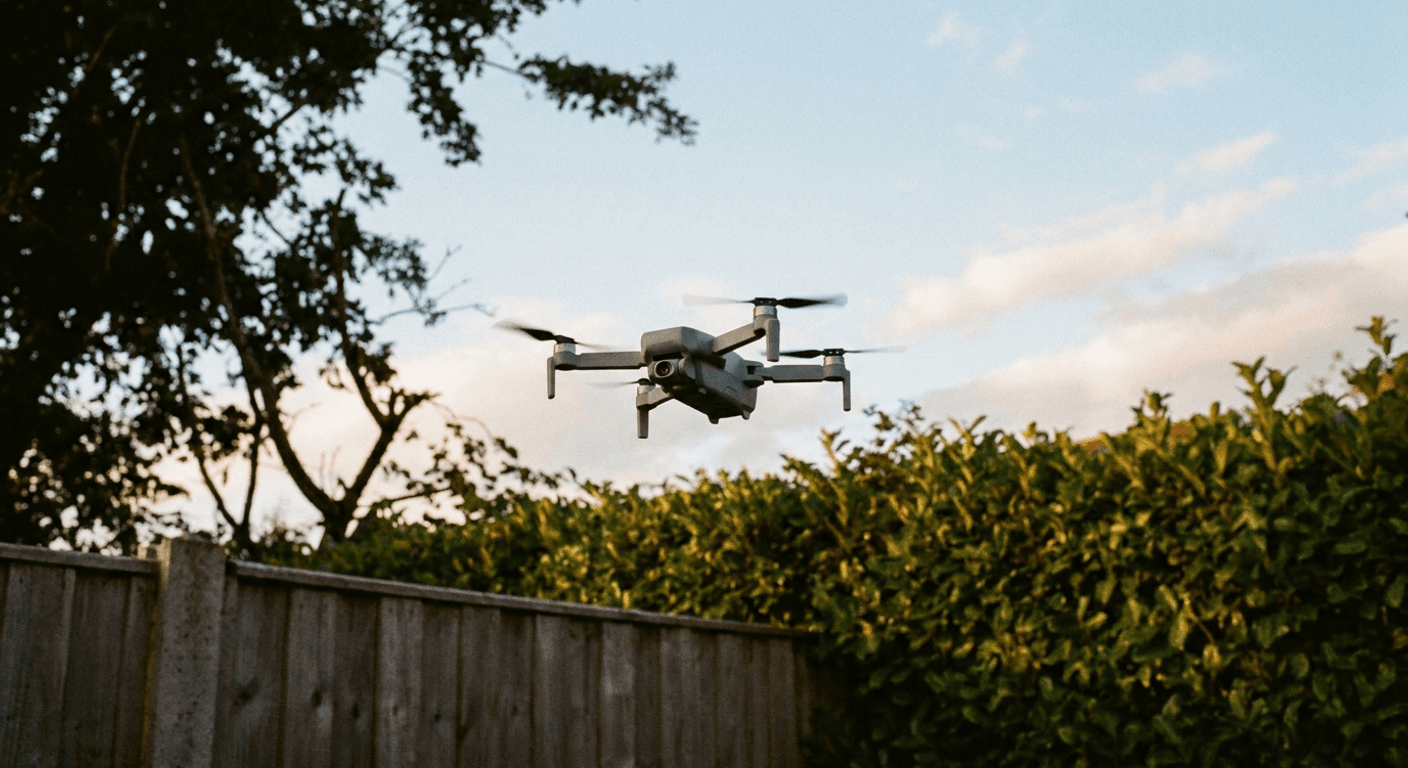
Colorado has no comprehensive civilian drone-privacy statute, so a claim that a drone invaded your privacy typically runs through general trespass, nuisance, and a 1937 airspace-ownership law, alongside a specific ban on using a drone to scout game.
This guide is part of our Drone Laws by State series, which also covers how state law intersects with surveillance camera laws more broadly.
Jurisdiction scope: This article addresses Colorado state law on private drone use, wildlife regulations, interference with emergency responders, and the federal baseline that applies in every state. It does not address a civilian's right to record police, which is covered separately in our guide to recording laws.
Does the FAA or Colorado control where a drone can fly?
The Federal Aviation Administration is the exclusive regulator of the airspace itself. Under 14 CFR Part 107, a commercial or non-recreational drone operator must hold a Remote Pilot Certificate, register the aircraft, fly at or below 400 feet, and stay within visual line of sight; recreational flyers register and follow a similar, separate framework under 49 U.S.C. Section 44809. Colorado cities and counties cannot add their own altitude ceilings, flight-path rules, or pilot-licensing requirements on top of that federal scheme. What Colorado law does reach is conduct: what a person does with a drone once it is airborne over Colorado, including whether they use it to watch a neighbor, interfere with emergency responders, or scout game before a hunt.

Colorado has no dedicated civilian drone-privacy statute
Unlike states such as California, Texas, or Florida, Colorado has not enacted a statute written specifically around drone surveillance of private citizens by other private citizens. That leaves two general-purpose tools. The first is Colo. Rev. Stat. Section 41-1-107, part of the 1937 Aeronautics Act, which declares that "the ownership of space above the lands and waters of this state is declared to be vested in the several owners of the surface beneath, subject to the right of flight of aircraft," according to the Colorado Revised Statutes, Title 41, published by the Colorado General Assembly's Office of Legislative Legal Services. Colorado attorneys have pointed to this provision as a statutory hook a landowner can use in a civil trespass or nuisance claim when a drone is flown low and repeatedly over private property in an intrusive way, though the statute predates drones by decades and does not set a specific altitude floor.
The second tool is Colorado's criminal invasion of privacy statute, Colo. Rev. Stat. Section 18-7-801, which makes it a class 2 misdemeanor to knowingly observe or take a photograph of another person's intimate parts, without consent, under circumstances where that person has a reasonable expectation of privacy. The statute is written around the conduct rather than the device used to record it, so a drone-mounted camera can trigger the same liability as a phone or a hidden camera. It does not reach ordinary outdoor filming, such as recording a front yard visible from a public sidewalk, because the core requirement is a genuine reasonable expectation of privacy in what was captured.
Drones and Colorado emergency responders
Colorado added drones explicitly to its obstruction statute in 2018. House Bill 18-1314, signed into law and effective August 8, 2018, amended Colo. Rev. Stat. Section 18-8-104 so that the term "obstacle," in the existing crime of obstructing a peace officer, firefighter, emergency medical service provider, rescue specialist, or volunteer, expressly includes an unmanned aircraft system, according to the Colorado General Assembly's official bill page. A drone operator who threatens or uses a drone to obstruct, impair, or hinder an officer or responder acting in their official capacity commits a class 2 misdemeanor. The law includes a safe harbor: a drone operator who gets permission from the responding law enforcement agency or coordinating entity, stays in communication with it during the flight, and immediately follows its instructions is not subject to the offense.
Using a drone to scout or hunt wildlife in Colorado
Colorado Parks and Wildlife's hunting regulations directly address drones. Under 2 CCR 406-0, Chapter W-0, Article IV, Regulation 004(C), "it shall be unlawful to use a drone to look for, scout, or detect wildlife as an aid in the hunting or taking of wildlife," according to the Colorado Parks and Wildlife regulations, approved by the Parks and Wildlife Commission on January 10, 2024. The regulation defines a drone broadly as any unmanned or remotely guided contrivance designed for flight, and it applies to pre-hunt scouting, not just live use during the hunt itself; flying a drone one day to locate an elk herd and hunting on foot the next day on that information can still violate the rule.
The regulation itself sets no penalty. That gap is filled by the catch-all in Colo. Rev. Stat. Section 33-6-104(1), which makes a violation of a Parks and Wildlife Commission rule that carries no separate statutory penalty a misdemeanor punishable by a fine of $100, a surcharge under Section 24-33.5-415.6, and an assessment of five license suspension points. Much larger species-based fines are often quoted alongside this drone rule, but they come from a different statute, Colo. Rev. Stat. Section 33-6-109, which punishes the illegal taking or possession of wildlife and reaches a drone user only if an unlawful take actually follows the scouting. Under that schedule an elk carries a flat $1,000 fine, plus a $10,000 additional penalty under Section 33-6-109(3.4)(a)(I) for a bull with at least six points on one antler beam. Only a bighorn sheep approaches the six-figure figures that circulate online: up to $100,000 under Section 33-6-109(3)(b), plus a $25,000 additional penalty under Section 33-6-109(3.4)(a)(V) for a ram with a horn length of at least one-half curl.
The federal shoot-down rule: destroying a drone is a felony
A persistent misconception is that a landowner may legally shoot down a drone hovering over their own property. Federal law says otherwise. The FAA classifies drones as aircraft within the National Airspace System, which means 18 U.S.C. Section 32, the federal Aircraft Sabotage Act, applies to them: willfully damaging, destroying, or disabling a drone is a federal felony carrying up to 20 years in prison, regardless of whose property the drone is over, because the federal government, not the landowner, controls the airspace. The widely publicized 2015 "Kentucky Drone Slayer" case, in which a Hillview, Kentucky, man shot down a neighbor's drone and had state criminal-mischief charges dismissed by a local judge, is often cited as evidence that shooting down a drone is low-risk. It is not. The drone owner's related federal civil suit, Boggs v. Merideth, was dismissed in 2017 for lack of federal jurisdiction without any court ever ruling on whether the shoot-down itself was lawful, and Colorado has not passed a law authorizing a landowner to disable a drone over their own property.
Colorado also had a real-world reminder of how unsettled drone law can feel in practice. Beginning in December 2019, residents across rural northeastern Colorado and neighboring Nebraska reported large drones flying in grid formations at night for weeks, prompting a multi-agency federal and state investigation. The Colorado Department of Public Safety ultimately concluded most sightings had mundane explanations, including planets, commercial aircraft, and hobbyist drones misidentified in the dark, and no new Colorado drone statute followed the episode.
More Colorado Laws
- Colorado Data Privacy Laws
- Colorado GPS Tracking Laws
- Colorado Police Bodycam Laws
- Colorado Recording Laws
- Colorado Smart Glasses Recording Laws
Frequently Asked Questions
Is it illegal for a neighbor to fly a drone over my property in Colorado?
Colorado has no dedicated civilian drone-privacy statute, so there is no automatic violation just because a drone crosses overhead. A property owner may have a civil trespass or nuisance claim under Colo. Rev. Stat. Section 41-1-107, which vests airspace ownership in the surface owner, if the flight is low, repeated, and genuinely intrusive.
Can I sue someone for using a drone to spy on me in Colorado?
If the drone was used to observe or photograph your intimate parts without consent in a place where you had a reasonable expectation of privacy, that conduct can violate Colo. Rev. Stat. Section 18-7-801, Colorado's criminal invasion of privacy statute, which is a class 2 misdemeanor. General nuisance or trespass claims may also apply depending on the facts.
Is it illegal to fly a drone near police or firefighters in Colorado?
Yes, if the drone is used or threatened as an obstacle to obstruct, impair, or hinder a peace officer, firefighter, emergency medical provider, rescue specialist, or volunteer performing official duties. Colo. Rev. Stat. Section 18-8-104, amended by House Bill 18-1314 in 2018, makes this a class 2 misdemeanor, unless the operator is coordinating with the responding agency.
Can I use a drone to scout deer or elk before hunting season in Colorado?
No. A Colorado Parks and Wildlife regulation, 2 CCR 406-0, Chapter W-0, Regulation 004(C), bans using a drone to look for, scout, or detect wildlife as an aid in hunting or taking wildlife, and applies even to scouting done before the actual hunt.
What is the penalty for using a drone to scout wildlife in Colorado?
The Parks and Wildlife regulation sets no penalty itself, so Colo. Rev. Stat. Section 33-6-104(1) supplies it: a violation of a commission rule with no separate statutory penalty is a misdemeanor punishable by a $100 fine, a surcharge under Section 24-33.5-415.6, and five license suspension points. The much larger species-based fines people associate with this rule come from Colo. Rev. Stat. Section 33-6-109 and apply only if an illegal take actually follows.
Can I legally shoot down a drone flying over my property in Colorado?
No. Destroying, damaging, or disabling any drone is a federal felony under 18 U.S.C. Section 32, the Aircraft Sabotage Act, because the FAA controls the airspace regardless of who owns the land beneath it. Colorado has not passed any law authorizing a landowner to disable a drone.
Does Colorado require police to get a warrant before flying a drone over my property?
Colorado has no standalone statute requiring a warrant for every police drone flight. Disputes generally fall back on ordinary Fourth Amendment analysis, the same framework used nationally for aerial surveillance questions.
What happened with the mysterious drones seen over Colorado in 2019 and 2020?
Beginning in December 2019, residents in northeastern Colorado and western Nebraska reported unexplained drones flying in formation at night. A multi-agency investigation and the Colorado Department of Public Safety concluded most sightings had ordinary explanations, and no new Colorado drone statute was enacted as a result.
Updates
Corrected the penalty for using a drone to scout wildlife: the Parks and Wildlife regulation sets no penalty of its own, so a violation carries a $100 fine, a surcharge, and five license suspension points under Colo. Rev. Stat. Section 33-6-104(1), while the larger species-based fines apply only to an illegal take under Section 33-6-109, and the six-figure ceiling reaches only bighorn sheep rather than elk.
Independently fact-checked against the cited primary sources; governing law re-checked for recent changes
Governing law re-checked for recent changes
Reviewed and approved by an editor
The Law Behind This Article
This article rests on the statutory provisions below, held in our own legal record and retrieved from the official source. Tap a section to read the operative text.
Colorado Revised Statutes, Title 18: Criminal Code
§ 18-7-801Criminal invasion of privacyIn forcecited in 13 of our articles
(1) A person who knowingly observes or takes a photograph of another person's intimate parts, as defined in section 18-3-401 (2), without that person's consent, in a situation where the person observed or photographed has a reasonable expectation of privacy, commits criminal invasion of privacy. (2) Criminal invasion of privacy is a class 2 misdemeanor. (3) For the purposes of this section, photograph includes a photograph, motion picture, videotape, live feed, print, negative, slide, or other mechanically, electronically, digitally, or chemically reproduced visual material.
Official text (excerpt) · last checked 2026-08-31 · Read the full text in our law library · Verify at olls.info
Also relied on in: Colorado Landlord-Tenant Recording Laws: Cameras, Privacy, and Rights, Colorado School Recording Laws: Classrooms, IEP Meetings, and Surveillance, Colorado Security Camera Laws: Residential, Commercial, and Privacy Rules
§ 18-8-104Obstructing a peace officer, firefighter, emergency medical service provider, rescue specialist, or volunteerIn forcecited in 2 of our articles
(1) (a) A person commits obstructing a peace officer, firefighter, emergency medical service provider, rescue specialist, or volunteer when, by using or threatening to use violence, force, physical interference, or an obstacle, such person knowingly obstructs, impairs, or hinders the enforcement of the penal law or the preservation of the peace by a peace officer, acting under color of his or her official authority; knowingly obstructs, impairs, or hinders the prevention, control, or abatement of fire by a firefighter, acting under color of his or her official authority; knowingly obstructs, impairs, or hinders the administration of medical treatment or emergency assistance by an emergency medical service provider or rescue specialist, acting under color of his or her official authority; or knowingly obstructs, impairs, or hinders the administration of emergency care or emergency assistance by a volunteer, acting in good faith to render such care or assistance without compensation at the place of an emergency or accident.
Official text (excerpt) · last checked 2026-07-29 · Read the full text in our law library · Verify at olls.info
Cited in 14 court opinions in our collectionLatest citing opinion in our collection: 2026
Opinions citing this section in our collection:
- Holdridge v. Blank (District Court, D. Colorado 2017, 255 F. Supp. 3d 1088)“…er, acting under color of his or her official authority[.]” C.R.S. § 18-8-104(l)(a). By all indications, after plai…”
- Kaufman v. Higgs (Court of Appeals for the Tenth Circuit 2012, 697 F.3d 1297)“…nder color of his or her official authority . . . . Colo. Rev. Stat. § 18-8-104(1)(a). 3 The Defendants concede that Mr…”
- Navratil v. Parker (District Court, D. Colorado 1989, 726 F. Supp. 800)“…rians. Navratil was then charged with a violation of Colo.Rev.Stat. § 18-8-104, which provides: “a person commits obst…”
Identified automatically from the court opinions citing this section — not a ranking of which case controls.
Also relied on in: Colorado Laws on Recording in Public: Rights, Limits, and Exceptions
Colorado Revised Statutes, Title 41: Aeronautics: Aircraft and Airports
§ 41-1-107Ownership of spaceIn force
The ownership of space above the lands and waters of this state is declared to be vested in the several owners of the surface beneath, subject to the right of flight of aircraft.
Official text (excerpt) · last checked 2026-07-29 · Read the full text in our law library · Verify at olls.info
United States Code Title 18
§ 32Destruction of aircraft or aircraft facilitiesIn forcecited in 51 of our articles
Whoever willfully— sets fire to, damages, destroys, disables, or wrecks any aircraft in the special aircraft jurisdiction of the United States or any civil aircraft used, operated, or employed in interstate, overseas, or foreign air commerce; places or causes to be placed a destructive device or substance in, upon, or in proximity to, or otherwise makes or causes to be made unworkable or unusable or hazardous to work or use, any such aircraft, or any part or other materials used or intended to be used in connection with the operation of such aircraft, if such placing or causing to be placed or such making or causing to be made is likely to endanger the safety of any such aircraft; sets fire to, damages, destroys, or disables any air navigation facility, or interferes by force or violence with the operation of such facility, if such fire, damaging, destroying, disabling, or interfering is likely to endanger the safety of any such aircraft in flight; with the intent to damage, destroy, or disable any such aircraft, sets fire to, damages, destroys, or disables or places a destructive device or substance in, upon, or in proximity to, any appliance or structure, ramp, landing area,…
Official text (excerpt) · last checked 2026-07-28 · Read the full text in our law library · Verify at uscode.house.gov
Cited in 168 court opinions in our collectionLatest citing opinion in our collection: 2026
In the courts (editorial summary, independently checked):United States v. Yousef (2003) applied 18 U.S.C. 32 to an overseas airline bombing plot, holding Section 32(a) reaches conduct abroad because US-flag aircraft in flight are within the special aircraft jurisdiction, and that a defendant brought here involuntarily is still found in the United States under Section 32(b).
Opinions citing this section in our collection:
- Perez v. United States (Supreme Court of the United States 1971, 402 U.S. 146)“…commerce, as, for example, the destruction of an aircraft ( 18 U. S. C. § 32 ), or persons or things in commerce, as…”
- Stanford v. Kentucky (Supreme Court of the United States 1989, 492 U.S. 361)“…r by persons subject to Uniform Code of Military Justice); 18 U. S. C. §§ 32 , 33, and 34 (1982 ed. and Supp. V) (de…”
- United States v. Yousef (Court of Appeals for the Second Circuit 2003, 327 F.3d 56)✓Yousef bombed a Philippine airliner and plotted to bomb twelve US flag airliners on Asian routes; the court held Section 32(a) reaches attacks on US flag aircraft worldwide, and that Yousef, brought here involuntarily, was found in the United States under Section 32(b).
Identified automatically from the court opinions citing this section — not a ranking of which case controls.
Also relied on in: Indiana Drone Laws (2026): Police Warrants, Voyeurism, Hunting, Iowa Drone Laws: Homestead, Farmstead & Warrant Rules, Kansas Drone Laws: Stalking Act & Privacy Rules Explained
Search our full record of US law — 2.1 million sections, every state + federal →
Sources and References
- Colo. Rev. Stat. Section 41-1-107, Ownership of space, 1937 Aeronautics Act, Colorado Revised Statutes Title 41(content.leg.colorado.gov).gov
- Colo. Rev. Stat. Section 18-7-801, criminal invasion of privacy(colorado.public.law)
- Colorado General Assembly, House Bill 18-1314, Drone Interference With Public Safety Operations, amending Colo. Rev. Stat. Section 18-8-104, signed June 6, 2018(leg.colorado.gov).gov
- Colorado Parks and Wildlife, 2 CCR 406-0, Chapter W-0, Article IV, Regulation 004(C), ban on using a drone to aid in taking wildlife, approved January 10, 2024(cpw.state.co.us).gov
- 18 U.S.C. Section 32, Aircraft Sabotage Act, federal prohibition on destroying or damaging an aircraft including drones(law.cornell.edu)
- 9NEWS, coverage and explainer on the 2019-2020 mystery drone sightings over northeastern Colorado(9news.com)
- Colo. Rev. Stat. Section 33-6-104(1) (penalty for violating a Parks and Wildlife Commission rule: $100 fine, Section 24-33.5-415.6 surcharge, five license suspension points) and Section 33-6-109 (illegal take penalties by species, including the 33-6-109(3.4)(a) additional penalties), Colorado Revised Statutes Title 33, Office of Legislative Legal Services(olls.info)