
Arizona
Arizona Drone Laws (2026): Privacy, Critical Facilities & Warrants
Independently fact-checked against primary sources (last audited August 17, 2026). · Reviewed by the RecordingLaw editorial team. · Law checked current as of August 17, 2026. · 6 primary sources cited on this page. How we verify our legal content

Arizona has no civilian drone-privacy statute after Governor Katie Hobbs vetoed one in 2023, but the state does criminalize using a drone to photograph or loiter over or near a defined critical facility, preempts nearly all local drone ordinances, and now shields public entities and peace officers from liability for property damage when an officer disables a drone within 15 miles of the international border.
Information last verified on 2026-07-09. This article has not yet been reviewed by a licensed lawyer.
Scope: This page covers Arizona law on civilian and law-enforcement drone use, the critical-facility and local-preemption statute, and the federal shoot-down law. It does not cover FAA flight-operation rules. For a related surveillance topic, see Arizona Surveillance Camera Laws.
Does the FAA or Arizona control where a drone can fly?
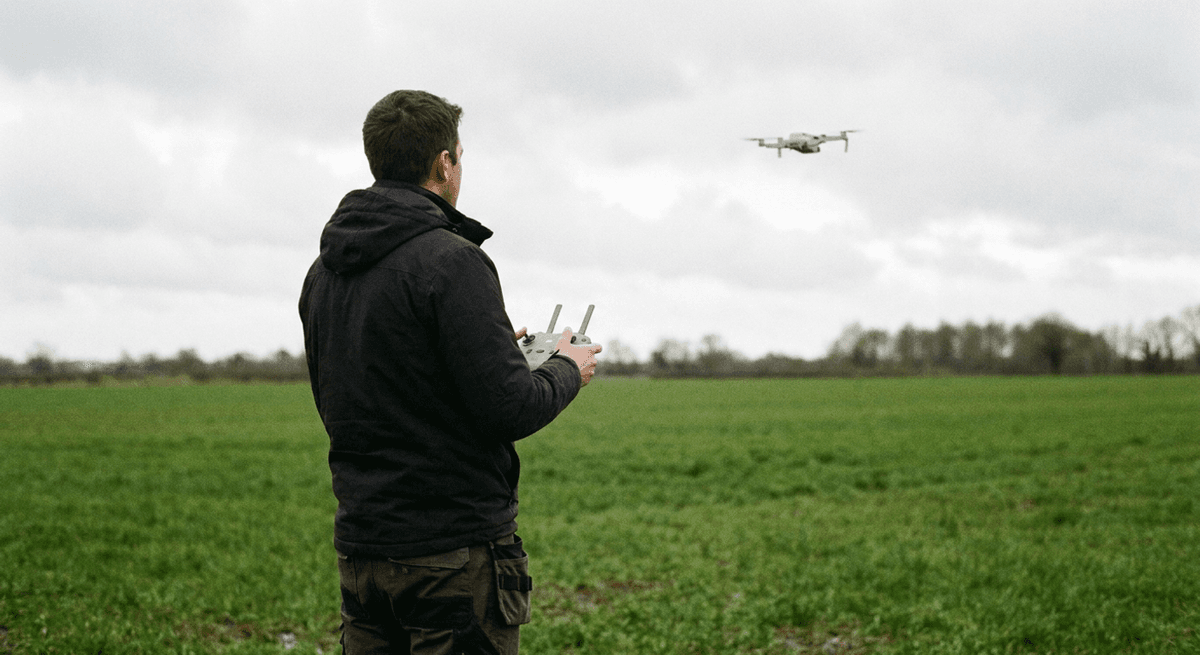
The Federal Aviation Administration controls the navigable airspace, which for drones extends down to the ground, and Arizona cannot override that authority no matter how a local ordinance is worded. Anyone flying a drone in Arizona must register it with the FAA, keep it at or below 400 feet, and stay within visual line of sight unless a waiver applies; recreational flyers take the FAA's free TRUST test, while commercial and government operators need a Remote Pilot Certificate under 14 CFR Part 107. None of that decides whether a neighbor can legally point a camera drone at your backyard, or whether flying near a power plant is a felony. Those are Arizona-law questions, and the Legislature's own statute, A.R.S. Section 13-3729, makes the split explicit: the state occupies drone regulation almost entirely, leaving cities and counties little room to add their own rules.
Does Arizona have a drone privacy law?
Not currently, though Arizona came close. Senate Bill 1277, passed by both chambers in 2023, would have made it unlawful to use a drone to intentionally photograph, record, or otherwise observe another person in a private place where they have a reasonable expectation of privacy. Governor Katie Hobbs vetoed it, writing that it would restrict the work of broadcasters, newspapers, telecommunication providers, and insurance providers, and that current law already protected Arizonans from the privacy violations it targeted. No replacement civilian privacy bill had been enacted as of this writing.
Without a dedicated statute, civilian drone spying is analyzed under general law. A.R.S. Section 13-1424 (voyeurism) makes it a Class 5 felony to knowingly invade another person's privacy, without that person's knowledge and for the purpose of sexual stimulation, where the person reasonably expects not to be photographed, recorded, or viewed. The statute's reach is wider than nudity alone. Subsection C covers a person in a state of undress or partial dress, engaged in sexual intercourse or sexual contact, urinating or defecating, or recorded in a manner that directly or indirectly captures the person's genitalia, buttock or female breast, whether clothed or unclothed, that is not otherwise visible to the public. That last clause matters for drone facts, because it can reach footage of a clothed person in a fenced backyard that no passerby could see. What the statute still does not reach is a drone that simply records a backyard gathering, because the sexual-stimulation purpose is an element the state has to prove.
That gap became visible in 2025, when a northeast Phoenix neighborhood reported a drone repeatedly "nosediving" toward children over several weeks. A Phoenix police officer met with residents to explain the limited options: report the operator to the FAA if identified, since the flight itself carried no automatic penalty and the operator was never caught.
Does Arizona police need a warrant to fly a drone over my property?
Arizona has no statute specifically requiring a search warrant before a law enforcement agency uses a drone, unlike Nevada, Oregon, or Minnesota. Absent a state-specific statute, the ordinary Fourth Amendment standard applies: police generally need a warrant to use a drone to gather evidence from a constitutionally protected area, such as a home's curtilage, unless a recognized exception like consent, exigent circumstances, or plain view applies. A common misconception traces to an unrelated statute, A.R.S. Section 13-3007, sometimes mislabeled online as a drone-warrant law; it actually sits in Arizona's eavesdropping chapter and addresses exclusion of improperly obtained electronic-communication records, not drone surveillance. Treat any claim that Arizona has a stand-alone drone warrant statute with caution until the Legislature actually passes one.
How does general trespass law apply to a drone in Arizona?
Arizona's trespass statutes were not written for drones, but one provision comes closer than most. A.R.S. Section 13-1504(A)(3) makes it criminal trespass in the first degree, a class 1 misdemeanor, to enter a residential yard and, without lawful authority, look into the residential structure on it in reckless disregard of the inhabitant's right of privacy. That language assumes the person looking has entered the yard on the ground, so whether a drone hovering above it satisfies the entering element is untested in Arizona's appellate courts. A separate provision, Section 13-1504(A)(6), makes entering a critical public service facility a class 5 felony, distinct from the drone-specific statute below. A homeowner facing a persistent nuisance drone is more likely to have a workable claim through civil nuisance or intrusion upon seclusion than through a criminal trespass charge.
What is Arizona's critical-infrastructure drone law?
A.R.S. Section 13-3729 is the center of Arizona's drone law, and it does two different things. Subsection B makes it a class 6 felony, a class 5 felony on a second or subsequent violation, to operate a drone to intentionally photograph or loiter over or near a critical facility in furtherance of any criminal offense. The words "or near" matter: the offense is not limited to overflight of the facility itself. The statute defines critical facility broadly: refineries and chemical storage facilities, water and wastewater treatment systems and dams, electric generation facilities and substations, high-voltage transmission lines, communication towers, courts, jails, military installations, and hospitals with air ambulance service. Subsection A separately makes it a class 1 misdemeanor to operate a drone in a way prohibited by federal aviation law, or that interferes with law enforcement, firefighting, or emergency-services operations.
Two exemptions take the whole section off the table. Under subsection D.1, Section 13-3729 does not apply to a person or entity that is authorized or allowed by the FAA to operate an unmanned aircraft system, so long as the operation complies with that authorization or with FAA rules, which covers a Part 107 remote pilot flying within the terms of their certificate. Under subsection D.4, it does not apply to a first responder acting in an official capacity or to an emergency worker engaged in authorized emergency management activities.
The same statute preempts nearly all local drone regulation. Since it took effect on August 6, 2016 (enacted as Senate Bill 1449), a city, town, or county may not enact or enforce any ordinance relating to drone ownership or operation, and any that predate or postdate that law are void. Two narrow allowances survive. A locality may adopt rules for a public drone it owns itself, and it may regulate the takeoff or landing of a model aircraft in a park or preserve it owns, but only where there are other parks or preserves in the jurisdiction available for model aircraft operation, or where the jurisdiction has only one park or preserve. That carve-out is written for model aircraft and does not give a city general authority over where drones may launch.
A 2025 law adds a wrinkle specific to Arizona's border with Mexico. House Bill 2733, codified at A.R.S. Section 12-820.10, provides that a public entity or public employee is not liable to a drone operator for any injury to personal property caused by a peace officer intercepting, capturing, disabling, shooting, destroying, or otherwise rendering inoperative a drone within fifteen miles of the state's international border, if the officer had reasonable suspicion the drone was being used to commit a violation of Title 13, chapter 23 (organized crime, fraud, and terrorism), chapter 34 (drug offenses), or chapter 34.1 (imitation substance or drug offenses). Read the section precisely, because its wording is narrower than the headlines it generated. It is a liability shield, not a grant of authority: no Arizona statute affirmatively authorizes an officer to damage or destroy a drone, and Section 12-820.10 says nothing about when doing so is lawful. It also leaves the federal offense described below untouched, since state law cannot immunize anyone against 18 U.S.C. Section 32, and it protects public entities and employees only, never a private citizen.
Is it legal to shoot down a drone over my property in Arizona?
No, for a private citizen. Federal law, 18 U.S.C. Section 32, makes it a felony to willfully damage, destroy, or disable an aircraft, and the FAA has classified drones as aircraft within the National Airspace System since 2012. Shooting down a drone is a federal crime regardless of where it is flying, including directly over the shooter's own property, because the FAA, not the landowner, controls the airspace. A conviction carries up to 20 years in federal prison, a fine of up to $250,000, and permanent loss of firearm rights. Arizona's border-area immunity statute, Section 12-820.10, shields public entities and employees from a property-damage claim in narrowly defined circumstances; it does not extend to a homeowner who shoots at a drone they merely suspect of spying on them, and it does not affect federal criminal exposure for anyone. A certified drone pilot made that same point to local reporters after the Phoenix drone-harassment reports.
Publicized cases where a shooter faced only reduced or dismissed state charges are not evidence that this conduct is safe. A Kentucky man's 2015 shoot-down of a neighbor's drone led a local judge to dismiss state criminal-mischief charges, but the drone owner's federal lawsuit, Boggs v. Merideth, was dismissed in 2017 for lack of federal jurisdiction, without any court deciding whether the shoot-down itself was lawful. That federal exposure applies to an Arizona landowner the same as anywhere else.
Disclaimer
This article provides general legal information about Arizona drone law as verified on 2026-07-09. It does not constitute legal advice and does not create an attorney-client relationship. Readers with a specific drone incident, or a question about a pending Arizona bill, should consult a lawyer licensed in Arizona.
Related articles
Last updated: 2026-07-09. Statutes cited reflect their in-force or enacted version as of 2026-07-09.
More Arizona Laws
- Arizona Data Privacy Laws
- Arizona GPS Tracking Laws
- Arizona Police Bodycam Laws
- Arizona Recording Laws
- Arizona Smart Glasses Recording Laws
Frequently Asked Questions
Is it illegal to fly a drone over my neighbor's house in Arizona?
Not by itself. Arizona has no drone-specific privacy law, and general trespass statutes require entering land, not merely flying over it. A drone that repeatedly loiters low over a property may support a civil nuisance or intrusion claim.
Does Arizona require a warrant for police drone surveillance?
No. Arizona has no statute setting a specific warrant requirement for law enforcement drone use, unlike Nevada or Oregon. Ordinary Fourth Amendment protections apply, subject to standard exceptions like consent or exigent circumstances.
What happened to Arizona's drone privacy bill?
Senate Bill 1277 passed the Legislature in 2023 and would have banned using a drone to photograph or observe someone in a private place with a reasonable expectation of privacy. Governor Katie Hobbs vetoed it, saying existing law already addressed the targeted conduct.
Can I fly a drone near a power plant or water treatment facility in Arizona?
Not in furtherance of a crime. A.R.S. Section 13-3729(B) makes it a class 6 felony, a class 5 felony for repeat violations, to use a drone to intentionally photograph or loiter over or near a defined critical facility in furtherance of any criminal offense. The section does not apply to a person or entity operating under an FAA authorization in compliance with it.
Can my city or county pass its own drone ordinance in Arizona?
Almost never. A.R.S. Section 13-3729 preempts nearly all local drone regulation statewide, void since August 6, 2016. A locality may set rules for a public drone it owns, and may regulate takeoff and landing of a model aircraft in a park or preserve it owns, but only if other parks or preserves in the jurisdiction are available for model aircraft or the jurisdiction has only one.
Can Arizona police disable a drone near the border?
Arizona law does not authorize it, but it does remove one consequence. A.R.S. Section 12-820.10, added by House Bill 2733 in 2025, provides that a public entity or employee is not liable to a drone operator for property damage when a peace officer renders a drone inoperative within 15 miles of the international border on reasonable suspicion it was being used to violate Title 13, chapter 23, 34, or 34.1. That is a liability shield rather than a grant of authority, it protects public entities and employees only, and it does not affect federal law.
Is it legal to shoot down a drone flying over my house in Arizona?
No, for a private citizen. Destroying a drone is a federal felony under 18 U.S.C. Section 32 regardless of location, punishable by up to 20 years in federal prison. Arizona's border-area immunity statute shields public entities and employees from a state property-damage claim only, and does not affect federal exposure.
Updates
Corrected the Arizona drone page: removed a nonexistent "House Bill 2755" drone law, reframed the 2025 border provision (A.R.S. 12-820.10, from House Bill 2733) as an immunity shield rather than authority to disable a drone, restored the "over or near" wording and the FAA-authorization exemption in A.R.S. 13-3729, narrowed the local parks carve-out to model aircraft, and expanded the voyeurism statute's actual scope.
Independently fact-checked against the cited primary sources; governing law re-checked for recent changes
Governing law re-checked for recent changes
Reviewed and approved by an editor
The Law Behind This Article
This article rests on the statutory provisions below, held in our own legal record and retrieved from the official source. Tap a section to read the operative text.
Arizona Revised Statutes, Title 13 (Criminal Code), Chapter 37 (MISCELLANEOUS OFFENSES)
§ 13-3729Unlawful operation of model or unmanned aircraft; state preemption; classification; definitionsIn forcecited in 3 of our articles
A. It is unlawful for a person to operate a model aircraft or a civil unmanned aircraft if the operation: 1. Is prohibited by a federal law or regulation that governs aeronautics, including federal aviation administration regulations. 2. Interferes with a law enforcement, firefighter or emergency services operation. B. It is unlawful for a person to operate or use an unmanned aircraft or unmanned aircraft system to intentionally photograph or loiter over or near a critical facility in the furtherance of any criminal offense. C. Except as authorized by law, a city, town or county may not enact or adopt any ordinance, policy or rule that relates to the ownership or operation of an unmanned aircraft or unmanned aircraft system or otherwise engage in the regulation of the ownership or operation of an unmanned aircraft or an unmanned aircraft system. Any ordinance, policy or rule that violates this subsection, whether enacted or adopted by the city, town or county before or after August 6, 2016, is void. D. This section does not: 1.
Official text (excerpt) · last checked 2026-08-31 · Read the full text in our law library · Verify at azleg.gov
Also relied on in: Arizona Video Recording Laws: Rules for Cameras and Filming, Arizona Surveillance Camera Laws (2026 Guide)
Arizona Revised Statutes, Title 13 (Criminal Code), Chapter 14 (SEXUAL OFFENSES)
§ 13-1424Voyeurism; classificationIn forcecited in 8 of our articles
A. It is unlawful to knowingly invade the privacy of another person without the knowledge of the other person for the purpose of sexual stimulation. B. It is unlawful for a person to disclose, display, distribute or publish a photograph, videotape, film or digital recording that is made in violation of subsection A of this section without the consent or knowledge of the person depicted. C. For the purposes of this section, a person's privacy is invaded if both of the following apply: 1. The person has a reasonable expectation that the person will not be photographed, videotaped, filmed, digitally recorded or otherwise viewed or recorded. 2. The person is photographed, videotaped, filmed, digitally recorded or otherwise viewed, with or without a device, either: (a) While the person is in a state of undress or partial dress. (b) While the person is engaged in sexual intercourse or sexual contact. (c) While the person is urinating or defecating. (d) In a manner that directly or indirectly captures or allows the viewing of the person's genitalia, buttock or female breast, whether clothed or unclothed, that is not otherwise visible to the public. D.
Official text (excerpt) · last checked 2026-08-04 · Read the full text in our law library · Verify at azleg.gov
Cited in 15 court opinions in our collectionLatest citing opinion in our collection: 2026
Opinions citing this section in our collection:
- State v. Blazak (Arizona Supreme Court 1977, 114 Ariz. 199)“…timony and not to the admissibility of the evidence. A.R.S. § 13-1424 permits a peace officer to apply to a m…”
- State v. Grijalva (Arizona Supreme Court 1975, 111 Ariz. 476)“…fense sought to suppress certain evidence taken pursuant to ARS § 13-1424, including photographs of the defendant…”
- Long v. Garrett (Court of Appeals of Arizona 1974, 22 Ariz. App. 397)“…tioner's special action challenges the constitutionality of A.R.S. § 13-1424, both on its face and as construed and…”
Identified automatically from the court opinions citing this section — not a ranking of which case controls.
Also relied on in: Arizona Audio Recording Laws: Complete Guide to Consent Rules, Arizona Security Camera Laws: Rules for Homes and Businesses, Arizona Surreptitious Recording & Voyeurism Laws: ARS 13-3019 Penalties (2026)
Arizona Revised Statutes, Title 13 (Criminal Code), Chapter 15 (CRIMINAL TRESPASS AND BURGLARY)
§ 13-1504Criminal trespass in the first degree; classificationIn force
A. A person commits criminal trespass in the first degree by knowingly: 1. Entering or remaining unlawfully in or on a residential structure. 2. Entering or remaining unlawfully in a fenced residential yard. 3. Entering any residential yard and, without lawful authority, looking into the residential structure thereon in reckless disregard of infringing on the inhabitant's right of privacy. 4. Entering unlawfully on real property that is subject to a valid mineral claim or lease with the intent to hold, work, take or explore for minerals on the claim or lease. 5. Entering or remaining unlawfully on the property of another and burning, defacing, mutilating or otherwise desecrating a religious symbol or other religious property of another without the express permission of the owner of the property. 6. Entering or remaining unlawfully in or on a critical public service facility. B.
Official text (excerpt) · last checked 2026-08-04 · Read the full text in our law library · Verify at azleg.gov
Cited in 30 court opinions in our collectionLatest citing opinion in our collection: 2025
Opinions citing this section in our collection:
- State v. Serrano (Court of Appeals of Arizona 1985, 145 Ariz. 498)“…Appellant first contends that our “peeping tom” statute, A.R.S. § 13-1504(A)(2) is unconstitutionally vague. He a…”
- State v. Cox (Court of Appeals of Arizona 1975, 25 Ariz. App. 328)“…952). The legislature of this state has also enacted A.R.S. Sec. 13-1504(B) which reads: “Where several a…”
- State v. Mitchell (Court of Appeals of Arizona 1983, 138 Ariz. 478)“…lesser-included offense instruction should have been under A.R.S. § 13-1504(A)(2). The statutes at issue are…”
Identified automatically from the court opinions citing this section — not a ranking of which case controls.
United States Code Title 18
§ 32Destruction of aircraft or aircraft facilitiesIn forcecited in 51 of our articles
Whoever willfully— sets fire to, damages, destroys, disables, or wrecks any aircraft in the special aircraft jurisdiction of the United States or any civil aircraft used, operated, or employed in interstate, overseas, or foreign air commerce; places or causes to be placed a destructive device or substance in, upon, or in proximity to, or otherwise makes or causes to be made unworkable or unusable or hazardous to work or use, any such aircraft, or any part or other materials used or intended to be used in connection with the operation of such aircraft, if such placing or causing to be placed or such making or causing to be made is likely to endanger the safety of any such aircraft; sets fire to, damages, destroys, or disables any air navigation facility, or interferes by force or violence with the operation of such facility, if such fire, damaging, destroying, disabling, or interfering is likely to endanger the safety of any such aircraft in flight; with the intent to damage, destroy, or disable any such aircraft, sets fire to, damages, destroys, or disables or places a destructive device or substance in, upon, or in proximity to, any appliance or structure, ramp, landing area,…
Official text (excerpt) · last checked 2026-07-28 · Read the full text in our law library · Verify at uscode.house.gov
Cited in 168 court opinions in our collectionLatest citing opinion in our collection: 2026
In the courts (editorial summary, independently checked):United States v. Yousef (2003) applied 18 U.S.C. 32 to an overseas airline bombing plot, holding Section 32(a) reaches conduct abroad because US-flag aircraft in flight are within the special aircraft jurisdiction, and that a defendant brought here involuntarily is still found in the United States under Section 32(b).
Opinions citing this section in our collection:
- Perez v. United States (Supreme Court of the United States 1971, 402 U.S. 146)“…commerce, as, for example, the destruction of an aircraft ( 18 U. S. C. § 32 ), or persons or things in commerce, as…”
- Stanford v. Kentucky (Supreme Court of the United States 1989, 492 U.S. 361)“…r by persons subject to Uniform Code of Military Justice); 18 U. S. C. §§ 32 , 33, and 34 (1982 ed. and Supp. V) (de…”
- United States v. Yousef (Court of Appeals for the Second Circuit 2003, 327 F.3d 56)✓Yousef bombed a Philippine airliner and plotted to bomb twelve US flag airliners on Asian routes; the court held Section 32(a) reaches attacks on US flag aircraft worldwide, and that Yousef, brought here involuntarily, was found in the United States under Section 32(b).
Identified automatically from the court opinions citing this section — not a ranking of which case controls.
Also relied on in: Indiana Drone Laws (2026): Police Warrants, Voyeurism, Hunting, Iowa Drone Laws: Homestead, Farmstead & Warrant Rules, Kansas Drone Laws: Stalking Act & Privacy Rules Explained
Arizona Revised Statutes, Title 12 (Courts and Civil Proceedings), Chapter 7 (SPECIAL ACTIONS AND PROCEEDINGS IN WHICH THE STATE IS A PARTY), Article 2 (Actions Against Public Entities or Public Employees)
§ 12-820.10Unmanned aircraft operator; immunity; definitionsIn force
A. A public entity or public employee is not liable to an unmanned aircraft operator for any injury to personal property caused by a peace officer intercepting, capturing, disabling, shooting, destroying or otherwise rendering inoperative an unmanned aircraft within fifteen miles of this state's international border if the peace officer had reasonable suspicion that the unmanned aircraft was being used to commit a violation of title 13, chapter 23, 34 or 34.1. B. For the purposes of this section: 1. "Unmanned aircraft" has the same meaning prescribed in section 13-3729. 2. "Unmanned aircraft operator": (a) Means a person who operates an unmanned aircraft. (b) Includes the owner of an unmanned aircraft and any person or group of persons acting in concert with the person who operates the unmanned aircraft.
Official text (excerpt) · last checked 2026-08-04 · Read the full text in our law library · Verify at azleg.gov
Search our full record of US law — 2.1 million sections, every state + federal →
Sources and References
- A.R.S. Section 13-3729 (Unlawful Operation of Model or Unmanned Aircraft; State Preemption; Classification; Definitions)(azleg.gov).gov
- A.R.S. Section 13-1424 (Voyeurism; Classification)(azleg.gov).gov
- A.R.S. Section 13-1504 (Criminal Trespass in the First Degree; Classification)(azleg.gov).gov
- Arizona Senate Bill 1277 (2023), unmanned aircraft photography and loitering bill, Senate Fact Sheet noting Governor's veto(azleg.gov).gov
- Arizona House Bill 2733 (2025), law enforcement immunity for disabling drones near the international border, House Bill Summary(azleg.gov).gov
- 18 U.S.C. Section 32 (Destruction of Aircraft or Aircraft Facilities)(law.cornell.edu)
- FAA, "State and Local Regulation of Unmanned Aircraft Systems (UAS)" Fact Sheet (July 2023)(faa.gov).gov
- AZFamily, "Phoenix neighborhood claims to be harassed by drone" (Sept. 4, 2025)(azfamily.com)
- A.R.S. Section 12-820.10 (Unmanned Aircraft Operator; Immunity; Definitions)(azleg.gov)
- Arizona Revised Statutes Title 13 chapter index (Chapter 23 Organized Crime, Fraud and Terrorism; Chapter 34 Drug Offenses; Chapter 34.1 Imitation Substance or Drug Offenses)(azleg.gov)