
Wisconsin
¿Cuánto Dura una Cadena Perpetua en Wisconsin? (Guía 2026)
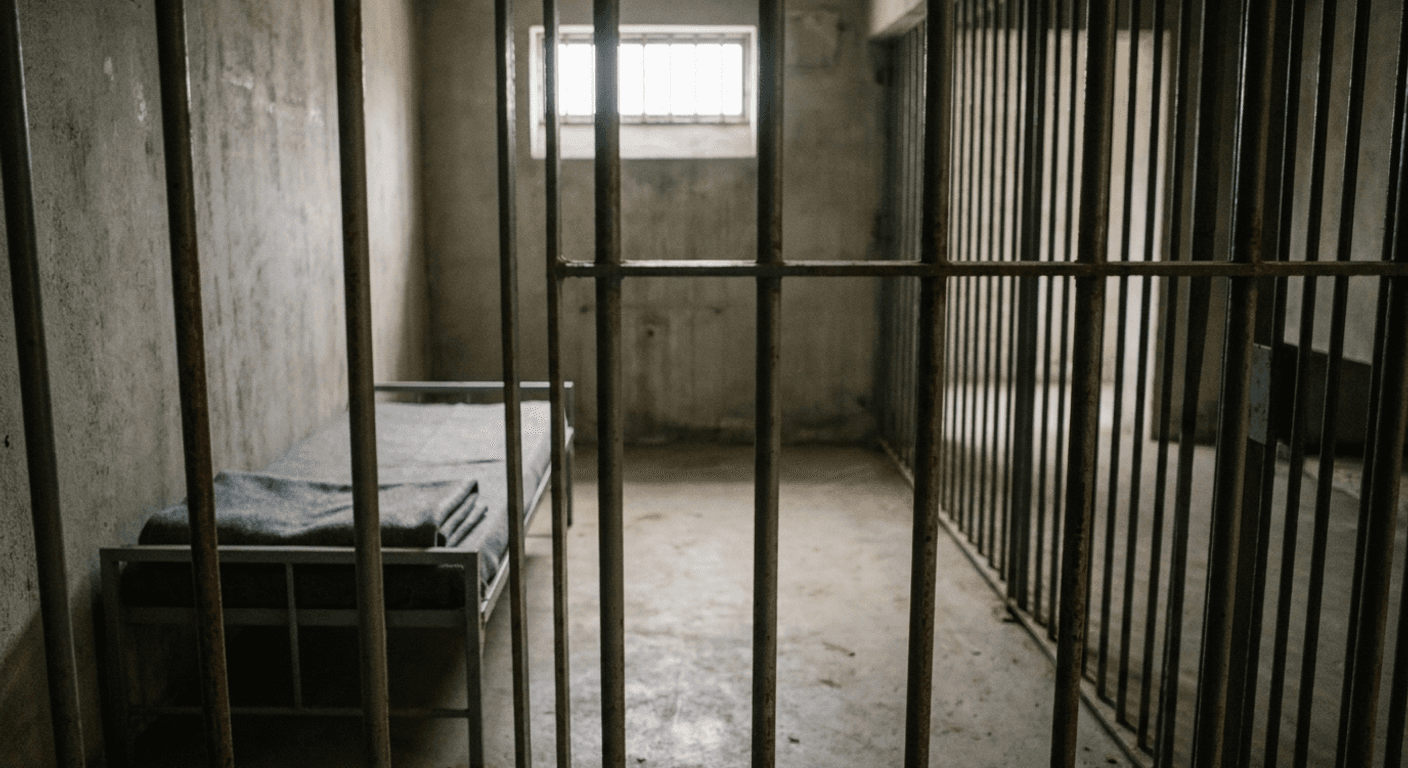
En Wisconsin, el homicidio intencional en primer grado bajo Wis. Stat. § 940.01 conlleva una sentencia obligatoria de cadena perpetua. El juez de sentencia luego fija una fecha de elegibilidad para supervisión extendida, o impone cadena perpetua sin posibilidad de supervisión extendida. No existe una fecha de liberación fija; el juez determina cuándo, si acaso, es posible la liberación. Muchas personas se preguntan cuántos años es una cadena perpetua en Wisconsin: a diferencia de otros estados, aquí la respuesta la decide un juez, caso por caso.
Este artículo fue revisado y actualizado por última vez el 17 de marzo de 2026. Todos los estatutos, la jurisprudencia y los datos de sentencia han sido verificados con fuentes gubernamentales actuales de Wisconsin.
En Wisconsin, una cadena perpetua funciona de manera distinta a la de la mayoría de los estados. Cuando un acusado es declarado culpable de homicidio intencional en primer grado, el juez debe sentenciarlo a cadena perpetua. El juez tiene entonces la facultad discrecional de fijar una fecha de elegibilidad para supervisión extendida (el punto más temprano en el que el acusado podría ser considerado para su liberación) o de imponer cadena perpetua sin posibilidad de supervisión extendida, que es la versión de LWOP de Wisconsin.
Wisconsin ocupa un lugar único en la historia de la justicia penal estadounidense. En 1853, el estado se convirtió en uno de los primeros del país en abolir la pena de muerte. La última ejecución en Wisconsin tuvo lugar el 21 de agosto de 1851, lo que significa que han pasado más de 170 años desde que el estado ejecutó a alguien.
Estatutos de Homicidio en Wisconsin
El enfoque de Wisconsin para clasificar el homicidio es particular. En lugar de usar las etiquetas tradicionales de "asesinato en primer grado" y "asesinato en segundo grado" comunes en la mayoría de los estados, Wisconsin utiliza categorías descriptivas específicas.

Homicidio Intencional en Primer Grado (Wis. Stat. § 940.01): Causar la muerte de otro ser humano con intención de matar. Este es el cargo de homicidio más grave en Wisconsin y conlleva una sentencia obligatoria de cadena perpetua. El juez fija una fecha de elegibilidad para supervisión extendida o impone cadena perpetua sin supervisión extendida.
Homicidio Imprudente en Primer Grado (Wis. Stat. § 940.02): Causar imprudentemente la muerte de otra persona en circunstancias que demuestran un desprecio absoluto por la vida humana. Es un delito grave Clase B que conlleva un máximo de 60 años de prisión.
Homicidio Intencional en Segundo Grado (Wis. Stat. § 940.05): Causar intencionalmente la muerte de otra persona con circunstancias atenuantes, como provocación adecuada, uso innecesario de fuerza defensiva o prevención de un delito grave. Es un delito grave Clase B que conlleva un máximo de 60 años de prisión.
Homicidio Imprudente en Segundo Grado (Wis. Stat. § 940.06): Causar imprudentemente la muerte de otra persona. Es un delito grave Clase D que conlleva un máximo de 25 años.
Homicidio por Delito Grave (Wis. Stat. § 940.03): Causar la muerte de otro ser humano mientras se comete o se intenta cometer un delito grave. El homicidio por delito grave es un delito no clasificado: la pena máxima es la pena máxima estatutaria propia del delito grave subyacente, más hasta 15 años adicionales, no una pena fija. Dependiendo del delito subyacente, esa pena puede resultar muy superior o inferior a 60 años.
Por Qué Wisconsin No Usa la Palabra "Asesinato"
El código penal de Wisconsin evita deliberadamente el término "asesinato" (murder) en su lenguaje estatutario. En cambio, la legislatura eligió el término "homicidio" con modificadores específicos (intencional, imprudente, negligente) para describir con mayor precisión el estado mental del infractor. Este enfoque busca promover la claridad en las instrucciones al jurado y en las sentencias.
Sin embargo, en la práctica, el "homicidio intencional en primer grado" es funcionalmente equivalente a lo que otros estados llaman "asesinato en primer grado".
Supervisión Extendida y Elegibilidad para la Liberación
Wisconsin no cuenta con un sistema tradicional de libertad condicional para la mayoría de los delitos graves cometidos después de 1999.
Truth-in-Sentencing (2000): Wisconsin implementó reformas de "sentencia veraz" (truth-in-sentencing) vigentes desde el año 2000, eliminando el antiguo sistema de libertad condicional para los delitos cometidos a partir del 31 de diciembre de 1999. Bajo el nuevo sistema, las sentencias se dividen en una porción de confinamiento y una porción de supervisión extendida. El recluso cumple la totalidad del período de confinamiento antes de volverse elegible para la supervisión extendida.
Cadenas perpetuas, el juez fija la fecha: Para el homicidio intencional en primer grado, el juez impone una cadena perpetua y luego determina la fecha de elegibilidad para supervisión extendida. Conforme al Wis. Stat. § 973.014(1g)(a), para los delitos cometidos a partir del 31 de diciembre de 1999, el juez debe elegir una de tres opciones: la persona es elegible para la liberación a supervisión extendida después de cumplir 20 años; la persona es elegible en una fecha posterior que fije el tribunal (nunca antes de la fecha de los 20 años); o la persona no es elegible para la liberación a supervisión extendida. La opción de los 20 años se aplica por disposición de la propia ley y no requiere que el tribunal fije una fecha. Una sentencia sin elegibilidad es una elección afirmativa que hace el juez, no una opción por defecto.
Cadena perpetua sin supervisión extendida: El juez puede determinar que el infractor nunca debe ser liberado. En este caso, la sentencia es cadena perpetua sin posibilidad de supervisión extendida, el equivalente funcional de LWOP en Wisconsin.
Cuando el juez no tiene opción: El artículo 973.014(2) excluye algunas cadenas perpetuas de la discreción del juez. Una cadena perpetua impuesta a un reincidente persistente conforme al Wis. Stat. § 939.62(2m)(c) debe ser sin posibilidad de libertad condicional ni de supervisión extendida. Una cadena perpetua por tráfico de un menor que involucre al menos 3 víctimas menores de edad conforme al Wis. Stat. § 948.051(1)(b) o (2)(b) debe ser sin posibilidad de supervisión extendida.
Delitos anteriores al 2000: Los reclusos sentenciados antes de la sentencia veraz aún pueden ser elegibles para libertad condicional bajo el sistema anterior. La Comisión de Libertad Condicional de Wisconsin revisa estos casos.
Condiciones de la Supervisión Extendida
Si un recluso finalmente es liberado a supervisión extendida, permanece bajo el control del Departamento de Correcciones de Wisconsin por el resto de su vida. Las condiciones de la supervisión extendida típicamente incluyen:
- Reportarse regularmente ante un agente de supervisión
- Restricciones de viaje, asociación y residencia
- Monitoreo electrónico en algunos casos
- Prohibición de poseer armas
- Pruebas de detección de drogas y alcohol
- Participación en programas de tratamiento
La violación de cualquier condición puede resultar en un regreso a prisión. Para los reclusos con cadena perpetua, la supervisión extendida es verdaderamente un compromiso de por vida.
Casos Destacados de Cadena Perpetua en Wisconsin
Steven Avery: Making a Murderer
El caso de Steven Avery se hizo famoso internacionalmente a través de la serie documental de Netflix Making a Murderer (2015). Avery fue declarado culpable en 2007 del homicidio intencional en primer grado de la fotógrafa Teresa Halbach en el condado de Manitowoc. Fue sentenciado a cadena perpetua sin posibilidad de supervisión extendida.
Avery había cumplido previamente 18 años de prisión por una agresión sexual que no cometió, antes de ser exonerado por evidencia de ADN en 2003. Su posterior condena por homicidio, y las circunstancias que rodearon la investigación, plantearon preguntas profundas sobre el sistema de justicia penal de Wisconsin. Sus apelaciones y mociones posteriores a la condena, lideradas por la abogada Kathleen Zellner, han continuado durante años.
Brendan Dassey: Making a Murderer
Brendan Dassey, sobrino de Steven Avery, tenía 16 años cuando fue declarado culpable de ser parte del homicidio intencional en primer grado, mutilación de un cadáver y agresión sexual en segundo grado en relación con la muerte de Teresa Halbach. Fue sentenciado a cadena perpetua con una fecha de elegibilidad para supervisión extendida en 2048.
El caso de Dassey generó preocupaciones importantes sobre el interrogatorio de sospechosos menores de edad. Su confesión fue obtenida sin la presencia de un padre o un abogado y fue calificada por expertos de la defensa como coaccionada. Un juez federal y la Corte de Apelaciones del Séptimo Circuito (en una decisión dividida) inicialmente concedieron un recurso de hábeas corpus, pero el pleno del Séptimo Circuito revocó esa decisión. La Corte Suprema de Estados Unidos se negó a escuchar el caso en 2018.
Ed Gein
Aunque los crímenes de Ed Gein en Plainfield, Wisconsin, durante la década de 1950, ocurrieron antes de las leyes de sentencia modernas, su caso sigue siendo uno de los más infames en la historia de Wisconsin. Gein fue declarado inocente por razón de demencia y confinado en un hospital psiquiátrico estatal, donde murió en 1984. Sus crímenes inspiraron personajes ficticios como Norman Bates en Psycho y Leatherface en La Masacre de Texas.
Cambios Legislativos Recientes
| Año | Cambio |
|---|---|
| 2023 | Discusiones en curso sobre la reforma de la justicia penal y la modificación de sentencias |
| 2015 | El documental Making a Murderer renueva la atención nacional sobre el sistema de justicia de Wisconsin |
| 2000 | Se implementa la sentencia veraz (Truth-in-Sentencing); se elimina la libertad condicional para nuevos delitos |
| 1853 | Se abolió la pena de muerte, entre los primeros estados de EE. UU. en hacerlo |
| 1851 | Se llevó a cabo la última ejecución (John McCaffary) |
Wisconsin no ha promulgado cambios importantes a su marco de cadena perpetua en los últimos años. El sistema de sentencia veraz implementado en 2000 sigue siendo la estructura vigente para todas las sentencias por delitos graves.
Se han presentado propuestas legislativas periódicas para restablecer la pena de muerte, pero han fracasado sistemáticamente en obtener apoyo suficiente. Las encuestas públicas en Wisconsin generalmente han mostrado oposición a la pena capital, en consonancia con la tradición de más de 170 años de abolición del estado.
Cadenas Perpetuas para Menores de Edad
El enfoque de Wisconsin en cuanto a las sentencias para menores de edad ha evolucionado en respuesta a los mandatos de la Corte Suprema de Estados Unidos y a la creciente comprensión científica del desarrollo adolescente.
Cumplimiento con Miller: Tras Miller v. Alabama (2012), Wisconsin garantiza que los delincuentes menores de edad declarados culpables de homicidio intencional en primer grado no sean sometidos a cadena perpetua obligatoria sin posibilidad de liberación. Bajo Miller, quien dicta la sentencia debe considerar la juventud del menor infractor y sus características asociadas antes de imponer cadena perpetua sin libertad condicional.
Supervisión extendida para menores: Para los delincuentes menores de edad sentenciados a cadena perpetua, el juez debe considerar la edad, la madurez, las circunstancias familiares y el potencial de rehabilitación del infractor al fijar la fecha de elegibilidad para supervisión extendida. El caso de Brendan Dassey ilustra cómo funciona esto: a pesar de una cadena perpetua, su fecha de elegibilidad para supervisión extendida se fijó para 2048, cuando tendría aproximadamente 59 años.
Jurisdicción original de la corte de adultos: Conforme a Wis. Stat. § 938.183(1)(am), los menores de 10 años en adelante acusados de homicidio intencional en primer grado (o su intento) quedan bajo la jurisdicción original de la corte penal de adultos de manera automática, no mediante un traslado discrecional, aunque pueden solicitar un traslado inverso de regreso a la corte juvenil. Una disposición de traslado discrecional distinta y más amplia cubre otros delitos graves a edades mayores.
Corrección juvenil: El Departamento de Correcciones de Wisconsin opera centros de corrección juvenil separados de las prisiones de adultos, aunque los menores juzgados y sentenciados como adultos pueden ser trasladados a instalaciones para adultos.
Contexto Histórico
La historia de la justicia penal de Wisconsin destaca por su rechazo temprano y sostenido de la pena capital.
La ejecución de McCaffary (1851): John McCaffary fue la primera y única persona ejecutada legalmente por el estado de Wisconsin. Fue ahorcado el 21 de agosto de 1851 por ahogar a su esposa. Según los informes, la ejecución fue chapucera: McCaffary no murió de inmediato y se ahorcó lentamente ante una multitud horrorizada. El repudio público ante el espectáculo contribuyó directamente al movimiento abolicionista.
Abolición en 1853: Apenas dos años después de la ejecución de McCaffary, la legislatura de Wisconsin abolió la pena de muerte. Wisconsin fue uno de los primeros estados en abolir la pena capital; Michigan (que la abolió en 1846) actuó antes.
Tradición progresista: La temprana abolición de la pena de muerte en Wisconsin es coherente con su tradición progresista más amplia. El estado fue pionero en compensación laboral, seguro de desempleo y otras reformas sociales a principios del siglo XX.
Sentencias modernas: El cambio de sentencias indeterminadas a determinadas en el año 2000 fue el cambio más significativo al marco de sentencias de Wisconsin en la historia moderna. La eliminación de la libertad condicional y la adopción de la sentencia veraz reflejaron una tendencia nacional hacia sentencias más estructuradas y predecibles.
Población penitenciaria: El Departamento de Correcciones de Wisconsin supervisa aproximadamente 20,000 reclusos. La tasa de encarcelamiento del estado está por debajo del promedio nacional, pero por encima de la de su vecino Minnesota. Las disparidades raciales en la población penitenciaria de Wisconsin han sido una preocupación persistente: el estado tiene una de las proporciones de encarcelamiento de personas negras respecto a personas blancas más altas del país.
Cadena Perpetua en Wisconsin de un Vistazo
| Categoría | Detalles |
|---|---|
| Cadena perpetua con supervisión extendida | Elegible después de 20 años, o en una fecha posterior que fije el juez |
| Cadena perpetua sin supervisión extendida | Disponible para el homicidio intencional en primer grado; obligatoria para reincidentes persistentes y ciertas cadenas perpetuas por tráfico de menores (§ 973.014(2)) |
| Pena de muerte | Abolida en 1853 |
| Última ejecución | 21 de agosto de 1851 (John McCaffary) |
| LWOP para menores | No obligatoria; requiere sentencia individualizada |
| Sistema de libertad condicional | Eliminado para delitos posteriores a 1999 (sentencia veraz) |
| Clasificación de homicidio | No usa "asesinato"; usa "homicidio" con modificadores |
| Estatutos clave | Wis. Stat. §§ 973.014 (elegibilidad de liberación de cadena perpetua), 939.50 (delito grave Clase A = cadena perpetua), 940.01, 940.02, 940.03, 940.05 |
Páginas Relacionadas
- ¿Cuánto Dura una Cadena Perpetua? Guía Estado por Estado
- Pautas de Sentencia por Asesinato para Cada Estado
Preguntas frecuentes
¿Cuánto dura una cadena perpetua en Wisconsin?
Para el homicidio intencional en primer grado, la sentencia es obligatoriamente cadena perpetua en prisión. El juez fija entonces una fecha de elegibilidad para supervisión extendida (el punto más temprano en el que el recluso podría ser considerado para su liberación) o impone cadena perpetua sin posibilidad de supervisión extendida (la versión de LWOP de Wisconsin). Conforme al Wis. Stat. § 973.014(1g)(a), el juez elige entre elegibilidad después de 20 años, elegibilidad en una fecha posterior fijada por el tribunal, o ninguna elegibilidad. Para reincidentes persistentes y ciertas cadenas perpetuas por tráfico de menores, el § 973.014(2) exige una sentencia sin liberación a supervisión extendida.
¿Wisconsin tiene pena de muerte?
No. Wisconsin abolió la pena de muerte en 1853, siendo uno de los primerísimos estados en hacerlo. La última ejecución se llevó a cabo el 21 de agosto de 1851. El estado no ha ejecutado a nadie en más de 170 años, y los esfuerzos periódicos por restablecer la pena capital han fracasado.
¿Por qué Wisconsin no usa la palabra 'asesinato' en su código penal?
El código penal de Wisconsin usa el término 'homicidio' con modificadores específicos ('homicidio intencional en primer grado', 'homicidio imprudente en primer grado', etc.) en lugar de las etiquetas tradicionales de 'asesinato en primer grado' y 'asesinato en segundo grado'. Este enfoque se eligió para describir con mayor precisión el estado mental del infractor y promover la claridad en las instrucciones al jurado.
¿Qué sucedió en el caso de Steven Avery?
Steven Avery fue declarado culpable en 2007 del homicidio intencional en primer grado de Teresa Halbach y sentenciado a cadena perpetua sin posibilidad de supervisión extendida. Su caso ganó atención internacional a través del documental de Netflix Making a Murderer. Avery había cumplido previamente 18 años por una condena injusta antes de ser exonerado por evidencia de ADN.
¿Puede un menor de edad recibir cadena perpetua sin libertad condicional en Wisconsin?
La LWOP obligatoria para menores es inconstitucional según Miller v. Alabama (2012). Bajo Miller, un juez no puede sentenciar a un menor declarado culpable de homicidio a cadena perpetua sin libertad condicional sin antes considerar la juventud del infractor y sus características asociadas, como la inmadurez y la capacidad de cambio. Brendan Dassey, por ejemplo, fue sentenciado a cadena perpetua con una fecha de elegibilidad para supervisión extendida en 2048.
Actualizaciones
Se corrigió la descripción de Miller v. Alabama para reflejar el proceso que la Corte realmente exigió: considerar la juventud del menor y sus características asociadas antes de imponer cadena perpetua sin libertad condicional.
Se corrigió cómo los jueces de Wisconsin fijan la elegibilidad de liberación en cadenas perpetuas bajo el Wis. Stat. § 973.014, se agregaron las cadenas perpetuas que por ley no permiten liberación, y se corrigió un error de cronología sobre la abolición de la pena de muerte.
La ley detrás de este artículo
Este artículo se apoya en las disposiciones legales a continuación, conservadas en nuestro propio registro jurídico y obtenidas de la fuente oficial. Toque una sección para leer el texto vigente.
Wisconsin Statutes, Chapter 973: Sentencing
§ 973.014Sentence of life imprisonment; parole eligibility determination; extended supervision eligibility determination.Vigente
(1) Except as provided in sub. (2), when a court sentences a person to life imprisonment for a crime committed on or after July 1, 1988, but before December 31, 1999, the court shall make a parole eligibility determination regarding the person and choose one of the following options: (a) The person is eligible for parole under s. 304.06 (1). (b) The person is eligible for parole on a date set by the court. Under this paragraph, the court may set any later date than that provided in s. 304.06 (1), but may not set a date that occurs before the earliest possible parole eligibility date as calculated under s. 304.06 (1). (c) The person is not eligible for parole. This paragraph applies only if the court sentences a person for a crime committed on or after August 31, 1995, but before December 31, 1999. (1g) (a) Except as provided in sub. (2), when a court sentences a person to life imprisonment for a crime committed on or after December 31, 1999, the court shall make an extended supervision eligibility date determination regarding the person and choose one of the following options: 1. The person is eligible for release to extended supervision after serving 20 years. 2.
Texto oficial (extracto) · verificado el 2026-09-24 · Lea el texto completo en nuestra biblioteca legal · Verifique en docs.legis.wisconsin.gov
Wisconsin Statutes, Chapter 940: Crimes Against Life And Bodily Security
§ 940.01First-degree intentional homicide.Vigentecitada en 3 de nuestros artículos
(1) Offenses. (a) Except as provided in sub. (2), whoever causes the death of another human being with intent to kill that person or another is guilty of a Class A felony. (b) Except as provided in sub. (2), whoever causes the death of an unborn child with intent to kill that unborn child, kill the woman who is pregnant with that unborn child or kill another is guilty of a Class A felony. (2) Mitigating circumstances. The following are affirmative defenses to prosecution under this section which mitigate the offense to 2nd-degree intentional homicide under s. 940.05: (a) Adequate provocation. Death was caused under the influence of adequate provocation as defined in s. 939.44. (b) Unnecessary defensive force. Death was caused because the actor believed he or she or another was in imminent danger of death or great bodily harm and that the force used was necessary to defend the endangered person, if either belief was unreasonable. (c) Prevention of felony. Death was caused because the actor believed that the force used was necessary in the exercise of the privilege to prevent or terminate the commission of a felony, if that belief was unreasonable. (d) Coercion; necessity.
Texto oficial (extracto) · verificado el 2026-07-29 · Lea el texto completo en nuestra biblioteca legal · Verifique en docs.legis.wisconsin.gov
Citada en 148 resoluciones judiciales de nuestra colecciónResolución más reciente que la cita en nuestra colección: 2026
Resoluciones que citan esta sección en nuestra colección:
- State v. Head (Wisconsin Supreme Court 2002, 255 Wis. 2d 194)“…harged with first-degree intentional homicide, pursuant to Wis. Stat. § 940.01 (1997-1998). [4] She admitted that sh…”
- State v. Lo (Wisconsin Supreme Court 2003, 264 Wis. 2d 1)“…rty. Id. ¶ 64. The statutes at issue in Head are Wis. Stat. §§ 940.01 (2)(b) and 940.05. Wisconsin Stat. § 94…”
- State v. Watkins (Wisconsin Supreme Court 2002, 255 Wis. 2d 265)“…irst-degree intentional homicide, while armed, pursuant to Wis. Stat. §§ 940.01 (1) and 939.63. *278…”
Identificado automáticamente a partir de las opiniones judiciales que citan esta sección; no es un ranking de qué caso prevalece.
§ 940.05Second-degree intentional homicide.Vigentecitada en 3 de nuestros artículos
(1) Whoever causes the death of another human being with intent to kill that person or another is guilty of a Class B felony if: (a) In prosecutions under s. 940.01, the state fails to prove beyond a reasonable doubt that the mitigating circumstances specified in s. 940.01 (2) did not exist as required by s. 940.01 (3); or (b) The state concedes that it is unable to prove beyond a reasonable doubt that the mitigating circumstances specified in s. 940.01 (2) did not exist. By charging under this section, the state so concedes. (2) In prosecutions under sub. (1), it is sufficient to allege and prove that the defendant caused the death of another human being with intent to kill that person or another. (2g) Whoever causes the death of an unborn child with intent to kill that unborn child, kill the woman who is pregnant with that unborn child or kill another is guilty of a Class B felony if: (a) In prosecutions under s. 940.01, the state fails to prove beyond a reasonable doubt that the mitigating circumstances specified in s. 940.01 (2) did not exist as required by s.
Texto oficial (extracto) · verificado el 2026-07-29 · Lea el texto completo en nuestra biblioteca legal · Verifique en docs.legis.wisconsin.gov
Citada en 21 resoluciones judiciales de nuestra colecciónResolución más reciente que la cita en nuestra colección: 2023
Resoluciones que citan esta sección en nuestra colección:
- State v. Head (Wisconsin Supreme Court 2002, 255 Wis. 2d 194)“…public disaster or imminent death to himself or another. Wis. Stat. § 940.05 (1985-86). Manslaughter was a Class C…”
- State v. Watkins (Wisconsin Supreme Court 2002, 255 Wis. 2d 265)“…guilty of second-degree intentional homicide, pursuant to Wis. Stat. § 940.05 . The court stated: [T]he State…”
- State v. Felix (Wisconsin Supreme Court 2012, 339 Wis. 2d 670)“…ormation of second-degree intentional homicide contrary to Wis. Stat. § 940.05 (l)(b). 16 Felix was sentenced to 28 y…”
Identificado automáticamente a partir de las opiniones judiciales que citan esta sección; no es un ranking de qué caso prevalece.
§ 940.02First-degree reckless homicide.Vigentecitada en 2 de nuestros artículos
(1) Whoever recklessly causes the death of another human being under circumstances which show utter disregard for human life is guilty of a Class B felony. (1m) Whoever recklessly causes the death of an unborn child under circumstances that show utter disregard for the life of that unborn child, the woman who is pregnant with that unborn child or another is guilty of a Class B felony. (2) Whoever causes the death of another human being under any of the following circumstances is guilty of a Class B felony: (a) By manufacture, distribution or delivery, in violation of s. 961.41, of a controlled substance included in schedule I or II under ch. 961, of a controlled substance analog of a controlled substance included in schedule I or II under ch. 961 or of ketamine or flunitrazepam, if another human being uses the controlled substance or controlled substance analog and dies as a result of that use. This paragraph applies: 1. Whether the human being dies as a result of using the controlled substance or controlled substance analog by itself or with any compound, mixture, diluent or other substance mixed or combined with the controlled substance or controlled substance analog. 2.
Texto oficial (extracto) · verificado el 2026-07-29 · Lea el texto completo en nuestra biblioteca legal · Verifique en docs.legis.wisconsin.gov
Citada en 61 resoluciones judiciales de nuestra colecciónResolución más reciente que la cita en nuestra colección: 2025
Resoluciones que citan esta sección en nuestra colección:
- State v. Head (Wisconsin Supreme Court 2002, 255 Wis. 2d 194)“…l purpose to take the life of another human *224 being." Wis. Stat. § 940.02 (1985-86). This two-element offense wa…”
- State v. Tomlinson (Wisconsin Supreme Court 2002, 254 Wis. 2d 502)“…s homicide while using a dangerous weapon, in violation of Wis. Stat. §§ 940.02 (1), 939.05, and 939.63 (1999-2000) [1]…”
- State v. Kleser (Wisconsin Supreme Court 2010, 328 Wis. 2d 42)“…o applies to juveniles who allegedly commit a violation of Wis. Stat. § 940.02 (first-degree reckless homicide) or a…”
Identificado automáticamente a partir de las opiniones judiciales que citan esta sección; no es un ranking de qué caso prevalece.
§ 940.06Second-degree reckless homicide.Vigente
(1) Whoever recklessly causes the death of another human being is guilty of a Class D felony. (2) Whoever recklessly causes the death of an unborn child is guilty of a Class D felony. Judicial Council Note, 1988: Second-degree reckless homicide is analogous to the prior offense of homicide by reckless conduct. The revised statute clearly requires proof of a subjective mental state, i.e., criminal recklessness. See s. 939.24 and the NOTE thereto. [Bill 191-S]
Texto oficial (extracto) · verificado el 2026-07-29 · Lea el texto completo en nuestra biblioteca legal · Verifique en docs.legis.wisconsin.gov
Citada en 27 resoluciones judiciales de nuestra colecciónResolución más reciente que la cita en nuestra colección: 2023
Resoluciones que citan esta sección en nuestra colección:
- State v. Lechner (Wisconsin Supreme Court 1998, 217 Wis. 2d 392)“…nses: (1) second-degree reckless homicide, in violation of Wis. Stat. § 940.06 ; (2) homicide by intoxicated use of a…”
- State v. Dale R. Neumann (Wisconsin Supreme Court 2013, 348 Wis. 2d 455)“…(l)(d). This is the same as the penalty for a violation of Wis. Stat. § 940.06 , second-degree reckless homicide. ¶…”
- State v. Raheem Moore (Wisconsin Supreme Court 2015)“…s. 2d 675, 846 N.W.2d 18. 2 Contrary to Wis. Stat. §§ 940.06(1) and 939.05. All subsequent ref…”
Identificado automáticamente a partir de las opiniones judiciales que citan esta sección; no es un ranking de qué caso prevalece.
§ 940.03Felony murder.Vigentecitada en 2 de nuestros artículos
Whoever causes the death of another human being while committing or attempting to commit a crime specified in s. 940.225 (1) or (2) (a), 940.30, 940.31, 940.60, 940.61, 940.62, 940.65, 943.02, 943.10 (2), 943.231 (1), 943.32 (2), or 947.016 (1), (2), or (3) or s. 940.19, 2023 stats., s. 940.195, 2023 stats., s. 940.20, 2023 stats., s. 940.201, 2023 stats., s. 940.203, 2023 stats., or s. 940.204, 2023 stats., may be imprisoned for not more than 15 years in excess of the maximum term of imprisonment provided by law for that crime or attempt. Judicial Council Note, 1988: The prior felony murder statute (s. 940.02 (2)) did not allow enhanced punishment for homicides caused in the commission of a Class B felony. State v. Gordon, 111 Wis. 2d 133, 330 N.W.2d 564 (1983). The revised statute eliminates the “natural and probable consequence” limitation and limits the offense to homicides caused in the commission of or attempt to commit armed robbery, armed burglary, arson, first-degree sexual assault or 2nd-degree sexual assault by use or threat of force or violence.
Texto oficial (extracto) · verificado el 2026-07-29 · Lea el texto completo en nuestra biblioteca legal · Verifique en docs.legis.wisconsin.gov
Citada en 15 resoluciones judiciales de nuestra colecciónResolución más reciente que la cita en nuestra colección: 2021
Resoluciones que citan esta sección en nuestra colección:
- State v. Maltese Lavele Williams (Wisconsin Supreme Court 2015, 364 Wis. 2d 126)“…at have people deceased, people 3 Contrary to Wis. Stat. §§ 940.03, 943.32(2), 939.32, and 939.05. 4…”
- State v. Krawczyk (Court of Appeals of Wisconsin 2002, 259 Wis. 2d 843)“…er to convict him of felony murder. According to Krawczyk, Wis. Stat. § 940.03 (1999-2000) 2 requires th…”
- State v. Mason (Court of Appeals of Wisconsin 2004, 276 Wis. 2d 434)“…the circuit court misconstrued the felony murder statute, Wis. Stat. § 940.03 (1999-2000), 1 and, there…”
Identificado automáticamente a partir de las opiniones judiciales que citan esta sección; no es un ranking de qué caso prevalece.
Wisconsin Statutes, Chapter 939: Crimes
§ 939.50Classification of felonies.Vigentecitada en 10 de nuestros artículos
(1) Felonies in the statutes are classified as follows: (a) Class A felony. (b) Class B felony. (c) Class C felony. (d) Class D felony. (e) Class E felony. (f) Class F felony. (g) Class G felony. (h) Class H felony. (i) Class I felony. (2) A felony is a Class A, B, C, D, E, F, G, H, or I felony when it is so specified in the statutes. (3) Penalties for felonies are as follows: (a) For a Class A felony, life imprisonment. (b) For a Class B felony, imprisonment not to exceed 60 years. (c) For a Class C felony, a fine not to exceed $100,000 or imprisonment not to exceed 40 years, or both. (d) For a Class D felony, a fine not to exceed $100,000 or imprisonment not to exceed 25 years, or both. (e) For a Class E felony, a fine not to exceed $50,000 or imprisonment not to exceed 15 years, or both. (f) For a Class F felony, a fine not to exceed $25,000 or imprisonment not to exceed 12 years and 6 months, or both. (g) For a Class G felony, a fine not to exceed $25,000 or imprisonment not to exceed 10 years, or both. (h) For a Class H felony, a fine not to exceed $10,000 or imprisonment not to exceed 6 years, or both.
Texto oficial (extracto) · verificado el 2026-07-29 · Lea el texto completo en nuestra biblioteca legal · Verifique en docs.legis.wisconsin.gov
Citada en 95 resoluciones judiciales de nuestra colecciónResolución más reciente que la cita en nuestra colección: 2026
Resoluciones que citan esta sección en nuestra colección:
- State v. Lechner (Wisconsin Supreme Court 1998, 217 Wis. 2d 392)“…ce to the penalty structure the legislature established in Wis. Stat. §§ 939.50 through 939.52. "While the word 'serio…”
- State v. Gerald D. Taylor (Wisconsin Supreme Court 2013, 347 Wis. 2d 30)“…mum term of imprisonment for a Class H felony is six years. Wis. Stat. § 939.50(3)(h)——(i).…”
- State v. Head (Wisconsin Supreme Court 2002, 255 Wis. 2d 194)“…s two-element offense was punishable by life imprisonment. Wis. Stat. § 939.50 (3)(a) (1985-86). ¶ 56. Section 940.0…”
Identificado automáticamente a partir de las opiniones judiciales que citan esta sección; no es un ranking de qué caso prevalece.
§ 939.62Increased penalty for habitual criminality.Vigente
(1) If the actor is a repeater, as that term is defined in sub. (2), and the present conviction is for any crime for which imprisonment may be imposed, except for an escape under s. 946.42 or a failure to report under s. 946.425, the maximum term of imprisonment prescribed by law for that crime may be increased as follows: (a) A maximum term of imprisonment of one year or less may be increased to not more than 2 years. (b) A maximum term of imprisonment of more than one year but not more than 10 years may be increased by not more than 2 years if the prior convictions were for misdemeanors and by not more than 4 years if the prior conviction was for a felony. (c) A maximum term of imprisonment of more than 10 years may be increased by not more than 2 years if the prior convictions were for misdemeanors and by not more than 6 years if the prior conviction was for a felony.
Texto oficial (extracto) · verificado el 2026-07-29 · Lea el texto completo en nuestra biblioteca legal · Verifique en docs.legis.wisconsin.gov
Citada en 111 resoluciones judiciales de nuestra colecciónResolución más reciente que la cita en nuestra colección: 2024
Resoluciones que citan esta sección en nuestra colección:
- State v. Erickson (Wisconsin Supreme Court 1999, 227 Wis. 2d 758)“…ady been convicted of "serious child sex offense[s]" under Wis. Stat. § 939.62 (2m), a conviction on either of the two…”
- State v. Myron C. Dillard (Wisconsin Supreme Court 2014, 358 Wis. 2d 543)“…Wis. Stat. § 940.30, with a repeater enhancer pursuant to Wis. Stat. § 939.62. ¶17 Had the defendant been…”
- State v. Gerald D. Taylor (Wisconsin Supreme Court 2013, 347 Wis. 2d 30)“…ars if the prior convictions were for misdemeanors . . . ." Wis. Stat. § 939.62(1)(b). "Subject to the minimum pe…”
Identificado automáticamente a partir de las opiniones judiciales que citan esta sección; no es un ranking de qué caso prevalece.
Wisconsin Statutes, Chapter 938: Juvenile Justice Code
§ 938.183Original adult court jurisdiction for criminal proceedings.Vigente
(1) Juveniles under adult court jurisdiction. Notwithstanding ss. 938.12 (1) and 938.18, courts of criminal jurisdiction have exclusive original jurisdiction over all of the following: (a) A juvenile who has been adjudicated delinquent and who is alleged to have violated s. 940.61 (2) (a) or 946.43 or s. 940.20 (1), 2023 stats., while placed in a juvenile correctional facility, a juvenile detention facility, or a secured residential care center for children and youth or who has been adjudicated delinquent and who is alleged to have committed a violation of s. 940.62 (2) (b) or s. 940.20 (2m), 2023 stats. (am) A juvenile who is alleged to have attempted or committed a violation of s. 940.01 or to have committed a violation of s. 940.02 or 940.05 on or after the juvenile’s 10th birthday. (ar) A juvenile specified in par. (a) or (am) who is alleged to have attempted or committed a violation of any state criminal law in addition to the violation alleged under par. (a) or (am) if the violation alleged under this paragraph and the violation alleged under par. (a) or (am) may be joined under s. 971.12 (1).
Texto oficial (extracto) · verificado el 2026-07-29 · Lea el texto completo en nuestra biblioteca legal · Verifique en docs.legis.wisconsin.gov
Citada en 18 resoluciones judiciales de nuestra colecciónResolución más reciente que la cita en nuestra colección: 2022
Resoluciones que citan esta sección en nuestra colección:
- State v. Ninham (Wisconsin Supreme Court 2011, 333 Wis. 2d 335)“…jected Ninham to the jurisdiction of criminal court. See Wis. Stat. § 938.183 (1)(am) (1997-98). 5 *349 ¶ 22. On…”
- State v. Kleser (Wisconsin Supreme Court 2010, 328 Wis. 2d 42)“…e original jurisdiction of the adult criminal court. See Wis. Stat. §§ 938.183 (1) and 970.032(1) and (2) (2005-06). […”
- State v. Raheem Moore (Wisconsin Supreme Court 2015)“…y juveniles, including second degree reckless homicide. See Wis. Stat. § 938.183.…”
Identificado automáticamente a partir de las opiniones judiciales que citan esta sección; no es un ranking de qué caso prevalece.
Wisconsin Statutes, Chapter 948: Crimes Against Children
§ 948.051Trafficking of a child.Vigente
(1) Whoever knowingly recruits, entices, provides, obtains, sells, purchases, harbors, transports, transfers, receives, patronizes, solicits, isolates, holds, confines, or deprives of liberty or knowingly attempts to recruit, entice, provide, obtain, sell, purchase, harbor, transport, transfer, receive, patronize, solicit, isolate, hold, confine, or deprive of liberty any child for the purpose of commercial sex acts, as defined in s. 940.302 (1) (a), is guilty of the following: (a) Except as provided in par. (b), a Class B felony. (b) If the act involves at least 3 victims who are children at the time the act is committed, a Class A felony. The term of imprisonment is life imprisonment without the possibility of extended supervision. (2) Whoever benefits in any manner from a violation of sub. (1) is guilty of the following if the person knows that the benefits come from an act described in sub. (1): (a) Except as provided in par. (b), a Class B felony. (b) If the violation involves at least 3 victims who are children at the time of the violation, a Class A felony. The term of imprisonment is life imprisonment without the possibility of extended supervision.
Texto oficial (extracto) · verificado el 2026-07-29 · Lea el texto completo en nuestra biblioteca legal · Verifique en docs.legis.wisconsin.gov
Citada en 3 resoluciones judiciales de nuestra colecciónResolución más reciente que la cita en nuestra colección: 2025
Resoluciones que citan esta sección en nuestra colección:
- State v. Mitchell D. Green (Wisconsin Supreme Court 2023, 408 Wis. 2d 248)“…child, a class C felony, among other offenses. See Wis. Stat. § 948.051(1) (2017–18).1 1All subsequent r…”
- Mitchell Green v. Milwaukee County Circuit Court (Court of Appeals for the Seventh Circuit 2025)“…Court with trafficking a child and other related offenses. See Wis. Stat. §948.051(1). The case proceeded to a jury trial…”
- Mannery v. City of Milwaukee (District Court, E.D. Wisconsin 2022)“…s wanted for human trafficking, a crime in Wisconsin. See Wis. Stat. §948.051. Braunreiter and Bracero therefore ha…”
Identificado automáticamente a partir de las opiniones judiciales que citan esta sección; no es un ranking de qué caso prevalece.
Fuentes y referencias
- Wis. Stat. § 940.01(docs.legis.wisconsin.gov).gov
- Wis. Stat. § 940.02(docs.legis.wisconsin.gov).gov
- Wis. Stat. § 940.05(docs.legis.wisconsin.gov).gov
- Wis. Stat. § 940.06(docs.legis.wisconsin.gov).gov
- Wis. Stat. § 940.03(docs.legis.wisconsin.gov).gov
- Comisión de Libertad Condicional de Wisconsin(doc.wi.gov).gov
- *Miller v. Alabama*(law.cornell.edu).gov
- Wis. Stat. § 938.183(docs.legis.wisconsin.gov).gov
- Wis. Stat. § 973.014(docs.legis.wisconsin.gov)
- Wis. Stat. § 939.50(docs.legis.wisconsin.gov)
- Wis. Stat. § 939.62(docs.legis.wisconsin.gov)
- Wis. Stat. § 948.051(docs.legis.wisconsin.gov)