
California
Leyes de grabación y vigilancia entre arrendador e inquilino en California (2026)
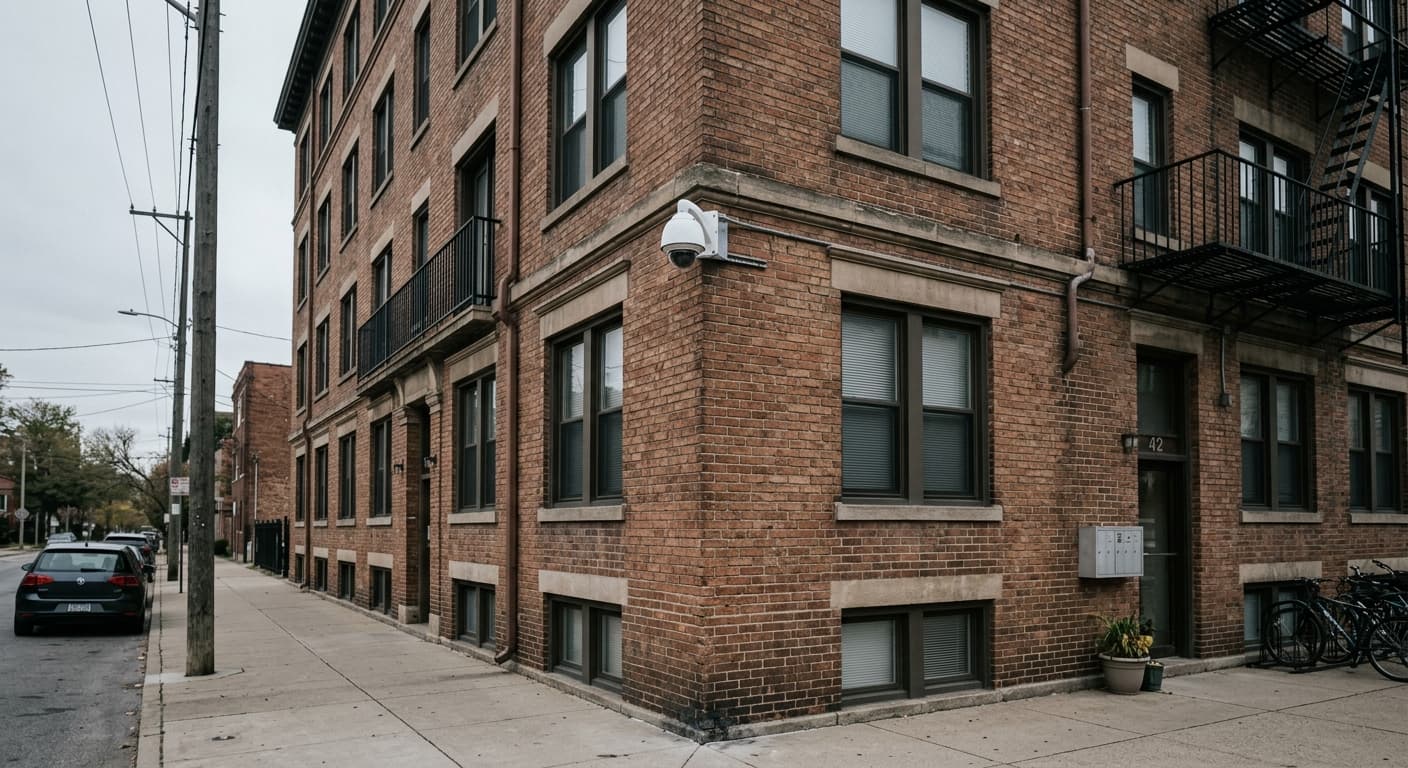
title: "Leyes de grabación y vigilancia entre arrendador e inquilino en California (2026)" meta_description: "Las leyes de grabación y vigilancia entre arrendador e inquilino en California explicadas. Conozca las reglas sobre cámaras en apartamentos, la grabación de audio según el PC 632, los derechos del inquilino, y las sanciones."
Panorama general de las leyes de grabación entre arrendador e inquilino en California
California tiene algunas de las protecciones de privacidad más sólidas del país, y esas protecciones se extienden directamente a la relación entre arrendador e inquilino. Ya sea que usted sea un arrendador considerando cámaras de seguridad para su edificio de apartamentos o un inquilino preguntándose sobre sus derechos, comprender estas leyes es fundamental para evitar tanto cargos penales como responsabilidad civil.
El marco legal que rige la grabación y la vigilancia en las propiedades de alquiler proviene de varios estatutos de California. El Penal Code 632 controla la grabación de audio y la interceptación. El Penal Code 647(j) prohíbe las cámaras ocultas y las invasiones visuales de privacidad. El Civil Code 1954 rige cuándo y cómo puede ingresar un arrendador a una unidad de alquiler. En conjunto, estos estatutos crean un conjunto detallado de reglas que tanto arrendadores como inquilinos deben seguir.
California es un estado de consentimiento de todas las partes, lo que significa que grabar una conversación privada sin el conocimiento y el consentimiento de todos los involucrados es un delito. Este principio fundamental afecta casi todos los escenarios de grabación en una propiedad de alquiler, desde cámaras de seguridad con micrófono hasta llamadas telefónicas entre arrendadores e inquilinos.
Cámaras de vigilancia del arrendador en áreas comunes
Los arrendadores en California tienen el derecho legal de instalar cámaras de vigilancia de video en las áreas comunes de los edificios de apartamentos y las propiedades de alquiler. Las áreas comunes incluyen los espacios compartidos por todos los inquilinos y visitantes donde no existe una expectativa razonable de privacidad.
Dónde pueden colocar cámaras los arrendadores
Los arrendadores pueden instalar legalmente cámaras de video en los siguientes lugares:
- Vestíbulos y entradas del edificio
- Pasillos y escaleras
- Estacionamientos y garajes
- Cuartos de lavandería
- Áreas de buzones
- Terrenos exteriores y senderos
- Perímetros y portones del edificio
Estos lugares se consideran espacios compartidos o semipúblicos. Debido a que los inquilinos y visitantes entienden que otras personas pueden observarlos en estas áreas, no existe una expectativa razonable de privacidad que impida la grabación de video.
Dónde están prohibidas las cámaras
La ley de California traza una línea firme en los espacios privados. Los arrendadores nunca pueden colocar cámaras en:
- El interior de apartamentos o unidades de alquiler individuales
- Baños, incluidas las instalaciones compartidas de baño
- Vestidores o probadores
- Cualquier lugar donde una cámara pueda ver el interior de la unidad de un inquilino cuando una puerta o ventana está abierta
Una cámara colocada afuera de la puerta de un apartamento que captura el interior de la unidad cuando se abre la puerta puede infringir los derechos de privacidad del inquilino. Los arrendadores deben posicionar las cámaras para evitar cualquier ángulo que revele el interior de un espacio de vivienda privado.
Restricciones de grabación de audio para sistemas de vigilancia
Aquí es donde muchos arrendadores se meten en problemas. Incluso cuando una cámara está colocada lícitamente en un área común, activar la grabación de audio en esa cámara introduce un conjunto separado de requisitos legales según el Penal Code 632.
La regla de consentimiento de todas las partes de California significa que grabar una conversación requiere el consentimiento de todas las partes involucradas. Sin embargo, hay una distinción importante aquí. El Penal Code 632 se aplica específicamente a las "comunicaciones confidenciales", que son conversaciones que se llevan a cabo en circunstancias que razonablemente indican que las partes desean que la conversación permanezca privada.
En áreas comunes verdaderamente públicas, como el vestíbulo grande de un edificio o un estacionamiento al aire libre, las conversaciones podrían no tener una expectativa razonable de privacidad. En esos entornos, la grabación de audio puede ser permisible. Pero en espacios comunes más pequeños y cerrados, como un cuarto de lavandería o un pasillo angosto, los inquilinos pueden razonablemente esperar que sus conversaciones sean privadas, lo que hace que grabar sin consentimiento sea una posible infracción.
La práctica más segura para los arrendadores es desactivar la grabación de audio en todas las cámaras de vigilancia, o colocar avisos claros y visibles que indiquen que se está usando tanto grabación de video como de audio.
Mejores prácticas para los sistemas de cámaras del arrendador
Si bien California no cuenta con un estatuto que exija explícitamente que los arrendadores notifiquen a los inquilinos sobre las cámaras en áreas comunes, la transparencia es la mejor protección legal. Los arrendadores deben seguir estas pautas:
- Incluir una cláusula de divulgación de vigilancia en el contrato de arrendamiento
- Colocar avisos visibles cerca de todas las ubicaciones de las cámaras que indiquen que se está grabando video
- Mantener las cámaras visibles en lugar de ocultas
- Desactivar las funciones de grabación de audio en las cámaras de áreas comunes, u obtener consentimiento por escrito
- Almacenar las grabaciones de forma segura y limitar el acceso al personal autorizado
- Establecer una política de retención para las grabaciones (30 días es el estándar)
Las cámaras dentro de las unidades de alquiler son ilegales
Un arrendador nunca debería instalar ni operar una cámara dentro de la unidad de alquiler ocupada de un inquilino. Según el California Penal Code 647(j)(3), es un delito que un arrendador use una cámara oculta para grabar en secreto a un inquilino que podría estar en estado de desnudez total o parcial, con el propósito de ver el cuerpo o la ropa interior del inquilino, sin su conocimiento ni consentimiento y con la intención de invadir su privacidad. El estatuto dispone que ser el arrendador de la víctima no es una defensa, y tampoco lo es que la víctima en realidad no estuviera desnuda. Una cámara divulgada no queda comprendida en el elemento de ocultamiento de este estatuto específico, pero de todos modos expone al arrendador a un riesgo legal grave, incluidas demandas civiles por invasión de la privacidad y el incumplimiento del derecho del inquilino al disfrute pacífico, por lo que las cámaras interiores deben tratarse como prohibidas sin importar si se divulgan.
Penal Code 647(j): invasión criminal de la privacidad
El Penal Code 647(j) convierte en delito menor el uso de una cámara oculta para grabar en secreto a una persona identificable que podría estar en estado de desnudez total o parcial, con el propósito de ver el cuerpo o la ropa interior de esa persona, en un dormitorio, un baño o cualquier otra área donde esa persona tenga una expectativa razonable de privacidad, con la intención de invadir su privacidad. El hogar de un inquilino es el ejemplo más claro de un lugar así.
Sanciones por primera infracción:
- Hasta seis meses en la cárcel del condado
- Multa de hasta $1,000
Sanciones por reincidencia:
- Hasta un año en la cárcel del condado
- Multa de hasta $2,000
Responsabilidad civil
Más allá de las sanciones penales, un arrendador que instala cámaras dentro de una unidad de alquiler enfrenta una responsabilidad civil significativa. Los inquilinos pueden demandar por invasión de la privacidad y pueden recuperar daños sustanciales. La angustia emocional causada por descubrir vigilancia oculta en su hogar puede respaldar indemnizaciones considerables.
¿Qué pasa con los detectores de humo y otros dispositivos?
Los reportes de cámaras ocultas disfrazadas de detectores de humo, relojes despertadores o cargadores USB se han vuelto cada vez más comunes. Si un arrendador coloca cualquier dispositivo de grabación disfrazado como un objeto doméstico dentro de una unidad de alquiler, esto puede constituir un delito penal según el Penal Code 647(j) y, potencialmente, según el Penal Code 632 si se capta audio. Los inquilinos que descubran ese tipo de dispositivos deben documentar la evidencia y contactar a las autoridades de inmediato.
Grabación de audio entre arrendadores e inquilinos
El Penal Code 632 de California rige la grabación de comunicaciones confidenciales, y se aplica por igual a arrendadores e inquilinos. Ninguna de las partes puede grabar en secreto una conversación privada con la otra.
La regla de consentimiento de todas las partes
Según el Penal Code 632, es ilegal grabar intencionalmente una comunicación confidencial usando cualquier dispositivo electrónico sin el consentimiento de todas las partes de la comunicación. Una "comunicación confidencial" es cualquier conversación que se lleva a cabo en circunstancias que razonablemente indican que las partes desean que permanezca privada.
Esto significa:
- Un arrendador no puede grabar en secreto una conversación con un inquilino durante la firma de un contrato de arrendamiento
- Un inquilino no puede grabar en secreto una llamada telefónica con su arrendador sobre una disputa de reparación
- Un administrador de propiedad no puede grabar una conversación con un inquilino sobre el pago del alquiler sin decírselo
Sanciones por grabación de audio ilegal
Sanciones penales según el PC 632:
- Primera infracción: multa de hasta $2,500, hasta un año en la cárcel del condado, o ambas
- Reincidencia: multa de hasta $10,000, hasta un año en la cárcel del condado, o ambas
Sanciones civiles según el Penal Code 637.2:
- $5,000 por infracción en daños establecidos por ley (sin necesidad de probar un daño real), o
- Tres veces los daños reales sufridos, lo que sea mayor
- Medidas cautelares (orden judicial para detener la grabación)
La estructura por infracción significa que un arrendador que graba múltiples conversaciones sin consentimiento enfrenta una responsabilidad multiplicada. Diez conversaciones grabadas podrían resultar en $50,000 solo en daños establecidos por ley.
Cuándo grabar sin consentimiento es legal
Existen excepciones limitadas a la regla de consentimiento de todas las partes que pueden aplicarse en el contexto de la relación entre arrendador e inquilino.
Entornos públicos: si una conversación ocurre en un entorno público donde cualquiera de las partes podría razonablemente esperar ser escuchada, como el vestíbulo concurrido de un edificio, podría no calificar como una "comunicación confidencial" según el Penal Code 632.
Evidencia de delito (PC 633.5): el Penal Code 633.5 permite que una persona grabe una comunicación confidencial sin el consentimiento de la otra parte si la grabación se hace para recopilar evidencia de extorsión, secuestro, soborno, cualquier delito grave que involucre violencia contra la persona, amenazas según el Penal Code 653m, o violencia doméstica según se define en el Penal Code 13700.
Esta excepción puede ser relevante para los inquilinos que están siendo amenazados o extorsionados por un arrendador. Por ejemplo, si un arrendador amenaza con daño físico a menos que un inquilino acepte desalojar, el inquilino puede grabar lícitamente esa amenaza según el PC 633.5.
La notificación elimina la confidencialidad: si un arrendador o inquilino declara al inicio de una conversación que la discusión está siendo grabada, la conversación deja de ser "confidencial" según el estatuto. La otra parte puede optar por continuar la conversación (dando así su consentimiento) o terminarla.
Derechos del inquilino: instalación de cámaras de seguridad y timbres Ring

Los inquilinos en California tienen sus propias preocupaciones de privacidad y seguridad. Muchos inquilinos desean instalar timbres Ring, cámaras de seguridad u otros dispositivos de grabación para protegerse a sí mismos y a su propiedad. Ninguna ley de California otorga expresamente ese derecho a los inquilinos; que esté permitido generalmente depende de los términos del contrato de arrendamiento y del consentimiento del arrendador.
Timbres con video y cámaras exteriores
Los inquilinos pueden instalar timbres con video, como dispositivos Ring o Nest, en la puerta de su unidad de alquiler individual. Ninguna ley de California otorga a los inquilinos un derecho general a hacerlo, pero la práctica generalmente se permite sujeta al contrato de arrendamiento y a algunas pautas prácticas:
- Nada en la ley de California impide que un inquilino agregue un dispositivo de seguridad no dañino a la puerta de su propia unidad, sujeto al contrato de arrendamiento
- El Civil Code 1941.3 exige que los arrendadores instalen y mantengan cerraduras de pestillo y dispositivos de cierre en las ventanas, un requisito básico independiente que no autoriza por sí mismo a un inquilino a agregar una cámara
- El Civil Code 1942.5 prohíbe la represalia del arrendador contra los inquilinos que ejercen sus derechos legales
Sin embargo, los inquilinos deben tener en cuenta estas pautas:
- Revise su contrato de arrendamiento primero. Muchos contratos contienen cláusulas sobre modificaciones a la propiedad. Use métodos de instalación que no dañen la propiedad, como soportes adhesivos, siempre que sea posible.
- Desactive la grabación de audio o coloque un aviso. Si su timbre Ring o cámara de seguridad graba audio, se aplica la ley de consentimiento de todas las partes de California. Desactive la función de audio o coloque un aviso visible cerca de la cámara indicando que se está grabando audio.
- No apunte las cámaras hacia los vecinos. Una cámara montada en su puerta debe estar orientada para captar su propia entrada, no la entrada de una unidad vecina ni una vista amplia de un pasillo compartido.
- Notifique a su arrendador. Aunque no siempre es legalmente obligatorio, informar a su arrendador sobre la cámara puede prevenir disputas.
¿Puede un arrendador prohibir las cámaras de seguridad?
Un arrendador puede incluir disposiciones en el contrato de arrendamiento que restrinjan las modificaciones a las áreas comunes, y que una prohibición general de los dispositivos de seguridad instalados por el inquilino sea o no aplicable depende de los términos específicos del contrato; ninguna ley de California, incluido el Civil Code 1941.3 (que cubre únicamente las cerraduras de pestillo y los dispositivos de cierre de ventanas instalados por el arrendador), crea un derecho independiente del inquilino a instalar una cámara.
El Civil Code 1942.5 protege a los inquilinos contra represalias por ejercer derechos legalmente protegidos, como solicitar reparaciones o denunciar infracciones de habitabilidad; debido a que instalar un dispositivo de seguridad no es en sí mismo un derecho que proteja el estatuto, un inquilino sancionado por agregar una cámara no debería asumir que aplica una reclamación por desalojo de represalia y debería consultar a un abogado sobre los hechos específicos.
Dicho esto, los arrendadores pueden restringir razonablemente las cámaras que:
- Estén fijadas permanentemente o dañen la estructura de la propiedad
- Apunten hacia las unidades de otros inquilinos o hacia las áreas comunes
- Graben audio sin los avisos de consentimiento adecuados
Cámaras interiores dentro de su propia unidad
Los inquilinos tienen amplios derechos para instalar cámaras dentro de su propia unidad de alquiler. Debido a que la unidad es el espacio privado del inquilino, el inquilino controla qué vigilancia ocurre dentro de ella. Los inquilinos comúnmente usan cámaras interiores para:
- Monitorear el ingreso no autorizado del arrendador
- Documentar las condiciones de la propiedad y las reparaciones necesarias
- Proporcionar seguridad mientras están fuera de casa
- Grabar a niñeras o cuidadores de mascotas (con el aviso adecuado sobre el audio)
Grabar el ingreso del arrendador y las visitas de mantenimiento
Uno de los escenarios de grabación más comunes en los alquileres de California involucra el ingreso del arrendador para inspecciones, mantenimiento o reparaciones. Los inquilinos tienen derechos específicos según el Civil Code 1954 respecto de cuándo puede ingresar un arrendador, y la grabación puede desempeñar un papel importante en proteger esos derechos.
Civil Code 1954: reglas de ingreso del arrendador
Según el Civil Code 1954, un arrendador puede ingresar a la unidad de vivienda de un inquilino únicamente por las siguientes razones:
- En caso de emergencia
- Para hacer reparaciones, decoraciones, alteraciones o mejoras necesarias o acordadas
- Para proporcionar servicios necesarios o acordados
- Para mostrar la unidad a posibles inquilinos, compradores o prestamistas
- Cuando el inquilino ha abandonado o entregado la unidad
- Para cumplir con una orden judicial
Salvo en emergencias, el arrendador debe proporcionar al inquilino un aviso razonable por escrito con al menos 24 horas de anticipación antes de ingresar. El aviso debe incluir la fecha, la hora aproximada y el propósito del ingreso. El ingreso debe ocurrir durante el horario laboral normal, a menos que el inquilino consienta otro horario.
¿Puede un inquilino grabar en video la visita de un arrendador?
Sí. Un inquilino puede usar una cámara de video visible para grabar a un arrendador, administrador de propiedad o trabajador de mantenimiento que ingresa y trabaja dentro de la unidad de alquiler. Debido a que el arrendador y los trabajadores están dentro del espacio privado del inquilino, no tienen una expectativa razonable de privacidad ahí.
Sin embargo, el componente de audio requiere atención. Si su dispositivo de grabación capta sonido:
- Informe al arrendador o trabajador de mantenimiento que se está grabando audio y video cuando ingresen
- Coloque un aviso visible en la entrada indicando que se está grabando
- Considere usar grabación de solo video para evitar cualquier preocupación relacionada con el Penal Code 632
Grabar las visitas de mantenimiento sirve para varios propósitos prácticos. Crea un registro del trabajo realizado, documenta la condición de la propiedad antes y después de las reparaciones, y puede proporcionar evidencia si surge una disputa sobre daños a la propiedad o trabajo incompleto.
¿Puede un arrendador grabar una visita de mantenimiento?
Un arrendador o administrador de propiedad que desea grabar o fotografiar las condiciones dentro de una unidad de alquiler durante una visita lícita debe obtener el consentimiento del inquilino. Simplemente ingresar a la unidad no le da al arrendador permiso para grabar audio ni tomar fotografías.
Si el propósito de la visita es documentar las condiciones de la propiedad (por ejemplo, durante una inspección de mudanza), el arrendador debe informar al inquilino con anticipación y solicitar permiso para fotografiar o grabar.
Grabar evidencia de infracciones del arrendador
A veces los inquilinos necesitan grabar evidencia de una mala conducta del arrendador, infracciones de habitabilidad o comportamiento ilegal. La ley de California ofrece algunas protecciones importantes para los inquilinos en estas situaciones.
Documentar problemas de habitabilidad
La oficina del Fiscal General de California y el Civil Code 1941-1942.5 establecen la garantía implícita de habitabilidad, que exige que los arrendadores mantengan las propiedades de alquiler en condiciones habitables. Cuando los arrendadores no cumplen con este estándar, los inquilinos deben documentar la evidencia.
La documentación en video y fotografía de problemas de habitabilidad como moho, infestaciones de plagas, tuberías rotas o daños estructurales es completamente legal dentro de su propia unidad de alquiler. Usted no necesita el consentimiento de nadie para fotografiar o grabar las condiciones dentro de su propio hogar.
Prácticas de documentación recomendadas:
- Tome fotos y videos con fecha de todos los problemas de habitabilidad
- Registre la condición del problema a lo largo del tiempo para mostrar su empeoramiento
- Guarde todos los mensajes de texto, correos electrónicos y cartas relacionados con las solicitudes de reparación
- Mantenga un registro escrito de todas las comunicaciones con su arrendador sobre el problema
- Grabe en video cualquier fuga de agua, actividad de plagas u otras condiciones continuas
La excepción del Penal Code 633.5 para delitos graves
Si un arrendador está incurriendo en una conducta delictiva como amenazas, extorsión o cualquier delito grave que involucre violencia contra el inquilino, el Penal Code 633.5 permite que el inquilino grabe la comunicación sin el consentimiento del arrendador. Esta excepción se aplica cuando la grabación se hace para obtener evidencia de:
- Extorsión (exigir dinero o una acción mediante amenazas)
- Soborno
- Secuestro
- Cualquier delito grave que involucre violencia contra otra persona
- Amenazas criminales según el Penal Code 653m
- Violencia doméstica según se define en el Penal Code 13700
Esta es una excepción limitada. No permite que un inquilino grabe en secreto cada conversación con su arrendador. El inquilino debe creer razonablemente que la conversación contendrá evidencia de uno de los delitos especificados.
Usar grabaciones en el tribunal de reclamos menores
Los inquilinos que llevan disputas entre arrendador e inquilino al tribunal de reclamos menores de California podrían querer usar grabaciones como evidencia. Estas son las reglas clave:
- Las grabaciones hechas con el consentimiento adecuado (o el aviso adecuado) generalmente son admisibles
- Las grabaciones hechas sin consentimiento pueden enfrentar desafíos de admisibilidad y podrían exponer a la persona que hizo la grabación a responsabilidad penal
- La evidencia debe presentarse ante el tribunal y todas las demás partes al menos 10 días antes de la audiencia
- Las fotografías, los videos de las condiciones de la propiedad y las comunicaciones escritas son las formas más sólidas de evidencia
Si planea basarse en una grabación en el tribunal de reclamos menores, prepare una breve explicación de las circunstancias en las que se hizo la grabación y por qué es admisible según la ley de California.
Leyes sobre cámaras en Airbnb y alquileres vacacionales
El auge de los alquileres vacacionales de corto plazo a través de plataformas como Airbnb y Vrbo ha generado nuevas preocupaciones sobre vigilancia. La ley de California aplica las mismas protecciones de privacidad a los huéspedes de alquileres vacacionales que a los inquilinos de largo plazo.
Las cámaras interiores están prohibidas
Las cámaras ocultas dentro de un alquiler vacacional son ilegales según el Penal Code 647(j). Esto incluye cámaras en:
- Dormitorios
- Baños
- Áreas de estar
- Cualquier espacio interior del alquiler
Incluso las cámaras interiores divulgadas son problemáticas. Desde el 30 de abril de 2024, la política actualizada de Airbnb prohíbe todas las cámaras de seguridad y dispositivos de grabación interiores en los anuncios, ya sea que estén encendidos o apagados. Los anfitriones que infrinjan esta política enfrentan la eliminación del anuncio y la suspensión de la cuenta.
Cámaras exteriores y monitores de ruido
Los anfitriones de alquileres vacacionales pueden usar:
- Cámaras de seguridad exteriores (deben divulgarse en el anuncio)
- Monitores de nivel de ruido que miden los decibeles sin grabar audio
- Cerraduras inteligentes y sistemas de monitoreo de acceso
Todas las cámaras exteriores deben divulgarse a los huéspedes antes de la reserva. Los anfitriones deben identificar la ubicación de cada cámara en la descripción de su anuncio.
Qué hacer si encuentra una cámara oculta
Si descubre una cámara no divulgada en un alquiler vacacional en California:
- Tome fotos o video del dispositivo como evidencia
- No toque ni mueva el dispositivo
- Contacte al anfitrión para solicitar una explicación
- Reporte la infracción a la plataforma de alquiler (Airbnb, Vrbo, etc.)
- Presente un reporte policial, ya que las cámaras ocultas en espacios privados son un delito penal según la ley de California
- Consulte a un abogado sobre los remedios civiles, incluidos los daños establecidos por ley según las leyes de invasión de la privacidad
Tabla resumen de sanciones
A continuación, un resumen de las sanciones clave que se aplican a la grabación y vigilancia ilegal en las propiedades de alquiler de California:
| Infracción | Estatuto | Sanción penal | Sanción civil |
|---|---|---|---|
| Grabación de audio secreta de una conversación confidencial | PC 632 | Multa de hasta $2,500 + 1 año de cárcel (primera infracción) | $5,000 por infracción o 3 veces los daños reales |
| Reincidencia en la grabación de audio | PC 632 | Multa de hasta $10,000 + 1 año de cárcel | $5,000 por infracción o 3 veces los daños reales |
| Cámara oculta en un espacio privado | PC 647(j) | Multa de hasta $1,000 + 6 meses de cárcel (primera infracción) | Demanda civil por invasión de la privacidad |
| Reincidencia con cámara oculta | PC 647(j) | Multa de hasta $2,000 + 1 año de cárcel | Demanda civil por invasión de la privacidad |
| Acoso del arrendador mediante vigilancia | CC 1940.2 | N/A | Hasta $2,000 por infracción |
| Ingreso ilegal sin aviso | CC 1954 | N/A | Daños reales + posible reclamo por acoso |
Temas relacionados de la ley de grabación de California
- Panorama general de las leyes de grabación de California
- Leyes de grabación de audio de California
- Leyes de grabación de video de California
- Leyes de voyerismo y cámaras ocultas de California
- Leyes de cámaras de seguridad y vigilancia de California
- Leyes de grabación en el lugar de trabajo de California
- Leyes de grabación de llamadas telefónicas de California
- Leyes sobre grabar en público en California
- Leyes sobre grabar a la policía en California
- Leyes de cámaras de tablero (dashcam) de California
- Leyes de grabación escolar de California
- Leyes sobre grabar a médicos en California
Más leyes de California
- Leyes de grabación de reuniones con IA de California
- Leyes de pensión alimenticia conyugal de California
- Leyes de empleo a voluntad de California
- Leyes de accidentes de auto de California
- Leyes de asientos de auto para niños de California
- Leyes de custodia de menores de California
- Leyes de manutención infantil de California
- Leyes de matrimonio de hecho de California
- Leyes de privacidad de datos de California
- Leyes sobre deepfakes de California
- Leyes de divorcio de California
- Leyes sobre mordeduras de perro de California
- Leyes de emancipación de California
- Leyes de eliminación de antecedentes penales de California
- Leyes de fuga del lugar del accidente de California
- Leyes de arrendador e inquilino de California
Más temas de grabación de California
- Leyes de grabación de California
- Grabación de audio de California
- Grabación de video de California
- Grabación médica de California
- Grabación escolar de California
- Grabación en el lugar de trabajo de California
- Grabar a la policía en California
- Grabación de llamadas telefónicas de California
- Cámaras de seguridad de California
- Voyerismo en California
- Grabación con dashcam en California
- Grabación en público en California
- Leyes de privacidad biométrica de California
- Leyes de cámaras de vigilancia
Preguntas frecuentes
¿Puede mi arrendador instalar cámaras de seguridad dentro de mi apartamento en California?
No. Un arrendador nunca puede instalar cámaras dentro de su unidad de alquiler individual. Su apartamento es un espacio privado donde usted tiene una expectativa razonable de privacidad. Usar una cámara **oculta** dentro de la unidad de un inquilino para grabarlo en secreto mientras podría estar desnudo, con el fin de ver su cuerpo o su ropa interior, infringe el California Penal Code 647(j)(3), un delito menor castigado con hasta seis meses de cárcel y una multa de $1,000 en la primera infracción. Incluso una cámara divulgada dentro de su unidad es un problema grave: puede sustentar una demanda civil por invasión de la privacidad y un reclamo por incumplimiento del disfrute pacífico contra el arrendador.
¿Puedo instalar un timbre Ring en mi apartamento en California?
A menudo, pero no es un derecho establecido por ley. Ninguna ley de California otorga expresamente a los inquilinos el derecho a instalar timbres con video, por lo que el contrato de arrendamiento y el consentimiento del arrendador generalmente son determinantes. Revise su contrato de arrendamiento en busca de restricciones de modificación, usar métodos de instalación que no dañen la propiedad como soportes adhesivos, y desactivar la función de grabación de audio o colocar un aviso visible indicando que se está grabando audio. Apunte la cámara hacia su propia entrada en lugar de hacia unidades vecinas o pasillos compartidos.
¿Puedo grabar en secreto a mi arrendador en California?
En la mayoría de las situaciones, no. California es un estado de consentimiento de todas las partes según el Penal Code 632, lo que significa que necesita el consentimiento de todas las partes para grabar una conversación privada. Sin embargo, hay dos excepciones importantes. Primero, usted puede informar al arrendador que está grabando, lo que elimina la confidencialidad de la conversación. Segundo, según el Penal Code 633.5, usted puede grabar sin consentimiento si cree razonablemente que la grabación captará evidencia de extorsión, amenazas criminales o cualquier delito grave que involucre violencia.
¿Son legales las cámaras en los pasillos y estacionamientos de un edificio de apartamentos en California?
Sí. Los arrendadores pueden instalar cámaras de vigilancia de video en áreas comunes como vestíbulos, pasillos, escaleras, estacionamientos y exteriores del edificio. Estos son espacios compartidos donde los inquilinos no tienen una expectativa razonable de privacidad. Sin embargo, las cámaras no deben estar posicionadas para ver el interior de ninguna unidad de un inquilino, y activar la grabación de audio en estas cámaras genera preocupaciones legales adicionales según la ley de consentimiento de todas las partes de California.
¿Qué debo hacer si encuentro una cámara oculta en mi alquiler o Airbnb en California?
Tome fotos o video del dispositivo sin tocarlo ni moverlo. Contacte al dueño de la propiedad o al anfitrión para solicitar una explicación. Si la cámara está en un espacio privado como un dormitorio o baño, presente un reporte policial, porque las cámaras ocultas en áreas privadas son un delito penal según el Penal Code 647(j). Si está en un Airbnb, reporte la infracción a la plataforma. Consulte a un abogado sobre los remedios civiles, que pueden incluir daños establecidos por ley de $5,000 o más por infracción.
Actualizaciones
Se corrigió la descripción del Penal Code 647(j)(3) para incluir los elementos de desnudez total o parcial y el propósito de ver el cuerpo o la ropa interior.
Se corrigieron tres errores: el PC 647(j)(3) tipifica como delito solo las cámaras interiores ocultas, no las divulgadas; el Civil Code 1940.2 limita la sanción civil a $2,000 fijos por infracción, no un rango de $2,000-$5,000; y el Penal Code 633.5 enumera la violencia doméstica como categoría propia, no anidada bajo delitos graves con violencia.
La ley detrás de este artículo
Este artículo se apoya en las disposiciones legales a continuación, conservadas en nuestro propio registro jurídico y obtenidas de la fuente oficial. Toque una sección para leer el texto vigente.
California Penal Code
§ 632Vigentecitada en 55 de nuestros artículos
(a) A person who, intentionally and without the consent of all parties to a confidential communication, uses an electronic amplifying or recording device to eavesdrop upon or record the confidential communication, whether the communication is carried on among the parties in the presence of one another or by means of a telegraph, telephone, or other device, except a radio, shall be punished by a fine not exceeding two thousand five hundred dollars ($2,500) per violation, or imprisonment in a county jail not exceeding one year, or in the state prison, or by both that fine and imprisonment. If the person has previously been convicted of a violation of this section or Section 631, 632.5, 632.6, 632.7, or 636, the person shall be punished by a fine not exceeding ten thousand dollars ($10,000) per violation, by imprisonment in a county jail not exceeding one year, or in the state prison, or by both that fine and imprisonment.
Texto oficial (extracto) · verificado el 2026-09-23 · Lea el texto completo en nuestra biblioteca legal · Verifique en leginfo.legislature.ca.gov
Citada en 267 resoluciones judiciales de nuestra colecciónResolución más reciente que la cita en nuestra colección: 2026
En los tribunales (resumen editorial, verificado de forma independiente):Kimmel v. Goland (1990) sostuvo que el privilegio de litigio del artículo 47(2) no impide una demanda de daños bajo la Sección 632 por grabar conversaciones confidenciales sin consentimiento. Lieberman v. KCOP Television, Inc. (2003) sostuvo que la violación se comete al hacer la grabación secreta, se divulgue o no.
Resoluciones que citan esta sección en nuestra colección:
- Rubin v. Green (California Supreme Court 1993, 4 Cal. 4th 1187)“…f telephone conversations with defendants, an offense under Penal Code section 632. We noted that defendants alleged that…”
- Kimmel v. Goland (California Supreme Court 1990, 51 Cal. 3d 202)✓Dueños de casas móviles grabaron en secreto llamadas con la administración del parque en anticipación de demandar; el tribunal sostuvo que el privilegio litigioso de la sección 47(2) no impedía la contrademanda por daños bajo la sección 632 del Código Penal, porque la lesión provino de la grabación, no de una publicación.
- Shulman v. Group W Productions, Inc. (California Supreme Court 1998, 74 Cal. Rptr. 2d 843)✓Un productor de televisión colocó un micrófono inalámbrico a la enfermera de vuelo que atendía a una víctima de un accidente. No había demanda bajo la sección 632 ante el tribunal, pero este llamó a la sección 632 y al agravio de intromisión leyes de aplicación general y dijo que la prensa no puede escuchar en violación de esa sección.
Identificado automáticamente a partir de las opiniones judiciales que citan esta sección; no es un ranking de qué caso prevalece.
También citada en: Grabaciones como prueba: reglas judiciales por estado, Leyes de grabación de reuniones con IA en Pensilvania: Consentimiento de todas las partes y penas de delito grave (2026)
§ 633.5Vigentecitada en 9 de nuestros artículos
Sections 631, 632, 632.5, 632.6, and 632.7 do not prohibit one party to a confidential communication from recording the communication for the purpose of obtaining evidence reasonably believed to relate to the commission by another party to the communication of the crime of extortion, kidnapping, bribery, any felony involving violence against the person, including, but not limited to, human trafficking, as defined in Section 236.1, or a violation of Section 653m, or domestic violence as defined in Section 13700. Sections 631, 632, 632.5, 632.6, and 632.7 do not render any evidence so obtained inadmissible in a prosecution for extortion, kidnapping, bribery, any felony involving violence against the person, including, but not limited to, human trafficking, as defined in Section 236.1, a violation of Section 653m, or domestic violence as defined in Section 13700, or any crime in connection therewith.
Texto oficial (extracto) · verificado el 2026-07-28 · Lea el texto completo en nuestra biblioteca legal · Verifique en leginfo.legislature.ca.gov
Citada en 21 resoluciones judiciales de nuestra colecciónResolución más reciente que la cita en nuestra colección: 2026
Resoluciones que citan esta sección en nuestra colección:
- People v. Baker (California Court of Appeal 1978, 88 Cal. App. 3d 115)“…ction 632. 3 . Appellant has overlooked Penal Code section 633.5, 4 which is dispositive of…”
- Malinowski v. Martin (California Court of Appeal 2024)“…se permitted under statutory exceptions to the Privacy Act (Pen. Code, §§ 633.5 and 633.6). In the published port…”
- Geragos v. Abelyan (California Court of Appeal 2023)“…matter pleaded.”].) The Geragos Parties next contend Penal Code section 633.5 exempts Kazarian’s recording from exclu…”
Identificado automáticamente a partir de las opiniones judiciales que citan esta sección; no es un ranking de qué caso prevalece.
§ 637.2Vigentecitada en 24 de nuestros artículos
(a) Any person who has been injured by a violation of this chapter may bring an action against the person who committed the violation for the greater of the following amounts: (1) Five thousand dollars ($5,000) per violation. (2) Three times the amount of actual damages, if any, sustained by the plaintiff. (b) Any person may, in accordance with Chapter 3 (commencing with Section 525) of Title 7 of Part 2 of the Code of Civil Procedure, bring an action to enjoin and restrain any violation of this chapter, and may in the same action seek damages as provided by subdivision (a). (c) It is not a necessary prerequisite to an action pursuant to this section that the plaintiff has suffered, or be threatened with, actual damages. (d) This section shall not be construed to affect Title 4 (commencing with Section 3425.1) of Part 1 of Division 4 of the Civil Code.
Texto oficial (extracto) · verificado el 2026-07-28 · Lea el texto completo en nuestra biblioteca legal · Verifique en leginfo.legislature.ca.gov
Citada en 103 resoluciones judiciales de nuestra colecciónResolución más reciente que la cita en nuestra colección: 2026
En los tribunales (resumen editorial, verificado de forma independiente):Ribas v. Clark (1985) sostuvo que la indemnización de la sección 637.2 nace en el momento mismo de la violación de la Privacy Act, por lo que el privilegio judicial del Civil Code section 47 no la impide, aunque fracasan los daños derivados solo de un testimonio privilegiado. Kimmel v. Goland (1990) aplicó ese razonamiento a grabaciones hechas en previsión de un litigio.
Resoluciones que citan esta sección en nuestra colección:
- Rubin v. Green (California Supreme Court 1993, 4 Cal. 4th 1187)“…asion of privacy and related torts as well as damages under Penal Code section 637.2, granting persons injured by eavesdropp…”
- Ribas v. Clark (California Supreme Court 1985, 38 Cal. 3d 355)✓Una esposa pidió a un tercero que escuchara por un teléfono supletorio mientras llamaba a su esposo, y esa persona luego testificó sobre la llamada; el tribunal sostuvo que el privilegio judicial impedía los daños del testimonio, pero no la indemnización legal fija de la Sección 637.2, que se genera al momento de la violación.
- Kimmel v. Goland (California Supreme Court 1990, 51 Cal. 3d 202)✓Residentes de un parque de casas móviles grabaron en secreto llamadas con la administración para reunir pruebas para una demanda planeada; el tribunal sostuvo que el privilegio judicial no impedía el reclamo bajo la Sección 637.2, porque el daño provino de la grabación misma y no de una publicación.
Identificado automáticamente a partir de las opiniones judiciales que citan esta sección; no es un ranking de qué caso prevalece.
§ 647Vigentecitada en 19 de nuestros artículos
Except as provided in paragraph (5) of subdivision (b) and in subdivisions (k) and (l), a person who commits any of the following acts is guilty of disorderly conduct, a misdemeanor: (a) An individual who solicits anyone to engage in or who engages in lewd or dissolute conduct in a public place or in a place open to the public or exposed to public view. (b) (1) An individual who solicits, or who agrees to engage in, or who engages in, an act of prostitution with the intent to receive compensation, money, or anything of value from another person. An individual agrees to engage in an act of prostitution when, with specific intent to so engage, the individual manifests an acceptance of an offer or solicitation by another person to so engage, regardless of whether the offer or solicitation was made by a person who also possessed the specific intent to engage in an act of prostitution. (2) An individual who solicits, or who agrees to engage in, or who engages in, an act of prostitution with another person who is 18 years of age or older in exchange for the individual providing compensation, money, or anything of value to the other person.
Texto oficial (extracto) · verificado el 2026-08-31 · Lea el texto completo en nuestra biblioteca legal · Verifique en leginfo.legislature.ca.gov
Citada en 593 resoluciones judiciales de nuestra colecciónResolución más reciente que la cita en nuestra colección: 2026
En los tribunales (resumen editorial, verificado de forma independiente):In re Giannini (1968) anuló las condenas bajo el Código Penal 647(a) porque la fiscalía no presentó prueba de los estándares comunitarios, y equiparó "lewd or dissolute" con lo obsceno solo para juzgar un baile presuntamente obsceno presentado ante un público.
Resoluciones que citan esta sección en nuestra colección:
- Morrison v. State Board of Education (California Supreme Court 1969, 1 Cal. 3d 214)“…public beach and the teacher was arrested for violation of Penal Code section 647, subdivision (a), and convicted, on his…”
- People v. Laiwa (California Supreme Court 1983, 34 Cal. 3d 711)“…to arrest him for being under the influence of a narcotic. (Pen. Code, § 647, subd. (f).) [1] He moved, however, to…”
- In Re Cregler (California Supreme Court 1961, 56 Cal. 2d 308)✓Un hombre con una condena previa por robo fue arrestado por estar de pie en una estación de autobuses de San Francisco bajo la versión de vagancia de la section 647 anterior a 1961. La corte rechazó su planteamiento de vaguedad, interpretó que merodear exige permanecer para cometer un delito y negó el hábeas corpus.
Identificado automáticamente a partir de las opiniones judiciales que citan esta sección; no es un ranking de qué caso prevalece.
California Civil Code
§ 1940.2Vigentecitada en 3 de nuestros artículos
(a) It is unlawful for a landlord to do any of the following for the purpose of influencing a tenant to vacate a dwelling: (1) Engage in conduct that violates subdivision (a) of Section 484 of the Penal Code. (2) Engage in conduct that violates Section 518 of the Penal Code. (3) Use, or threaten to use, force, willful threats, or menacing conduct constituting a course of conduct that interferes with the tenant’s quiet enjoyment of the premises in violation of Section 1927 that would create an apprehension of harm in a reasonable person. Nothing in this paragraph requires a tenant to be actually or constructively evicted in order to obtain relief. (4) Commit a significant and intentional violation of Section 1954. (5) Threaten to disclose information regarding or relating to the immigration or citizenship status of a tenant, occupant, or other person known to the landlord to be associated with a tenant or occupant. This paragraph does not require a tenant to be actually or constructively evicted in order to obtain relief.
Texto oficial (extracto) · verificado el 2026-07-28 · Lea el texto completo en nuestra biblioteca legal · Verifique en leginfo.legislature.ca.gov
Citada en 24 resoluciones judiciales de nuestra colecciónResolución más reciente que la cita en nuestra colección: 2026
Resoluciones que citan esta sección en nuestra colección:
- Larson v. City & County of San Francisco (California Court of Appeal 2011, 192 Cal. App. 4th 1263)“…ntiharassment” legislation, enacted in 2004 and codified as Civil Code section 1940.2, also makes such conduct actionable by…”
- Erlach v. Sierra Asset Servicing, LLC (California Court of Appeal 2014, 226 Cal. App. 4th 1281)“…17 In addition, Civil Code section 1940.2 makes it unlawful for a landlord to com…”
- Action Apartment Ass'n v. City of Santa Monica (California Supreme Court 2007, 41 Cal. 4th 1232)“…nt to vacate a dwelling includes a similar savings clause. (Civ. Code, § 1940.2, subd. (d).) However, we see nothing in…”
Identificado automáticamente a partir de las opiniones judiciales que citan esta sección; no es un ranking de qué caso prevalece.
§ 1941Vigentecitada en 2 de nuestros artículos
Section Nineteen Hundred and Forty-one. The lessor of a building intended for the occupation of human beings must, in the absence of an agreement to the contrary, put it into a condition fit for such occupation, and repair all subsequent dilapidations thereof, which render it untenantable, except such as are mentioned in section nineteen hundred and twenty-nine.
Texto oficial (extracto) · verificado el 2026-07-28 · Lea el texto completo en nuestra biblioteca legal · Verifique en leginfo.legislature.ca.gov
Citada en 69 resoluciones judiciales de nuestra colecciónResolución más reciente que la cita en nuestra colección: 2025
Resoluciones que citan esta sección en nuestra colección:
- Green v. Superior Court (California Supreme Court 1974, 10 Cal. 3d 616)“…nt out that the statutory “repair and deduct” provisions of Civil Code section 1941 et seq. do not preclude this developmen…”
- Stoiber v. Honeychuck (California Court of Appeal 1980, 101 Cal. App. 3d 903)“…that the statutory remedies provided a tenant *915 under Civil Code section 1941 et seq. [3] were not intended by the L…”
- Schweiger v. Superior Court (California Supreme Court 1970, 3 Cal. 3d 507)“…petitioner sent a letter to Bonds requesting, pursuant to Civil Code sections 1941 and 1942, [1] that Bonds repair two lo…”
Identificado automáticamente a partir de las opiniones judiciales que citan esta sección; no es un ranking de qué caso prevalece.
§ 1941.3Vigente
(a) On and after July 1, 1998, the landlord, or his or her agent, of a building intended for human habitation shall do all of the following: (1) Install and maintain an operable dead bolt lock on each main swinging entry door of a dwelling unit. The dead bolt lock shall be installed in conformance with the manufacturer’s specifications and shall comply with applicable state and local codes including, but not limited to, those provisions relating to fire and life safety and accessibility for the disabled. When in the locked position, the bolt shall extend a minimum of13/16 of an inch in length beyond the strike edge of the door and protrude into the doorjamb. This section shall not apply to horizontal sliding doors. Existing dead bolts of at least one-half inch in length shall satisfy the requirements of this section. Existing locks with a thumb-turn deadlock that have a strike plate attached to the doorjamb and a latch bolt that is held in a vertical position by a guard bolt, a plunger, or an auxiliary mechanism shall also satisfy the requirements of this section.
Texto oficial (extracto) · verificado el 2026-07-28 · Lea el texto completo en nuestra biblioteca legal · Verifique en leginfo.legislature.ca.gov
Citada en 4 resoluciones judiciales de nuestra colecciónResolución más reciente que la cita en nuestra colección: 2026
Resoluciones que citan esta sección en nuestra colección:
- Nottbohm v. Thompson CA5 (California Court of Appeal 2016)“…tices, violation of Civil Code section 1942.4, violation of Civil Code section 1941.3, and breach of contract. Subsequ…”
- Hunter v. Nansco Management CA2/3 (California Court of Appeal 2014)“…how that Defendants had a duty to maintain the locks. Under Civil Code section 1941.3, a landlord has a duty to provide locks…”
- Davis v. AIDS Healthcare Foundation CA2/4 (California Court of Appeal 2026)“…2 Section 1941.1, Second Cause of Action for Violation of Civil Code Section 1941.3, Third Cause of Action for Violation of…”
Identificado automáticamente a partir de las opiniones judiciales que citan esta sección; no es un ranking de qué caso prevalece.
§ 1942.5Vigentecitada en 3 de nuestros artículos
(a) If the lessor retaliates against the lessee because of the exercise by the lessee of the lessee’s rights under this chapter or because of the lessee’s complaint to an appropriate agency as to tenantability of a dwelling, and if the lessee of a dwelling is not in default as to the payment of rent, the lessor may not recover possession of a dwelling in any action or proceeding, cause the lessee to quit involuntarily, increase the rent, or decrease any services within 180 days of any of the following: (1) After the date upon which the lessee, in good faith, has given notice pursuant to Section 1942, has provided notice of a suspected bed bug infestation, or has made an oral complaint to the lessor regarding tenantability. (2) After the date upon which the lessee, in good faith, has filed a written complaint, or an oral complaint which is registered or otherwise recorded in writing, with an appropriate agency, of which the lessor has notice, for the purpose of obtaining correction of a condition relating to tenantability. (3) After the date of an inspection or issuance of a citation, resulting from a complaint described in paragraph (2) of which the lessor did not have notice.
Texto oficial (extracto) · verificado el 2026-07-28 · Lea el texto completo en nuestra biblioteca legal · Verifique en leginfo.legislature.ca.gov
Citada en 98 resoluciones judiciales de nuestra colecciónResolución más reciente que la cita en nuestra colección: 2026
Resoluciones que citan esta sección en nuestra colección:
- 1100 PARK LANE ASSOCIATES v. Feldman (California Court of Appeal 2008, 74 Cal. Rptr. 3d 1)“…The Feldmans’ cause of action for retaliatory eviction (Civ. Code, § 1942.5, subd. (c)) alleged that Park Lane cros…”
- Wallace v. McCubbin (California Court of Appeal 2011, 196 Cal. App. 4th 1169)“…s entrance into a dwelling unit), and retaliatory eviction (Civ. Code, § 1942.5 et seq.). At issue here are counts one…”
- Newby v. Alto Riviera Apartments (California Court of Appeal 1976, 60 Cal. App. 3d 288)“…esented no evidence of retaliatory eviction in violation of Civil Code section 1942.5. The question remains whether ap…”
Identificado automáticamente a partir de las opiniones judiciales que citan esta sección; no es un ranking de qué caso prevalece.
§ 1954Vigentecitada en 2 de nuestros artículos
(a) A landlord may enter the dwelling unit only in the following cases: (1) In case of emergency. (2) To make necessary or agreed repairs, decorations, alterations or improvements, supply necessary or agreed services, or exhibit the dwelling unit to prospective or actual purchasers, mortgagees, tenants, workers, or contractors or to make an inspection pursuant to subdivision (f) of Section 1950.5. (3) When the tenant has abandoned or surrendered the premises. (4) Pursuant to court order. (5) For the purposes set forth in Chapter 2.5 (commencing with Section 1954.201). (6) To comply with the provisions of Article 2.2 (commencing with Section 17973) of Chapter 5 of Part 1.5 of Division 13 of the Health and Safety Code. (b) Except in cases of emergency or when the tenant has abandoned or surrendered the premises, entry may not be made during other than normal business hours unless the tenant consents to an entry during other than normal business hours at the time of entry. (c) The landlord may not abuse the right of access or use it to harass the tenant.
Texto oficial (extracto) · verificado el 2026-07-28 · Lea el texto completo en nuestra biblioteca legal · Verifique en leginfo.legislature.ca.gov
Citada en 22 resoluciones judiciales de nuestra colecciónResolución más reciente que la cita en nuestra colección: 2024
Resoluciones que citan esta sección en nuestra colección:
- Spinks v. Equity Residential Briarwood Apartments (California Court of Appeal 2009, 171 Cal. App. 4th 1004)“…o statutory causes of action: illegal entry in violation of Civil Code section 1954 (10th cause of action) and lockout in v…”
- Becker v. IRM Corp. (California Supreme Court 1985, 38 Cal. 3d 454)“…nd that imposition of a duty to inspect would conflict with Civil Code section 1954 limiting the landlord’s right to enter…”
- Rental Housing Owners Ass'n v. City of Hayward (California Court of Appeal 2011, 200 Cal. App. 4th 81)“…ed units without the consent of the tenant, in violation of Civil Code section 1954 and the Fourth Amendment of the United…”
Identificado automáticamente a partir de las opiniones judiciales que citan esta sección; no es un ranking de qué caso prevalece.
Fuentes y referencias
- California Penal Code 632: interceptación de comunicaciones confidenciales(leginfo.legislature.ca.gov).gov
- California Penal Code 647(j): invasión criminal de la privacidad(leginfo.legislature.ca.gov).gov
- California Penal Code 633.5: excepción para grabar evidencia de ciertos delitos(leginfo.legislature.ca.gov).gov
- California Penal Code 637.2: acción civil por infracciones de privacidad(leginfo.legislature.ca.gov).gov
- California Civil Code 1954: ingreso del arrendador a la unidad de vivienda(leginfo.legislature.ca.gov).gov
- California Civil Code 1941: garantía implícita de habitabilidad(leginfo.legislature.ca.gov).gov
- California Civil Code 1941.3: dispositivos de seguridad en propiedades de alquiler(leginfo.legislature.ca.gov).gov
- California Civil Code 1942.5: protecciones contra el desalojo de represalia(leginfo.legislature.ca.gov).gov
- California Civil Code 1940.2: prohibición del acoso por el arrendador(leginfo.legislature.ca.gov).gov
- Fiscalía General de California: conozca sus derechos como inquilino(oag.ca.gov).gov
- Airbnb: política actualizada sobre cámaras de seguridad(news.airbnb.com)