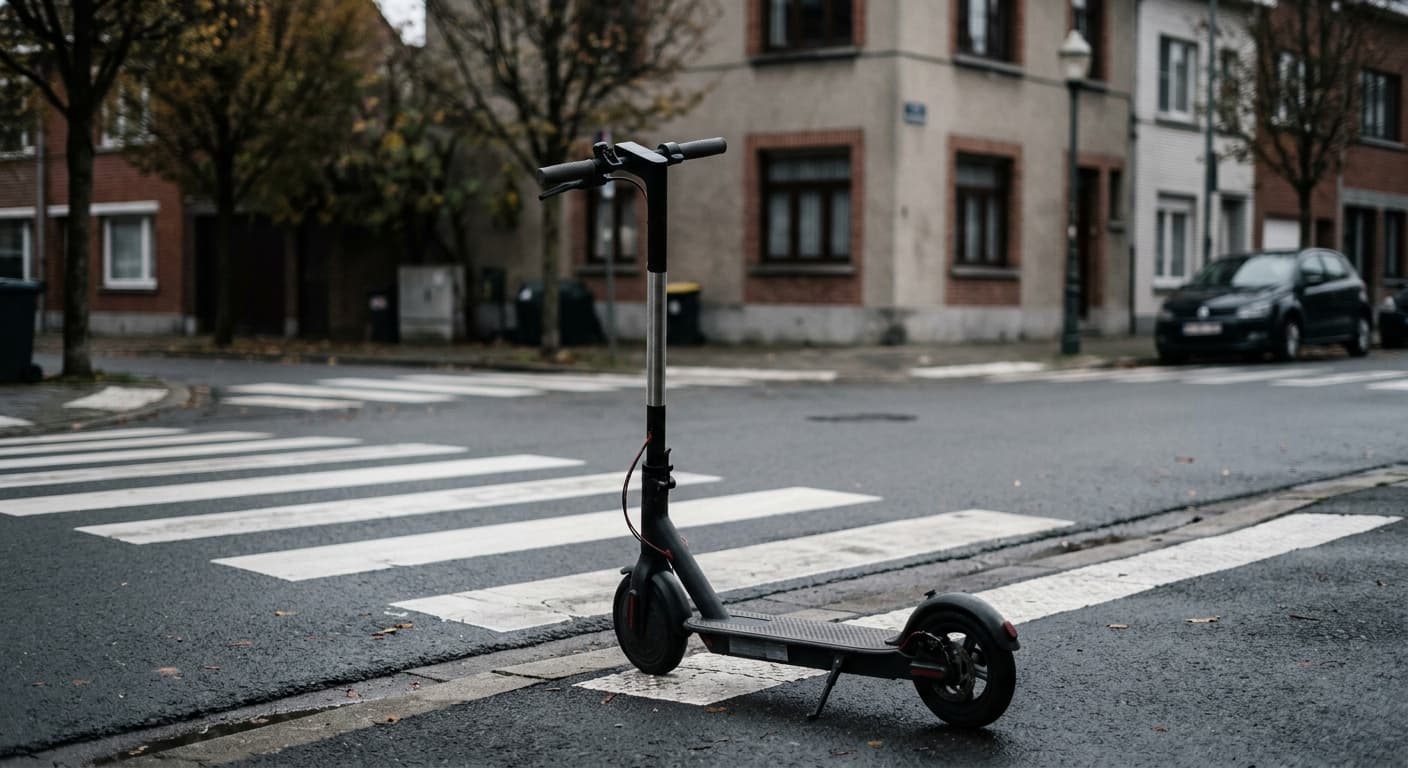
Florida E-Scooter Laws: Sidewalk, Helmet & Age Rules (2026)
Florida regulates e-scooters under Fla. Stat. section 316.2128 with bicycle rights and duties. There is no adult helmet or license rule, but riders under 16 must wear a helmet.
6 min read
205 articles · page 2 of 4
Florida regulates e-scooters under Fla. Stat. section 316.2128 with bicycle rights and duties. There is no adult helmet or license rule, but riders under 16 must wear a helmet.
Gabon applies the CEMAC road code, which has no separate moped category, so an electric scooter falls into its motor vehicle definition, requiring a permit and registration.
Georgia has no standup e-scooter statute; only EPAMD and electric-bike categories exist, and a 2019 law often cited for scooters actually covers electric bicycles instead.
Ghana's Road Traffic Act sets an 18-plus age floor for an electrically assisted pedal cycle, though whether that reaches a standing e-scooter is unresolved.
Greece's Law 5209/2025 sets a minimum e-scooter age of 12 and requires a helmet for every rider, a stricter rule than Greece applies to ordinary cyclists.
Grenada has never passed an e-scooter law. Its decades-old motor vehicle definition already reaches a powered scooter, with no lower-power exception found.
Guatemala's traffic code stops at a pedal-equipped motobicicleta category, so a standing e-scooter falls outside its vehicle taxonomy entirely, with no rule enacted.
Guinea's 2018 code covers e-scooters under its broad rolling-device category, but whether a small-engine licence exemption extends to electric motors is unresolved.
Guyana's 2023 amendment folds e-scooters into its motorcycle licensing regime, banning riders under 16 and requiring a full licence from age 18.
Hawaii's e-scooter helmet age just moved from under-16 to under-18 under Act 259, signed July 15, 2026. The minimum age to ride is 15, and the statewide speed cap is 15 mph.
Honduras's traffic law never defines motocicleta or motoneta, so whether e-scooters fall under its motorized-vehicle sweep is unresolved, with no age or helmet rule found.
E-scooters are illegal in public in Hong Kong today, carrying the harshest fine and jail exposure in the region. See the pending 2026 legalization bill.
Hungary's traffic code has no dedicated e-scooter category yet, so courts apply bicycle or moped analogies case by case until a new two-tier regime begins 1 September 2026.
Iceland sets a minimum e-scooter age of 13, not the often-repeated claim of no age limit, plus a helmet rule for riders under 16 and Reykjavik's own stricter roadway ban.
Idaho has no statewide electric scooter statute. Rules come entirely from city ordinance; a commonly cited Idaho Code section on e-scooters is refuted here.
Illinois requires riders to be 18 or older and lets cities opt in or stay out under 625 ILCS 5/11-1518. There is no statewide helmet requirement, and scooters cannot use state highways.
India exempts e-scooters under 250 watts and 25 km/h from registration and licensing nationally, but Delhi is reported to require both regardless of a device's power.
Indiana treats e-scooters like bicycles under IC 9-21-11-13.6, with no statewide age or helmet law. The device is capped at 20 mph and banned from interstate highways.
Indonesia's Permenhub 45/2020 sets a 25 km/h cap, a minimum age of 12, and mandatory helmets for e-scooters, though police enforcement leans toward warnings over fines.
Iowa has no dedicated electric scooter statute. Iowa Code 321.1(51A) classifies a standing kick scooter under 750 watts as a pedestrian conveyance, so riders generally follow pedestrian rules.
Iran's traffic police ban e-scooters from public streets, limiting riders to parks and designated routes, but admit no legal category exists to formally cite a violator.
Iraq's 2019 traffic law excludes powered two-wheelers from its bicycle and motorcycle categories, leaving e-scooters in a gap the broader vehicle definition may still reach.
Israel classifies e-scooters as a light transport vehicle capped at 25 km/h and 250 watts, with a widely reported minimum age of 16 and mandatory helmet use.
Côte d'Ivoire has no e-scooter statute, but the 2016 road code defines a motor vehicle by any mechanical propulsion device, wording that already covers an e-scooter.
Jamaica's 2018 Road Traffic Act still classifies e-scooters as motor cycles with no wattage or speed floor, treating them as ordinary vehicles for registration.
E-scooters have been legal nationwide in Japan since July 2023. See the 20 km/h cap, age 16 minimum, effort-only helmet rule, and the narrow sidewalk exception.
Jordan has no e-scooter statute, but its 2008 Traffic Law's broad motorcycle definition likely applies, implying registration, an 18-year age floor, and a mandatory helmet.
Kansas regulates e-scooters by applying its bicycle traffic rules, with no statewide age or helmet requirement. Wichita requires shared-scooter riders to be at least 18.
Kazakhstan caps e-scooters at 6 km/h on sidewalks under Article 168-1 and requires a helmet only on the roadway. Rental scooters need a licence from 1 July 2026.
Kentucky's KRS 189.289 sets a 16-and-up age rule for electric low-speed scooters and forbids the state from imposing a helmet requirement by regulation.
Kenya's Traffic Act has no e-scooter category, but its broad definitions sweep scooters into the same motorcycle rules, requiring a helmet, registration, and insurance.
Kuwait allows owning an e-scooter but has banned riding one on any public road, sidewalk, or footpath since October 2020, with violators risking a two-month vehicle seizure.
Kyrgyzstan created its first e-scooter category in 2026 for devices up to 0.25 kW or 25 km/h, with registration becoming mandatory six months after publication.
Laos exempts electric bicycles and low-speed e-scooters from vehicle registration, which also means no age, helmet, or speed rule governs how they are ridden.
Latvia has required state registration for private e-scooters since January 2024, alongside a minimum riding age of 14 paired with a bicycle or driving licence.
Lebanon has no e-scooter-specific law. E-scooters fall under its motorized-bicycle category, generally needing an 18-plus licence, and sidewalk riding is a listed violation.
In Lesotho, an e-scooter cannot qualify as a lenient moped because that category is combustion-only. It defaults to the full motor cycle regime instead.
Liberia's 1972 Vehicle and Traffic Law already defines motor vehicles to include electric propulsion, sweeping e-scooters into its existing motor scooter registration fee class.
Libya has no e-scooter law and, since 2014, no single national traffic authority. Here is what the 1984 traffic statute says and why enforcement barely applies.
Are e-scooters legal in Liechtenstein? The 500W/20 km/h light-motorbike category, the age 14-15 licence rule, no helmet requirement, and where riding is barred.
Lithuania tiers e-scooter access by age, from supervised courtyard riding under 10 to unrestricted road use at 16, with a general 20 km/h cap and a 7 km/h limit near pedestrians.
Louisiana requires a helmet only for riders under 17 and sets no minimum age for e-scooters. The statute's rental-and-commercial scope leaves privately owned scooters an open legal question.
Luxembourg's MVE category covers e-scooters up to 1,000 watts and 25 km/h, with no legal helmet requirement, though wearing one is strongly recommended.
Madagascar defines every moped and motorcycle category by a combustion engine, so an e-scooter defaults to the general motor vehicle regime, which still requires registration.
Maine defines 'motorized scooter' in 29-A MRS section 101(41-B): a license is required to ride, the speed cap is 20 mph, and no statewide helmet law was confirmed in the statute text.
Malawi's Road Traffic Act excludes only 'pedestrian-controlled' electric vehicles from its motor vehicle definition, leaving whether a ridden e-scooter qualifies an open legal question.
Malaysia has banned e-scooters from every public road since December 2021, limiting them to gazetted parks and pedestrian zones, with fines up to RM5,000 or jail time.
Malta allows privately owned, registered e-kickscooters, but banned nationwide commercial rental schemes from 1 March 2024, reportedly the first EU country to do so.
Maryland classifies e-scooters as bicycles, under 100 lb and 20 mph, requires a helmet under 16, and Jay's Law flipped the statewide sidewalk default to allowed as of October 2025.
Massachusetts e-scooter laws under MGL c.90 section 1E: a driver's license is required to ride, the speed cap is 20 mph, and the helmet rule applies to every rider, regardless of age.
Mauritania's road code names a velomoteur category, but gates it at 100cc, a figure an electric motor lacks. Here is what applies to e-scooters instead.
Mauritius has enforced a licence, insurance, and registration regime for electric-motor vehicles since March 2021, requiring a helmet with fines up to Rs5,000.
Mexico has no federal e-scooter law. Compare Guadalajara's 2024 rules with Mexico City's stricter VEMEPE/VEP regime taking effect in 2026, city by city.
Michigan law calls an e-scooter an 'electric skateboard.' The device is capped at 25 mph, no one under 12 may ride on a public street, and riders under 19 must wear a helmet.
Minnesota's motorized foot scooter law, Minn. Stat. 169.225, bans sidewalk riding, sets a minimum age of 12, and requires a helmet only for riders under 18.
Mississippi has no standup e-scooter statute; a 2020 bill defining one died in committee. State DOR guidance says scooters need local authorization to operate.
Missouri has no dedicated electric scooter statute. RSMo 307.180's motorized bicycle definition may apply, raising an unsettled question about whether a driver's license is required.
Are e-scooters legal in Moldova? The 2022 Regulamentul circulatiei rutiere amendment, technical thresholds, age and helmet rules, and where riding is allowed.
Mongolia banned riders under 18 from operating e-scooters starting 1 July 2026, after 532 accidents involving these devices in 2024, though adult rules were not confirmed.
Montana's motorized scooter law (MCA 61-1-101, 61-8-608) excludes scooters from motor vehicle DUI rules and allows sidewalk use only with the motor off.