
Illinois
Illinois E-Scooter Laws: Sidewalk, Helmet & Age Rules (2026)
Independently fact-checked against primary sources (last audited July 23, 2026). · 2 primary sources cited on this page. How we verify our legal content
This article is general information about Illinois e-scooter laws and is not legal advice. If you were cited or injured while riding, consult an Illinois attorney or check your municipality's current ordinance directly. Information last verified on 23 July 2026.
Are e-scooters legal in Illinois?
Illinois has a dedicated e-scooter statute, 625 ILCS 5/11-1518 ("Low-speed electric scooters"), created by Public Act 103-0899 and effective August 9, 2024. Unlike a state that simply stays silent and lets a scooter fall into a default vehicle category, Illinois wrote a specific rulebook for the device, and that rulebook is built around a local opt-in structure rather than a blanket statewide yes.
The statute lets a municipality, park district, forest preserve district, or conservation district "authorize and regulate the operation of low-speed electric scooters" on the highways under its jurisdiction, plus sidewalks, trails, and other public right-of-way where bicycles are permitted. A park district, forest preserve district, or conservation district can do so only on property it owns, manages, or leases. In practice, that means operation is not automatically legal everywhere in Illinois; it is legal where a public body has opted in, and off by default where none has.
Subsection (a-5) adds an authorizing body that is easy to miss. The Illinois Department of Natural Resources may authorize and regulate low-speed electric scooters on any property it owns, manages, or leases, and it may adopt administrative rules for them. On IDNR land, IDNR is the body that decides, not the surrounding municipality or park district, so checking only your city's ordinance can give you the wrong answer at a state-managed site.
Whether e-scooters are legal in your area therefore depends on what your city, park district, forest preserve district, conservation district, or IDNR has authorized, not just on the existence of the state law.
What counts as an e-scooter in Illinois
Illinois defines the device in its own section of the Vehicle Code. Under 625 ILCS 5/1-140.11, a low-speed electric scooter is "[a] device weighing less than 100 pounds, with 2 or 3 wheels, handlebars, and a floorboard that can be stood upon while riding, that is solely powered by an electric motor and human power, and whose maximum speed, with or without human propulsion, is no more than 10 miles per hour." The same section adds that the term "does not include a moped or motor-driven cycle."
A device that exceeds any of those limits, or that is a moped or motor-driven cycle, is not a low-speed electric scooter, and the rules described on this page do not govern it.
Do not confuse that 10 mph device cap with the separate roadway rule. A low-speed electric scooter cannot be operated on a highway with a posted speed limit above 35 mph. That figure describes the road you are riding on, not the machine's own top speed, and the two numbers should not be mixed up.
Where you can ride
Where riding is allowed at all depends first on local authorization, described above. Where a locality has opted in, the statute permits operation on "any or all highways under their respective jurisdiction, sidewalks, trails, or other public right-of-way where the operation of bicycles is permitted," subject to whatever conditions the local authorizing body sets.
Two statewide restrictions apply regardless of local authorization. First, low-speed electric scooters are not permitted on state highways at all. Second, even on a road where they are otherwise allowed, a scooter cannot be operated on any highway with a posted speed limit over 35 mph. These are hard statewide ceilings that a local authorization cannot override.
Rider rules
- Age: 18 or older statewide. The statute states plainly that "a person may not operate a low-speed electric scooter unless he or she is 18 years of age or older," a notably higher floor than the 12-to-16 range set by most neighboring Midwest states.
- Helmet: No statewide helmet requirement.
- License, registration, insurance: None required by the state statute.
- Lights and reflectors: This is a nighttime rule, not an always-on one. A scooter "in use at nighttime" must carry a lamp on the front emitting a white light visible from at least 500 feet, and a red reflector on the rear visible from 100 to 600 feet when lit by a vehicle's lawful low beams. A steady or flashing red rear lamp visible from 500 feet may be used "in addition to or instead of the red reflector," so the rear equipment the statute mandates is the reflector, with a rear lamp as an optional substitute or addition. Daytime riding carries no lighting requirement.
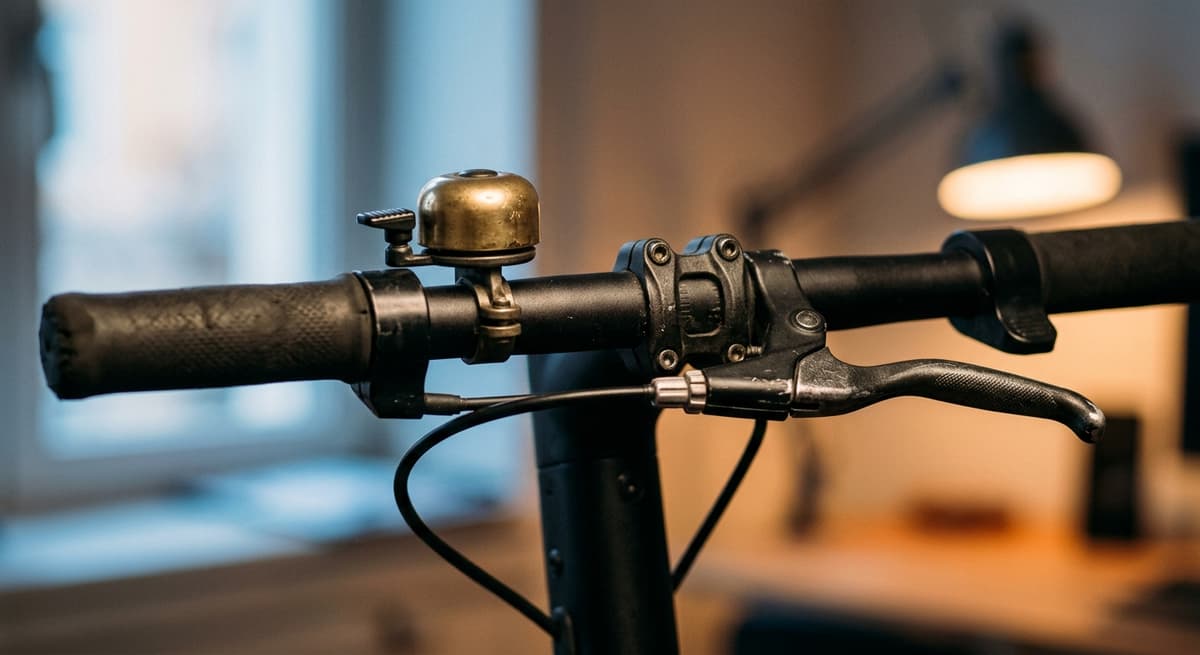
- Brakes: Every low-speed electric scooter must be equipped with "a brake that will adequately control movement of and stop and hold" it. This requirement is not limited to nighttime.
- Handlebar control and passengers: You cannot carry any package, bundle, or article that prevents you from keeping at least one hand on the handlebars, cannot carry more than one person at a time, and cannot attach yourself or the scooter to another vehicle being operated on the public right-of-way.
- Alcohol and drugs: Subsection (j) bars operating a low-speed electric scooter on any public highway in the state while under the influence of alcohol or any drug.
Penalties
625 ILCS 5/11-1518 does not itself set out a fine or penalty schedule for violating its provisions, but the Vehicle Code supplies a default. Under 625 ILCS 5/16-104, every person convicted of violating "any provision of this Code for which another penalty is not provided" is "guilty of a petty offense" for a first or second conviction, and "guilty of a Class C misdemeanor" for a third or subsequent conviction within one year after the first. Because 11-1518 prescribes no penalty of its own, that default is what applies to its rules.
Local ordinance sits on top of that. Because the statute's core mechanism is local authorization, riding where a locality has not opted in, or breaking the specific conditions a local authority attached to its authorization, can also carry a penalty set by that municipality, park district, forest preserve district, or conservation district. Those local amounts vary, so check the ordinance that applies where you ride.
Enforcement in practice
No statewide e-scooter enforcement data was verified for this page. Because Illinois's model puts the legal question itself in local hands, enforcement is also inherently local, and how actively a given municipality or park district enforces its own scooter rules can vary widely. Enforcement patterns do not change what the statute and any applicable local authorization require, and a lack of visible ticketing in a given area is not the same as scooters being permitted there.
Chicago e-scooter rules
Chicago is Illinois's largest city and has run e-scooter sharing programs in past years, but this page's research could not access chicago.gov's scooter rules or the relevant Municipal Code chapter directly to independently verify the city's current requirements. Reported figures circulating online, such as a minimum age around 18 (or 16 with parental consent for shared scooters), a helmet recommendation, and a lower first-trip or standard speed cap on shared devices, were not independently confirmed for this page and should not be treated as certain. Check the City of Chicago's own current shared-mobility rules and Municipal Code before relying on any of those specifics, and remember that Chicago's local rules apply on top of, and can be stricter than, the state statute described above.
The e-scooter statute addresses impairment directly rather than leaving it to general law: subsection (j) provides that a person "may not operate a low-speed electric scooter upon any public highway in the State while under the influence of alcohol or any drug." If a crash involving an e-scooter happens on an Illinois road, ordinary negligence law can also apply. If you were hurt in one, get a free consultation from an Illinois personal injury lawyer on how negligence law applies to your crash (attorney advertising). See RecordingLaw's Illinois DUI Laws and Illinois Car Accident Laws pages for more, and RecordingLaw's E-Scooter Laws by State hub to compare Illinois with other states.
Frequently Asked Questions
Can I ride an e-scooter on the sidewalk in Illinois?
Only where the responsible public body has authorized scooter operation on sidewalks where bicycles are also permitted. That is usually a municipality, park district, forest preserve district, or conservation district, or the Illinois Department of Natural Resources on property it owns, manages, or leases. Illinois's e-scooter law is opt-in, so this depends on where you are.
Do I need a license or insurance to ride an e-scooter in Illinois?
No. The state statute does not require a license, registration, or insurance for e-scooters.
Do I need to wear a helmet in Illinois?
There is no statewide helmet requirement for e-scooters in Illinois, though a local authority could add one as a condition of its own authorization.
How old do you have to be to ride an e-scooter in Illinois?
18 or older statewide. Illinois sets a higher minimum age than most nearby states, which commonly set the floor at 12 or 16.
Are e-scooters legal in Chicago?
Chicago has run its own scooter-sharing programs, but this page could not independently confirm the city's current ordinance details. Check the City of Chicago's own current rules before relying on secondhand figures.
Can I ride an e-scooter on a state highway in Illinois?
No. State law bars e-scooters from state highways entirely, and bars them from any highway posted above 35 mph even where otherwise allowed.
Updates
Corrected the Illinois e-scooter equipment rule (lighting applies only at night, and the rear device required is a red reflector), added the Department of Natural Resources as an authorizing body on state-managed land, replaced the unanswered penalties note with the Vehicle Code default in 625 ILCS 5/16-104, and cited the statutory definition in 625 ILCS 5/1-140.11 directly.
Independently fact-checked against the cited primary sources
The Law Behind This Article
This article rests on the statutory provisions below, held in our own legal record and retrieved from the official source. Tap a section to read the operative text.
Illinois Compiled Statutes Chapter 625, Act 5 (Illinois Vehicle Code)
§ 11-1518Low-speed electric scootersIn force
(a) Subject to the restrictions of this Section, a municipality, park district, forest preserve district, or conservation district may authorize and regulate the operation of low-speed electric scooters within the unit of local government on any or all highways under their respective jurisdiction, sidewalks, trails, or other public right-of-way where the operation of bicycles is permitted. The use of low-speed electric scooters within any municipality, park district, forest preserve district, or conservation district is allowed only if authorized by the municipality, park district, forest preserve district, or conservation district under this Section. Any authorization or regulation by a park district, forest preserve district, or conservation district applies only on property owned, managed, or leased by the park district, forest preserve district, or conservation district.
Official text (excerpt) · last checked 2026-09-07 · Read the full text in our law library · Verify at ilga.gov
§ 1-140.11Low-speed electric scooterIn force
A device weighing less than 100 pounds, with 2 or 3 wheels, handlebars, and a floorboard that can be stood upon while riding, that is solely powered by an electric motor and human power, and whose maximum speed, with or without human propulsion, is no more than 10 miles per hour. "Low-speed electric scooter" does not include a moped or motor-driven cycle.
Official text (excerpt) · last checked 2026-07-29 · Read the full text in our law library · Verify at ilga.gov
§ 16-104PenaltiesIn forcecited in 3 of our articles
Every person convicted of a violation of any provision of this Code for which another penalty is not provided shall, for a first or second conviction thereof, be guilty of a petty offense and, for a third or subsequent conviction within one year after the first conviction, be guilty of a Class C misdemeanor.
Official text (excerpt) · last checked 2026-07-29 · Read the full text in our law library · Verify at ilga.gov
Cited in 6 court opinions in our collectionLatest citing opinion in our collection: 2018
Opinions citing this section in our collection:
- People v. Cox (Illinois Supreme Court 2002, 202 Ill. 2d 462)“…12-201(c) (West 2000) (requiring rear registration light); 625 ILCS 5/16-104 (West 2000) (violations of provisions o…”
- People v. Gaytan (Illinois Supreme Court 2015, 2015 IL 116223)“…A violation of section 3-413(b) is a petty offense (625 ILCS 5/16-104 (West 2010)), punishable by fine…”
- People v. Moorman (Appellate Court of Illinois 2006, 307 Ill. Dec. 428)“…eration of a vehicle with an expired registration sticker); 625 ILCS 5/16-104 (West 2002) (an Illinois Vehicle Code v…”
Identified automatically from the court opinions citing this section — not a ranking of which case controls.
Also relied on in: Illinois License Plate Reader Laws (2026), Illinois Windshield Mounting Laws (2026 Guide)
Search our full record of US law — 2.1 million sections, every state + federal →
Sources and References
- 625 ILCS 5/11-1518, Low-speed electric scooters (full text)(ilga.gov).gov
- Illinois General Assembly, Public Act 103-0899 (creating 625 ILCS 5/11-1518)(ilga.gov).gov
- RecordingLaw.com, Illinois DUI Laws(recordinglaw.com)
- RecordingLaw.com, Illinois Car Accident Laws(recordinglaw.com)
- 625 ILCS 5/1-140.11, Low-speed electric scooter (statutory definition)(ilga.gov)
- 625 ILCS 5/16-104, Penalties (Illinois Vehicle Code default penalty)(ilga.gov)
Paid attorney referral. RecordingLaw may receive compensation when you use an attorney-help link. RecordingLaw is not a law firm. Submitting a request does not guarantee that an attorney will accept your case and does not create an attorney-client relationship.