Lebanon E-Scooter Laws: Swept Into the Moped Category (2026)
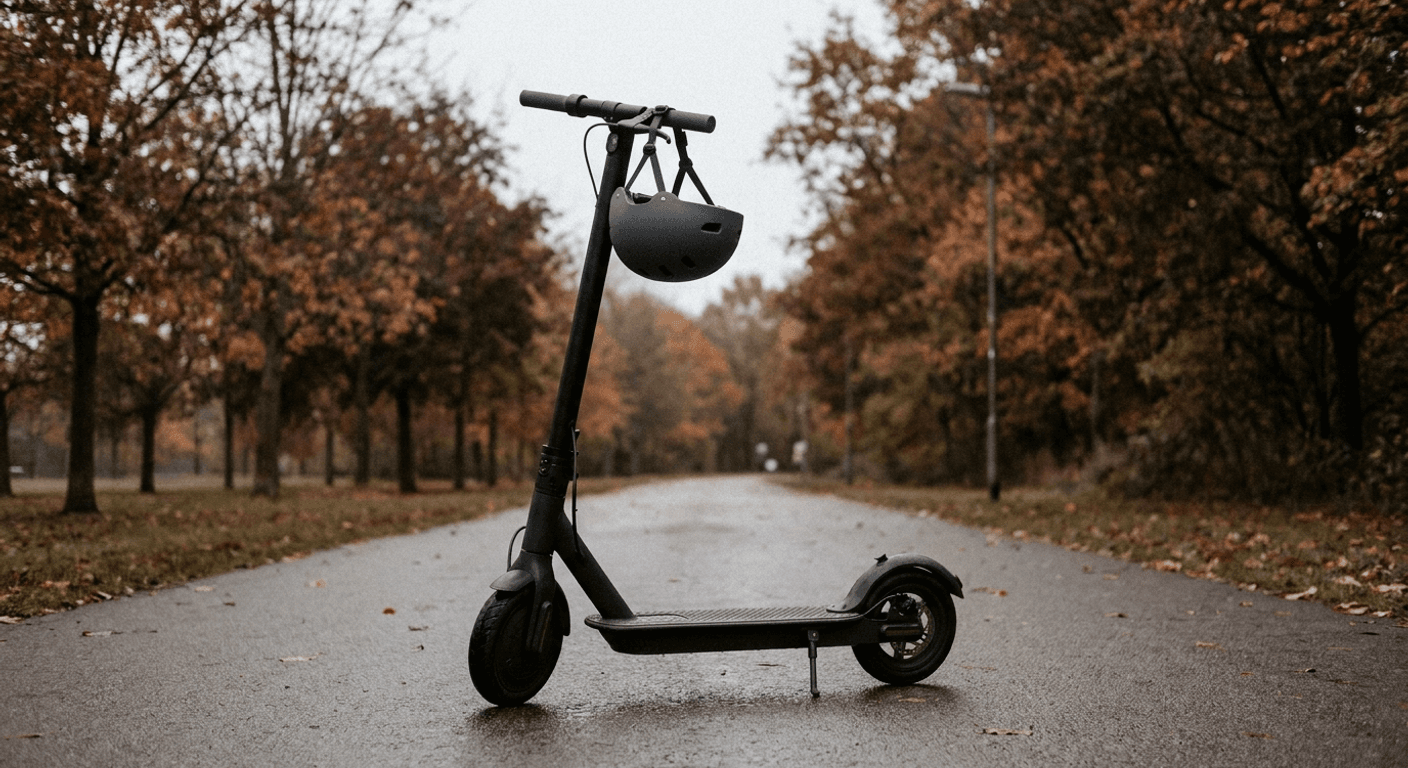
This article is general information about e-scooter rules in Lebanon and is not legal advice. Because a widely circulated claim about a specific Lebanese "e-scooter law" is actually satire, readers should be especially careful about the source of any legal claim they see repeated online. For a specific situation, consult a Lebanese lawyer or the Internal Security Forces (ISF) directly. Information last verified on 23 July 2026.
Are e-scooters legal in Lebanon?
Lebanon has no law written specifically for e-scooters, but that does not mean the law is silent about them. Law No. 243 of 22 October 2012, Lebanon's New Traffic Law, defines several vehicle categories in Article 2. A "vehicle" (item 11) is broadly "any means of transport with wheels that moves by mechanical or bodily force," a catch-all that literally includes an e-scooter. Within that, a "bicycle" ("draja hawa'iya," item 20) is defined as a vehicle with two, three, or four wheels, not equipped with a motor, moved instead by the rider's own power, which explicitly excludes anything with a motor. A "draja aliya" (item 19), the term Lebanon uses to cover motorcycles and mopeds together, is defined as a motorized vehicle with two or three wheels whose empty weight does not exceed 400 kg, with no minimum engine size or power stated at all.
Put those together and the effect is direct: an e-scooter has wheels and a motor, so it cannot be a "draja hawa'iya" (bicycle), which by definition has no motor. Because "draja aliya" sets no lower power floor, unlike, for example, Iraq's 40cc floor, an e-scooter falls into that category by elimination. In practice, Lebanese law treats an e-scooter the way it treats a small motorcycle or moped, not the way it treats a bicycle.
A warning about a false claim. A frequently shared article describing a specific "new traffic law for scooters in Lebanon" is 2013 satire, not a real law. It should not be cited, repeated, or relied on for any legal question about e-scooters in Lebanon, and its continued circulation online is itself a reason to be cautious about scooter-law claims that do not point to an actual statute.
Rider rules
Article 99's licensing table requires a driving license for the "draja" (motorcycle) category, split into power bands, and sets the minimum age at 18 for private use across those bands. There is no low-power exemption bracket comparable to the EU's reduced-age moped class.
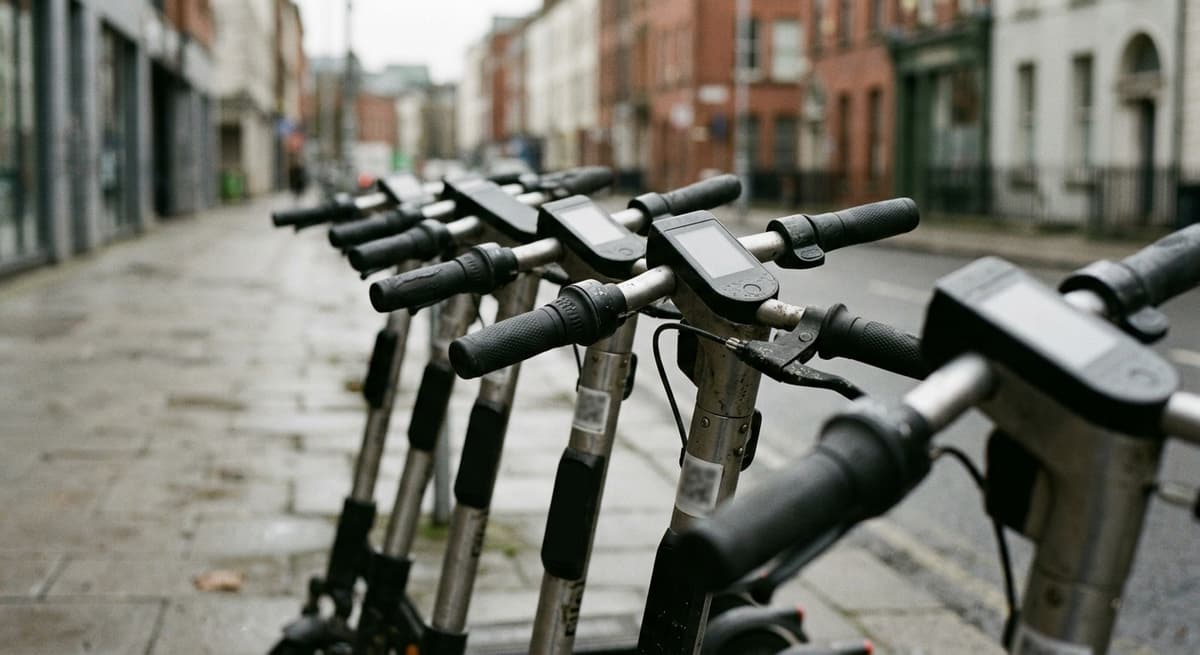
There is one narrow, explicit carve-out for small electric devices: vehicles with electric motors are exempt from needing a driving license if the motor's power does not exceed 1 kilowatt, which covers the great majority of consumer e-scooters (typically 250 to 800 watts). But the same clause attaches a strict condition: these vehicles may not be used on public roads at all. This is a narrowing, not a legalization. It removes the license requirement for very low-power devices used on private property, while barring exactly the public-road use most riders actually want to do.
General registration rules elsewhere in the law require that no vehicle be driven unless registered and licensed, which attaches to a draja aliya like any other motorized vehicle.
Where you can ride
Riding a draja aliya on a sidewalk or on paths designated for pedestrians is explicitly listed as a punishable violation in the law's fine schedule. Combined with the 1kW exemption's public-road ban, the practical picture is narrow: an e-scooter under 1kW may only be used off public roads without a license, and once it is on a public road, sidewalk use is a listed offense regardless of power.
Penalties
The fine schedule lists sidewalk riding by a draja aliya as a punishable violation, and separately lists carrying an additional rider under age 10 on a draja aliya as a violation. A helmet mandate is explicitly confirmed for ordinary pedal-bicycle riders, with three separate line items covering a non-compliant helmet, an unsecured strap, and no helmet at all, at the lowest fine tier with no license points. Whether an equivalent, explicit helmet clause covers draja aliya riders specifically was not confirmed in the research available for this article, though the fine table's category structure suggests one likely exists at a higher tier. Exact article numbers for the 1kW exemption and the sidewalk violation could not be pinned down precisely due to a digit-formatting issue in the source PDF; both are cited here by content and by page location in the ISF's official document instead.
Enforcement in practice
Lebanon's Internal Security Forces run active, visible traffic enforcement campaigns; the ISF's own site recently reported a Beirut-area campaign impounding nearly 2,000 motorcycles and 231 vehicles and issuing over 11,000 citations in a roughly two-and-a-half-week period. That gives a sense of how seriously Lebanon enforces motor-vehicle rules generally, but no source reviewed for this article documents enforcement activity against e-scooters specifically. Some Arabic-language commentary suggests current legal texts do not clearly settle the e-scooter question, but reading the definitions chain end to end shows the statute itself is fairly clear, an e-scooter is a draja aliya and sidewalk riding is a listed violation. What is genuinely uncertain is not the law but how consistently the ISF enforces it against e-scooters in practice; this article recommends treating enforcement as minimal to unconfirmed, not as evidence the law itself is ambiguous.
For how Lebanon's position compares with other countries, see the world e-scooter laws guide.
Frequently Asked Questions
Are e-scooters legal in Lebanon?
There is no e-scooter-specific law, but Lebanon's 2012 Traffic Law sweeps e-scooters into its motorized-bicycle (draja aliya) category by definition, since that category sets no minimum power floor. That brings a license requirement, a minimum age of 18, and a sidewalk-riding ban, unless the device is under 1 kilowatt and kept entirely off public roads.
Is the claim about a 2013 Lebanese e-scooter law real?
No. A widely circulated article describing a specific new traffic law for scooters in Lebanon from 2013 is satire, not a real statute. It should not be relied on for any legal question.
Do I need a license to ride an e-scooter in Lebanon?
Generally yes, under the draja aliya licensing rules, with a minimum age of 18. There is a narrow exception: electric motors under 1 kilowatt do not require a license, but that exemption only applies off public roads, so it does not cover ordinary street riding.
Can I ride an e-scooter on the sidewalk in Lebanon?
No. Riding a motorized bicycle (draja aliya), the category e-scooters fall into, on a sidewalk or pedestrian path is an explicitly listed punishable violation under Lebanon's traffic law.
Is a helmet required to ride an e-scooter in Lebanon?
A helmet mandate is explicitly confirmed for ordinary pedal-bicycle riders. Whether an equivalent rule explicitly covers motorized-bicycle riders was not confirmed, though the structure of the fine schedule suggests one likely exists.
How actively does Lebanon enforce e-scooter rules?
No source found for this article documents enforcement activity against e-scooters specifically, even though Lebanon's Internal Security Forces run active, well-documented enforcement campaigns against motor vehicles generally. Treat enforcement against e-scooters as unconfirmed rather than assuming it is either strict or absent.
Sources and References
- Law No. 243 of 22 October 2012, "New Traffic Law," official ISF-hosted text, Article 2 definitions and Article 99 licensing table(isf.gov.lb).gov
- Internal Security Forces (ISF) of Lebanon, official laws index(isf.gov.lb).gov
- Internal Security Forces (ISF) of Lebanon, official homepage, current traffic enforcement campaign statistics(isf.gov.lb).gov
- Lebanese Parliament, official site (laws archived by year, no standalone e-scooter entry)(lp.gov.lb).gov