
Michigan
Michigan E-Scooter Laws: Sidewalk, Helmet & Age Rules (2026)
Independently fact-checked against primary sources (last audited July 23, 2026). · Law checked current as of August 8, 2026. · 3 primary sources cited on this page. How we verify our legal content
This article is general information about Michigan e-scooter laws and is not legal advice. If you were cited or injured while riding, consult a Michigan attorney or check your municipality's current ordinance directly. Information last verified on 7 September 2026.
Are e-scooters legal in Michigan?
Yes, but Michigan's vehicle code does not use the term "electric scooter" at all. What most people mean by an e-scooter, a stand-up device with a floorboard and handlebars, is legally classified as an "electric skateboard" under MCL 257.13f, with a handlebar-equipped version treated as a variant of that same category rather than as its own vehicle type. This naming choice surprises a lot of readers, but it is the actual statutory term Michigan uses, and it is the label to search for if you want to look up the law yourself.
What counts as an e-scooter in Michigan
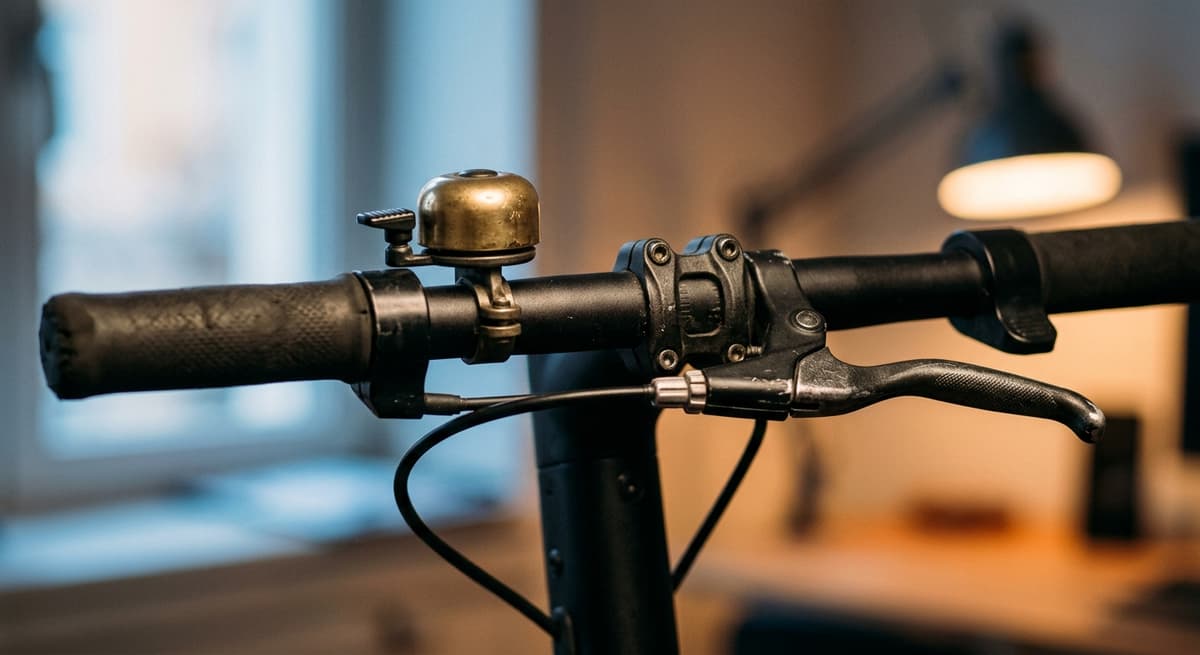
MCL 257.13f defines an electric skateboard as "a wheeled device that has a floorboard designed to be stood upon when riding that is no more than 60 inches long and 18 inches wide, is designed to transport only 1 person at a time, has an electrical propulsion system with power of no more than 2,500 watts, and has a maximum speed on a paved level surface of not more than 25 miles per hour." The device may have handlebars and may combine electric and human propulsion. A standard rental or personal kick scooter with handlebars and a throttle fits this definition as an "electric skateboard equipped with handlebars."
Where you can ride
MCL 257.660 sets the device speed cap at 25 mph, but the road you can legally use depends on whether your device has handlebars, and the two speed-related numbers here should not be confused with each other:
- An electric skateboard without handlebars cannot be operated on a highway or street with a posted speed limit above 25 mph, except to cross it.
- An electric skateboard with handlebars, meaning the typical stand-up scooter shape, cannot be operated on a highway or street with a posted speed limit above 45 mph, except to cross it.
So a handlebar scooter gets a materially higher road-speed-limit ceiling than a non-handlebar board, even though both device types share the same 25 mph top speed. Riders must stay near the right side of the roadway, and on a sidewalk must yield to pedestrians and give an audible signal before passing.
Local authority matters here too. Under MCL 257.660(12), the governing body of a county, city, village, or township may by ordinance regulate the operation of electric skateboards on sidewalks, highways, streets, or crosswalks within its jurisdiction, and may prohibit them outright in an area open to pedestrian traffic adjacent to a waterfront, on a trail under its jurisdiction, in a downtown or central business district, or on a street that includes streetcar tracks. Signs indicating the regulation must be conspicuously posted where it applies.
Three further restrictions sit in the statute itself and need no local ordinance at all:
- MCL 257.660(13): Operating an electric skateboard is prohibited in a special charter city and in a state park under the jurisdiction of the Mackinac Island State Park Commission. This is a flat statewide ban, not a power a locality has to exercise first.
- MCL 257.660(14): Operation may be prohibited in a historic district.
- MCL 257.660(15): The Department of Natural Resources may by order regulate the use of electric skateboards on all lands under its control.
Rider rules
- Age: No one under 12 may operate an electric skateboard on a public highway or street, under MCL 257.658(9).
- Helmet: Anyone under 19 operating an electric skateboard must wear a crash helmet, under MCL 257.658(4). Helmets must be approved by the Michigan Department of State Police under MCL 257.658(6). This age-19 helmet floor is notably higher than the under-18 or under-16 rules some neighboring states use.
- Passengers: An electric skateboard cannot carry more than one person at a time, under MCL 257.658(3).
- License, registration, insurance: None of the three is required. MCL 257.33 expressly states that "motor vehicle" does not include an electric skateboard, and Michigan's registration and title requirement in MCL 257.216 and its operator's license requirement in MCL 257.301 both reach motor vehicles only. No-fault security under MCL 500.3101 is owed by the owner or registrant of a motor vehicle required to be registered in Michigan, which an electric skateboard is not.
Lights, reflectors, and brakes
Michigan's equipment rule for these devices is MCL 257.662, and it names the electric skateboard directly.
- Night riding: An electric skateboard operated on a roadway between 1/2 hour after sunset and 1/2 hour before sunrise must be equipped with a lamp on the front that emits a white light visible from at least 500 feet ahead, plus a red reflector on the rear visible from 100 feet to 600 feet behind when caught by a vehicle's lower beams. A red rear lamp visible from 500 feet may be added, but it does not replace the required reflector.
- Stopping: MCL 257.662(3) requires an electric skateboard to enable the operator to bring it to a controlled stop.
Riding at night without the required lamp and reflector is a civil infraction under MCL 257.662(6), which is a ticket rather than a misdemeanor.
Penalties
MCL 257.660 does not attach a penalty of its own to the e-scooter operating rules, so the Michigan Vehicle Code's general default takes over. Under MCL 257.901(1), it is a misdemeanor to violate the code unless the violation is declared by law to be a felony or a civil infraction. MCL 257.901(2) then sets the punishment, absent another penalty in the act: a fine of not more than $100.00, imprisonment for not more than 90 days, or both.
Nothing in MCL 257.660 declares its violations civil infractions, so that misdemeanor default is what governs the riding rules. The contrast is visible one section over: MCL 257.662(6) expressly makes a lighting and reflector violation a civil infraction, which is exactly the kind of declaration MCL 257.660 lacks.
A local ordinance adopted under a county, city, village, or township's regulatory authority can carry its own separate penalty schedule on top of the state default.
Enforcement in practice
Enforcement of Michigan's road-speed-limit, age, and helmet rules is a local police matter, and how actively they are enforced can vary a great deal by community. Enforcement patterns do not change what the statute requires, and the absence of visible ticketing in a given area does not mean the rule does not apply there.
Detroit e-scooter rules
Detroit has hosted shared e-scooter programs, but the city's current scooter ordinance could not be reached from an official City of Detroit source for this page, so no Detroit-specific figures are stated here.
The framework around it is clear enough. Under MCL 257.660(12), Detroit may regulate electric skateboard use on its sidewalks, streets, and crosswalks by ordinance, and may prohibit it in areas such as a downtown or central business district, a waterfront pedestrian area, a city trail, or a street with streetcar tracks, with signs posted where the rule applies. Separately, a shared-scooter company's permit terms and in-app geofencing can restrict where a rental scooter will operate at all, which is a contractual limit rather than a legal one. What does not change is the state floor: the age-12 minimum and the under-19 helmet requirement in MCL 257.658 apply in Detroit whether or not the city restates them. Check the City of Detroit's own current rules, and the operator's app terms if you are riding a rental, before riding downtown.
If a crash involving an e-scooter happens on a Michigan road, ordinary negligence law and, where alcohol or drugs are involved, DUI law can still apply. See RecordingLaw's Michigan DUI Laws and Michigan Car Accident Laws pages for more, and RecordingLaw's E-Scooter Laws by State hub to compare Michigan with other states.
Frequently Asked Questions
Is an e-scooter legally a skateboard in Michigan?
Yes. Michigan's vehicle code has no separate 'electric scooter' category. A stand-up scooter with handlebars is classified as an 'electric skateboard equipped with handlebars' under MCL 257.13f.
Can I ride an e-scooter on the sidewalk in Michigan?
State law allows sidewalk riding while requiring riders to yield to pedestrians and give an audible signal before passing, but under MCL 257.660(12) a county, city, village, or township can regulate or prohibit sidewalk use by ordinance, with signs posted where the rule applies.
How old do you have to be to ride an e-scooter in Michigan?
At least 12. No one under 12 may operate an electric skateboard on a public highway or street under MCL 257.658(9).
Do I need a helmet in Michigan?
Yes, if you are under 19. MCL 257.658(4) requires anyone under 19 operating an electric skateboard to wear a crash helmet, and MCL 257.658(6) requires that the helmet be approved by the Michigan Department of State Police.
How fast can I ride an e-scooter on a Michigan road?
The device itself is capped at 25 mph. But which roads you can use depends on whether it has handlebars: non-handlebar boards are limited to roads posted 25 mph or under, while handlebar scooters can use roads posted up to 45 mph.
Do I need lights to ride an e-scooter at night in Michigan?
Yes. MCL 257.662(1) requires a white front lamp visible from at least 500 feet and a red rear reflector visible from 100 to 600 feet when you operate on a roadway between 1/2 hour after sunset and 1/2 hour before sunrise. Riding without them is a civil infraction under MCL 257.662(6).
What is the penalty for breaking Michigan's e-scooter rules?
MCL 257.660 sets no penalty of its own, so the Michigan Vehicle Code default in MCL 257.901 applies: a misdemeanor punishable by a fine of up to $100.00, up to 90 days in jail, or both. The lighting rule is the exception, since MCL 257.662(6) makes that a civil infraction. A local ordinance can add its own penalty.
Do I need a license, registration, or insurance for an e-scooter in Michigan?
No. MCL 257.33 excludes an electric skateboard from the definition of 'motor vehicle,' and Michigan's registration requirement (MCL 257.216), operator's license requirement (MCL 257.301), and no-fault security requirement (MCL 500.3101) all apply to motor vehicles only.
Are Detroit's e-scooter rules different from the state's?
Detroit's current ordinance could not be reached from an official city source for this page, so no Detroit-specific figures are given here. State law lets the city regulate or prohibit scooter use on its sidewalks, streets, and crosswalks, but Michigan's age-12 minimum and under-19 helmet rule apply in Detroit either way. Check the City of Detroit's own current rules before riding.
Updates
Added Michigan's statutory penalty for e-scooter violations (MCL 257.901), the night-riding lamp and reflector requirement (MCL 257.662), and the statewide bans in MCL 257.660(13)-(15); corrected the helmet citation to MCL 257.658(4); confirmed no license, registration, or insurance is required; and removed unverified Detroit ordinance details.
Governing law re-checked for recent changes
Independently fact-checked against the cited primary sources
The Law Behind This Article
This article rests on the statutory provisions below, held in our own legal record and retrieved from the official source. Tap a section to read the operative text.
Michigan Compiled Laws
§ 257.660Electric personal assistive mobility device, low-speed vehicle, commercial quadricycle; electric skateboard, or moped; operation; limitations; applicability to police officer; regulation by local government; prohibitions; regulation by department of natural resourcesIn forcecited in 5 of our articles
(1) A person operating an electric personal assistive mobility device, low-speed vehicle, electric skateboard, or moped upon a roadway shall ride as near to the right side of the roadway as practicable, shall exercise due care when passing a standing vehicle or a vehicle proceeding in the same direction, and shall not block, delay, or otherwise interfere with the movement of a streetcar on a streetcar track. (2) A motorcycle is entitled to full use of a lane, and a motor vehicle must not be driven in such a manner as to deprive a motorcycle of the full use of a lane. This subsection does not apply to motorcycles operated 2 abreast in a single lane or to the operation of a motorcycle in a manner that blocks, delays, or otherwise interferes with the movement of a streetcar on a streetcar track. (3) A person riding an electric personal assistive mobility device, motorcycle, electric skateboard, or moped upon a roadway shall not ride more than 2 abreast except on a path or part of a roadway set aside for the exclusive use of those vehicles.
Official text (excerpt) · last checked 2026-09-07 · Read the full text in our law library · Verify at legislature.mi.gov
Cited in 7 court opinions in our collectionLatest citing opinion in our collection: 1991
Opinions citing this section in our collection:
- Farm Bureau Mutual Insurance v. Stark (Michigan Supreme Court 1991, 437 Mich. 175)“…(prohibiting attachment to other vehicles on the highway); MCL 257.660; MSA 9.2360 (prohibiting moped use on s…”
- Roy v. Department of Transportation (Michigan Supreme Court 1987, 428 Mich. 330)“…e rider shall use that path and shall not use the roadway.” MCL 257.660(3); MSA 9.2360(3). Furthermore, bicycli…”
- Massey v. Scripter (Michigan Supreme Court 1977, 401 Mich. 385)“…re riding their bicycle against the traffic in violation of MCLA 257.660; MSA 9.2360, which provides in part:…”
Identified automatically from the court opinions citing this section — not a ranking of which case controls.
Also relied on in: Motorcycle Accident Laws in Michigan (2026): Deadlines & Helmets, Is Lane Splitting Legal in Michigan? (2026 Motorcycle Law)
§ 257.658Riding on seat of bicycle, motorcycle, moped, electric skateboard, or electric personal assistive mobility device; number of persons; wearing of crash helmet; conditions; rules; requirements for autocycleIn forcecited in 4 of our articles
(1) A person propelling a bicycle or operating a motorcycle or moped shall not ride other than upon and astride a permanent and regular seat attached to that vehicle. (2) A bicycle or motorcycle shall not be used to carry more persons at 1 time than the number for which it is designed and equipped. (3) An electric personal assistive mobility device or an electric skateboard shall not be used to carry more than 1 person at a time. (4) A person less than 19 years of age operating a moped on a public thoroughfare shall wear a crash helmet on his or her head. A person less than 19 years of age operating an electric skateboard shall wear a crash helmet on his or her head. Except as provided in subsection (5), a person operating or riding on a motorcycle shall wear a crash helmet on his or her head.
Official text (excerpt) · last checked 2026-07-30 · Read the full text in our law library · Verify at legislature.mi.gov
Cited in 8 court opinions in our collectionLatest citing opinion in our collection: 2025
Opinions citing this section in our collection:
- People v. Poucher (Michigan Supreme Court 1976, 398 Mich. 316)“…ce is unconstitutional should be reinstated. NOTES [1] MCLA 257.658(d); MSA 9.2358(d). Within two months, t…”
- People of Michigan v. Daryl Gene Robtoy (Michigan Court of Appeals 2025)“…legally required to have a seat for each person riding it. MCL 257.658(2). The taking of a breath sam…”
- Estate of Swick v. Farm Bureau Insurance Company (Michigan Court of Appeals 2016)“…hat PIP benefits should have nevertheless been precluded by MCL 257.658. We disagree. “When a statute’…”
Identified automatically from the court opinions citing this section — not a ranking of which case controls.
§ 257.13f"Electric skateboard" definedIn forcecited in 3 of our articles
"Electric skateboard" means a wheeled device that has a floorboard designed to be stood upon when riding that is no more than 60 inches long and 18 inches wide, is designed to transport only 1 person at a time, has an electrical propulsion system with power of no more than 2,500 watts, and has a maximum speed on a paved level surface of not more than 25 miles per hour. An electric skateboard may have handlebars and, in addition to having an electrical propulsion system with power of no more than 2,500 watts, may be designed to also be powered by human propulsion.
Official text (excerpt) · last checked 2026-07-30 · Read the full text in our law library · Verify at legislature.mi.gov
Also relied on in: E-Scooter Laws by State: Sidewalk, Helmet & Age Rules (2026)
§ 257.216Vehicles subject to registration and certificate of title provisions; pandemic expiration extensionIn forcecited in 2 of our articles
(1) Every motor vehicle, recreational vehicle, trailer, semitrailer, and pole trailer, when driven or moved on a street or highway, is subject to the registration and certificate of title provisions of this act except the following: (a) A vehicle driven or moved on a street or highway in conformance with the provisions of this act relating to manufacturers, transporters, dealers, or nonresidents. (b) A vehicle that is driven or moved on a street or highway only for the purpose of crossing that street or highway from 1 property to another. (c) An implement of husbandry. (d) Special mobile equipment. The secretary of state may issue a special registration to an individual, partnership, corporation, or association not licensed as a dealer that pays the required fee, to identify special mobile equipment that is driven or moved on a street or highway. (e) A vehicle that is propelled exclusively by electric power obtained from overhead trolley wires though not operated on rails. (f) Any vehicle subject to registration, but owned by the government of the United States.
Official text (excerpt) · last checked 2026-07-30 · Read the full text in our law library · Verify at legislature.mi.gov
Cited in 58 court opinions in our collectionLatest citing opinion in our collection: 2026
Opinions citing this section in our collection:
- Farm Bureau Mutual Insurance v. Stark (Michigan Supreme Court 1991, 437 Mich. 175)“…in numerous sections of the Motor Vehicle Code. See, e.g., MCL 257.216(1); MSA 9.1916(1), MCL 257.312a(2); MSA…”
- Lee v. Detroit Automobile Inter-Insurance Exchange (Michigan Supreme Court 1982, 412 Mich. 505)“…sbandry’, excepted from [the] registration [requirement] by MCL 257.216(c); MSA 9.1916(c), and MCL 257.21; MSA…”
- Parks v. Detroit Automobile Inter-Insurance Exchange (Michigan Supreme Court 1986, 426 Mich. 191)“…wned vehicles are not subject to registration requirements, MCL 257.216(f); MSA 9.1916(f), the vehicle was not…”
Identified automatically from the court opinions citing this section — not a ranking of which case controls.
§ 257.301Valid operator's or chauffeur's license required; group designation and indorsements; surrender of other valid licenses; notice; number of licenses permitted; certifying nonpossession of valid license; pandemic expiration extensionIn forcecited in 2 of our articles
(1) Except as provided in this act, an individual shall not drive a motor vehicle on a highway in this state unless that individual has a valid operator's or chauffeur's license with the appropriate group designation and indorsements for the type or class of vehicle being driven or towed. A resident of this state holding a commercial driver license group indorsement issued by another state shall apply for a license transfer within 30 days after establishing domicile in this state. (2) An individual shall not receive a license to operate a motor vehicle until that individual surrenders to the secretary of state all valid licenses to operate a motor vehicle issued to that individual by this or any state or certifies that he or she does not possess a valid license. The secretary of state shall notify the issuing state that the licensee is now licensed in this state. (3) An individual shall not have more than 1 valid driver license. (4) An individual shall not drive a motor vehicle as a chauffeur unless that individual holds a valid chauffeur's license.
Official text (excerpt) · last checked 2026-07-30 · Read the full text in our law library · Verify at legislature.mi.gov
Cited in 30 court opinions in our collectionLatest citing opinion in our collection: 2026
Opinions citing this section in our collection:
- Carlonda Naishe Swoope v. Citizens Insurance Co of the Midwest (Michigan Court of Appeals 2024)“…f the Michigan Vehicle Code, MCL 257.1 et seq. For example, MCL 257.301 concerns the legality of operating a ve…”
- Mohamed Ahmed v. Tokio Marine America Insurance Company (Michigan Court of Appeals 2021)“…ave considered under the Motor Vehicle Code would have been MCL 257.301, in conjunction with MCL 257.310e(4). M…”
- People v. Nunley (Michigan Court of Appeals 2011, 294 Mich. App. 274)“…o the person under chapter 3 [of the Michigan Vehicle Code, MCL 257.301 et seq.\. (b) A conviction, civil i…”
Identified automatically from the court opinions citing this section — not a ranking of which case controls.
§ 257.33"Motor vehicle" definedIn forcecited in 2 of our articles
"Motor vehicle" means every vehicle that is self-propelled, but for purposes of chapter 4, motor vehicle does not include industrial equipment such as a forklift, a front-end loader, or other construction equipment that is not subject to registration under this act. Motor vehicle does not include a power-driven mobility device when that power-driven mobility device is being used by an individual with a mobility disability. Motor vehicle does not include an electric patrol vehicle being operated in compliance with the electric patrol vehicle act, 1997 PA 55, MCL 257.1571 to 257.1577. Motor vehicle does not include an electric personal assistive mobility device. Motor vehicle does not include an electric carriage. Motor vehicle does not include a commercial quadricycle. Motor vehicle does not include an electric bicycle. Motor vehicle does not include an electric skateboard.
Official text (excerpt) · last checked 2026-07-30 · Read the full text in our law library · Verify at legislature.mi.gov
Cited in 37 court opinions in our collectionLatest citing opinion in our collection: 2026
Opinions citing this section in our collection:
- Mull v. Equitable Life Assurance Society (Michigan Supreme Court 1994, 444 Mich. 508)“…from over-head trolley wires, but not operated upon rails. [MCL 257.33; MSA 9.1833. Emphasis added.] For pre…”
- Mull v. Equitable Life Assurance Society of the United States (Michigan Court of Appeals 1992, 196 Mich. App. 411)“…from overhead trolley wires, but not operated upon rails.” MCL 257.33; MSA 9.1833. Section 79 of the Vehicle…”
- Stanton v. City of Battle Creek (Michigan Court of Appeals 1999, 237 Mich. App. 366)“…hicle Code. Before July 10, 1995, § 33 of the Vehicle Code, MCL 257.33; MSA 9.1833, defined a “motor vehicle”…”
Identified automatically from the court opinions citing this section — not a ranking of which case controls.
§ 257.662Bicycle, electric personal assistive mobility device, electric skateboard, or commercial quadricycle; equipment; violation as civil infractionIn forcecited in 2 of our articles
(1) A bicycle, electric personal assistive mobility device, electric skateboard, or commercial quadricycle being operated on a roadway between 1/2 hour after sunset and 1/2 hour before sunrise shall be equipped with a lamp on the front that emits a white light visible from a distance of at least 500 feet to the front and with a red reflector on the rear that shall be visible from all distances from 100 feet to 600 feet to the rear when directly in front of lawful lower beams of head lamps on a motor vehicle. A lamp emitting a red light visible from a distance of 500 feet to the rear may be used in addition to the red reflector. (2) A bicycle shall be equipped with a brake that enables the operator to make the braked wheels skid on dry, level, clean pavement. (3) An electric personal assistive mobility device, electric skateboard, or commercial quadricycle shall enable the operator to bring it to a controlled stop.
Official text (excerpt) · last checked 2026-07-30 · Read the full text in our law library · Verify at legislature.mi.gov
Cited in 2 court opinions in our collectionLatest citing opinion in our collection: 2017
Opinions citing this section in our collection:
- People of Michigan v. Steven Anthony James Jr (Michigan Court of Appeals 2016)“…ment for the felony-firearm (second offense) conviction. 2 MCL 257.662(1) provides, in part, that a bicycle “b…”
- Estate of Aaron Reid v. Thomas Walker (Michigan Court of Appeals 2017)“…ng “between ½ hour after sunset and ½ hour before sunrise,” MCL 257.662(1), a motorist must use due care when p…”
Identified automatically from the court opinions citing this section — not a ranking of which case controls.
§ 257.901Violation as misdemeanor; penalty; civil infractionIn forcecited in 2 of our articles
(1) Except as otherwise provided in subsection (3), it is a misdemeanor for a person to violate this act, unless that violation is by this act or other law of this state declared to be a felony or a civil infraction. (2) Unless another penalty is provided in this act or by the laws of this state, a person convicted of a misdemeanor for the violation of this act shall be punished by a fine of not more than $100.00, or by imprisonment for not more than 90 days, or both. (3) Except as otherwise provided in this act, a violation of this act by the owner of a commercial quadricycle arising out of the ownership or operation of the commercial quadricycle is a civil infraction.
Official text (excerpt) · last checked 2026-07-30 · Read the full text in our law library · Verify at legislature.mi.gov
Cited in 24 court opinions in our collectionLatest citing opinion in our collection: 2026
Opinions citing this section in our collection:
- People v. Schmidt (Michigan Court of Appeals 1992, 196 Mich. App. 104)“…[1] A violation of this provision is a misdemeanor under MCL 257.901; MSA 9.2601.…”
- People v. Schomaker (Michigan Court of Appeals 1982, 116 Mich. App. 507)“…0, 90 days in jail, or both. MCL 257.628(d); MSA 9.2328(4), MCL 257.901(b); *511 MSA 9.2601(2).…”
- People v. Barry (Michigan Court of Appeals 1970, 23 Mich. App. 121)“…costs or an additional 15 days in the House of Correction. (MCLA § 257.901 [Stat Ann 1968 Rev § 9.2601]). F…”
Identified automatically from the court opinions citing this section — not a ranking of which case controls.
§ 500.3101Security for payment of benefits required; period security required to be in effect; definitions; policy of insurance or other method of providing security; filing proof of security; exclusionIn forcecited in 7 of our articles
(1) Except as provided in sections 3107d and 3109a, the owner or registrant of a motor vehicle required to be registered in this state shall maintain security for payment of benefits under personal protection insurance and property protection insurance as required under this chapter, and residual liability insurance. Security is only required to be in effect during the period the motor vehicle is driven or moved on a highway. (2) Except as provided in section 3107d, all automobile insurance policies offered in this state must include benefits under personal protection insurance, and property protection insurance as provided in this chapter, and residual liability insurance. Notwithstanding any other provision in this act, an insurer that has issued an automobile insurance policy may only delete portions of the coverages under the policy and maintain the comprehensive coverage portion on a motor vehicle that is not driven or moved on a highway in accordance with section 3009(4). (3) As used in this chapter: (a) "Automobile insurance" means that term as defined in section 2102.
Official text (excerpt) · last checked 2026-07-30 · Read the full text in our law library · Verify at legislature.mi.gov
Cited in 1,396 court opinions in our collectionLatest citing opinion in our collection: 2026
Opinions citing this section in our collection:
- Shavers v. Attorney General (Michigan Supreme Court 1978, 402 Mich. 554)“…ar power which has more than 2 wheels. " (Emphasis added.) MCLA 500.3101(2); MSA 24.13101(2), as amended by 197…”
- McCORMICK v. CARRIER (Michigan Supreme Court 2010, 487 Mich. 180)“…he Michigan Legislature adopted the no-fault insurance act, MCL 500.3101 et seq. The act created a compulsory mo…”
- Titan Insurance Company v. Hyten (Michigan Supreme Court 2012, 491 Mich. 547)“…tatute. For example, the no-fault automobile insurance act, MCL 500.3101 et seq., limits the ability of a licen…”
Identified automatically from the court opinions citing this section — not a ranking of which case controls.
Also relied on in: Michigan Car Accident Laws: No-Fault, PIP Tiers, and Your Claim, Who Is Liable in a Self-Driving Car Accident? (2026)
Search our full record of US law — 2.1 million sections, every state + federal →
Sources and References
- MCL 257.13f, definition of electric skateboard(legislature.mi.gov).gov
- MCL 257.660, operation of electric skateboards(legislature.mi.gov).gov
- MCL 257.658, age and helmet requirements(legislature.mi.gov).gov
- RecordingLaw.com, Michigan DUI Laws(recordinglaw.com)
- RecordingLaw.com, Michigan Car Accident Laws(recordinglaw.com)
- MCL 257.901, default penalty for Michigan Vehicle Code violations(legislature.mi.gov)
- MCL 257.662, lighting, reflector and braking equipment; violation as civil infraction(legislature.mi.gov)
- MCL 257.33, definition of motor vehicle, excluding electric skateboards(legislature.mi.gov)
- MCL 257.216, vehicles subject to registration and certificate of title(legislature.mi.gov)
- MCL 257.301, valid operator or chauffeur license required(legislature.mi.gov)
- MCL 500.3101, Michigan no-fault security requirement(legislature.mi.gov)
Paid attorney referral. RecordingLaw may receive compensation when you use an attorney-help link. RecordingLaw is not a law firm. Submitting a request does not guarantee that an attorney will accept your case and does not create an attorney-client relationship.