
Michigan
Michigan Car Accident Laws: No-Fault, PIP Tiers, and Your Claim
Independently fact-checked against primary sources (last audited August 17, 2026). · Reviewed by the RecordingLaw editorial team. · Law checked current as of August 17, 2026. · 8 primary sources cited on this page. How we verify our legal content
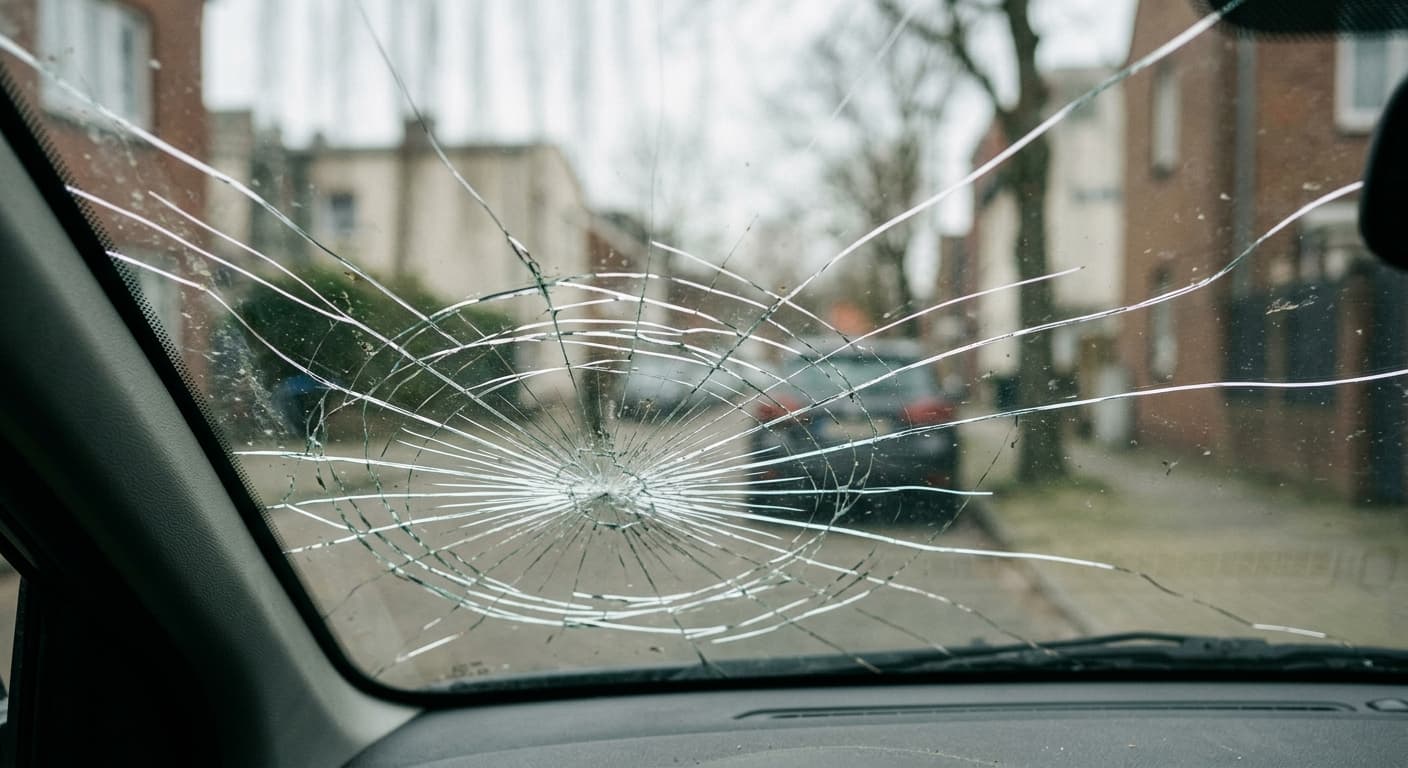
Michigan is a no-fault (PIP-first) state under the Insurance Code of 1956, Chapter 31 (MCL 500.3101 et seq.), meaning your own Personal Injury Protection benefits pay first regardless of fault (MCL 500.3105). To sue an at-fault driver for pain and suffering, your injury must cross the verbal serious-impairment threshold in MCL 500.3135. For noneconomic damages that survive a tort suit, fault is allocated under modified comparative negligence with a bar when your fault is greater than 50% (MCL 600.2959).
Is Michigan a no-fault or at-fault state?
Michigan is a traditional no-fault state, not an at-fault (tort) state and not a driver-election state like New Jersey or Pennsylvania. Under the Insurance Code of 1956, Chapter 31 (MCL 500.3101 et seq.), every owner of a Michigan-registered motor vehicle must carry Personal Injury Protection (PIP) coverage. MCL 500.3105(1) makes the insurer liable to pay PIP benefits for accidental bodily injury arising out of the ownership, operation, maintenance or use of a motor vehicle, and MCL 500.3105(2) states that those benefits "are due under this chapter without regard to fault." So after a crash your own PIP pays your medical expenses, wage loss (up to a capped weekly amount), replacement services, and related benefits regardless of who was at fault. The 2019 reform (PA 21 of 2019, effective July 1, 2020) restructured PIP into tiered coverage levels but did not convert Michigan into a tort or choice state. All drivers remain inside the no-fault system and face the same tort threshold.
No-fault does not mean you can never sue the driver who hit you. Michigan's no-fault act restricts when a tort claim for non-economic loss (pain and suffering) is available. Under MCL 500.3135(1), a driver is liable for non-economic damages only if the injured person suffered death, serious impairment of body function, or permanent serious disfigurement. MCL 500.3135(5) defines "serious impairment of body function" as an objectively manifested impairment of an important body function that affects the person's general ability to lead his or her normal life. The Legislature adopted that definition in a 1995 amendment to MCL 500.3135, and in McCormick v. Carrier the Michigan Supreme Court held that Kreiner v. Fischer was wrongly decided because it departed from the plain language of MCL 500.3135, and overruled it. Whether the threshold is met is a question of law for the court when the nature and extent of the injury is not genuinely disputed. There is no minimum recovery period and no dollar figure attached. Economic damages above PIP (such as medical bills over the PIP cap or lost wages over the weekly cap) can be recovered in a tort suit without clearing the verbal threshold.
How fault is shared: Michigan's negligence rule
Michigan applies modified comparative negligence for noneconomic damages in car accident lawsuits under MCL 600.2959. If you bear some share of fault for the crash, your noneconomic recovery is reduced proportionally by your percentage of fault. If your fault is greater than 50%, you are barred from recovering noneconomic damages from the other driver entirely; at exactly 50% fault, you can still recover a reduced noneconomic award. Economic damages are also reduced by your percentage of fault, but this bar applies specifically to noneconomic loss under MCL 600.2959.

This rule matters most when you cross the verbal threshold. Suppose a jury awards $200,000 in noneconomic damages (pain and suffering) but finds you 30% at fault. Your recovery from the at-fault driver drops to $140,000. If the jury found you exactly 50% at fault, your recovery would drop to $100,000; only if the jury found you more than 50% at fault would you receive nothing for noneconomic loss. For economic damages above PIP, the reduction by fault percentage also applies. Because PIP absorbs the first layer of medical and wage-loss costs regardless of fault, comparative fault becomes relevant primarily in threshold-clearing cases involving serious injuries with significant noneconomic claims.
Minimum car insurance in Michigan
Michigan's mandatory auto-insurance structure has two layers after the 2019 reform. First, every vehicle owner must carry PIP coverage, and since July 1, 2020 the driver chooses a PIP medical coverage level under MCL 500.3107c. The available levels are: Unlimited lifetime medical benefits; $500,000; $250,000; or $50,000 (available only to named insureds who are enrolled in Medicaid and have qualifying Medicaid coverage for all household members). Under MCL 500.3107d, a named insured whose household members all have Qualified Health Coverage (QHC) such as Medicare Parts A and B, or a health insurance plan that does not exclude motor-vehicle-accident injuries and carries an annual deductible at or below the statutory cap, may opt out of PIP medical entirely. MCL 500.3107d(7)(b)(i)(B) sets that deductible cap at $6,000 as enacted and directs the DIFS director to adjust it on July 1 each year by the medical component of the Consumer Price Index, and only when the accumulated adjustment reaches $500 or more. Because the figure changes on a July-to-June cycle rather than a calendar year, confirm the amount currently in effect with DIFS before relying on an opt-out. PIP also includes wage-loss benefits, replacement services, and survivor's-loss benefits regardless of which medical tier is chosen.
Second, residual bodily-injury (BI) and property-damage (PD) liability coverage is required under MCL 500.3009 and 500.3101. The default BI limits after July 1, 2020 are $250,000 per person / $500,000 per accident. A named insured may elect lower limits on a director-issued form, down to the statutory floor of $50,000 per person / $100,000 per accident. The PD limit is fixed at $10,000 and covers property damage outside Michigan only. In-state vehicle damage is handled through Michigan's mini-tort scheme (up to $3,000 from the at-fault driver) and through collision or PIP coverage, not residual PD liability.
Uninsured motorist (UM) and underinsured motorist (UIM) coverage are optional in Michigan and are not required by statute. Michigan's Department of Insurance and Financial Services (DIFS) classifies both as optional. Because PIP covers the policyholder's own injury benefits regardless of fault, the primary function of UM/UIM in Michigan is to provide noneconomic recovery when the at-fault driver has no or insufficient liability limits and your injuries clear the verbal threshold. Given Michigan's historical rate of uninsured drivers, carrying UM/UIM is strongly advisable.
Choosing the lowest permitted PIP level or the minimum BI limits can expose you to significant out-of-pocket liability. A Medicaid-tier $50,000 PIP cap can be exhausted by a single hospitalization, and the floor 50/100 BI limits may be insufficient to cover serious-injury claims brought against you.
How long you have to file: the statute of limitations
The statute of limitations for a personal-injury lawsuit arising from a Michigan car accident is 3 years from the date of the crash under MCL 600.5805(2). The same 3-year period applies to property-damage claims. Wrongful-death claims follow the same 3-year tort limitation via MCL 600.5805 and the savings provision in MCL 600.5852.

A separate, strict limitation applies to no-fault PIP benefit claims. Under MCL 500.3145, a claimant must give written notice of injury to the insurer within 1 year of the accident, and a lawsuit for PIP benefits must be filed within 1 year of the last date the insurer paid or should have paid benefits. This 1-year PIP structure is distinct from and runs separately from the 3-year tort limitation for the bodily-injury lawsuit against the at-fault driver. Failing to comply with the MCL 500.3145 notice and limitations requirements can forfeit PIP benefits even if the tort claim is still timely.
If your crash involved a government-owned vehicle or occurred due to a public road defect, Michigan's governmental-immunity rules under MCL 691.1401 et seq. impose additional notice requirements and limit the scope of claims. Claims against governmental agencies generally require compliance with pre-suit notice provisions and specific exceptions to immunity (such as the highway exception for road-defect claims). These additional requirements typically carry shorter effective deadlines than the standard 3-year SOL and need immediate attention.
For a broader overview of Michigan's limitation periods, see our Michigan statute of limitations page.
What a Michigan car accident claim is worth
The value of a Michigan car accident claim depends on whether your injury clears the verbal threshold, how fault is allocated, which PIP tier you and the at-fault driver carry, and the available liability limits. For threshold-clearing cases, your claim includes two categories. Economic damages cover medical expenses above your PIP cap, future medical care, lost wages above the PIP wage-loss cap, future earning capacity, and out-of-pocket costs. You can pursue economic damages above PIP through a tort suit without meeting the verbal threshold, though as a practical matter PIP absorbs a substantial portion of these costs first.
Noneconomic damages (pain and suffering, mental anguish, and loss of enjoyment of life) are available only if your injuries satisfy the verbal serious-impairment standard under MCL 500.3135. These damages are not capped for typical car accident cases. Once established, noneconomic recovery is reduced by your share of comparative fault under MCL 600.2959, and you are barred entirely only if your fault is greater than 50%.
The at-fault driver's residual BI limits also act as a practical ceiling unless you have a separate UM/UIM policy or the driver has significant personal assets. Given that Michigan drivers may carry only the 50/100 floor, serious injuries can result in judgments that exceed available insurance, leaving the balance uncollectable as a practical matter.
Use our Michigan car accident settlement calculator to model how PIP tiers, the verbal threshold, comparative fault, and liability limits interact in your specific case.
What to do after a car accident in Michigan
Taking the right steps after a Michigan crash protects your health, your PIP rights, and your potential tort claim.

Stop and secure the scene. Michigan law requires you to stop at the scene of any crash involving injury, death, or property damage and to report crashes involving injury or death to law enforcement. An official police report establishes the basic facts and is important for both your PIP claim and any tort lawsuit.
Seek medical care promptly. There is no 14-day PIP cutoff in Michigan the way Florida has, but delays in treatment create documentation gaps that insurers use to dispute the causal connection between the crash and your injuries. Prompt evaluation also begins the evidentiary record necessary to prove the verbal threshold in a serious-injury case.
Notify your own insurer quickly. Your PIP claim runs through your own policy. Be aware of the strict 1-year notice requirement under MCL 500.3145. Provide written notice of your injury within 1 year of the crash to preserve your right to PIP benefits.
Document everything. Photograph vehicle positions, road conditions, visible injuries, and all drivers' insurance information. Collect witness contact information. Preserve dashcam footage and seek nearby surveillance video before it is overwritten.
Understand your PIP tier before settling anything. The coverage level you chose determines how much your insurer will pay for medical care and wage loss. If your medical bills approach your PIP cap, begin tracking costs carefully and consult an attorney before your benefits run out.
Do not give a recorded statement to the at-fault driver's insurer without legal advice. Opposing adjusters are trained to gather statements that reduce or eliminate claims. Michigan's verbal threshold, modified comparative negligence, and separate PIP limitations structure are complex. If your injury may clear the threshold or fault is disputed, ask a Michigan car accident lawyer for a free claim review of any offer before you accept it (attorney advertising).
This article is general legal information, not legal advice. Car accident law varies by state and changes, and settlement values depend on the specific facts. For advice about a specific crash, consult a licensed attorney in Michigan.
Related pages:
- Michigan Car Accident Settlement Calculator
- Michigan Hit-and-Run Laws
- Car Accident Laws by State: Hub
- Michigan Statute of Limitations
More Michigan Laws
- Michigan Dashcam Laws
- Michigan Hit and Run Laws
- Michigan Slip and Fall Laws
- Michigan Statute of Limitations
- Michigan Workers Compensation Laws
Frequently Asked Questions
Is Michigan a no-fault state?
Yes. Michigan is a traditional no-fault state under the Insurance Code of 1956, Chapter 31 (MCL 500.3101 et seq.). Your own Personal Injury Protection (PIP) coverage pays medical bills, wage loss, and replacement services after a crash, regardless of who caused it: MCL 500.3105(1) makes the insurer liable for PIP benefits and MCL 500.3105(2) makes them due without regard to fault. You can still sue the at-fault driver for economic damages above PIP and, if your injuries meet the verbal serious-impairment threshold (MCL 500.3135), for pain and suffering as well.
Is Michigan an at-fault state?
No. Michigan is a no-fault state, not an at-fault (tort) state. Unlike at-fault states where you file a claim against the at-fault driver's insurer first, Michigan requires your own PIP to pay first, without regard to fault (MCL 500.3105(2)). However, no-fault does not eliminate all tort rights: if your injuries meet the verbal threshold under MCL 500.3135 (death, serious impairment of body function, or permanent serious disfigurement), you can bring a lawsuit against the at-fault driver for noneconomic damages.
What is the statute of limitations for a car accident in Michigan?
The personal-injury statute of limitations is 3 years from the crash date (MCL 600.5805(2)). A separate, strict 1-year limitation applies to no-fault PIP benefit claims: you must give written notice of injury to your insurer within 1 year of the accident, and any PIP lawsuit must be filed within 1 year of the last date benefits were or should have been paid (MCL 500.3145). Missing the PIP deadline forfeits benefits even if the tort claim is still timely.
Can I still recover if I was partly at fault in Michigan?
Yes, as long as your share of fault is 50% or less. Michigan uses modified comparative negligence for noneconomic damages (MCL 600.2959). Your noneconomic recovery is reduced by your percentage of fault, and you are barred from noneconomic recovery entirely only if your fault is greater than 50%. Economic damages above PIP are similarly reduced by your fault percentage. You must still cross the verbal threshold before noneconomic damages are available at all.
What are the minimum car insurance requirements in Michigan?
Michigan requires PIP coverage (medical level chosen by the driver: Unlimited, $500,000, $250,000, $50,000 for Medicaid enrollees, or opt-out with Qualified Health Coverage) plus residual bodily-injury and property-damage liability (MCL 500.3009, 500.3101). Default BI limits are $250,000/$500,000, but drivers may elect down to the statutory floor of $50,000/$100,000. Property damage is fixed at $10,000 for out-of-state damage. UM/UIM coverage is optional and not required by statute.
What is the verbal threshold in Michigan?
The verbal threshold (MCL 500.3135) is the injury standard you must meet to sue an at-fault driver for pain and suffering in Michigan. Your injury must involve death, permanent serious disfigurement, or 'serious impairment of body function,' which MCL 500.3135(5) defines as an objectively manifested impairment of an important body function that affects your general ability to lead your normal life. There is no dollar minimum and no minimum recovery period. Whether the threshold is met is a legal question for the court when the injury facts are not disputed.
How much is my Michigan car accident claim worth?
Value depends on injury severity and whether you clear the verbal threshold, how fault is allocated, your PIP tier, and available liability limits. Economic damages above PIP (excess medical bills, lost wages, future care) are recoverable in a tort suit without meeting the threshold. Noneconomic damages (pain and suffering) require clearing the threshold and are then reduced by your comparative fault. Use our Michigan car accident settlement calculator to model your specific situation.
Updates
Corrected the description of McCormick v. Carrier: the serious-impairment definition comes from a 1995 legislative amendment, and the Michigan Supreme Court applied that statute's plain language and overruled Kreiner v. Fischer.
Corrected the statutory citation for Michigan no-fault PIP benefits to MCL 500.3105 and replaced an outdated qualified health coverage deductible figure with the statutory cap and its annual July 1 adjustment rule.
Independently fact-checked against the cited primary sources; governing law re-checked for recent changes
Corrected the comparative-fault noneconomic-damages bar throughout the page: MCL 600.2959 and MCL 500.3135(2)(b) bar recovery only when fault is GREATER THAN 50%, not at exactly 50% (fixed the intro summary, the fault section including its worked example, the claim-value section, and the FAQ). Also removed a fabricated "$250,000 with household-member exclusions" PIP tier not found in MCL 500.3107c, aligning the tier list with the statute and the page's own correct FAQ answer.
Governing law re-checked for recent changes
Reviewed and approved by an editor
The Law Behind This Article
This article rests on the statutory provisions below, held in our own legal record and retrieved from the official source. Tap a section to read the operative text.
Michigan Compiled Laws
§ 500.3105Insurer liable for personal protection benefits without regard to fault; "bodily injury" and "accidental bodily injury" definedIn force
(1) Under personal protection insurance an insurer is liable to pay benefits for accidental bodily injury arising out of the ownership, operation, maintenance or use of a motor vehicle as a motor vehicle, subject to the provisions of this chapter. (2) Personal protection insurance benefits are due under this chapter without regard to fault. (3) Bodily injury includes death resulting therefrom and damage to or loss of a person's prosthetic devices in connection with the injury. (4) Bodily injury is accidental as to a person claiming personal protection insurance benefits unless suffered intentionally by the injured person or caused intentionally by the claimant. Even though a person knows that bodily injury is substantially certain to be caused by his act or omission, he does not cause or suffer injury intentionally if he acts or refrains from acting for the purpose of averting injury to property or to any person including himself.
Official text (excerpt) · last checked 2026-09-10 · Read the full text in our law library · Verify at legislature.mi.gov
§ 500.3101Security for payment of benefits required; period security required to be in effect; definitions; policy of insurance or other method of providing security; filing proof of security; exclusionIn forcecited in 7 of our articles
(1) Except as provided in sections 3107d and 3109a, the owner or registrant of a motor vehicle required to be registered in this state shall maintain security for payment of benefits under personal protection insurance and property protection insurance as required under this chapter, and residual liability insurance. Security is only required to be in effect during the period the motor vehicle is driven or moved on a highway. (2) Except as provided in section 3107d, all automobile insurance policies offered in this state must include benefits under personal protection insurance, and property protection insurance as provided in this chapter, and residual liability insurance. Notwithstanding any other provision in this act, an insurer that has issued an automobile insurance policy may only delete portions of the coverages under the policy and maintain the comprehensive coverage portion on a motor vehicle that is not driven or moved on a highway in accordance with section 3009(4). (3) As used in this chapter: (a) "Automobile insurance" means that term as defined in section 2102.
Official text (excerpt) · last checked 2026-07-30 · Read the full text in our law library · Verify at legislature.mi.gov
Cited in 1,396 court opinions in our collectionLatest citing opinion in our collection: 2026
Opinions citing this section in our collection:
- Shavers v. Attorney General (Michigan Supreme Court 1978, 402 Mich. 554)“…ar power which has more than 2 wheels. " (Emphasis added.) MCLA 500.3101(2); MSA 24.13101(2), as amended by 197…”
- McCORMICK v. CARRIER (Michigan Supreme Court 2010, 487 Mich. 180)“…he Michigan Legislature adopted the no-fault insurance act, MCL 500.3101 et seq. The act created a compulsory mo…”
- Titan Insurance Company v. Hyten (Michigan Supreme Court 2012, 491 Mich. 547)“…tatute. For example, the no-fault automobile insurance act, MCL 500.3101 et seq., limits the ability of a licen…”
Identified automatically from the court opinions citing this section — not a ranking of which case controls.
Also relied on in: Michigan E-Scooter Laws: Sidewalk, Helmet & Age Rules (2026), Motorcycle Accident Laws in Michigan (2026): Deadlines & Helmets, Who Is Liable in a Self-Driving Car Accident? (2026)
§ 500.3135Tort liability for noneconomic loss; exceptions; cause of action for damages; "serious impairment of body function" definedIn forcecited in 6 of our articles
(1) A person remains subject to tort liability for noneconomic loss caused by his or her ownership, maintenance, or use of a motor vehicle only if the injured person has suffered death, serious impairment of body function, or permanent serious disfigurement. (2) For a cause of action for damages under subsection (1) or (3)(d), all of the following apply: (a) The issues of whether the injured person has suffered serious impairment of body function or permanent serious disfigurement are questions of law for the court if the court finds either of the following: (i) There is no factual dispute concerning the nature and extent of the person's injuries. (ii) There is a factual dispute concerning the nature and extent of the person's injuries, but the dispute is not material to the determination whether the person has suffered a serious impairment of body function or permanent serious disfigurement. However, for a closed-head injury, a question of fact for the jury is created if a licensed allopathic or osteopathic physician who regularly diagnoses or treats closed-head injuries testifies under oath that there may be a serious neurological injury.
Official text (excerpt) · last checked 2026-09-10 · Read the full text in our law library · Verify at legislature.mi.gov
Cited in 651 court opinions in our collectionLatest citing opinion in our collection: 2026
Opinions citing this section in our collection:
- Rory v. Continental Insurance (Michigan Supreme Court 2005, 473 Mich. 457)“…ed motorist becomes liable for noneconomic loss pursuant to MCL 500.3135(1). Liability for noneconomic loss occu…”
- McCORMICK v. CARRIER (Michigan Supreme Court 2010, 487 Mich. 180)“…y function” threshold for non-economic tort liability under MCL 500.3135. We hold that Kreiner v Fischer, 471…”
- Johnson v. Recca (Michigan Supreme Court 2012, 492 Mich. 169)“…(dissenting). This Court granted leave to examine whether MCL 500.3135(3)(c) permits recov *198 ery of expense…”
Identified automatically from the court opinions citing this section — not a ranking of which case controls.
Also relied on in: Truck Accident Laws in Michigan (2026): Deadlines & Liability
§ 500.3107cPersonal protection insurance benefits; coverage limits for allowable expenses; form; rebuttable presumption; application of coverage selection; stacking of insurance policies; applicability to transportation network company vehicle; rider for attendant careIn forcecited in 4 of our articles
(1) Except as provided in sections 3107d and 3109a, and subject to subsection (5), for an insurance policy that provides the security required under section 3101(1) and is issued or renewed after July 1, 2020, the applicant or named insured shall, in a way required under section 3107e and on a form approved by the director, select 1 of the following coverage levels for personal protection insurance benefits under section 3107(1)(a): (a) A limit of $50,000.00 per individual per loss occurrence for any personal protection insurance benefits under section 3107(1)(a). The selection of a limit under this subdivision is only available to an applicant or named insured if both of the following apply: (i) The applicant or named insured is enrolled in Medicaid, as that term is defined in section 3157. (ii) The applicant's or named insured's spouse and any relative of either who resides in the same household has qualified health coverage, as that term is defined in section 3107d, is enrolled in Medicaid, or has coverage for the payment of benefits under section 3107(1)(a) from an insurer that provides the security required by section 3101(1).
Official text (excerpt) · last checked 2026-07-30 · Read the full text in our law library · Verify at legislature.mi.gov
Cited in 26 court opinions in our collectionLatest citing opinion in our collection: 2026
Opinions citing this section in our collection:
- Northland Radiology Inc v. Allstate Fire & Casualty Insurance Co (Michigan Court of Appeals 2026)“…d it included in MCL 500.3107d similar language as found in MCL 500.3107c(3), whereby there is a “rebuttable pres…”
- Mary Free Bed Rehabilitation Hosp v. Esurance Property & Casualty (Michigan Court of Appeals 2026)“…selection” of the $250,000 coverage limit as required under MCL 500.3107c. The trial court took the motion under…”
- Walter Love v. Lashawn Rudolph (Michigan Court of Appeals 2025)“…overage under this section was excluded. [Emphasis added.] MCL 500.3107c provides in relevant part as follows:…”
Identified automatically from the court opinions citing this section — not a ranking of which case controls.
§ 500.3107dElection to not maintain personal protection insurance benefit coverage; proof of qualified health coverage; form; failure to make election; termination of qualified health coverage; definitionsIn forcecited in 2 of our articles
(1) For an insurance policy that provides the security required under section 3101(1) and is issued or renewed after July 1, 2020, the applicant or named insured may, in a way required under section 3107e and on a form approved by the director, elect to not maintain coverage for personal protection insurance benefits payable under section 3107(1)(a) if the applicant or named insured is a qualified person, and if the applicant's or named insured's spouse and any relative of either that resides in the same household have qualified health coverage or have coverage for benefits payable under section 3107(1)(a) from an insurer that provides the security required by section 3101(1). (2) An applicant or named insured shall, when requesting issuance or renewal of a policy under subsection (1), provide to the insurer a document from the person that provides the qualified health coverage stating the names of all persons covered under the qualified health coverage.
Official text (excerpt) · last checked 2026-07-30 · Read the full text in our law library · Verify at legislature.mi.gov
Cited in 30 court opinions in our collectionLatest citing opinion in our collection: 2026
Opinions citing this section in our collection:
- Northland Radiology Inc v. Allstate Fire & Casualty Insurance Co (Michigan Court of Appeals 2026)“…e under MCL 500.3107(1)(a)1 if all the criteria outlined in MCL 500.3107d are met. This election applies to the a…”
- Mary Free Bed Rehabilitation Hosp v. Esurance Property & Casualty (Michigan Court of Appeals 2026)“…7c (addressing the process for selecting limited coverage); MCL 500.3107d (addressing the process for declining c…”
- Walter Love v. Lashawn Rudolph (Michigan Court of Appeals 2025)“…Turning to the first of these possible situations, MCL 500.3107d(1) provides as follows:…”
Identified automatically from the court opinions citing this section — not a ranking of which case controls.
§ 500.3145Limitation of actions for recovery of personal or property protection insurance benefits; period of limitations; tolling; notice of injuryIn forcecited in 4 of our articles
(1) An action for recovery of personal protection insurance benefits payable under this chapter for an accidental bodily injury may not be commenced later than 1 year after the date of the accident that caused the injury unless written notice of injury as provided in subsection (4) has been given to the insurer within 1 year after the accident or unless the insurer has previously made a payment of personal protection insurance benefits for the injury. (2) Subject to subsection (3), if the notice has been given or a payment has been made, the action may be commenced at any time within 1 year after the most recent allowable expense, work loss, or survivor's loss has been incurred. However, the claimant may not recover benefits for any portion of the loss incurred more than 1 year before the date on which the action was commenced. (3) A period of limitations applicable under subsection (2) to the commencement of an action and the recovery of benefits is tolled from the date of a specific claim for payment of the benefits until the date the insurer formally denies the claim.
Official text (excerpt) · last checked 2026-07-30 · Read the full text in our law library · Verify at legislature.mi.gov
Cited in 332 court opinions in our collectionLatest citing opinion in our collection: 2026
Opinions citing this section in our collection:
- Joseph v. Auto Club Insurance Association (Michigan Supreme Court 2012, 491 Mich. 200)“…f MCL 600.5851(1) applies to toll the one-year-back rule in MCL 500.3145(1) of the no-fault act. The one-ye…”
- Johnson v. Recca (Michigan Supreme Court 2012, 492 Mich. 169)“…500.3110(4), 8 MCL 500.3116(4), 9 MCL 500.3135(3)(c), and MCL 500.3145(1), 10 contain general *183 rules reg…”
- Rowland v. Washtenaw County Road Commission (Michigan Supreme Court 2007, 477 Mich. 197)“…that, for the first time, engrafted onto the text of [MCL 500.3145(1)] a tolling clause that has ab…”
Identified automatically from the court opinions citing this section — not a ranking of which case controls.
Also relied on in: Michigan Slip and Fall Laws: Proving Premises Liability After Kandil-Elsayed
§ 600.2959Comparative fault; reduced damagesIn forcecited in 14 of our articles
In an action based on tort or another legal theory seeking damages for personal injury, property damage, or wrongful death, the court shall reduce the damages by the percentage of comparative fault of the person upon whose injury or death the damages are based as provided in section 6306 or 6306a, as applicable. If that person's percentage of fault is greater than the aggregate fault of the other person or persons, whether or not parties to the action, the court shall reduce economic damages by the percentage of comparative fault of the person upon whose injury or death the damages are based as provided in section 6306 or 6306a, as applicable, and noneconomic damages shall not be awarded.
Official text (excerpt) · last checked 2026-07-30 · Read the full text in our law library · Verify at legislature.mi.gov
Cited in 32 court opinions in our collectionLatest citing opinion in our collection: 2025
Opinions citing this section in our collection:
- Johnnie F Shinholster v. Annapolis Hosp (Michigan Supreme Court 2004)“…ercentage “the total fault of 3 See, also, MCL 600.2959, which provides: In an action…”
- Lamp v. Reynolds (Michigan Court of Appeals 2002, 249 Mich. App. 591)“…rative fault attributed to plaintiff. Defendants argue that MCL 600.2959 mandates such a reduction. We disagree.…”
- Susan Blackwell v. Dean Franchi (Michigan Supreme Court 2018, 914 N.W.2d 900)“…1982 PA 147. It was codified in its present form in 1995 in MCL 600.2959. The Legislature, by requiring that a p…”
Identified automatically from the court opinions citing this section — not a ranking of which case controls.
Also relied on in: Michigan Dog Bite Laws: Liability and Victim Rights, Michigan Wrongful Death Laws (2026): Deadlines, Medical Malpractice Laws in Michigan (2026): Deadlines & Caps
§ 500.3009Automobile liability or motor vehicle liability policy; limits; exclusion of named person; notice; documentary evidence of deleted coveragesIn forcecited in 4 of our articles
(1) Subject to subsections (5) to (8), an automobile liability or motor vehicle liability policy that insures against loss resulting from liability imposed by law for property damage, bodily injury, or death suffered by any person arising out of the ownership, maintenance, or use of a motor vehicle must not be delivered or issued for delivery in this state with respect to any motor vehicle registered or principally garaged in this state unless the liability coverage is subject to all of the following limits: (a) Before July 2, 2020, a limit, exclusive of interest and costs, of not less than $20,000.00 because of bodily injury to or death of 1 person in any 1 accident, and after July 1, 2020, a limit, exclusive of interest and costs, of not less than $250,000.00 because of bodily injury to or death of 1 person in any 1 accident.
Official text (excerpt) · last checked 2026-07-30 · Read the full text in our law library · Verify at legislature.mi.gov
Cited in 96 court opinions in our collectionLatest citing opinion in our collection: 2026
Opinions citing this section in our collection:
- Ali Bazzi v. Sentinel Insurance Company (Michigan Supreme Court 2018, 502 Mich. 390)“…ication in Titan that MCL 500.3101(1), like the example of MCL 500.3009(1) used in Titan, limits the availabili…”
- Powers v. Detroit Automobile Inter-Insurance Exchange (Michigan Supreme Court 1986, 427 Mich. 602)“…the named excluded person remain fully personally liable.” MCL 500.3009; MSA 24.13009.[ 6 ] 6. The Policyho…”
- Bronson Methodist Hospital v. Michigan Assigned Claims Facility (Michigan Court of Appeals 2012, 298 Mich. App. 192)“…vehicle. Plaintiff concedes that Progressive complied with MCL 500.3009(2) and “properly excluded Ms. Pillars f…”
Identified automatically from the court opinions citing this section — not a ranking of which case controls.
§ 600.5805Injuries to persons or property; period of limitations; "adjudication," "criminal sexual conduct," and "dating relationship" definedIn forcecited in 21 of our articles
(1) A person shall not bring or maintain an action to recover damages for injuries to persons or property unless, after the claim first accrued to the plaintiff or to someone through whom the plaintiff claims, the action is commenced within the periods of time prescribed by this section. (2) Except as otherwise provided in this section, the period of limitations is 3 years after the time of the death or injury for all actions to recover damages for the death of a person or for injury to a person or property. (3) Subject to subsections (4) to (6), the period of limitations is 2 years for an action charging assault, battery, or false imprisonment. (4) Subject to subsection (6), the period of limitations is 5 years for an action charging assault or battery brought by a person who has been assaulted or battered by his or her spouse or former spouse, an individual with whom he or she has had a child in common, or a person with whom he or she resides or formerly resided.
Official text (excerpt) · last checked 2026-09-08 · Read the full text in our law library · Verify at legislature.mi.gov
Cited in 1,140 court opinions in our collectionLatest citing opinion in our collection: 2026
In the courts (editorial summary, independently checked):Michigan courts enforce Sec. 600.5805 as written: Garg v. MacOmb County Community Mental Health Services (2005) overruled the continuing violations doctrine as inconsistent with it, while Bryant v. Oakpointe Villa Nursing Centre, Inc (2004) let time-barred malpractice claims proceed on the equities of that case and others then pending.
Opinions citing this section in our collection:
- Rory v. Continental Insurance (Michigan Supreme Court 2005, 473 Mich. 457)“…ited to being brought within three years pursuant to former MCL 600.5805(9), now MCL 600.5805(10), which governs…”
- Walters v. Nadell (Michigan Supreme Court 2008, 481 Mich. 377)✓A driver hurt in a 2001 crash could not serve the defendant, a servicemember, before the three-year period expired; the court held he waived the federal tolling provision by never raising it below, reasoning the limitations statute is likewise mandatory yet waivable.
- Garg v. MacOmb County Community Mental Health Services (Michigan Supreme Court 2005, 472 Mich. 263)✓A county psychologist won a $250,000 retaliation verdict resting partly on acts older than three years; the court held the statute requires suit within three years of each adverse act, overruled the continuing violations doctrine, and directed judgment for the employer.
Identified automatically from the court opinions citing this section — not a ranking of which case controls.
Also relied on in: Michigan Defamation Laws: Libel & Slander (2026), Michigan Statute of Limitations: Filing Deadlines by Case Type, Defamation Laws by State: Libel and Slander (2026)
§ 600.5852Death before period of limitations has run or within 30 days thereafter; commencement of action; death or legal incapacitation of personal representative; limitation on commencement of actionIn forcecited in 12 of our articles
(1) If a person dies before the period of limitations has run or within 30 days after the period of limitations has run, an action that survives by law may be commenced by the personal representative of the deceased person at any time within 2 years after letters of authority are issued although the period of limitations has run. (2) If the action that survives by law is an action alleging medical malpractice, the 2-year period under subsection (1) runs from the date letters of authority are issued to the first personal representative of an estate. Except as provided in subsection (3), the issuance of subsequent letters of authority does not enlarge the time within which the action may be commenced. (3) If a personal representative dies or is adjudged by a court to be legally incapacitated within 2 years after his or her letters are issued, the successor personal representative may commence an action alleging medical malpractice that survives by law within 1 year after the personal representative died or was adjudged by a court to be legally incapacitated.
Official text (excerpt) · last checked 2026-07-30 · Read the full text in our law library · Verify at legislature.mi.gov
Cited in 127 court opinions in our collectionLatest citing opinion in our collection: 2026
Opinions citing this section in our collection:
- Bryant v. Oakpointe Villa Nursing Centre, Inc (Michigan Supreme Court 2004, 471 Mich. 411)“…years. MCL 600.5805(6). According to MCL 600.5852, plaintiff had two years from the date…”
- Johanna Woodard v. University of Mich Medical Ctr (Michigan Supreme Court 2006, 476 Mich. 545)“…within three years after the period of limitations has run. MCL 600.5852. (13) A successor personal representa…”
- Trentadue v. Buckler Automatic Lawn Sprinkler Company (Michigan Supreme Court 2007, 479 Mich. 378)“…claims. MCL 600.5805(1); MCL 600.5805(10). Further, while MCL 600.5852 permits an extension of up to three yea…”
Identified automatically from the court opinions citing this section — not a ranking of which case controls.
§ 691.1401DefinitionsIn forcecited in 2 of our articles
As used in this act: (a) "Governmental agency" means this state or a political subdivision. (b) "Governmental function" means an activity that is expressly or impliedly mandated or authorized by constitution, statute, local charter or ordinance, or other law. Governmental function includes an activity performed on public or private property by a sworn law enforcement officer within the scope of the law enforcement officer's authority, as directed or assigned by his or her public employer for the purpose of public safety. (c) "Highway" means a public highway, road, or street that is open for public travel. Highway includes a bridge, sidewalk, trailway, crosswalk, or culvert on the highway. Highway does not include an alley, tree, or utility pole. (d) "Municipal corporation" means a city, village, or township or a combination of 2 or more of these when acting jointly.
Official text (excerpt) · last checked 2026-07-30 · Read the full text in our law library · Verify at legislature.mi.gov
Cited in 743 court opinions in our collectionLatest citing opinion in our collection: 2026
Opinions citing this section in our collection:
- Ross v. Consumers Power Co. (Michigan Supreme Court 1985, 420 Mich. 567)“…ubdivisions, and municipal corporations as herein defined.” MCL 691.1401; MSA 3.996(101). Historically, t…”
- Pohutski v. City of Allen Park (Michigan Supreme Court 2002, 465 Mich. 675)“…agency” means the state or a political subdivision. [MCL 691.1401.] Under a plain reading of the statut…”
- Rowland v. Washtenaw County Road Commission (Michigan Supreme Court 2007, 477 Mich. 197)“…ort liability. The governmental tort liability act (GTLA), MCL 691.1401 et seq., broadly shields a governmenta…”
Identified automatically from the court opinions citing this section — not a ranking of which case controls.
Explore the law
The laws cited above reference these related sections in their own text:
- Michigan Compiled Laws § 750.520b — Criminal sexual conduct in the first degree; circumstances; felony; consecutive terms view in our statute record · read at the official source
- Michigan Compiled Laws § 750.520c — Criminal sexual conduct in the second degree; felony view in our statute record · read at the official source
- Michigan Compiled Laws § 750.520d — Criminal sexual conduct in the third degree; felony view in our statute record · read at the official source
- Michigan Compiled Laws § 750.520e — Criminal sexual conduct in the fourth degree; misdemeanor view in our statute record · read at the official source
Related law for further reading — not part of this article’s citations.
Search our full record of US law — 2.1 million sections, every state + federal →
Sources and References
- MCL 500.3135 (verbal serious-injury tort threshold)(legislature.mi.gov).gov
- MCL 500.3101 et seq. (Michigan No-Fault Act, Insurance Code of 1956, Ch. 31)(legislature.mi.gov).gov
- MCL 500.3107c (PIP medical coverage levels, 2019 reform)(legislature.mi.gov).gov
- MCL 500.3107d (PIP opt-out with Qualified Health Coverage)(legislature.mi.gov).gov
- MCL 500.3009 (mandatory BI/PD liability limits and lower-limit election)(legislature.mi.gov).gov
- MCL 600.5805(2) (3-year personal-injury statute of limitations)(legislature.mi.gov).gov
- MCL 500.3145 (1-year PIP benefit claims limitation)(legislature.mi.gov).gov
- MCL 600.2959 (modified comparative negligence for noneconomic damages)(legislature.mi.gov).gov
- MCL 500.3105 (PIP benefits payable without regard to fault)(legislature.mi.gov)
Paid attorney referral. RecordingLaw may receive compensation when you use an attorney-help link. RecordingLaw is not a law firm. Submitting a request does not guarantee that an attorney will accept your case and does not create an attorney-client relationship.