Madagascar E-Scooter Laws: No Category Fits an Electric Motor (2026)
This article is general information about e-scooter laws in Madagascar and is not legal advice. The source read for this article is a 1971 regulatory decree that a 2017 law is confirmed to have layered new legislation on top of, so confirm current requirements with a Malagasy lawyer or the Ministere des Transports before riding. Information last verified on 23 July 2026.
Are e-scooters legal in Madagascar?
Madagascar's Code de la Route has two layers. A legislative layer, most recently Loi n2017-002 du 6 juillet 2017, is confirmed by cross-references in later ministerial arretes to be the current governing law, though its own article-level text could not be reached in this research. The regulatory layer beneath it, the decree that actually spells out vehicle categories, is Decret n71-138 du 23 mars 1971, the only such implementing text located and read in full.
That decree answers the classification question on its own terms. Article R.170 defines motocyclette as a two-wheeled vehicle with a moteur thermique, a combustion engine, above 125 cubic centimeters, and velomoteur as the same but at or under 125cc, extending the identical combustion-engine test to tricycles and quadricycles a moteur. Article R.187 defines cyclomoteur separately as a vehicle with a moteur thermique auxiliaire of no more than 50 cubic centimeters and a design speed capped at 50 km/h. Every powered small-vehicle category in the decree is built around a combustion engine and a displacement ceiling, with no room for a battery-electric motor, which has no cylindree to measure against any of these figures.
That does not leave an electric scooter unregulated. The decree's broader term, vehicule automobile, carries no displacement, wheel-count, or engine-type qualifier anywhere it is used. Article R.111 requires any vehicule automobile to undergo type-approval inspection before circulation. Article R.115 requires its owner to file a declaration and obtain a carte grise, a registration certificate. Article R.128 requires a valid permit to drive one. A device that cannot be a cyclomoteur, velomoteur, or motocyclette by definition defaults to this general category instead, the same shape the site has found in Mauritania's ordonnance, except Madagascar's decree is unusually explicit about the electric case: Article R.131 exempts drivers of "vehicules automobiles electriques" of 1 kilowatt or less from needing a driving permit specifically, and nothing else. It says nothing about the type-approval and registration obligations that attach to "tout vehicule automobile" without any power floor.
What counts as an e-scooter here
No provision names an e-scooter, kick scooter, or personal mobility device directly. The only numeric thresholds in the decree's two-wheeler provisions are the 50cc and 125cc combustion-engine figures in Articles R.170 and R.187, both meaningless for an electric motor. The only wattage figure anywhere in the text, the 1 kilowatt permit exemption in Article R.131, is written for the general vehicule automobile category rather than a defined scooter class, and does not specify a wheel count.
Where you can ride
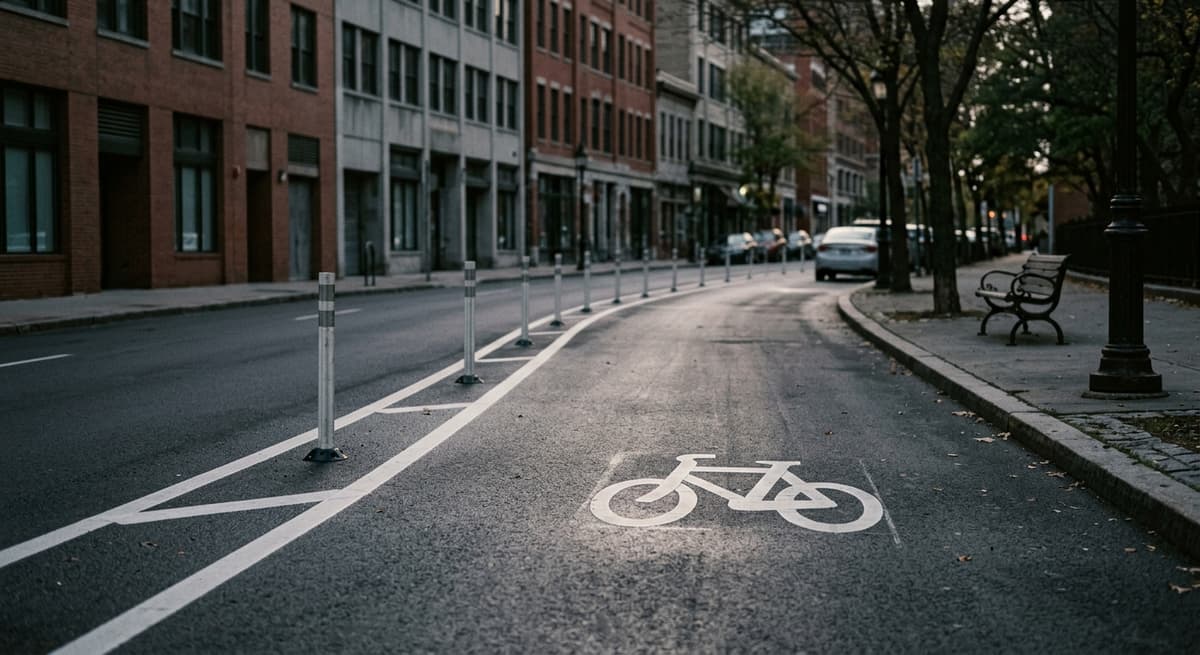
The decree's cycle-lane provisions, "piste cyclable" and "bande cyclable" under Article premier, are reserved for "cycles et cyclomoteurs," a category an electric scooter cannot join on the definitions above. If an e-scooter falls into the general vehicule automobile category instead, as its exclusion from the moped titles suggests, it would be expected to use the ordinary road network alongside other motor vehicles rather than a cycle lane, though no provision states this for a scooter specifically.
Rider rules and penalties
Because an e-scooter most plausibly falls under vehicule automobile rather than cyclomoteur or velomoteur, the obligations that follow are the general ones: type approval before circulation (Article R.111), a declaration of first circulation plus a carte grise (Article R.115), and a driving permit (Article R.128), with only the permit waived for a device of 1 kilowatt or less (Article R.131). A consumer e-scooter has no realistic path through a type-approval and registration process built for vehicles with a chassis and a manufacturer certificate of conformity.
The decree's own penalty structure, Article R.267 and the contravention articles that follow it, punishes circulating a motor vehicle without required plates and registration markings as a third-category contravention, and the ordonnance layer above the decree carries separate, heavier penalties for driving without a permit. The franc amounts printed in the 1971 text predate Madagascar's later currency redenomination to the ariary and should not be read as current figures. What carries forward is the mechanism: an unregistered motor vehicle on the public road is a punishable offense, not a specific number.
Enforcement in practice
No enforcement data, court decisions, or rental-operator presence addressing e-scooters specifically was found for Madagascar. That silence is a data gap, not evidence that the classification above goes unenforced. A device a road-traffic decree cannot cleanly register is not the same thing as a device that is lawful to ride freely, and enforcement patterns, whatever they turn out to be, would not change that underlying position.
Legal history and what may change
Loi n2017-002 du 6 juillet 2017 is confirmed, through citations in later ministerial arretes, to be Madagascar's current governing Code de la Route at the legislative level. Its own article text, and any implementing decree that may have replaced Decret n71-138 since 2017, could not be located after repeated attempts in this research. If a newer implementing decree exists and updates the vehicle-category definitions, it could change the analysis above in either direction. Until that text surfaces, the 1971 decree is the most recent regulatory text available, and its combustion-engine-gated moped titles alongside an explicit, if narrow, electric-vehicle clause in the general category is the most concrete basis for this classification. The same combustion-engine gap, a moped category written for cc figures with no equivalent slot for a battery, appears in other countries surveyed in the world e-scooter law guide.
Frequently Asked Questions
Are e-scooters legal in Madagascar?
There is no dedicated e-scooter law. The traffic decree defines cyclomoteur, velomoteur, and motocyclette using a combustion engine and a cc ceiling, categories an electric scooter cannot meet, so it most plausibly falls into the broader vehicule automobile category instead, which brings type-approval, registration, and permit obligations a consumer scooter has no practical way to satisfy.
Does Madagascar's code define a moped or cyclomoteur category at all?
Yes. Article R.187 of Decret n71-138 defines cyclomoteur as a vehicle with a combustion engine of no more than 50 cubic centimeters and a design speed capped at 50 km/h. Article R.170 defines velomoteur and motocyclette the same way at higher displacement bands. All are written for combustion engines only.
Does Madagascar's law say anything about electric vehicles specifically?
Yes, more directly than in several neighboring countries' texts. Article R.131 names "vehicules automobiles electriques" and exempts those of 1 kilowatt or less from needing a driving permit. It does not exempt them from the registration or type-approval rules that apply to a vehicule automobile generally.
Is the 1971 decree still the current law in Madagascar?
A 2017 law, Loi n2017-002, is confirmed by other government documents to govern Madagascar's Code de la Route at the legislative level today. Its own text, and whether a newer implementing decree has replaced the 1971 regulatory text described here, could not be confirmed in this research.
Are there e-scooter rental schemes in Madagascar?
None were found in this research for Antananarivo or elsewhere in the country.
Sources and References
- Decret n71-138 du 23 mars 1971 (partie reglementaire, Code de la Route), Article R.170 (motocyclette and velomoteur definitions, both moteur thermique and cc-gated; tricycle/quadricycle a moteur the same)(cnlegis.gov.mg).gov
- Decret n71-138, Article R.187 (cyclomoteur definition: moteur thermique auxiliaire, 50cc ceiling, 50 km/h design speed)(cnlegis.gov.mg).gov
- Decret n71-138, Articles R.111 and R.115-116 (type-approval and registration/carte grise requirements for any vehicule automobile, no displacement or power qualifier)(cnlegis.gov.mg).gov
- Decret n71-138, Article R.128 (general driving-permit requirement for a vehicule automobile) and Article R.131 (electric-vehicle, 1 kilowatt or less, permit exemption; article number inferred from sequential numbering in a scan-degraded two-column extraction, sentence itself directly quoted)(cnlegis.gov.mg).gov
- Decret n71-138, Article R.267 and following (tiered contravention/fine schedule; unregistered-vehicle-on-the-road offense)(cnlegis.gov.mg).gov
- Ministere des Transports arretes citing Loi n2017-002 du 6 juillet 2017 portant Code de la Route as the current governing legislative text (existence and date corroborated by cross-reference; body text not independently reached)(cnlegis.gov.mg).gov