Lesotho E-Scooter Laws: Why Electric Means the Harder Category (2026)
This article is general information about e-scooter laws in Lesotho and is not legal advice. Rules can change and enforcement varies, so confirm current requirements with a Lesotho lawyer or the Department of Traffic and Transport before riding. Information last verified on 23 July 2026.
Are e-scooters legal in Lesotho?
Lesotho has no law written for e-scooters specifically. What decides an e-scooter's status is the Road Traffic Act 1981 (Act No. 8 of 1981), and the way it defines its vehicle categories produces a counter-intuitive result: being electric makes an e-scooter's legal position harder, not easier.
The Act defines "motor vehicle" as any vehicle self-propelled by mechanical or electrical power. That is broad enough to catch an e-scooter on its own. The more important definition is "moped," which the Act limits to a two-wheeled vehicle fitted with an internal combustion engine of no more than 50cc. Because an electric motor is not an internal combustion engine, an e-scooter cannot be a moped under this text no matter how small or slow it is.
Locked out of the lenient moped category, an e-scooter instead falls into "motor cycle," defined as any two-wheeled vehicle other than a moped that is equipped with a propelling engine. That is the fuller regime, the one built for combustion motorcycles, not the lighter one meant for small mopeds.
What counts as an e-scooter here
The Act has no definition written for kick-scooters or personal mobility devices. Its two relevant categories are drawn purely from propulsion type and, for mopeds, engine size in cubic centimeters. An e-scooter is classified by elimination: not a moped, since its motor is not internal combustion, so motor cycle by default, regardless of how far its wattage or weight sits below an actual motorcycle.
Where you can ride
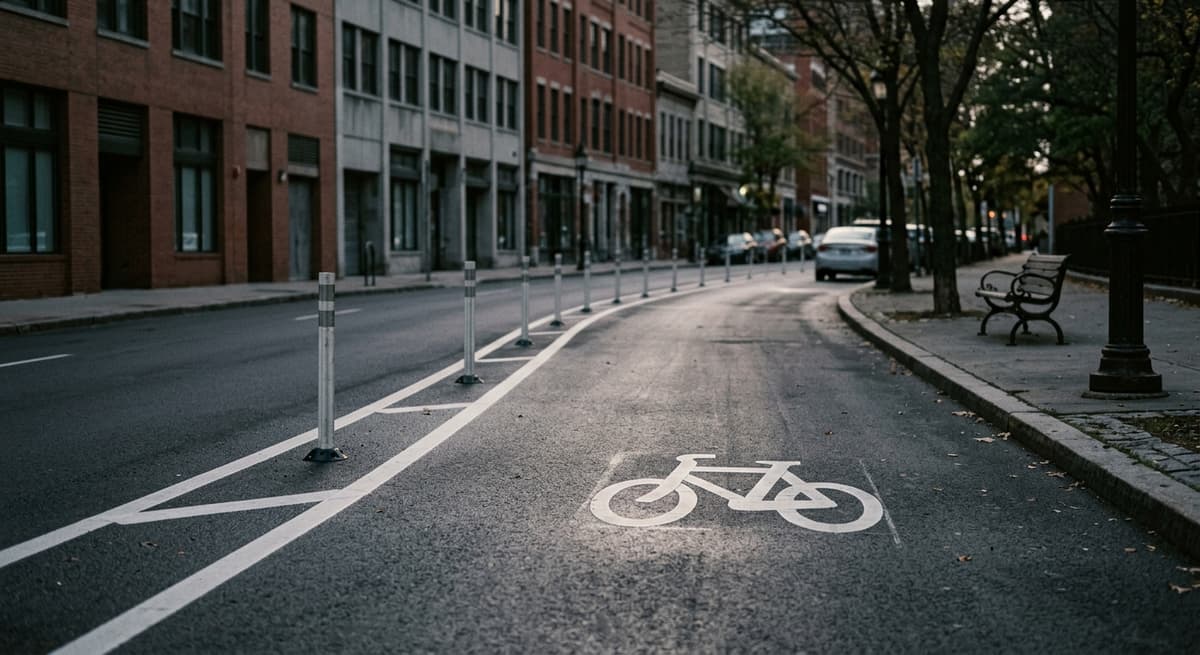
No source in this research described a cycle-path or pavement rule specific to a two-wheeled vehicle like an e-scooter. As a "motor cycle" under the Act, it would be expected to use the general road network on the same terms as any other motor cycle, not a bicycle lane or footpath.
Rider rules
Section 73(9) of the Act requires anyone driving or riding a motor cycle to wear a crash helmet. The Act also sets a licensing floor: no licence issues to anyone under 16, and an under-18 sub-floor applies to everything except mopeds. Since an e-scooter is excluded from the moped category, the higher age floor is the one that plausibly applies to it, not the lower moped exception.
Penalties
No specific fine amounts for riding an unlicensed or unregistered motor cycle, or riding without a helmet, could be verified in this research. General Road Traffic Act offence provisions apply to motor cycle violations, but the figures themselves were not confirmed.
Enforcement in practice
No enforcement data, incident reports, or rental-operator presence for e-scooters was found for Maseru or any other part of Lesotho in this research. That silence is a data gap, not evidence that the rules go unenforced. Enforcement patterns, where they exist, do not change the legal status of a device and are not permission to ride it.
Legal history and what may change
No evidence was found of a post-1981 regulation carving out a lighter class for electric two-wheelers. Until such a text surfaces, the 1981 Act's motor cycle category remains the best available reading of the law for an e-scooter in Lesotho. This same combustion-versus-electric classification trap appears across other jurisdictions surveyed in the world e-scooter law guide.
Frequently Asked Questions
Are e-scooters legal to ride in Lesotho?
There is no dedicated e-scooter law. Lesotho's Road Traffic Act defines vehicle categories by engine type, and because an e-scooter's electric motor is not an internal combustion engine, it cannot qualify for the lighter moped category. It falls instead into the fuller motor cycle category.
Why does being electric make things harder in Lesotho, not easier?
Lesotho's moped category is defined narrowly as a two-wheeled vehicle with a combustion engine no larger than 50cc. An electric scooter is automatically excluded from that lighter category and defaults to the motor cycle category, which carries a fuller set of obligations.
Do I need a helmet to ride an e-scooter in Lesotho?
Section 73(9) of the Road Traffic Act requires helmets for motor cycle riders. Since an e-scooter falls into the motor cycle category rather than the moped category, this requirement plausibly applies to it.
Is there a minimum age to ride an e-scooter in Lesotho?
The Act sets a general licensing floor of 16, with an under-18 sub-floor for everything except mopeds. Because an e-scooter is not classed as a moped, the higher age floor likely applies rather than any moped exception.
Are there e-scooter rental schemes in Lesotho?
None were found in this research for Maseru or elsewhere in Lesotho.
Sources and References
- Road Traffic Act 1981 (Act No. 8 of 1981), definitions section 1 (motor vehicle: mechanical or electrical power)(web.archive.org)
- Road Traffic Act 1981, definitions section 1 (moped: combustion engine, max 50cc)(web.archive.org)
- Road Traffic Act 1981, definitions section 1 (motor cycle: two-wheeled vehicle other than moped)(web.archive.org)
- Road Traffic Act 1981, section 73(9) (crash helmet requirement for motor cycle riders)(web.archive.org)
- Road Traffic Act 1981, licensing age floor provisions (under 16 disqualifying, under-18 sub-floor except mopeds)(web.archive.org)