
Maryland
Maryland E-Scooter Laws: Sidewalk, Helmet & Age Rules (2026)
Independently fact-checked against primary sources (last audited July 23, 2026). · Law checked current as of August 9, 2026. · 4 primary sources cited on this page. How we verify our legal content
This article is general information about Maryland e-scooter law and is not legal advice. If you were cited or injured, a Maryland-licensed attorney or the Maryland General Assembly's own statute text at mgaleg.maryland.gov can give you a current, situation-specific answer. Information last verified on 23 July 2026.
Are e-scooters legal in Maryland?
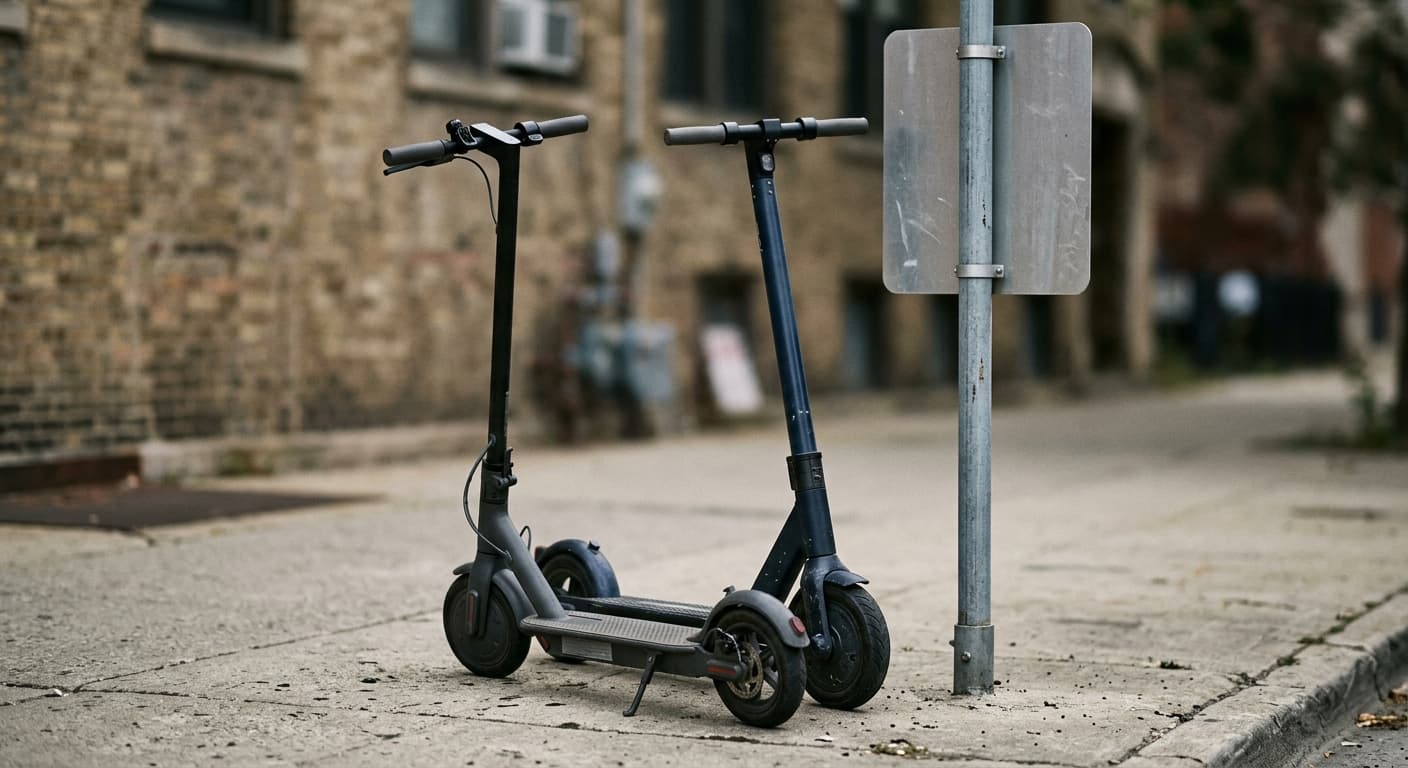
Yes. Maryland's Transportation Article treats an "electric low speed scooter" as a type of bicycle rather than a motor vehicle, motorized minibike, or motor scooter. That classification matters, because it means e-scooters generally follow Maryland's bicycle rules rather than a separate, more restrictive vehicle framework. See the e-scooter laws hub for how that compares to states that leave e-scooters unregulated or treat them as a motor vehicle.
What counts as an e-scooter in Maryland
An "electric low speed scooter" is a device designed to carry only the operator, with handlebars and a stand-on platform, weighing less than 100 pounds, and solely powered by an electric motor and human power, capable of operating at a speed of up to 20 mph. A standard stand-up rental or personal e-scooter fits this definition. Maryland regulates a separate, heavier self-balancing device category, the EPAMD (electric personal assistive mobility device, the Segway-style type), under its own rules, including a lower 15 mph speed cap and roadway restrictions near sidewalks or on roads posted above 30 mph. Don't confuse the two categories when reading Maryland scooter guidance.
Where you can ride
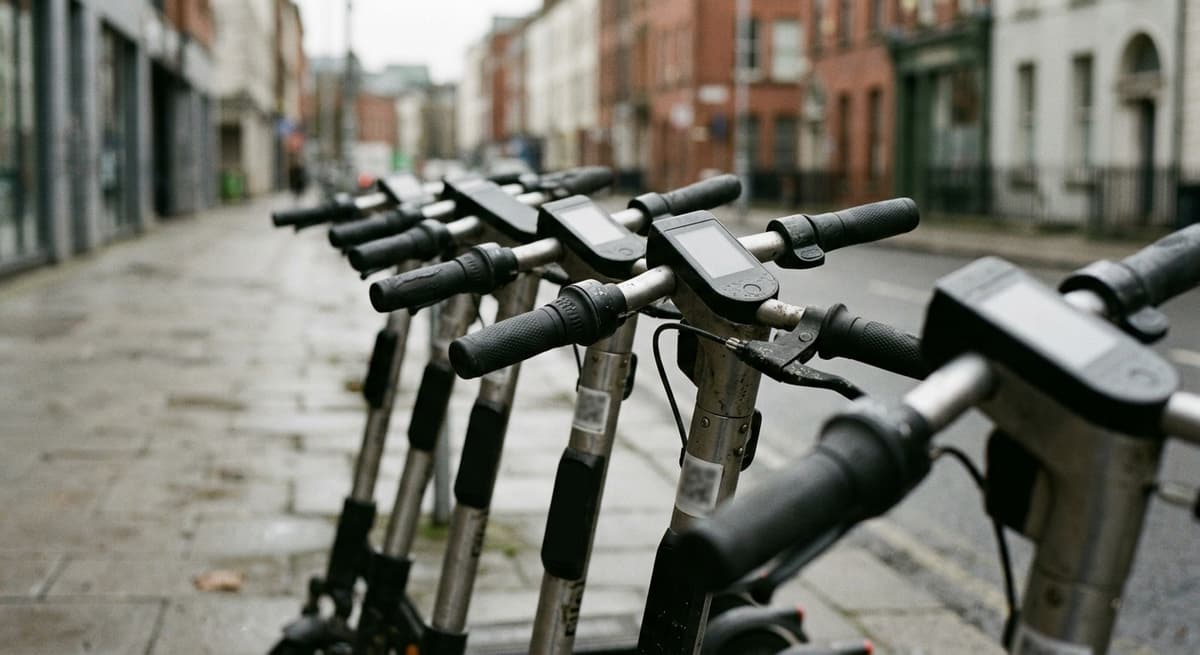
As of October 1, 2025, Maryland's "Jay's Law" (House Bill 375, Chapter 558 of the 2025 legislative session) flipped the state's sidewalk default: bicycles, play vehicles, and unicycles may now use sidewalks statewide unless a local ordinance specifically prohibits it, reversing the older default position. Because Maryland classifies an electric low speed scooter as a bicycle, this sidewalk-default flip extends to e-scooters as well. Riders on a sidewalk must yield the right-of-way to pedestrians and to EPAMD users.
That statewide default doesn't override a stricter local rule. Baltimore, for example, bans sidewalk riding for e-scooters specifically unless the adjacent street's posted speed limit is 30 mph or higher and the rider keeps the scooter at 6 mph or under on the sidewalk, a narrower exception than the statewide bicycle default alone would suggest. Always check whether the city you're riding in has adopted its own rule before assuming the statewide default is the last word.
Rider rules
Age: no statewide minimum age to operate an electric low speed scooter was found in Maryland law.
Helmet: required statewide for any rider under 16 operating a scooter, in-line skates, or a similar device on a highway, bikeway, sidewalk, or public property. This is enforced primarily through warnings and educational materials rather than a routine fine.
License/registration: none required, consistent with the bicycle classification.
Penalties
Maryland's e-scooter rules are largely enforced as bicycle-equivalent traffic rules rather than through a separate motor-vehicle penalty schedule, given the statutory classification. Locally, Baltimore's ordinance sets its own city-level violations for e-scooter-specific rules such as its 15 mph cap and sidewalk restriction.
Enforcement in practice
No statewide Maryland enforcement statistics specific to e-scooters were documented in the research behind this article. Enforcement patterns do not change what the law requires, and a location where enforcement is inconsistent is not a form of permission to ignore the sidewalk, speed, or helmet rules described above.
Baltimore e-scooter rules
Baltimore City Code section 38-18 sets a dedicated set of e-scooter rules that go further than the state framework alone. E-scooters are capped at 15 mph, compared to 20 mph for e-bikes. Riders under 16 must wear a helmet. A headlight is required after dusk and before dawn. Sidewalk riding is banned unless the adjacent street's posted speed limit is at least 30 mph and the scooter's sidewalk speed stays at 6 mph or under. Unauthorized passengers aren't allowed, riders must use bike facilities or the right side of the lane where available, and parked scooters can't block sidewalks, bus stops, driveways, or doorways.
If you're involved in a collision while riding, or a scooter rider is involved in one with you, in Baltimore or elsewhere in the state, Maryland car accident laws covers the general fault and insurance framework, and Maryland DUI laws explains how the state's impaired-operation rules apply more broadly.
Frequently Asked Questions
Can I ride an e-scooter on the sidewalk in Maryland?
Generally yes, as of October 1, 2025, under Jay's Law, unless a local ordinance says otherwise. Baltimore, for example, only allows sidewalk riding under specific speed conditions.
Do I need a helmet to ride an e-scooter in Maryland?
Only if you're under 16. Maryland requires a helmet statewide for riders under 16, with no mandate for adults.
How old do you have to be to ride an e-scooter in Maryland?
Maryland has no statewide minimum age to operate an electric low speed scooter.
What is Jay's Law?
Jay's Law, House Bill 375 (Chapter 558 of 2025), flips Maryland's sidewalk default so bicycles, play vehicles, and unicycles, including e-scooters through their bicycle classification, may use sidewalks statewide unless a local ordinance prohibits it. It took effect October 1, 2025.
Is an e-scooter the same as an EPAMD in Maryland?
No. Maryland regulates electric low speed scooters and EPAMDs (Segway-style self-balancing devices) as separate categories with different speed caps and roadway rules.
Do I need a license to ride an e-scooter in Maryland?
No. An electric low speed scooter is classified as a bicycle under Maryland law, with no license or registration requirement.
Are Baltimore's e-scooter rules different from the state's?
Yes. Baltimore caps e-scooters at 15 mph, requires a helmet under 16, and only allows sidewalk riding under specific speed conditions, on top of the statewide framework.
What's the fine for an e-scooter violation in Maryland?
Maryland doesn't publish a single statewide e-scooter fine. E-scooters are generally enforced under bicycle-equivalent traffic rules, and cities like Baltimore set their own local violations for city-specific rules.
Updates
Corrected the statutory definition of an electric low speed scooter to match Md. Code, Transportation 11-117.2: removed an inaccurate "on a paved, level surface" qualifier from the 20 mph figure and restored the statute's requirement that the device be solely powered by an electric motor and human power.
Governing law re-checked for recent changes
Corrected the Sources citation for Maryland's 'electric low speed scooter' definition: it is codified at Transportation Article 11-117.2, not 21-101 as previously cited (confirmed by opening the official Maryland General Assembly statute-text page).
Governing law re-checked for recent changes
Independently fact-checked against the cited primary sources
The Law Behind This Article
This article rests on the statutory provisions below, held in our own legal record and retrieved from the official source. Tap a section to read the operative text.
Maryland Code, Transportation Article
§ 21-1103In force
§21–1103. (a) Except as provided in subsection (b), (c), or (d) of this section, a person may not drive any vehicle on a sidewalk or sidewalk area unless it is a permanent or authorized temporary driveway. (b) (1) For the purposes of this subsection, “bicycle” does not include “moped”, as defined in § 11–134.1 of this article. (2) Unless prohibited by local ordinance, a person may ride a bicycle, play vehicle, or unicycle on a sidewalk or sidewalk area. (3) In a place where a person may ride a bicycle on a sidewalk or sidewalk area, a person may also ride a bicycle from the curb or edge of the roadway in or through a crosswalk to the opposite curb or edge of the roadway. (c) Unless prohibited by local ordinance, an individual with a disability may use a special vehicle other than a wheelchair on sidewalks or sidewalk areas. (d) An individual may use a wheelchair on sidewalks or sidewalk areas in accordance with § 21–501.1 of this title.
Official text (excerpt) · last checked 2026-09-07 · Read the full text in our law library · Verify at mgaleg.maryland.gov
§ 11-117.2In force
§11–117.2. (a) “Electric low speed scooter” means a vehicle that: (1) Is designed to transport only the operator; (2) Weighs less than 100 pounds; (3) Has single wheels in tandem or a combination of one or two wheels at the front and rear of the vehicle; (4) Is equipped with handlebars and a platform designed to be stood on while riding; (5) Is solely powered by an electric motor and human power; and (6) Is capable of operating at a speed of up to 20 miles per hour. (b) “Electric low speed scooter” does not include: (1) An electric personal assistive mobility device; or (2) An electric wheelchair or other mobility aid used by a disabled individual.
Official text (excerpt) · last checked 2026-07-29 · Read the full text in our law library · Verify at mgaleg.maryland.gov
§ 21-1205.1In force
§21–1205.1. (a) (1) Notwithstanding any other provision of this title, a person may not ride a bicycle or a motor scooter: (i) Except as provided in paragraph (2) of this subsection, on any roadway where the posted maximum speed limit is more than 50 miles per hour; or (ii) On any expressway, except on an adjacent bicycle path or way approved by the State Highway Administration, or on any other controlled access highway signed in accordance with § 21–313 of this title. (2) If a person is lawfully operating a bicycle or a motor scooter on a shoulder adjacent to a roadway for which the posted maximum speed limit is more than 50 miles per hour, the person may enter the roadway only if: (i) Making or attempting to make a left turn; (ii) Crossing through an intersection; or (iii) The shoulder is overlaid with a right turn lane, a merge lane, a bypass lane, or any other marking that breaks the continuity of the shoulder. (b) (1) Where there is not a bike lane paved to a smooth surface, a person operating a bicycle or a motor scooter may use the roadway or the shoulder.
Official text (excerpt) · last checked 2026-07-29 · Read the full text in our law library · Verify at mgaleg.maryland.gov
Search our full record of US law — 2.1 million sections, every state + federal →
Sources and References
- Maryland Transportation Article section 11-117.2, electric low speed scooter definition(mgaleg.maryland.gov).gov
- Maryland House Bill 375, Chapter 558 of 2025 ("Jay's Law"), bill details(mgaleg.maryland.gov).gov
- Maryland Transportation Article section 21-1205.1, EPAMD operating rules(mgaleg.maryland.gov).gov
- Baltimore City Code section 38-18, unlawful operation of e-bike or e-scooter(codes.baltimorecity.gov).gov
Paid attorney referral. RecordingLaw may receive compensation when you use an attorney-help link. RecordingLaw is not a law firm. Submitting a request does not guarantee that an attorney will accept your case and does not create an attorney-client relationship.