
Maryland
Maryland Pepper Spray and Stun Gun Laws (2026)
Independently fact-checked against primary sources (last audited September 23, 2026). · 9 primary sources cited on this page. How we verify our legal content
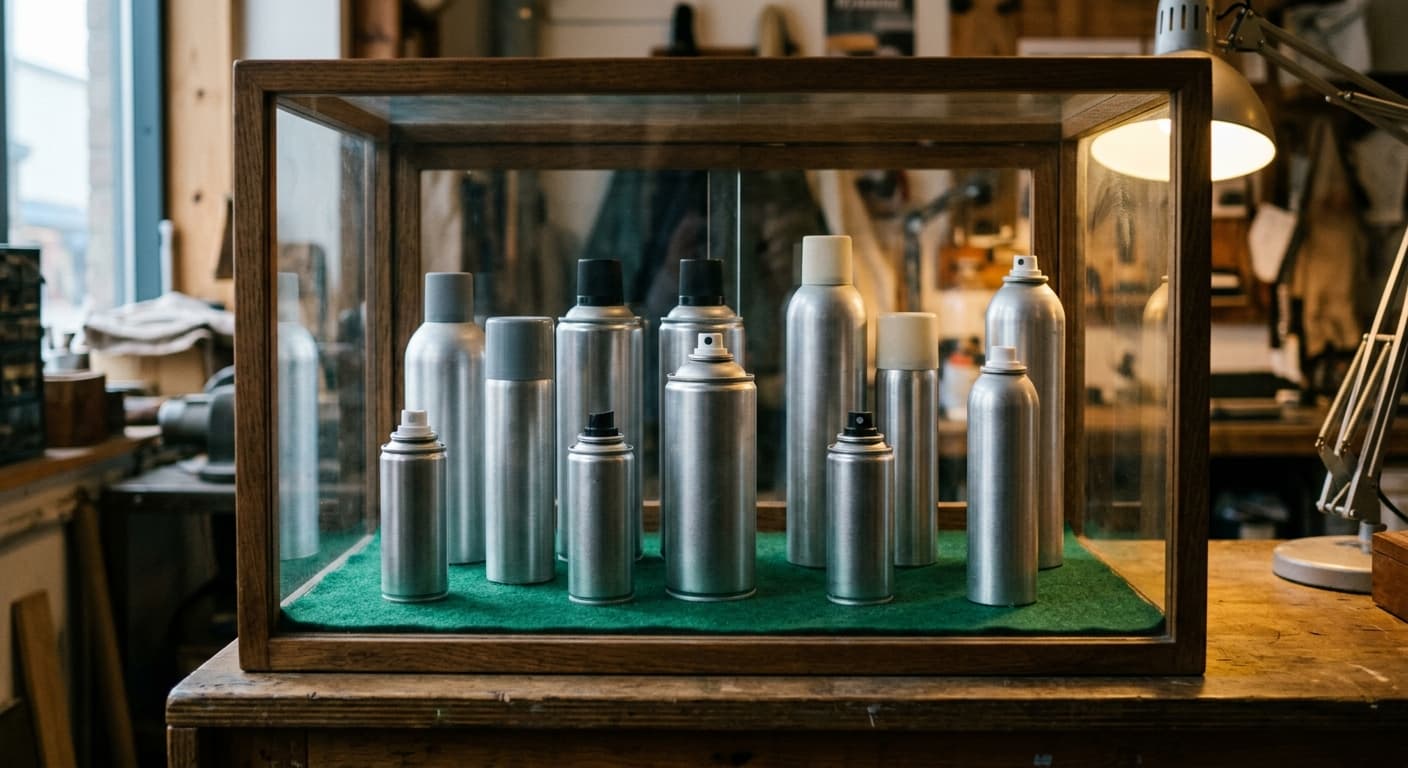
Maryland regulates pepper spray and stun guns through two differently structured statutes in the same subtitle of its Criminal Law article. Pepper mace is folded into the state's general weapon-carrying offense, with a distinction between concealed and open carry and an express self-defense carve-out that governs most ordinary carry; an electronic control device gets its own dedicated statute built around an age-and-clean-record eligibility test rather than a carry offense.
Jurisdiction scope: This page covers Maryland state law only, principally Criminal Law Sections 4-101, 4-102, 4-109, and 4-209. It does not cover Maryland's handgun permit statute in detail, or local ordinances in the counties and municipalities that have adopted their own weapon rules.
Is pepper spray legal to carry in Maryland?
Yes, subject to a distinction between concealed and open carry that the statute draws explicitly, plus an express self-defense carve-out. Criminal Law Section 4-101(a)(3) defines "pepper mace" as "an aerosol propelled combination of highly disabling irritant pepper-based products," also known as oleoresin capsicum, or O.C., spray.
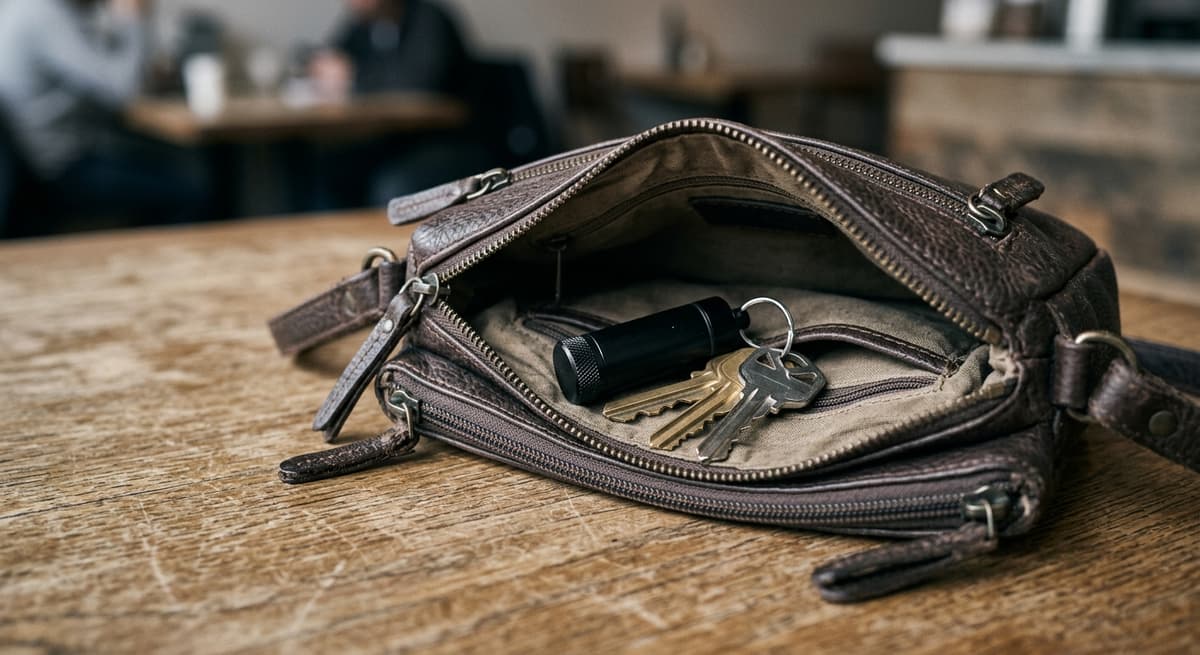
Section 4-101(c)(1) makes it unlawful to "wear or carry a dangerous weapon of any kind concealed on or about the person." That phrase is open-ended by its own words, "of any kind," and the section's only enumerated list, the "Weapon" definition in subsection (a)(5) (a dirk knife, bowie knife, switchblade knife, star knife, sandclub, metal knuckles, razor, and nunchaku, excluding a handgun and an ordinary penknife), governs where the statute uses the defined term "weapon," in subsection (b)'s exceptions, not where (c)(1) uses the separate, undefined phrase "dangerous weapon of any kind." Pepper mace's absence from the (a)(5) list is therefore not, on its own, proof that (c)(1) does not reach it.
The stronger textual signal sits in the next paragraph. Section 4-101(c)(2) reads: "A person may not wear or carry a dangerous weapon, chemical mace, pepper mace, or a tear gas device openly with the intent or purpose of injuring an individual in an unlawful manner." Pepper mace, chemical mace, and a tear gas device are listed separately from, and alongside, "a dangerous weapon," which shows the General Assembly did not treat pepper mace as already subsumed inside that term. That paragraph's offense also requires carrying the item openly and with the specific intent to injure someone unlawfully; ordinary carry for self-defense, without that intent, is not what it describes.
Ordinary concealed carry for self-defense is also covered by an express exception the statute states directly, in the same section as the (c)(1) prohibition. Section 4-101(b) provides: "This section does not prohibit the following individuals from carrying a weapon: ... (3) a holder of a permit to carry a handgun issued under Title 5, Subtitle 3 of the Public Safety Article; or (4) an individual who carries the weapon as a reasonable precaution against apprehended danger, subject to the right of the court in an action arising under this section to judge the reasonableness of the carrying of the weapon, and the proper occasion for carrying it, under the evidence in the case." Subsection (b)(4) is the provision a Marylander carrying pepper mace for ordinary self-defense actually relies on, and it is expressly discretionary: a court decides after the fact whether the carrying was reasonable and the occasion proper, not a guaranteed right established in advance. Subsection (a)(5)'s "Weapon" definition uses the word "includes," and Maryland's General Provisions Article Section 1-110 states that "Includes" or "including" means includes or including by way of illustration and not by way of limitation, so the (a)(5) list is illustrative rather than closed, and (b)(4)'s exemption for "the weapon" reaches pepper mace.
In twelve named counties, Anne Arundel, Baltimore County, Caroline, Cecil, Harford, Kent, Montgomery, Prince George's, St. Mary's, Talbot, Washington, and Worcester, a minor may not carry "a dangerous weapon" between one hour after sunset and one hour before sunrise, concealed or not, except on a bona fide hunting trip or while engaged in or traveling to a trap shoot, sport shooting event, or organized civic or military activity. Violating Section 4-101 is a misdemeanor punishable by up to 3 years imprisonment or a $1,000 fine, or both; the court must impose the highest available sentence if the evidence shows the weapon was carried with a deliberate purpose of injuring or killing someone.
Are stun guns legal to carry in Maryland?
Legal to possess for an adult with no disqualifying record. Maryland's electronic control device statute, Criminal Law Section 4-109, is not built as a carry offense the way pepper mace is; it is a possession-eligibility rule. Section 4-109(a)(3) defines "electronic control device" as "a portable device designed as a weapon capable of injuring, immobilizing, or inflicting pain on an individual by the discharge of electrical current." Section 4-109(b) states: "A person may not possess or use an electronic control device unless the person: (1) has attained the age of 18 years; and (2) has never been convicted of a crime of violence or a violation of" Maryland's specified controlled-substance distribution statutes.
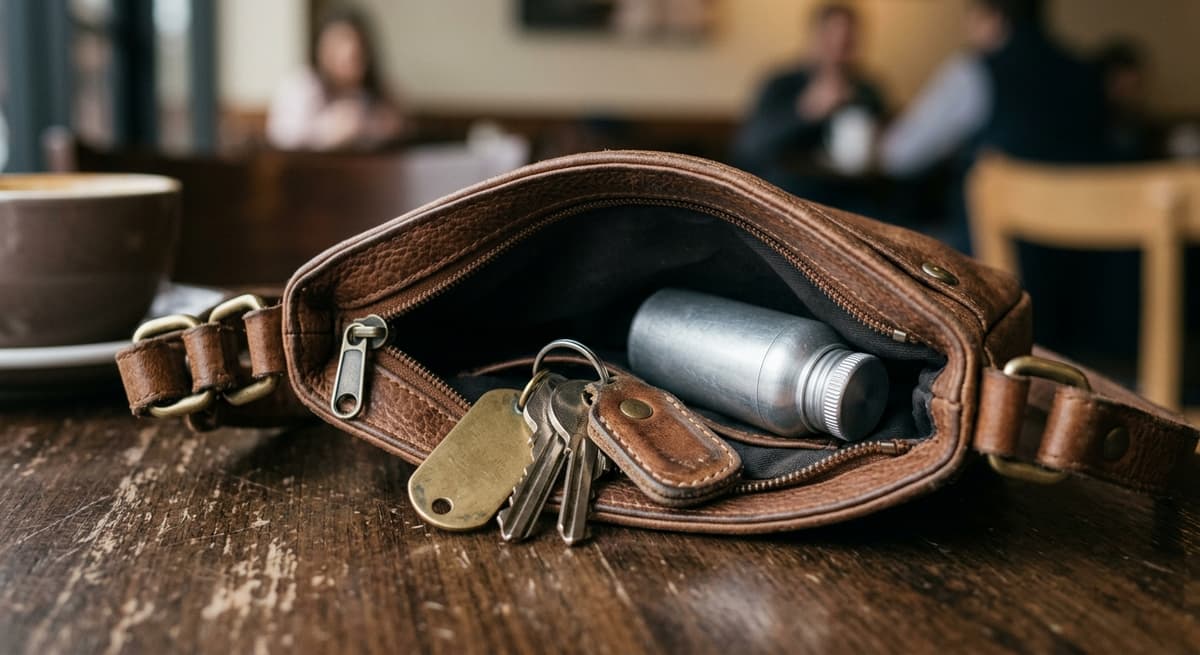
Selling one carries its own duties, separate from the buyer's eligibility. Section 4-109(c) requires that an activated electronic control device not be sold in Maryland unless the buyer receives instructional materials, the manufacturer keeps a record of the original owner, and the manufacturer or seller has run a state and federal criminal history check on that original owner "to ensure compliance with subsection (b)(2) of this section," the never-convicted prong of the eligibility rule; the check does not confirm the buyer's age under (b)(1). Violating the possession requirement is a misdemeanor, up to 2 months imprisonment or a $500 fine, or both; committing that violation while also committing a separate crime of violence raises it to a felony, up to 3 years imprisonment or a $5,000 fine, or both. Section 4-109(f) expressly reserves room for local regulation: "This section does not prohibit a local government from adopting a restriction or requirement concerning the possession of an electronic control device that is more stringent than the requirements of this section." No comparable local-authority clause appears in Section 4-101 for pepper mace, but the question is not left open: Maryland's firearms-preemption statute, Criminal Law Section 4-209(a), preempts local regulation only of "a handgun, rifle, or shotgun" and their ammunition and components. Because pepper mace is outside that list, Section 4-209 does not bar a Maryland county or municipality from regulating it, so local governments remain free to adopt their own rules for pepper mace just as Section 4-109(f) lets them do for electronic control devices.
Where you can't carry either device
Maryland's school-weapons statute, Criminal Law Section 4-102(b), states: "A person may not carry or possess a firearm, knife, or deadly weapon of any kind on public school property." "Deadly weapon" is not itself defined in Section 4-102, and it is a different term from both the "Weapon" defined in Section 4-101(a)(5) and the "electronic control device" defined in Section 4-109(a)(3); the statute's text does not resolve whether pepper mace or an electronic control device counts as a "deadly weapon" for this school-grounds offense. Section 4-102 carries the same misdemeanor penalty structure as Section 4-101, up to 3 years imprisonment or a $1,000 fine, or both, with narrow exceptions for on-duty and specified off-duty or retired law enforcement officers, school-hired security personnel, organized educational shooting activity, and principal-authorized historical demonstrations.

Federal law: what it does and does not reach
No federal statute regulates a civilian's purchase or possession of pepper spray or a stun gun. Federal law matters in three places.
Federal buildings. Under 18 U.S.C. § 930(a), whoever knowingly possesses or causes to be present "a firearm or other dangerous weapon in a Federal facility (other than a Federal court facility)" faces a fine, imprisonment of up to 1 year, or both. Subsection (e) sets up to 2 years for a federal court facility, and subsection (b) up to 5 years where the weapon is intended to be used in a crime. Section 930(g)(2) defines the term:
The term "dangerous weapon" means a weapon, device, instrument, material, or substance, animate or inanimate, that is used for, or is readily capable of, causing death or serious bodily injury, except that such term does not include a pocket knife with a blade of less than 2½ inches in length.
The definition names neither device. Whether a particular spray or stun gun is "readily capable of" causing serious bodily injury is a question of fact the statute does not answer. Subsection (d)(3) exempts "the lawful carrying of firearms or other dangerous weapons in a Federal facility incident to hunting or other lawful purposes," and subsection (h) requires notice of the ban to be posted at each public entrance. A "Federal facility" is "a building or part thereof owned or leased by the Federal Government, where Federal employees are regularly present for the purpose of performing their official duties."
Air travel. The Transportation Security Administration's screening rules, which are agency policy rather than statute, bar both devices from carry-on bags. One 4 fl. oz. (118 ml) container of mace or pepper spray is permitted in checked baggage if it has a safety mechanism to prevent accidental discharge, and sprays containing more than 2 percent by mass of tear gas (CS or CN) are prohibited in checked baggage. Tasers, stun guns and other electro-shock weapons may travel in checked baggage only if transported so the device cannot discharge accidentally. Airlines may set stricter rules.
National parks. National Park Service regulations prohibit possessing, carrying or using a "weapon" in a park area except as the regulations provide (36 CFR 2.4(b)(1)). 36 CFR 1.4 defines "weapon" to include an "irritant gas device" and any "weapon the possession of which is prohibited under the laws of the State in which the park area or portion thereof is located."
Disclaimer: This article provides general legal information about Maryland's pepper spray and stun gun laws as of September 2026. It is not legal advice. Consult a lawyer licensed in Maryland for advice about a specific situation.
For a state-by-state comparison, see pepper spray and stun gun laws by state. Maryland's self-defense statutes are covered separately on the Maryland self-defense laws page.
Statutes cited reflect their in-force version as of 2026-09-18. Last updated: 2026-09-18.
Frequently Asked Questions
Is it legal to carry pepper spray concealed in Maryland?
Maryland's concealed-carry clause, Criminal Law Section 4-101(c)(1), bans concealing 'a dangerous weapon of any kind,' an open-ended, undefined phrase; pepper mace is not named there, and the fact that Section 4-101(c)(2) separately lists pepper mace, chemical mace, and a tear gas device alongside 'a dangerous weapon' for its openly-carried, unlawful-intent offense is the stronger sign the two are not the same thing. Section 4-101(b)(4) also exempts 'an individual who carries the weapon as a reasonable precaution against apprehended danger,' the provision most ordinary self-defense carrying relies on, though a court decides case by case whether the carrying was reasonable. Subsection (a)(5)'s 'Weapon' list is illustrative, not closed, under Maryland's General Provisions Section 1-110, so that exemption reaches pepper mace.
Do you need a permit for a stun gun in Maryland?
No permit is required, but there is an eligibility rule. Criminal Law Section 4-109(b) bars possessing or using an electronic control device unless the person is 18 or older and has never been convicted of a crime of violence or specified controlled-substance distribution offenses.
Can Maryland counties regulate pepper spray or stun guns more strictly than state law?
For electronic control devices, yes: Section 4-109(f) expressly allows a local government to adopt a restriction more stringent than the state statute. Pepper mace is not left open either: Maryland's firearms-preemption statute, Section 4-209(a), reaches only a handgun, rifle, or shotgun and their ammunition and components, so it does not preempt local regulation of pepper mace, and a county or municipality may adopt its own rule for it.
What is the penalty for illegally possessing a stun gun in Maryland?
Violating the age-and-record eligibility rule in Criminal Law Section 4-109(b) is a misdemeanor punishable by up to 2 months imprisonment or a $500 fine, or both. If the violation happens while the person commits a separate crime of violence, it becomes a felony punishable by up to 3 years imprisonment or a $5,000 fine, or both.
Updates
Independently fact-checked against the cited primary sources
Sources and References
- Md. Code, Criminal Law 4-101 - Weapon crimes; concealed weapon; wear or carry with intent to injure ('pepper mace' definition and open/concealed distinction)(mgaleg.maryland.gov).gov
- Md. Code, Criminal Law 4-102 - Possession of weapon on public school property(mgaleg.maryland.gov).gov
- Md. Code, Criminal Law 4-109 - Electronic control device (definition, eligibility rule, sale requirements, penalties, local-authority clause)(mgaleg.maryland.gov).gov
- Md. Code, Criminal Law 4-209 - Regulation by counties and municipal corporations (state preemption scoped to handgun, rifle, or shotgun only)(mgaleg.maryland.gov).gov
- Md. Code, General Provisions 1-110 - 'Includes' or 'including' (rule of construction: illustrative, not limiting)(mgaleg.maryland.gov).gov
- 18 U.S.C. § 930 - Possession of firearms and dangerous weapons in Federal facilities(law.cornell.edu)
- Transportation Security Administration - What Can I Bring? Pepper Spray(tsa.gov).gov
- Transportation Security Administration - What Can I Bring? Stun Guns/Shocking Devices(tsa.gov).gov
- 36 CFR 1.4 - National Park Service definitions (weapon)(ecfr.gov).gov
- 36 CFR 2.4 - Weapons, traps and nets(ecfr.gov).gov