
Massachusetts
Massachusetts E-Scooter Laws: Sidewalk, Helmet & Age Rules (2026)
Independently fact-checked against primary sources (last audited July 23, 2026). · 4 primary sources cited on this page. How we verify our legal content
This article is general information about Massachusetts e-scooter law and is not legal advice. If you were cited, injured, or need a current reading of a pending bill, talk to a Massachusetts-licensed attorney or check the text at malegislature.gov directly. Information last verified on 7 September 2026.
Are e-scooters legal in Massachusetts?
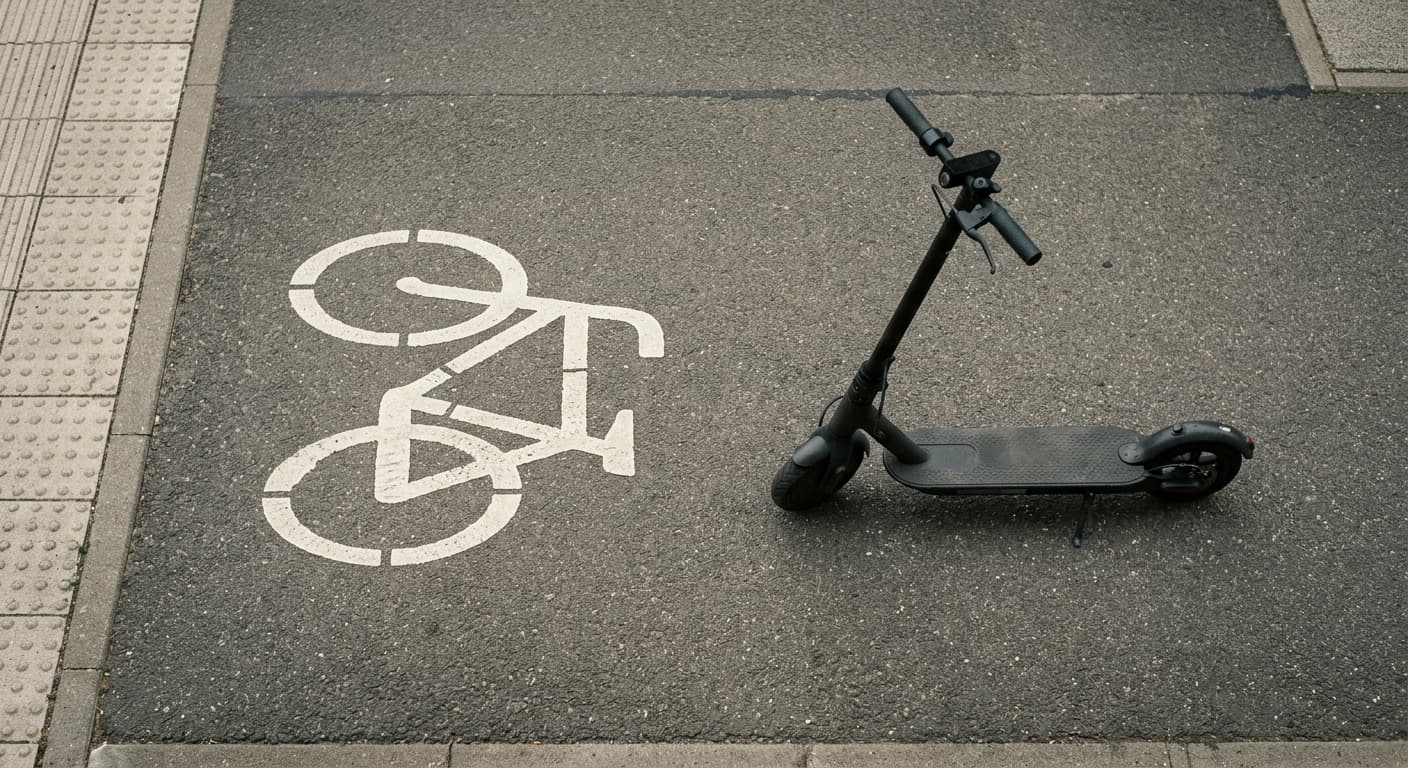
Massachusetts has a dedicated statute for e-scooters, Massachusetts General Laws Chapter 90, Section 1E, titled "Motorized scooters; operation regulations." So the short answer is yes, riding a motorized scooter is legal on public ways in Massachusetts, but the statute attaches conditions that are unusually strict compared to the rest of New England.
The biggest one: section 1E says "a motorized scooter shall not be operated on any way by a person not possessing a valid driver's license or learner's permit." That means Massachusetts treats scooter operation like driving a car for licensing purposes, a requirement Connecticut, Rhode Island, and Vermont do not impose. For how other states handle this, see the e-scooter laws hub.
Section 1E also requires the scooter itself to have "operational stop and turn signals so that the operator can keep both hands on the handlebars at all times." Almost no consumer e-scooter or shared-fleet scooter is built with turn signals, which is the practical reason dockless rental operators like Bird and Lime have largely stayed out of the state. This is a genuine, statute-driven quirk, not an urban legend.
What counts as an e-scooter in Massachusetts
Massachusetts does define the term, just not inside section 1E. The definition sits in the chapter's general definitions at MGL c.90 section 1, which defines a "motorized scooter" as "any 2 wheeled tandem or 3 wheeled device, that has handlebars, designed to be stood or sat upon by the operator, powered by an electric or gas powered motor that is capable of propelling the device with or without human propulsion."
That same definition carves devices out expressly. It "shall not include a motorcycle, electric bicycle or motorized bicycle or a 3 wheeled motorized wheelchair." So a standard e-bike with fully operable pedals falls under the separate electric bicycle rules rather than section 1E, and a three-wheeled motorized wheelchair is outside the definition as well.
Notice what the test does not turn on. There is no wattage threshold, no weight limit, and no wheel-size specification in the definition. It is a form-factor test: two or three wheels, handlebars, designed to be stood or sat upon, and motor powered. A seated three-wheeler with handlebars is covered, and a high-powered stand-up scooter and a low-powered one are treated the same way.
Where you can ride
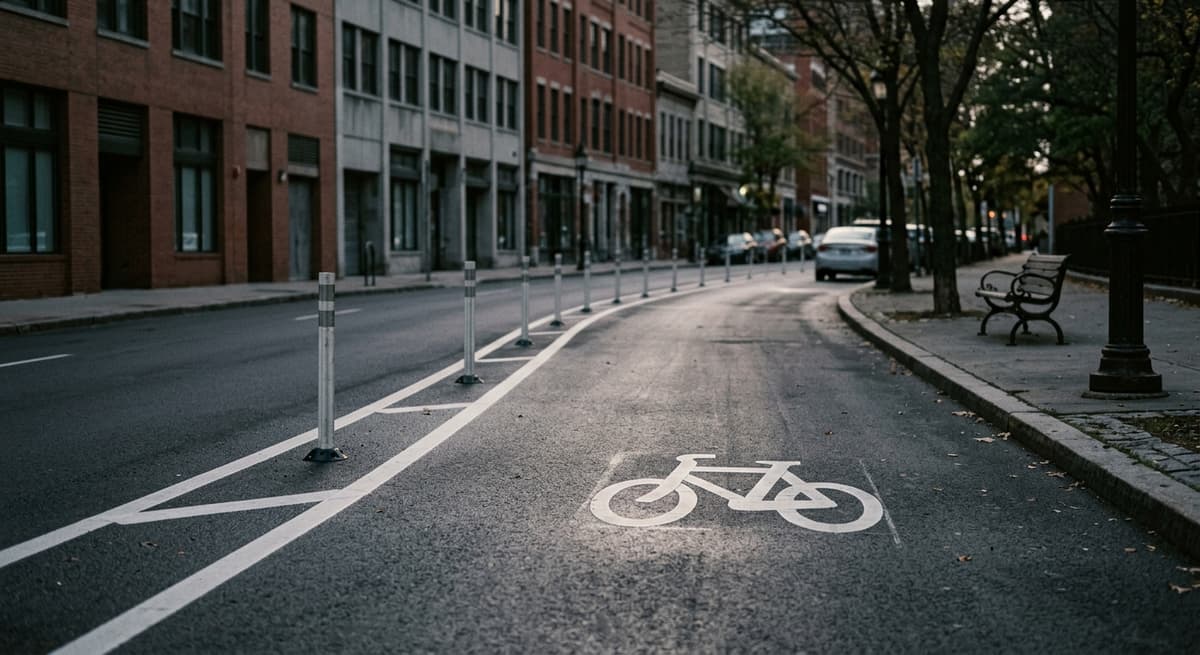
Section 1E allows motorized scooters on public ways generally, with two carve-outs: they may not be operated on limited-access or express state highways where posted against bicycles and scooters, and riders must keep to the right side of the way. The statute does not authorize sidewalk riding, and it imposes an outright nighttime ban, no operation "at any time after sunset or before sunrise," which goes further than a typical lighting requirement.
Because Boston's only citywide shared-scooter pilot ran April through November 2021 and has not been renewed, there is currently no active dockless rental fleet operating on Boston streets to compare against the private-scooter rules described above.
Rider rules
License or permit: required to operate on any public way, no exceptions in the statute's text.
Age: section 1E does not state a standalone minimum age directly; it ties eligibility to holding a driver's license or learner's permit, and Massachusetts commonly issues learner's permits starting at 16. That connection was not independently confirmed against Massachusetts's driver-licensing statute for this article, so treat 16 as the effective floor rather than a number written into section 1E itself.
Helmet: required, and the statutory text sets no age cutoff. It requires "protective headgear conforming with such minimum standards of construction and performance as the registrar may prescribe" for the person operating the scooter, full stop. Several secondary guides describe this as an under-16 rule, but that threshold actually belongs to a separate Massachusetts bicycle helmet statute (MGL c.85 section 11B) and does not appear in section 1E.
Equipment: stop and turn signals, as noted above.
Passengers: not allowed.
Penalties
Section 1E sets fines that escalate by offense: not more than $25 for a first violation, $25 to $50 for a second, and $50 to $100 for a third or subsequent violation. Because operating a motorized scooter in Massachusetts already requires a driver's license, the state's general operating-under-the-influence rules apply to a person on a scooter the same way they apply to any other licensed vehicle on a public way; see Massachusetts DUI laws for how those penalties work.
Enforcement in practice
No Massachusetts-specific enforcement data, such as citation counts or seizure statistics, was documented in the research for this article. Enforcement patterns do not change what the statute requires and are not a form of permission; a rider who is technically out of compliance with the license, helmet, or turn-signal requirements is not shielded from a citation just because enforcement may be inconsistent city to city.
Boston e-scooter rules
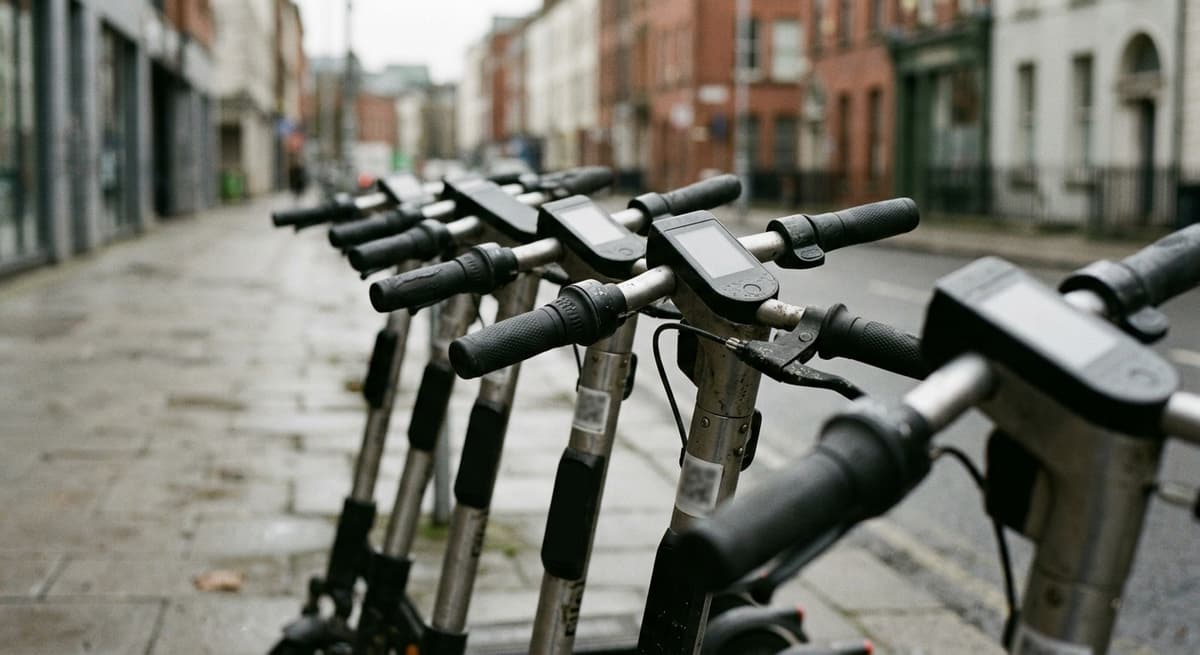
Boston does not currently run a citywide shared e-scooter program. The city's only pilot operated from April to November 2021 under the Boston Transportation Department, confining riders to streets, bike lanes, and shared paths, with sidewalks off-limits. Since that pilot ended, Boston has not reinstated a permanent dockless scooter-share system, so anyone riding a private e-scooter in the city is operating under the same statewide section 1E rules described above, license and turn-signals included.
A bill that would change this: the Ride Safe Act
Governor Healey filed Senate Bill 3077 on May 4, 2026. Its official title is "An Act to enhance the safe use of micromobility devices"; "Ride Safe Act" is the name the administration uses for it publicly, not the title on the bill. It proposes a four-tier, speed-based framework for e-bikes, mopeds, and scooters that would replace section 1E's license-and-turn-signal model with rules calibrated to a device's speed class, including helmet and under-16 protections for lower-speed devices and registration and age-16-plus requirements for higher-speed ones. The bill went to the Joint Committee on Transportation, which held a hearing on May 28, 2026, and on July 22, 2026 it was reported as accompanying a study order (S.3194), the step that in Massachusetts practice ends a bill's progress for the session. It is proposed legislation, not enacted law, and Massachusetts e-scooter riders remain governed by section 1E.
If you were injured while riding or were hit by an e-scooter in Massachusetts, the same personal injury and insurance principles covered in Massachusetts car accident laws generally extend to scooter riders as road users, so have a Massachusetts injury lawyer check in a free consultation how section 1E's rules could affect your claim (attorney advertising).
Frequently Asked Questions
Can I ride an e-scooter on the sidewalk in Massachusetts?
Section 1E does not authorize sidewalk riding. It regulates operation on public ways generally and bars operation on posted limited-access highways, so sidewalks are not treated as a permitted riding surface under this statute.
Do I need a license to ride an e-scooter in Massachusetts?
Yes. Section 1E requires a valid driver's license or learner's permit to operate a motorized scooter on any public way, a requirement most other New England states do not impose.
Do I have to wear a helmet on an e-scooter in Massachusetts?
Yes, and the statutory text applies the requirement to every operator, with no age cutoff written into section 1E, despite some online guides claiming it only covers riders under 16.
Can a child ride an e-scooter in Massachusetts?
Because section 1E requires a driver's license or learner's permit to operate a motorized scooter, a child too young to hold either would not be permitted to legally ride one on a public way.
Why don't Bird or Lime operate shared scooters in Massachusetts?
Section 1E requires a motorized scooter to have operational stop and turn signals that let the rider keep both hands on the handlebars, equipment that essentially no shared-fleet scooter is built with, which is widely understood to be why dockless rental programs have not taken hold statewide.
Is there a shared e-scooter program in Boston?
Not currently. Boston ran a pilot from April to November 2021 and has not brought back a permanent citywide program since.
What's the fine for an e-scooter violation in Massachusetts?
Section 1E sets escalating fines: not more than $25 for a first offense, $25 to $50 for a second, and $50 to $100 for a third or later offense.
Is Massachusetts about to change its e-scooter law?
Not for now. S.3077, officially 'An Act to enhance the safe use of micromobility devices' and promoted as the Ride Safe Act, was filed in May 2026 and would have created a speed-tiered framework for scooters, e-bikes, and mopeds, but the Joint Committee on Transportation reported it to a study order in July 2026. Section 1E remains the governing law.
Updates
Corrected the definition section to cite the statutory definition of "motorized scooter" in MGL c.90 section 1, updated the status of Senate Bill 3077 (referred to the Joint Committee on Transportation and sent to a study order in July 2026), and clarified that the first-offense fine is a $25 maximum rather than a set amount.
Independently fact-checked against the cited primary sources
The Law Behind This Article
This article rests on the statutory provisions below, held in our own legal record and retrieved from the official source. Tap a section to read the operative text.
Massachusetts General Laws, Chapter 90
§ 1EMotorized scooters; operation regulationsIn force
Section 1E. A motorized scooter shall not be operated on any way by a person not possessing a valid driver's license or learner's permit, nor at a speed in excess of 20 miles per hour. A person operating a motorized scooter upon a way shall have the right to use all public ways in the commonwealth except limited access or express state highways where signs specifically prohibiting scooters or bicycles have been posted, and shall be subject to all traffic laws and regulations of the commonwealth and the regulations contained in this section, except that: (1) a scooter operator shall keep to the right side of the road at all times, including when passing a motor vehicle which is moving in the travel lane of the way; and (2) the scooter shall be equipped with operational stop and turn signals so that the operator can keep both hands on the handlebars at all times. No person shall operate a motor scooter upon any way at any time after sunset or before sunrise. A person operating a motorized scooter shall wear protective headgear conforming with such minimum standards of construction and performance as the registrar may prescribe.
Official text (excerpt) · last checked 2026-09-07 · Read the full text in our law library · Verify at malegislature.gov
§ 1DefinitionsIn force
Section 1. The following words used in this chapter shall have the following meanings, unless a different meaning is clearly apparent from the language or context, or unless such construction is inconsistent with the manifest intention of the legislature: ''Alternative fuel'', an energy source used to power a vehicle that does not meet the definition of fuel in section 1 of chapter 64A and is not diesel motor fuel. ''Alternative fuel vehicle'', a vehicle powered by alternative fuel with the following attributes: (a) the capability of operating only on alternative fuel; (b) its original use was commenced with the taxpayer; (c) acquired by the taxpayer for use or lease, but not for resale; (d) is designed to use and uses alternative fuel for a significant portion of the total fuel used for propulsion energy for the vehicle; and (e) when operating on petroleum fuel, the vehicle model's miles per gallon rating from the United States Environmental Protection Agency exceeds the agency's corporate average fuel economy requirement for the class of vehicles, whether cars or light trucks, in which the vehicle model is classified.
Official text (excerpt) · last checked 2026-07-29 · Read the full text in our law library · Verify at malegislature.gov
Cited in 79 court opinions in our collectionLatest citing opinion in our collection: 2025
Opinions citing this section in our collection:
- Simpson v. Eastern Massachusetts Street Railway Co. (Massachusetts Supreme Judicial Court 1935, 292 Mass. 562)“…trailer to be operated on the highway or to remain thereon. G. L. c. 90, § 1, as amended (see St. 1923, c. 464, § 1)…”
- Commonwealth v. Belliveau (Massachusetts Appeals Court 2010, 76 Mass. App. Ct. 830)“…control of park commissioners or body having like powers.” G. L. c. 90, § 1. This element has been further interpre…”
- Arbella Mutual Insurance v. Vynorious (Massachusetts Appeals Court 1993, 34 Mass. App. Ct. 121)“…e purposes, refers to the definition of “motor vehicles” in G. L. c. 90, § 1, as amended through St. 1984, c. 77, §…”
Identified automatically from the court opinions citing this section — not a ranking of which case controls.
Search our full record of US law — 2.1 million sections, every state + federal →
Sources and References
- MGL c.90 section 1E, Motorized scooters; operation regulations(malegislature.gov).gov
- MGL c.85 section 11B, bicycle helmet requirement (the separate under-16 rule sometimes wrongly attributed to scooters)(malegislature.gov).gov
- Senate Bill 3077, the Ride Safe Act, filed May 4, 2026(malegislature.gov).gov
- Boston.gov, Motorized bicycles, mopeds, and scooters(boston.gov).gov
- MGL c.90 section 1, definitions (including "motorized scooter" and its express exclusions)(malegislature.gov)
Paid attorney referral. RecordingLaw may receive compensation when you use an attorney-help link. RecordingLaw is not a law firm. Submitting a request does not guarantee that an attorney will accept your case and does not create an attorney-client relationship.