
Massachusetts
Massachusetts Car Accident Laws: Fault, Insurance, and Your Claim
Independently fact-checked against primary sources (last audited August 17, 2026). · Reviewed by the RecordingLaw editorial team. · Law checked current as of August 17, 2026. · 6 primary sources cited on this page. How we verify our legal content
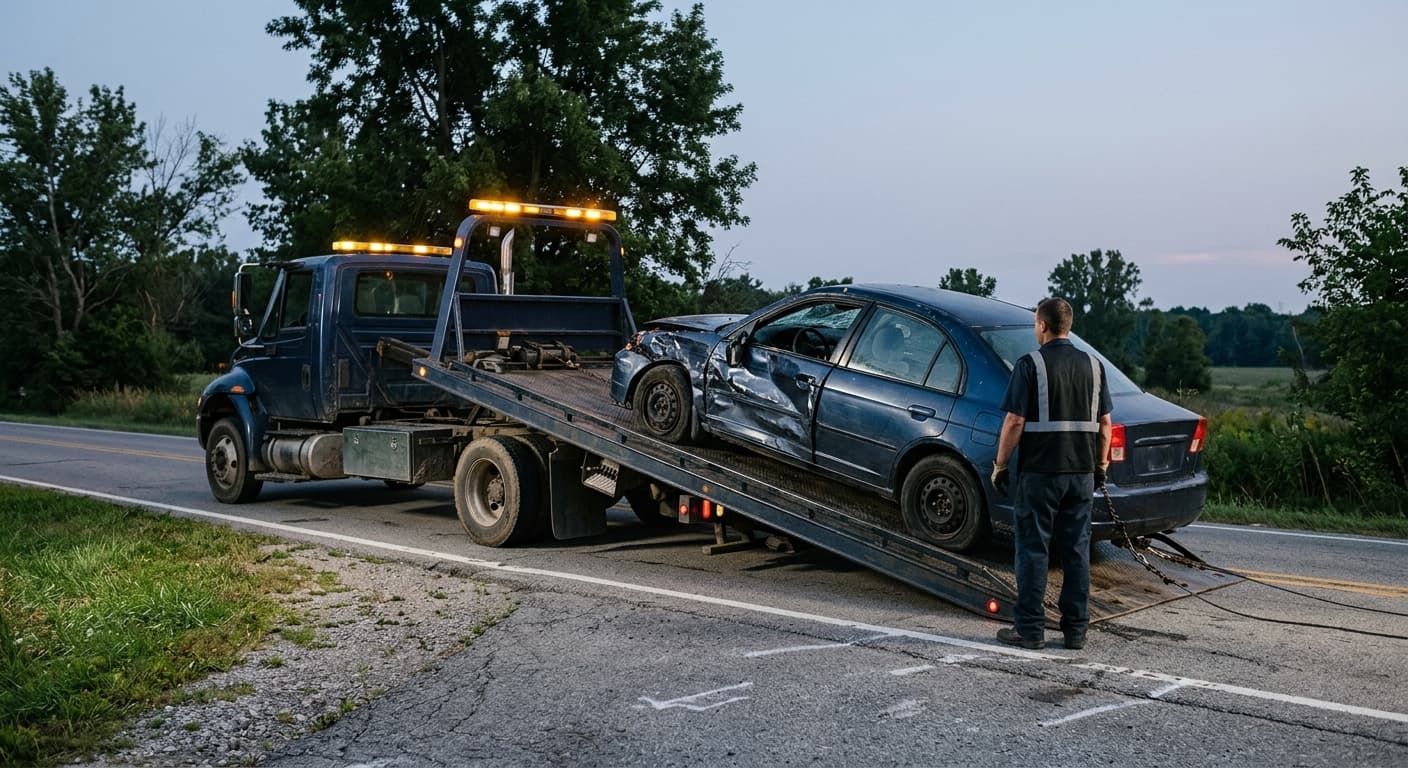
Massachusetts is a no-fault state that requires every driver to carry Personal Injury Protection (PIP), so your own insurer pays your medical bills and lost wages after a crash regardless of who caused it. To step outside the no-fault system and sue the at-fault driver for pain and suffering, your reasonable medical expenses must exceed $2,000 or your injury must meet a specific verbal exception under MGL c. 231 § 6D.
Is Massachusetts a no-fault or at-fault state?
Massachusetts is one of 12 traditional no-fault states in the country. Under MGL c. 90 § 34M, every auto insurance policy must carry Personal Injury Protection (PIP), and drivers with PIP are generally exempt from tort liability for bodily-injury damages to the extent the injured person can recover those benefits through PIP. In practice, after a crash you file a claim with your own insurer first. Your PIP benefit covers up to $8,000 in medical expenses, up to 75% of lost wages, and replacement-service costs, and it pays regardless of who was at fault. If you have private health insurance, PIP is capped at the first $2,000 of medical expenses and your health plan pays the balance, as explained below.
The no-fault system does not mean the at-fault driver escapes all liability. Massachusetts includes a tort-recovery threshold under MGL c. 231 § 6D. Once your reasonable and necessary medical or dental expenses exceed $2,000, or if your injury results in death, a fracture, loss of a body member, permanent and serious disfigurement, or loss of sight or hearing, you may step outside the no-fault system entirely and bring a lawsuit against the at-fault driver for pain and suffering, mental anguish, and emotional distress. If your injuries stay below that threshold, your recovery is limited to PIP benefits and direct economic damages.
How fault is shared: Massachusetts's negligence rule
Massachusetts applies modified comparative negligence with a 51% bar, codified at MGL c. 231 § 85. Under this rule, your damages are reduced by your own percentage of fault. If a jury finds you 30% at fault for an accident and your total damages are $100,000, you recover $70,000. However, if you are found to be 51% or more at fault, you are barred from recovering anything at all from the other driver.

This rule matters enormously in disputed crashes where both drivers share some responsibility. Insurance adjusters will try to assign you as much fault as possible, because pushing your share above 50% eliminates their obligation to pay your pain-and-suffering damages entirely. That is one reason to document the scene and get a free claim review from a Massachusetts car accident lawyer on the insurer's fault questions before any recorded statement (attorney advertising). Massachusetts's modified-51 rule is more forgiving than the pure contributory negligence used in a handful of states, but it still contains a hard cutoff that can wipe out a substantial claim.
Minimum car insurance in Massachusetts
Massachusetts requires four compulsory coverages on every registered vehicle. The higher limits took effect for policies issued or renewed on or after July 1, 2025 under St. 2024, c. 275, § 4, which amended the compulsory-coverage sections cited below. Those minimums are:
- Bodily Injury to Others: $25,000 per person / $50,000 per accident (MGL c. 90 § 34A)
- Property Damage: $30,000 (MGL c. 90 § 34O)
- Personal Injury Protection (PIP): $8,000 per person per accident (MGL c. 90 §§ 34A, 34M)
- Uninsured Motorist Bodily Injury: $25,000 per person / $50,000 per accident (MGL c. 175 § 113L, which sets uninsured-motorist limits at the bodily-injury liability minimums)
The prior longstanding minimum was 20/40/5. Notably, Massachusetts is one of the few states where Uninsured Motorist coverage is not optional but compulsory. It protects you when the at-fault driver carries no insurance or flees the scene in a hit-and-run. Underinsured Motorist (UIM) coverage is optional but must be made available to you by your insurer.
Two features of PIP are frequently confused, and only one of them is a choice. If you carry private health insurance, MGL c. 90 § 34A caps PIP at the first $2,000 of your medical, surgical, X-ray and dental expenses and your health insurer covers the rest. That ceiling applies automatically to the extent your health plan pays; you cannot decline it in order to keep the full $8,000 of PIP for medical bills. Separately, MGL c. 90 § 34M lets you elect an optional PIP deductible of $100, $250, $500, $1,000, $2,000, $4,000 or $8,000, applying either to you alone or to you and your household members. The deductible is the election that reduces your PIP premium.
How long you have to file: the statute of limitations
Under MGL c. 260 § 2A, you have three years from the date a cause of action accrues to file a personal-injury lawsuit arising from a car accident in Massachusetts. For most crashes, the clock starts running on the day of the accident. Missing that deadline almost always means losing your right to sue permanently, regardless of the strength of your case.

There are some practical nuances worth understanding. If you are pursuing a claim against a Massachusetts government entity (a city, county, or the Commonwealth itself) for a defective road or negligent government driver, the Massachusetts Tort Claims Act requires you to file a presentment letter with the government agency within two years. For property-damage claims, the same three-year personal-injury limitation generally applies, though your specific policy's appraisal or lawsuit deadline may differ. If the injured person is a minor, the statute of limitations is typically tolled until the child turns 18, giving three additional years to file. You should always confirm these timelines with a licensed Massachusetts attorney, particularly when a government entity or minor is involved.
For more on Massachusetts civil deadlines, see the Massachusetts statute of limitations page.
What a Massachusetts car accident claim is worth
The value of a Massachusetts car accident claim depends on whether you can clear the MGL c. 231 § 6D threshold. If you cannot, your recovery is largely limited to PIP benefits for medical bills and lost wages, plus direct property damage. Once you clear the threshold, the full range of compensatory damages is available: past and future medical expenses, past and future lost income, and non-economic damages such as pain and suffering, loss of enjoyment of life, and emotional distress.
Under Massachusetts's modified comparative negligence rule, any damages the jury awards are then reduced by your percentage of fault. For example, if your damages total $150,000 but you were 20% at fault, you collect $120,000. The at-fault driver's liability policy limits also cap what their insurer will pay. With the new 25/50 minimums, the most the other driver's insurer must pay is $25,000 per person ($50,000 per accident), which is often well below the actual value of a serious-injury claim. Many Massachusetts drivers carry optional medical-payments, collision, and gap coverage to bridge that shortfall.
Use the Massachusetts car accident settlement calculator to get a rough sense of how these factors combine in your specific situation.
What to do after a car accident in Massachusetts
Taking the right steps in the hours and days after a crash protects both your health and your legal rights.

At the scene: Move to safety if possible, call 911, and request police and medical assistance. Massachusetts requires you to report any accident involving injury, death, or property damage over $1,000 to the Registry of Motor Vehicles (Form CRA) within five days. Exchange names, insurance information, and license plate numbers with all drivers involved.
Document everything: Take photos of vehicle damage, skid marks, traffic controls, and visible injuries. Get the names and contact information of any witnesses. Write down your recollection of events as soon as possible while memory is fresh.
Seek medical care promptly: Even if you feel fine, some injuries (soft-tissue damage, concussion, internal bleeding) appear hours or days later. Getting evaluated creates a medical record that ties your injuries to the accident, which matters when you file a PIP claim or a tort lawsuit. Under MGL c. 90 § 34M, your PIP claim must be submitted within two years, but the insurer may dispute claims where treatment was delayed significantly.
Notify your own insurer: Report the accident to your insurance company promptly. They will open a PIP claim for your immediate medical bills and lost wages. Do not give a recorded statement to the other driver's insurer without first consulting an attorney.
Consult an attorney: Before accepting any settlement offer, particularly for injuries that may require ongoing care, speak with a Massachusetts personal-injury attorney. Most take car accident cases on a contingency fee and offer free consultations. An attorney can evaluate whether you have cleared the § 6D threshold, negotiate with the at-fault driver's insurer, and file suit if necessary within the three-year window.
For more on what happens when the other driver flees, see Massachusetts Hit-and-Run Laws.
This article is general legal information, not legal advice. Car accident law varies by state and changes, and settlement values depend on the specific facts. For advice about a specific crash, consult a licensed attorney in Massachusetts.
Related: Car Accident Laws Hub | Massachusetts Hit-and-Run Laws | Massachusetts Statute of Limitations | Massachusetts Car Accident Settlement Calculator
More Massachusetts Laws
- Massachusetts Dashcam Laws
- Massachusetts Hit and Run Laws
- Massachusetts Slip and Fall Laws
- Massachusetts Statute of Limitations
- Massachusetts Workers Compensation Laws
Frequently Asked Questions
Is Massachusetts a no-fault state?
Yes. Massachusetts is one of 12 no-fault states. Under MGL c. 90 § 34M, your own Personal Injury Protection (PIP) insurer pays your medical bills and up to 75% of lost wages after a crash regardless of who caused it, up to $8,000 per person. If you have private health insurance, MGL c. 90 § 34A limits PIP to the first $2,000 of medical expenses and your health plan pays the remainder; the $8,000 limit still applies to lost wages and replacement services.
Is Massachusetts an at-fault state?
No. Massachusetts is a no-fault state, not an at-fault state. You generally cannot sue the other driver for pain and suffering unless your reasonable medical expenses exceed $2,000 or your injury meets a verbal exception under MGL c. 231 § 6D (such as a fracture, permanent disfigurement, or loss of a body member).
What is the statute of limitations for a car accident in Massachusetts?
Three years from the date of the accident (MGL c. 260 § 2A). If you file after this deadline, your lawsuit will almost certainly be dismissed. Claims against government entities have additional presentment requirements under the Massachusetts Tort Claims Act.
Can I still recover if I was partly at fault in Massachusetts?
Yes, as long as you were 50% or less at fault. Massachusetts uses modified comparative negligence (MGL c. 231 § 85), which reduces your damages by your share of fault but does not bar recovery unless you are 51% or more responsible.
What are the minimum insurance requirements in Massachusetts?
As of July 1, 2025: $25,000 per person / $50,000 per accident bodily injury liability, $30,000 property damage, $8,000 PIP, and $25,000/$50,000 Uninsured Motorist coverage. All four are compulsory; driving without them can result in license and registration revocation.
How much is my Massachusetts car accident claim worth?
If you cannot clear the $2,000 MGL c. 231 § 6D threshold, recovery is largely limited to PIP benefits. Above the threshold, you may claim medical costs, lost wages, and pain and suffering. Your award is then reduced by your percentage of fault under modified comparative negligence. Policy limits also cap what the at-fault driver's insurer will pay.
Does Massachusetts require Uninsured Motorist coverage?
Yes. Uninsured Motorist bodily-injury coverage (minimum 25/50 effective July 1, 2025) is one of the four compulsory coverages in Massachusetts. It pays when the at-fault driver has no insurance or in a hit-and-run. Underinsured Motorist (UIM) coverage is optional but must be offered.
Updates
Corrected the statutes cited for Massachusetts minimum coverage limits and clarified that the $2,000 PIP cap for drivers with private health insurance is automatic under MGL c. 90 § 34A, not an optional election.
Independently fact-checked against the cited primary sources; governing law re-checked for recent changes
Reviewed and approved by an editor
The Law Behind This Article
This article rests on the statutory provisions below, held in our own legal record and retrieved from the official source. Tap a section to read the operative text.
Massachusetts General Laws, Chapter 90
§ 34MPersonal injury protectionIn forcecited in 3 of our articles
[ First paragraph effective until February 24, 2026. For text effective February 24, 2026, see below.] Section 34M. Every motor vehicle liability policy and every motor vehicle liability bond, as defined in section thirty-four A, issued or executed in this commonwealth shall provide personal injury protection benefits as defined therein except to the extent such defined benefits to an insured or obligor or members of an insured's or obligor's household may be modified, reduced or eliminated by the purchase of the deductible authorized in this section. The benefits due and payable under any motor vehicle liability policy or bond as a result of the provisions therein providing personal injury protection benefits, and any benefits due any person entitled to make claim under the assigned claims plan established in accordance with section thirty-four N, are granted in lieu of damages otherwise recoverable by the injured person or persons in tort as a result of an accident occurring within this commonwealth. [ First paragraph as amended by 2025, 78, Sec. 2 effective February 24, 2026.
Official text (excerpt) · last checked 2026-09-10 · Read the full text in our law library · Verify at malegislature.gov
Cited in 257 court opinions in our collectionLatest citing opinion in our collection: 2025
Opinions citing this section in our collection:
- DiMarzo v. American Mutual Insurance (Massachusetts Supreme Judicial Court 1983, 389 Mass. 85)“…tual claims that since the terms of the applicable statute, G. L. c. 90, § 34M, entitled it to deduct the P.-I.P. paym…”
- Dodd v. Commercial Union Insurance (Massachusetts Supreme Judicial Court 1977, 373 Mass. 72)“…er the Massachusetts no-fault motor vehicle insurance laws, G. L. c. 90, §§ 34M-340, et seq., and requests that the cou…”
- Parrell v. Keenan (Massachusetts Supreme Judicial Court 1983, 389 Mass. 809)“…no-fault insurance personal injury protection coverage. See G. L. c. 90, §§ 34M, 340. An attorney acting for the…”
Identified automatically from the court opinions citing this section — not a ranking of which case controls.
Also relied on in: Massachusetts Motorcycle Accident Laws (2026): Deadlines, Truck Accident Laws in Massachusetts (2026): Deadlines & Liability
§ 34OProperty damage liability insurance or bondsIn force
Section 34O. Every person having in force a motor vehicle liability policy or motor vehicle liability bond, as defined in section thirty-four A, shall also maintain in force either property damage liability insurance or a bond providing equivalent coverage. Every insurer issuing or executing a motor vehicle liability policy or bond shall also provide property damage liability coverage for the policyholder or obligor. Property damage liability insurance is insurance containing provisions as prescribed in this section, among such other provisions, including conditions, exclusions, and limitations, as the commissioner of insurance may approve. [Second paragraph applicable to motor vehicle liability policies issued or renewed on or after July 1, 2025. See 2024, 275, Sec.
Official text (excerpt) · last checked 2026-07-29 · Read the full text in our law library · Verify at malegislature.gov
Cited in 5 court opinions in our collectionLatest citing opinion in our collection: 2024
Opinions citing this section in our collection:
- Bagley v. Contributory Retirement Appeal Board (Massachusetts Supreme Judicial Court 1986, 397 Mass. 255)“…attorney’s fees authorized in private civil rights action); G. L. c. 90, § 34O (1984 ed.) (attorney’s fees authorized…”
- Skiffington v. Liberty Mutual Insurance Co. (Massachusetts Appeals Court 2018, 93 Mass. App. Ct. 1)“…plaintiff asserts that the standard policy conflicts with G. L. c. 90, § 34O, as appearing in St. 1976, c. 266, § 7,…”
- Tom's Ashland Auto, Inc. v. Safety Insurance Company. (Massachusetts Appeals Court 2024)“…erms of the standard policy were within the limits set by G. L. c. 90, § 34O. After reviewing de no…”
Identified automatically from the court opinions citing this section — not a ranking of which case controls.
§ 34ADefinitions applicable to Secs. 34A to 34NIn force
Section 34A. The following words, as used in sections thirty-four A to thirty-four N, inclusive, shall have the following meanings:— ''Certificate'', the certificate of an insurance company authorized to issue in the commonwealth a motor vehicle liability policy, stating that it has or will insure the applicant for registration of a motor vehicle with respect to such motor vehicle for a period at least coterminous with that of such registration under such a motor vehicle liability policy or a renewal or extension of such a policy, which conforms to the provisions of section one hundred and thirteen A of chapter one hundred and seventy-five or that it has executed a binder, as defined in said section one hundred and thirteen A, under and in conformity with said section covering such motor vehicle pending the issue of a motor vehicle liability policy; or the certificate of a surety company authorized to transact business in the commonwealth under section one hundred and five of said chapter one hundred and seventy-five as surety, stating that it has or will guarantee performance by the applicant for registration of a motor vehicle with respect to such motor vehicle for a period…
Official text (excerpt) · last checked 2026-07-29 · Read the full text in our law library · Verify at malegislature.gov
Cited in 178 court opinions in our collectionLatest citing opinion in our collection: 2024
Opinions citing this section in our collection:
- Pinnick v. Cleary (Massachusetts Supreme Judicial Court 1971, 360 Mass. 1)“…evious requirements of compulsory liability insurance under G.L.c. 90, § 34A, the victim who chooses to sue has the…”
- Bilodeau v. Lumbermens Mutual Casualty Co. (Massachusetts Supreme Judicial Court 1984, 392 Mass. 537)“…ith the language of the policy, which parallels language in G. L. c. 90, § 34A, setting forth statutory requirements f…”
- Insurance Rating Board v. Commissioner of Insurance (Massachusetts Supreme Judicial Court 1969, 356 Mass. 184)“…icle liability policies or bonds, both as defined in . . . [G. L. c. 90, § 34A] as he fixed and established . . . for…”
Identified automatically from the court opinions citing this section — not a ranking of which case controls.
Massachusetts General Laws, Chapter 231
§ 6DDamages for pain and suffering in tort actions arising out of operation, etc., of motor vehicles; restrictionsIn forcecited in 2 of our articles
Section 6D. In any action of tort brought as a result of bodily injury, sickness or disease, arising out of the ownership, operation, maintenance or use of a motor vehicle within this commonwealth by the defendant, a plaintiff may recover damages for pain and suffering, including mental suffering associated with such injury, sickness or disease, only if the reasonable and necessary expenses incurred in treating such injury, sickness or disease for necessary medical, surgical, x-ray and dental services, including prosthetic devices, and necessary ambulance, hospital, professional nursing and funeral expenses are determined to be in excess of two thousand dollars unless such injury, sickness or disease (1) causes death, or (2) consists in whole or in part of loss of a body member, or (3) consists in whole or in part of permanent and serious disfigurement, or (4) results in such loss of sight or hearing as is described in paragraphs (a), (b), (c), (d), (e), (f) and (g) of section thirty-six of chapter one hundred and fifty-two or (5) consists of a fracture.
Official text (excerpt) · last checked 2026-07-29 · Read the full text in our law library · Verify at malegislature.gov
Cited in 72 court opinions in our collectionLatest citing opinion in our collection: 2018
Opinions citing this section in our collection:
- Dziokonski v. Babineau (Massachusetts Supreme Judicial Court 1978, 375 Mass. 555)“…670), she has no enforceable claim against any defendant. G. L. c. 231, § 6D. See Pinnick v. Cleary, 360 Mass.…”
- Chipman v. Massachusetts Bay Transportation Authority (Massachusetts Supreme Judicial Court 1974, 366 Mass. 253)“…the plaintiff is barred from such recovery by the terms of G. L. c. 231, § 6D , 2 From the statement…”
- Scalia v. Liberty Mutual Insurance (Massachusetts District Court, Appellate Division 1995, 1995 Mass. App. Div. 69)“…tment of an injury arising out of a motor vehicle accident. G.L.c. 231, §6D. That finding is not unsupported by evi…”
Identified automatically from the court opinions citing this section — not a ranking of which case controls.
§ 85Comparative negligence; limited effect of contributory negligence as defenseIn forcecited in 8 of our articles
Section 85. Contributory negligence shall not bar recovery in any action by any person or legal representative to recover damages for negligence resulting in death or in injury to person or property, if such negligence was not greater than the total amount of negligence attributable to the person or persons against whom recovery is sought, but any damages allowed shall be diminished in proportion to the amount of negligence attributable to the person for whose injury, damage or death recovery is made. In determining by what amount the plaintiff's damages shall be diminished in such a case, the negligence of each plaintiff shall be compared to the total negligence of all persons against whom recovery is sought. The combined total of the plaintiff's negligence taken together with all of the negligence of all defendants shall equal one hundred per cent.
Official text (excerpt) · last checked 2026-09-10 · Read the full text in our law library · Verify at malegislature.gov
Cited in 294 court opinions in our collectionLatest citing opinion in our collection: 2025
Opinions citing this section in our collection:
- Poirier v. Town of Plymouth (Massachusetts Supreme Judicial Court 1978, 374 Mass. 206)“…e and the abolition of the defense of assumption of risk by G. L. c. 231, § 85, the Legislature has moved in the direc…”
- O'Sullivan v. Shaw (Massachusetts Supreme Judicial Court 2000, 431 Mass. 201)“…mplicitly. abolished by the comparative negligence statute, G. L. c. 231, § 85, as appearing in St. 1973, c. 1123, § 1…”
- Correia v. Firestone Tire & Rubber Co. (Massachusetts Supreme Judicial Court 1983, 388 Mass. 342)“…atute to the negligence count, i.e., that it should treat M.G.L. c. 231, § 85, as a comparative ‘fault’ statute, or,…”
Identified automatically from the court opinions citing this section — not a ranking of which case controls.
Also relied on in: Massachusetts Hit and Run Laws: Penalties and What to Do, Massachusetts Wrongful Death Laws (2026): Deadlines, Massachusetts Dog Bite Laws: Liability and Victim Rights
Massachusetts General Laws, Chapter 175
§ 113LUninsured motorists; insufficient liability limits; coverageIn force
Section 113L. (1) No policy shall be issued or delivered in the commonwealth with respect to a motor vehicle, trailer or semitrailer registered in this state unless such policy provides coverage in amounts or limits prescribed for bodily injury or death for a liability policy under this chapter, under provisions approved by the insurance commissioner, for the protection of persons insured thereunder who are legally entitled to recover damages from owners or operators of uninsured motor vehicles, trailers or semitrailers and hit-and-run motor vehicles because of bodily injury, sickness or disease, including death resulting therefrom; and, subject to the terms and conditions of such coverage, such coverage shall include an insured motor vehicle where the liability insurer thereof is unable to make payment with respect to the legal liability of its insured within the limits specified therein because of insolvency.
Official text (excerpt) · last checked 2026-07-29 · Read the full text in our law library · Verify at malegislature.gov
Cited in 130 court opinions in our collectionLatest citing opinion in our collection: 2018
Opinions citing this section in our collection:
- Royal Indemnity Co. v. Blakely (Massachusetts Supreme Judicial Court 1977, 372 Mass. 86)“…erage under each policy be no less than $5,000. In adopting G. L. c. 175, § 113L, in its present form, the Legislature g…”
- Cardin v. Royal Insurance Co. of America (Massachusetts Supreme Judicial Court 1985, 394 Mass. 450)“…usion” in the plaintiff’s uninsured motorist coverage under G. L. c. 175, § 113L. 1 The case was *4…”
- MacInnis v. Aetna Life & Casualty Co. (Massachusetts Supreme Judicial Court 1988, 403 Mass. 220)“…s the option of purchasing underin-sured motorist coverage. G.L.c. 175, § 113L (1), as amended by St. 1973, c. 380. Th…”
Identified automatically from the court opinions citing this section — not a ranking of which case controls.
Massachusetts General Laws, Chapter 260
§ 2ATort, contract to recover for personal injuries, and replevin actionsIn forcecited in 8 of our articles
Section 2A. Except as otherwise provided, actions of tort, actions of contract to recover for personal injuries, and actions of replevin, shall be commenced only within three years next after the cause of action accrues.
Official text (excerpt) · last checked 2026-09-08 · Read the full text in our law library · Verify at malegislature.gov
Cited in 682 court opinions in our collectionLatest citing opinion in our collection: 2026
Opinions citing this section in our collection:
- Hendrickson v. Sears (Massachusetts Supreme Judicial Court 1974, 365 Mass. 83)“…ification of title to real estate “accrues” for purposes of G. L. c. 260, § 2A. We hold that the cause of action does…”
- Olsen v. Bell Telephone Laboratories, Inc. (Massachusetts Supreme Judicial Court 1983, 388 Mass. 171)“…oss of consortium are barred by the statute of limitations, G. L. c. 260, § 2A. We hold that the plaintiffs’ claims ar…”
- Baldassari v. Public Finance Trust (Massachusetts Supreme Judicial Court 1975, 369 Mass. 33)“…3A, § 9 (1). The Baldassari claims, we hold, were barred by G. L. c. 260, § 2A, inserted by St. 1948, c. 274, § 2, the…”
Identified automatically from the court opinions citing this section — not a ranking of which case controls.
Also relied on in: Massachusetts Statute of Limitations: Filing Deadlines by Case Type, Massachusetts Slip and Fall Laws: Proving Premises Liability, Massachusetts Jury Duty Laws: Pay, Exemptions and Employer Rules
Search our full record of US law — 2.1 million sections, every state + federal →
Sources and References
- MGL c. 231 § 6D — Tort threshold for pain and suffering in motor-vehicle cases(malegislature.gov).gov
- MGL c. 90 § 34M — No-fault / PIP compulsory coverage(malegislature.gov).gov
- MGL c. 90 § 34O — Compulsory coverage requirements and limits(malegislature.gov).gov
- MGL c. 175 § 113L — Uninsured Motorist compulsory coverage(malegislature.gov).gov
- MGL c. 231 § 85 — Comparative negligence (modified-51 rule)(malegislature.gov).gov
- MGL c. 260 § 2A — Three-year statute of limitations for tort actions(malegislature.gov).gov
- MGL c. 90 § 34A — Definitions: motor vehicle liability policy ($25,000/$50,000 bodily-injury minimums) and personal injury protection, including the $2,000 cap where health insurance applies(malegislature.gov)
- MGL c. 175 § 113L — Uninsured motorists; insufficient liability limits; coverage(malegislature.gov)
Paid attorney referral. RecordingLaw may receive compensation when you use an attorney-help link. RecordingLaw is not a law firm. Submitting a request does not guarantee that an attorney will accept your case and does not create an attorney-client relationship.