
Massachusetts
Massachusetts Ring Doorbell Laws: What You Need to Know in 2026
Independently fact-checked against primary sources (last audited August 17, 2026). · Reviewed by the RecordingLaw editorial team. · Law checked current as of August 17, 2026. · 6 primary sources cited on this page. How we verify our legal content
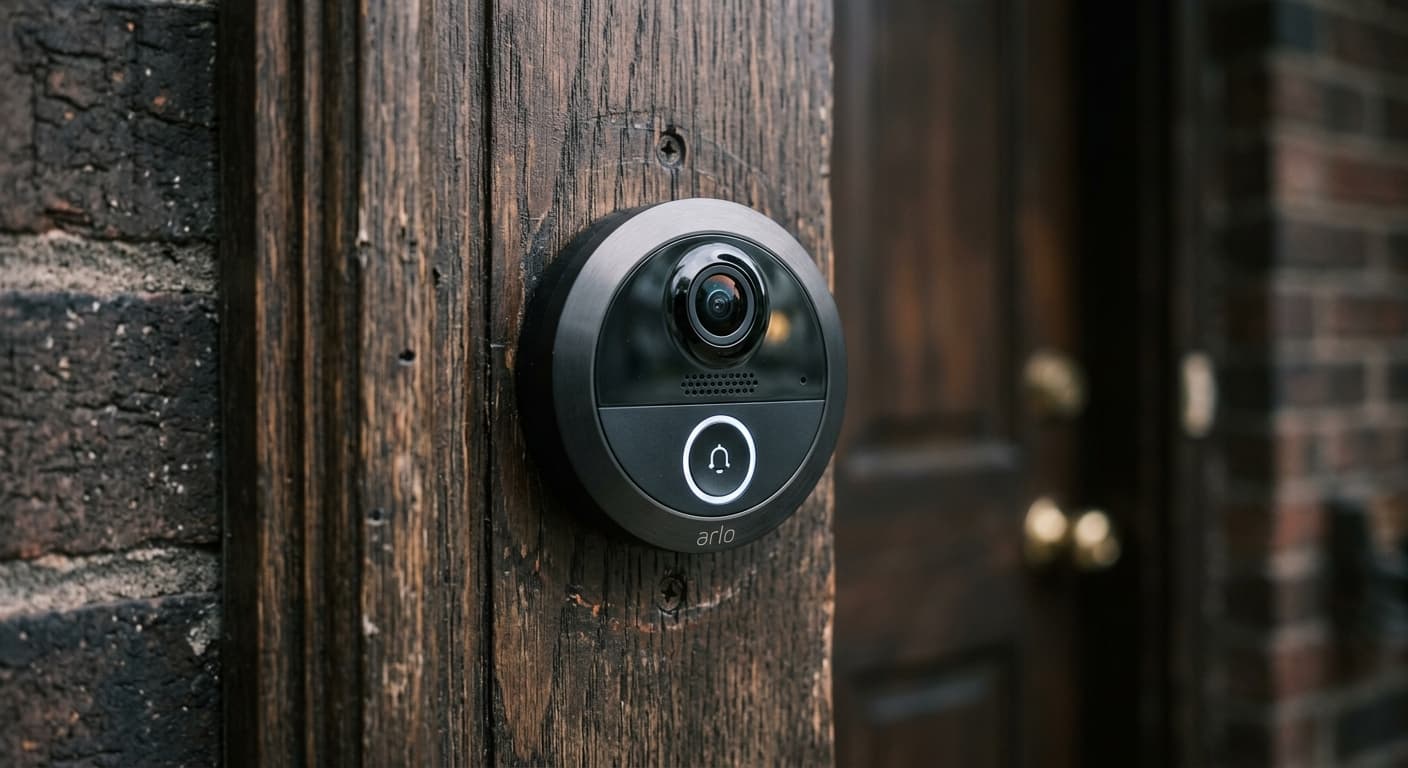
Massachusetts has one of the strictest wiretapping laws in the United States. Under Mass. Gen. Laws ch. 272, section 99, secretly recording any oral or wire communication is a criminal offense punishable by up to 5 years in state prison and a $10,000 fine. This law has direct implications for every Ring doorbell owner in the state.
The critical word in the Massachusetts statute is "secretly." Unlike other all-party consent states that focus on whether everyone agreed to be recorded, Massachusetts targets whether the recording was made without the knowledge of the other participants. A Ring doorbell that silently records conversations without any notice to the people being recorded runs afoul of this distinction.
Audio Recording Laws and Ring Doorbells in Massachusetts
Mass. Gen. Laws ch. 272, section 99 is the governing statute for all audio recording in Massachusetts. The law makes it a crime for any person to willfully commit an interception, attempt to commit an interception, or procure any other person to commit an interception of any wire or oral communication.
The "Secret" Recording Standard
Massachusetts takes a different approach from most all-party consent states. The statute specifically targets secret recordings. The Massachusetts Supreme Judicial Court has interpreted this to mean that if all parties are aware that recording is occurring, the recording does not violate the statute, even if one or more parties object to being recorded.
This distinction matters for Ring doorbell owners. A Ring doorbell that records audio without any visible indication or notice to visitors is making a secret recording under the statute. A Ring doorbell paired with a clearly visible sign stating that audio and video recording is in progress provides the awareness that may take the recording outside the statute's prohibition.

What "Interception" Covers
The statute defines "interception" broadly as the secret use of any device to hear or record the contents of any wire or oral communication. Section 99B.2 defines "oral communication" as speech, except speech that is transmitted over the public air waves by radio or other similar device. The Massachusetts definition contains no reasonable-expectation-of-privacy element, unlike the federal wiretap act, so ordinary conversation on a porch, a sidewalk, or a shared hallway is still an oral communication under section 99.
A Ring doorbell's microphone captures all sounds within its range. When visitors, delivery drivers, neighbors, or passersby have conversations near the device, the Ring records their voices. If those individuals have no knowledge that recording is occurring, the interception is "secret" under the statute.
The Law Enforcement Exception Is Extremely Narrow
Unlike many states that allow law enforcement officers to record with one-party consent, Massachusetts restricts even police recordings. An officer may only record communications when investigating "designated offenses" connected to organized crime, and even then only with specific authorization. This narrow exception does not apply to civilian Ring doorbell recordings.
Video Recording Laws and Ring Doorbells
Massachusetts separates video surveillance from audio recording under its legal framework. The wiretapping statute applies only to oral and wire communications, not to video.
Where Video Recording Is Legal
Ring doorbell owners in Massachusetts can legally record video of outdoor areas where people do not have a reasonable expectation of privacy. This includes front porches, driveways, sidewalks, front yards, and other public-facing areas. No consent or notice is required for video-only surveillance of these areas.
Privacy Restrictions on Video
Mass. Gen. Laws ch. 214, section 1B establishes a general right against unreasonable, substantial, or serious interference with privacy. This statute can apply to video surveillance that goes beyond recording public areas.
Aiming a Ring doorbell camera through a neighbor's window, into their bedroom, or at any area where they have a reasonable expectation of privacy could violate this provision. The superior court has jurisdiction to enforce privacy rights and award damages for violations.
Voyeurism and Electronic Surveillance Statute
Mass. Gen. Laws ch. 272, section 105 specifically addresses electronic recording or surveillance of nude or partially nude persons. This statute covers any electronic device used to view, obtain, or record a person's visual image in circumstances where the person has a reasonable expectation of privacy. The base offense, secretly recording a person who is nude or partially nude in circumstances where that person has a reasonable expectation of privacy, is punishable by up to 2.5 years in the house of correction or a fine of up to $5,000. Secretly recording the intimate parts of a child under 18 under or around the child's clothing carries up to 2.5 years in the house of correction, up to 5 years in state prison, or a fine of up to $10,000. Willfully disseminating an image obtained in violation of the statute carries up to 5 years in state prison, and up to 10 years in state prison where the image is of the intimate parts of a child under 18.
While this statute targets a different type of conduct than typical Ring doorbell use, it underscores how seriously Massachusetts treats privacy-related surveillance offenses.
HOA Rules and Ring Doorbells in Massachusetts
Massachusetts condominium and HOA law adds a significant layer of complexity to Ring doorbell installations, particularly in multi-unit buildings.
Condominium Common Elements
Under Massachusetts condominium law, exterior walls, hallways, entryways, and doorframes are typically classified as common elements owned by the condominium trust rather than individual unit owners. Installing a Ring doorbell on a common element constitutes a modification to association property.
Most condominium declarations and bylaws require trustee approval before any modification to common elements. A unit owner who installs a Ring doorbell without this approval faces potential fines, removal orders, and legal action from the association.
Board Use Agreements
When a Massachusetts condominium board grants permission for a Ring doorbell installation, best practice calls for a written license or use agreement. This agreement typically specifies where the camera can be aimed, prohibits audio recording (to comply with section 99), addresses data storage and sharing, and sets conditions for removal.
Privacy in Common Areas
Massachusetts courts have generally held that residents do not have a reasonable expectation of privacy in condominium common areas like hallways. A Ring doorbell that records video of a shared hallway is less likely to violate privacy rights than one aimed at a neighbor's door or windows. However, the audio component remains problematic regardless of location.
HOA Architectural Review
Planned communities governed by HOA covenants typically require architectural review committee approval for exterior modifications, including Ring doorbells. Review your community's CC&Rs and submit required applications before installation.

Landlord and Tenant Rights
Massachusetts rental properties present specific challenges for Ring doorbell use, driven by both the wiretapping statute and landlord-tenant law.
Tenant-Installed Ring Doorbells
Tenants in Massachusetts generally have the right to install security cameras inside their own rental units. Exterior installations, including Ring doorbells, require landlord permission because the front door, doorframe, and building exterior are typically landlord property.
Written permission from the landlord protects the tenant from lease violations and security deposit deductions for any installation damage. Some Massachusetts landlords now include specific doorbell camera provisions in lease agreements.
Audio Recording in Multi-Unit Buildings
The wiretapping statute creates particular risks for Ring doorbells in apartment buildings. A device mounted on an apartment door captures audio from a shared hallway where other tenants regularly pass and converse. Without clear notice to all building residents, these recordings could constitute secret interceptions under section 99.
Disabling audio recording is the recommended approach for tenants in Massachusetts multi-unit buildings. If audio remains enabled, prominent signage in the hallway area helps establish that the recording is not secret.
Landlord-Installed Cameras
Landlords can install video surveillance cameras in common areas like parking lots, building entrances, and lobby spaces. Cameras cannot monitor private tenant spaces. Any camera with audio capability must comply with the wiretapping statute, which in practice means landlords should either disable audio or post conspicuous notice of audio recording.
Massachusetts landlords should disclose security camera locations to tenants, ideally in the lease agreement, with written details about where cameras are located and what areas they monitor.
Law Enforcement Access to Ring Footage
Massachusetts follows the same federal framework as other states for law enforcement access to Ring recordings, with one notable state-level wrinkle.
Standard Warrant and Legal Process
Law enforcement can obtain Ring footage through a valid warrant, subpoena, or court order. Since 2024, Ring has required valid legal process before releasing customer recordings to police. Ring discontinued its "Request for Assistance" program that previously allowed direct police requests through the Neighbors app.
Police officers can still approach homeowners directly and ask them to voluntarily share Ring footage. There is no legal obligation for homeowners to comply with voluntary requests.
Emergency Exceptions
Ring retains the ability to release footage without user permission in situations involving "danger of death or serious physical injury" under 18 U.S.C. section 2702.
End-to-End Encryption
Ring's E2EE feature encrypts video on the device itself. When enabled, neither Ring nor law enforcement can access footage without the user's cooperation and linked device. This provides a strong privacy protection for Massachusetts Ring doorbell owners concerned about unauthorized access.
Audio Admissibility in Massachusetts Courts
Audio captured by a Ring doorbell in violation of section 99 faces significant admissibility challenges in Massachusetts courts. The statute provides for suppression of illegally intercepted communications, and courts have consistently excluded secretly recorded audio from evidence. Even lawfully obtained Ring footage may have its audio component suppressed if the recording was made without the knowledge of the recorded parties.
Penalties for Illegal Recording in Massachusetts
Massachusetts imposes severe penalties for wiretapping violations, reflecting the legislature's strong stance on recording privacy.

Criminal Penalties
| Offense | Statute | Classification | Maximum Prison Time | Maximum Fine |
|---|---|---|---|---|
| Secret interception of communications | Ch. 272, section 99 | Felony | 5 years | $10,000 |
| Disclosure/use of illegally intercepted communications | Ch. 272, section 99 | Misdemeanor | 2 years | $5,000 |
| Electronic surveillance of a nude or partially nude person (base offense) | Ch. 272, section 105 | Misdemeanor | 2.5 years (house of correction) | $5,000 |
| Electronic surveillance of the intimate parts of a child under 18 | Ch. 272, section 105 | Felony | 5 years (state prison) | $10,000 |
| Dissemination of an unlawfully obtained image (adult victim) | Ch. 272, section 105 | Felony | 5 years (state prison) | $10,000 |
| Dissemination of an unlawfully obtained image of a child under 18 | Ch. 272, section 105 | Felony | 10 years (state prison) | $10,000 |
Civil Liability
Under section 99(Q), any person whose communications were illegally intercepted can bring a civil action and recover damages of at least $100 per day of violation or $1,000, whichever is higher. The court may also award actual damages (if greater), punitive damages, reasonable attorney fees, and other litigation costs.
This civil remedy means that a neighbor who discovers a Ring doorbell has been secretly recording their conversations can sue for substantial damages without needing to involve law enforcement.
Practical Context
While prosecutions of homeowners for Ring doorbell audio recordings are uncommon, the penalties are real. A Massachusetts prosecutor sought to introduce Ring doorbell audio as evidence in a criminal case, and the defense argued that the Ring device itself violated the wiretapping statute. This type of legal challenge underscores the risk that Ring audio creates in Massachusetts.
How to Use a Ring Doorbell Legally in Massachusetts
The strict nature of Massachusetts recording law requires deliberate precautions from Ring doorbell owners.
Disable audio recording. Open the Ring app, navigate to device settings, and turn off audio recording. This is the single most effective step to eliminate criminal liability under section 99. Video-only recording is not covered by the wiretapping statute.
Post visible signage if keeping audio enabled. If you choose to leave audio recording on, place a clearly visible sign near the doorbell stating "Audio and video recording in progress." Because Massachusetts law targets secret recordings, giving notice that recording is happening may protect you. The sign should be visible to anyone approaching the door.
Use Ring's privacy zones. Configure the camera to exclude areas where neighbors have a reasonable expectation of privacy, such as windows, fenced yards, and private spaces.
Get condominium board approval. If you live in a condo, submit a request to the trustees before installing a Ring doorbell on any common element. Be prepared for conditions, including a prohibition on audio recording.
Get landlord permission if renting. Obtain written authorization before installing on rental property. Discuss audio recording implications, especially in multi-unit buildings.
Enable end-to-end encryption. Protect your stored footage by activating E2EE in the Ring app.
Consider the "knowledge" standard. Massachusetts law prohibits secret recording, not all unconsented recording. If every person who approaches your door can see a sign informing them of recording, you are providing the knowledge that the statute requires. This approach has stronger legal footing in Massachusetts than in states that require affirmative consent.
More Massachusetts Laws
Explore other Massachusetts legal topics on RecordingLaw.com:
- Massachusetts Recording Laws
- Massachusetts Hit and Run Laws
- Massachusetts Lemon Law
- Massachusetts Surveillance Camera Laws
- Massachusetts Data Privacy Laws
This article provides general legal information about Massachusetts Ring doorbell laws and is not legal advice. Massachusetts has one of the strictest wiretapping statutes in the country, with felony penalties for violations. Consult an attorney for advice specific to your situation.
Frequently Asked Questions
Is it legal to have a Ring doorbell in Massachusetts?
Video recording with a Ring doorbell is legal in Massachusetts for outdoor areas where people lack a reasonable expectation of privacy. Audio recording is the legal risk. Under Mass. Gen. Laws ch. 272, section 99, secretly recording oral communications is a felony. Disabling audio in the Ring app or posting clear signage about audio recording helps comply with the law.
Can I be arrested for my Ring doorbell recording audio in Massachusetts?
Technically, yes. Secret audio recording is a felony under section 99, carrying up to 5 years in prison and a $10,000 fine. Prosecutions of homeowners for security camera audio are rare, but the statute does not create an exception for home security devices. Disabling audio eliminates this risk entirely.
Does a sign saying 'recording in progress' make Ring audio legal in Massachusetts?
Posting visible signage provides a strong argument that the recording is not 'secret' under section 99. Massachusetts law targets secrecy rather than consent. If a person approaches your door and can clearly see a sign stating that audio and video recording is in progress, they have knowledge of the recording. However, no Massachusetts court has issued a definitive ruling on whether signage alone satisfies the statute for doorbell cameras specifically.
Can my condo association ban Ring doorbells in Massachusetts?
Yes. Condominium associations in Massachusetts typically own the common elements, including exterior walls and hallways where Ring doorbells are mounted. The board of trustees can prohibit installations on common elements or impose conditions through a use agreement. Review your condo documents and obtain trustee approval before installing.
What damages can someone collect if my Ring doorbell illegally recorded them in Massachusetts?
Under section 99(Q), a person whose communications were secretly recorded can sue for damages of at least $100 per day of violation or $1,000, whichever is higher. The court can also award actual damages, punitive damages, attorney fees, and litigation costs. Multiple days of recording can result in substantial civil liability even without criminal prosecution.
Updates
Corrected the Massachusetts definition of "oral communication" under Mass. Gen. Laws ch. 272, section 99B.2, which contains no expectation-of-privacy element, and corrected the section 105 voyeurism penalties in both the prose and the penalty table, including the 10-year state prison maximum for disseminating an unlawfully obtained image of a child under 18.
Corrected the penalty description for Massachusetts's electronic-surveillance-of-nude-person statute (ch. 272, § 105): the base adult-victim offense caps at 2.5 years/$5,000, while the 5-year state-prison/$10,000 penalty applies only when the victim is a minor or the images are disseminated.
Independently fact-checked against the cited primary sources; governing law re-checked for recent changes
Governing law re-checked for recent changes
Reviewed and approved by an editor
The Law Behind This Article
This article rests on the statutory provisions below, held in our own legal record and retrieved from the official source. Tap a section to read the operative text.
Massachusetts General Laws, Chapter 272
§ 99Interception of wire and oral communicationsIn forcecited in 24 of our articles
Section 99. Interception of wire and oral communications.— A. Preamble. The general court finds that organized crime exists within the commonwealth and that the increasing activities of organized crime constitute a grave danger to the public welfare and safety. Organized crime, as it exists in the commonwealth today, consists of a continuing conspiracy among highly organized and disciplined groups to engage in supplying illegal goods and services. In supplying these goods and services organized crime commits unlawful acts and employs brutal and violent tactics. Organized crime is infiltrating legitimate business activities and depriving honest businessmen of the right to make a living. The general court further finds that because organized crime carries on its activities through layers of insulation and behind a wall of secrecy, government has been unsuccessful in curtailing and eliminating it. Normal investigative procedures are not effective in the investigation of illegal acts committed by organized crime.
Official text (excerpt) · last checked 2026-09-23 · Read the full text in our law library · Verify at malegislature.gov
Cited in 271 court opinions in our collectionLatest citing opinion in our collection: 2026
In the courts (editorial summary, independently checked):Commonwealth v. Blood (1987) read Section 99 as generally proscribing secret recording of oral communications without all parties' consent, and suppressed under art. 14 a warrantless police recording made with one party's consent. Commonwealth v. Vitello (1975) held Section 99 substantially complies with federal Title III.
Opinions citing this section in our collection:
- Commonwealth v. Vitello (Massachusetts Supreme Judicial Court 1975, 367 Mass. 224)✓In a gaming prosecution built on wiretapped phone calls, the SJC gave chapter 272 section 99 its first full review and held the state wiretap statute substantially complies with federal Title III and that the warrants issued under it met both standards.
- Commonwealth v. Blood (Massachusetts Supreme Judicial Court 1987, 400 Mass. 61)✓Police wired an informant who recorded conversations in private homes about a planned break-in; the SJC held the recordings fell within section 99's one-party-consent exception but that article 14 nonetheless required a warrant, and reversed the convictions.
- Commonwealth v. D'Amour (Massachusetts Supreme Judicial Court 1999, 428 Mass. 725)✓The SJC upheld a section 99 wiretap of a widow suspected of arranging her husband's murder for insurance money, holding the district attorney's written designation of an assistant satisfied Vitello and that probable cause supported the organized crime connection.
Identified automatically from the court opinions citing this section — not a ranking of which case controls.
Also relied on in: Massachusetts Recording Laws (2026): Two-Party Consent Rules, Massachusetts Landlord-Tenant Recording Laws, Massachusetts Nursing Home Camera Laws: All-Party Consent Risks
§ 105Photographing, videotaping or electronically surveilling partially nude or nude person or the sexual or other intimate parts of a person around the person's clothing; exceptions; punishmentIn forcecited in 11 of our articles
Section 105. (a) As used in this section, the following words shall have the following meanings unless the context clearly requires otherwise: ''Electronically surveils'' or ''electronically surveilled'', to view, obtain or record a person's visual image by the use or aid of a camera, cellular or other wireless communication device, computer, television or other electronic device. ''Partially nude'', the exposure of the human genitals, buttocks, pubic area or female breast below a point immediately above the top of the areola. ''Sexual or other intimate parts'', human genitals, buttocks, pubic area or female breast below a point immediately above the tip of the areola, whether naked or covered by clothing or undergarments.
Official text (excerpt) · last checked 2026-08-31 · Read the full text in our law library · Verify at malegislature.gov
Cited in 11 court opinions in our collectionLatest citing opinion in our collection: 2025
In the courts (editorial summary, independently checked):Massachusetts courts have applied section 105 to secret imaging. Commonwealth v. Robertson (2014) held section 105(b) as then written did not reach upskirt photography of fully clothed people, which prompted a 2014 amendment, and Commonwealth v. Wassilie (2019) held the unit of prosecution under paragraph one is each victim.
Opinions citing this section in our collection:
- Commonwealth v. Wassilie (Massachusetts Supreme Judicial Court 2019, 482 Mass. 562)✓A man hid a phone in paper towels facing a public unisex toilet and recorded adults and children; the court held the unit of prosecution under section 105(b), first paragraph, is each victim, and that the third paragraph child upskirting language is not unconstitutionally vague.
- Commonwealth v. Robertson (Massachusetts Supreme Judicial Court 2014, 467 Mass. 371)✓A man was charged with aiming his phone camera up the skirts of clothed women on an MBTA trolley; the court held section 105(b) reaches only a person nude or partially nude at the time, so the charged upskirting fell outside it, and reversed the denial of his motion to dismiss.
- COMMONWEALTH v. MARKUS COOPER. (Massachusetts Appeals Court 2021, 100 Mass. App. Ct. 345)✓A man pointed a phone camera into a bathroom stall where a woman was urinating, then fled; the court held section 105(b), first paragraph, does not require the Commonwealth to produce the photograph, so the camera sound plus his flight supported the conviction.
Identified automatically from the court opinions citing this section — not a ranking of which case controls.
Also relied on in: Massachusetts Laws on Recording in Public, Massachusetts Security Camera Laws, Massachusetts Video Recording Laws
Massachusetts General Laws, Chapter 214
§ 1BRight of privacyIn forcecited in 11 of our articles
Section 1B. A person shall have a right against unreasonable, substantial or serious interference with his privacy. The superior court shall have jurisdiction in equity to enforce such right and in connection therewith to award damages.
Official text (excerpt) · last checked 2026-08-31 · Read the full text in our law library · Verify at malegislature.gov
Cited in 199 court opinions in our collectionLatest citing opinion in our collection: 2026
In the courts (editorial summary, independently checked):Ayash v. Dana-Farber Cancer Institute (2005) held that recovery under c. 214, Section 1B requires a disclosure both unreasonable and either substantial or serious, and that publicity on a matter of public concern falls outside it. Cort v. Bristol-Myers Co. (1982) held an attempted intrusion that obtained no information is not actionable.
Opinions citing this section in our collection:
- Madsen v. Erwin (Massachusetts Supreme Judicial Court 1985, 395 Mass. 715)✓A Christian Science Monitor writer fired after her employers questioned her about her sexual orientation sued under Section 1B; the court held the privacy count as pleaded did not survive dismissal but let her replead it, since religion clauses do not immunize tortious conduct.
- Ayash v. Dana-Farber Cancer Institute (Massachusetts Supreme Judicial Court 2005, 443 Mass. 367)✓A physician won a privacy verdict after her institute leaked confidential peer review material about chemotherapy overdoses to a newspaper; the court vacated it, holding disclosures about her professional conduct in a matter of intense public interest fall outside Section 1B.
- Duarte v. Healy (Massachusetts Supreme Judicial Court 1989, 405 Mass. 43)✓Cambridge fire fighter recruits had to give monitored urine samples and Duarte was fired after testing positive for cocaine; the court assumed a Privacy Act violation but held the city manager and fire chief immune for discretionary acts, so the Section 1B claims were dismissed.
Identified automatically from the court opinions citing this section — not a ranking of which case controls.
Also relied on in: Massachusetts Voyeurism and Hidden Camera Laws, Massachusetts Data Privacy Laws: Security Rules & Consumer Rights (2026), Massachusetts Surveillance Camera Laws: Privacy Rules and Penalties
United States Code Title 18
§ 2702Voluntary disclosure of customer communications or recordsIn forcecited in 19 of our articles
Except as provided in subsection (b) or (c)— a person or entity providing an electronic communication service to the public shall not knowingly divulge to any person or entity the contents of a communication while in electronic storage by that service; and a person or entity providing remote computing service to the public shall not knowingly divulge to any person or entity the contents of any communication which is carried or maintained on that service— on behalf of, and received by means of electronic transmission from (or created by means of computer processing of communications received by means of electronic transmission from), a subscriber or customer of such service; solely for the purpose of providing storage or computer processing services to such subscriber or customer, if the provider is not authorized to access the contents of any such communications for purposes of providing any services other than storage or computer processing; and a provider of remote computing service or electronic communication service to the public shall not knowingly divulge a record or other information pertaining to a subscriber to or customer of such service (not including the contents of…
Official text (excerpt) · last checked 2026-07-28 · Read the full text in our law library · Verify at uscode.house.gov
Cited in 259 court opinions in our collectionLatest citing opinion in our collection: 2026
In the courts (editorial summary, independently checked):Freeman v. Directv, Inc. (2006) held Sections 2702 and 2707 do not support secondary liability claims such as aiding and abetting or conspiracy. Alexander v. Verizon Wireless (2017) applied Section 2702(c)(4)'s emergency exception and found a provider's good-faith reliance on a law enforcement request a complete defense.
Opinions citing this section in our collection:
- Matthew Alexander v. Verizon Wireless Services, LL (Court of Appeals for the Fifth Circuit 2017, 875 F.3d 243)✓A detective sent Verizon a certified emergency form after an arson, and Verizon released the subscriber's non-content cell records; the Fifth Circuit applied an objective good faith standard to section 2702(c)(4) and held Verizon statutorily immune from the SCA suit.
- Doe 1 v. AOL LLC (Court of Appeals for the Ninth Circuit 2009, 552 F.3d 1077)“…rs, alleging violations of federal electronic privacy law, 18 U.S.C. § 2702 (a). A subclass of AOL members who are…”
- Freeman v. Directv, Inc. (Court of Appeals for the Ninth Circuit 2006, 457 F.3d 1001)✓Users whose message board posts were seized from a website operator and passed to DirecTV sued for aiding and abetting and conspiracy; the Ninth Circuit held sections 2702 and 2707 name who can be liable and do not support secondary liability, affirming dismissal.
Identified automatically from the court opinions citing this section — not a ranking of which case controls.
Also relied on in: Stored Communications Act Explained: 18 U.S.C. § 2701, Georgia Ring Doorbell Laws: What You Need to Know in 2026, Hawaii Ring Doorbell Laws: What You Need to Know in 2026
Search our full record of US law — 2.1 million sections, every state + federal →
Sources and References
- Mass. Gen. Laws ch. 272, § 99 (Wiretapping and Electronic Surveillance)(malegislature.gov).gov
- Mass. Gen. Laws ch. 214, § 1B (Right of Privacy)(malegislature.gov).gov
- Mass. Gen. Laws ch. 272, § 105 (Electronic Surveillance of Nude Person)(malegislature.gov).gov
- Massachusetts Jury Instructions: Wiretapping (Mass.gov)(mass.gov).gov
- Massachusetts Law About Privacy (Mass.gov)(mass.gov).gov
- Massachusetts Condominiums and Ring Camera Privacy Concerns (Allcock Marcus)(amcondolaw.com)
- MA Security Cameras vs. Right of Privacy in Condos (Goldman & Pease)(goldmanpease.com)
- Ring Law Enforcement Guidelines(ring.com)
- 18 U.S.C. § 2702 (Stored Communications Act)(law.cornell.edu)
- FTC Ring Privacy Settlement (2023)(ftc.gov).gov