Florida Sues TikTok Under HB3 Social Media Minors Law (2026)
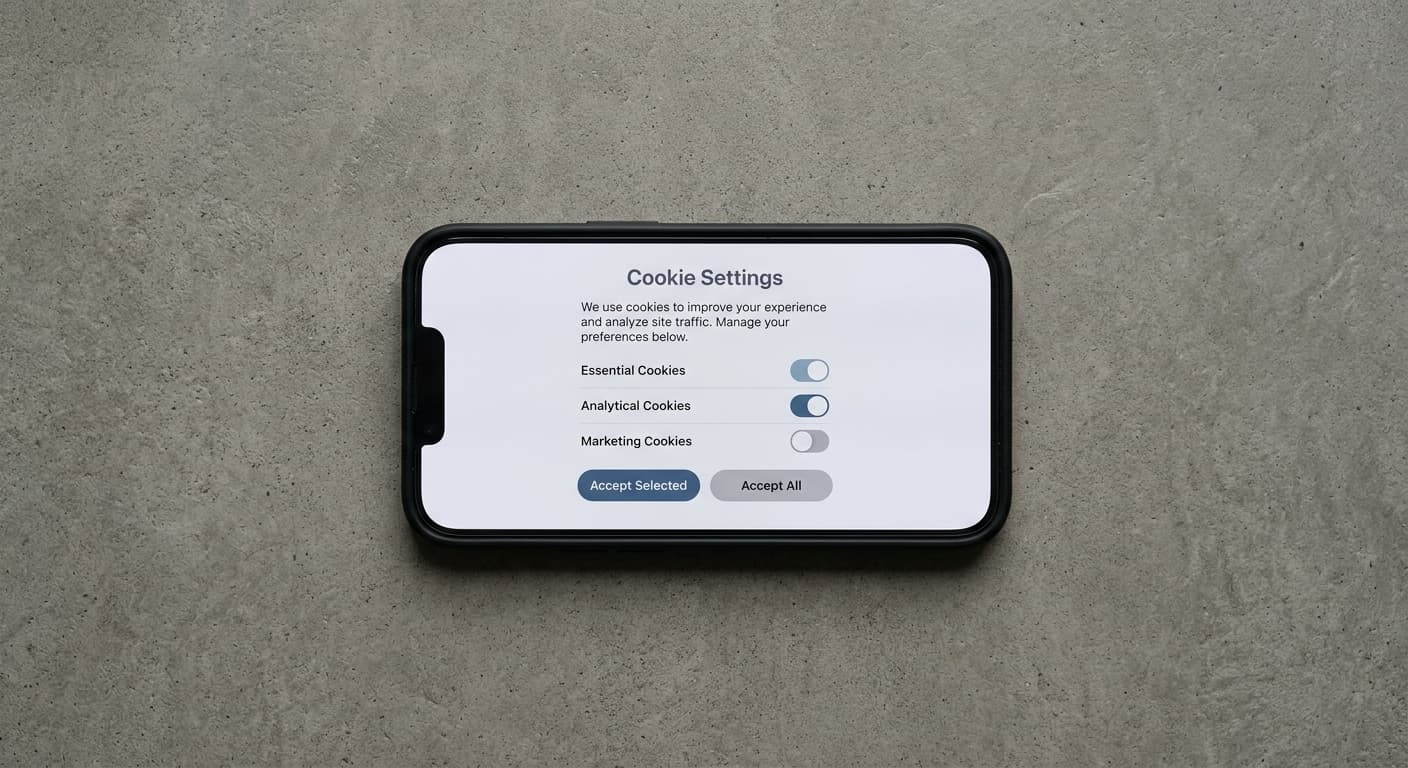
Florida Sues TikTok Under HB3, the State's Social Media Minors Law
Florida Attorney General James Uthmeier sued TikTok and its parent ByteDance on June 15, 2026, in the Nineteenth Judicial Circuit in St. Lucie County, alleging the app broke HB3, Florida's social media minors law, by letting children open accounts without parental consent. The state asks the court to declare TikTok a public nuisance and to impose penalties under HB3, codified at Fla. Stat. 501.1736.
Information last verified on June 16, 2026. This is a developing story; we update it as the record changes.
Jurisdiction scope: This article addresses Florida's enforcement of HB3 (Fla. Stat. 501.1736) against TikTok in Florida state court, with notes on the parallel federal First Amendment appeal. It does not state how the case will resolve, and it is not individualized advice. For the underlying state framework, see Florida data privacy laws.
What Happened
On June 15, 2026, Florida Attorney General James Uthmeier filed a civil complaint against TikTok Inc., ByteDance Ltd., the TikTok USDS Joint Venture LLC, and related TikTok and ByteDance entities in the Nineteenth Judicial Circuit Court in St. Lucie County. According to the Attorney General's office, the complaint pleads three causes of action: a violation of HB3 (the Online Protections for Minors Act, codified at Fla. Stat. 501.1736), a violation of the Florida Deceptive and Unfair Trade Practices Act, and public nuisance. The state alleges TikTok let users as young as 13 create accounts and failed to obtain verifiable parental consent before allowing 14- and 15-year-olds to hold accounts, while telling parents the platform was safe.
The Attorney General's office says the company acted "openly and knowingly" in allowing the accounts. The state asks the court to declare the platform a public nuisance, enjoin the conduct, and impose civil penalties of up to $50,000 per violation, along with punitive damages and disgorgement. The office framed the filing as the end of a compliance runway, with the Attorney General stating that "time is up" for the platform. These are allegations; TikTok has not yet answered, and a court has not ruled on the merits.
What Florida's HB3 Actually Requires
HB3, enacted as Chapter 2024-42, Laws of Florida, and codified at Fla. Stat. 501.1736, took effect on January 1, 2025. It draws two age lines. For children under 14, a covered platform may not enter into an account contract and must terminate any existing account on request. For 14- and 15-year-olds, the platform must obtain a parent or guardian's verifiable consent before the minor holds an account, and it must terminate the account if that consent is not given or is later revoked.
The statute does not reach every website. It applies to social media platforms that use algorithms to analyze user data and select content, and that deploy at least one defined "addictive feature," such as infinite scrolling, push notifications, auto-play video, or live-streaming. That design-feature trigger is central to how Florida has defended the law: the state casts HB3 as a regulation of addictive functionality rather than of speech.
Enforcement runs through Florida's consumer-protection machinery. HB3 treats a knowing or reckless violation as an unfair or deceptive act under FDUTPA (Fla. Stat. 501.204 and following), and it authorizes the Department of Legal Affairs, led by the Attorney General, to sue. The statute sets civil penalties of up to $50,000 per violation and allows recovery for minors harmed by a violation. The June 15 complaint invokes that authority directly, then layers on a public-nuisance theory that asks the court to treat the alleged conduct as an ongoing harm to the public at large.
The First Amendment Case Running in the Background
HB3 reached the enforcement stage only after a separate constitutional fight. In October 2024, two tech-industry trade groups, the Computer and Communications Industry Association and NetChoice, sued to block the law in Computer and Communications Industry Association v. Uthmeier, No. 4:24-cv-00438-MW-MAF, in the U.S. District Court for the Northern District of Florida. They argued HB3 violates the First Amendment, is unconstitutionally vague, and is preempted by the federal Children's Online Privacy Protection Act.
On June 3, 2025, Chief Judge Mark Walker preliminarily enjoined enforcement, concluding the challengers were likely to show the law is unconstitutional. Florida appealed the same day. On November 25, 2025, the Eleventh Circuit granted the state a stay of that injunction by a 2-1 vote (appeal No. 25-11881), with the majority describing HB3 as a content-neutral attempt to regulate addictive platform features rather than the content of speech. That stay is what cleared the way for Florida to begin enforcing the law, and it is the legal backdrop against which the June 15 TikTok suit was filed.
Two points matter for reading the new case. First, the Eleventh Circuit's order is interlocutory: it lets enforcement proceed during the appeal, but it is not a final ruling that HB3 is constitutional. Second, the federal appeal and the state enforcement suit are different proceedings in different courts, so a development in one does not automatically decide the other.
Analysis: Why This Matters
The following is analysis from the Recording Law Editorial Team.
For most of HB3's short life, Florida was on defense, fighting to keep the law alive against a First Amendment challenge. The TikTok complaint flips that posture. With the Eleventh Circuit stay in hand, the state is now using HB3 as a sword, and it has chosen the largest possible target for the first major test. That choice signals that Florida intends to treat the under-14 ban and the parental-consent rule as operative obligations, not aspirational policy waiting on the outcome of the appeal.
The public-nuisance count is the part worth watching. Pleading a statutory FDUTPA violation is the expected path under HB3's own enforcement provision. Adding public nuisance imports a flexible common-law theory that states have deployed in opioid and environmental litigation to pursue broad injunctive relief and to frame a defendant's conduct as a continuing harm to the community. Whether that theory fits a social media platform is an open question that the St. Lucie County court will have to address, and it is one reason this filing is more than a routine penalty action.
The case also fits a broader pattern. Over the past two years, states have passed a wave of youth-focused online laws, including device-level and app-store age checks, while a federal framework has stalled. Florida is now showing that a state attorney general can litigate one of these laws directly rather than wait on Congress. We are not predicting how the enforcement suit or the constitutional appeal will come out. The point is narrower: the era of these statutes sitting unenforced on the books appears to be giving way to active litigation, and how Florida's theory fares will inform what other states attempt.
How This Affects You
For Florida parents and teens, the practical takeaway is that HB3's account rules are currently enforceable, even though their constitutionality is still being litigated on appeal. Platforms covered by the law are expected to block accounts for children under 14 and to require parental consent for 14- and 15-year-olds. If your state has passed a similar social media or age-verification law, watch your own state's enforcement posture rather than assuming Florida's approach applies, because these statutes differ in their age lines, their triggers, and their enforcement mechanisms.
For businesses that operate consumer-facing platforms, the filing is a reminder that a knowing or reckless violation of a state minors law can be charged as an unfair or deceptive trade practice, which carries per-violation penalties and, as here, can be paired with additional theories such as public nuisance. None of this is legal advice about any specific platform or family situation. The complaint contains allegations that remain unproven, and the law in this area is moving quickly.
This is general legal information, not legal advice. It covers Florida's HB3 enforcement suit against TikTok and the related federal appeal, and it reflects sources verified on June 16, 2026. Laws change and this story is developing; consult a lawyer licensed in your jurisdiction about your specific situation.
Sources
- Florida Office of the Attorney General, "AG James Uthmeier Launches Lawsuit Against TikTok for Deceiving Parents about the Safety of its Platform; Failure to Comply with HB3" (June 15, 2026): https://www.myfloridalegal.com/newsrelease/ag-james-uthmeier-launches-lawsuit-against-tiktok-deceiving-parents-about-safety-its
- Fla. Stat. 501.1736 (Online Protections for Minors Act): https://www.flsenate.gov/laws/statutes/2024/501.1736
- House Bill 3 (2024), The Florida Senate (bill history and text): https://www.flsenate.gov/Session/Bill/2024/3
- Computer and Communications Industry Association v. Uthmeier, No. 4:24-cv-00438-MW-MAF (N.D. Fla.); 11th Cir. No. 25-11881 (docket): https://www.courtlistener.com/docket/69315216/computer-communications-industry-association-v-uthmeier/
Related articles
- Florida data privacy laws
- Texas app store age-verification law
- Illinois social media age-assurance law
- Colorado device-level age-check law
Last updated: 2026-06-16. This is a developing story; details verified as of 2026-06-16.
Sources and References
- Florida OAG: AG Uthmeier Launches Lawsuit Against TikTok (press release, June 15, 2026)(myfloridalegal.com)
- Fla. Stat. 501.1736 (Online Protections for Minors Act)(flsenate.gov)
- House Bill 3 (2024), The Florida Senate(flsenate.gov)
- Computer and Communications Industry Association v. Uthmeier, No. 4:24-cv-00438-MW-MAF (N.D. Fla.); 11th Cir. No. 25-11881(courtlistener.com)