Brass Knuckles Laws by State (2026): Are They Legal Where You Live?
Independently fact-checked against primary sources (last audited October 10, 2026). · 39 primary sources cited on this page. How we verify our legal content
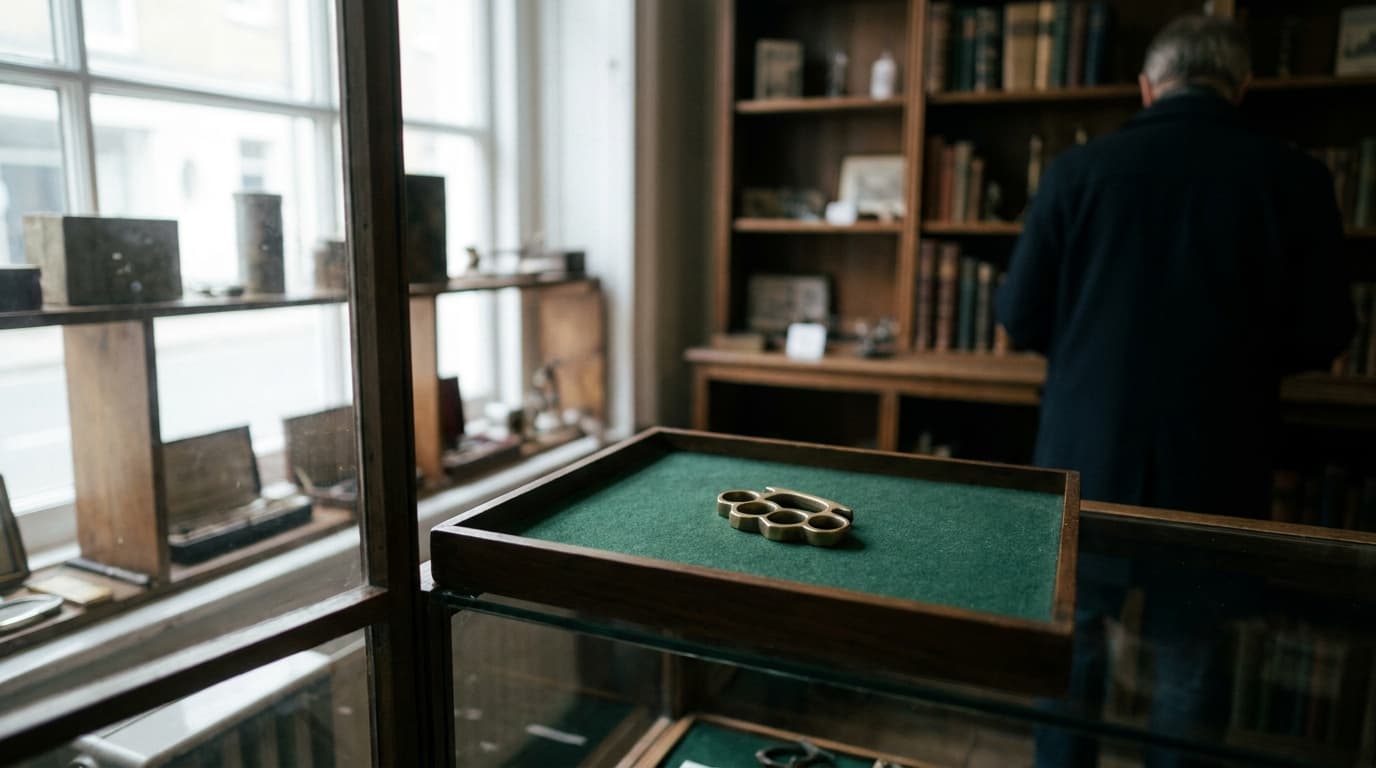
Brass knuckles are legal to own in some states and a crime to possess in others. The main federal weapons statutes, including 18 U.S.C. 922 and 930, do not mention knuckles, so state law does most of the work: among the states our guides cover, 15 states and the District of Columbia ban simply possessing them, several more ban carrying them in any form, many ban only concealed carry, and Texas removed its ban effective September 1, 2019.
The comparison table below gives each state's rule for owning, carrying and selling knuckles, with a link to the full state guide. Federal rules still apply in federal buildings, at airport checkpoints and in national parks.
Information last verified on 2026-10-09. This article has not been reviewed by a licensed lawyer.
Jurisdiction scope: This guide compares the state statutes on brass, metal and other knuckles in all 50 states and the District of Columbia (each state's details, exceptions and citations are on its linked guide; the New Jersey guide is not yet published), plus the federal rules for federal facilities (18 U.S.C. 930), air travel (TSA guidance and 49 CFR 1540.111), national parks (36 CFR 1.4 and 2.4) and the mail. It does not cover city or county ordinances, school district or university codes of conduct, private property rules, tribal law or military installations.
What counts as brass knuckles
Brass knuckles are a set of finger rings or a guard worn over the fingers and gripped in the fist. Statutes call them "metal knuckles," "metallic knuckles," "brass knuckles," "brass or metal knucks" or simply "knuckles," and the word a state uses can decide whether a plastic or wooden set is covered.
Some states define the item by shape and purpose rather than material. Alaska, for example, defines metal knuckles in AS 11.81.900(a)(39) as finger rings or guards "made of a hard substance" and designed, made or adapted for inflicting serious physical injury or death by striking a person. Missouri (RSMo 571.010(13)), Nebraska (28-1201(9)) and Tennessee use the same design-based approach.
California's definition in Penal Code 16920 turns on metal: a device or instrument "made wholly or partially of metal" worn in or on the hand, that protects the hand or increases the force of a blow. California then covers the gap with a second statute, Penal Code 21710, for composite and hard wooden knuckles.
Plastic, composite and knuckle-knife questions
Plastic and polymer knuckles are sold as an alternative to metal ones, but they are not a safe harbor everywhere. The statutes fall into three groups.

Any material is covered. Illinois bans "metal knuckles or other knuckle weapon regardless of its composition" (720 ILCS 5/24-1(a)(1)). D.C. Code 22-4501(3) defines knuckles as made of "metal, wood, plastic or other similarly durable material." Georgia names knuckles "whether made from metal, thermoplastic, wood, or other similar material." Kentucky lists "artificial knuckles made from metal, plastic, or other similar hard material" as a deadly weapon (KRS 500.080(4)(h)). Massachusetts reaches "knuckles of any substance which could be put to the same use with the same or similar effect as metallic knuckles," and West Virginia's "metallic or false knuckles" definition covers any material. Alaska, Missouri, Nebraska and Tennessee reach any hard substance through their design-based definitions. New York names "plastic knuckles" alongside metal ones in Penal Law 265.01(1), and California covers composite and hard wooden knuckles in Penal Code 21710.
Only metal is named. Many states, including Colorado ("metallic knuckles"), Florida, Kansas, Maryland, Michigan, Minnesota, Nevada, Oklahoma, Pennsylvania and Washington, use metal wording without a definition that resolves the question. Their state guides treat the status of plastic sets as unsettled, not as legal. Michigan's guide calls it "an open question, not a safe harbor," and Pennsylvania's catch-all for any "implement for the infliction of serious bodily injury which serves no common lawful purpose" could still reach a non-metal set.
Knuckles are not named at all. In states such as Arizona, Idaho, Indiana, Iowa, Ohio, South Dakota, Utah and Wyoming, any limit depends on whether the item is a "deadly weapon" or "dangerous weapon," which turns on design or use rather than material.
Knuckle knives (a blade attached to a knuckle-guard handle) raise a separate question. Delaware bans a "knuckles-combination knife" outright under 11 Del. C. 1452, a class B misdemeanor to sell, offer for sale or possess. New York lists a "metal knuckle knife" in Penal Law 265.01(1). In Texas a knuckle knife is treated as a knife, and one with a blade over five and one-half inches is a location-restricted knife. Most other codes, including California's, Illinois', Michigan's, Missouri's and Virginia's, do not say whether a bladed knuckle guard is knuckles, a knife or both, so the knife laws by state can apply alongside the knuckles rules.
Brass knuckles laws by state: comparison table
Each row summarizes the main state statutes on its linked guide. "Not banned" means the statutes covered on that guide contain no offense for that conduct by an adult who is not otherwise prohibited; school, minor, felony and place-based rules can still apply. Where a cell says "depends," the state's rule turns on whether knuckles meet a general deadly or dangerous weapon definition.
| State | Own at home | Carry | Sale | Main penalty |
|---|---|---|---|---|
| Alabama | Not banned | Concealed carry banned (§ 13A-11-53); open carry not covered | Not banned | $50 to $500 fine; up to 6 months possible |
| Alaska | Banned | Banned (possession is the offense) | Banned | Class A misdemeanor (AS 11.61.210) |
| Arizona | Not banned | Not named; some limits apply if knuckles are a deadly weapon (e.g., concealed carry under 21) | Not misconduct involving weapons | Depends on the offense; class 3 misdemeanor for under-21 concealed carry |
| Arkansas | Banned | Banned | Banned | Possession: Class A misdemeanor; making or selling: Class D felony on the text |
| California | Banned | Banned | Banned | Misdemeanor or felony (PC 21810) |
| Colorado | Banned | Banned | No separate sale section; possession is the offense | Class 1 misdemeanor (C.R.S. 18-12-102) |
| Connecticut | No separate crime | Banned on the person, open or concealed; felony in a vehicle | No separate crime | Class E felony (carry); class D felony (vehicle) |
| Delaware | Not banned | Concealed carry without a license banned; open carry outside the concealed-carry sections | Dealers need a special license | Class G felony (concealed carry) |
| District of Columbia | Banned (any material) | Banned | Banned except listed dealers and occupations | Up to 1 year for a first violation |
| Florida | Not banned | Concealed carry can be a first-degree misdemeanor; open-carry statute does not list knuckles | Making or selling banned | Second-degree misdemeanor (sale); first-degree misdemeanor (concealed) |
| Georgia | Not banned | Not reached by the carry statutes; banned in school safety zones and the State Capitol | Sale to under 18 banned | High and aggravated misdemeanor (sale to a minor) |
| Hawaii | Not banned | Concealed carry banned (home defense applies); open carry not a separate offense | No offense in Part III of ch. 134 | Misdemeanor, up to 1 year and $2,000 |
| Idaho | Not banned | Not named; concealed carry rule applies only if a deadly weapon, with broad exceptions | Not banned | Misdemeanor where a deadly-weapon rule applies |
| Illinois | Banned (any composition) | Banned | Banned | Class A misdemeanor; Class 4 felony in listed places |
| Indiana | Not banned | Not named; deadly-weapon rules for aircraft, airports and jails | Not banned | Depends on place (e.g., Level 5 felony on an aircraft) |
| Iowa | Not banned | Not named; dangerous-weapon rules depend on circumstances | Not banned | Depends on the offense |
| Kansas | Banned | Banned, open or concealed | Banned | Class A nonperson misdemeanor |
| Kentucky | Not banned | Concealed carry allowed for eligible adults 21 and older; otherwise an offense | Not banned | Class A misdemeanor (concealed carry without an exception) |
| Louisiana | Not named | Concealment rule uses general terms; 2024 exception for eligible adults 18+, its reach to knuckles unsettled | Not named | First offense up to $500, 6 months, or both |
| Maine | Not banned | Concealed carry or threatening display banned; non-threatening open carry not covered | Not banned | Class D crime |
| Maryland | Not banned | Concealed carry banned; open carry banned with intent to injure | Not banned | Misdemeanor, up to 3 years and $1,000 |
| Massachusetts | Not addressed by the carry statute | Banned on the person or under control in a vehicle | Banned (G.L. c. 269, § 12) | 2.5 to 5 years state prison or 6 months to 2.5 years jail (carry) |
| Michigan | Banned | Banned | Banned | Felony, up to 5 years and $2,500 |
| Minnesota | Banned (museum and collector exception) | Banned | Transfer banned | Misdemeanor; gross misdemeanor in listed zones |
| Mississippi | Not banned for adults (felons barred, § 97-37-5) | Concealed carry banned (§ 97-37-1); the text does not say whether its home, business and vehicle exception covers knuckles | Sale, gift or loan to a person known to be under 18 banned (§ 97-37-13) | First offense $100 to $500, up to 6 months, or both (concealed carry) |
| Missouri | Banned | Banned | Banned | Class A misdemeanor |
| Montana | Not banned | General concealed-weapon law covers firearms only; banned in school buildings | Not banned | Up to $500 and 6 months (school building) |
| Nebraska | Not banned for adults | Concealed carry banned only for people under 21 and prohibited persons | Not banned | Class I misdemeanor, first offense (minors and prohibited persons) |
| Nevada | Banned | Banned | Banned | Gross misdemeanor; category D felony for a later offense |
| New Hampshire | Simple possession not listed | Carrying on the person banned, open or concealed | Banned (including possession with intent to sell) | Misdemeanor, presumptively class B |
| New Jersey | Guide coming soon | Guide coming soon | Guide coming soon | Guide coming soon |
| New Mexico | Not banned | Concealed carry banned, with home and private-vehicle exceptions | Not banned | Petty misdemeanor |
| New York | Banned (metal or plastic) | Banned | Banned (§ 265.10) | Class A misdemeanor; class D felony after a prior conviction |
| North Carolina | Not banned | Concealed carry banned off your own premises | Sale or gift to a minor banned | Class 2 misdemeanor (concealed carry) |
| North Dakota | Not banned | Concealed carry needs a license; open carry not banned | Not banned | Class A misdemeanor (unlicensed concealed carry) |
| Ohio | Not banned | Concealed carry banned if a deadly weapon; open carry not banned | Not banned | First-degree misdemeanor (concealed carry) |
| Oklahoma | Not banned | Banned, concealed or unconcealed | Sale to under 18 banned | Misdemeanor: $100 to $250, up to 30 days, or both |
| Oregon | Not banned for most adults | Concealed carry banned; open carry not banned | Not banned | Class B misdemeanor |
| Pennsylvania | Banned | Banned | Banned | First-degree misdemeanor, up to 5 years |
| Rhode Island | Banned (curio and lawful-purpose exception) | Banned | Sale to under 18 without written parental consent banned | Up to $1,000, 1 year, or both |
| South Carolina | Not banned | No general carry ban; school property is a felony | Not banned | No general offense |
| South Dakota | Not banned | No general ban; concealing with intent to commit a felony is a crime | Not banned | Depends on place or intent |
| Tennessee | Banned | Banned | Banned | Class A misdemeanor |
| Texas | Not banned since Sept. 1, 2019 | Not reached by the carry statute; restricted-place rules name a club, and whether knuckles count is unsettled | Not banned for adults | No general offense |
| Utah | Not named | Depends on the dangerous weapon test and on who, where and why | Not named | Depends (e.g., class B misdemeanor for a minor, first offense) |
| Vermont | Not banned | Possession with intent to use against a person is a crime, even if the use is planned for later (State v. Hale, 2021: knuckles carried for protection) | Banned | Up to 2 years (sale); up to 5 years (possession with intent to use) |
| Virginia | Not banned | Concealed carry banned; open carry by adults not an offense | Banned | Class 1 misdemeanor (concealed carry); Class 4 misdemeanor (sale) |
| Washington | Banned | Banned | Banned | Gross misdemeanor |
| West Virginia | Not banned for adults | Concealed carry allowed for eligible adults 18 and older | Sale to minors banned | No general offense for eligible adults |
| Wisconsin | Not banned for adults | Concealed carry a Class A misdemeanor if a dangerous weapon; license does not cover knuckles | Sale to under 18 is a Class I felony | Class A misdemeanor (concealed carry) |
| Wyoming | Not banned | Concealed carry a misdemeanor if knuckles are a deadly weapon | Not banned | First offense up to $750, 6 months, or both |
Patterns across the states
Outright possession bans
Among the states our guides cover, 15 states and D.C. make possession itself the offense, so knuckles kept in a drawer at home are covered as well as knuckles in a pocket or a car: Alaska, Arkansas, California, Colorado, Illinois, Kansas, Michigan, Minnesota, Missouri, Nevada, New York, Pennsylvania, Rhode Island, Tennessee and Washington.
Penalties in this group range widely. Michigan makes possession a felony punishable by up to 5 years under MCL 750.224, and Pennsylvania grades it a first-degree misdemeanor carrying up to five years under 18 Pa.C.S. 908. California's Penal Code 21810 can be charged as a misdemeanor or a felony. Alaska, Missouri, Tennessee and New York use a class A misdemeanor, Nevada a gross misdemeanor for a first offense, and Minnesota a misdemeanor that rises to a gross misdemeanor in school, park and public housing zones.
Exceptions are narrow and mostly institutional. Minnesota exempts museums and collectors of art; Rhode Island exempts a curio collection or another lawful purpose without intent to use the knuckles unlawfully; Pennsylvania and Tennessee allow a curio defense; Missouri exempts public museums and dramatic performances. Minnesota's statute has no self-defense exception, and a handgun carry license does not change the answer in Illinois or Tennessee.
Carry bans that reach open and concealed carry
Four states do not make ownership at home a separate crime but ban carrying knuckles whether hidden or not. Connecticut makes carrying them on the person a class E felony (Conn. Gen. Stat. 53-206) and having them in a vehicle a class D felony (29-38). Massachusetts punishes carrying them on the person or under your control in a vehicle with 2.5 to 5 years in state prison or 6 months to 2.5 years in a jail or house of correction (G.L. c. 269, § 10(b)), and separately bans making and selling them (§ 12). New Hampshire bans selling them, possessing them with intent to sell and carrying them on the person (RSA 159:16), and Oklahoma bans carrying them "whether such weapon be concealed or unconcealed" (21 O.S. 1272(A)).
Concealed-carry bans
The largest group regulates how knuckles are carried. Statutes in Alabama, Hawaii, Maine, Maryland, Mississippi, North Carolina, Oregon and Virginia name knuckles and ban carrying them concealed. Delaware, Kentucky, New Mexico, North Dakota and West Virginia reach them by listing knuckles as a "deadly weapon" or "dangerous weapon," and Florida names "metallic knuckles" in its definition of a concealed weapon.
The consequences differ. Delaware treats concealed carry without a license as a class G felony, while New Mexico treats it as a petty misdemeanor. North Dakota lets adults carry concealed with a firearm and dangerous weapon license. Kentucky allows people 21 and older who may lawfully possess a firearm to carry a concealed deadly weapon without a license (KRS 237.109), and West Virginia does the same at 18 (W. Va. Code 61-7-7(c)). Nebraska's concealed-carry ban on knuckles applies only to people under 21 and prohibited persons (Neb. Rev. Stat. 28-1202).
Concealed-carry permits usually do not help. In Alabama, Illinois, Maine, North Carolina, Ohio, Oregon, Virginia and Wisconsin, the permit or license exception is written for handguns (or, in Wisconsin, a handgun, electric weapon or billy club), not knuckles.
Sale-based and intent-based laws
Some states focus on commerce or purpose rather than possession. Florida makes manufacturing or selling metallic knuckles a second-degree misdemeanor (Fla. Stat. 790.09) without banning ownership. Virginia makes selling or furnishing "brass or metal knucks" a Class 4 misdemeanor (Va. Code 18.2-311). Vermont punishes making, selling or giving away brass knuckles (13 V.S.A. 4002) and, separately, using them against another person or possessing them "with intent so to use it" (13 V.S.A. 4001); simply owning them is not an offense there.
States with no general knuckles law
In Arizona, Idaho, Indiana, Iowa, Louisiana, Ohio, South Dakota, Utah and Wyoming, the general weapons laws do not name knuckles. Any limit comes from a deadly or dangerous weapon definition, which matters in schools, jails, courthouses, airports and in crimes committed with a weapon. Iowa's Supreme Court held in State v. Tusing (1984) that brass knuckles are designed primarily for inflicting death or injury, leaving whether a particular set is capable of inflicting death to the fact-finder.
Georgia, Montana, South Carolina and Wisconsin name knuckles only in narrow statutes (sales to minors, schools, the State Capitol, prisoners, armed robbery or people under 18), with no general ban on adults owning or carrying them. South Carolina repealed its former concealed-weapons section, 16-23-460, effective March 7, 2024.
Texas is the clearest recent change. House Bill 446 removed knuckles from the prohibited-weapons list in Penal Code 46.05 and repealed the knuckles definition, effective September 1, 2019. The places-prohibited rule (46.03) and the rule on transfers to children under 18 (46.06(a)(2)) still cover a "club," and whether knuckles count as a club is unsettled.
Brass knuckles in a car
Vehicle rules vary even among states that allow ownership. Connecticut makes knowingly having knuckles in a vehicle you own, operate or occupy a class D felony, and New York treats knuckles found in a car as presumptive evidence of possession by everyone in it, with listed exceptions. Massachusetts covers knuckles "under control in a vehicle."
Other states carve out vehicles. Kentucky does not treat a deadly weapon in a glove compartment, center console or other factory-installed compartment as concealed on the person, except for people prohibited from possessing a firearm. New Mexico's concealed-carry statute excepts a private vehicle when the weapon is there for lawful protection, and Idaho's excepts a deadly weapon concealed in a motor vehicle. Florida lets a person 18 or older in lawful possession keep a weapon in a private vehicle if it is securely encased or not readily accessible.
North Dakota goes the other way: knuckles under the seat or in the glove compartment count as concealed, while knuckles locked in a closed trunk do not. In the outright-ban states, the car makes no difference because possession is the offense.
Schools, courthouses, minors and prohibited persons
Even in states with no general ban, knuckles are often barred at schools. Having knuckles on school property is a Class D felony in Kentucky (KRS 527.070), a fourth degree felony in New Mexico, a felony punishable by 2 to 10 years in West Virginia and a Class 4 felony in Illinois, and carrying them on your person on K-12 school property is a felony in South Carolina. Courthouses and capitol buildings carry their own rules in many states, including Georgia, Minnesota, North Carolina, Pennsylvania and Virginia.
Minors are a common target. Arkansas makes furnishing knuckles to a minor without a parent's or guardian's consent a Class B felony; Wisconsin makes an adult who sells, loans or gives knuckles to a person under 18 guilty of a Class I felony; and Florida makes a dealer's sale of brass knuckles to a minor a second-degree felony. Georgia, Mississippi, North Carolina, Oklahoma and Rhode Island also restrict sales to minors, and Oklahoma, West Virginia and Wisconsin bar possession by people under 18.
People with felony convictions and other prohibited persons face extra limits in several states, including Delaware, Kansas, Mississippi, Nebraska, New Hampshire, New York and Oregon, even where ordinary adults may own knuckles.
Local rules and preemption
Many states stop cities and counties from regulating firearms and, in some cases, knives, but most of those preemption statutes do not name knuckles. That is the case in Alabama, Arizona, Georgia, Kentucky, Louisiana, Ohio, South Carolina, Texas and Wisconsin, among others, so a local ordinance on knuckles may apply. A few states word their preemption broadly: Montana bars local regulation of "any weapon" (MCA 45-8-351), with listed exceptions, and Nebraska bars local regulation of "firearms or other weapons" except as state law expressly provides (13-330), and Iowa bars local rules on "other weapons" when the conduct is otherwise lawful under state law (724.28). Check your city or county code as well as state law.
Federal law on brass knuckles
The federal firearms chapter of the U.S. Code (18 U.S.C. chapter 44) is written around firearms, and its core sections (921, 922, 924, 925, 926, 927, 929 and 930) do not mention knuckles. Federal rules reach knuckles through places and travel, not through a general ban.
Federal facilities and courthouses
18 U.S.C. 930(a) makes it a crime to knowingly possess or cause to be present "a firearm or other dangerous weapon" in a federal facility (other than a federal court facility), punishable by up to 1 year. The maximum is 2 years in a federal court facility (930(e)(1)) and 5 years when the weapon is meant to be used in a crime (930(b)).
The statute defines "dangerous weapon" by function in 930(g)(2):
"The term 'dangerous weapon' means a weapon, device, instrument, material, or substance, animate or inanimate, that is used for, or is readily capable of, causing death or serious bodily injury, except that such term does not include a pocket knife with a blade of less than 2 1/2 inches in length." 18 U.S.C. 930(g)(2)
Knuckles are not named, so whether a given set qualifies turns on that test. In our reading they may qualify, because they are built for striking, but the statute does not name them and this guide cites no court decision on the point. Subsection (a) does not apply to the lawful carrying of dangerous weapons "incident to hunting or other lawful purposes" (930(d)(3)), and a person cannot be convicted under (a) or (e) if the required notice is not posted at the facility's public entrances, unless the person had actual notice (930(h)).
Air travel
TSA's "What Can I Bring?" guidance lists brass knuckles as not allowed in carry-on bags and allowed in checked bags. The same page warns:
"Although these items can be placed in your checked baggage, they are still illegal in some states. Should the bag need to be opened for some reason and there is an illegal item in the bag, TSA will be required to report it to local law enforcement." TSA, What Can I Bring? Brass Knuckles
The page adds that the final decision rests with the TSA officer. It is guidance; the binding rule, 49 CFR 1540.111, bars a "weapon" on your person or in accessible property in the sterile area, at screening and when boarding, and the TSA regulation's definitions section (49 CFR 1540.5) does not define "weapon." Several states also have their own airport rules, such as Indiana's Level 5 felony for boarding an aircraft with a deadly weapon (IC 35-47-6-1) and Virginia's airport terminal rule (Va. Code 18.2-287.01).
National parks
National Park Service rules prohibit possessing, carrying or using a weapon in a park area, with exceptions, and separately prohibit carrying or possessing a weapon in violation of federal or state law (36 CFR 2.4(b)(1), (g)). The definition in 36 CFR 1.4 lists firearms and projectile devices but closes with this clause:
"... and includes a weapon the possession of which is prohibited under the laws of the State in which the park area or portion thereof is located." 36 CFR 1.4(a)
Knuckles are not on the named list, so in practice the park rule follows the state: where the state bans knuckles, the park weapon rule reaches them as well.
Mail and imports
USPS Publication 52, the Postal Service's guide to hazardous, restricted and perishable mail, has sections on firearms and on knives and sharp instruments but does not mention knuckles. The general mailability statute, 18 U.S.C. 1716(a), makes nonmailable "other natural or artificial articles, compositions, or material which may kill or injure another," without naming knuckles. Ask the Postal Service before mailing a set, and remember that the destination state's possession law still applies. CBP's traveler page on prohibited and restricted items does not list knuckles either, though that page is not a complete list of import rules.
Traveling between states with brass knuckles
Because state rules range from no restriction to a felony, knuckles that are lawful at home can become a crime at the next state line. Driving from Texas into Oklahoma moves you from a state with no general knuckles offense to one that bans carrying them, openly or concealed. Crossing from Indiana into Michigan or Illinois moves you into a possession ban.
The TSA checked-bag guidance does not make knuckles legal at your destination or at a connecting airport; TSA itself warns that knuckles are illegal in some states and that it reports illegal items found in a bag. Before traveling, check each state on the route using the table above.
Related weapons and self-defense laws
Brass knuckles often fall under the same statutes as other self-defense items. For blades, including knives with knuckle guards, see the knife laws by state. For non-lethal alternatives, see pepper spray and stun gun laws by state. For when the law permits force at all, see self-defense laws by state.
Related pages
- Knife laws by state
- Pepper spray and stun gun laws by state
- Self-defense laws by state
- Texas brass knuckles laws
- California brass knuckles laws
- New York brass knuckles laws
This guide provides general legal information about state and federal law, not legal advice. Weapons laws change and local rules vary. For advice about a specific situation, contact a lawyer licensed in your state or your local law enforcement agency.
Last updated: 2026-10-09.
Frequently Asked Questions
Are brass knuckles illegal in the United States?
The main federal firearms statutes, including 18 U.S.C. 921, 922, 924 and 930, do not mention knuckles or ban civilians from owning them. State law decides, and among the states covered by our guides, 15 states plus D.C. ban possession outright, while others regulate only carrying, sale or specific places.
Which states ban owning brass knuckles?
Possession itself is an offense in Alaska, Arkansas, California, Colorado, Illinois, Kansas, Michigan, Minnesota, Missouri, Nevada, New York, Pennsylvania, Rhode Island, Tennessee, Washington and the District of Columbia. Some of those laws have narrow exceptions, such as Minnesota for museums and collectors and Rhode Island for curio collections. This list covers the states with a published guide; the New Jersey guide is not yet available.
In which states are brass knuckles legal to own?
Owning knuckles at home is not an offense under the statutes covered in states such as Alabama, Delaware, Florida, Georgia, Kentucky, Maryland, North Carolina, Ohio, Oregon, South Carolina, Texas, Virginia, West Virginia, Wisconsin and Wyoming. Most of them still restrict concealed carry, schools, minors or other settings, so check the state guide.
Are brass knuckles legal in Texas?
House Bill 446 removed knuckles from the prohibited-weapons list in Texas Penal Code 46.05 effective September 1, 2019. The restricted-place and minor-transfer rules still name a club, and whether knuckles count as a club there is an open question.
Are plastic knuckles legal?
It depends on the state. Illinois covers any knuckle weapon regardless of its composition, New York names plastic knuckles, California separately bans composite and hard wooden knuckles, and Missouri, Tennessee, Kentucky, Georgia, D.C. and several other states define knuckles by design or list non-metal materials. In states whose statutes say only metal or metallic, the text does not settle whether plastic sets are covered.
Can I bring brass knuckles on a plane?
TSA guidance says brass knuckles are not allowed in carry-on bags and are allowed in checked bags, with the final decision resting with the TSA officer. TSA warns they are still illegal in some states and that it must report an illegal item found in a bag to local law enforcement.
Are brass knuckles allowed in national parks?
National Park Service rules in 36 CFR 2.4 prohibit possessing or carrying a weapon, and 36 CFR 1.4 defines weapon to include one whose possession is prohibited under the laws of the state where the park lies. Where the state bans knuckles, the park rule reaches them too.
Can I carry brass knuckles into a federal building?
18 U.S.C. 930(a) bars knowingly possessing a firearm or other dangerous weapon in a federal facility, punishable by up to 1 year, and up to 2 years in a federal court facility. The definition covers items readily capable of causing death or serious bodily injury; knuckles are not named, so they are measured against that test.
Does a concealed carry permit cover brass knuckles?
In most states covered here, no. Permits in Alabama, Illinois, Maine, North Carolina, Ohio, Oregon, Virginia and Wisconsin are written for handguns or a short list of items that does not include knuckles. There are exceptions where the license or permitless-carry rule is written for deadly or dangerous weapons generally: North Dakota's firearm and dangerous weapon license covers concealed metal knuckles, Delaware's concealed deadly weapon license is not limited to handguns, and Kentucky (21 and older, KRS 237.109, or with a KRS 237.110 license) and West Virginia (18 and older, 61-7-7(c)) let eligible adults carry a concealed deadly weapon. Maryland's carry statute excepts handgun permit holders, but how a court would apply that to knuckles is not settled.
Are knuckle knives legal?
Few statutes address them directly. Delaware bans a knuckles-combination knife under 11 Del. C. 1452, and New York names a metal knuckle knife in Penal Law 265.01. In Texas a knuckle knife is a knife, and one with a blade over five and one-half inches is a location-restricted knife. Most other state codes do not say how a knife with a knuckle guard is classified.
Updates
Independently fact-checked against the cited primary sources
State-by-state comparison
Each state guide below is paired with the governing statute our editors adjudicated for it, held in our own legal record and verified against the official source.
Each statute shown is the same adjudicated anchor its state guide renders, independently verified against primary sources. A dash means not yet adjudicated in our record — never that no law exists.
Sources and References
- TSA, What Can I Bring? Brass Knuckles(tsa.gov).gov
- 18 U.S.C. 930, Possession of firearms and dangerous weapons in Federal facilities(govinfo.gov).gov
- 36 CFR 1.4, What terms do I need to know?(ecfr.gov).gov
- 49 CFR 1540.111, Carriage of weapons, explosives, and incendiaries by individuals(ecfr.gov).gov
- AS 11.81.900, Definitions (metal knuckles)(akleg.gov).gov
- RSMo 571.010, Definitions(revisor.mo.gov).gov
- Cal. Penal Code 21810, Metal knuckles(leginfo.legislature.ca.gov).gov
- Cal. Penal Code 21710, Composite knuckles or hard wooden knuckles(leginfo.legislature.ca.gov).gov
- 720 ILCS 5/24-1, Unlawful possession of weapons(ilga.gov).gov
- D.C. Code 22-4501, Definitions(code.dccouncil.gov).gov
- KRS 500.080, Definitions for Kentucky Penal Code(apps.legislature.ky.gov).gov
- W. Va. Code 61-7-2, Definitions (deadly weapon; metallic or false knuckles)(code.wvlegislature.gov).gov
- N.Y. Penal Law 265.01, Criminal possession of a weapon in the fourth degree(nysenate.gov).gov
- C.R.S. 18-12-102, Possessing a dangerous or illegal weapon(olls.info).gov
- 18 Pa.C.S. 908, Prohibited offensive weapons(legis.state.pa.us).gov
- 11 Del. C. 1452, Unlawfully dealing with knuckles-combination knife(delcode.delaware.gov).gov
- Tex. Penal Code Chapter 46, Weapons(tcss.legis.texas.gov).gov
- AS 11.61.210, Misconduct involving weapons in the fourth degree(akleg.gov).gov
- MCL 750.224, Weapons; manufacture, sale, or possession(legislature.mi.gov).gov
- Minn. Stat. § 609.66, Dangerous weapons(revisor.mn.gov).gov
- R.I. Gen. Laws 11-47-43, Exemption for collections and lawful purposes(webserver.rilegislature.gov).gov
- RSMo 571.020, Possession, manufacture, transport, repair or sale of certain weapons(revisor.mo.gov).gov
- Conn. Gen. Stat. 53-206, Carrying of dangerous weapons prohibited(cga.ct.gov).gov
- G.L. c. 269, § 10, Carrying dangerous weapons; punishment(malegislature.gov).gov
- G.L. c. 269, § 12, Manufacturing and selling dangerous weapons(malegislature.gov).gov
- RSA 159:16, Carrying or selling weapons(gc.nh.gov).gov
- Oklahoma Statutes Title 21 (21 O.S. 1272)(oklegislature.gov).gov
- Neb. Rev. Stat. 28-1202, Carrying concealed weapon by a minor or prohibited person(nebraskalegislature.gov).gov
- Fla. Stat. 790.09, Manufacturing or selling metallic knuckles(leg.state.fl.us).gov
- Va. Code 18.2-311, Prohibiting the selling or having in possession blackjacks, etc.(law.lis.virginia.gov).gov
- 13 V.S.A. 4001, Slung shot, blackjack, brass knuckles: use or possession(legislature.vermont.gov).gov
- Iowa Code 702.7, Dangerous weapon(legis.iowa.gov).gov
- H.B. 446, 86th Texas Legislature (2019), enrolled text(capitol.texas.gov).gov
- KRS 527.070, Unlawful possession of a weapon on school property(apps.legislature.ky.gov).gov
- MCA 45-8-351, Restriction on local government regulation of weapons(mca.legmt.gov).gov
- 36 CFR 2.4, Weapons, traps and nets(ecfr.gov).gov
- USPS Publication 52, Chapter 4, Restricted Matter(pe.usps.com).gov
- 18 U.S.C. 1716, Injurious articles as nonmailable(govinfo.gov).gov
- CBP, Prohibited and Restricted Items(cbp.gov).gov