
Illinois
Are Brass Knuckles Legal in Illinois? (2026 720 ILCS 5/24-1)
Independently fact-checked against primary sources (last audited October 8, 2026). · 13 primary sources cited on this page. How we verify our legal content
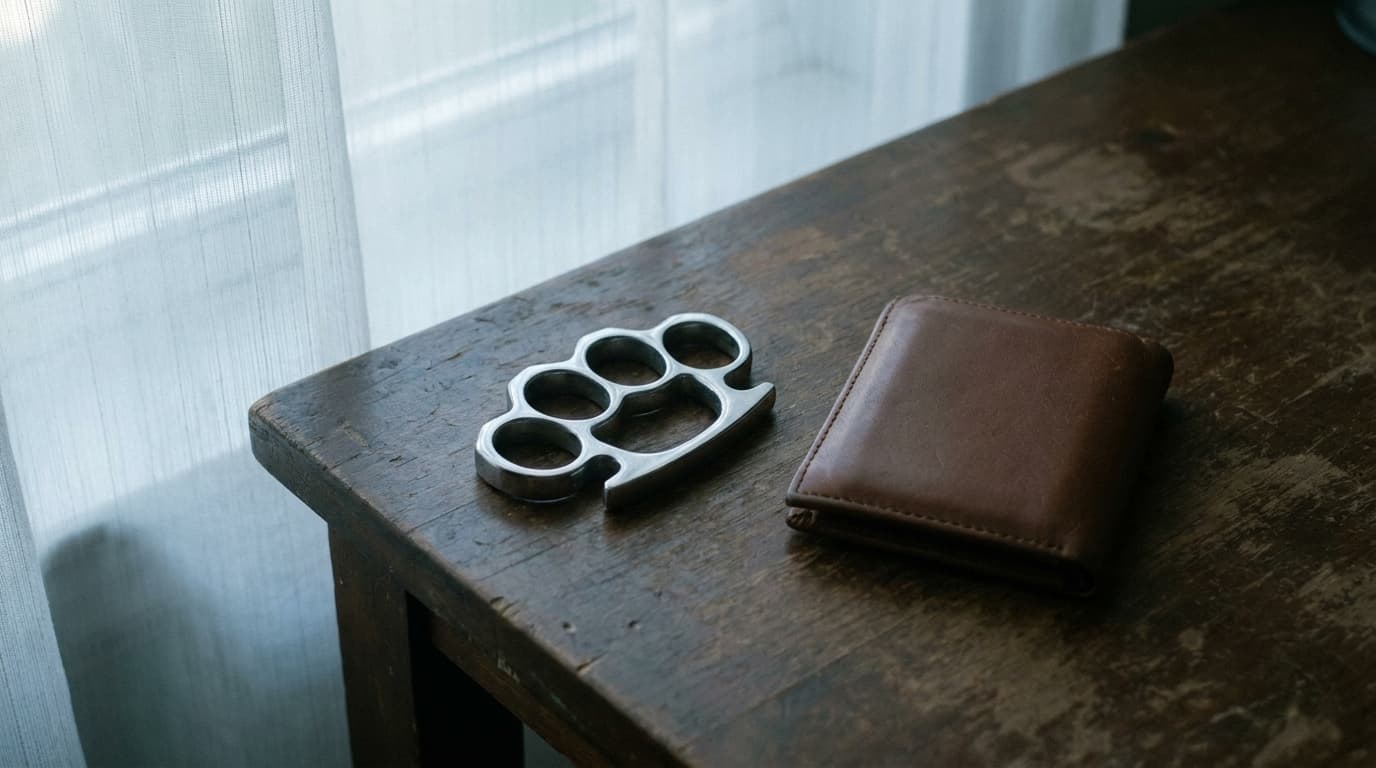
Brass knuckles are illegal in Illinois. Under 720 ILCS 5/24-1(a)(1), a person commits unlawful possession of weapons by knowingly selling, manufacturing, purchasing, possessing or carrying "metal knuckles or other knuckle weapon regardless of its composition," which is a Class A misdemeanor anywhere in the state and a Class 4 felony in or near schools, public parks, courthouses, public housing and public transit. For how other states treat the same item, see our guide to brass knuckles laws by state.
Information last verified on 2026-10-08. This article has not been reviewed by a licensed lawyer.
Jurisdiction scope: This article covers Illinois state law: the unlawful possession of weapons offense in 720 ILCS 5/24-1, its exemptions in 720 ILCS 5/24-2, felon possession in 720 ILCS 5/24-1.1, confiscation in 720 ILCS 5/24-6, the sentencing ranges in 730 ILCS 5/5-4.5-45, 5-4.5-50 and 5-4.5-55, armed violence in 720 ILCS 5/33A-1 through 33A-3, penal institution contraband in 720 ILCS 5/31A-0.1 and 31A-1.1, and the school discipline provision in 105 ILCS 5/10-22.6. It does not cover city or county ordinances, including those of Chicago or Cook County, federal property, tribal land, or the law of other states.
What Illinois law says about brass knuckles
Illinois bans knuckles through its unlawful possession of weapons statute. The relevant part of 720 ILCS 5/24-1(a) reads:
"(a) A person commits the offense of unlawful possession of weapons when he knowingly: (1) Sells, manufactures, purchases, possesses or carries any bludgeon, black-jack, slung-shot, sand-club, sand-bag, metal knuckles or other knuckle weapon regardless of its composition, throwing star, or any knife, commonly referred to as a switchblade knife, ..." 720 ILCS 5/24-1(a)(1)
The list of acts covers both ends of a transaction. Selling and manufacturing reach the supplier; purchasing reaches the buyer; possessing and carrying reach everyone who has knuckles at all. The mental state is "knowingly."
The statute has no place element. A set of knuckles in a dresser drawer, in a glove box or in a pocket is equally within the words "possesses or carries."
Plastic, polymer and other non-metal knuckles
Illinois does not limit its ban to metal. The ban covers "metal knuckles or other knuckle weapon regardless of its composition," so a knuckle weapon made of plastic, polymer, wood or any other material is covered just as a brass or steel set is.

The statute does not define "knuckle weapon." Knives are addressed separately in the same paragraph, which names switchblade knives and ballistic knives, and the text does not say whether a knife with a knuckle-style guard is also a "knuckle weapon." For the Illinois knife rules, see our guide to Illinois knife laws.
Owning, buying, selling and keeping knuckles at home or in a car
Every common way of having knuckles is covered:
| Situation | What 720 ILCS 5/24-1 says |
|---|---|
| Buying a set | "Purchases" is listed in 24-1(a)(1) |
| Selling or making a set | "Sells" and "manufactures" are listed in 24-1(a)(1) |
| Kept at home | "Possesses" is listed; 24-1 has no home exception for knuckles |
| Kept in a vehicle | "Possesses or carries" is listed; 24-1 has no vehicle exception |
| Carried concealed or openly | "Carries" is listed, with no distinction between concealed and open carry |
| Non-metal knuckle weapons | Covered: "other knuckle weapon regardless of its composition" |
| Collectors or antiques | 24-1 contains no collector or antique exception for knuckles |
The "own abode" and "fixed place of business" language that people sometimes associate with Illinois weapons law appears in 24-1 only in the handgun paragraphs, (a)(4) and (a)(10). It does not apply to knuckles.
Penalties
Section 24-1(b) makes a violation of 24-1(a)(1) a Class A misdemeanor and adds that "The possession of each weapon or device in violation of this Section constitutes a single and separate violation." Two sets of knuckles, or knuckles plus another listed weapon, can mean separate counts.
The Class A misdemeanor range is set by 730 ILCS 5/5-4.5-55:
"For a Class A misdemeanor: (a) TERM. The sentence of imprisonment shall be a determinate sentence of less than one year. ... (e) FINE. Unless otherwise specified by law, the minimum fine is $75. A fine not to exceed $2,500 for each offense or the amount specified in the offense, whichever is greater, may be imposed." 730 ILCS 5/5-4.5-55
| Offense | Statute | Class and range stated in the code |
|---|---|---|
| Selling, manufacturing, purchasing, possessing or carrying knuckles | 720 ILCS 5/24-1(a)(1), (b) | Class A misdemeanor: less than one year; fine up to $2,500 per offense or the amount specified in the offense, whichever is greater (730 ILCS 5/5-4.5-55) |
| The same conduct in or near the protected places listed in 24-1(c)(2) | 720 ILCS 5/24-1(c)(2) | Class 4 felony: 1 to 3 years, or 3 to 6 years on an extended term (730 ILCS 5/5-4.5-45); fine up to $25,000 per offense or the amount specified in the offense, whichever is greater (730 ILCS 5/5-4.5-50(b)) |
| Carrying or possessing a dangerous or deadly weapon with intent to use it unlawfully against another | 720 ILCS 5/24-1(a)(2), (b), (c)(2) | Class A misdemeanor; Class 4 felony in or near the protected places listed in 24-1(c)(2) |
| Carrying or possessing an "other deadly weapon" in a licensed bar or at a licensed or admission-charging public gathering | 720 ILCS 5/24-1(a)(8), (b) | Class 4 felony; Class 3 felony for a second or subsequent violation, if knuckles fall within that language |
| Possession of a 24-1 weapon by a person convicted of a felony | 720 ILCS 5/24-1.1(a), (e) | Class 3 felony: 2 to 10 years; Class 2 felony, 3 to 14 years, for a second or subsequent violation, certain prior convictions, or a person on parole or mandatory supervised release |
| Committing a felony while armed with a Category III weapon such as metal knuckles | 720 ILCS 5/33A-2(a), 33A-3 | Class 2 felony, or the unarmed classification if greater; Class 1 felony for a second or subsequent violation, or the unarmed classification if greater |
| Bringing a weapon into, or possessing one in, a penal institution without authority | 720 ILCS 5/31A-1.1 | Class 1 felony |
| Carrying a billy club or other weapon of like character in a building occupied by a unit of government | 720 ILCS 5/24-1(a)(13), (b) | Class A misdemeanor, if knuckles fall within that language |
For a Class 4 felony, 730 ILCS 5/5-4.5-45(e) points to Section 5-4.5-50(b), which allows a fine of up to $25,000 for each offense or the amount specified in the offense, whichever is greater. Except as provided in other sections, probation or conditional discharge for a Class 4 felony may not exceed 30 months (5-4.5-45(d)).
On conviction of an offense in which a weapon was used or possessed, "any weapon seized shall be confiscated by the trial court" (720 ILCS 5/24-6(a)).
Schools, parks, courthouses, public housing and transit: the felony upgrade
Where the violation happens can turn a misdemeanor into a felony. Section 24-1(c)(2) provides that a person who violates 24-1(a)(1):
"in any school, regardless of the time of day or the time of year, in residential property owned, operated or managed by a public housing agency or leased by a public housing agency as part of a scattered site or mixed-income development, in a public park, in a courthouse, on the real property comprising any school ... in any conveyance owned, leased, or contracted by a public transportation agency, or on any public way within 1,000 feet of the real property comprising any school, public park, courthouse, public transportation facility, or residential property owned, operated, or managed by a public housing agency or leased by a public housing agency as part of a scattered site or mixed-income development commits a Class 4 felony." 720 ILCS 5/24-1(c)(2)
For this subsection, "school" means "any public or private elementary or secondary school, community college, college, or university" (24-1(c)(4)), and the felony also applies "in any conveyance owned, leased or contracted by a school to transport students to or from school or a school related activity." The same subsection defines "Courthouse" as "any building that is used by the Circuit, Appellate, or Supreme Court of this State for the conduct of official business." The 1,000-foot rule extends the felony beyond the protected property itself: the statute reaches "any public way" within 1,000 feet of a school, public park, courthouse, public transportation facility or public housing property.
Section 24-1(c)(3) lifts the felony upgrade for "law enforcement officers or security officers of such school, college, or university" and for students carrying firearms for training and similar school-approved uses. It contains no carve-out aimed at knuckles.
Government buildings, bars and public gatherings
Section 24-1(a)(2) separately covers carrying or possessing, "with intent to use the same unlawfully against another," any "dangerous or deadly weapon or instrument of like character." It is a Class A misdemeanor under 24-1(b), and a Class 4 felony in or near the places listed in 24-1(c)(2).
Two other paragraphs of 24-1 use general weapon language that may reach knuckles, but the statute's text does not settle whether it does:
- Buildings occupied by a unit of government. Section 24-1(a)(13) covers carrying or possessing "a billy club, other weapon of like character, or other instrument of like character intended for use as a weapon" on or about the person in a building occupied by a unit of government. Section 24-1(b) makes it a Class A misdemeanor. Whether knuckles are a "weapon of like character" to a billy club is not answered by the statute. Knuckles in such a building are already within the 24-1(a)(1) ban either way.
- Licensed bars and public gatherings. Section 24-1(a)(8) covers carrying or possessing "any firearm, stun gun or taser or other deadly weapon" in a place licensed to sell intoxicating beverages, or at a public gathering held under a government license or one that charges admission. Section 24-1(b) makes a violation of (a)(8) a Class 4 felony, and a second or subsequent violation a Class 3 felony. Section 24-2(e) exempts owners, managers and authorized employees of the licensed place, and law enforcement officers. Whether knuckles count as an "other deadly weapon" under (a)(8) is not answered by the statute.
Exemptions: officers, security guards and concealed carry licensees
Illinois's knuckles ban has very few exemptions, which matters for people who work in law enforcement or security.
The general exemption list does not reach (a)(1). Section 24-2(a) begins: "Subsections 24-1(a)(3), 24-1(a)(4), 24-1(a)(10), and 24-1(a)(13) and Section 24-1.6 do not apply to or affect any of the following," and then lists groups that include peace officers, the armed forces, licensed security personnel and others. Subsection 24-1(a)(1), the knuckles ban, is not in that opening list. The only (a)(1) carve-out in 24-2 is subsection (d): "Subsection 24-1(a)(1) does not apply to the purchase, possession or carrying of a black-jack or slung-shot by a peace officer." It names blackjacks and slung-shots, not knuckles.
A concealed carry license does not help. Section 24-2(a-5) provides that "Subsections 24-1(a)(4) and 24-1(a)(10) do not apply to or affect any person carrying a concealed pistol, revolver, or handgun and the person has been issued a currently valid license under the Firearm Concealed Carry Act at the time of the commission of the offense." The exemption is tied to handguns and to the handgun paragraphs only.
The defendant carries the burden. Under 24-2(h), a charge "need not negate any exemptions contained in this Article. The defendant shall have the burden of proving such an exemption."
Minors and brass knuckles
Section 24-1(a)(1) applies to "a person" and contains no age element, so it covers minors and adults alike. Selling a set to a young person is within the same paragraph, which lists "sells."
Schools also treat knuckles as a disciplinary matter. The School Code's suspension and expulsion provision, 105 ILCS 5/10-22.6(d)(2), includes in its description of a weapon "A knife, brass knuckles or other knuckle weapon regardless of its composition, a billy club, or any other object if used or attempted to be used to cause bodily harm, including "look alikes" of any firearm as defined in subdivision (1) of this subsection (d)." Under 10-22.6(d), a student in kindergarten through grade 12 who is determined to have brought or possessed a listed object to or at school, a school-sponsored activity or event, or an activity or event that bears a reasonable relationship to school "shall be expelled for a period of not less than one year." For a student in kindergarten through grade 2, the board may not expel under this subdivision unless the student is determined to have brought or possessed the object with the intent to cause bodily harm. The superintendent may modify the expulsion requirement, and the board may modify the superintendent's determination case by case.
Armed violence definitions
Illinois's armed violence article also names knuckles. Its definitions section, 720 ILCS 5/33A-1, provides that "A Category III weapon is a bludgeon, black-jack, slungshot, sand-bag, sand-club, metal knuckles, billy, or other dangerous weapon of like character." Under 33A-2(a), a person commits armed violence by committing a felony while armed with a dangerous weapon, with a list of excluded felonies. Under 33A-3, armed violence with a Category III weapon is a Class 2 felony, or the classification for the same act while unarmed if that permits a greater penalty, and a second or subsequent violation is a Class 1 felony, or the unarmed classification if greater.
People with a felony conviction
Section 24-1.1(a) makes it unlawful for a person convicted of a felony in Illinois or any other jurisdiction to possess "on or about his person or on his land or in his own abode or fixed place of business any weapon prohibited under Section 24-1," which includes knuckles. For a person not confined in a penal institution, a violation is a Class 3 felony with 2 to 10 years. A second or subsequent violation, a violation by a person with certain prior convictions (including a forcible felony or a felony under Article 24), or a violation by a person on parole or mandatory supervised release is a Class 2 felony with 3 to 14 years. The section does not apply to a person granted relief by the Director of the Illinois State Police under Section 10 of the Firearm Owners Identification Card Act.
Jails and prisons
Article 31A defines "weapon" to include "any of the devices or implements designated in subsections (a)(1), (a)(3) and (a)(6) of Section 24-1," which covers knuckles, and defines "penal institution" to include a prison, jail, police detention area and similar places of custody (720 ILCS 5/31A-0.1). Knowingly bringing a weapon into a penal institution without authority, or possessing one there, is a Class 1 felony under 720 ILCS 5/31A-1.1(d)(6). Separately, a person confined in an Illinois Department of Corrections facility who possesses a weapon prohibited under 24-1 commits a Class 1 felony under 24-1.1(b) and (e).
City and county rules
The state ban in 24-1(a)(1) applies throughout Illinois. This page does not cover municipal or county weapons ordinances; check your city or county code, or ask your local police department's non-emergency line, about any additional local rule.
Self-defense alternatives under Illinois law
Readers looking at knuckles for personal protection often compare other tools. Illinois's rules on sprays and stun devices are in our guide to Illinois pepper spray and stun gun laws, and the rules on when force may be used at all are in Illinois self-defense laws.
Related pages
- Brass knuckles laws by state
- Illinois knife laws
- Illinois pepper spray and stun gun laws
- Illinois self-defense laws
This article provides general legal information about Illinois state law, not legal advice. Weapons laws change and local rules vary. For advice about a specific situation, contact a lawyer licensed in Illinois or your local law enforcement agency.
Last updated: 2026-10-08.
Frequently Asked Questions
Are brass knuckles legal in Illinois?
No. 720 ILCS 5/24-1(a)(1) makes it a crime to knowingly sell, manufacture, purchase, possess or carry metal knuckles or any other knuckle weapon regardless of its composition. It is a Class A misdemeanor, and a Class 4 felony in or near schools, including colleges and universities, on school-contracted student transport, and in or near parks, courthouses, public housing and public transit.
Can I keep brass knuckles at home in Illinois?
Section 24-1(a)(1) bans possession itself and contains no home exception. The own-abode language in 24-1 appears only in the handgun paragraphs, (a)(4) and (a)(10).
Are plastic knuckles legal in Illinois?
No. The ban in 720 ILCS 5/24-1(a)(1) covers metal knuckles or other knuckle weapon regardless of its composition, so plastic and other non-metal sets fall within it.
What is the penalty for brass knuckles in Illinois?
A Class A misdemeanor under 24-1(b), with a sentence of less than one year and a fine of up to $2,500 per offense under 730 ILCS 5/5-4.5-55. In the protected places listed in 24-1(c)(2), it is a Class 4 felony with 1 to 3 years of imprisonment, or 3 to 6 years on an extended term, and a fine of up to $25,000 per offense. For a person with a felony conviction, possession is a Class 3 felony under 24-1.1.
Does an Illinois concealed carry license allow brass knuckles?
No. The license exemption in 720 ILCS 5/24-2(a-5) applies only to subsections 24-1(a)(4) and (a)(10) and only to a person carrying a concealed pistol, revolver or handgun.
Can I keep brass knuckles in my car in Illinois?
Section 24-1 has no vehicle exception, so carrying or possessing knuckles in a car is within the 24-1(a)(1) ban.
Can I buy or sell brass knuckles in Illinois?
No. Section 24-1(a)(1) lists selling, manufacturing and purchasing alongside possessing and carrying.
Updates
Independently fact-checked against the cited primary sources
The Law Behind This Article
This article rests on the statutory provisions below, held in our own legal record and retrieved from the official source. Tap a section to read the operative text.
Illinois Compiled Statutes Chapter 720, Act 5 (Criminal Code of 2012)
§ 24-1Unlawful possession of weaponsIn forcecited in 3 of our articles
(a) A person commits the offense of unlawful possession of weapons when he knowingly: (1) Sells, manufactures, purchases, possesses or carries any bludgeon, black-jack, slung-shot, sand-club, sand-bag, metal knuckles or other knuckle weapon regardless of its composition, throwing star, or any knife, commonly referred to as a switchblade knife, which has a blade that opens automatically by hand pressure applied to a button, spring or other device in the handle of the knife, or a ballistic knife, which is a device that propels a knifelike blade as a projectile by means of a coil spring, elastic material or compressed gas; or (2) Carries or possesses with intent to use the same unlawfully against another, a dagger, dirk, billy, dangerous knife, razor, stiletto, broken bottle or other piece of glass, stun gun or taser or any other dangerous or deadly weapon or instrument of like character; or (2.5) Carries or possesses with intent to use the same unlawfully against another, any firearm in a church, synagogue, mosque, or other building, structure, or place used for religious worship; or (3) Carries on or about his person or in any vehicle, a tear gas gun projector or bomb or any object…
Official text (excerpt) · last checked 2026-09-23 · Read the full text in our law library · Verify at ilga.gov
Cited in 231 court opinions in our collectionLatest citing opinion in our collection: 2026
Opinions citing this section in our collection:
- People v. Mosley (Illinois Supreme Court 2015, 2015 IL 115872)“…der section 24-1(a)(4) of the Criminal Code of 2012 (720 ILCS 5/24-1(a)(4) (West 2012)) would be ente…”
- People v. Davis (Illinois Supreme Court 1997, 177 Ill. 2d 495)“…rm and ammunition)), one count of unlawful use of a weapon (720 ILCS 5/24-1(a)(4) (West 1994)), and one count of fa…”
- People v. Gayden (Illinois Supreme Court 2020, 443 Ill. Dec. 259)“…t defendant was charged with unlawful use of a weapon (720 ILCS 5/24-1(a)(7)(ii) (West 2014)), possession…”
Identified automatically from the court opinions citing this section — not a ranking of which case controls.
Also relied on in: Illinois Knife Laws (2026): Switchblades and Intent Rule, Illinois Pepper Spray and Stun Gun Laws (2026)
§ 33A-1Legislative intent and definitionsIn forcecited in 3 of our articles
(a) Legislative findings. The legislature finds and declares the following: (1) The use of a dangerous weapon in the commission of a felony offense poses a much greater threat to the public health, safety, and general welfare, than when a weapon is not used in the commission of the offense. (2) Further, the use of a firearm greatly facilitates the commission of a criminal offense because of the more lethal nature of a firearm and the greater perceived threat produced in those confronted by a person wielding a firearm. Unlike other dangerous weapons such as knives and clubs, the use of a firearm in the commission of a criminal felony offense significantly escalates the threat and the potential for bodily harm, and the greater range of the firearm increases the potential for harm to more persons. Not only are the victims and bystanders at greater risk when a firearm is used, but also the law enforcement officers whose duty is to confront and apprehend the armed suspect.
Official text (excerpt) · last checked 2026-07-29 · Read the full text in our law library · Verify at ilga.gov
Cited in 103 court opinions in our collectionLatest citing opinion in our collection: 2026
Opinions citing this section in our collection:
- People v. Clemons (Illinois Supreme Court 2012, 2012 IL 107821)“…with 720 ILCS 5/33A-2(a) (West 2006) (armed violence) and 720 ILCS 5/33A-1(c)(2) (West 2006) (defining cate…”
- People v. Moss (Illinois Supreme Court 2003, 206 Ill. 2d 503)“…e" (Pub. Act 91-404, § 5, eff. January 1, 2000 (codified at 720 ILCS 5/33A-1 (West 2000))). People v. Walden, 19…”
- People v. Smith (Illinois Supreme Court 2000, 191 Ill. 2d 408)“…is otherwise armed with a Category I or Category II weapon. 720 ILCS 5/33A-1(a) (West 1992). A handgun is a Category…”
Identified automatically from the court opinions citing this section — not a ranking of which case controls.
Search our full record of US law — 2.1 million sections, every state + federal →
Sources and References
- 720 ILCS 5/24-1, Unlawful possession of weapons(www.ilga.gov).gov
- 730 ILCS 5/5-4.5-55, Class A misdemeanor sentence(www.ilga.gov).gov
- 730 ILCS 5/5-4.5-45, Class 4 felony sentence(www.ilga.gov).gov
- 720 ILCS 5/24-2, Exemptions(www.ilga.gov).gov
- 105 ILCS 5/10-22.6, Suspension or expulsion of pupils(www.ilga.gov).gov
- 720 ILCS 5/33A-1, Armed violence: legislative intent and definitions(www.ilga.gov).gov
- 720 ILCS 5/24-1.1, Unlawful possession of weapons by felons or persons in the custody of the Department of Corrections facilities(www.ilga.gov).gov
- 720 ILCS 5/24-6, Confiscation and disposition of weapons(www.ilga.gov).gov
- 720 ILCS 5/33A-2, Armed violence: elements of the offense(www.ilga.gov).gov
- 720 ILCS 5/33A-3, Armed violence: sentence(www.ilga.gov).gov
- 720 ILCS 5/31A-0.1, Interference with penal institutions: definitions(www.ilga.gov).gov
- 720 ILCS 5/31A-1.1, Bringing contraband into a penal institution; possessing contraband in a penal institution(www.ilga.gov).gov
- 730 ILCS 5/5-4.5-50, Sentence provisions for all felonies(www.ilga.gov).gov