
Illinois
Illinois Knife Laws (2026): Switchblades and Intent Rule
Independently fact-checked against primary sources (last audited September 18, 2026). · 3 primary sources cited on this page. How we verify our legal content
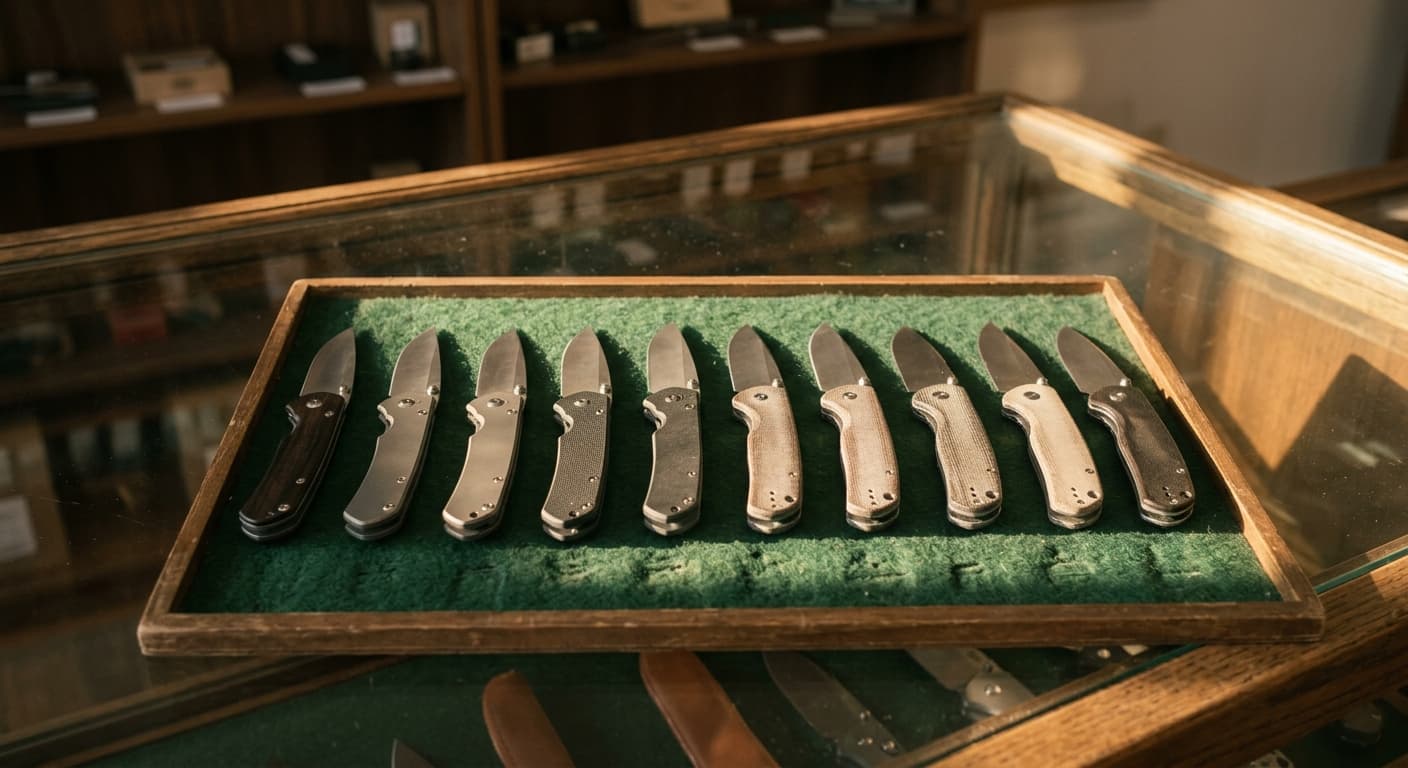
Illinois splits its knife law into several structurally different rules that are easy to collapse into one. A switchblade, ballistic knife, or throwing star is banned to sell, manufacture, possess, or carry outright, full stop, subject to one specific exception. As a general carrying offense, an ordinary knife, a dagger, dirk, "dangerous knife," stiletto, or razor, is criminal to carry only with intent to use it unlawfully against another person, but a separate statute bans possessing many of those same knives in most publicly funded buildings with no intent requirement at all. Treating these as one uniform rule gets Illinois wrong in more than one direction.
Jurisdiction scope: This page covers Illinois state law only, principally 720 ILCS 5/24-1, 5/21-6, and 5/33A-1. It does not cover Illinois's separate aggravated assault, armed robbery, or armed violence statutes, which apply to a knife used as a weapon regardless of how it was carried.
Can you own a knife in Illinois?
Most ordinary knives can be owned in Illinois without restriction. Two specific types are banned outright, not merely restricted from carrying. 720 ILCS 5/24-1(a)(1) makes it unlawful to knowingly:
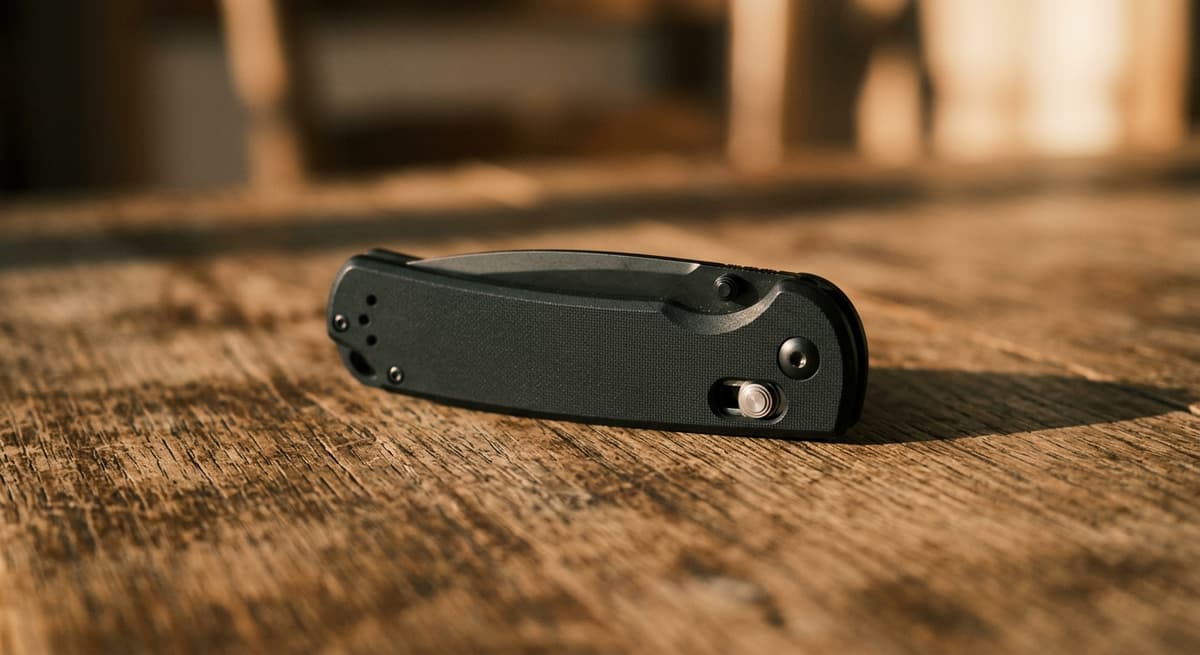
Sells, manufactures, purchases, possesses or carries any bludgeon, black-jack, slung-shot, sand-club, sand-bag, metal knuckles or other knuckle weapon regardless of its composition, throwing star, or any knife, commonly referred to as a switchblade knife, which has a blade that opens automatically by hand pressure applied to a button, spring or other device in the handle of the knife, or a ballistic knife, which is a device that propels a knifelike blade as a projectile by means of a coil spring, elastic material or compressed gas.
This is an outright ban on the item itself, reaching sale, manufacture, purchase, and mere possession, not just carrying it in public, and it covers three knife-relevant items at the same grade: a switchblade, a ballistic knife, and a throwing star. A first violation is a Class A misdemeanor under subsection (b).
Two exceptions matter here, and both are narrower than the paragraph they sit in. Subsection (e)(2) removes the ban entirely, but only for "the provision of paragraph (1) of subsection (a)... prohibiting the sale, manufacture, purchase, possession, or carrying of any knife, commonly referred to as a switchblade knife," that is, the switchblade prohibition specifically. It applies to "a person who possesses a currently valid Firearm Owner's Identification Card previously issued in his or her name by the Illinois State Police" and to "a person or an entity engaged in the business of selling or manufacturing switchblade knives." It does not exempt a ballistic knife or a throwing star; both remain banned outright even for a FOID cardholder. Subsection (e)(1) separately excludes crossbows, common or compound bows, and underwater spearguns from the ballistic-knife definition.
Open carry and concealed carry: the intent-based rule for ordinary knives
Illinois does not ban carrying an ordinary knife outright, openly or concealed. Instead, 720 ILCS 5/24-1(a)(2) criminalizes carrying or possessing certain items with unlawful intent:
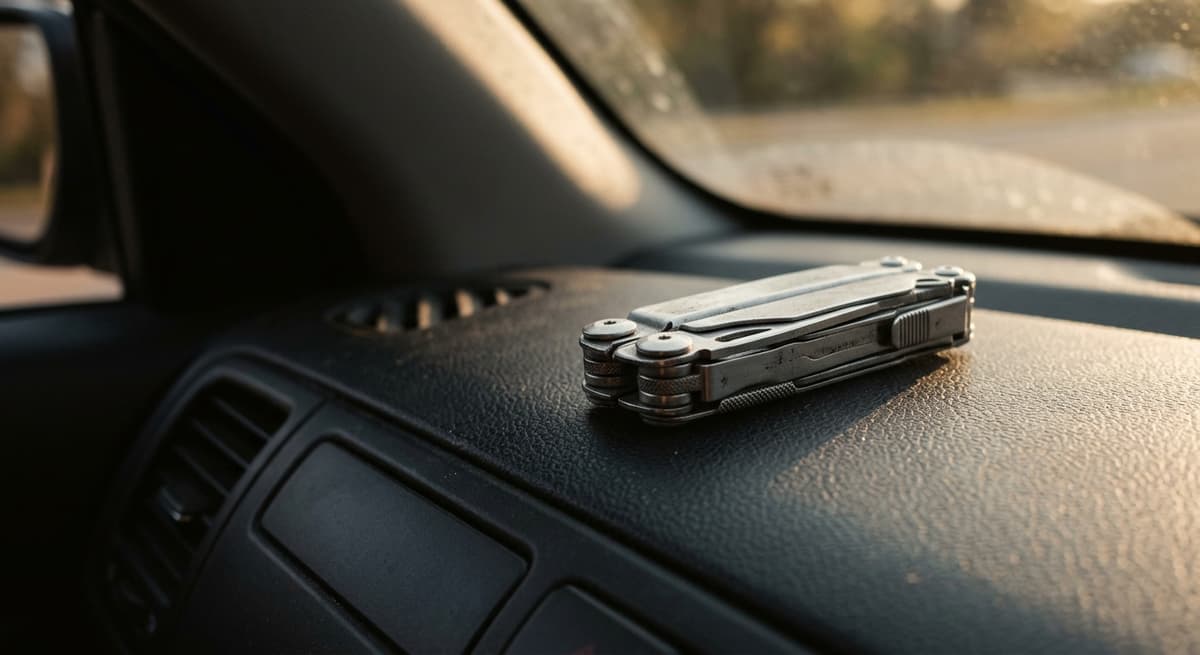
Carries or possesses with intent to use the same unlawfully against another, a dagger, dirk, billy, dangerous knife, razor, stiletto, broken bottle or other piece of glass, stun gun or taser or any other dangerous or deadly weapon or instrument of like character.
This offense turns on the person's intent to use the item unlawfully against another, not on how it is carried or whether it is concealed. A dagger, dirk, "dangerous knife," razor, or stiletto carried or possessed without that intent is not an offense under this subsection. Like the switchblade and ballistic-knife offense, a first violation of this intent-based offense is also a Class A misdemeanor under subsection (b).
Where you can't carry at all: schools, parks, courthouses, and public buildings
Illinois elevates the penalty for either of the two knife offenses above when committed in specific places. 720 ILCS 5/24-1(c)(2) provides that a person who violates subsection (a)(1) (the switchblade/ballistic-knife ban) or (a)(2) (the intent-based offense) "in any school... in residential property owned, operated or managed by a public housing agency... in a public park, in a courthouse... in any conveyance owned, leased or contracted by a school... or on any public way within 1,000 feet" of any of those locations "commits a Class 4 felony." "School" is defined broadly for this subsection to include any public or private elementary or secondary school, community college, college, or university; "courthouse" means a building used by the Circuit, Appellate, or Supreme Court for official business.
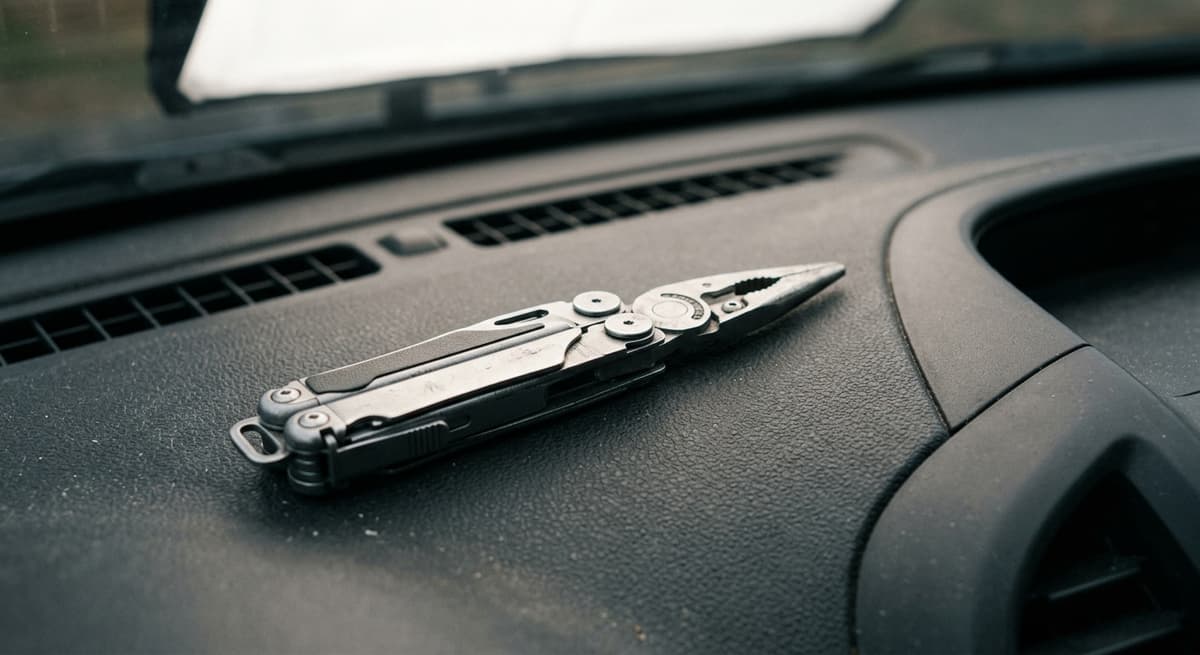
A separate statute reaches public buildings generally, beyond schools and courthouses. 720 ILCS 5/21-6(a) makes it a Class A misdemeanor to possess or store "any weapon enumerated in Section 33A-1 in any building or on land supported in whole or in part with public funds... without prior written permission from the chief security officer for such land or building." Section 33A-1(c)(2) defines a "Category II weapon" to include "knife with a blade of at least 3 inches in length, dagger, dirk, switchblade knife, stiletto, axe, hatchet, or other deadly or dangerous weapon or instrument of like character," so a knife meeting that description is covered by this public-building rule. Subsection (b) of section 21-6 requires the chief security officer to grant any reasonable request for permission.
Does Illinois preempt local knife ordinances?
No. Illinois has no statewide knife preemption statute. Because state law does not preempt local knife regulation, a city or county in Illinois is free to adopt its own, stricter knife ordinance on top of state law, unlike in a state with knife-specific preemption. Chicago, in particular, has its own municipal weapons code that can reach knives beyond what state law regulates; check your city or county's own ordinance before assuming state law is the only rule that applies. No dedicated minimum-age statute for purchasing or possessing a knife exists under Illinois state law either.
Federal law: what it does and does not reach
Federal law does not ban an individual from owning or carrying a switchblade nationwide; the ban that reaches Illinois residents is the state's own, under 720 ILCS 5/24-1(a)(1), subject to the FOID-card and dealer exceptions above. The Federal Switchblade Act, 15 U.S.C. §§ 1241 to 1245, instead regulates interstate commerce in switchblade knives, barring their manufacture, sale, transport, or introduction into interstate commerce, and, in 15 U.S.C. § 1245, makes it a federal offense to knowingly possess, manufacture, sell, or import a ballistic knife in or affecting interstate commerce or within federal territorial jurisdiction, a category Illinois's own statute also names. 15 U.S.C. § 1244, captioned "Exceptions," provides that §§ 1242 and 1243 "shall not apply to" a list of specific knives; it is an exemption from those two interstate-commerce and importation offenses, not a change to the switchblade definition itself, which sits in § 1241(b) and was not amended. A 2009 addition, § 1244(5), exempts from §§ 1242 and 1243 any knife with a spring, detent, or other closure-bias mechanism that requires hand, wrist, or arm exertion to overcome the bias and assist opening, the exception that keeps modern assisted-opening folding knives legal in interstate commerce. A separate exception, § 1244(4), exempts a person with only one arm from those same two offenses when possessing or carrying a switchblade with a blade three inches or less.
Disclaimer: This article provides general legal information about Illinois's knife laws as of September 2026. It is not legal advice. Consult a lawyer licensed in Illinois for advice about a specific situation. Because the intent-based offense in section 24-1(a)(2) depends on the specific facts, whether an ordinary knife carry crosses into that offense can depend on circumstances beyond the item itself.
For a state-by-state comparison, see knife laws by state. Illinois's self-defense statutes are covered separately on the Illinois self-defense laws page.
Statutes cited reflect their in-force version as of 2026-09-18. Last updated: 2026-09-18.
Frequently Asked Questions
Are switchblades illegal in Illinois?
Selling, manufacturing, possessing, or carrying a switchblade knife is banned outright under 720 ILCS 5/24-1(a)(1), a Class A misdemeanor, the same paragraph that also bans a ballistic knife and a throwing star outright. A person who holds a currently valid Firearm Owner's Identification Card, or who is in the business of selling or manufacturing switchblade knives, is exempt from the switchblade ban specifically under 24-1(e)(2). That exemption does not cover a ballistic knife or a throwing star, both of which remain banned even for a FOID cardholder.
Is it legal to carry a pocketknife in Illinois?
An ordinary pocketknife is not named on either of Illinois's specific lists. It could fall under the intent-based offense in 720 ILCS 5/24-1(a)(2) if carried or possessed with intent to use it unlawfully against another person, or under the public-building restriction in 21-6 if it has a blade of at least 3 inches and is carried into a publicly funded building without permission.
What knives are illegal to carry in a public building in Illinois?
720 ILCS 5/21-6 bans possessing or storing a Category II weapon, defined to include a knife with a blade of at least 3 inches, a dagger, dirk, switchblade knife, or stiletto, in any building or on land supported by public funds, without prior written permission from the chief security officer.
Does Illinois preempt local knife ordinances?
No. Illinois has no statewide knife preemption statute, so a local government is not barred by state law from adopting its own knife ordinance the way it is in some other states.
Does Chicago have its own knife rules?
Yes. Because Illinois does not preempt local knife regulation, Chicago has its own separate knife ordinance in the Chicago Municipal Code. This page does not cover what that ordinance says; check the Chicago Municipal Code directly, since city rules can be stricter than the state law described here.
Updates
Independently fact-checked against the cited primary sources
Sources and References
- 720 ILCS 5/24-1 - Unlawful possession of weapons (renamed from 'Unlawful use of weapons' by P.A. 103-822, eff. 1-1-25): (a)(1) switchblade/ballistic-knife/throwing-star outright ban, (a)(2) intent-based dagger/dirk/dangerous-knife/stiletto offense, (b) Class A misdemeanor, (c)(2) Class 4 felony in school/park/courthouse zones, (e) FOID-card switchblade-only exception (does not cover ballistic knife or throwing star) and bow/speargun exceptions(ilga.gov).gov
- 720 ILCS 5/21-6 - Unauthorized Possession or Storage of Weapons (Category II weapon incl. 3-inch-blade knife/dagger/dirk/switchblade/stiletto, public buildings, Class A misdemeanor)(ilga.gov).gov
- 720 ILCS 5/33A-1 - Legislative intent and definitions (Category II weapon definition, knife with blade 3+ inches, dagger, dirk, switchblade, stiletto)(ilga.gov).gov
- 15 U.S.C. 1241-1245 - Federal Switchblade Act, interstate commerce and importation scope(law.cornell.edu)
- 15 U.S.C. 1244 - exceptions, including the 2009 assisted-opening carve-out and the one-arm exception(law.cornell.edu)