
Illinois
Illinois Pepper Spray and Stun Gun Laws (2026)
Independently fact-checked against primary sources (last audited September 23, 2026). · 7 primary sources cited on this page. How we verify our legal content
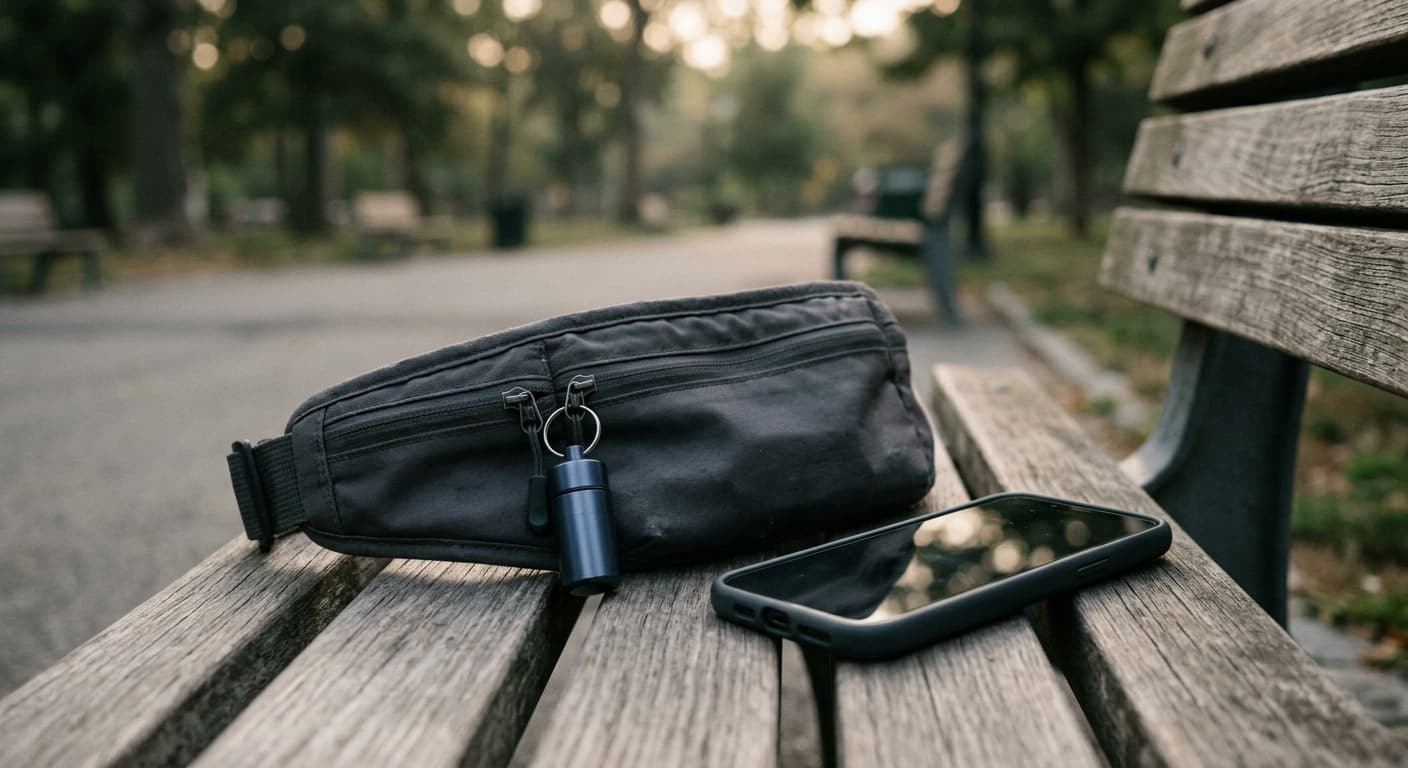
Illinois treats pepper spray as an ordinary, largely unregulated self-defense item for adults, but treats a stun gun or taser almost like a firearm: acquiring or possessing one requires a Firearm Owner's Identification (FOID) Card, and a separate weapons statute restricts where and how one may be carried, a restriction the Illinois Supreme Court has partly struck down as unconstitutional.
Jurisdiction scope: This page covers Illinois state law only, principally 720 ILCS 5/24-1, 720 ILCS 5/21-6 and 5/33A-1, and 430 ILCS 65/2 and 65/4. It does not cover the Firearm Concealed Carry Act's licensing procedure in detail, which is built around handguns and does not extend to stun guns or tasers.
Is pepper spray legal to carry in Illinois?
Yes, for an adult. Illinois's unlawful-possession-of-weapons statute, 720 ILCS 5/24-1(a)(3), makes it unlawful to carry "a tear gas gun projector or bomb or any object containing noxious liquid gas or substance," but exempts "an object containing a non-lethal noxious liquid gas or substance designed solely for personal defense carried by a person 18 years of age or older." An ordinary pepper spray canister sold and carried for personal defense by an adult falls within that exemption. 720 ILCS 5/24-1 and the Firearm Owners Identification Card Act, 430 ILCS 65/1 et seq., contain no capacity, concentration, or purchase provision specific to personal-defense spray; 430 ILCS 65/2(a)(1)'s FOID requirement reaches only "any firearm, stun gun, or taser," not a chemical spray.

Violating subsection (a)(3), such as carrying a device that does not meet the personal-defense exemption, or carrying one while under 18, is a Class A misdemeanor under 720 ILCS 5/24-1(b), which groups subsections (a)(1) through (a)(5) together for that penalty. That penalty rises further in specific locations: 720 ILCS 5/24-1(c)(2) makes a violation of subsection (a)(1), (a)(2), or (a)(3) in a school, on public housing property, in a public park, in a courthouse, on a school or public transportation conveyance, or on a public way within 1,000 feet of any of those places a Class 4 felony. For this subsection, Section 24-1(c)(4) defines "school" as any public or private elementary or secondary school, community college, college, or university, so a college or university campus is inside the enhancement, and (c)(2) defines "courthouse" as any building used by the Circuit, Appellate, or Supreme Court of Illinois for official business. This place-based enhancement applies to a violation of (a)(3), not to compliant personal-defense spray carried lawfully under the exemption, which is not a violation at all.
Do you need a FOID card for a stun gun or taser in Illinois?
Yes. Illinois places stun guns and tasers under the same licensing statute as firearms. 430 ILCS 65/2(a)(1) provides: "No person may acquire or possess any firearm, stun gun, or taser within this State without having in his or her possession a Firearm Owner's Identification Card previously issued in his or her name by the Illinois State Police." The FOID Card Act's eligibility rules, set out in 430 ILCS 65/4, apply the same way to a stun gun or taser applicant as to a firearm applicant: an applicant must generally be 21 or older, or, if under 21, have never been convicted of a misdemeanor other than a traffic offense or been adjudged delinquent, and either be an active-duty member of the U.S. Armed Forces or the Illinois National Guard, or have the written consent of a parent or legal guardian who is not themselves disqualified from holding a FOID card and who files an affidavit with the Illinois State Police. That clean-record condition applies to both the service-member and the parental-consent route; it is not limited to the service-member branch. All applicants must also clear disqualifications for a felony conviction, narcotics addiction, recent mental health treatment, certain misdemeanor convictions, an active protective order, and similar categories.

Section 2 also lists a series of people the FOID requirement does not apply to, and several name stun guns and tasers specifically: 430 ILCS 65/2(b)(10) exempts nonresidents currently licensed or registered to possess a firearm in their resident state, and 430 ILCS 65/2(b)(11) exempts unemancipated minors in the custody of a parent or guardian who holds a valid FOID card. 430 ILCS 65/2(c) exempts law enforcement officials of any jurisdiction while engaged in official duties. One exemption a reader might expect does not reach a stun gun or taser, however: 430 ILCS 65/2(c-5) lets a Firearm Concealed Carry Act licensee possess a firearm without a separate FOID card, but that exemption is written only for "the possession of firearms and firearm ammunition," so a concealed carry license does not substitute for a FOID card when it comes to a stun gun or taser.
Carrying a stun gun or taser: the unlawful-possession-of-weapons statute and People v. Webb
Holding a FOID card answers whether a person may possess a stun gun or taser at all; it does not by itself answer where they may carry it. That question is governed by a different statute, 720 ILCS 5/24-1(a)(4), which makes it unlawful to carry or possess a stun gun, taser, pistol, revolver, or other firearm "in any vehicle or concealed on or about his person," except when on the carrier's own land or in their own abode, legal dwelling, or fixed place of business, or on the land or in the legal dwelling of another person as an invitee with that person's permission, subject to further exceptions for a weapon that is broken down and non-functioning, not immediately accessible, unloaded and cased by a FOID card holder, or carried in accordance with a Firearm Concealed Carry Act license.

The Illinois Supreme Court found that structure unconstitutional as applied to stun guns and tasers in People v. Webb, 2019 IL 122951, a case combining two Du Page County prosecutions. The court reasoned that a Concealed Carry Act license "cannot be issued" for a stun gun or taser, since that Act is limited to handguns, so a stun gun or taser owner has no way to satisfy any of subsection (a)(4)'s exceptions once off their own property. The court held: "we hold the portion of section 24-1(a)(4) that prohibits the carriage or possession of stun guns and tasers is facially unconstitutional under the second amendment," affirming the circuit court judgments below. The statute's text naming stun guns and tasers within subsection (a)(4) has not been removed by the legislature since that 2019 decision; Webb's holding is what keeps that portion of the provision from being enforced, rather than a rewritten statute.
Other parts of the same weapons statute are not affected by Webb, because the court's holding was limited to subsection (a)(4), but they are written as catch-alls that name a stun gun or taser alongside several other items rather than as stun-gun-specific rules. Subsection (a)(2) makes it a Class A misdemeanor to carry or possess, "with intent to use the same unlawfully against another, a dagger, dirk, billy, dangerous knife, razor, stiletto, broken bottle or other piece of glass, stun gun or taser or any other dangerous or deadly weapon or instrument of like character." Subsection (a)(8) makes it a Class 4 felony to carry "any firearm, stun gun or taser or other deadly weapon" in a place licensed to sell intoxicating beverages, or at a public gathering held under a government license or charging admission. Subsection (a)(9) makes it a Class 4 felony to carry a pistol, revolver, stun gun, taser, firearm, or ballistic knife while hooded, robed, or masked to conceal identity. A similarly worded carry restriction in subsection (a)(10), covering public streets and land within a city, village, or incorporated town, excepts an invitee carrying for display or lawful commerce in weapons and, like (a)(4), a person on their own land, abode, legal dwelling, or fixed place of business, or on another person's land or dwelling as an invitee with that person's permission; it uses the same Firearm Concealed Carry Act exception language the Webb court found could not be satisfied for a stun gun or taser, though the Webb opinion itself addressed only subsection (a)(4) and did not rule on subsection (a)(10). A violation of subsection (a)(10) is a Class A misdemeanor under subsection (b), and a second or subsequent violation of (a)(8), (a)(9), or (a)(10) is a Class 3 felony.
Violating subsections (a)(4), (a)(9), or (a)(10) on or near a school (again defined to include a community college, college, or university), public park, courthouse, public transportation facility, or certain public housing property raises the offense to a Class 3 felony under subsection (c)(1.5) of the same statute. The parallel enhancement for the pepper spray side of the statute, covering a violation of subsection (a)(1), (a)(2), or (a)(3) in the same locations, is a Class 4 felony under subsection (c)(2), described above.
A separate statute outside Section 24-1 restricts a stun gun or taser on public property generally, and Webb does not touch it. 720 ILCS 5/21-6(a) makes it a Class A misdemeanor to possess or store "any weapon enumerated in Section 33A-1 in any building or on land supported in whole or in part with public funds or in any building on such land without prior written permission from the chief security officer for such land or building," and subsection (b) requires that officer to "grant any reasonable request for permission" under (a). 720 ILCS 5/33A-1(c)(2) enumerates a "stun gun or taser as defined in paragraph (a) of Section 24-1" among the Category II weapons the section reaches: "any other rifle, shotgun, spring gun, other firearm, stun gun or taser as defined in paragraph (a) of Section 24-1 of this Code, knife with a blade of at least 3 inches in length, dagger, dirk, switchblade knife, stiletto, axe, hatchet, or other deadly or dangerous weapon or instrument of like character." That covers a courthouse, a public university, a public library, a public transit building, or any other building or land supported by public funds in Illinois. Webb's holding is limited to subsection 24-1(a)(4); it does not mention Section 21-6, which draws its weapon list from 33A-1 rather than from the provision Webb struck. A stun gun or taser carried lawfully off one's own property after Webb can still be an unauthorized-possession misdemeanor on publicly funded land without the chief security officer's prior written permission. The Category II list does not end with its named items: it closes with "or other deadly or dangerous weapon or instrument of like character." Nothing in Section 21-6 or Section 33A-1 names a personal-defense spray, and no reported Illinois decision applies that residual clause to one, so whether a compliant canister falls inside it on publicly funded land is not settled by the text either way. The safe course in a courthouse or other publicly funded building is the same one the statute sets for a stun gun: ask the chief security officer, who under subsection (b) must grant any reasonable request.
Illinois's own statute defines the devices this way: a "stun gun or taser" is "any device which is powered by electrical charging units, such as, batteries, and which fires one or several barbs attached to a length of wire and which, upon hitting a human, can send out a current capable of disrupting the person's nervous system in such a manner as to render him incapable of normal functioning" or a device that produces the same effect through direct contact rather than fired barbs.
Federal law: what it does and does not reach
No federal statute regulates a civilian's purchase or possession of pepper spray or a stun gun. Federal law matters in three places.
Federal buildings. Under 18 U.S.C. § 930(a), whoever knowingly possesses or causes to be present "a firearm or other dangerous weapon in a Federal facility (other than a Federal court facility)" faces a fine, imprisonment of up to 1 year, or both. Subsection (e) sets up to 2 years for a federal court facility, and subsection (b) up to 5 years where the weapon is intended to be used in a crime. Section 930(g)(2) defines the term:
The term "dangerous weapon" means a weapon, device, instrument, material, or substance, animate or inanimate, that is used for, or is readily capable of, causing death or serious bodily injury, except that such term does not include a pocket knife with a blade of less than 2½ inches in length.
The definition names neither device. Whether a particular spray or stun gun is "readily capable of" causing serious bodily injury is a question of fact the statute does not answer. Subsection (d)(3) exempts "the lawful carrying of firearms or other dangerous weapons in a Federal facility incident to hunting or other lawful purposes," and subsection (h) requires notice of the ban to be posted at each public entrance. A "Federal facility" is "a building or part thereof owned or leased by the Federal Government, where Federal employees are regularly present for the purpose of performing their official duties."
Air travel. The Transportation Security Administration's screening rules, which are agency policy rather than statute, bar both devices from carry-on bags. One 4 fl. oz. (118 ml) container of mace or pepper spray is permitted in checked baggage if it has a safety mechanism to prevent accidental discharge, and sprays containing more than 2 percent by mass of tear gas (CS or CN) are prohibited in checked baggage. Tasers, stun guns and other electro-shock weapons may travel in checked baggage only if transported so the device cannot discharge accidentally. Airlines may set stricter rules.
National parks. National Park Service regulations prohibit possessing, carrying or using a "weapon" in a park area except as the regulations provide (36 CFR 2.4(b)(1)). 36 CFR 1.4 defines "weapon" to include an "irritant gas device" and any "weapon the possession of which is prohibited under the laws of the State in which the park area or portion thereof is located."
Disclaimer: This article provides general legal information about Illinois's pepper spray and stun gun laws as of September 2026. It is not legal advice. Consult a lawyer licensed in Illinois for advice about a specific situation.
For a state-by-state comparison, see pepper spray and stun gun laws by state. Illinois's self-defense statutes are covered separately on the Illinois self-defense laws page.
Statutes cited reflect their in-force version as of 2026-09-18. Last updated: 2026-09-18.
Frequently Asked Questions
Is pepper spray legal to carry in Illinois?
Yes, for a person 18 or older. 720 ILCS 5/24-1(a)(3) exempts a non-lethal noxious liquid gas or substance designed solely for personal defense, carried by someone 18 or older, from the state's tear-gas-gun offense, and no FOID card is required for it. Carrying a non-compliant device, or carrying one under 18, is a Class A misdemeanor under 720 ILCS 5/24-1(b), rising to a Class 4 felony under 24-1(c)(2) if it happens in or near a school (defined for this subsection to include a community college, college, or university), park, courthouse, transit facility, or certain public housing property.
Do you need a FOID card to own a stun gun or taser in Illinois?
Yes, in most cases. 430 ILCS 65/2(a)(1) requires a Firearm Owner's Identification Card to acquire or possess any firearm, stun gun, or taser in Illinois, and the same age and background eligibility rules that apply to firearm applicants apply to stun gun and taser applicants. Section 2 exempts certain nonresidents, unemancipated minors under a FOID-carded parent's control, and on-duty law enforcement, but a Firearm Concealed Carry Act license does not substitute for a FOID card for a stun gun or taser the way it can for a firearm.
Is it illegal to carry a stun gun in Illinois?
The statute that would restrict carrying one, 720 ILCS 5/24-1(a)(4), still names stun guns and tasers in its text, but the Illinois Supreme Court held in People v. Webb, 2019 IL 122951, that the portion of that provision banning stun gun and taser carriage or possession is facially unconstitutional, because no Firearm Concealed Carry Act license can be issued for those devices. Other carry restrictions in the same statute remain in force, though most are catch-alls that reach a stun gun or taser alongside other items rather than rules written just for them: carrying one with intent to use it unlawfully (a Class A misdemeanor), in a bar or licensed public gathering, or while masked (each a Class 4 felony), a Class A misdemeanor for carrying on a public street or land within a city, village, or incorporated town under (a)(10) (a Class 3 felony for a second or subsequent violation), all rising to a Class 3 felony near a school (defined to include a community college, college, or university), park, courthouse, transit facility, or certain public housing property. A separate statute outside Section 24-1, 720 ILCS 5/21-6, is not affected by Webb at all: possessing or storing a stun gun or taser, enumerated in 720 ILCS 5/33A-1(c)(2)'s Category II list, on land or in a building supported by public funds, such as a courthouse, public university, or city building, without the chief security officer's prior written permission, is a Class A misdemeanor. That Category II list closes with a residual clause reaching 'other deadly or dangerous weapon or instrument of like character'; no personal-defense spray is named in it, and no reported Illinois decision applies the residual to one, so whether a compliant spray on that same land is also covered is not settled by the text.
What is Illinois's legal definition of a stun gun or taser?
720 ILCS 5/24-1 defines it as a battery-powered device that either fires barbs attached to a wire or works through direct contact, in either case sending an electrical current capable of disrupting a person's nervous system enough to incapacitate them.
Updates
Independently fact-checked against the cited primary sources
Sources and References
- 720 ILCS 5/24-1 - Unlawful possession of weapons (pepper spray carve-out (a)(3); stun gun/taser intent offense (a)(2), carry restriction (a)(4), bar/gathering ban (a)(8), disguise ban (a)(9), public-way restriction (a)(10), definition, base penalties (b), place enhancements (c)(1.5) and (c)(2))(ilga.gov).gov
- 430 ILCS 65/2 - Firearm Owner's Identification Card required; exceptions (stun guns and tasers included; nonresident, minor, and law-enforcement exemptions; concealed carry license does not substitute)(ilga.gov).gov
- 430 ILCS 65/4 - Application for Firearm Owner's Identification Cards (age and eligibility requirements, incl. under-21 conditions)(ilga.gov).gov
- People v. Webb, 2019 IL 122951 (Illinois Supreme Court, decided March 21, 2019) - holding that 720 ILCS 5/24-1(a)(4)'s stun gun/taser carry ban is facially unconstitutional(courtlistener.com)
- 18 U.S.C. § 930 - Possession of firearms and dangerous weapons in Federal facilities(law.cornell.edu)
- Transportation Security Administration - What Can I Bring? Pepper Spray(tsa.gov).gov
- Transportation Security Administration - What Can I Bring? Stun Guns/Shocking Devices(tsa.gov).gov
- 36 CFR 1.4 - National Park Service definitions (weapon)(ecfr.gov).gov
- 36 CFR 2.4 - Weapons, traps and nets(ecfr.gov).gov