
Iowa
Are Brass Knuckles Legal in Iowa? (2026 Dangerous Weapon Rules)
Independently fact-checked against primary sources (last audited October 8, 2026). · 8 primary sources cited on this page. How we verify our legal content
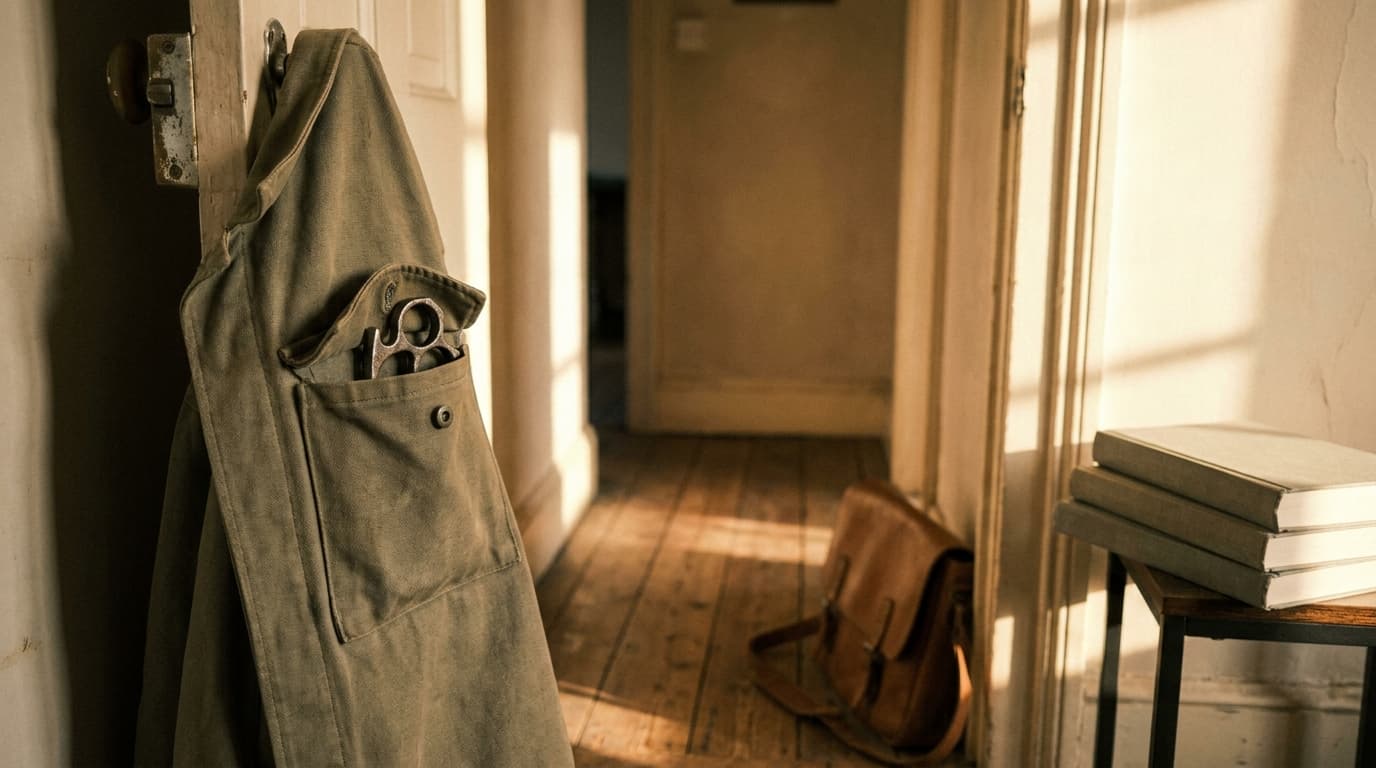
Iowa's weapons chapter never mentions brass knuckles. Iowa Code chapter 724 (weapons), chapter 702 (definitions) and chapter 708 (assault) contain no section that names knuckles, so none of them bans owning, buying, selling or carrying them by name, and knuckles are not on the "offensive weapon" list in Iowa Code 724.1 that makes possession a class "D" felony. Most of Iowa's other weapon rules reach knuckles only if they count as a "dangerous weapon" under Iowa Code 702.7, a definition that turns on how an item is designed or how it is actually used. The Iowa Supreme Court has held that brass knuckles meet the design part of that definition as a matter of law, leaving whether a particular set is capable of inflicting death to the fact-finder (State v. Tusing, 1984). Iowa's jail and prison contraband felony, 719.7, can reach knuckles without the dangerous weapon test. For other states, see our guide to brass knuckles laws by state.
Information last verified on 2026-10-08. This article has not been reviewed by a licensed lawyer.
Jurisdiction scope: This article covers Iowa state law: the dangerous weapon definition in Iowa Code 702.7; the weapons provisions in chapter 724, including 724.1, 724.3, 724.4, 724.4A, 724.4B, 724.4C, 724.4D, 724.4E, 724.5, 724.8B, 724.26, 724.28 and 724.32; assault with a dangerous weapon in 708.2(3) and going armed with intent in 708.8; first-degree robbery in 711.2; jail and prison contraband in 719.7; school weapon reporting and discipline procedures in 280.17A, 280.17B and 280.21B; the Iowa Supreme Court's decision in State v. Tusing; and the penalty statutes 902.7, 902.9, 902.12 and 903.1. It does not cover other court decisions, city or county ordinances, school district, college or university policies, the State Capitol, federal law or federal property, or the law of other states.
The key question: is it a "dangerous weapon"?
Iowa has no rule written for knuckles, so the practical question is whether they meet the general definition of a dangerous weapon:
"A "dangerous weapon" is any instrument or device designed primarily for use in inflicting death or injury upon a human being or animal, and which is capable of inflicting death upon a human being when used in the manner for which it was designed, except a bow and arrow when possessed and used for hunting or any other lawful purpose. Additionally, any instrument or device of any sort whatsoever which is actually used in such a manner as to indicate that the defendant intends to inflict death or serious injury upon the other, and which, when so used, is capable of inflicting death upon a human being, is a dangerous weapon. Dangerous weapons include but are not limited to any offensive weapon, pistol, revolver, or other firearm, dagger, razor, stiletto, switchblade knife, knife having a blade exceeding five inches in length, or any portable device or weapon directing an electric current, impulse, wave, or beam that produces a high-voltage pulse designed to immobilize a person." Iowa Code 702.7
The definition works two ways:
- By design: an item designed primarily for inflicting death or injury, and capable of inflicting death when used as designed.
- By actual use: any item actually used in a way that shows intent to inflict death or serious injury, and capable of inflicting death when so used.
The list of examples does not name knuckles, but the Iowa Supreme Court has addressed the design test. In State v. Tusing, 344 N.W.2d 253 (Iowa 1984), an appeal from the dismissal of a charge of carrying a dangerous weapon under sections 702.7 and 724.4, the court concluded "as a matter of law that brass knuckles are 'designed primarily for use in inflicting death or injury upon a human being or animal.'" It did not hold that every set is "capable of inflicting death upon a human being," explaining that this "will turn on the design and construction of the particular set of brass knuckles," and it held that a fact-finder could conclude the set in that case was capable of inflicting death.
Every rule below that applies to a "dangerous weapon" therefore applies to knuckles if they meet one of the two tests. For brass knuckles that have not been used, Tusing leaves one question: whether the particular set is capable of inflicting death.
Knuckles are not an "offensive weapon"
Iowa's most serious possession offense is limited to a list:
"724.1 1. An offensive weapon is any device or instrumentality of the following types: a. A machine gun. ... d. A ballistic knife. A ballistic knife is a knife with a detachable blade which is propelled by a spring-operated mechanism, elastic material, or compressed gas. ... 724.3 Any person, other than a person authorized in this chapter, who knowingly possesses an offensive weapon commits a class "D" felony." Iowa Code 724.1(1), 724.3
Knuckles are not on the 724.1 list, so the class "D" felony in 724.3 does not reach them. Two other rules are tied to that same list:
- Felons: Iowa Code 724.26(1) makes it a crime for a person convicted of a felony, or adjudicated delinquent for conduct that would be a felony if committed by an adult, to possess, receive or transport "a firearm or offensive weapon," a class "D" felony for a first offense. Knuckles are neither.
- Weapons free zones: Iowa Code 724.4A doubles the maximum fine for "a public offense involving a firearm or offensive weapon, within a weapons free zone." Knuckles are neither.
Carrying brass knuckles in Iowa
Iowa has no general ban on carrying a dangerous weapon without a permit:
"The availability of a professional or nonprofessional permit to carry weapons under this chapter shall not be construed to impose a general prohibition on the otherwise lawful unlicensed carrying or transport, whether openly or concealed, of a dangerous weapon, including a loaded firearm." Iowa Code 724.5
Iowa Code 724.4D adds a duty: "A person carrying a dangerous weapon whose behavior creates a reasonable suspicion that the person presents a danger to the person's self or others shall cooperate with an investigating officer."
That does not make every carry lawful. If knuckles are a dangerous weapon, carrying them can be a crime in these situations:
Using them in a crime
"A person who goes armed with a dangerous weapon on or about the person, and who uses the dangerous weapon in the commission of a crime, commits an aggravated misdemeanor, except as provided in section 708.8." Iowa Code 724.4
Related offenses carry heavier penalties. An assault in which the person "uses or displays a dangerous weapon in connection with the assault" is an aggravated misdemeanor, unless 708.6 or 708.8 applies (708.2(3)). A person who is armed with a dangerous weapon while perpetrating a robbery commits robbery in the first degree, a class "B" felony (711.2), which carries up to 25 years (902.9(1)(b)). And a person convicted of a forcible felony who was armed with a dangerous weapon while participating in it "shall serve a minimum of five years of the sentence imposed by law" and is not eligible for parole until that minimum is served (902.7). For first-degree robbery the longer bar in 902.12(3) controls: a person convicted on or after July 1, 2018 is denied parole or work release until serving between one-half and seven-tenths of the maximum term.
Going armed with intent
"A person who goes armed with any dangerous weapon with the intent to use without justification such weapon against the person of another commits a class "D" felony. The intent required for a violation of this section shall not be inferred from the mere carrying or concealment of any dangerous weapon itself, including the carrying of a loaded firearm, whether in a vehicle or on or about a person's body." Iowa Code 708.8
The second sentence matters: carrying or concealing a dangerous weapon is not, by itself, proof of the intent this felony requires.
Carrying while intoxicated
"1. Except as provided in subsection 2, a person commits a serious misdemeanor if the person is intoxicated as provided under the conditions set out in section 321J.2, subsection 1, paragraph "a", "b", or "c", and the person does any of the following: a. Carries a dangerous weapon on or about the person. b. Carries a dangerous weapon within the person's immediate access or reach while in a vehicle. 2. This section shall not apply to any of the following: a. A person who carries or possesses a dangerous weapon while in the person's own dwelling, place of business, or on land owned or lawfully possessed by the person. b. The transitory possession or use of a dangerous weapon during an act of justified self-defense or justified defense of another, provided that the possession lasts no longer than is immediately necessary to resolve the emergency." Iowa Code 724.4C
The intoxication conditions are the ones in Iowa's operating-while-intoxicated statute, section 321J.2, subsection 1, paragraphs "a", "b" and "c".
People barred from carrying dangerous weapons
"A person determined to be ineligible to receive a permit to carry weapons under section 724.8, subsection 2, 3, 4, 5, or 6, a person who illegally possesses a controlled substance included in chapter 124, subchapter II, or a person who is committing an indictable offense is prohibited from carrying dangerous weapons. Unless otherwise provided by law, a person who violates this section commits a serious misdemeanor." Iowa Code 724.8B
This is the Iowa rule most likely to reach a person with a criminal record who carries knuckles, again only if knuckles are a dangerous weapon. The felon-in-possession statute itself, 724.26, does not reach them.
Minors and brass knuckles
"1. A minor who goes armed with a dangerous weapon concealed on or about the person commits a serious misdemeanor." Iowa Code 724.4E(1)
If knuckles are a dangerous weapon, a minor who carries them concealed on or about the person commits a serious misdemeanor. No section of chapter 724 names knuckles, so no section there addresses selling or giving knuckles to a minor by name.
Schools
Iowa's school grounds felony is written for firearms:
"1. A person who goes armed with, carries, or transports a firearm of any kind, whether concealed or not, on the grounds of a school commits a class "D" felony." Iowa Code 724.4B(1)
It does not reach knuckles. Schools still have a duty to report them if they are a dangerous weapon:
"The board of directors of a public school and the authorities in control of a nonpublic school shall prescribe procedures requiring school officials to report to local law enforcement agencies any dangerous weapon, as defined in section 702.7, possessed on school premises in violation of school policy or state law." Iowa Code 280.17A
The reporting duty refers to weapons possessed "in violation of school policy or state law," so a school's own weapons policy matters. Iowa Code 280.17B also requires schools to prescribe procedures for continued school involvement with, and reintegration of, a student "suspended or expelled for possession of a dangerous weapon, as defined in section 702.7, on school premises in violation of state law." Iowa's mandatory one-year expulsion statute, 280.21B, defines "weapon" as a firearm, so it does not reach knuckles. Check the policy of the specific school or district. College and university rules are outside the scope of this article.
Jails and prisons
Iowa's contraband statute does not depend on the dangerous weapon test alone. Iowa Code 719.7(1)(b) lists as contraband "A dangerous weapon, offensive weapon, pneumatic gun, stun gun, firearm ammunition, knife of any length or any other cutting device, explosive or incendiary material, instrument, device, or other material fashioned in such a manner as to be capable of inflicting death or injury." A person not authorized by law who knowingly introduces contraband into, or onto, the grounds of a jail, detention facility, community-based correctional facility, correctional institution or juvenile detention facility commits the offense of possessing contraband (719.7(3)(a)). For contraband of that type, it is a class "C" felony (719.7(4)(a)), which for a non-habitual offender carries up to 10 years and a fine of $1,370 to $13,660 (902.9(1)(d)).
Courthouses
"A supreme court or judicial branch order that prohibits a person from lawfully carrying, possessing, or transporting a weapon in a county courthouse or other joint-use public facility shall be unenforceable unless the judicial order applies only to a courtroom or a court office, or to a courthouse used only for judicial branch functions." Iowa Code 724.32
City and county rules
Iowa's preemption statute is broader than most because it reaches "other weapons," not only firearms:
"2. A political subdivision of the state shall not enact an ordinance, motion, resolution, policy, or amendment regulating the ownership, possession, carrying, legal transfer, lawful transportation, modification, registration, or licensing of firearms, firearms attachments, or other weapons when the ownership, possession, carrying, transfer, transportation, or modification is otherwise lawful under the laws of this state. ... 4. A political subdivision of the state may restrict the carrying, possession, or transportation of firearms or other dangerous weapons in the buildings or physical structures located on property under the political subdivision's control if adequate arrangements are made by the political subdivision to screen persons for firearms or other dangerous weapons and the political subdivision provides armed security personnel inside the building or physical structure where the restriction is to be in effect." Iowa Code 724.28(2), (4)
Subsection 2 does not name knuckles and protects only conduct that is "otherwise lawful under the laws of this state." Subsection 4 lets a city or county restrict dangerous weapons inside its own buildings when it screens people and posts armed security inside. No court decision or local ordinance applying 724.28 to knuckles is discussed here; check your city or county code and call your local police department's non-emergency line if a rule is unclear.
Iowa penalties at a glance
| Offense | Statute | Classification | Penalty range |
|---|---|---|---|
| Carrying a dangerous weapon while intoxicated | 724.4C | Serious misdemeanor | Fine of $430 to $2,560; up to 1 year (903.1(1)(b)) |
| Minor going armed with a concealed dangerous weapon | 724.4E(1) | Serious misdemeanor | Fine of $430 to $2,560; up to 1 year (903.1(1)(b)) |
| Ineligible person, illegal controlled-substance possessor or person committing an indictable offense carrying dangerous weapons | 724.8B | Serious misdemeanor, unless otherwise provided by law | Fine of $430 to $2,560; up to 1 year (903.1(1)(b)) |
| Going armed with a dangerous weapon and using it in a crime | 724.4 | Aggravated misdemeanor, except as provided in 708.8 | Up to 2 years; fine of $855 to $8,540 (903.1(2)) |
| Going armed with a dangerous weapon with intent to use it without justification against another | 708.8 | Class "D" felony | Up to 5 years; fine of $1,025 to $10,245 for a non-habitual offender (902.9(1)(e)) |
| Assault using or displaying a dangerous weapon | 708.2(3) | Aggravated misdemeanor, unless 708.6 or 708.8 applies | Up to 2 years; fine of $855 to $8,540 (903.1(2)) |
| Robbery while armed with a dangerous weapon | 711.2 | Class "B" felony | Up to 25 years (902.9(1)(b)); for a conviction on or after July 1, 2018, no parole or work release until between one-half and seven-tenths of the maximum term is served (902.12(3)) |
| Knowingly introducing a dangerous weapon or an instrument fashioned to be capable of inflicting death or injury into a jail or prison | 719.7(3)(a), (4)(a) | Class "C" felony | Up to 10 years; fine of $1,370 to $13,660 for a non-habitual offender (902.9(1)(d)) |
Except for the 719.7 row, which also reaches any instrument or device fashioned to be capable of inflicting death or injury, each row applies to knuckles only if they are a dangerous weapon under 702.7.
Knives, sprays and self-defense in Iowa
The same 702.7 definition names daggers, stilettos, switchblade knives and knives with a blade over five inches, which are covered in our guide to Iowa knife laws. Electric immobilizing devices are on that list too; see Iowa pepper spray and stun gun laws. When the law allows force at all is covered in Iowa self-defense laws.
Related pages
- Brass knuckles laws by state
- Iowa knife laws
- Iowa pepper spray and stun gun laws
- Iowa self-defense laws
- Missouri brass knuckles laws
- Illinois brass knuckles laws
This article provides general legal information about Iowa state law, not legal advice. Weapons laws change and local rules vary. For advice about a specific situation, contact a lawyer licensed in Iowa or your local law enforcement agency.
Last updated: 2026-10-08.
Frequently Asked Questions
Are brass knuckles legal in Iowa?
Iowa Code chapters 724, 702 and 708 do not name brass knuckles, and knuckles are not an offensive weapon under Iowa Code 724.1. Most of Iowa's carry and crime rules reach them only if they are a dangerous weapon under Iowa Code 702.7. In State v. Tusing (1984), the Iowa Supreme Court held as a matter of law that brass knuckles are designed primarily for inflicting death or injury, leaving whether a particular set is capable of inflicting death to the fact-finder.
Are brass knuckles a dangerous weapon in Iowa?
Iowa Code 702.7 does not name knuckles. An item is a dangerous weapon if it is designed primarily for inflicting death or injury and capable of inflicting death, or if it is actually used in a way that shows intent to inflict death or serious injury. In State v. Tusing, 344 N.W.2d 253 (Iowa 1984), the Iowa Supreme Court held as a matter of law that brass knuckles meet the design part of the test; whether a particular set is capable of inflicting death is a question for the fact-finder that turns on its design and construction.
Can I carry brass knuckles in Iowa?
Iowa Code 724.5 says there is no general ban on otherwise lawful unlicensed open or concealed carry of a dangerous weapon. If knuckles are a dangerous weapon, carrying them is still a crime when they are used in a crime (724.4), carried with intent to use them against another (708.8), carried while intoxicated (724.4C), carried concealed by a minor (724.4E) or carried by a person barred under 724.8B.
Can a felon have brass knuckles in Iowa?
The felon-in-possession statute, Iowa Code 724.26, covers a firearm or offensive weapon, and knuckles are neither. Separately, if knuckles are a dangerous weapon, Iowa Code 724.8B bars people ineligible for a weapons permit under 724.8, subsections 2 through 6, from carrying them, a serious misdemeanor unless otherwise provided by law.
Can I bring brass knuckles to school in Iowa?
The school grounds felony in Iowa Code 724.4B covers firearms only. If knuckles are a dangerous weapon, Iowa Code 280.17A requires school officials to report them to law enforcement when possessed on school premises in violation of school policy or state law.
Can my city ban brass knuckles in Iowa?
Iowa Code 724.28 bars cities and counties from regulating firearms, firearms attachments or other weapons when the conduct is otherwise lawful under state law. It does not name knuckles, and a city may restrict dangerous weapons in its own buildings if it screens people and provides armed security inside.
Updates
Independently fact-checked against the cited primary sources
The Law Behind This Article
This article rests on the statutory provisions below, held in our own legal record and retrieved from the official source. Tap a section to read the operative text.
Iowa Code, Chapter 702: DEFINITIONS
§ 702.7Dangerous weapon.In forcecited in 4 of our articles
A “dangerous weapon” is any instrument or device designed primarily for use in inflicting death or injury upon a human being or animal, and which is capable of inflicting death upon a human being when used in the manner for which it was designed, except a bow and arrow when possessed and used for hunting or any other lawful purpose. Additionally, any instrument or device of any sort whatsoever which is actually used in such a manner as to indicate that the defendant intends to inflict death or serious injury upon the other, and which, when so used, is capable of inflicting death upon a human being, is a dangerous weapon. Dangerous weapons include but are not limited to any offensive weapon, pistol, revolver, or other firearm, dagger, razor, stiletto, switchblade knife, knife having a blade exceeding five inches in length, or any portable device or weapon directing an electric current, impulse, wave, or beam that produces a high-voltage pulse designed to immobilize a person.
Official text (excerpt) · last checked 2026-07-29 · Read the full text in our law library · Verify at legis.iowa.gov
Cited in 63 court opinions in our collectionLatest citing opinion in our collection: 2026
Opinions citing this section in our collection:
- State Of Iowa Vs. Ricardo Ortiz (Supreme Court of Iowa 2010, 789 N.W.2d 761)“…robbery possessed a dangerous weapon within the meaning of Iowa Code section 702.7; therefore, there was no factual basis…”
- State of Iowa v. Taquala Monique Howse (Supreme Court of Iowa 2016, 875 N.W.2d 684)“…shown to be operable—qualifies as a dangerous weapon under Iowa Code section 702.7 (2011). The State argues that…”
- State v. Lambert (Supreme Court of Iowa 2000, 612 N.W.2d 810)“…anguage substantially tracks with the statutory language of Iowa Code section 702.7. However, the court further instructed…”
Identified automatically from the court opinions citing this section — not a ranking of which case controls.
Also relied on in: Pepper Spray and Stun Gun Laws by State (2026), Iowa Pepper Spray and Stun Gun Laws (2026), Iowa Knife Laws (2026): Carry, Intent, and Blade Rules
Iowa Code, Chapter 724: WEAPONS
§ 724.4Use of a dangerous weapon in the commission of a crime.In forcecited in 3 of our articles
A person who goes armed with a dangerous weapon on or about the person, and who uses the dangerous weapon in the commission of a crime, commits an aggravated misdemeanor, except as provided in section 708.8.
Official text (excerpt) · last checked 2026-07-29 · Read the full text in our law library · Verify at legis.iowa.gov
Cited in 151 court opinions in our collectionLatest citing opinion in our collection: 2026
Opinions citing this section in our collection:
- State of Iowa v. Taquala Monique Howse (Supreme Court of Iowa 2016, 875 N.W.2d 684)“…3 weapon concealed on or about her person in violation of Iowa Code section 724.4(1). Howse waived her right to a jury tr…”
- State v. Kirchoff (Supreme Court of Iowa 1990, 452 N.W.2d 801)“…ation with the offense of carrying weapons, in violation of Iowa Code section 724.4 (1987), and the offense of operating a…”
- State v. Freeman (Supreme Court of Iowa 2005, 705 N.W.2d 293)“…ers did not have probable cause to arrest him for violating Iowa Code section 724.4(3)( b ). Iowa Code section 804.7(3) a…”
Identified automatically from the court opinions citing this section — not a ranking of which case controls.
§ 724.4EPossession of dangerous weapons and loaded firearms by minors.In forcecited in 3 of our articles
1. A minor who goes armed with a dangerous weapon concealed on or about the person commits a serious misdemeanor. 2. A minor who carries, transports, or possesses a loaded firearm of any kind within the limits of a city or knowingly carries or transports a pistol or revolver in a vehicle commits a serious misdemeanor. 3. A minor who goes armed with a dangerous weapon that directs an electric current impulse, wave, or beam that produces a high-voltage pulse designed to immobilize a person, whether concealed or not, commits a simple misdemeanor.
Official text (excerpt) · last checked 2026-07-29 · Read the full text in our law library · Verify at legis.iowa.gov
Iowa Code, Chapter 708: ASSAULT
§ 708.8Going armed with intent.In forcecited in 4 of our articles
A person who goes armed with any dangerous weapon with the intent to use without justification such weapon against the person of another commits a class “D” felony. The intent required for a violation of this section shall not be inferred from the mere carrying or concealment of any dangerous weapon itself, including the carrying of a loaded firearm, whether in a vehicle or on or about a person’s body.
Official text (excerpt) · last checked 2026-09-24 · Read the full text in our law library · Verify at legis.iowa.gov
Cited in 65 court opinions in our collectionLatest citing opinion in our collection: 2026
Opinions citing this section in our collection:
- State of Iowa v. James Norman Harris (Supreme Court of Iowa 2017, 891 N.W.2d 182)“…ently charged with going armed with intent in violation of Iowa Code section 708.8 (2013), a class “D” felony, and willful…”
- State v. Ray (Supreme Court of Iowa 1994, 516 N.W.2d 863)“…ying a dangerous weapon, and simple assault in violation of Iowa Code sections 708.8, 708.2(3), and 708.2(4) (1991). On appe…”
- State v. Geier (Supreme Court of Iowa 1992, 484 N.W.2d 167)“…nt Exposure, and Theft in the Third Degree, in violation of Iowa Code sections 708.8, 709.11, 709.9, and 714.1(4) (1989), re…”
Identified automatically from the court opinions citing this section — not a ranking of which case controls.
Also relied on in: Knife Laws by State (2026): Carry Rules, Blade Limits, Penalties
Search our full record of US law — 2.1 million sections, every state + federal →
Sources and References
- Iowa Code 702.7, Dangerous weapon(www.legis.iowa.gov).gov
- Iowa Code chapter 724, Weapons (724.1, 724.3, 724.4, 724.4A, 724.4B, 724.4C, 724.4D, 724.4E, 724.5, 724.8B, 724.26, 724.28, 724.32)(www.legis.iowa.gov).gov
- Iowa Code 708.2 and 708.8, Penalties for assault; going armed with intent(www.legis.iowa.gov).gov
- Iowa Code 280.17A, 280.17B and 280.21B, Dangerous weapons on school premises; student discipline(www.legis.iowa.gov).gov
- Iowa Code 903.1, Maximum sentence for misdemeanants(www.legis.iowa.gov).gov
- Iowa Code 902.7, 902.9 and 902.12, Minimum sentence for use of a dangerous weapon; maximum sentence for felons; minimum sentence for certain felonies(www.legis.iowa.gov).gov
- Iowa Code 719.7, Possessing contraband(www.legis.iowa.gov).gov
- Iowa Code 711.2, Robbery in the first degree(www.legis.iowa.gov).gov
- State v. Tusing, 344 N.W.2d 253 (Iowa 1984), Supreme Court of Iowa(www.courtlistener.com)