
Hawaii
Are Brass Knuckles Legal in Hawaii? (2026 Metal Knuckles Law)
Independently fact-checked against primary sources (last audited October 10, 2026). · 9 primary sources cited on this page. How we verify our legal content
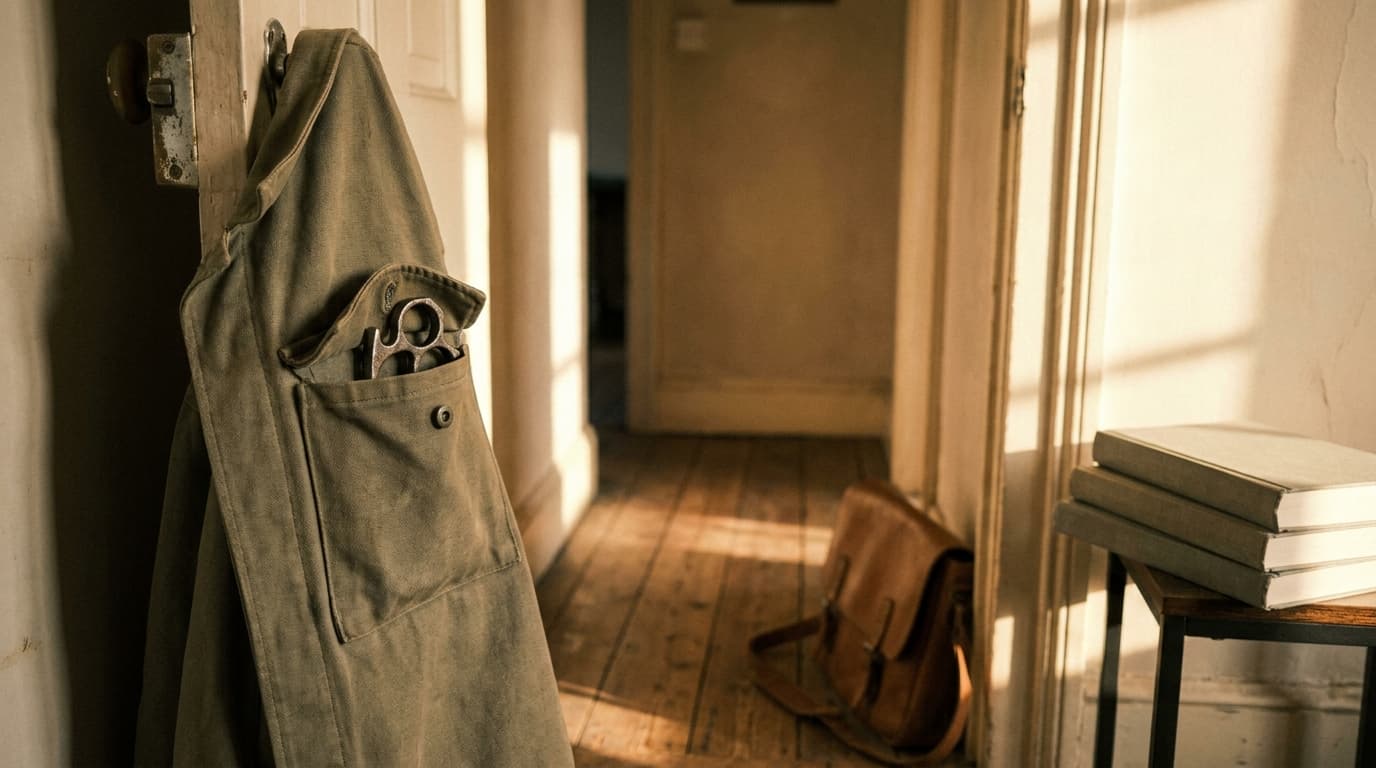
Hawaii law names "metal knuckles" in Hawaii Revised Statutes (HRS) section 134-51. A person not authorized by law who knowingly carries metal knuckles concealed on the person, or in a bag or other container carried by the person, commits a misdemeanor, punishable by up to one year in jail and a fine of up to $2,000. Knowingly possessing, or intentionally using or threatening to use, metal knuckles while committing a separate felony or misdemeanor is a class C felony, punishable by up to five years and a fine of up to $10,000.
Part III of HRS chapter 134 (Dangerous Weapons, sections 134-51 to 134-53) contains no separate offense for owning, buying, selling or openly carrying metal knuckles; its knuckles offenses are the two in section 134-51. For other states, see our guide to brass knuckles laws by state.
Information last verified on 2026-10-08. This article has not been reviewed by a licensed lawyer.
Jurisdiction scope: This article covers Hawaii state law in HRS 134-51 (deadly or dangerous weapons), the school discipline rule in HRS 302A-1134.6, the forfeiture rule in HRS 134-12.5, the prison contraband offense in HRS 710-1022, and the sentencing provisions in HRS 706-640, 706-660 and 706-663, together with the official case notes printed with section 134-51. It does not cover rules for people with felony convictions or on probation or parole, rules for particular places such as courthouses or airports, rules on sales to minors, county ordinances in Honolulu, Hawaii, Maui or Kauai counties, school or university policies, federal law or federal property, or the law of other states.
Carrying metal knuckles concealed in Hawaii
The central rule is subsection (a) of the dangerous weapons statute:
"(a) Any person, not authorized by law, who knowingly carries concealed on the person, or in a bag or other container carried by the person, any dirk, dagger, blackjack, metal knuckles, or other deadly or dangerous weapon shall be guilty of a misdemeanor; provided that this subsection shall not apply to a billy." HRS 134-51(a)
Key points from the text:
- Concealment is an element. The offense is carrying the knuckles concealed. A bag or other container the person is carrying counts the same as concealment on the person.
- Knowledge is an element. The person must knowingly carry the concealed weapon.
- "Not authorized by law" is not defined in the section, and the section does not say who is authorized.
- The billy carve-out ("provided that this subsection shall not apply to a billy") applies to subsection (a) only. It does not cover metal knuckles.
A misdemeanor in Hawaii carries a jail term not to exceed one year (HRS 706-663) and a fine of up to $2,000 (HRS 706-640(1)(d)).
The home defense
"(g) It shall be a defense to a prosecution under subsection (a) that a person was lawfully present in the person's own home at the time of the offense." HRS 134-51(g)
This is a defense to the concealed-carry charge in subsection (a). It is not written as a defense to the felony in subsection (b), and it covers the person's own home, not someone else's.
Open carry and vehicles
Because concealment is part of the subsection (a) offense, section 134-51 does not separately address carrying metal knuckles openly. Open carry is no safe harbor from subsection (b), though: that felony reaches knowing possession during a separate felony or misdemeanor, whether the knuckles are concealed or not.
Subsection (a) speaks of the person and of a bag or other container carried by the person. It does not mention vehicles. The official case notes printed with section 134-51 include this note on a 1977 Hawaii Supreme Court decision, 58 H. 514, 572 P.2d 1222: "Statute does not require that weapons be 'concealed' within the vehicle." That note construed an earlier version of subsection (a), which expressly covered weapons concealed "within any vehicle used or occupied by the person." Act 21 of 2024 (approved May 13, 2024, and effective on approval) deleted that vehicle language, so subsection (a) now reaches knuckles concealed on the person or in a bag or other container the person is carrying. Subsection (b) does not depend on where the knuckles are kept: it reaches knowingly possessing them during a separate felony or misdemeanor.
What counts as metal knuckles
Section 134-51 names "metal knuckles" but does not define the term. Items that are not metal knuckles can still fall under the section through its catch-all, "other deadly or dangerous weapon." The official case notes printed with the statute summarize two decisions on that phrase:
"'Other deadly or dangerous weapon' is limited to instruments whose sole design and purpose is to inflict bodily injury or death. 55 H. 531, 523 P.2d 299 (1974). ... Sheathed sword-cane and wooden knuckles with shark's teeth were 'deadly or dangerous weapons'. 58 H. 514, 572 P.2d 1222 (1977)." Case notes to HRS 134-51
So plastic, wooden or other non-metal knuckles are not clearly outside the statute. Whether a particular design is covered depends on how a court applies these notes. Another note describes a "deadly and dangerous weapon" as "one designed primarily as a weapon or diverted from normal use and prepared for combat" (56 H. 374, 537 P.2d 14 (1975)), and the 1977 note concerned an earlier version of the statute.
Section 134-51 does not apply to switchblade knives or butterfly knives, which Hawaii regulates in their own sections (134-52 and 134-53). Our guide to Hawaii knife laws covers those knives.
Knuckles during another crime: a class C felony
"(b) Any person who knowingly possesses or intentionally uses or threatens to use a dirk, dagger, blackjack, metal knuckles, or other deadly or dangerous weapon, or a billy, while engaged in the commission of a separate felony or misdemeanor shall be guilty of a class C felony. (c) A conviction and sentence under subsection (b) shall be in addition to and not in lieu of any conviction and sentence for the separate felony or misdemeanor; provided that the sentence imposed under subsection (b) may run concurrently or consecutively with the sentence for the separate felony or misdemeanor." HRS 134-51(b), (c)
Three features stand out:
- Any separate offense counts, misdemeanor or felony, so knuckles can turn a misdemeanor case into a felony case.
- Possession is enough. Subsection (b) reaches knowingly possessing the knuckles, not only using or threatening to use them.
- The conviction is separate. Subsection (c) makes the class C felony conviction and sentence additional to the conviction and sentence for the separate offense, but the court may run the two sentences concurrently or consecutively.
A class C felony carries a prison term of up to five years (HRS 706-660(1)(b)) and a fine of up to $10,000 (HRS 706-640(1)(c)).
Destruction of the weapon
"(d) Upon conviction of a person for carrying or possessing a deadly or dangerous weapon pursuant to this section, the deadly or dangerous weapon shall be summarily destroyed by the chief of police or sheriff." HRS 134-51(d)
Separately, HRS 134-12.5 provides that deadly or dangerous weapons possessed or used in violation of chapter 134 or the Hawaii Penal Code are forfeited to the State under chapter 712A.
What section 134-51 does not cover
Subsection (e) takes four kinds of weapons out of the section:
"(e) Notwithstanding any provision to the contrary, this section shall not apply to: (1) A firearm, whether loaded or not, and whether operable or not; (2) A switchblade knife as defined in section 134-52; (3) A butterfly knife as defined in section 134-53; or (4) An electric gun as defined in section 134-81." HRS 134-51(e)
Electric guns have their own rules; see Hawaii pepper spray and stun gun laws. Subsection (f) defines "billy" to include "a cudgel, truncheon, police baton, collapsible baton, billy club, or nightstick."
Metal knuckles at school
Hawaii's zero tolerance statute lists metal knuckles in its definition of "dangerous weapon":
"(a) Any child who possesses, sells, or uses a dangerous weapon or switchblade knife, while attending school or while attending department-supervised activities held on or off school property, may be excluded from attending school for up to ninety-two school days ..." HRS 302A-1134.6(a)
Subsection (g) defines "dangerous weapon" as "a dirk, dagger, butterfly knife, blackjack, slug shot, billy, metal knuckles, or other instrument whose sole design and purpose is to inflict bodily injury or death," followed by a proviso excluding firearms from that definition.
This is a school discipline rule, not a criminal offense. Exclusion is discretionary ("may be excluded"), and 92 school days is the upper limit, not a fixed term. Separately, carrying knuckles concealed can still be charged under section 134-51(a).
Jails and prisons
Intentionally conveying a dangerous instrument to a person confined in a correctional or detention facility is promoting prison contraband in the first degree, a class B felony (HRS 710-1022). The same offense covers a confined person who intentionally makes, obtains or possesses a dangerous instrument, and a dangerous instrument may be possessed by or conveyed to a confined person only with the facility administrator's express prior approval. HRS 707-700 defines "dangerous instrument" to include any weapon or instrument "which in the manner it is used or is intended to be used is known to be capable of producing death or serious bodily injury." A class B felony carries a prison term of up to 10 years (HRS 706-660(1)(a)) and a fine of up to $25,000 (HRS 706-640(1)(b)).

Hawaii penalties at a glance
| Conduct | Statute | Classification | Maximum penalty |
|---|---|---|---|
| Knowingly carrying metal knuckles concealed on the person or in a bag or container carried by the person, not authorized by law | HRS 134-51(a) | Misdemeanor | 1 year; $2,000 |
| Knowingly possessing, or intentionally using or threatening to use, metal knuckles during a separate felony or misdemeanor | HRS 134-51(b) | Class C felony | 5 years; $10,000 |
| Child possessing, selling or using metal knuckles at school or a department-supervised activity | HRS 302A-1134.6(a) | School discipline | Exclusion for up to 92 school days |
| Intentionally conveying a dangerous instrument to a person confined in a correctional or detention facility | HRS 710-1022 | Class B felony | 10 years; $25,000 |
Misdemeanor maximums come from HRS 706-663 and 706-640(1)(d); class C felony maximums from HRS 706-660(1)(b) and 706-640(1)(c); class B felony maximums from HRS 706-660(1)(a) and 706-640(1)(b). These are statutory maximums; other sentencing options under HRS chapter 706 are outside the scope of this article.
Self-defense and county rules
When the law allows force at all is a separate question from whether an item is legal to carry; see Hawaii self-defense laws. County ordinances are outside the scope of this article; check your county code, and call your county police department's non-emergency line if a rule is unclear.
Related pages
- Brass knuckles laws by state
- Hawaii knife laws
- Hawaii pepper spray and stun gun laws
- Hawaii self-defense laws
This article provides general legal information about Hawaii state law, not legal advice. Weapons laws change and county rules vary. For advice about a specific situation, contact a lawyer licensed in Hawaii or your county police department.
Last updated: 2026-10-08.
Frequently Asked Questions
Are brass knuckles legal in Hawaii?
Part III of HRS chapter 134 has no separate offense for owning, buying or selling metal knuckles. Knowingly carrying them concealed on the person or in a bag or container carried by the person is a misdemeanor under HRS 134-51(a), and possessing them during a separate felony or misdemeanor is a class C felony under HRS 134-51(b).
What is the penalty for carrying brass knuckles in Hawaii?
Concealed carry under HRS 134-51(a) is a misdemeanor, punishable by up to one year in jail and a fine of up to $2,000. Possessing or using metal knuckles during a separate felony or misdemeanor is a class C felony, punishable by up to five years and a fine of up to $10,000, in addition to the sentence for the other offense; the court may run the sentences concurrently or consecutively.
Can I keep brass knuckles at home in Hawaii?
Part III of HRS chapter 134 contains no offense for simply owning metal knuckles. For the concealed-carry charge, HRS 134-51(g) makes it a defense that the person was lawfully present in the person's own home at the time.
Can I keep brass knuckles in my car in Hawaii?
HRS 134-51(a) covers knuckles concealed on the person or in a bag or other container carried by the person and does not mention vehicles. Before Act 21 of 2024, subsection (a) expressly covered weapons concealed within any vehicle used or occupied by the person; that act deleted the vehicle language. Possessing knuckles during a separate felony or misdemeanor is still a class C felony under HRS 134-51(b), wherever they are kept.
Are plastic or wooden knuckles legal in Hawaii?
HRS 134-51 names only metal knuckles, but its catch-all covers any other deadly or dangerous weapon. The official case notes describe that phrase as limited to instruments whose sole design and purpose is to inflict bodily injury or death, describe such a weapon elsewhere as one designed primarily as a weapon or diverted from normal use and prepared for combat, and note a 1977 decision treating wooden knuckles with shark's teeth as deadly or dangerous weapons.
Can a student be expelled for brass knuckles in Hawaii?
Under HRS 302A-1134.6, a child who possesses, sells or uses a dangerous weapon, a term that includes metal knuckles, while attending school or a department-supervised activity may be excluded from school for up to 92 school days.
Updates
Independently fact-checked against the cited primary sources
The Law Behind This Article
This article rests on the statutory provisions below, held in our own legal record and retrieved from the official source. Tap a section to read the operative text.
Hawaii Revised Statutes, Chapter 134: FIREARMS, AMMUNITION AND DANGEROUS WEAPONS
§ 134-51Deadly or dangerous weapons; prohibitions; penaltyIn forcecited in 3 of our articles
(a) Any person, not authorized by law, who knowingly carries concealed on the person, or in a bag or other container carried by the person, any dirk, dagger, blackjack, metal knuckles, or other deadly or dangerous weapon shall be guilty of a misdemeanor; provided that this subsection shall not apply to a billy. (b) Any person who knowingly possesses or intentionally uses or threatens to use a dirk, dagger, blackjack, metal knuckles, or other deadly or dangerous weapon, or a billy, while engaged in the commission of a separate felony or misdemeanor shall be guilty of a class C felony. (c) A conviction and sentence under subsection (b) shall be in addition to and not in lieu of any conviction and sentence for the separate felony or misdemeanor; provided that the sentence imposed under subsection (b) may run concurrently or consecutively with the sentence for the separate felony or misdemeanor. (d) Upon conviction of a person for carrying or possessing a deadly or dangerous weapon pursuant to this section, the deadly or dangerous weapon shall be summarily destroyed by the chief of police or sheriff.
Official text (excerpt) · last checked 2026-09-23 · Read the full text in our law library · Verify at capitol.hawaii.gov
Cited in 22 court opinions in our collectionLatest citing opinion in our collection: 2019
Opinions citing this section in our collection:
- State v. Ganal (Hawaii Supreme Court 1996, 81 Haw. 358)“…At the same time, under section 3 of Act 195 (codified as HRS § 134-51(b)), to "knowingly possess[ ] or intent…”
- State v. Sanchez (Hawaii Intermediate Court of Appeals 1996, 82 Haw. 517)“…S § 134-6(a), or be “engaged in the commission of a crime,” HRS § 134-51(b). HRS § 134-7(b) does not require the…”
- State v. Ogata (Hawaii Supreme Court 1977, 58 Haw. 514)“…or the offense of carrying a deadly weapon, in violation of HRS § 134-51. The recovery of a sheathed sword-cane,…”
Identified automatically from the court opinions citing this section — not a ranking of which case controls.
Also relied on in: Hawaii Knife Laws (2026): Switchblade and Butterfly Rules, Hawaii Pepper Spray and Stun Gun Laws (2026)
Hawaii Revised Statutes, Chapter 302A: EDUCATION
§ 302A-1134.6Zero tolerance policyIn forcecited in 2 of our articles
. (a) Any child who possesses, sells, or uses a dangerous weapon or switchblade knife, while attending school or while attending department-supervised activities held on or off school property, may be excluded from attending school for up to ninety-two school days, as determined by the principal and approved by the superintendent or other individuals designated pursuant to rules adopted by the board. (b) Except as provided in subsection (f), any child who possesses, sells, consumes, or uses intoxicating liquor or illegal drugs, while attending school or while attending department-supervised activities held on or off school property, may be excluded from attending school for up to ninety-two school days, as determined by the principal and approved by the superintendent or other individuals designated pursuant to rules adopted by the board.
Official text (excerpt) · last checked 2026-07-30 · Read the full text in our law library · Verify at capitol.hawaii.gov
Cited in 1 court opinions in our collectionLatest citing opinion in our collection: 2007
Opinions citing this section in our collection:
- State v. Reis (Hawaii Supreme Court 2007, 115 Haw. 79)“…" and creating a "zero tolerance policy" in public schools, HRS § 302A-1134.6). [44] The reference to a "presumpti…”
Identified automatically from the court opinions citing this section — not a ranking of which case controls.
Search our full record of US law — 2.1 million sections, every state + federal →
Sources and References
- HRS 134-51 Deadly or dangerous weapons; prohibitions; penalty (with case notes)(www.capitol.hawaii.gov).gov
- HRS 706-663 (misdemeanor imprisonment)(www.capitol.hawaii.gov).gov
- HRS 706-640 (authorized fines)(www.capitol.hawaii.gov).gov
- HRS 706-660 (felony imprisonment)(www.capitol.hawaii.gov).gov
- HRS 302A-1134.6 Zero tolerance policy(www.capitol.hawaii.gov).gov
- HRS 134-12.5 Forfeiture of firearms, ammunition, deadly or dangerous weapons, and switchblade knives(www.capitol.hawaii.gov).gov
- HRS 710-1022 Promoting prison contraband in the first degree(www.capitol.hawaii.gov).gov
- HRS 707-700 Definitions (dangerous instrument)(www.capitol.hawaii.gov).gov
- HB2342 SD2 (Act 21, Session Laws of Hawaii 2024), amending HRS 134-51(www.capitol.hawaii.gov).gov