North Dakota
Are Brass Knuckles Legal in North Dakota? (2026 Law)
Independently fact-checked against primary sources (last audited October 10, 2026). · 13 primary sources cited on this page. How we verify our legal content
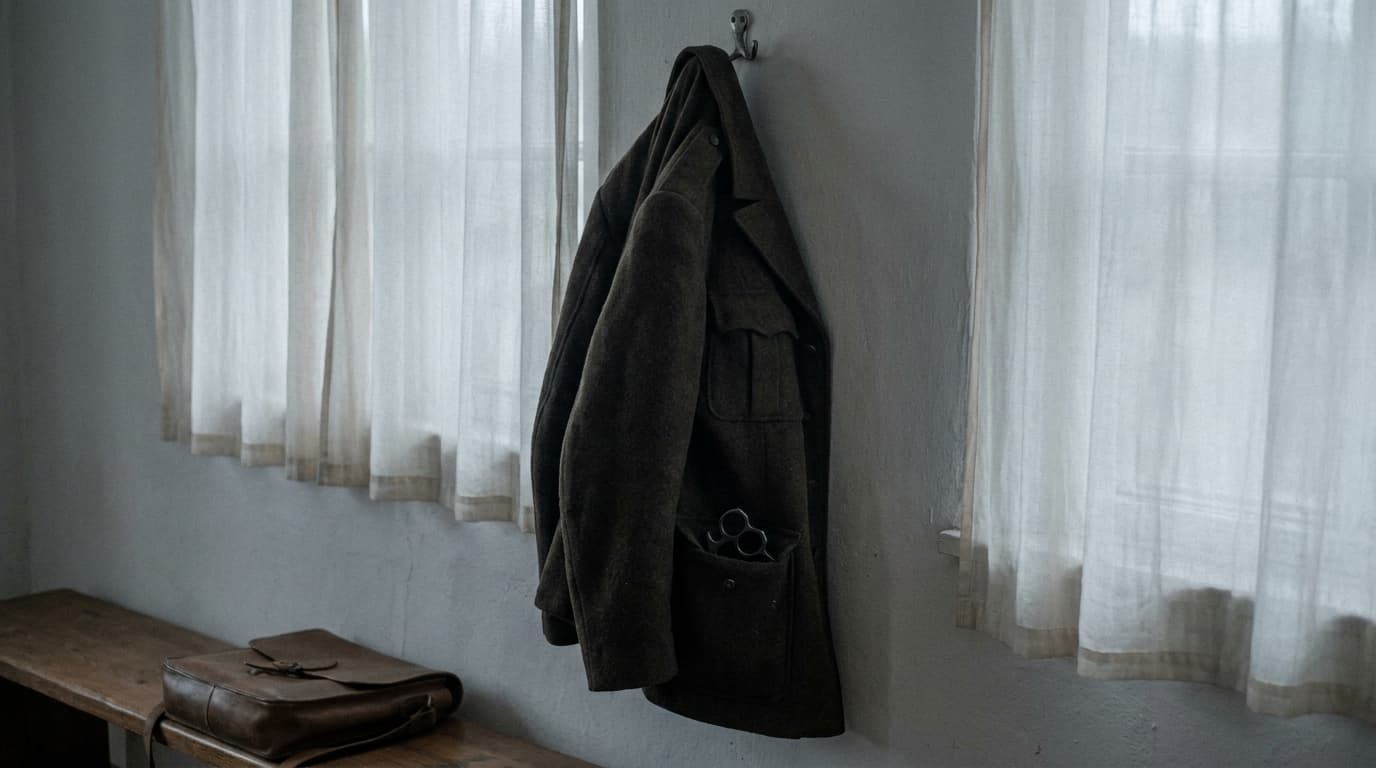
North Dakota does not ban brass knuckles outright, but it treats them as a regulated weapon. The Century Code lists "metal knuckles" in its definition of "dangerous weapon" (N.D.C.C. 62.1-01-01(1)), so an adult may own and openly carry them, yet carrying them concealed requires a firearm and dangerous weapon license under 62.1-04-02, and possessing them at schools, places of worship, public buildings and bars is restricted.
For other states, see our guide to brass knuckles laws by state.
Information last verified on 2026-10-08. This article has not been reviewed by a licensed lawyer.
Jurisdiction scope: This article covers North Dakota state statutes in Title 62.1 of the North Dakota Century Code (chapters 62.1-01, 62.1-02, 62.1-03 and 62.1-04), the Title 12.1 criminal-code definition and penalty sections cited below, and the correctional-facility contraband statutes 12-44.1-21 and 12-47-21. It does not cover city or county ordinances, North Dakota court decisions, building or campus security policies, federal law or federal property, tribal law, or the law of other states.
How North Dakota defines brass knuckles
North Dakota uses the term "metal knuckles," not "brass knuckles." The weapons title lists them among the items that make up a "dangerous weapon":
"As used in this title, unless the context otherwise requires: 1. "Dangerous weapon" includes any switchblade or gravity knife, machete, scimitar, stiletto, sword, dagger, or knife with a blade of six inches [15.24 centimeters] or more; any throwing star, nunchaku, or other martial arts weapon; any billy, blackjack, sap, bludgeon, cudgel, metal knuckles, or sand club; any slungshot; any bow and arrow, crossbow, or spear; ..." N.D.C.C. 62.1-01-01(1)
The criminal code in Title 12.1 has its own "dangerous weapon" definition, and it also lists "metal knuckles" (12.1-01-04(7)). That second definition governs crimes such as robbery and assault in Title 12.1.
Neither definition says what "metal knuckles" means, and neither mentions plastic, polymer or other non-metal knuckle devices. Because both definitions are written as lists of what a dangerous weapon "includes," the Century Code does not settle whether a non-metal knuckle device counts.
Is it legal to own or sell brass knuckles in North Dakota?
Yes, for adults. Title 62.1 regulates metal knuckles through the definition of "dangerous weapon," and its chapters on possession (62.1-02), handguns (62.1-03) and concealed weapons (62.1-04) contain no provision that bans owning, buying, selling or making them. The rules that do apply concern how they are carried, where they are taken, and how they are used.

Carrying brass knuckles concealed requires a license
North Dakota's concealed-carry statute covers dangerous weapons as well as firearms:
"1. An individual, other than a law enforcement officer, may not carry a firearm or dangerous weapon concealed unless the individual is licensed to do so or exempted under this chapter." N.D.C.C. 62.1-04-02(1)
North Dakota allows permitless concealed carry, but only of firearms. Subsection 2 of 62.1-04-02 lets a qualifying person with a valid driver's license or nondriver ID "carry a firearm concealed under this chapter." It does not mention dangerous weapons, so carrying metal knuckles concealed still requires a license.
The license that covers knuckles is the class 2 firearm and dangerous weapon license, available to applicants "at least eighteen years of age" (62.1-04-03(1)(a)). A class 1 firearm license requires age 21, and a North Dakota resident who holds one "also may carry a class 2 dangerous weapon without any further testing required" (62.1-04-03(2)(c)).
A licensed carrier must have the license, or a digital image of it, on their person and must show it to an officer on request. Failing to produce it is prima facie evidence of illegal concealed carry, and violating that section is a noncriminal offense with a $20 fee (62.1-04-04).
Carrying knuckles concealed without a license is a crime. Any violation of chapter 62.1-04 is a class A misdemeanor (62.1-04-05), which carries up to 360 days in jail, a $3,000 fine, or both (12.1-32-01(5)).
What counts as concealed, including in a car
A weapon is concealed if it is carried "in such a manner as to not be discernible by the ordinary observation of a passerby" (62.1-04-01). The statute then spells out the vehicle rule:
"A firearm or dangerous weapon is considered concealed if it is not secured, and is worn under clothing or carried in a bundle that is held or carried by the individual, or transported in a vehicle under the individual's control or direction and available to the individual, including beneath the seat or in a glove compartment." N.D.C.C. 62.1-04-01
Knuckles under the seat or in the glove box of a car you control are therefore concealed, and carrying them that way without a license falls under 62.1-04-02. The same section says a weapon is not considered concealed if it is "locked in a closed trunk or luggage compartment of a motor vehicle."
Places where brass knuckles are restricted
Two statutes restrict dangerous weapons by location, and both reach metal knuckles through the 62.1-01-01 definition.
Schools, places of worship and public buildings. Section 62.1-02-05(1) provides that an individual "may not possess a firearm or dangerous weapon at: a. A school or school-sponsored event on school property; b. A church or other place of worship; or c. A publicly owned or operated building." A knowing violation is a noncriminal offense punishable by a $100 fee (62.1-02-05(6)).
The section lists many exceptions in subsection 2. They include law enforcement and security personnel, "a firearm or dangerous weapon carried in a temporary residence or motor vehicle," a state or federal park, and a publicly owned or operated rest area or restroom. Subsection 2(m) allows a concealed-carry licensee to carry in a place of worship only with the approval of its primary religious leader or governing body. Subsection 3 lets a political subdivision or the state board of higher education adopt a policy less restrictive than the section.
Bars and bingo halls. A person who enters or stays in "that part of the establishment set aside for the retail sale of alcoholic beverages and the consumption of purchased alcoholic beverages or used as a gaming site at which bingo is the primary gaming activity while that individual knowingly possesses a firearm or dangerous weapon is guilty of an infraction" (62.1-02-04(1)). An infraction carries a fine of up to $1,000 (12.1-32-01(7)). Exceptions cover law enforcement, the proprietor and employees, and the restaurant part of an establishment if people under 21 are not barred from it.
Jails and prisons. In a correctional facility, an inmate who willfully procures, makes or possesses an object "intended to be used for an assault on another person or to damage property" commits a class A felony if the object is "a weapon that is a dangerous weapon or firearm as defined in section 62.1-01-01", and delivering such an object to an inmate carries the same class (12-44.1-21; parallel language appears in 12-47-21 for penitentiary inmates). Separately, an inmate of an official detention facility who has an object useful for escape commits a class C felony, raised to a class B felony "if the object is a firearm, destructive device, or other dangerous weapon" (12.1-08-09(2)).
Brass knuckles and minors
Title 62.1 has no provision restricting the sale of metal knuckles to minors or possession by minors. Its age rules are about handguns: a person under 18 may not possess a handgun except under adult supervision for training, target shooting or hunting (62.1-02-01(1)(d)), and selling or giving "any handgun to any minor" is a class A misdemeanor (62.1-03-02).
Students also face school discipline. Each school district must adopt a policy that prohibits a student from possessing a dangerous weapon (as defined by reference to federal law) on school property and at school functions and provides for punishment (15.1-19-10), and a student who violates the district's weapons policy may be suspended for up to ten days or expelled (15.1-19-09).
Age still matters for concealed carry. The class 2 license that covers dangerous weapons is available only from age 18 (62.1-04-03(1)(a)), so a person under 18 has no license route to carry knuckles concealed.
Felons and prohibited persons
North Dakota's prohibited-person statute, 62.1-02-01, bars possession of firearms, not of other dangerous weapons. A dangerous weapon appears in it only as a trigger: a person convicted of certain felonies, or of a class A misdemeanor involving violence or intimidation "committed while using or possessing a firearm, a dangerous weapon," and certain other devices, is barred from owning or possessing a firearm for five years (62.1-02-01(1)(b)). A violation is a class C felony.
Using brass knuckles in a crime
Because the criminal code's definition names metal knuckles, offenses that turn on a dangerous weapon reach them. Robbery is a class A felony if the robber directs the force of a dangerous weapon against another, and a class B felony if the robber possesses or pretends to possess one (12.1-22-01). Aggravated assault includes knowingly causing bodily injury with a dangerous weapon, a class C felony (12.1-17-02(1)(b)), or a class B felony if the victim is under 12, a peace officer or correctional employee acting in an official capacity, or suffers permanent loss or impairment of a bodily function (12.1-17-02(2)), and arming rioters is a class B felony (12.1-25-02).
North Dakota's armed-offender statute adds a mandatory minimum prison term when, "in the course of committing an offense, the offender inflicts or attempts to inflict bodily injury upon another, threatens or menaces another with imminent bodily injury with a dangerous weapon, explosive, destructive device, or firearm" (12.1-32-02.1(1)(a)). The minimum is four years for a class AA, A or B felony and two years for a class C felony (12.1-32-02.1(2)), and it applies only when the weapon possession is charged and admitted or found.
Any dangerous weapon "used or possessed while in the commission of a felony or a misdemeanor involving violence or intimidation must be seized and, upon conviction and by motion, forfeited" (62.1-01-02(1)).
North Dakota also allows an individual to "brandish a dangerous weapon while on property owned or leased by the individual," subject to the terrorizing and menacing statutes and section 12.1-31-01 (62.1-02-05.1). When force itself is lawful is covered in our guide to North Dakota self-defense laws.
Can North Dakota cities regulate brass knuckles?
North Dakota's preemption statute covers firearms and ammunition only. It bars a political subdivision, including a home rule city or county, from enacting an ordinance on "the purchase, sale, ownership, possession, transfer of ownership, registration, or licensure of firearms and ammunition which is more restrictive than state law" (62.1-01-03(1)). It does not mention other dangerous weapons, so it does not stop a city or county from regulating metal knuckles. Check your city or county code, or call your local police department's non-emergency line, before carrying knuckles in a new place.
Many of the same rules apply to long blades, switchblades and other items on the dangerous-weapon list; see our guide to North Dakota knife laws.
North Dakota penalties at a glance
| Conduct | Statute | Classification |
|---|---|---|
| Carrying knuckles concealed without a license | 62.1-04-02, 62.1-04-05 | Class A misdemeanor (up to 360 days, $3,000, or both) |
| Licensed carrier without the license on hand | 62.1-04-04 | Noncriminal offense, $20 fee |
| Possession at a school, place of worship or public building | 62.1-02-05 | Noncriminal offense, $100 fee |
| Possession in a bar area or bingo-primary gaming site | 62.1-02-04 | Infraction (fine up to $1,000; 12.1-32-01(7)) |
| Inmate possessing, or someone delivering to an inmate, a dangerous weapon intended for an assault or property damage | 12-44.1-21, 12-47-21 | Class A felony |
| Inflicting or threatening injury with a dangerous weapon during an offense | 12.1-32-02.1 | Mandatory minimum of 2 or 4 years, by felony class |
Related pages
- Brass knuckles laws by state
- North Dakota knife laws
- North Dakota self-defense laws
- North Dakota pepper spray and stun gun laws
- Minnesota brass knuckles laws
- South Dakota brass knuckles laws
This article provides general legal information about North Dakota state law, not legal advice. Weapons laws change and local rules vary. For advice about a specific situation, contact a lawyer licensed in North Dakota or your local law enforcement agency.
Last updated: 2026-10-08.
Frequently Asked Questions
Are brass knuckles legal in North Dakota?
North Dakota's weapons title lists metal knuckles as a dangerous weapon (N.D.C.C. 62.1-01-01(1)) but contains no ban on adults owning, buying, selling or openly carrying them. Carrying them concealed requires a license (62.1-04-02), and they may not be possessed in certain places (62.1-02-04, 62.1-02-05).
Can I carry brass knuckles concealed in North Dakota without a permit?
No. Section 62.1-04-02(1) bars carrying a firearm or dangerous weapon concealed unless licensed or exempt, and the permitless-carry rule in 62.1-04-02(2) applies only to firearms. Unlicensed concealed carry is a class A misdemeanor (62.1-04-05).
Can I keep brass knuckles in my car in North Dakota?
Knuckles that are not secured and are available to you in a vehicle you control, such as under the seat or in the glove compartment, count as concealed under 62.1-04-01, so carrying them that way needs a license. Knuckles locked in a closed trunk or luggage compartment are not considered concealed.
Can an 18-year-old carry brass knuckles in North Dakota?
Open carry is not restricted by age in Title 62.1. For concealed carry, the class 2 firearm and dangerous weapon license is available at 18 (62.1-04-03(1)(a)), so an adult 18 or older needs that license or a class 1 license.
Can a felon own brass knuckles in North Dakota?
North Dakota's felon-in-possession statute, 62.1-02-01, bars possession of firearms, not other dangerous weapons. The concealed-carry license rules and the place restrictions still apply, and a dangerous weapon used in a felony or a violent misdemeanor must be seized and can be forfeited (62.1-01-02).
What is the penalty for carrying brass knuckles concealed in North Dakota?
Any violation of chapter 62.1-04 is a class A misdemeanor (62.1-04-05), which carries up to 360 days in jail, a $3,000 fine, or both (12.1-32-01). A licensed carrier who fails to have the license on hand faces a separate $20 noncriminal fee (62.1-04-04).
Updates
Independently fact-checked against the cited primary sources
The Law Behind This Article
This article rests on the statutory provisions below, held in our own legal record and retrieved from the official source. Tap a section to read the operative text.
North Dakota Century Code
§ 62.1-04-02Carrying concealed firearms or dangerous weapons - License distinctionsIn forcecited in 3 of our articles
An individual, other than a law enforcement officer, may not carry a firearm or dangerous weapon concealed unless the individual is licensed to do so or exempted under this chapter. An individual who is not otherwise precluded from possessing a class 2 firearm and dangerous weapon license under this chapter and who possesses a valid driver's license or nondriver identification card issued by the department of transportation or by the individual's state or territory of residence may carry a firearm concealed under this chapter. An individual may carry a firearm concealed under this chapter if the individual qualifies for reciprocity under section 62.1-04-03.1 and the individual has the equivalent of a class 2 firearm and dangerous weapon license from the state in which the individual is a resident. For purposes of this chapter, the difference between a class 1 and class 2 firearm and dangerous weapon license is only the extent to which a holder of either license may be eligible to receive reciprocal rights in other jurisdictions.
Official text (excerpt) · last checked 2026-09-24 · Read the full text in our law library · Verify at ndlegis.gov
Cited in 6 court opinions in our collectionLatest citing opinion in our collection: 2025
Opinions citing this section in our collection:
- State v. Anderson (North Dakota Supreme Court 2006, 710 N.W.2d 392)“…ing a concealed firearm or dangerous weapon in violation of N.D.C.C. § 62.1-04-02. They moved to suppress the evidence se…”
- State v. Foster (North Dakota Supreme Court 2020, 942 N.W.2d 829)“…ortation may carry a firearm concealed under this chapter.” N.D.C.C § 62.1-04-02(2). [¶25] Evidence at trial supports t…”
- State v. Vermilya (North Dakota Supreme Court 1988, 423 N.W.2d 153)“…traight razor is not a dangerous weapon under § 62.1-01-01, N.D.C.C. Section 62.1-04-02, N.D.C.C., provides that “[n]o person,…”
Identified automatically from the court opinions citing this section — not a ranking of which case controls.
Also relied on in: North Dakota Knife Laws (2026): The 6-Inch Rule and Licensing, North Dakota Pepper Spray and Stun Gun Laws (2026)
§ 62.1-01-01General definitionsIn forcecited in 3 of our articles
As used in this title, unless the context otherwise requires: "Dangerous weapon" includes any switchblade or gravity knife, machete, scimitar, stiletto, sword, dagger, or knife with a blade of six inches [15.24 centimeters] or more; any throwing star, nunchaku, or other martial arts weapon; any billy, blackjack, sap, bludgeon, cudgel, metal knuckles, or sand club; any slungshot; any bow and arrow, crossbow, or spear; any weapon that will expel, or is readily capable of expelling, a projectile by the action of a spring, compressed air, or compressed gas, including any such weapon, loaded or unloaded, commonly referred to as a BB gun, air rifle, or CO2 gun; and any projector of a bomb or any object containing or capable of producing and emitting any noxious liquid, gas, or substance.
Official text (excerpt) · last checked 2026-07-30 · Read the full text in our law library · Verify at ndlegis.gov
Cited in 5 court opinions in our collectionLatest citing opinion in our collection: 2026
Opinions citing this section in our collection:
- State v. Luetzen (North Dakota Supreme Court 2026, 2026 ND 13)“…The first issue requires interpretation of an amendment to N.D.C.C. § 62.1-01-01(11), which defines the term “possession…”
- State v. Buchholz (North Dakota Supreme Court 2006, 723 N.W.2d 534)“…ver, rifle, gun, machine gun, shotgun, bazooka, or cannon.” N.D.C.C. § 62.1-01-01(3). [¶ 22] During the search of…”
- State v. Vermilya (North Dakota Supreme Court 1988, 423 N.W.2d 153)“…he ordinary observation of a passerby.” Section 62.1-04-01, N.D.C.C. Section 62.1-01-01, N.D.C.C., provides: “62.1-01…”
Identified automatically from the court opinions citing this section — not a ranking of which case controls.
§ 62.1-04-01Definition of concealedIn forcecited in 2 of our articles
A firearm or dangerous weapon is concealed if it is carried in such a manner as to not be discernible by the ordinary observation of a passerby. There is no requirement that there be absolute invisibility of the firearm or dangerous weapon, merely that it not be ordinarily discernible. A firearm or dangerous weapon is considered concealed if it is not secured, and is worn under clothing or carried in a bundle that is held or carried by the individual, or transported in a vehicle under the individual's control or direction and available to the individual, including beneath the seat or in a glove compartment.
Official text (excerpt) · last checked 2026-07-30 · Read the full text in our law library · Verify at ndlegis.gov
Cited in 1 court opinions in our collectionLatest citing opinion in our collection: 2020
Opinions citing this section in our collection:
- State v. Foster (North Dakota Supreme Court 2020, 942 N.W.2d 829)“…orth Dakota Law. [¶23] Concealed weapons are defined under N.D.C.C. § 62.1-04-01. A weapon is concealed “if it is transp…”
Identified automatically from the court opinions citing this section — not a ranking of which case controls.
§ 62.1-02-05Possession of a firearm or dangerous weapon at a public gathering - Penalty - ApplicationIn forcecited in 3 of our articles
An individual may not possess a firearm or dangerous weapon at: A school or school-sponsored event on school property; A church or other place of worship; or A publicly owned or operated building. This section does not apply to: A law enforcement officer, or a correctional officer employed by the department of corrections and rehabilitation or by a correctional facility governed by chapter 12-44.1. A correctional officer employed by the department of corrections and rehabilitation may carry a firearm only as authorized in section 12-47-34.
Official text (excerpt) · last checked 2026-07-30 · Read the full text in our law library · Verify at ndlegis.gov
Cited in 1 court opinions in our collectionLatest citing opinion in our collection: 2017
Opinions citing this section in our collection:
- Keller v. Keller (North Dakota Supreme Court 2017, 894 N.W.2d 883)“…titutionality of ban on possession of firearms by a felon); N.D.C.C. Sec. 62.1-02-05 (restrictions on possession of firearms…”
Identified automatically from the court opinions citing this section — not a ranking of which case controls.
§ 12.1-01-04General definitionsIn forcecited in 3 of our articles
As used in this title, unless a different meaning plainly is required: "Absconded" means when a probationer, parolee, participant in a pretrial services program, or participant in a prosecution-led diversion program willfully avoids supervision by making their whereabouts unknown or fails to report to a supervising authority. "Act" or "action" means a bodily movement, whether voluntary or involuntary. "Acted", "acts", and "actions" include, where relevant, "omitted to act" and "omissions to act". "Actor" includes, where relevant, a person guilty of an omission. "Bodily injury" means any impairment of physical condition, including physical pain. "Court" means any of the following courts: the supreme court, a district court, and where relevant, a municipal court.
Official text (excerpt) · last checked 2026-07-30 · Read the full text in our law library · Verify at ndlegis.gov
Cited in 69 court opinions in our collectionLatest citing opinion in our collection: 2026
Opinions citing this section in our collection:
- Thompson v. Olson (North Dakota Supreme Court 2006, 711 N.W.2d 226)“…ion, that is what it means. N.D.C.C. § 1-02-02. [¶ 29] In N.D.C.C. § 12.1-01-04(29), the legislature had defined "serio…”
- State v. Keller (North Dakota Supreme Court 2005, 695 N.W.2d 703)“…of culpability suffices to establish its commission. N.D.C.C. § 12.1-01-04(15). [¶ 26] As noted above, this…”
- Moses v. Burleigh County (North Dakota Supreme Court 1989, 438 N.W.2d 186)“…d. She stressed statutory definitions of "peace officer" in NDCC 12.1-01-04(17) ("a public servant authorized ... t…”
Identified automatically from the court opinions citing this section — not a ranking of which case controls.
Search our full record of US law — 2.1 million sections, every state + federal →
Sources and References
- N.D.C.C. ch. 62.1-01: 62.1-01-01 definitions, 62.1-01-02 forfeiture, 62.1-01-03 preemption(ndlegis.gov).gov
- N.D.C.C. 12.1-01-04: criminal code definitions(ndlegis.gov).gov
- N.D.C.C. ch. 62.1-04: concealed weapons, 62.1-04-01 to 62.1-04-05(ndlegis.gov).gov
- N.D.C.C. 12.1-32-01 and 12.1-32-02.1: penalty classes (including infractions) and armed-offender minimums(ndlegis.gov).gov
- N.D.C.C. ch. 62.1-02: 62.1-02-01, 62.1-02-04, 62.1-02-05, 62.1-02-05.1(ndlegis.gov).gov
- N.D.C.C. 12-44.1-21: weapons contraband in correctional facilities(ndlegis.gov).gov
- N.D.C.C. 12-47-21: weapons contraband(ndlegis.gov).gov
- N.D.C.C. 12.1-08-09: inmate possession of escape objects(ndlegis.gov).gov
- N.D.C.C. ch. 62.1-03: 62.1-03-02 selling handgun to minors(ndlegis.gov).gov
- N.D.C.C. 12.1-22-01: robbery(ndlegis.gov).gov
- N.D.C.C. 12.1-17-02: aggravated assault(ndlegis.gov).gov
- N.D.C.C. 12.1-25-02: arming rioters(ndlegis.gov).gov
- N.D.C.C. 15.1-19-09 and 15.1-19-10: student suspension, expulsion and school weapons policy(ndlegis.gov).gov