
Minnesota
Are Brass Knuckles Legal in Minnesota? (2026 Law)
Independently fact-checked against primary sources (last audited October 8, 2026). · 7 primary sources cited on this page. How we verify our legal content
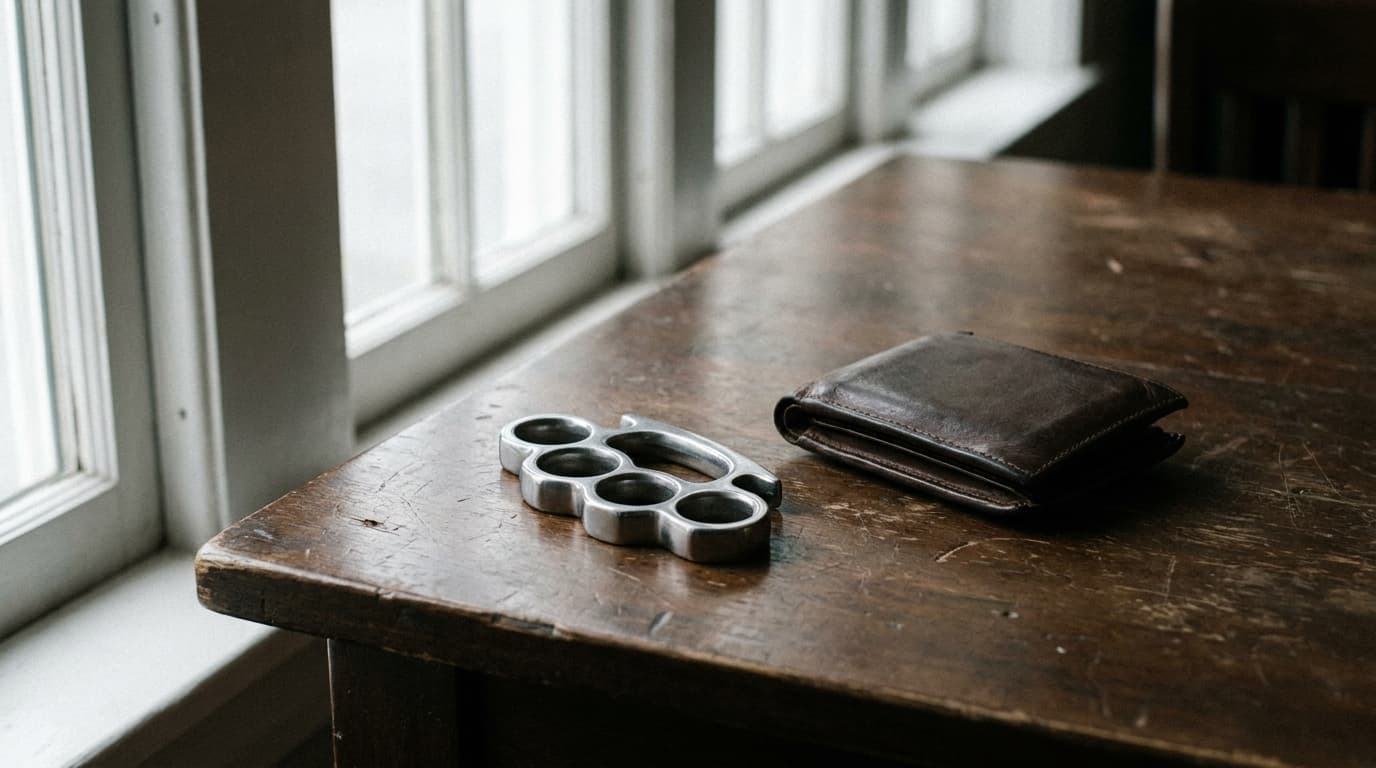
Brass knuckles are illegal in Minnesota for almost everyone. Minn. Stat. § 609.66, subd. 1(a)(4) makes it a crime to manufacture, transfer or possess "metal knuckles," a misdemeanor punishable by up to 90 days in jail, a $1,000 fine, or both, and a gross misdemeanor punishable by up to 364 days, a $3,000 fine, or both when the act happens in a public housing, school or park zone. The section's one exception, in subdivision 2, covers possession by museums or collectors of art or for other lawful purposes of public exhibition. To compare other states, see our guide to brass knuckles laws by state.
Information last verified on 2026-10-08. This article has not been reviewed by a licensed lawyer.
Jurisdiction scope: This article covers Minnesota Statutes § 609.66 (dangerous weapons, including subdivision 1d on school property, subdivision 1g on courthouses and Capitol Area state buildings, and the subdivision 2 exception), the offense classes and the definition of "dangerous weapon" in § 609.02, the zone definitions in § 152.01, the correctional facility statutes in §§ 243.55 and 641.165, the dangerous-weapon sentencing rule in § 609.11, subdivision 4, and the firearm preemption statute in § 471.633. It does not cover city or county ordinances, firearm eligibility rules, federal law or federal property, or the law of other states.
What Minnesota law says about brass knuckles
Minnesota bans metal knuckles, with one narrow exception. Minn. Stat. § 609.66, subdivision 1(a) provides in part:
"(a) Whoever does any of the following is guilty of a crime and may be sentenced as provided in paragraph (b): ... (4) manufactures, transfers, or possesses metal knuckles or a switch blade knife opening automatically;" Minn. Stat. § 609.66, subd. 1(a)(4)
The clause has no carry, concealment or intent element. Making, transferring or possessing metal knuckles is the offense, and there is no self-defense exception. Subdivision 2 holds the only exception for the whole section:
"Nothing in this section prohibits the possession of the articles mentioned by museums or collectors of art or for other lawful purposes of public exhibition." Minn. Stat. § 609.66, subd. 2
That exception covers possession only; it does not mention manufacturing or transferring. The same clause covers automatically opening switchblade knives, which are discussed in our guide to Minnesota knife laws.
Owning, selling and keeping knuckles in a car
Because the offense is possession, it does not matter whether the knuckles are kept at home, carried in a pocket, worn openly or stored in a vehicle. Clause (4) also covers whoever "manufactures" or "transfers" metal knuckles, with the same penalties as possessing them.
Penalty for metal knuckles in Minnesota
Section 609.66 sets its own sentence range, which depends on where the act happened:
"(b) A person convicted under paragraph (a) may be sentenced as follows: (1) if the act was committed in a public housing zone, as defined in section 152.01, subdivision 19, a school zone, as defined in section 152.01, subdivision 14a, or a park zone, as defined in section 152.01, subdivision 12a, to imprisonment for not more than 364 days or to payment of a fine of not more than $3,000, or both; or (2) otherwise, including where the act was committed on residential premises within a zone described in clause (1) if the offender was at the time an owner, tenant, or invitee for a lawful purpose with respect to those residential premises, to imprisonment for not more than 90 days or to payment of a fine of not more than $1,000, or both." Minn. Stat. § 609.66, subd. 1(b)
Subdivision 1 is headed "Misdemeanor and gross misdemeanor crimes." Under § 609.02, subdivisions 3 and 4, the 90-day tier is a misdemeanor and the 364-day tier is a gross misdemeanor.
The three zones take their meanings from Minn. Stat. § 152.01, and each reaches beyond the property line. A school zone covers school property, the area within 300 feet or one city block (whichever is greater) beyond it, and the inside of a school bus while it is transporting elementary or secondary school students (subd. 14a). A park zone covers a designated public park plus the area within 300 feet or one city block of its boundary, whichever is greater (subd. 12a). A public housing zone covers a public housing project or development plus the area within 300 feet of its boundary or one city block, whichever is greater (subd. 19).
| Conduct | Statute | Maximum penalty |
|---|---|---|
| Manufacturing, transferring or possessing metal knuckles (general rule) | § 609.66, subd. 1(a)(4), (b)(2) | Misdemeanor; 90 days, $1,000, or both |
| The same act in a public housing zone, school zone or park zone | § 609.66, subd. 1(a)(4), (b)(1) | Gross misdemeanor; 364 days, $3,000, or both |
| The same act on residential premises in such a zone, by an owner, tenant or invitee for a lawful purpose | § 609.66, subd. 1(b)(2) | Misdemeanor; 90 days, $1,000, or both |
| Possessing, storing or keeping a dangerous weapon while knowingly on school property | § 609.66, subd. 1d(a) | Felony; 5 years, $10,000, or both |
| Possessing a dangerous weapon in a courthouse complex or a Capitol Area state building | § 609.66, subd. 1g(a) | Felony; 5 years, $10,000, or both |
| Bringing weapons of any kind into, or possessing them at, a state correctional facility or state hospital without consent | § 243.55, subd. 1 | Felony; 10 years |
| Bringing a dangerous weapon into, or possessing one at, a jail, lockup or correctional facility without consent | § 641.165, subd. 2(b) | Felony; 5 years |
Separately, if a person convicted of assault, burglary, robbery or another offense listed in Minn. Stat. § 609.11, subdivision 9 used "a dangerous weapon other than a firearm" during the offense, "whether by brandishing, displaying, threatening with, or otherwise employing" it, the statute directs that the person be committed to the commissioner of corrections for not less than one year plus one day, or not less than three years for a second or subsequent such offense (§ 609.11, subd. 4). On the prosecutor's motion or its own, the court may sentence without regard to that minimum if it finds substantial and compelling reasons to do so (§ 609.11, subd. 8(a)). It may not do so if the person was previously convicted of a listed offense in which the person used or possessed a firearm or other dangerous weapon (subd. 8(b)).
Plastic and other non-metal knuckles
Section 609.66 says "metal knuckles" and does not define the term. Its text does not address knuckles made of plastic, polymer or other composite materials.
The next clause of the same subdivision reaches items the statute does not name, but only with a purpose element. Subdivision 1(a)(5) covers whoever "possesses any other dangerous article or substance for the purpose of being used unlawfully as a weapon against another," with the same penalty tiers.
School property
Subdivision 1d creates a separate felony for weapons on school property:
"(a) Except as provided under paragraphs (d) and (f), whoever possesses, stores, or keeps a dangerous weapon while knowingly on school property is guilty of a felony and may be sentenced to imprisonment for not more than five years or to payment of a fine of not more than $10,000, or both." Minn. Stat. § 609.66, subd. 1d(a)
For this subdivision, "dangerous weapon" has the meaning in § 609.02, subdivision 6:
""Dangerous weapon" means any firearm, whether loaded or unloaded, or any device designed as a weapon and capable of producing death or great bodily harm, any combustible or flammable liquid or other device or instrumentality that, in the manner it is used or intended to be used, is calculated or likely to produce death or great bodily harm, or any fire that is used to produce death or great bodily harm." Minn. Stat. § 609.02, subd. 6
For the felony, "school property" means a public or private elementary, middle or secondary school building and its improved grounds; a licensed child care center while children are present and participating in a child care program; the inside of a school bus while it is transporting elementary, middle or secondary school students to and from school-related activities; and the part of a building under a school's temporary, exclusive control where conspicuous signs are posted at each entrance (§ 609.66, subd. 1d(e)(4)).
Neither subdivision 1d nor § 609.02, subdivision 6 names knuckles. The felony applies to knuckles only if they meet that definition, a question the statutes' text does not answer directly. Possessing metal knuckles in a school zone is in any case covered by subdivision 1(a)(4) and its 364-day tier.
Subdivision 1d(f) lists people and situations the felony does not apply to, including "(1) active licensed peace officers," on-duty military personnel and students in military training, "(6) possession of dangerous weapons, BB guns, or replica firearms by a ceremonial color guard," "(7) a gun or knife show held on school property," "(8) possession of dangerous weapons, BB guns, or replica firearms with written permission of the principal or other person having general control and supervision of the school or the director of a child care center," and "(9) persons who are on unimproved property owned or leased by a child care center, school, or school district unless the person knows that a student is currently present on the land for a school-related activity." Clauses (3) through (5) address other circumstances not covered here.
Courthouses, Capitol buildings, jails and prisons
Subdivision 1g makes it a felony, punishable by up to five years, a $10,000 fine, or both, to possess "a dangerous weapon, ammunition, or explosives within any courthouse complex" or in any state building within the Capitol Area described in chapter 15B, other than the National Guard Armory. The exceptions in subdivision 1g(b) include licensed peace officers and military personnel performing official duties, pistol permit holders who notify the sheriff or the commissioner of public safety, weapons displayed as demonstrative evidence under advance notice and safety guidelines, and possession with the express consent of the county sheriff or the commissioner of public safety.
Two statutes cover correctional settings. Bringing "firearms, weapons or explosives of any kind" into a state correctional facility or state hospital, or onto its grounds, or being found in possession of them there, without the consent of the chief executive officer is a felony punishable by up to 10 years (Minn. Stat. § 243.55, subd. 1). Bringing a dangerous weapon into a jail, lockup or correctional facility, or being found in possession of one there, without the consent of the person in charge is a felony punishable by up to five years (§ 641.165, subd. 2(b)).
Subdivision 1g and § 641.165 use "dangerous weapon" in the § 609.02, subdivision 6 sense discussed above, which does not name knuckles.
Minors
Subdivision 1(a)(4) applies to "whoever" manufactures, transfers or possesses metal knuckles. It does not set a different rule by age.

Local rules
Minnesota's preemption statute is written for firearms. Minn. Stat. § 471.633 preempts local authority "to regulate firearms, ammunition, or their respective components to the complete exclusion of any order, ordinance or regulation by them," except that a local government may regulate the discharge of firearms and may adopt regulations identical to state law. It does not name knuckles or other weapons. Check your city or county code, or call your local police department's non-emergency line, about any local rule.
Self-defense under Minnesota law
Because knuckles are banned, readers often compare other options. The rules for sprays and stun devices are in our guide to Minnesota pepper spray and stun gun laws, and the rules on when force may be used at all are in Minnesota self-defense laws.
Related pages
- Brass knuckles laws by state
- Minnesota knife laws
- Minnesota pepper spray and stun gun laws
- Minnesota self-defense laws
This article provides general legal information about Minnesota law, not legal advice. Weapons laws change and local rules vary. For advice about a specific situation, contact a lawyer licensed in Minnesota or your local law enforcement agency.
Last updated: 2026-10-08.
Frequently Asked Questions
Are brass knuckles legal in Minnesota?
No. Minn. Stat. § 609.66, subd. 1(a)(4) makes it a crime to manufacture, transfer or possess metal knuckles: a misdemeanor punishable by up to 90 days, a $1,000 fine, or both, or a gross misdemeanor punishable by up to 364 days, $3,000, or both in a public housing, school or park zone. The only exception, in subdivision 2, covers possession by museums or collectors of art or for other lawful purposes of public exhibition.
Can I keep brass knuckles at home in Minnesota?
Section 609.66, subd. 1(a)(4) makes possession itself the offense and has no home exception; the section's only exception, subdivision 2, covers possession by museums or collectors of art or for other lawful purposes of public exhibition. Committing the act on residential premises inside a public housing, school or park zone as an owner, tenant or invitee for a lawful purpose affects only the penalty tier, keeping it at the 90-day, $1,000 level.
Can I carry brass knuckles in my car in Minnesota?
Subdivision 1(a)(4) reaches possession of metal knuckles wherever they are, and it contains no vehicle exception.
Is it legal to sell brass knuckles in Minnesota?
Subdivision 1(a)(4) makes it a crime to manufacture or transfer metal knuckles as well as to possess them, with the same penalty tiers.
Are plastic brass knuckles legal in Minnesota?
Section 609.66 names "metal knuckles" and does not define the term, so its text does not address plastic or composite knuckles. Subdivision 1(a)(5) separately covers possessing "any other dangerous article or substance for the purpose of being used unlawfully as a weapon against another."
Is it a felony to bring brass knuckles to school in Minnesota?
Section 609.66, subd. 1d makes possessing a "dangerous weapon" while knowingly on school property a felony with up to 5 years, $10,000, or both. The definition of dangerous weapon in § 609.02, subd. 6 does not name knuckles, so the felony applies to knuckles only if they meet that definition.
Updates
Independently fact-checked against the cited primary sources
The Law Behind This Article
This article rests on the statutory provisions below, held in our own legal record and retrieved from the official source. Tap a section to read the operative text.
Minnesota Statutes, Chapter 609: CRIMINAL CODE
§ 609.66DANGEROUS WEAPONSIn forcecited in 3 of our articles
Subdivision 1. Misdemeanor and gross misdemeanor crimes. (a) Whoever does any of the following is guilty of a crime and may be sentenced as provided in paragraph (b): (1) recklessly handles or uses a gun or other dangerous weapon or explosive so as to endanger the safety of another; or (2) intentionally points a gun of any kind, capable of injuring or killing a human being and whether loaded or unloaded, at or toward another; or (3) manufactures or sells for any unlawful purpose any weapon known as a slungshot or sand club; or (4) manufactures, transfers, or possesses metal knuckles or a switch blade knife opening automatically; or (5) possesses any other dangerous article or substance for the purpose of being used unlawfully as a weapon against another; or (6) outside of a municipality and without the parent's or guardian's consent, furnishes a child under 14 years of age, or as a parent or guardian permits the child to handle or use, outside of the parent's or guardian's presence, a firearm or airgun of any kind, or any ammunition or explosive.
Official text (excerpt) · last checked 2026-09-24 · Read the full text in our law library · Verify at revisor.mn.gov
Cited in 95 court opinions in our collectionLatest citing opinion in our collection: 2026
Opinions citing this section in our collection:
- State v. Vang (Supreme Court of Minnesota 2014, 847 N.W.2d 248)“…ttempting to commit the offense of drive-by shooting under Minn. Stat. § 609.66 , subd. le; and (5) appellant’s conduct…”
- State v. Cole (Supreme Court of Minnesota 1996, 542 N.W.2d 43)“…eing and whether loaded or unloaded, at or toward another.” Minn.Stat. § 609.66, subd. 1(1) and (2) (1994). The…”
- State v. Richardson (Supreme Court of Minnesota 2003, 670 N.W.2d 267)“…m in a manner that endangered the safety of another person. Minn.Stat. § 609.66, subd. 1a(2) (2002). Reckless discharge…”
Identified automatically from the court opinions citing this section — not a ranking of which case controls.
Also relied on in: Minnesota Knife Laws (2026): Switchblades, Schools, and Intent, Minnesota Pepper Spray and Stun Gun Laws (2026)
§ 609.02DEFINITIONSIn forcecited in 12 of our articles
Subdivision 1. Crime. "Crime" means conduct which is prohibited by statute and for which the actor may be sentenced to imprisonment, with or without a fine. Subd. 2. Felony. "Felony" means a crime for which a sentence of imprisonment for one year or more may be imposed. Subd. 2a. [Repealed, 1999 c 194 s 11] Subd. 3. Misdemeanor. "Misdemeanor" means a crime for which a sentence of not more than 90 days or a fine of not more than $1,000, or both, may be imposed. Subd. 4. Gross misdemeanor. "Gross misdemeanor" means any crime which is not a felony or misdemeanor. The maximum fine which may be imposed for a gross misdemeanor is $3,000. Subd. 4a. Petty misdemeanor. "Petty misdemeanor" means a petty offense which is prohibited by statute, which does not constitute a crime and for which a sentence of a fine of not more than $300 may be imposed. Subd. 5. Conviction. "Conviction" means any of the following accepted and recorded by the court: (1) a plea of guilty; or (2) a verdict of guilty by a jury or a finding of guilty by the court. Subd. 6. Dangerous weapon.
Official text (excerpt) · last checked 2026-07-29 · Read the full text in our law library · Verify at revisor.mn.gov
Cited in 539 court opinions in our collectionLatest citing opinion in our collection: 2026
Opinions citing this section in our collection:
- State v. Stewart (Court of Appeals of Minnesota 2019, 923 N.W.2d 668)“…he intentionally inflicted great bodily harm upon B.G.D. Minn. Stat. §§ 609.02 , subd. 10(2), .221, subd. 1 (2014). S…”
- State v. Fleck (Supreme Court of Minnesota 2012, 810 N.W.2d 303)“…itted two forms of assault to the jurors: (1) assault-fear, Minn.Stat. § 609.02, subd. 10(1) (2010) (prohibiting an act…”
- State v. Vance (Supreme Court of Minnesota 2007, 734 N.W.2d 650)“…iction of or attempt to inflict bodily harm upon another. Minn.Stat. § 609.02, subd. 10 (2004). 4 The statute furthe…”
Identified automatically from the court opinions citing this section — not a ranking of which case controls.
Also relied on in: Minnesota Hit and Run Laws: Penalties and What to Do, Minnesota Window Tint Laws (2026): Legal VLT Limits, Minnesota Recording Laws (2026): One-Party Consent Rules
Search our full record of US law — 2.1 million sections, every state + federal →
Sources and References
- Minn. Stat. § 609.66, Dangerous weapons(revisor.mn.gov).gov
- Minn. Stat. § 609.02, Definitions (misdemeanor, gross misdemeanor, dangerous weapon)(revisor.mn.gov).gov
- Minn. Stat. § 152.01, Definitions (school, park and public housing zones)(revisor.mn.gov).gov
- Minn. Stat. § 243.55, Contraband articles (state correctional facilities)(revisor.mn.gov).gov
- Minn. Stat. § 641.165, Contraband in jails (dangerous weapons)(revisor.mn.gov).gov
- Minn. Stat. § 609.11, Minimum sentences (dangerous weapon)(revisor.mn.gov).gov
- Minn. Stat. § 471.633, Firearms preemption(revisor.mn.gov).gov