
Minnesota
Minnesota Knife Laws (2026): Switchblades, Schools, and Intent
Independently fact-checked against primary sources (last audited September 18, 2026). · 5 primary sources cited on this page. How we verify our legal content
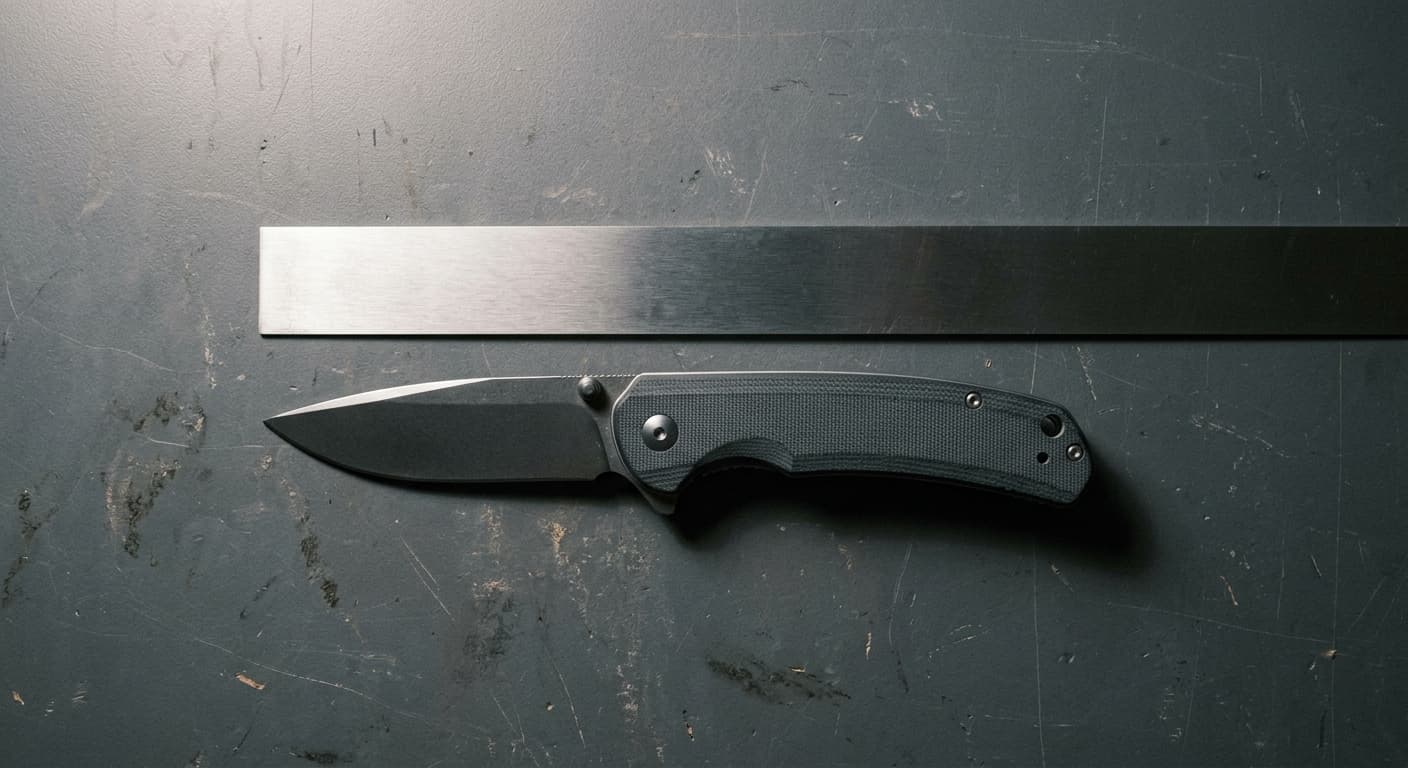
Minnesota's general knife law is narrow. Minn. Stat. § 609.66 flatly bans possessing a switchblade knife, but chapter 609, the state's general weapons-offense chapter, names no dirk, dagger, bowie knife, or stiletto, and it has no general concealed-carry crime for knives at all. Under state law, an ordinary knife becomes illegal to possess only when carried for an unlawful purpose, or when carried on school property or in a courthouse or certain state buildings, where a functional "dangerous weapon" definition reaches it. A separate, older statute, Minn. Stat. § 625.16, can still put a person who goes armed with a dirk or dagger before a court: it is not a carrying crime, but a neighbor's complaint can require sureties for keeping the peace. Minnesota preempts local firearms regulation only, so a city or county may still add its own knife restriction beyond what state law requires.
Jurisdiction scope: This page covers Minnesota state law only, principally Minn. Stat. §§ 609.66, 609.02, and 471.633. It does not cover Minnesota's firearms-permit statutes in detail, or local municipal ordinances.
Can you carry a knife openly or concealed in Minnesota?
For an ordinary knife, yes under state law, in most circumstances. Chapter 609, Minnesota's general weapons-offense chapter, has no statute that bans open or concealed carry of a dirk, dagger, bowie knife, stiletto, or any other named knife type, and none of those terms, or a general "concealed weapon" carry offense, appear there. The switchblade ban discussed below is a possession ban that does not depend on how the knife is carried, and the "unlawful purpose" offense discussed below turns on intent, not on whether the knife is visible. Minnesota preempts local firearms regulation only, so a city or county may still impose its own knife carry restriction. One older statute matters here too: Minn. Stat. § 625.16, discussed further below, can require a person who goes armed with a dirk or dagger without reasonable cause to fear an assault to post sureties for keeping the peace, on another person's complaint. It is not a criminal carrying offense, but it is the one in-force Minnesota statute actually headed "Carrying Dangerous Weapons" and naming dirk and dagger.
The switchblade ban: possession, not just sale
Minn. Stat. § 609.66, subdivision 1(a)(4) makes it a crime to "manufacture, transfer, or possess metal knuckles or a switch blade knife opening automatically." This is a full possession ban, not merely a restriction on manufacturing or selling: possessing a switchblade knife, on its own, satisfies the statute regardless of purpose or where it is carried. Subdivision 2 exempts museums, art collectors, and "other lawful purposes of public exhibition" from this and the other bans in the section.
The intent-based catch-all: what actually reaches an ordinary knife
Minn. Stat. § 609.66, subdivision 1(a)(5) makes it a crime to possess "any other dangerous article or substance for the purpose of being used unlawfully as a weapon against another." This clause is Minnesota's functional stand-in for the type-based and length-based knife statutes other states use: an ordinary pocketknife, hunting knife, or kitchen knife is not independently illegal to carry, but carrying one for the purpose of using it unlawfully against another person satisfies this offense. The state must prove that unlawful purpose; bare possession, without it, is not covered by this clause.
Going armed without cause: an older sureties-for-the-peace statute
Minn. Stat. § 625.16, headed "Carrying Dangerous Weapons," sits in the criminal-procedure chapter rather than chapter 609, and it is not a criminal carrying offense. It provides: "Whoever shall go armed with a dirk, dagger, sword, pistol, or other offensive and dangerous weapon, without reasonable cause to fear an assault or other injury or violence to person, family, or property, may, on complaint of any other person having reasonable cause to fear an injury or breach of the peace, be required to find sureties for keeping the peace, for a term not exceeding six months." A neighbor or other person with reasonable cause to fear injury can bring a complaint, and a court can require the armed person to post sureties for up to six months; there is no fine or imprisonment for the going-armed conduct itself, only the sureties requirement, and a right of appeal. But the rest of the peace-bond chapter gives that requirement teeth: under Minn. Stat. § 625.13, a person who does not find the sureties the court orders may be committed until security is given, and under Minn. Stat. § 625.08, a court may also order that person to pay the costs of the proceeding, with commitment continuing until those costs are paid or the person is otherwise legally discharged. The statute is in force and unamended, and it is the one Minnesota law actually titled around carrying a dagger.
Penalty structure under section 609.66, subdivision 1
A violation of subdivision 1, whether the switchblade ban or the unlawful-purpose clause, is punished on a two-tier scale set by subdivision 1(b). If the act was committed in a public housing zone, school zone, or park zone (each defined by cross-reference to Minn. Stat. § 152.01), the offense is punishable by up to 364 days' imprisonment, a fine of up to $3,000, or both. Otherwise, including on residential premises within one of those zones if the person was there lawfully as an owner, tenant, or invitee, the offense is punishable by up to 90 days' imprisonment, a fine of up to $1,000, or both.
School property: a felony built on a functional definition
Minn. Stat. § 609.66, subdivision 1d makes it a felony, punishable by up to 5 years' imprisonment, a fine of up to $10,000, or both, to possess, store, or keep a "dangerous weapon" while knowingly on school property. "Dangerous weapon" for this purpose is defined by cross-reference to Minn. Stat. § 609.02, subdivision 6, which reads: "any firearm, whether loaded or unloaded, or any device designed as a weapon and capable of producing death or great bodily harm, any combustible or flammable liquid or other device or instrumentality that, in the manner it is used or intended to be used, is calculated or likely to produce death or great bodily harm, or any fire that is used to produce death or great bodily harm." This is a functional test, not an enumerated list of knife types, meaning whether a particular knife qualifies turns on whether it is designed as a weapon capable of producing death or great bodily harm, or on how it was used or intended to be used at the time.
"School property" is defined broadly to include a school building and its grounds, a licensed child care center during program hours, a school bus in use for school transportation, and areas under a school's temporary exclusive control with posted notice. The subdivision exempts active licensed peace officers, on-duty military personnel, people lawfully carrying a pistol under permit while placing or retrieving it from a vehicle, firearm safety courses on school property, a ceremonial color guard, a gun or knife show held on school property, and possession with the school principal's or child care director's written permission, among other listed exceptions. A permit holder who carries a firearm on school property in violation of this subdivision commits only a misdemeanor under paragraph (d), a separate and lighter provision than the general felony.
Courthouses and the Capitol Area
The same functional "dangerous weapon" definition drives a separate felony under Minn. Stat. § 609.66, subdivision 1g: possessing a dangerous weapon, ammunition, or explosives within any courthouse complex, or in a state building within the Capitol Area (other than the National Guard Armory), is punishable by up to 5 years' imprisonment, a fine of up to $10,000, or both. Exceptions apply to on-duty licensed peace officers and military personnel, permit holders who notify the sheriff or commissioner of public safety, people displaying a weapon as demonstrative evidence at a trial or hearing under advance safety guidelines, and people who obtain express consent from the county sheriff or the commissioner of public safety.
Does Minnesota preempt local knife ordinances?
Only for firearms, not knives. Minn. Stat. § 471.633 provides that "the legislature preempts all authority of a home rule charter or statutory city including a city of the first class, county, town, municipal corporation, or other governmental subdivision ... to regulate firearms, ammunition, or their respective components," subject to narrow exceptions for regulating the discharge of firearms and adopting regulations identical to state law. Its text names firearms, ammunition, and their components only; it does not mention knives. Minn. Stat. § 471.634 only carves school districts out of section 471.633, and nothing else in that chapter's local-government block touches weapons. Minnesota preempts local firearms regulation only, so a city or county may adopt its own knife ordinance.
Federal law: what it does and does not reach
Federal law does not ban an individual from owning or carrying a switchblade. The Federal Switchblade Act, 15 U.S.C. §§ 1241 to 1245, instead restricts interstate commerce in switchblade knives, barring their manufacture for, or introduction, transport, and sale in, interstate commerce, and, in 15 U.S.C. § 1245, makes it a federal offense to knowingly possess, manufacture, sell, or import a ballistic knife in or affecting interstate commerce or within federal territorial jurisdiction. Sections 1242 and 1243 do not apply to certain knives and people, listed as exemptions in 15 U.S.C. § 1244. A 2009 amendment, § 1244(5), exempts any knife with a spring, detent, or other closure-bias mechanism that requires hand, wrist, or arm exertion on the blade itself to overcome the bias and assist opening, the carve-out that keeps modern assisted-opening folding knives legal in interstate commerce. A separate exemption, § 1244(4), covers a person with only one arm possessing or carrying a switchblade with a blade three inches or less. Neither exemption changes what Minnesota's own § 609.66 independently bans for a switchblade; state law governs possession within Minnesota on its own terms.
Disclaimer: This article provides general legal information about Minnesota's knife laws as of September 2026. It is not legal advice. Consult a lawyer licensed in Minnesota for advice about a specific situation. Because Minnesota's firearms preemption statute does not reach knives, local ordinances can add restrictions beyond the statewide rules described here.
For a state-by-state comparison, see knife laws by state. Minnesota's self-defense statutes are covered separately on the Minnesota self-defense laws page.
Statutes cited reflect their in-force version as of 2026-09-18. Last updated: 2026-09-18.
Frequently Asked Questions
Is it legal to carry a knife concealed in Minnesota?
For an ordinary knife, yes under state law. Chapter 609, Minnesota's general weapons-offense chapter, has no general statute banning concealed carry of a dirk, dagger, bowie knife, or stiletto, and no such offense appears there. Carrying an ordinary knife becomes illegal only if it is possessed for the purpose of being used unlawfully against another person, under Minn. Stat. 609.66, subdivision 1(a)(5), or if a switchblade is involved. Separately, Minn. Stat. 625.16 can require a person who goes armed with a dirk or dagger without reasonable cause to fear an assault to post sureties for keeping the peace, on another person's complaint; that is not a criminal offense. A city or county may still add its own restriction, since Minnesota preempts local firearms regulation only.
Are switchblades illegal in Minnesota?
Yes. Minn. Stat. 609.66, subdivision 1(a)(4) bans manufacturing, transferring, or possessing 'metal knuckles or a switch blade knife opening automatically,' a full possession ban that applies regardless of intent or how the knife is carried, subject to an exception for museums, collectors, and lawful public exhibition.
What size knife is illegal to carry in Minnesota?
Minnesota's general knife statute does not use a blade-length threshold. The switchblade ban turns on the opening mechanism, not length. The catch-all offense in subdivision 1(a)(5) turns on whether the article was possessed for the purpose of unlawful use against another person, regardless of size.
Can you carry a knife on Minnesota school property?
Possessing, storing, or keeping a 'dangerous weapon' while knowingly on school property is a felony under Minn. Stat. 609.66, subdivision 1d, punishable by up to 5 years and/or a $10,000 fine. 'Dangerous weapon' is defined functionally in Minn. Stat. 609.02, subdivision 6, as a device designed as a weapon and capable of producing death or great bodily harm, or one that, as used or intended to be used, is calculated or likely to produce death or great bodily harm, so whether a specific knife qualifies depends on those facts rather than a fixed list.
Does Minnesota preempt local knife ordinances?
No, not for knives. Minn. Stat. 471.633 preempts local firearms regulation by name; its text does not mention knives, so a city or county may adopt its own knife ordinance.
Updates
Independently fact-checked against the cited primary sources
Sources and References
- Minn. Stat. 609.66 - Dangerous weapons: switchblade possession ban, unlawful-purpose catch-all, school property, courthouse/Capitol Area, penalty tiers(revisor.mn.gov).gov
- Minn. Stat. 609.02, subdivision 6 - 'Dangerous weapon' defined (functional test)(revisor.mn.gov).gov
- Minn. Stat. 471.633 - Firearms local preemption (firearms, ammunition, and components only)(revisor.mn.gov).gov
- Minn. Stat. 471.634 - Definition clarifying school districts are excluded from 471.633's 'governmental subdivision'(revisor.mn.gov).gov
- Minn. Stat. 625.16 - Carrying Dangerous Weapons (names dirk and dagger; sureties-for-the-peace mechanism on a private citizen's complaint, not a criminal carry offense)(revisor.mn.gov).gov
- 15 U.S.C. 1241-1245 - Federal Switchblade Act, interstate commerce and ballistic-knife scope(law.cornell.edu)
- 15 U.S.C. 1244 - exceptions, including the 2009 assisted-opening carve-out and the one-arm exception(law.cornell.edu)