North Dakota
North Dakota Pepper Spray and Stun Gun Laws (2026)
Independently fact-checked against primary sources (last audited September 23, 2026). · 15 primary sources cited on this page. How we verify our legal content
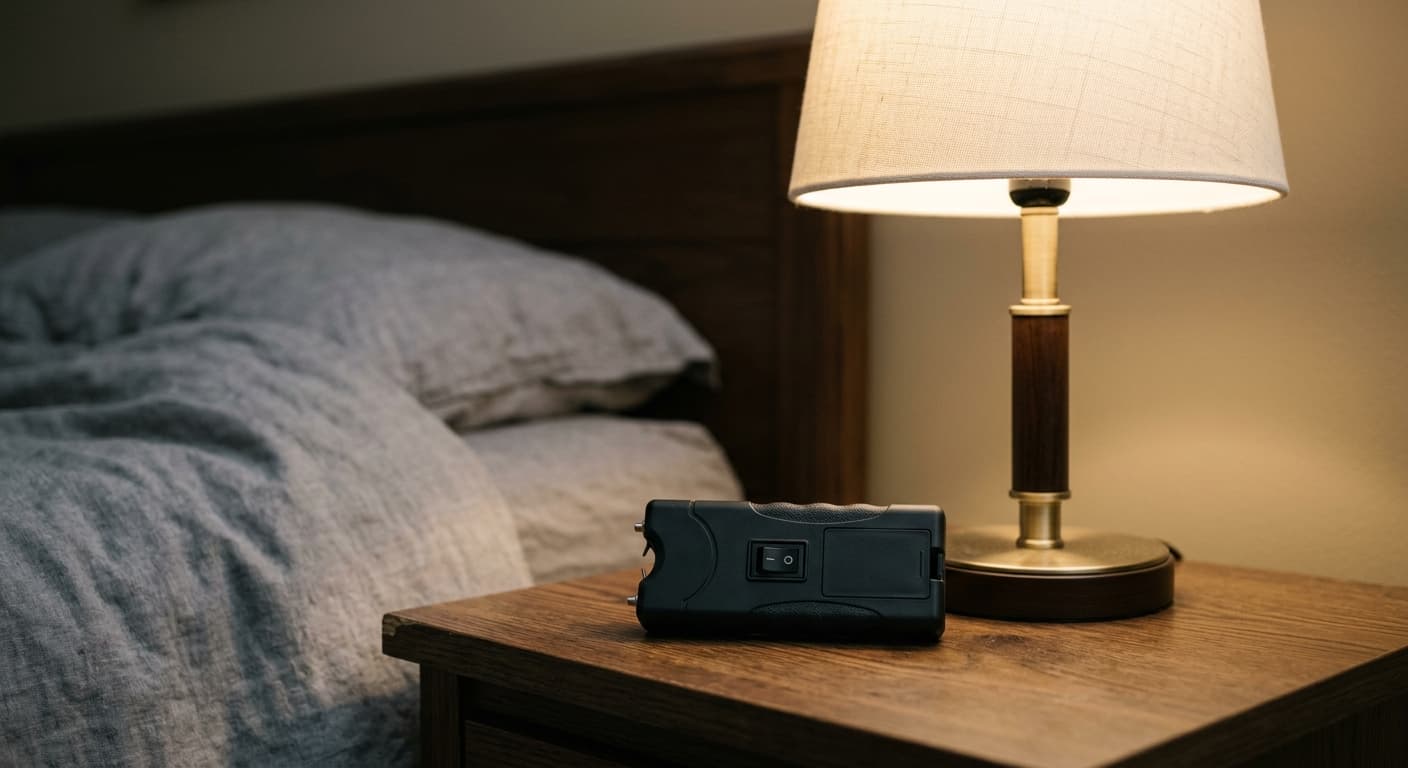
North Dakota takes an unusually direct approach to both devices: instead of exempting pepper spray and stun guns from a weapons offense, the state's core Title 62.1 "dangerous weapon" definition excludes an ordinary self-defense spray outright and excludes an ordinary stun gun with a narrow carve-back for certain projectile devices. That exclusion is narrower, and less universal, than it first reads. North Dakota's separate criminal code carries its own "dangerous weapon" definition, with no spray or voltage exclusion at all, feeding a felony assault charge. A liquor-establishment statute inside Title 62.1 itself makes a qualifying stun device an offense for anyone, not only a firearm-prohibited person. A school-district policy statute borrows a broader federal definition with no carve-out. And the carve-back that does apply within Title 62.1 turns on the word "or," not "and": a single-shot device that fires a projectile and delivers voltage is swept back in for a firearm-prohibited person, with no multiple-application requirement at all.
Jurisdiction scope: This page covers North Dakota state law only, principally N.D.C.C. 62.1-01-01, 62.1-02-04, 62.1-02-05, 62.1-04-02, 62.1-04-05, 62.1-01-03, 12.1-01-04, 12.1-17-02, and 15.1-19-10. It does not cover the concealed-carry license application process in detail. Fargo Municipal Code s. 10-0304 is discussed because it directly illustrates the local-regulation question; no other municipal ordinance is covered.
Is pepper spray legal in North Dakota?
Yes, and North Dakota's approach is unusually direct: pepper spray is written out of the state's core weapons definition entirely, rather than exempted from a separate offense. N.D.C.C. 62.1-01-01(1) defines "dangerous weapon" broadly for Title 62.1, then carves out self-defense sprays by name: "'Dangerous weapon' does not include a spray or aerosol containing CS, also known as ortho-chlorobenzamalonitrile; CN, also known as alpha-chloroacetophenone; or other irritating agent intended for use in the defense of an individual." Because nearly every weapons restriction inside Title 62.1, the concealed-carry license requirement, and the public-gathering and school-property ban, is written to cover a "firearm or dangerous weapon," and pepper spray is excluded from "dangerous weapon" by this definition, those restrictions do not reach it. No age minimum, capacity or formula limit, or purchase restriction on pepper spray appears in chapter 62.1-01 (definitions, arrest forfeiture, preemption, buyback ban, test administrators), chapter 62.1-02 (its firearm and dangerous-weapon offenses, including the handgun-sale-only regulation at 62.1-02-02), or chapter 62.1-04 (the concealed-carry licensing chapter).

Are stun guns legal in North Dakota?
Mostly yes, with a disjunctive exception that reaches more devices than a quick read suggests. N.D.C.C. 62.1-01-01(1) continues past the pepper-spray exclusion: "nor does the term include a device that uses voltage for the defense of an individual, unless the device uses a projectile and voltage or the device uses a projectile and may be used to apply multiple applications of voltage during a single incident, then the term includes the device for an individual who is prohibited from possessing a firearm under this title." An ordinary direct-contact stun gun, the kind that has to touch the target to work, is excluded from "dangerous weapon" for everyone, with no license, age floor, or prohibited-persons list under Title 62.1. The carve-back is written as an "or," not an "and": a device that fires a projectile and delivers voltage is swept back into "dangerous weapon," with no requirement that it deliver more than one application, and so is a device that fires a projectile and can apply voltage more than once in a single incident. Either branch alone is enough. Even then, the reattachment applies only to a person who is independently prohibited from possessing a firearm under Title 62.1; for everyone else, a projectile stun device is not a "dangerous weapon" under this section.
North Dakota's own licensing agency does not describe the rule this narrowly. The Attorney General's office, which issues the concealed-weapon license, publishes guidance stating: "A Taser that only delivers a single application of voltage is not considered a dangerous weapon and may be carried without a concealed weapon license. However, if the Taser is capable of delivering multiple applications of voltage, you must have a concealed weapon license." That guidance states the rule with no prohibited-person qualifier at all, a simpler and broader reading than the statute's own text supports. A reader planning around this device should know both readings exist: the statute's plain text limits the licensing requirement to a firearm-prohibited person, while the agency that issues the license describes a rule that applies to everyone.
The Title 62.1 exclusion is not the only rule in North Dakota that can reach a stun gun. N.D.C.C. 62.1-02-04 separately makes it an offense, for anyone, to knowingly possess "a device that uses a projectile and voltage or a device that uses a projectile and may be used to apply multiple applications of voltage during a single incident" in the part of a liquor establishment set aside for the retail sale and consumption of alcoholic beverages, regardless of whether the person is otherwise prohibited from possessing a firearm. That device offense does not extend to a bingo gaming site; a separate first sentence in the same section makes possessing an ordinary firearm or dangerous weapon, not the excluded devices this page covers, an infraction at either the liquor-service area or a bingo gaming site. Neither offense applies to a law enforcement officer, the proprietor, the proprietor's employee, a proprietor's designee displaying an unloaded firearm or dangerous weapon as a raffle or auction prize, private security personnel delivering or receiving money at the establishment, or the restaurant part of an establishment where a person under 21 is not otherwise prohibited.
North Dakota's criminal code has its own definition, with no carve-out
Title 62.1's exclusion governs Title 62.1 only; it does not touch North Dakota's separate criminal code, Title 12.1. N.D.C.C. 12.1-01-04 opens "As used in this title, unless a different meaning plainly is required," and defines "dangerous weapon" without any spray or voltage exception: "any switchblade or gravity knife, machete, scimitar, stiletto, sword, or dagger; any billy, blackjack, sap, bludgeon, cudgel, metal knuckles, or sand club; any slingshot; any bow and arrow, crossbow, or spear; any weapon that will expel, or is readily capable of expelling, a projectile by the action of a spring, compressed air, or compressed gas including any such weapon, loaded or unloaded, commonly referred to as a BB gun, air rifle, or CO2 gun; and any projector of a bomb or any object containing or capable of producing and emitting any noxious liquid, gas, or substance." That last clause reaches a spray canister without any self-defense carve-out. This definition drives N.D.C.C. 12.1-17-02, aggravated assault: a person who "knowingly causes bodily injury or substantial bodily injury to another human being with a dangerous weapon or other weapon, the possession of which under the circumstances indicates an intent or readiness to inflict serious bodily injury" is guilty of a class C felony, rising to a class B felony if the victim "is a peace officer or correctional institution employee acting in an official capacity, which the actor knows to be a fact," is under 12 years of age, or suffers a permanent loss or impairment of a bodily function. Using a spray or a stun gun on another person in North Dakota can be a felony assault under this title even though the same device is not a "dangerous weapon" anywhere in Title 62.1.
Concealed carry and public places
North Dakota's concealed-carry statute, N.D.C.C. 62.1-04-02(1), states: "An individual, other than a law enforcement officer, may not carry a firearm or dangerous weapon concealed unless the individual is licensed to do so or exempted under this chapter." Because pepper spray and an ordinary stun gun are excluded from "dangerous weapon," this licensing requirement does not apply to either one; it applies only to the narrow projectile-stun-device case described above. North Dakota's permitless-carry provision does not help in that narrow case, and neither does the license itself: subsection (2) lets an eligible individual "carry a firearm concealed" without a license, a grant limited to a firearm, not a dangerous weapon, and N.D.C.C. 62.1-04-03(1)(c) separately bars issuing a license to "an individual specified in section 62.1-02-01," the same firearm-prohibited-person list that triggers the projectile carve-back in the first place. So the only people the carve-back reaches are also the only people who cannot obtain the license that would authorize carrying the device concealed; for them, concealed carry of a qualifying projectile stun device is simply prohibited, not a case where a license exists but constitutional carry does not apply. Violating the concealed-carry chapter is a class A misdemeanor under N.D.C.C. 62.1-04-05.
The same firearm-or-dangerous-weapon scoping runs through N.D.C.C. 62.1-02-05, which bars possessing a "firearm or dangerous weapon" at a school or school-sponsored event on school property, a church or other place of worship, or a publicly owned or operated building, punishable as a noncriminal offense with a $100 fee under subsection 6. An ordinary pepper-spray canister or non-projectile stun gun falls outside this specific section for the same reason. The section carries sixteen exceptions, among them one for "an instructor, a test administrator, an official, or a participant in educational, training, cultural, or competitive events involving the authorized use of a dangerous weapon if the event occurs with permission of the person or entity with authority over the function or premises in question." Two further subsections matter beyond the exceptions list: subsection 3 lets a political subdivision or the state board of higher education adopt an ordinance or policy that is "less restrictive" than this section, which then supersedes it within that jurisdiction, and subsection 5 lets the governing body of a school, or the entity controlling a publicly owned building or property, authorize a "less than lethal weapon" as part of its own security plan.
The school-weapon-policy statute is different: it uses the federal definition
North Dakota's schools face a separate requirement that does not carry the same carve-out. N.D.C.C. 15.1-19-10 requires every school district board to "adopt a policy governing the possession of weapons and firearms on school property or at a school function," and that policy must "prohibit the possession of a dangerous weapon or a firearm by a student on school property and at school functions." Subsection 6(a) defines "dangerous weapon" for this section specifically as having "the meaning provided in 18 U.S.C. 930(g)(2)," the federal standard, a weapon, device, instrument, material, or substance, animate or inanimate, that is used for, or is readily capable of, causing death or serious bodily injury, with no exception for a self-defense spray or an electric device the way North Dakota's own state-law definition carries. A firearm violation under this section requires a mandatory one-year expulsion, subject to case-by-case modification by the superintendent or principal under subsection 2(c). A dangerous-weapon violation, which could reach pepper spray or a stun gun under this broader federal standard even though neither counts as a "dangerous weapon" anywhere else in Title 62.1, requires punishment under the district's own adopted policy rather than the automatic one-year expulsion the statute reserves for firearms.
Local regulation: Fargo has already used the room state law leaves
N.D.C.C. 62.1-01-03(1) bars a political subdivision, including a home rule city or county, from enacting "any ordinance relating to the purchase, sale, ownership, possession, transfer of ownership, registration, or licensure of firearms and ammunition which is more restrictive than state law," and voids any existing ordinance that does. The statute's text is scoped to "firearms and ammunition"; it does not mention a dangerous weapon, an electric device, or a spray or aerosol anywhere. North Dakota cities and counties are accordingly not state-preempted from adopting their own local rules for pepper spray or stun guns, and the state's largest city already has.
Fargo Municipal Code s. 10-0304 tracks the state's "dangerous weapon" definition word for word, with two deliberate changes. It sets a five-inch knife-blade threshold where the state sets six inches, and it rewrites the stun-gun carve-back: "'Dangerous weapon' does not include a spray or aerosol containing CS... or other irritating agent intended for use in the defense of an individual, nor does the term include a device that uses voltage for the defense of an individual, unless the device uses a projectile and voltage, then the term includes the device for an individual who is prohibited from possessing a firearm under this title. However, the term includes a device that uses a projectile and may be used to apply multiple applications of voltage during a single incident." That final sentence carries no firearm-prohibited-person limit at all, so in Fargo, a multi-application projectile stun device is a "dangerous weapon" for every carrier, not only one who is otherwise barred from possessing a firearm. The ordinance goes on to make it unlawful within city limits for anyone but a law enforcement officer, or a person state law permits, to carry a dangerous weapon or firearm concealed (subsection B), and separately unlawful to discharge or activate a dangerous weapon or firearm within the city, with exceptions including a person acting in defense of person or property (subsection C). Subsection D bars carrying or possessing a dangerous weapon or firearm at a public gathering, as N.D.C.C. 62.1-02-05 defines it, or in a publicly owned or operated building, for anyone outside that state statute's own exceptions. Pepper spray, an ordinary aerosol containing CS or CN for self-defense, remains excluded from Fargo's definition on the same terms as the state's.
Federal law: what it does and does not reach
No federal statute regulates a civilian's purchase or possession of pepper spray or a stun gun. Federal law matters in three places.
Federal buildings. Under 18 U.S.C. § 930(a), whoever knowingly possesses or causes to be present "a firearm or other dangerous weapon in a Federal facility (other than a Federal court facility)" faces a fine, imprisonment of up to 1 year, or both. Subsection (e) sets up to 2 years for a federal court facility, and subsection (b) up to 5 years where the weapon is intended to be used in a crime. Section 930(g)(2) defines the term:
The term "dangerous weapon" means a weapon, device, instrument, material, or substance, animate or inanimate, that is used for, or is readily capable of, causing death or serious bodily injury, except that such term does not include a pocket knife with a blade of less than 2½ inches in length.
The definition names neither device. Whether a particular spray or stun gun is "readily capable of" causing serious bodily injury is a question of fact the statute does not answer. Subsection (d)(3) exempts "the lawful carrying of firearms or other dangerous weapons in a Federal facility incident to hunting or other lawful purposes," and subsection (h) requires notice of the ban to be posted at each public entrance. A "Federal facility" is "a building or part thereof owned or leased by the Federal Government, where Federal employees are regularly present for the purpose of performing their official duties."
Air travel. The Transportation Security Administration's screening rules, which are agency policy rather than statute, bar both devices from carry-on bags. One 4 fl. oz. (118 ml) container of mace or pepper spray is permitted in checked baggage if it has a safety mechanism to prevent accidental discharge, and sprays containing more than 2 percent by mass of tear gas (CS or CN) are prohibited in checked baggage. Tasers, stun guns and other electro-shock weapons may travel in checked baggage only if transported so the device cannot discharge accidentally. Airlines may set stricter rules.
National parks. National Park Service regulations prohibit possessing, carrying or using a "weapon" in a park area except as the regulations provide (36 CFR 2.4(b)(1)). 36 CFR 1.4 defines "weapon" to include an "irritant gas device" and any "weapon the possession of which is prohibited under the laws of the State in which the park area or portion thereof is located."
Disclaimer: This article provides general legal information about North Dakota's pepper spray and stun gun laws as of September 2026. It is not legal advice. Consult a lawyer licensed in North Dakota for advice about a specific situation.
For a state-by-state comparison, see pepper spray and stun gun laws by state. North Dakota's self-defense statutes are covered separately on the North Dakota self-defense laws page.
Statutes cited reflect their in-force version as of 2026-09-23. Last updated: 2026-09-23.
Frequently Asked Questions
Does North Dakota limit the size or formula of pepper spray?
No. N.D.C.C. 62.1-01-01 excludes a spray or aerosol containing CS, CN, or another irritating agent intended for self-defense from the 'dangerous weapon' definition entirely, without stating any size, volume, or concentration limit, and no other section in chapters 62.1-01, 62.1-02, or 62.1-04 sets one.
Do you need a license for a stun gun in North Dakota?
Not for an ordinary, non-projectile stun gun; it is excluded from 'dangerous weapon' and so falls outside the concealed-carry license requirement. Under the statute's text, a device that fires a projectile and delivers voltage, or fires a projectile and can apply voltage more than once, becomes a 'dangerous weapon' only for a person already prohibited from possessing a firearm, and that same person cannot obtain a concealed-weapon license at all: N.D.C.C. 62.1-04-03(1)(c) bars a license to anyone specified in section 62.1-02-01. For that person, concealed carry of such a device is prohibited outright, not merely license-gated. The North Dakota Attorney General's own published guidance describes a broader rule with no prohibited-person qualifier, so a caller to the licensing office may be told a stricter standard applies to everyone.
Are stun guns banned on North Dakota school grounds?
A stun gun is not a 'dangerous weapon' under N.D.C.C. 62.1-02-05's public-gathering and school-property restriction, but N.D.C.C. 15.1-19-10 requires each school district to adopt its own policy prohibiting possession of a 'dangerous weapon' by a student on school property, defined there by the broader federal standard in 18 U.S.C. 930(g)(2), which could reach a stun gun even though state law otherwise excludes it. That student-directed policy does not by itself reach a non-student adult on school property; for a visitor, N.D.C.C. 62.1-02-05's narrower state-law definition applies instead.
Can a felon possess pepper spray or a stun gun in North Dakota?
Pepper spray and an ordinary stun gun are not 'dangerous weapons' under N.D.C.C. 62.1-01-01 for anyone, felon or not, so Title 62.1 does not bar a felon's possession of either. A device that fires a projectile and delivers voltage, or fires a projectile with multiple voltage applications, is different: it becomes a 'dangerous weapon' specifically for a person prohibited from possessing a firearm. Separately, North Dakota's criminal code carries its own 'dangerous weapon' definition with no spray or voltage exclusion at all, so using either device to injure someone can be felony aggravated assault under N.D.C.C. 12.1-17-02 regardless of the carrier's criminal history.
Why does North Dakota treat pepper spray and stun guns differently at school than elsewhere in state law?
N.D.C.C. 15.1-19-10, the school weapon-policy statute, defines 'dangerous weapon' by cross-reference to the federal definition in 18 U.S.C. 930(g)(2), which has no carve-out for a self-defense spray or an electric device, unlike N.D.C.C. 62.1-01-01's state-law definition used everywhere else in Title 62.1.
Can a North Dakota city or county ban pepper spray or stun guns even though state law excludes them from 'dangerous weapon'?
Yes, and Fargo has done exactly that for stun guns. N.D.C.C. 62.1-01-03's local-preemption statute is scoped to 'firearms and ammunition' only. Fargo Municipal Code s. 10-0304 keeps the state's pepper-spray exclusion but rewrites the stun-gun carve-back to drop the firearm-prohibited-person limit, so a projectile device that can apply voltage more than once is a 'dangerous weapon' for everyone within city limits, on top of the city's own concealed-carry, discharge, and public-gathering rules.
Updates
Independently fact-checked against the cited primary sources
Sources and References
- N.D.C.C. 62.1-01-01 - General definitions ('dangerous weapon,' pepper-spray and stun-gun exclusions)(ndlegis.gov).gov
- N.D.C.C. 62.1-01-03 - Limitation on authority of political subdivision regarding firearms(ndlegis.gov).gov
- N.D.C.C. 62.1-02-04 - Possession of firearm or dangerous weapon in liquor establishment prohibited(ndlegis.gov).gov
- N.D.C.C. 62.1-02-05 - Possession of a firearm or dangerous weapon at a public gathering(ndlegis.gov).gov
- N.D.C.C. 62.1-04-02 - Carrying concealed firearms or dangerous weapons; license distinctions(ndlegis.gov).gov
- N.D.C.C. 62.1-04-05 - Penalty(ndlegis.gov).gov
- N.D.C.C. 12.1-01-04 - General definitions ('dangerous weapon,' criminal code, no spray/voltage exclusion)(ndlegis.gov).gov
- N.D.C.C. 12.1-17-02 - Aggravated assault(ndlegis.gov).gov
- N.D.C.C. 15.1-19-10 - Possession of a weapon; policy; expulsion from school(ndlegis.gov).gov
- North Dakota Attorney General - Stun Guns, Defense Sprays, Tasers(attorneygeneral.nd.gov).gov
- Fargo Municipal Code s. 10-0304 - Carrying, possession, discharge of dangerous weapons(library.municode.com).gov
- 18 U.S.C. § 930 - Possession of firearms and dangerous weapons in Federal facilities(law.cornell.edu)
- Transportation Security Administration - What Can I Bring? Pepper Spray(tsa.gov).gov
- Transportation Security Administration - What Can I Bring? Stun Guns/Shocking Devices(tsa.gov).gov
- 36 CFR 1.4 - National Park Service definitions (weapon)(ecfr.gov).gov
- 36 CFR 2.4 - Weapons, traps and nets(ecfr.gov).gov