North Dakota
North Dakota Knife Laws (2026): The 6-Inch Rule and Licensing
Independently fact-checked against primary sources (last audited September 18, 2026). · 14 primary sources cited on this page. How we verify our legal content
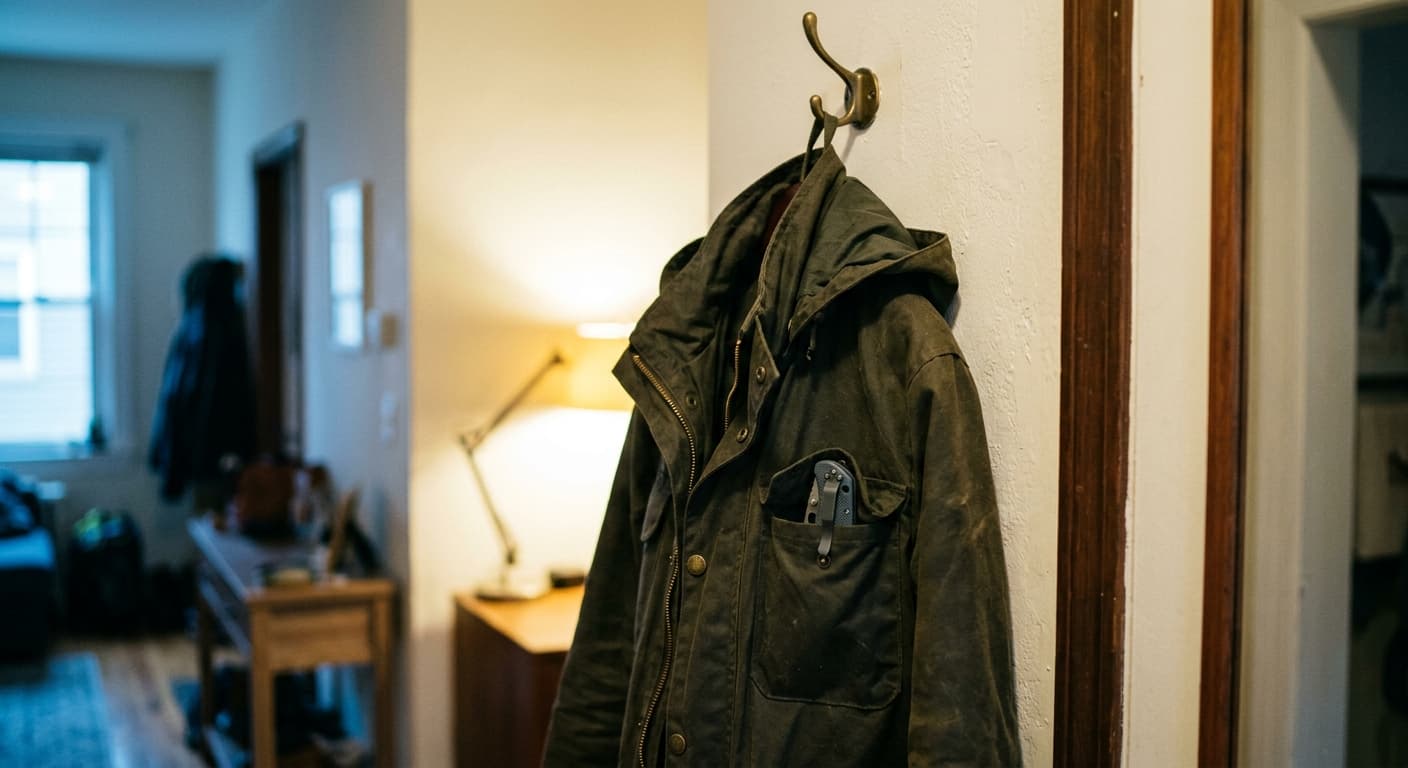
North Dakota's well-known permitless concealed carry applies to firearms, not to knives. A "dangerous weapon," a term that covers several named knife types regardless of length and any other knife with a blade of 6 inches or more, still needs an actual concealed weapons license to carry concealed anywhere the statute reaches.
Jurisdiction scope: This page covers North Dakota state law only, principally N.D. Cent. Code §§ 62.1-01-01, 62.1-01-03, 62.1-02-04, 62.1-02-05, 62.1-02-05.1, 62.1-04-01, 62.1-04-02, 62.1-04-03, and 15.1-19-10. It does not cover North Dakota's firearms-specific handgun-carrying statute (§ 62.1-03-01) in detail, since knives are governed by the "dangerous weapon" provisions described here.
The "dangerous weapon" definition that governs this page
N.D. Cent. Code § 62.1-01-01 provides, in relevant part: "'Dangerous weapon' includes any switchblade or gravity knife, machete, scimitar, stiletto, sword, dagger, or knife with a blade of six inches [15.24 centimeters] or more; any throwing star, nunchaku, or other martial arts weapon; any billy, blackjack, sap, bludgeon, cudgel, metal knuckles, or sand club." The named knife types (switchblade knife, gravity knife, machete, scimitar, stiletto, sword, dagger) are covered by this definition regardless of blade length. Any other knife not on that named list is covered only once its blade reaches 6 inches or more. This definition governs every title 62.1 statute described on this page, which covers carrying a dangerous weapon concealed and possessing one in a restricted place. It does not carry over to North Dakota's criminal code, title 12.1: § 12.1-01-04 defines "dangerous weapon" there without a six-inch knife-length clause at all, listing only "any switchblade or gravity knife, machete, scimitar, stiletto, sword, or dagger" among knives. A criminal-code offense that turns on possessing a "dangerous weapon" uses that narrower, un-lengthed definition, not the six-inch rule described here. A third definition governs K-12 schools specifically: N.D.C.C. § 15.1-19-10(6)(a) defines "dangerous weapon," for that section, by borrowing federal law, "'Dangerous weapon' has the meaning provided in 18 U.S.C. 930(g)(2)," which excludes only "a pocket knife with a blade of less than 2 1/2 inches in length," not the six-inch line described above. A four-inch folding knife, well under the six-inch title 62.1 threshold, is still barred on North Dakota school property under this narrower school-specific rule, covered below.
Permitless carry applies to firearms, not to knives
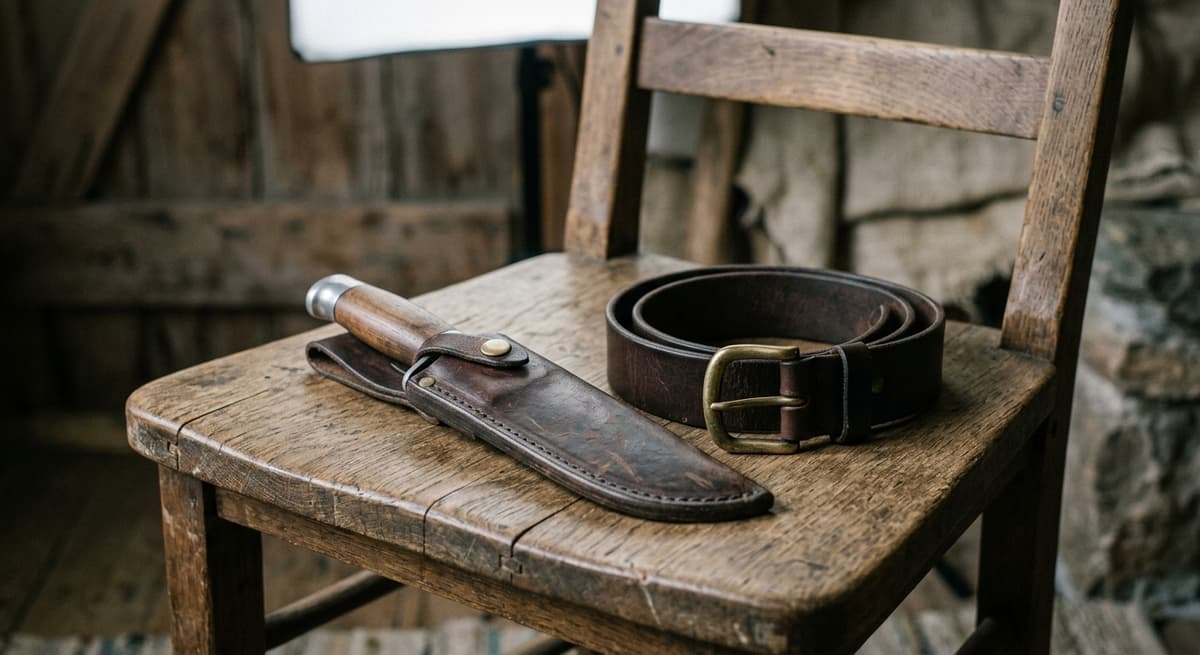
North Dakota is often described as a permitless-carry state, but that description applies to firearms specifically, not to a knife meeting the "dangerous weapon" definition. § 62.1-04-02 provides: "An individual, other than a law enforcement officer, may not carry a firearm or dangerous weapon concealed unless the individual is licensed to do so or exempted under this chapter. An individual who is not otherwise precluded from possessing a class 2 firearm and dangerous weapon license under this chapter and who possesses a valid driver's license or nondriver identification card issued by the department of transportation or by the individual's state or territory of residence may carry a firearm concealed under this chapter." The identification-based exemption in the statute's second sentence is written for "a firearm," not for a dangerous weapon generally. A knife within the "dangerous weapon" definition therefore still requires an actual license to carry concealed, distinct from the identification-based path available for a firearm. § 62.1-04-05, the penalty section that closes the same chapter, states in full: "Any person who violates this chapter is guilty of a class A misdemeanor." Carrying a covered knife concealed without a license, or without an applicable exemption, is a class A misdemeanor on that basis.
The license that covers a dangerous weapon
§ 62.1-04-03 directs the director of the Bureau of Criminal Investigation to issue a class 1 firearm license (minimum age 21) or a class 2 firearm and dangerous weapon license (minimum age 18) to an applicant who meets the statute's residency, background, and testing requirements. A class 1 applicant must complete classroom instruction, an open-book test, and a shooting or firearm-proficiency demonstration; a class 2 applicant need only complete the open-book test. Within North Dakota, "the rights and privileges conveyed by a class 1 or class 2 firearm and dangerous weapon license within the state are identical," and the statute specifically provides: "A North Dakota resident who has a valid class 1 firearm license also may carry a class 2 dangerous weapon without any further testing required." A license is valid for five years.
What counts as "concealed"
§ 62.1-04-01 defines concealment functionally: "A firearm or dangerous weapon is concealed if it is carried in such a manner as to not be discernible by the ordinary observation of a passerby. There is no requirement that there be absolute invisibility of the firearm or dangerous weapon, merely that it not be ordinarily discernible." The same section then states an affirmative rule that reaches a common scenario: "A firearm or dangerous weapon is considered concealed if it is not secured, and is worn under clothing or carried in a bundle that is held or carried by the individual, or transported in a vehicle under the individual's control or direction and available to the individual, including beneath the seat or in a glove compartment." The statute lists several carrying methods that are not considered concealed, including a knife carried "in a belt holster which is wholly or substantially visible or carried in a case designed for carrying a firearm or dangerous weapon and which is wholly or substantially visible," one "locked in a closed trunk or luggage compartment of a motor vehicle," and one "carried in the field while lawfully engaged in hunting, trapping, or target shooting, whether visible or not." The vehicle exception in that not-concealed list is written for firearms only: "A bow and arrow, rifle, shotgun, unloaded handgun, or a weapon that will expel, or is readily capable of expelling, a projectile by the action of a spring, compressed air, or compressed gas" while carried in a motor vehicle. A knife is not on that list, so a covered knife under the seat or in the glove compartment, unlike a rifle or unloaded handgun kept the same way, is concealed under the statute and needs a class 1 or class 2 license unless another exemption applies.
Restricted places: public gatherings and liquor establishments
§ 62.1-02-05 provides: "An individual may not possess a firearm or dangerous weapon at: A school or school-sponsored event on school property; A church or other place of worship; or A publicly owned or operated building." A knife meeting the "dangerous weapon" definition is covered. An individual who knowingly violates the section is guilty of a noncriminal offense punishable by a $100 fee; the statute's own penalty clause carries that mental element, so a knife carried without the person's awareness is not, on the statute's face, automatically an offense. The statute lists a long set of exceptions, including law enforcement and certain correctional officers, on-duty ambulance and firefighter crew members meeting specific licensing and notice conditions, armed forces and National Guard members on duty, sport shooting competitors, gun and antique shows, a firearm or dangerous weapon carried in a temporary residence or motor vehicle, hunter safety students and instructors, security personnel on duty, state and federal parks, and a licensed concealed carrier permitted by a place of worship's own leadership. A separate, storage-specific exception applies only to a building owned or managed by the state or a political subdivision: it covers an individual's storage of a firearm or dangerous weapon there if the individual resides in the building, the storage is inside the individual's assigned residential unit, and the state, governing board, or a designee has consented to it. The statute also expressly preserves local flexibility in one direction: "This section does not prevent any political subdivision or the state board of higher education from enacting an ordinance or policy that is less restrictive than this section," and any such enacted ordinance or policy supersedes the statute within that jurisdiction. A related exception in the same section covers "an individual authorized to carry a concealed weapon on school property under section 62.1-02-14," North Dakota's armed-first-responder-in-schools program.
A separate statute, § 62.1-02-04, bans knowingly possessing a firearm or dangerous weapon, which again includes a covered knife, in the part of a liquor establishment set aside for retail alcohol sale and on-site consumption, or at a bingo gaming site, an infraction. Exceptions apply to law enforcement, the proprietor and their employees, a proprietor's designee displaying an unloaded item as a raffle or auction prize, certain on-duty private security personnel, and the restaurant part of an establishment where a person under 21 is not otherwise prohibited.
Separately from § 62.1-02-05's public-building ban, N.D.C.C. § 15.1-19-10 requires each school district's board of directors to adopt a policy governing weapons and firearms on school property and at school functions. Subsection (2)(a) requires the policy to "Prohibit the possession of a dangerous weapon or a firearm by a student on school property and at school functions," and subsection (6)(a) defines "dangerous weapon" for this statute by adopting the federal definition at 18 U.S.C. § 930(g)(2): "a weapon, device, instrument, material, or substance, animate or inanimate, that is used for, or is readily capable of, causing death or serious bodily injury," excluding only "a pocket knife with a blade of less than 2 1/2 inches in length." That two-and-a-half-inch carve-out, not the six-inch rule that governs the rest of this page, is what actually applies to a knife on North Dakota school property. Subsection (2)(b) requires a mandatory one-year expulsion for a student's firearm violation specifically; the statute does not extend that mandatory expulsion to a knife violation. "School property" under subsection (6)(c) includes a school vehicle and the site of any school-sponsored event.
North Dakota's one statute addressing how a dangerous weapon may be displayed, § 62.1-02-05.1, is a narrow safe harbor limited to a person's own property: "Unless otherwise provided by law and subject to sections 12.1-17-04, 12.1-17-05, and 12.1-31-01, an individual may brandish a dangerous weapon while on property owned or leased by the individual." Off that property, or beyond what the safe harbor allows, brandishing a knife can be terrorizing under § 12.1-17-04, a class C felony, or menacing under § 12.1-17-05, a class A misdemeanor committed by a person who "knowingly ... places or attempts to place another human being in fear ... by menacing him with imminent serious bodily injury."
No statewide knife preemption
§ 62.1-01-03 provides: "A political subdivision, including home rule cities or counties, may not enact any ordinance relating to the purchase, sale, ownership, possession, transfer of ownership, registration, or licensure of firearms and ammunition which is more restrictive than state law. All such existing ordinances are void." A second paragraph bars a political subdivision from enacting a zoning ordinance on the same subject matter. Neither paragraph, nor any other part of this statute's text, mentions a knife or dangerous weapon. A North Dakota political subdivision's own ordinance concerning knives is not addressed by this statute.
Federal law: what it does and does not reach
Federal law does not ban an individual from owning or carrying a switchblade. The Federal Switchblade Act, 15 U.S.C. §§ 1241 to 1245, instead restricts interstate commerce in switchblade knives, barring their manufacture for, or introduction, transport, and sale in, interstate commerce, and, in 15 U.S.C. § 1245, makes it a federal offense to knowingly possess, manufacture, sell, or import a ballistic knife in or affecting interstate commerce or within federal territorial jurisdiction. The two switchblade offense sections, §§ 1242 and 1243, do not apply to certain knives and people, listed as exemptions in 15 U.S.C. § 1244. A 2009 amendment, § 1244(5), exempts any knife with a spring, detent, or other closure-bias mechanism that requires hand, wrist, or arm exertion on the blade itself to overcome the bias and assist opening, the carve-out that keeps modern assisted-opening folding knives legal in interstate commerce. A separate exemption, § 1244(4), covers a person with only one arm possessing or carrying a switchblade with a blade three inches or less. North Dakota's own "dangerous weapon" definition names a switchblade regardless of length, independent of these federal interstate-commerce exemptions.
Disclaimer: This article provides general legal information about North Dakota's knife laws as of September 2026. It is not legal advice. Consult a lawyer licensed in North Dakota for advice about a specific situation.
For a state-by-state comparison, see knife laws by state. North Dakota's self-defense statutes are covered separately on the North Dakota self-defense laws page.
Statutes cited reflect their in-force version as of 2026-09-18. Last updated: 2026-09-18.
Frequently Asked Questions
Do you need a permit to carry a knife concealed in North Dakota?
For a knife that meets the 'dangerous weapon' definition (a switchblade, gravity knife, machete, scimitar, stiletto, sword, dagger, or any knife with a blade of 6 inches or more), yes. North Dakota's identification-based permitless concealed carry under N.D. Cent. Code 62.1-04-02 applies to a firearm only; carrying a covered knife concealed still requires a class 1 or class 2 license under 62.1-04-03. Carrying one concealed without a license or an applicable exemption is a class A misdemeanor under 62.1-04-05.
What blade length is illegal to carry concealed in North Dakota?
Six inches or more for a knife not otherwise named. A switchblade, gravity knife, machete, scimitar, stiletto, sword, or dagger meets the 'dangerous weapon' definition under N.D. Cent. Code 62.1-01-01 regardless of blade length. On North Dakota school property specifically, a narrower definition applies instead: N.D.C.C. 15.1-19-10 borrows the federal school definition, 18 U.S.C. 930(g)(2), which excludes only a pocket knife with a blade under 2.5 inches.
Can you carry a knife openly in North Dakota?
North Dakota's concealed-carry licensing requirement applies only to concealed carry, defined at 62.1-04-01 as carried so as not to be ordinarily discernible to a passerby. A knife carried in a wholly or substantially visible holster or case, for example, is not considered concealed under that definition. Two place-specific bans apply however the knife is carried: 62.1-02-05 bars a covered knife at a school, a place of worship, or a publicly owned building, and 62.1-02-04 bars one in the alcohol-service or bingo-gaming area of a liquor establishment. How the knife may be displayed is separately limited by 62.1-02-05.1, a brandishing safe harbor that applies only on the individual's own property and is subject to North Dakota's terrorizing and menacing offenses.
Is a knife concealed under North Dakota law if it's kept in my car?
Usually yes. N.D. Cent. Code 62.1-04-01 states that a firearm or dangerous weapon transported in a vehicle and available to the individual, including beneath the seat or in a glove compartment, is concealed. The statute's vehicle exception to that rule names only a bow, a long gun, an unloaded handgun, and a BB or air gun; a knife is not on that list, so a covered knife kept that way in a vehicle needs a class 1 or class 2 license, unless it is locked in a closed trunk or luggage compartment, which the same statute does not treat as concealed.
Does North Dakota preempt local knife ordinances?
No. North Dakota's statewide preemption statute, N.D. Cent. Code 62.1-01-03, is written for firearms and ammunition only. Its text does not mention a knife or dangerous weapon, so a local ordinance regulating knives is not displaced by this statute.
Can you carry a knife into a North Dakota church or public building?
No, generally. N.D. Cent. Code 62.1-02-05 bans possessing a firearm or dangerous weapon, which includes a covered knife, at a school or school-sponsored event, a church or other place of worship, or a publicly owned or operated building, subject to a long list of exceptions. Only a knowing violation is a noncriminal offense punishable by a $100 fee.
Updates
Independently fact-checked against the cited primary sources
Sources and References
- N.D. Cent. Code 62.1-01-01 - General definitions ("dangerous weapon")(ndlegis.gov).gov
- N.D. Cent. Code 62.1-04-01 - Definition of concealed(ndlegis.gov).gov
- N.D. Cent. Code 62.1-04-02 - Carrying concealed firearms or dangerous weapons; license distinctions(ndlegis.gov).gov
- N.D. Cent. Code 62.1-04-03 - License to carry a firearm or dangerous weapon concealed(ndlegis.gov).gov
- N.D. Cent. Code 62.1-04-05 - Penalty(ndlegis.gov).gov
- N.D. Cent. Code 12.1-01-04 - General definitions ("dangerous weapon")(ndlegis.gov).gov
- N.D. Cent. Code 62.1-02-05 - Possession of a firearm or dangerous weapon at a public gathering(ndlegis.gov).gov
- N.D. Cent. Code 62.1-02-04 - Possession of firearm or dangerous weapon in liquor establishment prohibited(ndlegis.gov).gov
- N.D. Cent. Code 62.1-01-03 - Limitation on authority of political subdivision regarding firearms(ndlegis.gov).gov
- N.D. Cent. Code 62.1-02-05.1 - Brandishing a dangerous weapon(ndlegis.gov).gov
- N.D. Cent. Code 15.1-19-10 - School district weapons and firearms policy(ndlegis.gov).gov
- N.D. Cent. Code 12.1-17-04 - Terrorizing(ndlegis.gov).gov
- N.D. Cent. Code 12.1-17-05 - Menacing(ndlegis.gov).gov
- 18 U.S.C. 930(g)(2) - Federal definition of dangerous weapon incorporated by N.D. Cent. Code 15.1-19-10(uscode.house.gov).gov
- 15 U.S.C. 1241-1245 - Federal Switchblade Act, interstate commerce and ballistic-knife scope(law.cornell.edu)
- 15 U.S.C. 1244 - exceptions, including the 2009 assisted-opening carve-out and the one-arm exception(law.cornell.edu)